Hubbry Logo
Green buildingGreen buildingMain
Open search
Green building
Community hub
Green building
logo
8 pages, 0 posts
0 subscribers
Be the first to start a discussion here.
Green building
Green building
from Wikipedia

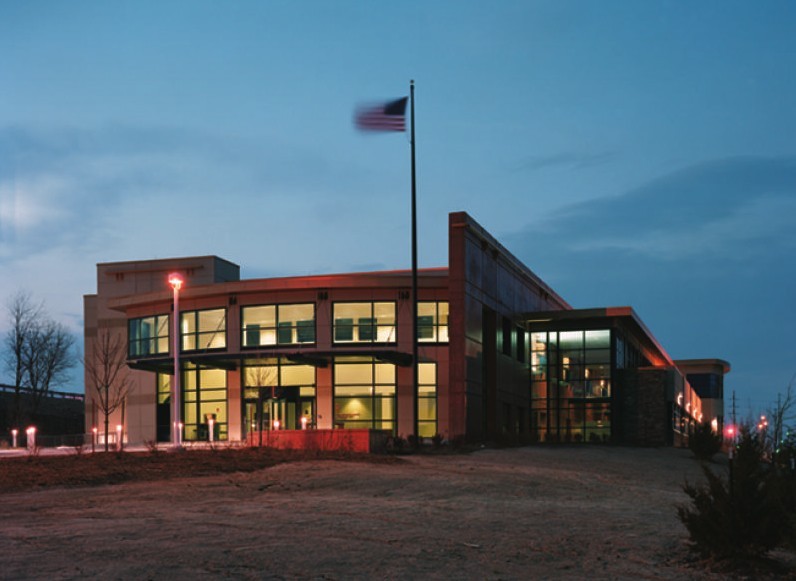
US EPA Kansas City Science & Technology Center. This facility features the following green attributes:

Green building (also known as green construction, sustainable building, or eco-friendly building) refers to both a structure and the application of processes that are environmentally responsible and resource-efficient throughout a building's life cycle: from planning to design, construction, operation, maintenance, renovation, and demolition.[1] This requires close cooperation between the contractor, the architects, the engineers, and the client at all project stages.[2] The Green Building practice expands and complements the classical building design concerns of economy, utility, durability, and comfort.[1] Green building also refers to saving resources to the maximum extent, including energy saving, land saving, water saving, material saving, etc., during the whole life cycle of the building, protecting the environment and reducing pollution, providing people with healthy, comfortable and efficient use of space, and being in harmony with nature. Buildings that live in harmony; green building technology focuses on low consumption, high efficiency, economy, environmental protection, integration and optimization.[3]

Leadership in Energy and Environmental Design (LEED) is a set of rating systems for the design, construction, operation, and maintenance of green buildings, developed by the U.S. Green Building Council. Other certification systems that confirm the sustainability of buildings are the British BREEAM (Building Research Establishment Environmental Assessment Method) for buildings and large-scale developments or the DGNB System (Deutsche Gesellschaft für Nachhaltiges Bauen e.V.) which benchmarks the sustainability performance of buildings, indoor environments, and districts. Currently, the World Green Building Council is conducting research on the effects of green buildings on the health and productivity of their users and is working with the World Bank to promote green buildings in Emerging Markets through EDGE (Excellence in Design for Greater Efficiencies) Market Transformation Program and certification.[4] There are also other tools such as NABERS or Green Star in Australia, Global Sustainability Assessment System (GSAS) used in the Middle East and the Green Building Index (GBI) predominantly used in Malaysia.

Building information modeling (BIM) is a process involving the generation and management of digital representations of the physical and functional characteristics of places. Building information models (BIMs) are files (often, but not always in proprietary formats and containing proprietary data) which can be extracted, exchanged, or networked to support decision-making regarding a building or other built asset. Current BIM software is used by individuals, businesses, and government agencies who plan, design, construct, operate, and maintain diverse physical infrastructures, such as water, refuse, electricity, gas, communication utilities, roads, railways, bridges, ports, and tunnels.

Although new technologies are constantly being developed to complement current practices in creating greener structures, the common objective of green buildings is to reduce the overall impact of the built environment on human health and the natural environment by:

Natural building is a similar concept, usually on a smaller scale and focusing on the use of locally available natural materials.[5] Other related topics include sustainable design and green architecture. Sustainability may be defined as meeting the needs of present generations without compromising the ability of future generations to meet their needs.[6] Although some green building programs do not address the issue of retrofitting existing homes, others do, especially through public schemes for energy efficient refurbishment. Green construction principles can easily be applied to retrofit work as well as new construction.

A 2009 report by the U.S. General Services Administration found that 12 sustainably designed buildings cost less to operate and have excellent energy performance. In addition, occupants were overall more satisfied with these buildings than those in typical commercial buildings. These are eco-friendly buildings.[7]

Reducing environmental impact

[edit]

Buildings represent a large part of energy, electricity, water, and materials consumption. As of 2020, they account for 37% of global energy use and energy-related CO2 emissions, which the United Nations estimates contributed to 33% of overall worldwide emissions.[8][9] Including the manufacturing of building materials, the global CO2 emissions were 39%.[10] If new technologies in construction are not adopted during this time of rapid growth, emissions could double by 2050, according to the United Nations Environment Program.

Glass buildings, especially all-glass skyscrapers, contribute significantly to climate change due to their energy inefficiency. While these structures are visually appealing and allow abundant natural light, they also trap heat, necessitating increased use of air conditioning systems, which contributes to higher carbon emissions. Experts advocate for design modifications and potential restrictions on all-glass edifices to mitigate their detrimental environmental impact.[11][12]

Buildings account for a large amount of land. According to the National Resources Inventory, approximately 107 million acres (430,000 km2) of land in the United States are developed. The International Energy Agency released a publication that estimated that existing buildings are responsible for more than 40% of the world's total primary energy consumption and for 24% of global carbon dioxide emissions.[13][14]

According to Global status report from the year 2016, buildings consume more than 30% of all produced energy. The report states that "Under a below 2°C trajectory, effective action to improve building energy efficiency could limit building final energy demand to just above current levels, meaning that the average energy intensity of the global building stock would decrease by more than 80% by 2050".[15]

Hanging gardens of One Central Park, Sydney

Green building practices aim to reduce the environmental impact of building as the building sector has the greatest potential to deliver significant cuts in emissions at little or no cost.[16] General guidelines can be summarized as follows: Every building should be as small as possible. Avoid contributing to sprawl, even if the most energy-efficient, environmentally sound methods are used in design and construction. Bioclimatic design principles are able to reduce energy expenditure and by extension, carbon emissions. Bioclimatic design is a method of building design that takes local climate into account to create comfortable conditions within the structure.[17][18] This could be as simple as constructing a different shape for the building envelope or facing the building towards the south to maximize solar exposure for energy or lighting purposes. Given the limitations of city planned construction, bioclimatic principles may be employed on a lesser scale, however it is still an effective passive method to reduce environmental impact.

Goals of green building

[edit]
Blu Homes mkSolaire, a green building designed by Michelle Kaufmann.
Shanghai Tower, the tallest and largest LEED Platinum certified building in the world since 2015.[19]

The concept of sustainable development can be traced to the energy (especially fossil oil) crisis and environmental pollution concerns of the 1960s and 1970s.[20] The Rachel Carson book, Silent Spring,[21] published in 1962, is considered to be one of the first efforts to describe sustainable development as related to green building.[20] The green building movement in the U.S. originated from the need and desire for more energy efficient and environmentally friendly construction practices. There are a number of motives for building green, including environmental, economic, and social benefits.[1] However, modern sustainability initiatives call for an integrated and synergistic design to both new construction and in the retrofitting of existing structures. Also known as sustainable design, this approach integrates the building life-cycle with each green practice employed with a design-purpose to create a synergy among the practices used.

Green building brings together a vast array of practices, techniques, and skills to reduce and ultimately eliminate the impacts of buildings on the environment and human health. It often emphasizes taking advantage of renewable resources, e.g., using sunlight through passive solar, active solar, and photovoltaic equipment, and using plants and trees through green roofs, rain gardens, and reduction of rainwater run-off. Many other techniques are used, such as using low-impact building materials or using packed gravel or permeable concrete instead of conventional concrete or asphalt to enhance replenishment of groundwater.

While the practices or technologies employed in green building are constantly evolving and may differ from region to region, fundamental principles persist from which the method is derived: siting and structure design efficiency, energy efficiency, water efficiency, materials efficiency, indoor environmental quality enhancement, operations and maintenance optimization and waste and toxics reduction.[22][23] The essence of green building is an optimization of one or more of these principles. Also, with the proper synergistic design, individual green building technologies may work together to produce a greater cumulative effect.

On the aesthetic side of green architecture or sustainable design is the philosophy of designing a building that is in harmony with the natural features and resources surrounding the site. There are several key steps in designing sustainable buildings: specify 'green' building materials from local sources, reduce loads, optimize systems, and generate on-site renewable energy.

Life cycle assessment

[edit]

A life cycle assessment (LCA) can help avoid a narrow outlook on environmental, social, and economic concerns[24] by assessing a full range of impacts associated with all cradle-to-grave stages of a process: from extraction of raw materials through materials processing, manufacture, distribution, use, repair, and maintenance, and disposal or recycling. Impacts taken into account include (among others) embodied energy, global warming potential, resource use, air pollution, water pollution, and waste.

In terms of green building, the last few years have seen a shift away from a prescriptive approach, which assumes that certain prescribed practices are better for the environment, toward the scientific evaluation of actual performance through LCA.

Although LCA is widely recognized as the best way to evaluate the environmental impacts of buildings (ISO 14040 provides a recognized LCA methodology),[25] it is not yet a consistent requirement of green building rating systems and codes, despite the fact that embodied energy and other life cycle impacts are critical to the design of environmentally responsible buildings.

In North America, LCA is rewarded to some extent in the Green Globes rating system, and is part of the new American National Standard based on Green Globes, ANSI/GBI 01-2010: Green Building Protocol for Commercial Buildings. LCA is also included as a pilot credit in the LEED system, though a decision has not been made as to whether it will be incorporated fully into the next major revision. The state of California also included LCA as a voluntary measure in its 2010 draft Green Building Standards Code.

Although LCA is often perceived as overly complex and time-consuming for regular use by design professionals, research organizations such as BRE in the UK and the Athena Sustainable Materials Institute in North America are working to make it more accessible.[26]

In the UK, the BRE Green Guide to Specifications offers ratings for 1,500 building materials based on LCA.

Siting and structure design efficiency

[edit]

The foundation of any construction project is rooted in the concept and design stages. The concept stage, in fact, is one of the major steps in a project life cycle, as it has the largest impact on cost and performance.[27] In designing environmentally optimal buildings, the objective is to minimize the total environmental impact associated with all life-cycle stages of the building project.

Exterior Light Shelves - Green Office Building, Denver, Colorado

However, building as a process is not as streamlined as an industrial process, and varies from one building to the other, never repeating itself identically. In addition, buildings are much more complex products, composed of a multitude of materials and components, each constituting various design variables to be decided at the design stage. A variation of every design variable may affect the environment during all the building's relevant life-cycle stages.[28]

Energy efficiency

[edit]
An eco-house at Findhorn Ecovillage with a turf roof and solar panels

Green buildings often include measures to reduce energy consumption–both the embodied energy required to extract, process, transport, and install building materials and operating energy to provide services such as heating and power for equipment.

As high-performance buildings use less operating energy, embodied energy has assumed much greater importance – and may make up as much as 30% of the overall life cycle energy consumption. Studies such as the U.S. LCI Database Project[29] show buildings built primarily with wood will have a lower embodied energy than those built primarily with brick, concrete, or steel.[30]

To reduce operating energy use, designers use details that reduce air leakage through the building envelope (the barrier between conditioned and unconditioned space). They also specify high-performance windows and extra insulation in walls, ceilings, and floors. Another strategy, passive solar building design, is often implemented in low-energy homes. Designers orient windows and walls and place awnings, porches, and trees[31] to shade windows and roofs during the summer while maximizing solar gain in the winter. In addition, effective window placement (daylighting) can provide more natural light and lessen the need for electric lighting during the day. Solar water heating further reduces energy costs.

Onsite generation of renewable energy through solar power, wind power, hydro power, or biomass can significantly reduce the environmental impact of the building. Power generation is generally the most expensive feature to add to a building.

Energy efficiency for green buildings can be evaluated from either numerical or non-numerical methods. These include use of simulation modelling, analytical or statistical tools.[32]

In a report published in April 2024, the International Energy Agency (IEA) highlighted that buildings are responsible for about 30% of global final energy consumption and over 50% of electricity demand. It noted the tripling of heat pump sales from 2015 to 2022, electric cars accounting for 20% of 2023 vehicle sales, and a potential doubling of China's peak electricity demand by mid-century. India's air conditioner ownership could see a tenfold rise by 2050, causing a sixfold increase in peak electricity demand, which could be halved with efficient practices. By 2050, demand response measures might lower household electricity bills by 7% to 12% in advanced economies and nearly 20% in developing ones, with smart device installations nearly doubling by 2030. The US could see a 116 GW reduction in peak demand, 80 million tonnes less CO2 per year by 2030, and save between USD 100 billion and USD 200 billion over twenty years with grid-interactive buildings. In Alabama, a smart neighborhood demonstrated 35% to 45% energy savings compared to traditional homes.[33][34]

Water efficiency

[edit]

Reducing water consumption and protecting water quality are key objectives in sustainable building. One critical issue of water consumption is that in many areas, the demands on the supplying aquifer exceed its ability to replenish itself. To the maximum extent feasible, facilities should increase their dependence on water that is collected, used, purified, and reused on-site. The protection and conservation of water throughout the life of a building may be accomplished by designing for dual plumbing that recycles water in toilet flushing or by using water for washing of the cars. Waste-water may be minimized by utilizing water conserving fixtures such as ultra-low flush toilets and low-flow shower heads.[35] Bidets help eliminate the use of toilet paper, reducing sewer traffic and increasing possibilities of re-using water on-site. Point of use water treatment and heating improves both water quality and energy efficiency while reducing the amount of water in circulation. The use of non-sewage and greywater for on-site use such as site-irrigation will minimize demands on the local aquifer.[36]

Large commercial buildings with water and energy efficiency can qualify for an LEED Certification. Philadelphia's Comcast Center is the tallest building in Philadelphia. It is also one of the tallest buildings in the USA that is LEED Certified. Their environmental engineering consists of a hybrid central chilled water system which cools floor-by-floor with steam instead of water. Burn's Mechanical set-up the entire renovation of the 58 story, 1.4 million square foot sky scraper.

Materials efficiency

[edit]

Building materials typically considered 'green' include lumber (that has been certified to a third-party standard), rapidly renewable plant materials (like bamboo and straw), dimension stone, recycled stone, hempcrete,[37] recycled metal (see: copper sustainability and recyclability), and other non-toxic, reusable, renewable, and/or recyclable products. Materials with lower embodied energy can be used in substitution to common building materials with high degrees of energy consumption and carbon/harmful emissions.[38] For concrete a high performance self-healing version is available,[39][40] however options with lower yields of pollutive waste entertain ideas of upcycling and congregate supplementing; replacing traditional concrete mixes with slag, production waste, and aggregates.[41] Insulation also sees multiple angles for substitution. Commonly used fiberglass has competition from other eco-friendly, low energy embodying insulators with similar or higher R-values (per inch of thickness) at a competitive price. Sheep wool, cellulose, and ThermaCork perform more efficiently, however, use may be limited by transportation or installation costs.

Furthermore, embodied energy comparisons can help deduce the selection of building material and its efficiency. Wood production emits less CO2 than concrete and steel if produced in a sustainable way just as steel can be produced more sustainably through improvements in technology (e.g. EAF) and energy recycling/carbon capture(an underutilized potential for systematically storing carbon in the built environment).[42][43][44]

The EPA (Environmental Protection Agency) also suggests using recycled industrial goods, such as coal combustion products, foundry sand, and demolition debris in construction projects.[22] Energy efficient building materials and appliances are promoted in the United States through energy rebate programs.

A 2022 report from the Boston Consulting Group found that, investments in developing greener forms of cement, iron, and steel lead to bigger greenhouse gas reductions compared with investments in electricity and aviation.[45] In addition, the process of making cement without producing CO2 is unavoidable. However, using pozzolans clinkers can reduce CO2 emission while in the process of making cement.[46]

Indoor environmental quality enhancement

[edit]

The Indoor Environmental Quality (IEQ) category in LEED standards, one of the five environmental categories, was created to provide comfort, well-being, and productivity of occupants. The LEED IEQ category addresses design and construction guidelines especially: indoor air quality (IAQ), thermal quality, and lighting quality.[47][48][49]

Indoor Air Quality seeks to reduce volatile organic compounds, or VOCs, and other air impurities such as microbial contaminants. Buildings rely on a properly designed ventilation system (passively/naturally or mechanically powered) to provide adequate ventilation of cleaner air from outdoors or recirculated, filtered air as well as isolated operations (kitchens, dry cleaners, etc.) from other occupancies. During the design and construction process choosing construction materials and interior finish products with zero or low VOC emissions will improve IAQ. Most building materials and cleaning/maintenance products emit gases, some of them toxic, such as many VOCs including formaldehyde. These gases can have a detrimental impact on occupants' health, comfort, and productivity. Avoiding these products will increase a building's IEQ. LEED,[50] HQE[51] and Green Star contain specifications on use of low-emitting interior. Draft LEED 2012[52] is about to expand the scope of the involved products. BREEAM[53] limits formaldehyde emissions, no other VOCs. MAS Certified Green is a registered trademark to delineate low VOC-emitting products in the marketplace.[54] The MAS Certified Green Program ensures that any potentially hazardous chemicals released from manufactured products have been thoroughly tested and meet rigorous standards established by independent toxicologists to address recognized long-term health concerns. These IAQ standards have been adopted by and incorporated into the following programs:

  • The United States Green Building Council (USGBC) in their LEED rating system[55]
  • The California Department of Public Health (CDPH) in their section 01350 standards[56]
  • The Collaborative for High Performance Schools (CHPS) in their Best Practices Manual[57]
  • The Business and Institutional Furniture Manufacturers Association (BIFMA) in their level® sustainability standard.[58]

Also important to indoor air quality is the control of moisture accumulation (dampness) leading to mold growth and the presence of bacteria and viruses as well as dust mites and other organisms and microbiological concerns. Water intrusion through a building's envelope or water condensing on cold surfaces on the building's interior can enhance and sustain microbial growth. A well-insulated and tightly sealed envelope will reduce moisture problems but adequate ventilation is also necessary to eliminate moisture from sources indoors including human metabolic processes, cooking, bathing, cleaning, and other activities.[59]

Personal temperature and airflow control over the HVAC system coupled with a properly designed building envelope will also aid in increasing a building's thermal quality. Creating a high performance luminous environment through the careful integration of daylight and electrical light sources will improve on the lighting quality and energy performance of a structure.[36][60]

Solid wood products, particularly flooring, are often specified in environments where occupants are known to have allergies to dust or other particulates. Wood itself is considered to be hypo-allergenic and its smooth surfaces prevent the buildup of particles common in soft finishes like carpet. The Asthma and Allergy Foundation of America recommends hardwood, vinyl, linoleum tile or slate flooring instead of carpet.[61] The use of wood products can also improve air quality by absorbing or releasing moisture in the air to moderate humidity.[62]

Interactions among all the indoor components and the occupants together form the processes that determine the indoor air quality. Extensive investigation of such processes is the subject of indoor air scientific research and is well documented in the journal Indoor Air.[63]

Operations and maintenance optimization

[edit]

No matter how sustainable a building may have been in its design and construction, it can only remain so if it is operated responsibly and maintained properly. Ensuring operations and maintenance(O&M) personnel are part of the project's planning and development process will help retain the green criteria designed at the onset of the project.[64] Every aspect of green building is integrated into the O&M phase of a building's life. The addition of new green technologies also falls on the O&M staff. Although the goal of waste reduction may be applied during the design, construction and demolition phases of a building's life-cycle, it is in the O&M phase that green practices such as recycling and air quality enhancement take place. O&M staff should aim to establish best practices in energy efficiency, resource conservation, ecologically sensitive products and other sustainable practices. Education of building operators and occupants is key to effective implementation of sustainable strategies in O&M services.[65]

Waste reduction

[edit]

Green architecture also seeks to reduce waste of energy, water and materials used during construction. For example, in California nearly 60% of the state's waste comes from commercial buildings[66] During the construction phase, one goal should be to reduce the amount of material going to landfills. Well-designed buildings also help reduce the amount of waste generated by the occupants as well, by providing on-site solutions such as compost bins to reduce matter going to landfills.

To reduce the amount of wood that goes to landfill, Neutral Alliance (a coalition of government, NGOs and the forest industry) created the website dontwastewood.com. The site includes a variety of resources for regulators, municipalities, developers, contractors, owner/operators and individuals/homeowners looking for information on wood recycling.

When buildings reach the end of their useful life, they are typically demolished and hauled to landfills. Deconstruction is a method of harvesting what is commonly considered "waste" and reclaiming it into useful building material.[67] Extending the useful life of a structure also reduces waste – building materials such as wood that are light and easy to work with make renovations easier.[68]

To reduce the impact on wells or water treatment plants, several options exist. "Greywater", wastewater from sources such as dishwashing or washing machines, can be used for subsurface irrigation, or if treated, for non-potable purposes, e.g., to flush toilets and wash cars. Rainwater collectors are used for similar purposes.

Centralized wastewater treatment systems can be costly and use a lot of energy. An alternative to this process is converting waste and wastewater into fertilizer, which avoids these costs and shows other benefits. By collecting human waste at the source and running it to a semi-centralized biogas plant with other biological waste, liquid fertilizer can be produced. This concept was demonstrated by a settlement in Lübeck Germany in the late 1990s. Practices like these provide soil with organic nutrients and create carbon sinks that remove carbon dioxide from the atmosphere, offsetting greenhouse gas emission. Producing artificial fertilizer is also more costly in energy than this process.[69]

Reduce impact onto electricity network

[edit]

Electricity networks are built based on peak demand (another name is peak load). Peak demand is measured in the units of watts (W). It shows how fast electrical energy is consumed. Residential electricity is often charged on electrical energy (kilowatt hour, kWh). Green buildings or sustainable buildings are often capable of saving electrical energy but not necessarily reducing peak demand.

When sustainable building features are designed, constructed and operated efficiently, peak demand can be reduced so that there is less desire for electricity network expansion and there is less impact onto carbon emission and climate change.[70] These sustainable features can be good orientation, sufficient indoor thermal mass, good insulation, photovoltaic panels, thermal or electrical energy storage systems, smart building (home) energy management systems.[71]

Cost and payoff

[edit]

The most criticized issue about constructing environmentally friendly buildings is the price. Photovoltaics, new appliances, and modern technologies tend to cost more money. Most green buildings cost a premium of less than 2%, but yield 10 times as much over the entire life of the building.[66] In regards to the financial benefits of green building, "Over 20 years, the financial payback typically exceeds the additional cost of greening by a factor of 4-6 times. And broader benefits, such as reductions in greenhouse gases (GHGs) and other pollutants have large positive impacts on surrounding communities and on the planet."[72] The stigma is between the knowledge of up-front cost[73] vs. life-cycle cost. The savings in money come from more efficient use of utilities which result in decreased energy bills. It is projected that different sectors could save $130 billion on energy bills.[74] Also, higher worker or student productivity can be factored into savings.[75]

Numerous studies have shown the measurable benefit of green building initiatives on worker productivity. In general, it has been found that, "there is a direct correlation between increased productivity and employees who love being in their work space."[76] Specifically, worker productivity can be significantly impacted by certain aspects of green building design such as improved lighting, reduction of pollutants, advanced ventilation systems and the use of non-toxic building materials.[77] In "The Business Case for Green Building", the U.S. Green Building Council gives another specific example of how commercial energy retrofits increase worker health and thus productivity, "People in the U.S. spend about 90% of their time indoors. EPA studies indicate indoor levels of pollutants may be up to ten times higher than outdoor levels. LEED-certified buildings are designed to have healthier, cleaner indoor environmental quality, which means health benefits for occupants."[78]

Studies have shown over a 20-year life period, some green buildings have yielded $53 to $71 per square foot back on investment.[79] Confirming the rentability of green building investments, further studies of the commercial real estate market have found that LEED and Energy Star certified buildings achieve significantly higher rents, sale prices and occupancy rates as well as lower capitalization rates, potentially reflecting lower investment risk.[80][81][82]

Regulation and operation

[edit]

As a result of the increased interest in green building concepts and practices, a number of organizations have developed standards, codes and rating systems for use by government regulators, building professionals and consumers. In some cases, codes are written so local governments can adopt them as bylaws to reduce the local environmental impact of buildings.

Green building rating systems such as BREEAM (United Kingdom), LEED (United States and Canada), DGNB (Germany), CASBEE (Japan), and VERDEGBCe (Spain), GRIHA (India) help consumers determine a structure's level of environmental performance. They award credits for optional building features that support green design in categories such as location and maintenance of building site, conservation of water, energy, and building materials, and occupant comfort and health. The number of credits generally determines the level of achievement.[83]

Green building codes and standards, such as the International Code Council's draft International Green Construction Code,[84] are sets of rules created by standards development organizations that establish minimum requirements for elements of green building such as materials or heating and cooling.

The new version of the European Construction Products Regulation (PCR) contains elements of Life Cycle Analysis and verification of Environmental Product Declarations under the "System 3+" process.[85]

Some of the major building environmental assessment tools currently in use include:

Green neighborhoods and villages

[edit]

At the beginning of the 21st century, efforts were made to implement the principles of green building, not only for individual buildings, but also for neighborhoods and villages. The intent is to create zero energy neighborhoods and villages, which means they're going to create all the energy on their own. They will also reuse waste, implements sustainable transportation, and produce their own food.[86][87] Green villages have been identified as a way to decentralize sustainable climate practices, which may prove key in areas with high rural or scattered village populations, such as India, where 74% of the population lives in over 600,000 different villages.[88]

International frameworks and assessment tools

[edit]

IPCC Fourth Assessment Report

Climate Change 2007, the Fourth Assessment Report (AR4) of the United Nations Intergovernmental Panel on Climate Change (IPCC), is the fourth in a series of such reports. The IPCC was established by the World Meteorological Organization (WMO) and the United Nations Environment Programme (UNEP) to assess scientific, technical and socio-economic information concerning climate change, its potential effects and options for adaptation and mitigation.[89]

UNEP and Climate change

United Nations Environment Program UNEP works to facilitate the transition to low-carbon societies, support climate proofing efforts, improve understanding of climate change science, and raise public awareness about this global challenge.

GHG Indicator

The Greenhouse Gas Indicator: UNEP Guidelines for Calculating Greenhouse Gas Emissions for Businesses and Non-Commercial Organizations

Agenda 21

Agenda 21 is a programme run by the United Nations (UN) related to sustainable development. It is a comprehensive blueprint of action to be taken globally, nationally and locally by organizations of the UN, governments, and major groups in every area in which humans impact on the environment. The number 21 refers to the 21st century.

FIDIC's PSM

The International Federation of Consulting Engineers (FIDIC) Project Sustainability Management Guidelines were created to assist project engineers and other stakeholders in setting sustainable development goals for their projects that are recognized and accepted as being in the interests of society. The process is also intended to align project goals with local conditions and priorities and assist those involved in managing projects to measure and verify their progress.

The Project Sustainability Management Guidelines are structured with Themes and Sub-Themes under the three main sustainability headings of Social, Environmental and Economic. For each individual Sub-Theme a core project indicator is defined along with guidance as to the relevance of that issue in the context of an individual project.

The Sustainability Reporting Framework provides guidance for organizations to use as the basis for disclosure about their sustainability performance, and also provides stakeholders a universally applicable, comparable framework in which to understand disclosed information.

The Reporting Framework contains the core product of the Sustainability Reporting Guidelines, as well as Protocols and Sector Supplements. The Guidelines are used as the basis for all reporting. They are the foundation upon which all other reporting guidance is based, and outline core content for reporting that is broadly relevant to all organizations regardless of size, sector, or location. The Guidelines contain principles and guidance as well as standard disclosures – including indicators – to outline a disclosure framework that organizations can voluntarily, flexibly, and incrementally, adopt.

Protocols underpin each indicator in the Guidelines and include definitions for key terms in the indicator, compilation methodologies, intended scope of the indicator, and other technical references.

Sector Supplements respond to the limits of a one-size-fits-all approach. Sector Supplements complement the use of the core Guidelines by capturing the unique set of sustainability issues faced by different sectors such as mining, automotive, banking, public agencies and others.

IPD Environment Code

The IPD Environment Code was launched in February 2008. The Code is intended as a good practice global standard for measuring the environmental performance of corporate buildings. Its aim is to accurately measure and manage the environmental impacts of corporate buildings and enable property executives to generate high quality, comparable performance information about their buildings anywhere in the world. The Code covers a wide range of building types (from offices to airports) and aims to inform and support the following;

  • Creating an environmental strategy
  • Inputting to real estate strategy
  • Communicating a commitment to environmental improvement
  • Creating performance targets
  • Environmental improvement plans
  • Performance assessment and measurement
  • Life cycle assessments
  • Acquisition and disposal of buildings
  • Supplier management
  • Information systems and data population
  • Compliance with regulations
  • Team and personal objectives

IPD estimate that it will take approximately three years to gather significant data to develop a robust set of baseline data that could be used across a typical corporate estate.

ISO 21931

ISO/TS 21931:2006, Sustainability in building construction—Framework for methods of assessment for environmental performance of construction works—Part 1: Buildings, is intended to provide a general framework for improving the quality and comparability of methods for assessing the environmental performance of buildings. It identifies and describes issues to be taken into account when using methods for the assessment of environmental performance for new or existing building properties in the design, construction, operation, refurbishment and deconstruction stages. It is not an assessment system in itself but is intended be used in conjunction with, and following the principles set out in, the ISO 14000 series of standards.

Development history

[edit]
  • In the 1930s, geothermal hot water district heating of houses started in Iceland.[90]
  • In the 1960s, American architect Paul Soleri proposed a new concept of ecological architecture.
  • In 1969, American architect Ian McHarg wrote the book "Design Integrates Nature", which marked the official birth of ecological architecture.
  • In the 1970s, the energy crisis caused various building energy-saving technologies such as solar energy, geothermal energy, and wind energy to emerge, and energy-saving buildings became the forerunner of building development.
  • In 1975, the Swiss PLENAR-group published the concept of an energy efficient house in "PLENAR: Planning-Energy-Architecture".
  • In 1980, the World Conservation Organization put forward the slogan "sustainable development" for the first time. At the same time, the energy-saving building system was gradually improved, and it was widely used in developed countries such as Germany, Britain, France and Canada.
  • In 1982, Per and Maria Krusche et al. published an ecological approach to architecture in "Ökologisches Bauen" (ecological buildings) for the German Federal Environment Agency.
  • In 1987, the United Nations Environment Program published the "Our Common Future" report, which established the idea of sustainable development.
  • In 1990, the world's first green building standard was released in the UK.
  • In 1992, because the "United Nations Conference on Environment and Development" promoted sustainable development, green buildings gradually became the direction of development.
  • In 1993, the United States created the Green Building Association.
  • In 1996, Hong Kong introduced green building standards.
  • In 1999, Taiwan introduced green building standards.
  • In 2000, Canada introduced green building standards.
  • In 2005, Singapore initiated the "BCA Green Building Mark".
  • In 2015, according to the Berkeley National Laboratory, China implemented the "Green Building Evaluation Standards".[91]
  • In 2021, the first, both low-cost and sustainable 3D printed house made out of a clay-mixture was completed.[92]

Green building by country

[edit]

See also

[edit]

References

[edit]
[edit]
Revisions and contributorsEdit on WikipediaRead on Wikipedia
from Grokipedia
Green building refers to the , , operation, and maintenance of structures that aim to reduce environmental impacts through efficient use of , water, and materials while enhancing indoor and occupant health across the building's lifecycle. The practice emerged prominently in the with concepts of ecological and gained traction during the crises, prompting innovations in -efficient and passive solar techniques. systems such as the UK's Environmental Assessment Method (), introduced in 1990, and the US Green Building Council's (), launched in 1998, standardized evaluation criteria covering site development, , and emissions reduction. Empirical studies indicate certified green buildings often achieve 25% to 50% lower compared to conventional counterparts in certain regions, alongside potential improvements in occupant productivity and reduced operational costs. However, upfront cost premiums range from -0.4% to 21% across empirical investigations, with actual performance frequently falling short of predictions due to factors like occupant and modeling inaccuracies, raising questions about the net economic and environmental returns. These discrepancies highlight ongoing debates over efficacy and the risk of greenwashing, where symbolic compliance overshadows substantive gains.

Definition and Core Principles

Fundamental Concepts

Green building refers to the practice of designing, constructing, operating, and maintaining structures in ways that minimize adverse environmental impacts while promoting over the full life cycle of the building, including material sourcing, , use, and eventual decommissioning or . This approach integrates considerations of use, , , and occupant to reduce depletion of natural resources and limit contributions to and emissions. Unlike conventional , which often prioritizes short-term cost minimization, green building emphasizes long-term through evidence-based strategies that address causal factors like inefficient flows and generation in built environments. The rationale for these concepts stems from the building sector's substantial resource demands; in 2023, buildings accounted for 32% of global final and 34% of energy-related CO₂ emissions, with operational emissions alone reaching record levels despite incremental gains. These figures highlight the sector's role in driving resource strain, as structures consume vast quantities of , heating fuels, and materials while generating , runoff, and embodied carbon from production processes. Empirical data from international assessments underscore that targeted interventions in and operations can yield measurable reductions, such as 20-50% lower energy use in certified efficient buildings compared to code-compliant baselines, without compromising functionality. At its core, green building rests on several interrelated principles derived from resource conservation and systems integration:
  • Site optimization: Selecting and developing locations that preserve ecosystems, reduce , and harness passive environmental benefits like solar orientation and natural ventilation to lower reliance on mechanical systems.
  • Energy efficiency: Employing passive solar design, high-performance envelopes, efficient HVAC systems, and on-site renewables to minimize operational energy needs, which constitute the majority of a building's lifetime consumption.
  • Water conservation: Implementing strategies such as low-flow fixtures, , and to curb usage, addressing the sector's responsibility for 20-30% of municipal demand in many regions.
  • Sustainable materials: Prioritizing low-impact, durable, locally sourced, and recyclable products to reduce and waste, with life-cycle assessments showing potential cuts in material-related emissions by up to 40%.
  • Indoor environmental quality: Enhancing ventilation, daylighting, and low-emission materials to improve occupant and , as poor air in conventional correlates with higher and costs.
These principles necessitate an holistic, interdisciplinary process from initial , where trade-offs are evaluated quantitatively, through ongoing commissioning and to adapt to performance data. While implementation varies by climate and context, adherence is grounded in verifiable metrics like and post-occupancy evaluations, revealing that poorly executed efforts can underperform due to factors such as inadequate maintenance or overstated material benefits.

Design and Operational Strategies

Design strategies in green building emphasize passive techniques to minimize energy consumption through building orientation, insulation, and natural ventilation. Passive solar design, which optimizes site placement and window sizing to capture winter sunlight while shading summer exposures, can reduce heating loads by up to 50% in appropriate climates, as demonstrated in U.S. Department of Energy analyses of solar homes. High-performance building envelopes, incorporating continuous insulation and airtight construction, further limit thermal bridging and air leakage, principles central to Passive House standards that achieve primary energy use below 15 kWh/m² annually in certified structures. Empirical studies confirm these approaches outperform conventional designs, with passive buildings showing 40-90% lower space heating energy demands compared to code-compliant buildings. Daylighting and shading systems, such as exterior light shelves, enhance visual comfort and reduce reliance on artificial , potentially cutting use for illumination by 20-60% in office settings, per evaluations. Material selection prioritizes low-embodied carbon options like recycled content aggregates and regionally sourced woods, which lower lifecycle emissions without compromising durability, as evidenced by lifecycle assessments in journals. Water conservation integrates low-flow fixtures, recycling, and , strategies that can achieve 30-50% reductions in potable water demand, according to federal guidelines from the Whole Building Design Guide. Operational strategies focus on commissioning, continuous monitoring, and to ensure design intent translates to real-world performance. Building management systems (BMS) automate HVAC, , and ventilation based on and , enabling 10-30% savings post-occupancy, as reported in studies on high-performance buildings. Regular maintenance protocols, including filter replacements and leak detection, prevent efficiency degradation, with indicating optimized operations sustain 15-25% lower utility costs over building lifecycles. Resilient adaptation, such as modular upgrades for climate variability, is incorporated per federal guiding principles to mitigate risks from , emphasizing empirical feedback loops over static certifications.

Historical Development

Origins and Early Initiatives

The modern green building movement emerged from the broader environmental awakening of the , catalyzed by works such as Rachel Carson's (1962), which documented the ecological harms of widespread pesticide use and spurred public demand for reduced environmental degradation in human activities, including construction practices. This awareness influenced early architects to prioritize natural resource conservation, though initial efforts remained fragmented and focused more on awareness than standardized implementation. The first on April 22, 1970, further amplified these concerns, drawing 20 million participants in the U.S. and prompting discussions on sustainable and building efficiency as part of planetary stewardship. The 1973 OPEC oil embargo and subsequent marked a pivotal shift, exposing vulnerabilities in fossil fuel-dependent building operations and driving pragmatic innovations in . U.S. oil prices quadrupled, leading to federal responses like the of 1975, which established efficiency standards for appliances and incentivized building retrofits with better insulation and reduced air leakage to minimize heating and cooling demands. These measures emphasized causal links between and , with early prototypes demonstrating up to 50% reductions in fuel use through simple envelope improvements, though adoption was uneven due to high upfront costs and limited empirical validation at scale. Passive solar design represented a core early initiative, leveraging building orientation, thermal mass, and glazing to harness sunlight for heating without mechanical systems—techniques refined from pre-crisis experiments like George Fred Keck's south-facing "Solar House" prototypes in (starting 1940s), which achieved natural winter warming via direct gain. Post-1973, projects proliferated, including earth-sheltered homes for inherent insulation and experimental "earthships" by Michael Reynolds in (beginning 1975), which integrated recycled tires for walls, , and rainwater capture to enable off-grid living. The U.S. Department of Energy funded solar research in the late , resulting in demonstrations like the Frank Bridgers-designed commercial building in Albuquerque (1956, retrofitted post-crisis), the first to incorporate in an office setting, proving viability for non-residential applications. These efforts, while innovative, often prioritized energy over holistic metrics like material lifecycle or , reflecting the era's reactive focus on scarcity rather than comprehensive .

Expansion and Key Milestones Post-2000

In 2000, the U.S. Green Building Council (USGBC) publicly launched LEED version 2.0 for new construction, marking a significant expansion in standardized green building assessment, with early adoptions including the Kandalama Hotel in as the first LEED-certified international project and hotel, and the Philip Merrill Environmental Center in achieving the inaugural LEED Platinum rating. By that year, only 24 projects had achieved LEED certification globally, reflecting nascent adoption. The early 2000s saw policy-driven momentum, including the European Union's Energy Performance of Buildings Directive (EPBD) in 2002, which established requirements for energy efficiency certifications and minimum performance standards across member states, later revised in 2010, 2018, and 2024 to target a decarbonized building stock by 2050. In 2005, introduced the BCA Green Mark scheme, promoting energy-efficient designs and contributing to Asia's growing green building sector. Domestically, the 2006 2030 Challenge urged the global architecture community to design all new buildings and major renovations to be carbon-neutral by 2030, influencing commitments from organizations like the and accelerating focus on embodied carbon reductions. By mid-decade, mandates proliferated: the U.S. Army required certification for major projects in 2006, and , enacted the Green Building Act mandating for nonresidential buildings over 50,000 square feet. registrations grew steadily from 2000 to 2008, then exponentially, with adaptations like for Existing Buildings piloted in 2003 and 2009 released in April 2009, enabling recertification based on operational data. The 2010 U.S. Energy Independence and Security Act further incentivized federal green building practices, while for Neighborhood Development launched that year, extending principles to with 56 initial projects. The 2010s highlighted technological and performance milestones, including LEED v4's release in November 2013, which emphasized whole-building and materials transparency. The in , completed in 2013, became the first commercial office building to achieve certification in 2015, demonstrating net-zero energy and water use through on-site solar generation and rainwater treatment, producing 30% excess energy over its first decade. 's international push via the 2013 LEED Earth campaign spurred adoption, culminating in over 100,000 certified projects worldwide by 2022, encompassing more than 12 billion square feet. Later innovations included in 2018 for net-zero performance verification and LEED v4.1 in 2019 for performance-based updates.

Assessment and Certification Frameworks

Major International Tools

The rating system, developed by the U.S. Green Building Council (USGBC), serves as a voluntary framework for assessing the environmental performance of buildings and communities across their lifecycle. Launched in its first version in 2000 following pilot projects in 1998, LEED awards points in categories including sustainable site development, , energy and atmospheric optimization, materials and resources, indoor environmental quality, locations and linkages, awareness and education, and innovation. Projects achieve certification levels—Certified, Silver, Gold, or Platinum—based on total points earned, with over 100,000 commercial and institutional buildings certified globally as of 2024, spanning more than 180 countries. While originating in the United States, LEED's adaptability through international versions has facilitated its adoption in diverse regulatory contexts, though critics note its emphasis on documentation over measured performance outcomes. The , established in 1990 by the UK's , represents the world's first formalized green building assessment tool and remains prominent in and beyond. It evaluates buildings on nine core criteria: management, health and wellbeing, energy, transport, water, materials, waste, land use and , pollution, and , with grades from Pass to Outstanding determined by percentage scores. As of 2023, BREEAM schemes operate in over 80 countries, with more than 600,000 certified developments, emphasizing lifecycle impacts and post-occupancy verification in newer iterations like BREEAM International New Construction 2016. Its scheme-specific adaptations for regions such as the (BREEAM-NL) and highlight efforts to align with local climates and standards while maintaining a focus on empirical benchmarks. The DGNB System from the German Sustainable Building Council, introduced in , adopts a holistic approach integrating environmental, economic, technical, and sociocultural dimensions for . Criteria cover ecology (e.g., ), economy (e.g., lifecycle costs), sociocultural aspects (e.g., user comfort), site quality, process quality, and technical quality, with certifications valid for a defined period requiring reassessment. By 2024, DGNB has certified projects in over 40 countries, with international adaptations like DGNB International Core for non-German contexts, prioritizing quantifiable metrics such as grey energy and impacts over prescriptive checklists. This system's inclusion of economic viability distinguishes it from more environmentally narrow frameworks, though its complexity can limit uptake in regions lacking aligned data infrastructure. Other notable international tools include Australia's Green Star, launched in 2003 by the Green Building Council , which assesses , , , and materials across six rating levels up to 6 Stars, with certifications exceeding 3,000 projects primarily in the but with tools for international use. Japan's CASBEE (Comprehensive Assessment System for ), developed in 2001, focuses on built environment efficiency ratios for , resources, and service quality, achieving adoption in select East Asian markets through urban and variants. These systems collectively enable cross-border , though variances in weighting (e.g., LEED's 33% on versus BREEAM's 19%) reflect national priorities rather than universal optima.

Methodological Limitations and Critiques

Certifications such as and predominantly evaluate design intentions and documentation rather than long-term operational , contributing to a significant performance gap where actual often exceeds predictions by up to 2.5 times. This discrepancy arises because these systems award credits based on modeled simulations and compliance checklists, which fail to account for variables like occupant behavior, maintenance practices, and commissioning errors that dominate real-world outcomes. Empirical reviews indicate that while LEED-certified buildings may achieve 18-39% lower use compared to non-certified counterparts on average, 28-35% of certified structures consume more than conventional buildings, underscoring the limitations of input-focused methodologies. The credit-based scoring in these frameworks invites gaming, where projects prioritize low-effort, high-point credits—such as bicycle facilities or educational signage—over substantive or emissions reductions, diluting overall environmental impact. Configurational analyses reveal multiple pathways to that do not consistently yield superior holistic performance, as the systems' configurational flexibility allows substitution of effective strategies with less impactful ones without penalty. Furthermore, inadequate integration of full (LCA) in core criteria overlooks upstream embodied carbon from materials and downstream operational inefficiencies, with many systems applying LCA optionally or superficially, leading to incomplete . Regional and version-specific variations exacerbate methodological inconsistencies; for instance, and differ in weighting versus indoor , potentially misaligning incentives with site-specific causal factors like or . Post-certification monitoring is rarely mandated, resulting in a lack of empirical feedback loops to refine protocols, as evidenced by studies showing certified buildings underperform projections due to unaddressed operational gaps. These critiques, drawn from peer-reviewed evaluations, highlight how institutional biases toward promotional metrics in bodies may overstate efficacy, prioritizing market appeal over rigorous, outcome-verified .

Economic Analysis

Initial Investment and Cost Premiums

Empirical analyses indicate that green buildings often command an initial cost premium relative to conventional structures, primarily arising from the deployment of high-performance materials, advanced HVAC systems, enhanced insulation, and specialized commissioning processes. A 2016 review of 39 empirical studies encompassing over 1,000 green building projects worldwide reported that more than 90% of documented premiums ranged from -0.4% to 21%, with a around 4-5% for certified buildings. This premium reflects incremental expenses for features like superior envelopes and renewable integrations, though negative values in some cases suggest cost parity or savings through optimized design. Certification level exerts a direct influence on upfront costs, with higher tiers imposing greater surcharges. The World Green Building Council's synthesis of global data shows premiums of 0% to 10% for LEED Gold or Silver equivalents, escalating to 12.5% for Platinum-level projects targeting near-zero carbon performance. Davis Langdon's 2007 benchmarking of 20 major green projects, including LEED-certified offices and hospitals, found no statistically significant premium when sustainability measures are embedded from schematic design rather than retrofitted, attributing excesses to inefficient sequencing. Regional disparities persist; a 2025 Indonesian study of GREENSHIP-rated constructions pegged premiums at 10-20%, linked to imported technologies and nascent local expertise. Temporal trends reveal diminishing premiums as green practices mainstream, driven by in supply chains and evolving building codes that elevate conventional baselines. Matthiessen and Morris's 2007 update to their database for 145 U.S. projects indicated LEED premiums averaging 0-2%, down from prior estimates, with further erosion anticipated through standardized procurement. In markets like , 2024 assessments confirm 3-5% uplifts for IGBC-compliant builds, offsettable via but persistent due to material markups. These findings underscore that while premiums are verifiable, their magnitude hinges on project execution, underscoring the causal role of integrated in containment.

Return on Investment and Lifecycle Economics

Green buildings generally entail an upfront cost premium of 0% to 4% compared to conventional , attributable to enhanced materials, systems, and processes, with recoupment anticipated through operational savings in , water, and maintenance. Empirical payback periods for retrofits, calculated from verified reductions, range from 8 to 28 years, reflecting variability in achieved efficiencies and local utility rates. Shorter paybacks of 2 to 15 years have been documented for targeted energy efficiency programs in certified structures, though these assume consistent post-construction performance. Lifecycle cost analyses aggregate expenses across phases—acquisition, operation, maintenance, and disposal—often yielding positive net present values (NPV) for green when discounting future savings at rates of 3-5%. For instance, projections for an 80-year building lifespan incorporate reduced demands, potentially lowering total ownership costs by 10-20% relative to baselines, contingent on and retrofit efficacy. Sensitivity to discount rates and highlights that higher prices accelerate ROI, as savings compound over decades. However, a documented performance gap between simulated and actual —where green buildings sometimes match or exceed conventional usage—erodes projected returns, extending effective paybacks or negating them in suboptimal implementations. This arises from modeling limitations overlooking occupant behavior, commissioning shortfalls, and overemphasis on design intent over measured outcomes, as evidenced in post-occupancy audits of certified projects. Market-driven benefits, such as 4.1% higher occupancy and 16% elevated sale prices for buildings, may bolster ROI through capitalization rates but risk overstating intrinsic economics if decoupled from operational realities.

Environmental Effectiveness

Purported Reductions in Resource Use

Green building initiatives claim reductions in operational primarily through improved building envelopes, high-efficiency mechanical systems, and on-site generation. Certification frameworks such as project energy savings of 20–40% relative to baseline conventional , varying by level and project type. USGBC analyses of certified projects have asserted average energy score improvements equivalent to 43% reductions in some datasets of office . similarly emphasizes energy performance credits that target minimized dependency and enhanced efficiency, though specific quantitative claims are context-dependent. Water resource use is purportedly curtailed via low-flow fixtures, systems, and alternative sourcing like and reuse. LEED protocols award credits for indoor water reductions of 20–50% below standard baselines, alongside outdoor irrigation efficiencies using drought-resistant landscaping. These strategies aim to achieve whole-building water budgets that limit consumption to 15% or less of typical usage in some zero-water designs, particularly in water-stressed regions. Broader green building practices, including and permeable surfaces, further claim to mitigate stormwater runoff and embedded water demands. Material and waste resource efficiencies are advanced through specifications for recycled content, locally sourced aggregates, and modular to minimize and construction debris. Proponents assert that sustainable materials can lower virgin resource extraction by incorporating up to 20–50% recycled inputs, reducing waste to near-zero in optimized projects. Low-impact alternatives like engineered timber and bio-based composites are claimed to cut lifecycle carbon footprints by 25% or more compared to and norms. systems incentivize these via credits for resource reuse, though actual diversion rates depend on supply chain rigor.

Empirical Outcomes and Oversights

Empirical investigations into the operational environmental performance of certified green buildings indicate substantial variability and frequent shortfalls relative to pre-certification projections. A of -certified structures documented inconsistencies, with actual often exceeding modeled estimates due to factors such as occupant and incomplete of features. Similarly, analyses of buildings pursuing LEED certification revealed that measured energy use in many cases deviated from design-phase benchmarks, undermining claims of consistent superiority over conventional buildings. In a study of properties, about 25% of LEED- and Energy Star-rated buildings consumed more energy than predicted, highlighting performance gaps attributable to modeling assumptions and real-world variances. Notwithstanding these discrepancies, meta-analyses report average energy reductions of 18-39% in LEED-certified buildings compared to non-certified peers, with greater savings associated with higher certification tiers like , though results diminish for lower levels and vary by climate and building function. Comparable outcomes appear in Environmental Assessment Method ()-rated projects, where energy-related credits yield disparate real-world efficiencies, influenced by regional enforcement and simulation tool inaccuracies. Water conservation metrics show analogous patterns, with certified buildings achieving modest reductions in usage but often falling short of targets amid metering inconsistencies and behavioral overrides. A primary oversight in green building evaluations lies in the predominant focus on operational-phase impacts, sidelining embodied carbon from raw material extraction, manufacturing, and construction, which comprises up to 50% of a structure's total lifecycle emissions in some cases. This upstream footprint, estimated at 11% of annual global , receives limited weight in certification schemes like and , potentially inflating net environmental benefits. Lifecycle assessments of certified buildings underscore that operational savings may require 10-80 years to amortize new-construction embodied emissions, favoring retrofits over greenfield developments for faster decarbonization. Further lacunae include inadequate accounting for rebound effects, where efficiency enhancements prompt expanded usage or density, partially offsetting gains, and exclusion of indirect emissions from supply chains or . Peer-reviewed syntheses of over 300 studies advocate integrating full cradle-to-grave analyses to rectify these gaps, revealing that partial metrics can overestimate reductions by disregarding material-intensive "sustainable" features like advanced facades. Such oversights persist partly due to data limitations in post-occupancy monitoring and reliance on predictive modeling over verified outcomes.

Regulations, Incentives, and Market Forces

Policy Frameworks and Mandates

The Energy Performance of Buildings Directive (EPBD), recast as EU/2024/1275, represents a cornerstone of policy on green building, entering into force on May 28, 2024, and requiring transposition into national law by s by May 2026. It mandates minimum energy performance standards (MEPS) for the worst-performing buildings, with national plans due by December 31, 2025, targeting decarbonization of the building stock by 2050 through measures like phasing out boilers in new non-residential buildings from 2030 and residential ones from 2040, alongside requirements for digital building logbooks and solar-ready roofs. Implementation varies by , with uneven progress noted in energy efficiency upgrades for multi-apartment buildings as of 2023 assessments. In the United States, green building mandates primarily operate through state-level adoption of the International Energy Conservation Code (IECC), which sets minimum standards for energy efficiency in new construction and major renovations, with commercial buildings often aligning to ASHRAE 90.1. As of April 2025, nine states had adopted the 2021 IECC residential provisions, 15 states the ASHRAE 90.1-2019 for commercial, and federal rules require HUD- and USDA-financed housing to meet these or equivalent standards. Adoption rates lag in southern states like Alabama and Georgia, which remain at the 2015 IECC, reflecting political and economic resistance to stricter codes amid concerns over construction costs. Local mandates, such as California's 2025 Energy Code for residential buildings, enforce statewide efficiency baselines, though enforcement relies on local jurisdictions. China's national policy framework mandates that all new urban buildings comply with green building standards by 2025, escalating from earlier targets where 70% of new public buildings achieved certification by 2022 under the Ministry of Housing and Urban-Rural Development's three-star rating system. This includes requirements for energy-efficient materials and designs, with certifications ranging from basic to three-star levels, though implementation faces barriers like stakeholder perceptions of high upfront costs. In , the Green Mark scheme, administered by the Building and Construction Authority, is mandatory for gross exceeding 5,000 square meters since 2008, emphasizing energy performance and climatic design, with updates integrating smart building features. Australia's National Construction Code incorporates energy efficiency provisions, mandating a seven-star rating for new homes under the Nationwide House Energy Rating Scheme (NatHERS) from 2023, while states like enforce BASIX for sustainability assessments. Empirical studies indicate that such mandates, as in California's green standards, correlate with broader private-sector adoption of green practices by establishing minimum compliance floors, though they do not guarantee certification levels and can impose economic burdens without uniform verification. Globally, frameworks like those from the World Green Building Council advocate for policy principles on carbon and resilience, but binding mandates remain jurisdiction-specific, with varying enforcement rigor.

Subsidies, Distortions, and Private Sector Roles

Government subsidies for green building, such as tax credits and grants, have proliferated in major economies to encourage adoption of energy-efficient designs and materials. In the United States, the of 2022 expanded Section 179D deductions for energy-efficient commercial buildings, allowing up to $5 per square foot for qualifying properties meeting specific performance thresholds, alongside the Section 45L credit for new energy-efficient homes up to $5,000 per unit. These provisions, embedded in broader clean energy incentives totaling hundreds of billions in projected spending, aim to offset initial cost premiums associated with features like advanced insulation and HVAC systems. Similar programs exist internationally, including EU directives providing grants for near-zero-energy buildings and China's subsidies for green-certified projects, often tied to metrics like reduced carbon emissions during construction. These subsidies, however, introduce market distortions by altering investment incentives away from unsubsidized economic viability toward compliance with bureaucratic criteria. Economic analyses indicate that such interventions favor subsidized technologies and certifications—such as or —over potentially more cost-effective innovations, leading developers to prioritize rebate-eligible elements like solar panels or green roofs even when lifecycle returns do not justify the premiums without fiscal support. For instance, the Inflation Reduction Act's energy subsidies are projected to cost $936 billion to $1.97 trillion over the next decade, potentially crowding out private capital allocation toward genuinely scalable efficiencies and fostering dependency on ongoing government funding. Empirical studies on related green procurement policies show spillovers where public subsidies influence private practices, but often result in superficial adoption rather than deep technological advancement, as firms game systems for financial gains without proportional environmental outcomes. This can exacerbate inefficiencies, such as inflated construction costs passed to end-users or misallocation toward low-impact features, undermining first-principles resource optimization. The 's role in green building expands under regimes but contracts without them, highlighting reliance on external incentives over intrinsic market drivers. Absent subsidies, private developers typically limit investments to proven, low-cost measures like basic insulation upgrades, as evidenced by subdued voluntary rates in unsubsidized markets where upfront premiums of 2-10% deter broad uptake. Firms such as modular home builders have pursued efficiency independently, focusing on supply-chain optimizations that reduce waste without certification dependencies, yet comprehensive green retrofits or new builds remain niche without fiscal backing. In emerging markets, private financing via green bonds has supported some projects, but these often hinge on de-risking rather than pure profitability, with analyses showing that true requires transitioning beyond subsidies to competitive . Overall, private sector engagement thrives in -driven ecosystems, enabling scale but at the risk of stagnation once supports wane.

Implementations and Variations

Building-Scale Applications

Building-scale applications of green building principles emphasize optimizations at the individual structure level, targeting reductions in operational energy use through enhanced envelopes, efficient mechanical systems, and on-site renewables. High-performance building envelopes, incorporating advanced insulation, airtight construction, and triple-glazed windows, form the core of standards like , which limit space heating demand to 15 kWh/m² annually. Empirical monitoring of buildings from 2020 to 2025 demonstrates average heating energy savings of 50-72% compared to conventional low-energy structures, with real-world data from European and North American projects confirming consistent performance across climates. Integrated , such as photovoltaic panels and solar thermal collectors, enable net-zero energy configurations where annual on-site production matches consumption. In a monitored U.S. residential net-zero development completed in the early , three of six identical duplex units achieved balance through super-insulated envelopes combined with 10-15 kW solar arrays, though variability arose from occupant behavior and grid export inefficiencies. Mechanical systems, including and demand-controlled HVAC, further contribute; for instance, energy recovery ventilators in designs recover 75-90% of exhaust heat, reducing overall heating loads by up to 60% in cold climates. Certification systems like promote diverse applications, including daylighting strategies with light shelves and automated shading to cut lighting by 20-30%, as observed in office buildings. High-rise examples include the Bank of America Tower in New York, which achieved LEED Platinum certification featuring on-site cogeneration three times more efficient than traditional plants and rainwater harvesting conserving 17 million gallons of potable water annually, and The Edge in Amsterdam, scoring 98.3% under BREEAM for its energy-positive design with solar panels and smart systems using 70% less electricity than comparable offices. However, post-occupancy evaluations of LEED-certified structures reveal that actual energy savings often fall short of modeled projections, with many federally owned buildings showing no statistically significant reduction in consumption compared to non-certified peers after retrofits completed between 2010 and 2020. Water conservation features, such as low-flow fixtures and recycling, achieve 30-50% reductions in usage, verifiable through metering in certified projects, though maintenance lapses can erode gains over time. Successful pilot projects illustrate effective building-scale implementations. Seattle's Watershed office building met the city's Living Building Pilot Program requirements and achieved Living Building Challenge Petal Certification, with a measured 67% reduction in energy use, 88% reduction in potable water usage, and reuse of more than half of onsite stormwater alongside treatment of over 400,000 gallons of runoff annually. The Bullitt Center in Seattle, a net-positive energy structure generating 30% more energy than consumed over its first decade through rooftop solar, incorporates composting toilets and avoids toxic materials. Among LEED-certified projects, the CÍVITA Office in Mexico became the first worldwide to attain Platinum certification under LEED v4.1 O+M, while the Dahlia Campus in Denver utilized a Social Equity pilot credit. Daylighting and passive solar design applications, exemplified by exterior light shelves, distribute deeper into interiors, diminishing reliance on artificial sources; studies of such installations report 25-40% lower annual in mid-latitude offices. Material selections prioritize low-embodied carbon options like , which in buildings constructed post-2020 sequesters 200-500 kg CO₂e per m³ during growth, offsetting operational emissions when combined with efficiency measures. Despite these targeted successes, holistic empirical outcomes underscore that building-scale applications yield reliable gains primarily when prioritizing airtightness and ventilation over expansive feature checklists, as broader certifications frequently underperform due to modeling optimism and post-construction deviations.

Community and Regional Extensions

Community and regional extensions of green building principles integrate resource-efficient designs across multiple structures and infrastructure systems, such as and cooling networks, shared generation, permeable pavements for stormwater management, and coordinated low-emission transport. These approaches aim to achieve unattainable at individual buildings, potentially reducing per-unit demand through centralized systems and holistic planning. For instance, district energy systems, which distribute heating or cooling via underground pipes from a central , can capture from industrial processes or renewables, lowering overall reliance compared to decentralized boilers. A 2012 evaluation of North American district energy systems found they typically reduce and long-term operational costs by optimizing heat recovery, though effectiveness depends on plant efficiency and fuel source. Empirical case studies illustrate mixed outcomes. The Beddington Zero Energy Development () in , completed in 2002 with 100 homes and facilities, targeted carbon neutrality through passive solar design, combined heat and power (CHP), and on-site renewables; post-occupancy monitoring showed electricity use 45% below averages and hot water 81% lower, but the biomass CHP system underperformed due to fuel quality issues, leading to reliance on and CO2 emissions 56% below national norms rather than zero. Similarly, Freiburg's Vauban district, developed from 1998 on a former for 5,500 residents, emphasized car-free zones, passive houses, and from renewables and , achieving per capita energy use far below German averages through co-housing cooperatives and green roofs; however, studies highlight accessibility barriers, with higher costs limiting adoption to affluent households and revealing socioeconomic exclusions in low-carbon transitions. Regional initiatives often face scalability hurdles, including coordination across jurisdictions and discrepancies between projected and actual savings. A 2023 assessment of biomass-fueled district heating in a renovated European eco-district projected 50-70% emission cuts but achieved lower gains due to integration challenges with variable renewables and occupant overrides of automated controls. Criticisms include hidden upfront costs from extended planning and specialized infrastructure, which can exceed 20-30% over conventional developments, alongside risks of underutilization if demand forecasts err. In the U.S., eco-district pilots like Portland's Lloyd EcoDistrict target 50% energy reductions via shared utilities but report progress tied to voluntary participation, with actual metrics lagging ambitious goals amid data gaps on lifecycle emissions from materials transport. These extensions thus demand rigorous post-implementation monitoring to validate claims, as optimistic projections often overlook behavioral factors and supply chain dependencies.

Controversies and Unintended Consequences

Greenwashing and Certification Failures

Greenwashing in the green building sector involves deceptive marketing practices where developers, architects, or material suppliers exaggerate or fabricate environmental benefits to attract clients, secure incentives, or boost sales, often without verifiable of reduced ecological impact. For instance, claims of "sustainable" materials may lack proof of responsible sourcing or lifecycle , leading to unsubstantiated assertions that mislead stakeholders about a project's true . Such tactics exploit consumer and regulatory demand for eco-friendly construction, where superficial features like green roofs or isolated solar installations are highlighted to imply holistic , despite negligible overall emissions reductions. Certification systems such as (Leadership in Energy and Environmental Design) and have faced scrutiny for enabling greenwashing by prioritizing design-phase checklists over post-occupancy performance, allowing buildings to earn credits for features that fail to deliver measurable benefits. Critics argue these schemes overlook embodied carbon—emissions from material production and construction—focusing instead on operational energy use, which constitutes only a fraction of a building's lifetime impact and can be gamed through temporary compliance during certification audits. A 2023 analysis highlighted how LEED's point-based system encourages unnecessary add-ons, such as complex ventilation systems, that increase upfront costs without proportional environmental gains, adding an estimated $150,000 per federal building in administrative expenses alone. Empirical studies reveal certification failures, with many LEED-rated buildings underperforming on energy efficiency benchmarks; for example, a review of certified structures found that a significant portion failed to achieve projected reductions in resource use due to discrepancies between modeled simulations and real-world operations influenced by occupant behavior and maintenance lapses. Post-occupancy evaluations indicate that up to 30-50% of green-rated buildings operate at energy levels comparable to conventional ones, undermining claims of systemic environmental superiority. These shortcomings stem from self-reporting biases and lax verification, where third-party auditors may overlook non-compliance to maintain throughput, as evidenced by unintended environmental harms like increased material waste from over-specified "green" components. Notable cases underscore these vulnerabilities, including a 2009 lawsuit where Shaw Development sued a contractor for failing to deliver promised certification, resulting in lost tax credits and highlighting risks from unproven sustainable technologies that led to construction defects. Similarly, a 2010 federal court action accused the U.S. Green Building of misleading claims about 's efficacy, alleging that certified buildings did not consistently outperform non-certified peers in savings. Such litigation reveals how reliance on certifications can propagate greenwashing when financial incentives, like rebates tied to ratings, incentivize superficial compliance over rigorous, data-driven outcomes, eroding trust in the sector's sustainability narratives.

Hidden Costs and Systemic Drawbacks

Green buildings often incur upfront cost premiums ranging from 1% to 12% compared to conventional structures, with empirical reviews indicating that over 90% of documented cases fall between -0.4% and 21%. These premiums arise from specialized materials, advanced systems like high-efficiency HVAC, and processes, which can extend payback periods beyond initial projections, particularly when energy savings underperform due to occupant behavior or design flaws. In regions like , premiums reach 3-5%, delaying amid volatile energy prices. Operational hidden costs emerge from heightened system complexity in certified buildings, such as those under standards, leading to elevated maintenance demands and specialized expertise requirements that inflate long-term expenses. Studies reveal that -certified structures frequently consume more than anticipated, with actual performance falling short of design benchmarks in numerous cases, undermining promised reductions in utility bills. This performance gap stems from factors like suboptimal commissioning or reliance on modeled rather than real-world data, resulting in systemic inefficiencies where certification prioritizes points over holistic outcomes. Supply chain drawbacks compound environmental burdens, as "green" materials like or low-VOC finishes often involve resource-intensive extraction and , contributing to embodied carbon emissions that rival operational savings. for components in sustainable facades or insulation depletes freshwater in stressed regions and generates , offsetting purported lifecycle benefits. Unintended systemic effects include overheating risks in energy-efficient designs with reduced ventilation, exacerbating indoor discomfort without adequate mitigation, and potential from elevated property values that displace lower-income communities. Certification systems like can inadvertently prioritize superficial metrics, allowing projects to achieve ratings while neglecting critical areas such as or material toxicity, thus failing to deliver net environmental gains. Broader market distortions arise from these mandates, where hidden administrative burdens— including documentation and audits—divert resources from substantive innovations, perpetuating a cycle of compliance over verifiable sustainability.

Recent Innovations and Future Prospects

Technological Advances 2023-2025

Integration of (AI) and (IoT) devices advanced significantly in green building applications between 2023 and 2025, enabling real-time optimization of energy use through and automated systems such as occupancy-based HVAC adjustments. These technologies reduced operational by 18% to 70% in equipped buildings, according to analyses from the American Council for an Energy-Efficient Economy and . By 2025, AI-driven tools facilitated dynamic responses to environmental conditions, minimizing waste and enhancing overall building performance. Prefabricated and modular construction methods gained traction for their efficiency in reducing site waste and emissions, with advancements incorporating eco-friendly materials and smart integrations. In 2023, modular techniques demonstrated up to 90% waste reduction and 67% lower energy use during the building phase compared to traditional methods. By 2025, trends included hybrid modular designs with (BIM) and smart home technologies, supporting faster deployment of energy-efficient structures. Innovations in materials, such as that repairs cracks via reactions with air and water, and strengthened timber as a low-carbon alternative to , further lowered embodied carbon footprints. Efforts toward net-zero energy buildings (NZEB) progressed with U.S. Department of (DOE) initiatives, including the 2024 definition of zero-emissions building criteria developed with industry stakeholders, emphasizing on-site renewable like advanced solar panels and geothermal systems. Tools for embodied carbon analysis, such as Autodesk's 2024 Forma software preview, enabled early-stage design optimizations to curb construction-related emissions, which could constitute 50% of a building's total by 2050. Sensor technologies and digital twins, integrated with AI, supported lifecycle management, optimizing resource use from design through operations. These developments collectively addressed operational and embodied carbon challenges, though high upfront costs persisted as a barrier.

Barriers to Scalability and Realistic Projections

Despite substantial investments in green building technologies, remains constrained by elevated upfront capital requirements, which typically exceed those of conventional by 2-5% globally, with and fittings costs rising 32-38% in certified projects. These premiums arise from specialized materials, advanced systems like high-efficiency HVAC, and processes, deterring developers in cost-sensitive markets where lifecycle savings—projected at 15-20% lower operating expenses—fail to materialize quickly enough to offset financing risks amid high interest rates. A persistent shortage of skilled labor further impedes widespread adoption, with the construction sector facing a projected deficit of 251,500 green-specialized workers by 2027, exacerbated by inadequate training in technologies such as passive solar design and low-carbon materials. This skills gap stems from limited curricula integration in vocational programs and resistance to upskilling in traditional trades, leading to delays, errors, and reliance on inexperienced contractors unfamiliar with green standards. Supply chain vulnerabilities compound these issues, as sourcing certified low-embodied-carbon materials often involves higher costs and logistical hurdles in regions without established domestic production. Empirical data reveals frequent underperformance relative to modeled energy savings, with many certified buildings consuming 20-50% more energy than projected due to occupant behavior overrides, simulation inaccuracies, and integration failures in complex systems. For instance, analyses of offices show average reductions of only 15% versus non-certified peers, far below initial claims of 30-50%, undermining investor confidence and highlighting causal disconnects between metrics and real-world outcomes influenced by variables like variability and lapses. Regulatory fragmentation adds inertia, as inconsistent enforcement of codes and absence of unified net-zero definitions across jurisdictions stifles standardization and cross-border scaling. Realistic projections indicate modest penetration rather than transformative dominance, with green buildings comprising under 5% of global new as of 2024 despite market valuations reaching $618 billion. Forecasts from industry reports anticipate growth to $1.37 trillion by 2034 at a CAGR of 8-10%, driven by mandates in select markets like the and select U.S. states, yet this trajectory is tempered by persistent barriers, projecting only 10-15% annual increases in certified projects amid economic pressures. The UNEP's Global Status Report for Buildings and 2024/25 underscores the need for doubled investments to $522.5 billion annually by 2030 to meet decarbonization goals, implying current rates—below 2% for net-zero compliant structures—will yield incremental rather than exponential without breakthroughs in parity and expansion. In developing economies, where demand surges, barriers like capital access and technical unfamiliarity cap growth at 5-7% CAGR, prioritizing affordability over premium features.

References

Add your contribution
Related Hubs
User Avatar
No comments yet.