Hubbry Logo
Flash memory controllerFlash memory controllerMain
Open search
Flash memory controller
Community hub
Flash memory controller
logo
8 pages, 0 posts
0 subscribers
Be the first to start a discussion here.
Flash memory controller
from Wikipedia
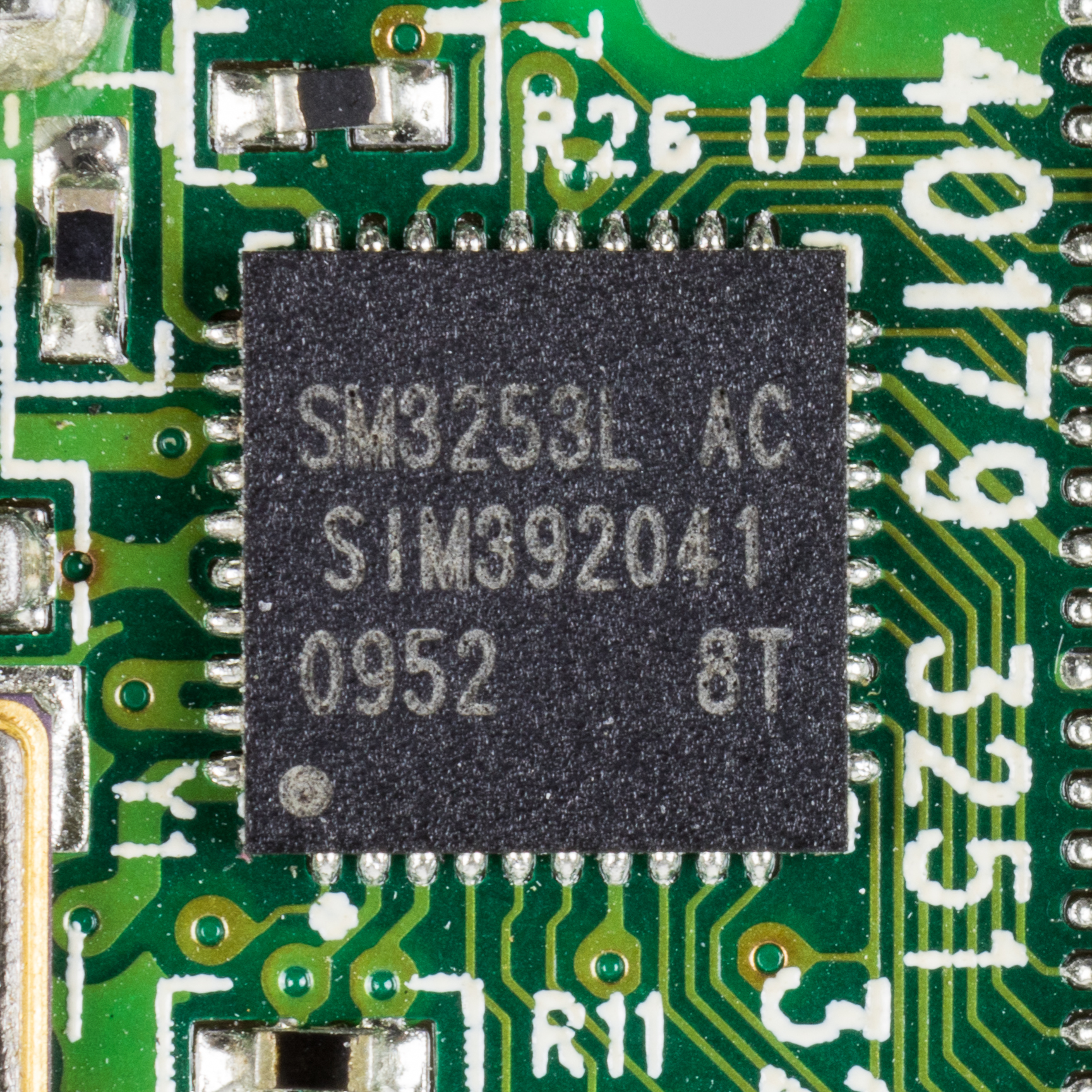
Lexar USB stick 8 GB - Silicon Motion SM3253L - USB 2.0 single-channel flash controller.

A flash memory controller (or flash controller) manages data stored on flash memory (usually NAND flash) and communicates with a computer or electronic device. Flash memory controllers can be designed for operating in low duty-cycle environments like memory cards, or other similar media for use in PDAs, mobile phones, etc. USB flash drives use flash memory controllers designed to communicate with personal computers through the USB port at a low duty-cycle. Flash controllers can also be designed for higher duty-cycle environments like solid-state drives (SSDs) used as data storage for laptop computer systems up to mission-critical enterprise storage arrays.[1]

Initial setup

[edit]

After a flash storage device is initially manufactured, the flash controller is first used to format the flash memory. This ensures the device is operating properly, it maps out bad flash memory cells, and it allocates spare cells to be substituted for future failed cells. Some part of the spare cells is also used to hold the firmware which operates the controller and other special features for a particular storage device. A directory structure is created to allow the controller to convert requests for logical sectors into the physical locations on the actual flash memory chips.[1]

Reading, writing, and erasing

[edit]

When the system or device needs to read data from or write data to the flash memory, it will communicate with the flash memory controller. Simpler devices like SD cards and USB flash drives typically have a small number of flash memory die connected simultaneously. Operations are limited to the speed of the individual flash memory die. In contrast, a high-performance solid-state drive will have more dies organized with parallel communication paths to enable speeds many times greater than that of a single flash die.[citation needed]

Wear-leveling and block picking

[edit]

Flash memory can withstand a limited number of program-erase cycles. If a particular flash memory block were programmed and erased repeatedly without writing to any other blocks, the one block would wear out before all the other blocks thereby prematurely ending the life of the storage device. For this reason flash controllers use a technique called wear leveling to distribute writes as evenly as possible across all the flash blocks in the SSD. In a perfect scenario this would enable every block to reach its terabytes written threshold.[2]

Flash translation layer (FTL) and mapping

[edit]

Usually, flash memory controllers also include the "flash translation layer" (FTL), a layer below the file system that maps host side or file system logical block addresses (LBAs) to the physical address of the flash memory (logical-to-physical mapping). The LBAs refer to sector numbers and to a mapping unit of 512 bytes. All LBAs that represent the logical size visible to and managed by the file system are mapped to a physical location (block ID, page ID and sector ID) of the flash memory. As part of the wear leveling and other flash management algorithms (bad block management, read disturb management, safe flash handling etc.), the physical location of an LBA might dynamically change frequently. The mapping units of an FTL can differ so that LBAs are mapped block-, page- or even sub-page-based. Depending on the usage pattern, a finer mapping granularity can significantly reduce the flash wear out and maximize the endurance of a flash based storage media.[3][4][5] The deduplication function to eliminate redundant data and duplicate writes is also added in FTL.[6]

As the FTL metadata takes up its own flash space, it needs protection in case of power loss. In addition, it is possible for the mapping table to wear out before other parts of the flash memory has, prematurely ending the life of a storage device. This is usually avoided in enterprise devices by allocating an oversized space for spares, although more durable forms of storage like MRAM has been proposed for FTL too.[citation needed]

The FTL may have three types: page mapping, block mapping, and hybrid mapping. Page mapping can have higher performance, but it has bigger FTL metadata size and higher cost, and is usually used on solid state drives. Block mapping can have smaller metadata size and lower cost, but it has lower performance, and is usually used on USB flash drives. On page mapping FTL implementations, the ratio of FTL metadata size and storage capacity is usually 1:1000, for example, a 1TB flash storage device may have 1GB of FTL metadata.

Garbage collection

[edit]

Once every block of a solid-state storage device has been written one time, the flash controller will need to return to some of the initial blocks which no longer have current data (also called stale blocks). The data in these blocks were replaced with newly written blocks and now they are waiting to be erased so that new data can be written into them. This is a process called garbage collection (GC). All SSDs, CF cards and other flash storage devices will include some level of garbage collection. The speed at which a flash controller will do this can vary.[7]

References

[edit]
Revisions and contributorsEdit on WikipediaRead on Wikipedia
from Grokipedia
A flash memory controller is a specialized that manages , retrieval, and maintenance in devices, primarily NAND flash, by interfacing between the host system and the memory chips to handle low-level operations such as , error correction coding, garbage collection, and bad block management. These controllers abstract the complexities of flash memory's non-volatile nature, which retains data without power but requires block-level erasures and has limited write cycles, enabling efficient use in devices like solid-state drives (SSDs), embedded multimedia cards (eMMC), and USB flash drives. Key functions include translating logical addresses to physical locations via a flash translation layer (FTL), distributing write operations evenly to prevent premature wear on specific cells, and performing health monitoring to predict and mitigate failures through protocols like SMART. Architecturally, a typical controller comprises a host interface (e.g., , PCIe, or NVMe), a processing core for executing , error correction engines, and a flash interface for direct communication with dies, often supporting multi-channel operations for parallelism and high throughput in enterprise applications. In system-on-chip (SoC) designs, such as those from , the controller integrates with the hard processor system to provide seamless access to external NAND flash for software storage and user data, enhancing overall device reliability and performance.

Introduction

Definition and purpose

A flash memory controller is a specialized hardware component or that interfaces between a host system and NAND flash memory chips, handling low-level operations to ensure reliable . The primary purposes of a flash memory controller include translating host commands into flash-specific operations, optimizing performance through techniques like command queuing and internal parallelism, ensuring with error correction mechanisms, and extending memory lifespan via embedded management algorithms. These controllers are embedded in devices such as solid-state drives (SSDs), USB flash drives, and embedded systems, supporting standardized protocols like the Open NAND Flash Interface (ONFI) for vendor interoperability. In an SSD, for example, the controller functions as the "brain," autonomously managing data flow between the host and flash chips without direct CPU involvement.

Historical development

The development of controllers originated in the late , parallel to the invention of technology. Fujio Masuoka and his team at introduced the concept of NOR through a seminal paper presented at the 1984 International Electron Devices Meeting (IEDM), establishing a foundation for non-volatile, electrically erasable storage. This was followed by the invention of NAND flash in 1987, also by Masuoka at , which prioritized higher density over random access speed and necessitated initial controller designs to manage sequential operations and block erasures. Early controllers for NOR flash were rudimentary integrated circuits tailored for embedded systems, such as those using (SPI) protocols introduced in the early , enabling reliable code storage in devices like microcontrollers and early digital cameras. The NAND architecture influenced controller evolution toward handling multi-bit operations and error management. In the , flash memory controllers matured alongside the shift to consumer and removable storage applications. Companies like SanDisk, founded in 1988 by Eli Harari, integrated flash into pioneering products such as the 20 MB ATA Flash Disk Card launched in 1991, which featured embedded controllers to emulate hard drive interfaces and support file systems. These controllers incorporated basic error-correcting code (ECC) mechanisms to mitigate bit errors inherent in floating-gate technology, building on Intel's 1986 flash card prototype that first demonstrated on-card ECC for in non-volatile environments. By the mid-, this era saw widespread adoption in compact flash cards and early SSD prototypes, with controllers evolving to include wear management primitives to extend limited erase cycles, typically around 100,000 per block. The 2000s marked a transition to NAND-dominant architectures optimized for solid-state drives (SSDs), driven by demand for higher capacities in enterprise and consumer markets. Phison Electronics, established in 2000, and Marvell Semiconductor pioneered multi-channel NAND controllers to parallelize data access across multiple flash dies, boosting throughput from single-digit MB/s to hundreds of MB/s. The emergence of SATA interfaces around 2006 enabled SSDs to integrate seamlessly with PC storage buses, exemplified by early controllers like Marvell's pre-88NV series designs that supported 3 Gb/s speeds and initial RAID-like striping. Hybrid controllers incorporating DRAM caching also gained prominence during this period, using volatile memory to buffer flash translation layer (FTL) tables and incoming writes, reducing latency and amplifying write performance by factors of 10x or more in early SSDs. From the 2010s onward, flash controllers adapted to protocol innovations and advanced NAND geometries. The (NVMe) protocol, ratified in 2011, revolutionized SSD interfaces by leveraging PCIe lanes for low-latency, high-queue-depth operations, with initial commercial chipsets from Integrated Device Technology enabling up to 64,000 concurrent commands. The introduction of 3D NAND stacking in 2013 by , using charge-trap flash in vertical layers, required controllers to support finer-grained channel interleaving and elevated voltages for deeper stacks, achieving densities beyond 128 Gb per die. In 2017, Intel's Optane technology, based on , spurred experiments in hybrid controllers that combined it with NAND flash for tiered caching, aiming to close the and latency gap between DRAM and traditional SSDs in enterprise workloads. By 2023, optimizations for AI workloads emerged in controllers, as demonstrated in 's enterprise SSD solutions that supported AI data center ecosystems. In 2025, introduced the E28 controller, the world's first PCIe 5.0 SSD controller with integrated AI processing to enhance performance in AI applications.

Architecture and components

Core hardware elements

The core hardware elements of a flash memory controller encompass the essential physical and logical components that enable efficient management of NAND flash storage. At the heart of the controller is a core, typically ARM-based, responsible for processing commands, coordinating operations, and executing algorithms. This core varies in performance based on the application's demands, with higher-end designs incorporating multi-core architectures for complex tasks. The NAND interface forms a critical pathway for communicating with dies, often featuring multi-channel configurations to enable parallel access and boost throughput. Modern controllers support up to 8-16 channels, each connecting to multiple NAND chips for interleaved operations that enhance data transfer rates. A DRAM buffer, either integrated or external, serves as a high-speed cache for temporary during read/write operations and holds metadata tables essential for address mapping. Supporting elements include an (ECC) engine, which employs algorithms such as Bose-Chaudhuri-Hocquenghem (BCH) or low-density parity-check (LDPC) codes to detect and correct bit errors inherent in NAND flash. A (DMA) controller facilitates efficient data transfers between the host system and flash memory, minimizing CPU involvement. Additionally, a regulates voltage levels and enables low-power modes, such as sleep states, to optimize energy consumption in battery-powered or idle scenarios. Host interfaces connect the controller to the , with common standards including PCIe for high-speed NVMe solid-state drives (SSDs), for traditional storage, and USB for portable devices. On the flash side, interfaces adhere to standards like Open NAND Flash Interface (ONFI) 4.0 and later or Toggle NAND, supporting data rates up to 1.2 GB/s per chip through synchronous modes such as NV-DDR2. Controller designs vary by application: low-duty cycle variants, suited for intermittent use in USB flash drives, feature simplified architectures with minimal channels and basic to prioritize cost and portability. In contrast, high-duty cycle controllers for enterprise SSDs incorporate complex features, including support for RAID-like and advanced multi-channel setups, to handle continuous 24x7 workloads with sustained performance.

Initial setup and initialization

Upon power-on, the flash memory controller initiates a reset signal to the connected NAND flash chips to ensure they are in a known state, typically by issuing the RESET command (0xFF) as specified in the ONFI standard. This command aborts any ongoing operations and prepares the NAND devices for subsequent commands, with the controller waiting for the ready/ to indicate completion. Following the reset, the controller performs a (BIST) to validate its hardware integrity, such as checking the NAND interface logic and ECC engines through predefined test patterns and error injection simulations. The configuration phase involves detecting attached NAND dies by reading device IDs using the READ ID command (0x90), which provides manufacturer, device, and parameter details to identify the number of dies and their topology. Based on this, the controller sets key parameters, including page size (ranging from 2 KB to 16 KB), block size (typically 128 to 512 pages per block), bus width (8-bit or 16-bit), and ECC strength (e.g., 1-bit per 512 bytes or higher for modern TLC NAND). If a DRAM cache is present, it is initialized at this stage to buffer metadata and data transfers. These settings are programmed into the controller's configuration registers, often via bootstrap code loaded from internal ROM. Firmware plays a central role in completing initialization, starting with code execution from on-chip ROM that handles basic peripheral setup before loading the full image from reserved NAND blocks or into SRAM or DRAM. The then loads FTL metadata, such as logical-to-physical mappings, from designated reserved blocks, verifying integrity using checksums or cyclic checks (CRC) to detect corruption. For bad block management, the either recovers an existing bad block table () from flash or creates a new one by scanning all blocks for bad block markers (e.g., 0x00 in the area of the first or second page) and storing it in redundant locations for . Initialization failures, such as mismatched NAND chip IDs or corrupted BBTs, trigger error handling mechanisms like fallback to default parameters (e.g., assuming single-die 2 KB pages) or entering a that limits operations to verified blocks. In cases of severe issues like undetected dies, the controller may signal the host via interrupts or status registers, preventing progression until manual intervention or recovery routines resolve the mismatch.

Basic operations

Reading data

When a host system requests data from a flash storage device, it issues a read command with a logical block address (LBA). The flash memory controller's flash translation layer (FTL) translates this LBA into the corresponding physical page address within the NAND flash array. The controller then sends the appropriate read command sequence to the NAND device—typically a command like 00h followed by address cycles and 30h—initiating the transfer of data from the memory cells to the device's page register, a process that incurs a latency of approximately 50-100 µs per page in modern 3D NAND flash. The retrieved data follows a structured path managed by the controller: reads are executed serially or in parallel across multiple NAND channels (often 4-32 channels in enterprise controllers) to exploit device-level parallelism and boost overall throughput. Each channel's data is loaded into on-chip SRAM buffers within the NAND die before the controller aggregates full pages (e.g., 16 KB in contemporary designs) and applies error correction. During this stage, the controller decodes the embedded error correction code (ECC), typically using algorithms like BCH or LDPC, to detect and correct bit errors arising from noise sources such as charge leakage; modern controllers handle up to 40-60 raw bit errors per 1 KB sector in triple-level cell (TLC) NAND. To address read failures, controllers employ read retry mechanisms, which adjust the read reference voltages (V_ref) in incremental steps—often up to 100-200 retries per page—when initial reads fail ECC validation due to retention-induced shifts. This process recovers data without erasing or rewriting, though it can add 10-50 µs per retry in severe cases. Additionally, to minimize repeated NAND accesses for hot (frequently read) data, controllers use on-board DRAM as a read cache, prefetching and buffering likely-accessed pages based on access patterns, thereby reducing effective latency for sequential or patterned workloads. High-performance controllers in PCIe 5.0-based solid-state drives (SSDs) achieve sequential read throughputs exceeding 14 GB/s by interleaving operations across channels, dies, and planes while optimizing buffer management. To mitigate read disturb—an effect where repeated reads on a target page elevate voltages in adjacent cells, potentially causing bit flips—the controller tracks read counts per block and triggers proactive data relocation or voltage recalibration when thresholds are approached, preventing error accumulation without impacting primary read flows.

Writing data

The flash memory controller initiates a write operation by translating the host-provided logical block address (LBA) to a corresponding physical page address within the NAND flash array, a process managed by the flash translation layer (FTL) to ensure efficient mapping and maintain data integrity. This translation accounts for factors such as block availability and wear distribution, directing the write to an erased or available page in a suitable block. Once mapped, the controller programs data page-by-page, typically loading 2-16 KB of data into the NAND device's page register before applying programming pulses; this process consumes approximately 200-500 µs per page, depending on the NAND generation and cell density. Following programming, the controller performs post-write verification through a read-back operation on the programmed page, comparing the retrieved data against the original input and applying error correction codes (ECC), such as BCH or LDPC, to detect and correct any bit errors introduced during the process. At the cell level, programming involves incremental step pulse programming (ISPP), where the controller applies a series of increasing high-voltage s to the word line of selected cells to gradually raise their to the desired level, enabling multi-level storage. For (MLC) types storing 2 bits per cell across four voltage states, triple-level cell (TLC) with 3 bits and eight states, or quadruple-level cell (QLC) with 4 bits and 16 states, ISPP ensures precise charge placement by verifying the threshold after each increment, typically starting from the erased state (all bits logic 1). This iterative method avoids over-programming—where excessive voltage could push a cell beyond its target state and into an adjacent one—by halting s once verification confirms the correct distribution, thus minimizing program disturb effects on neighboring cells. To optimize write efficiency, the controller employs buffering mechanisms using on-chip (SRAM) or external (DRAM) to queue incoming write requests and temporarily hold . SRAM provides a small, low-latency buffer integrated into the controller for immediate queuing of small or sequential writes, while DRAM offers larger capacity for caching metadata and user , supporting native command queuing (up to 32-65,536 operations). For partial or scattered small writes that do not fill a full page, the controller merges them in the buffer—often via write coalescing—accumulating until a complete page is ready for transfer to the NAND page register, reducing the frequency of inefficient partial programs. A fundamental limitation of NAND flash is the absence of in-place overwrites, as cells can only transition from erased (logic 1) to programmed (logic 0) states without an intervening erase, necessitating a full block erase before reprogramming any page within it. Consequently, partial page writes require the controller to execute read-modify-write cycles: reading the existing valid data from the target page (or block), merging it with the new data in the buffer, erasing the block if needed, and rewriting the combined content to a new location, which amplifies and latency.

Erasing data

The flash memory controller orchestrates the erasure of data in NAND flash memory using a block-level process that employs high-voltage Fowler-Nordheim tunneling to extract electrons from the floating gates across all cells in a designated block, effectively resetting their threshold voltages to a low state representing erased data (logical 1s). This mechanism involves applying a high negative voltage (typically -15 V to -22 V) to the control gate relative to the substrate, enabling quantum tunneling of electrons through the tunnel oxide layer. The controller initiates this by issuing erase commands to the NAND flash die, which automates the pulsing sequence to ensure uniform charge removal. Erasure operations are constrained to the block level, with typical block sizes spanning 512 KB to 16 MB depending on the NAND generation and architecture, as smaller granularities would risk incomplete charge neutralization and issues. Before proceeding, the controller must relocate any valid data within the block to a free location elsewhere, a step integrated with broader storage to prevent data loss during the destructive erase process. The erase duration per block generally ranges from 1 ms to 5 ms, influenced by factors such as block size, voltage levels, and NAND type (e.g., 1.5 ms typical for many SLC devices). Following the erase pulse application, the controller performs a verification read on the block to confirm that all cells have reached the target erased , typically by checking if the read current exceeds a predefined minimum. If verification fails—often due to localized oxide breakdown or trapped charges causing uneven tunneling—the controller marks the block as bad in its bad block table and retires it from use, reallocating operations to spare blocks. Such failures contribute to the typical per-block limit of 3,000 to 100,000 program/erase cycles, varying by cell type (e.g., 100,000 for SLC NAND and 3,000 for TLC NAND). To enhance overall efficiency and reduce system-level latency, modern flash controllers exploit parallelism by issuing simultaneous erase commands across multiple independent channels, each connected to separate NAND dies or packages, allowing concurrent processing of up to 8 or more blocks without sequential bottlenecks. This multi-channel approach can significantly overlap erase operations, minimizing the impact on host I/O responsiveness in high-throughput storage systems.

Management techniques

Wear leveling and block selection

Wear leveling is a critical management technique in flash memory controllers designed to distribute program/erase (P/E) cycles evenly across memory blocks, thereby preventing premature wear-out of individual blocks and extending the overall lifespan of the NAND flash device. This process is essential because NAND flash cells have limited endurance, typically measured in P/E cycles, after which errors increase and reliability degrades. By selecting blocks for writes based on their prior usage, the controller ensures that no single block accumulates excessive cycles while others remain underutilized. Wear leveling algorithms are categorized into static and dynamic types. Static wear leveling considers all blocks— including those holding static data, dynamic data, and free space— to achieve uniform wear distribution, often by relocating infrequently changed data to more-worn blocks. In contrast, dynamic wear leveling focuses only on active blocks containing changing data and free blocks, selecting the least-erased free blocks for new writes without disturbing static data. Additionally, wear leveling can operate globally across the entire device or per-zone, where zones (such as boot areas, system data, or user partitions) are managed independently to optimize performance in segmented environments. Common algorithms include counter-based and histogram-based approaches. Counter-based methods track the exact P/E cycle count for each block, typically stored in the block's spare area or controller , to identify and prioritize low-cycle blocks for allocation. Histogram-based algorithms monitor the distribution of usage across blocks via histograms of erase counts, enabling the controller to detect imbalances and trigger data migrations to maintain even wear. Block selection in these algorithms favors the least-worn free blocks for incoming writes, often integrating with the flash translation layer (FTL) for logical-to-physical mapping during allocation. The effectiveness of is evaluated by metrics such as usage variance, aiming for a uniform distribution where the difference between the most and least-used blocks is typically 1-10% of total cycles. Endurance varies by cell type: single-level cell (SLC) NAND supports approximately 100,000 P/E cycles, while triple-level cell (TLC) NAND is limited to around 1,000 cycles, necessitating more aggressive for multi-level cells to avoid hotspots. These differences influence block selection strategies, with higher-endurance SLC blocks often reserved for critical data. Implementation occurs primarily in the controller's , which maintains a bad block table (BBT) to exclude defective blocks and usage tables—stored in DRAM or the NAND spare areas—to log P/E counts and block states. The firmware periodically scans these tables to enforce leveling policies, ensuring real-time adaptation to write patterns without significant overhead.

Garbage collection

Garbage collection (GC) is a critical management technique employed by flash memory controllers to reclaim storage in NAND flash by identifying and processing blocks that contain a mix of valid and invalid pages, ensuring availability of free blocks for incoming write operations. The process is typically triggered when the proportion of free blocks drops below a predefined threshold, often around 20-30% of the total capacity, to prevent degradation from space exhaustion. This threshold-based activation allows the controller to proactively maintain operational efficiency without immediate host intervention. Once triggered, the GC process involves several steps managed by the controller: first, it selects victim blocks based on specific ; then, it reads and copies valid pages from the victim block to a new free block; finally, it performs a block erase on the victim to make it available for future use, as detailed in the erasing data operations. Common selection include the greedy approach, which prioritizes blocks with the highest of invalid pages (i.e., the least valid pages) to minimize data relocation, thereby optimizing for immediate space recovery. Another widely adopted method is the cost-benefit , which evaluates a score balancing the cost of copying valid pages against the benefit of freeing the block, often factoring in block age to promote even wear distribution. Additionally, techniques like hot/cold data separation can enhance greedy GC by isolating frequently updated (hot) data from stable (cold) data, reducing unnecessary relocations during collection. To minimize latency impacts on host I/O, GC is preferentially executed in the background during idle periods, allowing the controller to interleave collection with ongoing operations without stalling writes. In scenarios with high write activity, foreground GC may occur, potentially merged with incoming writes for efficiency, though this risks temporary performance dips if free space is critically low. Such background execution is particularly vital in solid-state drives (SSDs), where overprovisioning—reserving extra capacity beyond user-visible space—provides a buffer to delay aggressive GC cycles. The primary impact of GC is write amplification (WA), where the total data written to the flash exceeds host writes due to valid page copies and erases; in typical SSD workloads, WA ranges from 1.5x to 3x, contributing to increased latency and reduced throughput during intensive periods. This amplification also accelerates flash wear, as each GC cycle consumes program/erase cycles, though intelligent algorithms like cost-benefit help mitigate overhead by up to 20% in erase operations compared to simpler methods. Overall, effective GC balances space reclamation with performance, directly influencing SSD endurance and responsiveness.

Flash translation layer and address mapping

The flash translation layer (FTL) is a critical software component within the flash memory controller that abstracts the physical characteristics of NAND flash, providing the host system with a logical view of storage as a contiguous block device. It performs address translation by maintaining mappings between logical block addresses (LBAs) issued by the host and the actual physical locations on the flash array. A core function of the FTL is logical-to-physical (L2P) mapping, which directs read and write operations from logical page numbers (LPNs) to corresponding physical page numbers (PPNs) on the NAND flash. Complementing this, physical-to-logical (P2L) mappings enable the inverse translation, allowing the FTL to determine which logical addresses are associated with specific physical pages during maintenance tasks. Because NAND flash prohibits in-place overwrites due to its erase-before-write constraint, the FTL manages out-of-place updates by allocating free pages for new data writes, invalidating the prior physical locations, and updating the L2P mappings to redirect subsequent accesses. FTL architectures differ in mapping granularity to trade off performance, memory usage, and update efficiency. Page-level mapping offers fine-grained control, translating addresses at the individual page level (typically 4-16 KB), which supports efficient handling of partial updates but demands high RAM consumption for the full mapping table. Block-level mapping, by contrast, operates at a coarser scale by associating entire blocks (often 512-1024 pages) with logical units, minimizing RAM overhead at the expense of reduced flexibility for isolated page modifications. Hybrid architectures integrate both schemes, applying block-level mapping to stable data regions and page-level to dynamic "hot" areas, while incorporating demand-based loading mechanisms to selectively cache mappings in RAM as needed. Central to these architectures are data structures like mapping tables, which require 4-8 bytes of storage per logical page to encode L2P entries. These tables are primarily persisted in the device's over-provisioning —a reserved portion of NAND flash comprising 7-25% of total capacity that remains inaccessible to the host—to ensure durability across power cycles. To address RAM constraints in resource-limited controllers, FTLs employ multi-tier cache hierarchies, keeping frequently accessed mappings in volatile DRAM for low-latency lookups and storing comprehensive backups in dedicated NAND regions for recovery. The FTL incurs notable overhead from metadata management; in page-level schemes, the ratio of mapping metadata to user data approximates 1:1000, amplifying storage requirements and contributing to write amplification. Additionally, the FTL supports bad block remapping by monitoring defective physical blocks and dynamically substituting them with spares from the over-provisioning area, thereby preserving address mapping integrity without host intervention.

Implementations and applications

Mapping schemes and types

Flash memory controllers employ various mapping schemes in their Flash Translation Layer (FTL) to translate logical addresses to physical locations in NAND flash, balancing performance, capacity, and resource constraints. Page mapping directly associates each logical page number (LPN) with a physical page number (PPN), enabling fine-grained address translation that supports efficient and write operations. This scheme is ideal for solid-state drives (SSDs) where low-latency random I/O is critical, as it avoids the need for full block erasures during updates. However, it requires substantial memory for storing the mapping table, which can be a limitation in resource-constrained systems. Block mapping, in contrast, maps logical block numbers (LBN) to physical block numbers (PBN), with intra-block page offsets handled separately, resulting in simpler and smaller mapping tables that fit in limited on-chip SRAM. This approach suits low-cost devices like USB flash drives focused on sequential workloads, but it incurs higher latency for random writes due to the need to rewrite entire blocks. Hybrid mapping combines elements of both, typically using block-level mapping for the majority of data blocks (data area) and page-level mapping for a smaller set of log blocks dedicated to updates, thereby reducing overall metadata size while improving random write performance. This balances the trade-offs and is widely used in mixed-workload environments. Controller designs are classified based on their hardware capabilities and mapping preferences, with low-end controllers often lacking dedicated DRAM and relying on block or hybrid mapping to minimize costs—for instance, the S11, a DRAM-less controller from the used in budget thumb drives and entry-level SSDs. High-end controllers, equipped with DRAM caches for larger mapping tables, favor page or advanced hybrid mapping to support enterprise-grade performance, as seen in the Pascal controller used in 2020s NVMe SSDs such as the 990 PRO series (launched 2022). To address RAM limitations, adaptations like demand-access mapping load only portions of the mapping table into SRAM as needed, reducing static while maintaining page-level , particularly in hybrid schemes. Log-structured approaches, such as the FAST FTL, further optimize hybrids by sequentially appending updates to log blocks in a first-in-first-out manner, minimizing merge operations and enhancing for write-intensive patterns. Performance trade-offs among these schemes are pronounced: page mapping delivers low latency for random accesses but demands high metadata storage, potentially increasing if caching fails; block mapping offers simplicity and low overhead but suffers from elevated due to block-level granularity. Hybrid schemes mitigate these by trading some complexity for balanced latency and amplification, though they require careful management of log block exhaustion.

Integration in storage devices

Flash memory controllers are integral components in solid-state drives (SSDs), where they interface directly with NAND flash packages to manage data operations, error correction, and , enabling high-performance storage solutions for both and enterprise applications. In USB flash drives, controllers are typically implemented as system-on-chip (SoC) designs that integrate host interfaces like USB with NAND management, providing portable, low-cost storage without external processors. Similarly, in SD cards, controllers are embedded alongside a host bridge to handle MMC protocols, facilitating compact integration in cameras, phones, and embedded systems. Enterprise variants of these controllers differ from consumer ones by prioritizing and reliability for 24/7 operations, often featuring higher over-provisioning, advanced correction, and power-loss protection, while consumer controllers focus on cost-efficiency and burst performance for . In personal computers, controllers support the TRIM command, allowing the operating system to notify the drive of deleted data blocks for efficient garbage collection and sustained performance. In mobile devices, they are optimized for low power consumption to extend battery life, incorporating features like dynamic voltage scaling and idle state management. For (IoT) applications, controllers emphasize real-time constraints with low-latency access and minimal energy use during sleep modes to support battery-powered or energy-harvesting deployments. In October 2025, announced UFS 5.0, which promises sequential speeds up to 10.8 GB/s to support AI workloads in future devices. Common protocols for flash controller integration include for legacy compatibility in consumer storage, offering up to 6 Gb/s throughput, and NVMe over PCIe for high-speed enterprise and gaming SSDs, achieving sequential read speeds up to 14 GB/s in 2025 PCIe 5.0 implementations. Mobile integrations favor eMMC for cost-effective, in budget devices and UFS for faster, full-duplex communication in premium smartphones, with UFS 4.0 enabling up to 5.8 GB/s transfers while maintaining power efficiency. Vendor-specific firmware customizations enhance controller functionality; for instance, SandForce controllers incorporate on-the-fly data compression via DuraWrite technology to reduce and improve endurance. controllers support RAID configurations, such as RAID 0/1/5/10, for aggregated performance and in multi-drive setups.

Challenges and advancements

Error handling and reliability

Flash memory controllers employ sophisticated error handling mechanisms to detect, correct, and mitigate various error types inherent to NAND flash memory, ensuring in storage systems. Common error types include raw bit errors (RBER), which occur at rates around 10^{-4} for triple-level cell (TLC) NAND due to factors like program/erase (P/E) cycling and read disturbs. Read and program failures manifest as uncorrectable sectors during data access or write operations, often triggered by cell threshold voltage shifts. Retention loss, or data fade, arises from charge leakage over time, particularly in multi-level cells, where stored data degrades without periodic refresh, exacerbating errors in idle blocks. To counter these errors, controllers integrate error correction codes (ECC), with low-density parity-check (LDPC) codes being widely adopted for their ability to correct over 100 bits per kilobyte in modern NAND, far surpassing older BCH codes limited to 40-72 bits. Bad block management identifies and marks defective blocks—typically 1-2% of total blocks at manufacturing or during operation—remapping them to spare blocks via firmware to prevent data corruption. Additionally, controllers may implement RAID-like redundancy schemes, such as parity striping across dies, to recover from multi-block failures beyond single-block ECC capabilities. Reliability is quantified through metrics like the unrecoverable (UBER), targeted at less than 10^{-15} for enterprise-grade controllers to minimize data loss over the device's lifetime. (MTBF) is calculated using models incorporating ECC efficacy, bad block rates, and operational stress, often exceeding 2 million hours for high-end systems. These metrics guide controller design to predict and handle wear-out, ensuring sustained performance under heavy workloads. Advanced techniques further enhance reliability, including patrol reads, where the controller periodically scans idle blocks in the background to detect latent errors before they become uncorrectable. Data refresh cycles proactively reprogram affected data to counteract retention loss, integrating with ECC hardware for efficient correction without host intervention. Recent advancements in flash memory controllers include enhanced support for NVMe 2.0, particularly its zoned namespaces (ZNS) feature, which was integrated into controllers like Marvell's Bravera SC5 in 2023 to enable sequential write zoning for improved efficiency in large-scale storage systems. This allows controllers to expose internal device structures more directly to hosts, offloading mapping table management and reducing latency in hyperscale environments. Compatibility with advanced 3D NAND architectures has also progressed, with controllers adapting to stack heights exceeding 200 layers, such as Samsung's 430-layer V-NAND, planned for in 2026, necessitating sophisticated channel management to handle increased die stacking and inter-layer signaling complexity. These developments enable higher densities, such as Kioxia's LC9 series with capacities up to 245.76 TB announced in 2025, while maintaining performance through optimized error correction and power distribution across multi-channel interfaces. Integration of AI and into flash controllers is emerging, with on-controller neural networks enabling predictive garbage collection and ; for instance, Samsung's 2024 innovations in flexible data placement (FDP) under NVMe leverage host-directed optimization to reduce , achieving up to 20% improvements in certain workloads by minimizing internal data relocations. This AI-driven approach anticipates wear patterns, enhancing endurance without relying solely on traditional heuristics. Key trends include the adoption of PCIe 6.0 interfaces at 64 GT/s per lane, with controllers like Silicon Motion's SM8466 announced in 2025 to support up to 32 GB/s bandwidth for x4 SSDs, targeting AI and applications. Hybrid integrations with (CXL) are gaining traction in s, as seen in Samsung's CMM-H modules combining DRAM and NAND flash over CXL Type 3 for pooled memory expansion up to 1 TB per card. Security enhancements continue with TCG Opal 2.0 self-encrypting drive (SED) compliance, enabling hardware-based AES-256 encryption in controllers like those from ATP Electronics to protect data at rest against unauthorized access. Looking ahead, quantum-resistant encryption is being incorporated into controllers, such as Microchip's MEC175xB series in 2025, which embed post-quantum algorithms like ML-KEM and ML-DSA to safeguard against future quantum threats in embedded and storage systems. Hybrids involving MRAM or Optane-like for flash translation layers (FTL) are under exploration to enable non-volatile mapping tables, reducing DRAM dependency and in high-endurance scenarios. Sustainability efforts emphasize power efficiency, with trends toward low-power states in controllers—such as those in Pure Storage's all-flash arrays—projected to cut data center energy use by up to 80% when replacing HDDs, driven by advanced process nodes and adaptive voltage scaling.

References

Add your contribution
Related Hubs
User Avatar
No comments yet.