Hubbry Logo
Frank R. StocktonFrank R. StocktonMain
Open search
Frank R. Stockton
Community hub
Frank R. Stockton
logo
8 pages, 0 posts
0 subscribers
Be the first to start a discussion here.
Frank R. Stockton
Frank R. Stockton
from Wikipedia

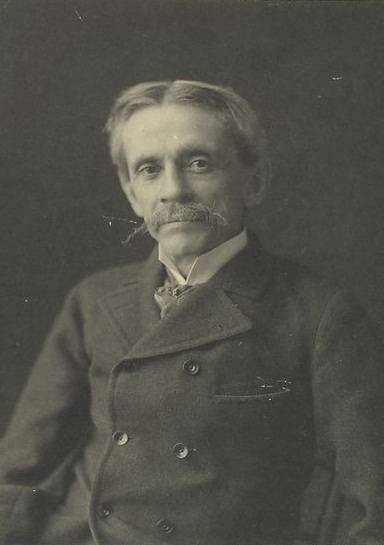
Frank Richard Stockton (April 5, 1834 – April 20, 1902) was an American writer and humorist, best known today for a series of innovative children's fairy tales that were widely popular during the last decades of the 19th century.

Key Information

Life

[edit]

Stockton was born in Philadelphia in 1834, the son of a prominent Methodist minister who discouraged him from a writing career. He married Mary Ann Edwards Tuttle and moved to Burlington, New Jersey,[1] where he produced his first literary work. The couple then moved to Nutley, New Jersey.[2]

For years, he supported himself as a wood engraver until his father's death in 1860. In 1867, he moved back to Philadelphia to write for a newspaper founded by his brother. His first fairy tale was "Ting-a-ling", published that year in The Riverside Magazine; his first book collection appeared in 1870. He was also an editor for Hearth and Home magazine in the early 1870s.[3] Around 1899, he moved to Charles Town, West Virginia.[4]

Stockton died in Washington, D.C. on April 20, 1902 of a cerebral hemorrhage.[5] He is buried at The Woodlands in Philadelphia.

Writings

[edit]

Stockton avoided the didactic moralizing common to children's stories of the time. Instead, he humorously poked fun at greed, violence, abuse of power, and other human foibles, describing his fantastic characters' adventures in a charming, matter-of-fact way in stories such as "The Griffin and the Minor Canon" (1885) and "The Bee-Man of Orn" (1887). These two stories were republished in 1963 and 1964 in editions illustrated by Maurice Sendak. "The Griffin and the Minor Canon" won a Lewis Carroll Shelf Award in 1963.

Stockton's most famous short story was "The Lady, or the Tiger?" (1882), about a man sentenced to an unusual punishment for having a romance with a king's daughter. The man is taken to the public arena where he is faced with two doors, and he must choose which door will open. Behind one of them is a hungry tiger that will devour him; behind the other is a beautiful lady-in-waiting whom he will have to marry. The crowd waits anxiously for his decision, when he sees the princess among the spectators pointing him to the door on the right. The man starts to open the door—and the story abruptly ends. Did the princess save her love by pointing to the door leading to the lady-in-waiting, or did she prefer to see her lover die rather than see him marry someone else? That quandary has made the story a staple in English classes in American schools, especially since Stockton was careful never to hint at what he thought the ending would be.[6] He also wrote a sequel to the story called "The Discourager of Hesitancy".

Stockton's 1895 adventure novel The Adventures of Captain Horn was the third-best selling book in the United States in 1895.[7][8] "The Bee Man of Orn" and several other tales were incorporated in The Bee Man of Orn (1887). Other stories included "The Griffin and the Minor Canon", "Old Pipes and The Dryad", "The Queen's Museum", "Christmas Before Last", "Prince Hassak's March", "The Battle of the Third Cousins", "The Banished King", and "Philopena".

[edit]

Works

[edit]
The House of Martha, 1891
  • Rudder Grange, originally serialized in Scribner's Monthly
  • The Lady or the Tiger? and Other Stories, David Douglas, 1884
  • The Story of Viteau,1884
  • The Hundredth Man, The Century Co., 1886.
  • The Casting Away of Mrs. Lecks and Mrs. Aleshine, The Century Co.,1886
  • The Bee-Man of Orn and Other Fanciful Tales, Charles Scribner's Sons, 1887
  • The Dusantes, 1888
  • The Great War Syndicate Dodd, Mead, and Company 1889
  • The House of Martha, Houghton, Mifflin & Company, 1891
  • The Adventures of Captain Horn, 1895
  • Mrs. Cliff's Yacht, Charles Scribner's Sons, 1896
  • The Vizier of the Two-Horned Alexander, The Century Co., 1899
  • A Bicycle of Cathay, Harper and Brothers, 1900
  • Kate Bonnet: The Romance of a Pirate's Daughter, D. Appleton & Company, 1901
  • The Captain's Toll-Gate, D. Appleton & Company, 1903
  • The Magic Egg and Other Stories, Charles Scribner's Sons, 1908
  • The Squirrel Inn, The Century Company,1891
  • The Lost Dryad, United Workers of Greenwich, 1912
  • The Novels and Stories, 23 Vol., Charles Scribner's Sons, 1899–1904
  • Fairy Tales of Frank Stockton, Penguin Books, 1990 (Edited and with a critical afterword by Jack Zipes). ISBN 0-451-52479-9.

Further reading

[edit]

References

[edit]
[edit]
Revisions and contributorsEdit on WikipediaRead on Wikipedia
from Grokipedia
Frank Richard Stockton (April 5, 1834 – April 20, 1902) was an American and humorist renowned for his innovative children's fairy tales, humorous short stories, and novels that blended fantasy with moral lessons. Born in , , , to a Methodist minister father, William Smith Stockton, who was also a , and Emily Hepsibeth Drean Stockton, a school administrator, Stockton grew up in a literary environment and attended the Public School System and Central High School. After briefly working as a wood engraver starting in 1852, he transitioned to writing, contributing to magazines like the American Courier and Riverside Magazine under pseudonyms such as Paul Fort and John Lewees, and later to newspapers including the Philadelphia Press. In 1860, he married Marian Edwards Tuttle, with whom he had several children, and the couple resided primarily in before moving to locations in , , and New York. Stockton's career gained momentum in the 1870s as assistant editor and contributor to Hearth and Home (1868–1874) and assistant editor of St. Nicholas Magazine (1873–1878), where he honed his style for young readers. Due to failing eyesight, he began dictating his works after leaving St. Nicholas, producing a prolific output that included the fairy tale "Ting-a-Ling" (serialized 1867; book 1870), the novel Rudder Grange (1879), the famous short story "The Lady, or the Tiger?" (1882), and The Bee-Man of Orn (1887). His stories often featured whimsical premises, clever twists, and didactic elements, earning posthumous recognition through two Lewis Carroll Shelf Awards in 1963 and 1969 for his children's literature. Stockton died in Washington, D.C., and was buried in Woodlands Cemetery in Philadelphia, leaving a legacy as a pivotal figure in 19th-century American juvenile fiction.

Early Life

Birth and Family Background

Francis Richard Stockton was born on April 5, 1834, in , a within , . He was one of nine children born to William Smith Stockton, a prominent Methodist minister, writer, and superintendent of the Philadelphia Alms House, and Hepsibeth Drean Stockton, a school administrator whose work emphasized within a disciplined religious framework. William Stockton's role as a minister deeply influenced the family's moral and al outlook, instilling values of piety and intellectual rigor in his children from an early age. Among Stockton's siblings was his sister Maria Louise Stockton (1838–1914), who pursued a writing career, contributing to periodicals and authoring works of and . The family's Methodist environment in prioritized religious devotion and ethical development, with William Stockton actively discouraging his son's interest in writing during youth, viewing it as incompatible with their strict disciplinary standards. This home setting, rooted in Methodist principles, shaped Stockton's early worldview, blending moral instruction with a cautious approach to imaginative literature.

Education and Early Influences

Frank R. Stockton received his early education in the public school system before attending Central High School, from which he graduated in 1852. At Central High School, he demonstrated an early aptitude for writing by winning a contest sponsored by the Boys' and Girls' Journal, an experience that highlighted his burgeoning interest in narrative storytelling. Despite his father's desire for him to pursue a career in , Stockton apprenticed as a wood engraver in 1852 at the age of 18, a profession he followed for nearly a decade to support himself. His family's strict Methodist background, shaped by his father William Smith Stockton—a prominent minister and —imposed limitations on creative pursuits like fiction writing, yet it inadvertently fostered Stockton's rebellious affinity for imaginative . During this period, he contributed engravings to various periodicals, honing skills that later intersected with his literary ambitions. The death of his in November 1860 marked a turning point, freeing Stockton from familial expectations and enabling him to abandon in favor of full-time writing. This pivotal event allowed him to channel his early influences—ranging from school successes to the disciplined yet constraining religious environment of his upbringing—into a dedicated literary path.

Literary Career

Initial Publications and Journalism

Stockton's entry into professional writing began modestly in the mid-1850s while he supplemented his income as a wood engraver. His first published story, "The Slight Mistake," appeared on September 1, 1855, in the American Courier, marking the start of his contributions to local periodicals under his own name and pseudonyms such as Paul Fort and John Lewees. These early pieces often featured humorous sketches and light fiction, reflecting his developing interest in whimsical narratives. Following the death of his father in 1860, Stockton transitioned from to full-time writing, allowing him to focus on literary pursuits. By 1867, he had returned to to contribute serialized stories and humorous sketches to The Philadelphia Post, a founded by his brother John Drean Stockton. That same year, his breakthrough "Ting-a-Ling," about a mischievous sprite, was published in The Riverside Magazine for Young People, earning acclaim for its inventive fantasy and paving the way for his reputation in . The story's success led to its collection in the 1870 volume Ting-a-Ling. In 1870, Stockton began contributing regularly to Hearth and Home, a weekly magazine that had been co-edited in its early years by Harriet Beecher Stowe, where he supplied stories and articles for the children's section. He soon became assistant editor of the publication, serving until about 1873 and honing his skills in periodical writing for young readers. This experience solidified his position within New York's literary circles. In 1873, Stockton joined St. Nicholas Magazine as assistant editor under Mary Mapes Dodge, contributing stories and helping shape content until 1878, when failing eyesight forced his resignation.

Major Works and Recognition

Stockton's first major novel, Rudder Grange (1879, ), a humorous depiction of domestic adventures, marked an early success in his adult fiction and was serialized in Scribner's Monthly. Frank R. Stockton achieved widespread acclaim with the short story "" published in the July 1882 issue of Century Magazine. The tale, originally titled "In the King's Arena," presented readers with an unresolved dilemma in a semi-barbaric kingdom's arena, prompting intense public debate and thousands of letters to the magazine as audiences speculated on whether the princess chose the lady or the tiger. This acclaim elevated Stockton's profile, leading him to write a thematic sequel, "The Discourager of Hesitancy," published in Century Magazine in 1885, which similarly ended ambiguously to further engage readers. Stockton's children's fairy tales gained popularity through collections that blended whimsy and moral lessons. His first such book, Ting-a-Ling, appeared in 1870 from Hurd and Houghton, compiling stories originally serialized in The Riverside Magazine for Young People. This was followed by The Floating Prince and Other Fairy Tales in 1881, published by Charles Scribner's Sons, featuring inventive narratives like the title story of a prince adrift on a houseboat. Subsequent works included The Griffin and the Minor Canon (1885, Century Company), a tale of redemption involving a beast and a cleric, and The Bee-Man of Orn and Other Fanciful Tales (1887, Charles Scribner's Sons), which incorporated earlier stories with new additions centered on magical transformations. In his adult fiction, Stockton produced novels that showcased adventure and humor, earning commercial success. The House of Martha (1891, Houghton, Mifflin and Company) explored romantic entanglements involving a secluded community of women, serialized earlier in The Atlantic Monthly. His adventure novel The Adventures of Captain Horn (1895, ) followed a ship's crew discovering Inca treasure, becoming the third-best-selling book in the United States that year. Stockton's close association with Century Magazine from the early , where he contributed numerous stories including his breakthrough work, significantly boosted his visibility among a wide readership. Over his career, he authored more than 20 books and hundreds of short stories, establishing himself as a prolific and fabulist.

Personal Life

Marriage and Residences

Frank R. Stockton married Marian Edwards Tuttle, a teacher from , in 1860, shortly after the death of his father, William Smith Stockton, which allowed him to devote more time to writing with her encouragement and support. The couple's union provided a stable foundation for his literary pursuits, as Tuttle assisted in his work, particularly later in life when she dictated stories to him due to his deteriorating eyesight. The Stocktons had several children; family life emphasized Stockton's writing routine, with occasional travels that influenced his narratives, though career demands occasionally prompted relocations for better creative environments. Following their marriage, the family initially resided in , where Stockton continued while beginning to write. In the early 1870s, they moved to , a quieter setting that fostered his initial literary output, including early stories for periodicals. By the 1880s, seeking more rural surroundings, they settled in , in a Walnut Street cottage featuring a garden, chickens (some humorously named after fellow authors), and a cow, reflecting a domestic routine intertwined with sessions involving his wife and sister Louise, who contributed ideas and shared readings of drafts. The Nutley home served as a productive hub until the late 1890s, after which the family briefly resided in and , before relocating to , in 1899, where Stockton established the Claymont estate amid the for a serene atmosphere conducive to his ongoing work.

Later Years and Death

In the 1890s, Stockton continued his prolific literary output despite mounting health challenges, including chronic and deteriorating eyesight that forced him to dictate his stories. Notable works from this period include the novel The Girl at Cobhurst (1897), a humorous tale of rural life, as well as Kate Bonnet: The Romance of a Pirate's , published just months before his . Seeking relief from his respiratory ailments, Stockton relocated in 1899 from his previous home in , to Claymont, a historic estate in West Virginia's near Charles Town. This colonial residence, originally designed by for his nephew , represented the country retreat he had long desired, offering fresher air for his lifelong . Stockton's health took a sudden turn in mid-April 1902 while he was in , attending a banquet for the ; he fell ill at his hotel and died on April 20 at age 68 from a cerebral hemorrhage. His body was returned to for burial in Woodlands Cemetery. At the time of his death, he left several unfinished manuscripts, including the completed novel The Captain's Toll-Gate and interludes for John Gayther's Garden, both of which his family arranged for to honor his final works.

Literary Style and Themes

Humor and Fantasy Elements

Frank R. Stockton's fantasy elements often blended traditional fairy-tale motifs with contemporary American settings, creating whimsical narratives grounded in everyday realism. In stories such as "The Bee-Man of Orn," published in 1887, Stockton introduces magical creatures like a talking baby and a sorcerer who transforms the , only for the fantastical elements to resolve through pragmatic, character-driven logic as the Bee-Man reverts to his natural role, satirizing attempts at forced personal change. This approach infused supernatural occurrences with relatable rural American contexts, making the extraordinary feel accessible and logical rather than purely escapist. Stockton's humor emerged from absurd logic and unexpected narrative twists, delivered in a light-hearted tone that eschewed the moralistic preaching common among his Victorian contemporaries. Characters frequently navigated bizarre situations with unflappable , as in the middle-aged protagonists of "The Casting Away of Mrs. Leeks and Mrs. Aleshire" (1886), who treat and survival as mundane chores, generating through their understated reactions to the improbable. Unlike didactic tales that enforced clear lessons, Stockton's twists—such as the unresolved in "The Lady, or the Tiger?" (1882)—left readers amused by the illogic without prescriptive resolutions, emphasizing entertainment over instruction. Influenced by Lewis Carroll's nonsensical inventions and Hans Christian Andersen's poignant fables, Stockton adapted these elements to craft non-didactic children's stories that prioritized imaginative play over overt moralizing. His early fairy tales, like "Ting-a-Ling" (1870), featured elves and fairies behaving with rational, human-like pragmatism in American locales, echoing Carroll's absurd worlds but tempered with Andersen's gentle wonder, while inviting young readers to derive their own interpretations. This synthesis produced fanciful yet humane narratives, as seen in "The Griffin and the Minor Canon" (1885), where mythical beasts integrate seamlessly into village life without heavy-handed allegory. In longer works, Stockton employed an episodic structure that highlighted adventure and humor over conventional plot resolution, exemplified by The Rudder-Grangers Abroad (). The narrative unfolds as a series of loosely connected travel vignettes in , with the protagonists' naive mishaps—such as Euphemia's simplistic observations—driving comedic episodes that build cumulative delight rather than culminating in a singular climax. This format allowed Stockton to explore whimsical scenarios freely, reinforcing his focus on character-driven fantasy and light-hearted exploration.

Social Satire and Moral Ambiguity

Stockton's short story "The Lady, or the Tiger?" (1882) exemplifies his use of social satire to critique the arbitrary exercise of power and the flaws in systems of justice. The semi-barbaric king's arena trial, where the accused must choose between innocence (a lady) or guilt (a tiger), satirizes the capricious blend of civilization and barbarism in governance, exposing how rulers impose whimsical punishments that reflect their own moral inconsistencies rather than true equity. The narrative further underscores themes of greed and jealousy through the princess's dilemma, as her possessive love for the accused lover forces a choice between self-sacrifice or vengeful destruction, mirroring societal tensions over desire and control. By deliberately withholding the story's resolution—leaving readers to decide whether the tiger or the lady emerges—Stockton introduces profound moral ambiguity, challenging Victorian expectations of clear-cut ethical resolutions and prompting reflection on human nature's inherent contradictions. In allegorical tales such as "The Griffin and the Minor Canon" (1885), Stockton critiques 19th-century American materialism and underlying social violence through fantastical elements that expose community failings. The villagers' selfish reluctance to feed the living griffin statue, based on a carved church icon, allegorizes how material self-interest and fear of the unfamiliar lead to collective avoidance of communal duties, reflecting broader industrial-era anxieties over progress and obligation. The griffin's gentle demeanor contrasts with the townspeople's panicked aggression, satirizing how societal violence stems not from external threats but from internal greed and intolerance, as the canon must ultimately confront these hypocrisies to resolve the conflict. Stockton's humorous style serves as a vehicle for this satire, softening the critique while highlighting the absurdity of human priorities in an era of rapid social change. Rejecting the heavy prevalent in , Stockton crafted stories that embraced moral ambiguity to encourage independent reader interpretation rather than prescriptive lessons, a approach that anticipated modern fantasy's emphasis on ethical complexity. This is evident in his fairy tales' open-ended explorations of duty and desire, where resolutions avoid moralizing judgments and instead reveal the nuanced interplay of personal and societal forces. In adult novels like The House of Martha (1891), Stockton extends this to commentary on and class, portraying the constraints on women's within a semi-cloistered of caregivers, where romantic pursuits clash with rigid social roles and economic dependencies. Through the protagonist's evolving relationship with the house's inhabitants, the novel subtly critiques class hierarchies and expectations, illustrating how love and are limited by 19th-century norms without offering simplistic solutions.

Legacy

Influence on Children's Literature

Frank R. Stockton played a pivotal role in pioneering non-moralistic fairy tales in American during the late , departing from the didactic traditions prevalent in earlier works that emphasized clear moral lessons akin to . His stories, such as those in Ting-a-Ling (1870) and The Floating Prince and Other Fairy Tales (1881), instead prioritized whimsical humor, clever twists, and imaginative scenarios without overt preaching, marking the first significant flowering of non-didactic in the United States alongside contributions from authors like and . This approach allowed young readers to engage with fantasy on its own terms, fostering creativity through open-ended narratives that encouraged personal interpretation rather than prescribed ethical conclusions. Stockton's innovative style drew comparisons to , another humorist initially viewed as a children's writer, for his lighthearted yet sophisticated storytelling that blended fantasy with . Works like The Floating Prince and Other Fairy Tales helped establish the episodic format in , featuring interconnected yet standalone adventures that captivated audiences through their playful structure and absence of rigid moral frameworks. His influence extended to later fantasists, including , who explicitly praised Stockton's The Floating Prince as a "most bewitching story of the good class" in his 1909 essay on modern , crediting it as part of the tradition that shaped his own Americanized fantasy works like . Recognition of Stockton's enduring impact came posthumously through awards, notably the Lewis Carroll Shelf Awards bestowed upon The Griffin and the Minor Canon in 1963 and The Storytellers Pack: A Frank R. Stockton Reader in 1969 for their timeless appeal in children's fantasy. His stories continue to hold a place in American English curricula, particularly for teaching inference and creativity; for instance, "The Lady, or the Tiger?" is frequently used to illustrate drawing conclusions from ambiguous evidence, prompting students to exercise critical thinking and imaginative problem-solving in classroom activities.

Adaptations and Enduring Popularity

Stockton's short story "The Lady, or the Tiger?" has inspired numerous adaptations across various media since its publication. In 1888, it was adapted into a three-act that premiered on May 7 at Wallack's in New York, with Stockton attending the opening night performance. The story has also been staged in multiple plays, including modern dramatic versions suitable for educational theater. Radio adaptations appeared in the mid-20th century, such as the 1953 episode of the anthology series On Stage. versions include a 1969 produced by Britannica Films, set in a futuristic context, and a 1970 educational adaptation. Film interpretations range from a 1942 short directed by Edward C. Lilley to contemporary student projects, like a 2017 live-action rendition. Other works by Stockton have seen adaptations in animation, audio, and theater. "The Griffin and the Minor Canon," a fanciful tale from his 1885 collection The Bee-Man of Orn and Other Fanciful Tales, was adapted into a 30-minute animated short in the 1980s by , though the production is now considered . His fairy tales have been performed in various theater productions, including musical adaptations like the 1988 staging of "The Griffin and the Minor Canon" at the Berkshire Theatre Festival. Audiobook versions of Stockton's stories, including "The Lady, or the Tiger?" and his children's fantasies, are widely available through platforms like and Audible, narrated for modern listeners. The enduring popularity of Stockton's works is evident in their cultural impact, particularly in American education. "The Lady, or the Tiger?" has been a staple in U.S. school curricula since the 1880s, frequently anthologized in short story collections for adolescents and used to teach themes of justice and decision-making. Stockton himself wrote a sequel, "The Discourager of Hesitancy," published in 1885, which extends the original narrative into a new dilemma. The story has inspired literary parodies, such as Will Elder's satirical take in the 1950s comic Panic. In the 21st century, revivals include podcast episodes like PodCastle's 2019 audio dramatization of "The Griffin and the Minor Canon" and online discussions analyzing its ambiguities. A 2024 adaptation by Voice of America Learning English brought the story to contemporary language learners via audio narrative. Ongoing anthologization in collections like The Best American Humorous Short Stories ensures its continued relevance in literary studies.

References

Add your contribution
Related Hubs
User Avatar
No comments yet.