Hubbry Logo
search
logo
1325955

Friggitello

logo
Community Hub0 Subscribers
Read side by side
from Wikipedia

Friggitello
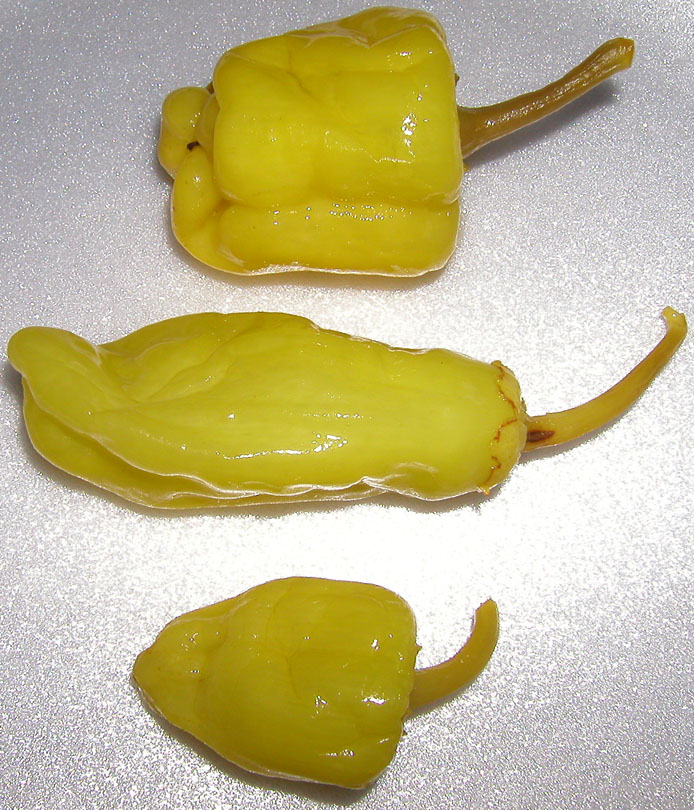
Three pickled friggitelli
SpeciesCapsicum annuum
OriginItaly
Heat Mild
Scoville scale100–500[1] SHU

Friggitello (pl.: friggitelli) is a sweet Italian chili pepper of the species Capsicum annuum.[2] It is also known as the "Golden Greek pepper", "Sweet Italian pepper", or "Tuscan pepper".[3] In the United States they may be called "pepperoncini";[4] they are quite distinct from Italian peperoncini, which are hot Italian chili peppers. Friggitello is mild with a slight heat and a hint of bitterness, and is sometimes pickled and sold in jars. In Italy friggitello is most associated with the region of Tuscany. The Greek variety, which is sweeter, is commonly used elsewhere in Europe and the United States.

Cultivation

[edit]

Like many other cultivars of Capsicum annuum, friggitello requires a warm climate with a lot of sunlight and is not tolerant of frost. The seeds take 10 to 14 days to germinate, after which the plant will reach maturity in 70 to 80 days.[5] It appreciates slightly rich and well-drained soils, but overfertilized soil will result in fewer fruits. The plant has the potential to grow plenty of fruits, so it requires staking if it is to be prevented from falling over due to the weight of the fruits. The fruits should be harvested when they are 5–7.5 centimetres (2–3 in) long. Mature fruits will eventually turn red, but it is best to pick them while they are still green.

Culinary use

[edit]
Friggitelli served in a Swedish kebab restaurant

Although it is often pickled, friggitello has a complex flavor which is appreciated most when it is eaten fresh. It lends itself very well to sautéing, stuffing, and popping. It combines nicely with fruits and is a suitable ingredient to use in salads and compotes or on sandwiches.

They are also often served with kebab, such as İskender kebap. Pickled friggitelli can vary in color from bright yellow to bright yellow-green. They are sometimes briefly rinsed in cold water before serving to reduce the effects of the pickling brine on the taste.

See also

[edit]

References

[edit]

Sources

[edit]
Revisions and contributorsEdit on WikipediaRead on Wikipedia
from Grokipedia
The friggitello (plural: friggitelli) is a mild, sweet Italian chili pepper variety belonging to the species Capsicum annuum, renowned for its crisp flesh and very low heat level, registering 0-500 Scoville Heat Units (SHU).[1] Originating from the Campania region of southern Italy, particularly Naples, it features elongated, pendant-shaped pods that grow 3 to 4 inches (7.5 to 10 cm) long and 1 to 1.5 inches wide, ripening from vibrant green when unripe to bright red at maturity.[2][1] Introduced to Italy in the 16th century as part of the Columbian Exchange, spreading from southern regions like Sicily northward, the friggitello has become a staple in Mediterranean agriculture and cuisine, with compact plants typically reaching 2 to 3 feet (60 to 90 cm) in height. Also known as the Golden Greek pepper or simply sweet Italian pepper, it is distinct from hotter peperoncini varieties despite occasional overlap in naming, emphasizing its role as a frying pepper rather than a spicy one.[1] Its mild, fruity flavor profile—sweet and slightly tangy—makes it versatile for both fresh consumption and cooking, with unripe green pods often preferred for their tenderness.[3] In culinary applications, friggitelli are traditionally fried whole as a side dish in Neapolitan cuisine, where their thin skins blister easily to enhance texture, or pickled for antipasti and salads.[1] Ripe red specimens can be stuffed, baked, dried into powder, or incorporated into sauces and ferments, contributing a subtle sweetness without overpowering other ingredients.[3] The pepper's productivity is notable, with plants yielding abundant pods in mid-season harvests around 70 days after transplanting, thriving in full sun and warm climates typical of USDA zones 8–11.[1]

Description

Botanical Characteristics

The friggitello is classified as a variety of Capsicum annuum within the Solanaceae family, a diverse group encompassing many cultivated peppers native to the Americas.[4][5] This species is characterized by its herbaceous growth habit, with plants typically reaching heights of 60-90 cm under optimal conditions, forming bushy structures that support multiple fruiting branches.[1] Friggitello plants produce small, star-shaped white flowers, typical of C. annuum, which appear in clusters and facilitate self-pollination.[5] Following pollination, fruit development progresses over approximately 60-70 days to reach maturity, during which the peppers transition from immature green stages to their ripe form, influenced by environmental factors such as temperature and cumulative light exposure.[1] The heat level of friggitello peppers registers 0 Scoville Heat Units (SHU), indicating no detectable heat or pungency and reflecting minimal capsaicinoid production in the placental tissue of the fruit.[1] This complete lack of heat distinguishes it from hotter relatives. In comparison to related varieties, friggitello differs from peperoncini, which often feature thicker walls and mild heat levels, and from bell peppers, which exhibit a blockier, more robust shape with even thicker flesh suited to different culinary roles.[1][6] These botanical distinctions underscore friggitello's adaptation for quick cooking and preservation while maintaining its position within the mild end of the C. annuum spectrum.[7]

Physical Appearance

The friggitello pepper is characterized by its elongated, finger-like fruits, typically measuring 7.5 to 10 centimeters in length and 2.5 to 3.8 centimeters in width, with a conical shape that tapers to a rounded end. These pods feature a thin, crisp skin that is smooth and glossy, providing a waxy texture when handled. The immature fruits display a vibrant green color, which progresses to bright red upon ripening, although some varieties may reach yellow or orange hues. This color change highlights the pepper's maturity and enhances its visual appeal in culinary presentations. The internal structure of the friggitello fruit includes pale green, crisp flesh encasing a central cavity with flat, cream-colored seeds, contributing to its lightweight and delicate composition. In terms of flavor profile, the peppers offer a sweet and fruity taste with minimal bitterness, making them distinct among milder pepper varieties. Belonging to the Capsicum annuum species, these sensory attributes are observable in both fresh and prepared forms. The friggitello plant itself adopts a bushy habit, growing to a height of 2 to 3 feet with abundant green leaves that form a dense foliage canopy. This structure supports prolific fruit production, with clusters of 5 to 10 pods emerging per node, allowing for efficient harvesting and high yields in suitable conditions.

Origin and History

Etymology and Names

The term friggitello (plural: friggitelli) originates from the Italian verb friggere, meaning "to fry," reflecting the traditional preparation method of frying these peppers whole in southern Italian cuisine.[8] This name is particularly tied to Neapolitan dialect, where variants like friariello derive from frjere or che si frigge, literally "that which is fried," emphasizing their culinary role as a quick-fried side dish.[9] The suffix -ello adds a diminutive sense, suggesting "little fried ones," which aligns with the peppers' small size and delicate texture when prepared this way.[10] In English-speaking contexts, friggitello sometimes overlaps with peperoncini, a broader term for mild Italian chili peppers, though the latter can refer to slightly hotter varieties.[11] Sweeter European strains are known as the Golden Greek pepper, highlighting their mild flavor; these peppers ripen from green to red, though often harvested at yellow-green stages for pickling.[12][1] In southern Italy, dialectal names include friarielli in Campania and pupalulill (or puparulillo) in Neapolitan parlance, both evoking the frying tradition and underscoring the pepper's deep roots in local foodways.[13] Regional variations further diversify the nomenclature, such as Friggitello Sicilia for Sicilian cultivars, which adapt the base name to island-specific strains prized for their sweetness.[14] In Tuscany, the term friggitello persists but often incorporates local Tuscan dialects that blend with Campanian influences, while Campania—particularly around Naples—remains the epicenter for names like friariello, associating the pepper closely with its origins as the quintessential frying pepper of the region.[15][16]

Introduction and Cultural Spread

The friggitello, a mild variety of chili pepper belonging to the species Capsicum annuum, originates from Central and South America. Following Christopher Columbus's voyages across the Atlantic in 1492, peppers of this genus were introduced to Europe by Spanish and Portuguese explorers during the late 15th and early 16th centuries, initially arriving in the Iberian Peninsula before spreading further. Peppers first reached Italian shores in the 1500s, likely via trade routes from North Africa to Sicily, from where the friggitello variety was adapted and cultivated in southern Italy, quickly integrating into regional agricultural practices and culinary traditions.[17][12][18][1] In Italy, the friggitello established its primary hub in the southeastern region of Campania, particularly between Naples and Rome, where it thrives in the Mediterranean climate and fertile soils. This area became central to its development as a distinct variety, prized for its slender shape and subtle sweetness. From Campania, the pepper spread northward to Tuscany, influencing local dishes with its versatility, and southward and eastward to Greece, where sweeter variants—often called Golden Greek peppers—emerged and gained popularity across the Mediterranean.[2][12][19] The friggitello holds deep cultural significance in Neapolitan cuisine, where it is commonly fried whole as a simple yet iconic side dish, embodying the region's emphasis on fresh, seasonal ingredients. Its preservation through heirloom seed lines underscores its enduring heritage among Italian growers. The name itself derives from the Italian verb friggere, meaning "to fry," highlighting its traditional preparation.[8][20][12]

Cultivation

Growing Requirements

Friggitello, a variety of sweet pepper (Capsicum annuum), is a warm-season crop that thrives in full sun, receiving at least 6 to 8 hours of direct sunlight daily to promote vigorous growth and fruit production.[21] Optimal daytime temperatures range from 20°C to 30°C (70°F to 85°F), with nighttime lows above 10°C (50°F) to avoid stunted development; the plant is frost-sensitive and performs poorly in cool conditions below 15°C (60°F).[22][23] It requires well-drained, fertile soil rich in organic matter, with a pH between 6.0 and 7.0 to ensure nutrient availability and prevent issues like blossom-end rot.[5][24] Propagation typically begins with seeds started indoors 6 to 8 weeks before the last expected frost, which in Mediterranean climates like Italy's corresponds to February or March.[21] Sow seeds 1 cm deep in a moist seed-starting mix at a germination temperature of 20°C to 25°C (68°F to 77°F), maintaining consistent warmth and humidity until emergence, which takes 7 to 14 days.[25] Transplant seedlings outdoors after all frost risk has passed and soil temperatures reach at least 15°C (60°F), typically in late April or May in Italy, spacing plants 30 to 50 cm (12 to 20 inches) apart in rows 75 to 90 cm (30 to 36 inches) apart to allow for air circulation and reduce disease pressure.[22][24] Ongoing care involves maintaining consistent soil moisture through regular watering, providing about 2.5 to 5 cm (1 to 2 inches) per week without allowing waterlogging, which can lead to root rot; drip irrigation is ideal for even distribution.[21] Fertilize with a balanced NPK formulation (such as 10-10-10) at planting, followed by side-dressing with a lower-nitrogen option once fruits form to support flowering and fruit set without excessive vegetative growth.[24] Pest and disease management includes crop rotation every 3 to 4 years to mitigate soil-borne issues like verticillium wilt, a fungal disease that causes wilting and yellowing; select resistant varieties where possible and monitor for common pests such as aphids or spider mites, using organic controls like insecticidal soap if needed. Friggitello typically reaches maturity in 60 to 70 days from transplant, aligning with its mid-season classification.[5]

Harvesting and Yield

Friggitello peppers reach maturity for green harvest approximately 60 days after transplanting, at which point they are picked for their crisp texture ideal for frying, while allowing them to ripen to red takes 70 to 90 days post-transplant. Fruits are selected when firm, glossy, and fully sized but before full coloration to optimize quality and flavor. In Italian culinary tradition, the green stage is particularly favored for its mild tanginess.[26][1][27] Harvesting involves careful hand-picking to minimize plant damage and fruit bruising, often using pruners or fingers to clip stems. This method supports ongoing production, as regular removal of mature peppers stimulates further fruit set over the growing season. Typical yields range from 2 to 4 kg per plant in home gardens, scaling to 10 to 15 tons per hectare in commercial fields under optimal conditions.[21][26][28] After harvest, Friggitello peppers require prompt cooling and storage at 7 to 10°C with high humidity (90-95%) to preserve crispness and prevent chilling injury or decay, allowing them to remain marketable for up to 2 weeks. Gentle handling during sorting and packing is essential to avoid abrasions that could reduce shelf life.[29][30][31]

Culinary Uses

Preparation Techniques

The primary preparation technique for friggitello peppers is frying them whole in olive oil, which highlights their tender texture and subtle sweetness. To prepare, heat a generous amount of olive oil in a large skillet over medium-high heat, add the whole peppers (with stems intact), and cook for about 5-7 minutes, stirring occasionally, until the skins blister and char lightly; garlic cloves can be added toward the end for flavor, and the peppers are typically seasoned with salt before serving.[32][33] Peeling the skins after frying is optional, as the blistered exterior is often enjoyed for its crisp contrast, though some prefer to slip off the skins for a smoother bite.[34] Other methods include roasting the peppers in an oven preheated to 180-200°C for 15-20 minutes until softened and charred, either whole or halved with seeds removed, which allows for easy peeling if desired. For preservation, friggitello peppers can be pickled by piercing slightly unripe specimens with a fork, packing them into jars, and covering with a vinegar brine, where they develop a tangy flavor suitable for extended storage. They may also be used raw in salads, sliced for added crunch without cooking, leveraging their mild heat level for versatile incorporation.[35][1][2] Preparation tips emphasize washing the peppers thoroughly under running water and patting them dry to prevent oil splattering during frying, while stems can be removed post-cooking if preferred for presentation. Their thin skins make friggitello peppers particularly well-suited to high-heat methods like frying or roasting, as they blister quickly without becoming overly soft.[33][1]

Traditional Dishes

In Neapolitan cuisine, friggitello peppers are a staple in simple yet flavorful contorni, or side dishes, that highlight their mild sweetness and crisp texture after frying. Peperoni fritti, featuring whole friggitelli peppers lightly fried until blistered and served warm, often accompanies grilled meats or fish in traditional Campanian meals.[8] Another classic preparation pairs the peppers with a sauce of fresh tomatoes and garlic, sautéed in olive oil to create a rustic, tangy accompaniment known as friggitelli napoletani, which embodies the everyday home cooking of southern Italy.[20] These dishes underscore the pepper's role in Mediterranean diets, where frying—true to the name friggitello, derived from "friggere" meaning "to fry"—enhances its natural flavors without overpowering seasonings.[32] Friggitello peppers also integrate seamlessly into pasta dishes, adding a subtle peppery note to hearty southern Italian recipes. Orecchiette with friggitelli and pancetta combines the ear-shaped pasta from Puglia with sautéed peppers and crispy pork, finished with a touch of pecorino cheese for a balanced, savory main course popular in Apulian and Neapolitan households.[36] Similarly, friggitelli al forno involves roasting the peppers with herbs like oregano and basil, then tossing them with spaghetti or penne for a lighter, oven-baked pasta variation that celebrates seasonal produce in Campania.[19] Regional variations extend friggitello's versatility into fusion and appetizer formats across the Mediterranean. A Greco-Italian twist stuffs the peppers with crumbled feta cheese, chopped olives, and fresh mint, baked until the filling melts slightly, offering a tangy contrast ideal for mezze-style platters.[37] In Campania, friggitelli are used as pizza toppings alongside sausage in various Neapolitan-style pizzas, or sliced into antipasti platters with olive oil and basil, serving as a fresh starter in Neapolitan trattorias.[38][39] These adaptations reflect the pepper's adaptability in blending Italian and Greek culinary traditions while remaining rooted in southern Italian heritage.[40]

Nutritional Value

Composition

Friggitello peppers exhibit a low caloric density, providing approximately 20-30 kcal per 100 grams, primarily due to their high water content of 90-92%.[41][42] They contain low fat at about 0.3 grams per 100 grams, moderate carbohydrates around 6 grams (including 4 grams of sugars), approximately 1 gram of protein, and 1-2 grams of dietary fiber.[43][44] In terms of micronutrients, Friggitello peppers are rich in vitamin C, with up to 130 mg per 100 grams, alongside vitamin A derived from beta-carotene and various B vitamins, including B6.[43][12] They also serve as sources of essential minerals such as potassium (approximately 200 mg per 100 grams), iron, and manganese.[12][43] Beyond macronutrients and vitamins, Friggitello peppers contain antioxidants like flavonoids and negligible amounts of capsaicin, rendering them suitable for diets sensitive to spiciness.[27][1]

Health Benefits

Friggitello peppers contribute to immune support through their high vitamin C content, which acts as a potent antioxidant to protect cells from oxidative damage and aids in collagen synthesis for tissue repair.[45] This nutrient also plays a key role in enhancing overall immune function by promoting white blood cell activity.[45] Additionally, the presence of vitamin A precursors, such as carotenoids, supports vision health by maintaining the integrity of retinal cells and preventing conditions like night blindness.[45] The dietary fiber in friggitello peppers facilitates healthy digestion by promoting regular bowel movements and supporting gut microbiota balance.[45] Their low-calorie profile makes them suitable for weight management, providing satiety without excess energy intake.[45] Trace amounts of capsaicin in these mild peppers may offer mild anti-inflammatory effects and stimulate metabolism, potentially aiding in fat oxidation.[45] Potassium found in friggitello peppers helps regulate blood pressure and supports cardiovascular health by counteracting sodium effects.[45] Overall, their nutrient-dense composition, combining vitamins, minerals, and antioxidants in a low-calorie package, contributes to preventing chronic diseases linked to oxidative stress and nutrient deficiencies, such as scurvy.[45]

References

User Avatar
No comments yet.