Hubbry Logo
Peter pepperPeter pepperMain
Open search
Peter pepper
Community hub
Peter pepper
logo
8 pages, 0 posts
0 subscribers
Be the first to start a discussion here.
Peter pepper
Peter pepper
from Wikipedia
Peter red pepper
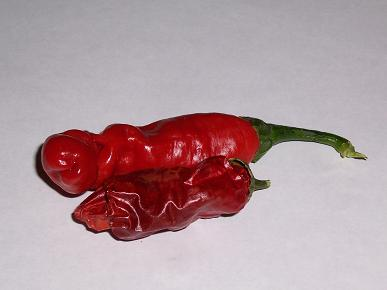
Mature Peter red chili next to a dried pod
SpeciesCapsicum annuum var. annuum
Heat Hot
Scoville scale10,000-23,000[1] SHU

The peter pepper, Capsicum annuum var. annuum, is an heirloom chili pepper that is best known for its distinctive shape. It is a type of Capsicum annuum, though it is not officially recognized as a cultivar of the species. It occurs in red and yellow varieties.[2] The pepper is considered very rare and its origin is unknown.[2][3]

The pepper is most commonly grown in East Texas, Louisiana,[2] and in parts of Mexico.[4] It was first popularized in the United States by Texas journalist, historian, and chili enthusiast Frank X. Tolbert in his Dallas Morning News column about obscure local history, although he saw the pepper only once in his life. It has since been studied by horticulture experts at the University of Texas at Austin and Louisiana State University.[2] Though it is rare, its seeds are available from some private suppliers.[1] It is adaptable to a variety of growing conditions.[3] The seeds have also been exported to Asian countries, including South Korea.[4]

The pepper has often been noted for its phallic appearance when fully grown. The red variety has been described as a "miniature replica of the uncircumcised male organ".[2] The pod of the pepper is wrinkled and has a round tip with a cleft.[5] It is approximately 3 to 4 inches long, and 1 to 1.5 inches wide when fully mature.[1] The pod of the pepper has also been noted for its pungency.[3]

The pepper has a Scoville scale rating of 10,000-23,000 SHU[1] depending on cultivation and preparation, making it more spicy than the jalapeño. The peter pepper has both ornamental[2] and culinary use. Common uses include pickling,[3] salsa, and chili pepper.[6] It can be used like jalapeño or serrano peppers.[6]

Peter peppers

Sexually suggestive appearance

[edit]
Peter peppers

The unusual appearance of the peter pepper inspires descriptive names such as "penis pepper" and "Chilly Willy/Willy Chilly."[7] According to the book Peppers: the domesticated Capsicums, the peppers naturally contort into "a miniature replica of the uncircumcised male organ."[8] The uniquely-shaped chilis were named "the most pornographic pepper" by Organic Gardening Magazine.[9] The peter pepper is a product of selective breeding.[10]

In the book Temptations: Igniting the Pleasure and Power of Aphrodisiacs, the pepper is called a "very hot Latin lover" who "likes to brag about his size and heat."[11]

Cultivation and use

[edit]

In Backwoods Home Magazine, Alice Brantley Yeager describes the process of growing peter peppers: "The best growing conditions involve a sunny spot in the garden, moderately rich soil and the same amount of water you’d give any other pepper plant when drought threatens." It is recommended to use a seed starter for a better result, but if a seed starter is not available, the seeds could be planted "in a plastic or clay pot in a sunny window".[12]

See also

[edit]

References

[edit]

Further reading

[edit]
Revisions and contributorsEdit on WikipediaRead on Wikipedia
from Grokipedia
The Peter pepper () is a rare variety renowned for its distinctive phallic shape, which resembles a and has earned it nicknames like "penis pepper" or "." This medium-hot pepper typically grows 3 to 6 inches long with a bulbous tip and thin walls, ripening from green to bright red or orange, and registers between 10,000 and 23,000 Scoville Heat Units (SHU), comparable to a but several times hotter than a . The origins of the Peter pepper are uncertain, with no definitive historical records of its development, though it is believed to have emerged naturally in the , particularly in regions like and , and is also cultivated in parts of . It has long been grown by home gardeners and small-scale farmers as both an ornamental curiosity and a culinary , gaining a in recent decades due to its novelty, though it remains uncommon in commercial markets because of its suggestive appearance. In flavor profile, the Peter pepper offers a bright, vegetal taste with subtle fruity notes that intensify when roasted, making it versatile for fresh use in salsas, pickled preparations, or as a substitute for milder chilies in sauces, soups, and stews. Its thin pod walls dry quickly, allowing it to be easily dehydrated into powders or preserved by freezing for year-round use. For cultivation, the Peter pepper plant reaches 2 to 3 feet in height with bushy, dense foliage and white flowers, producing moderately high yields in warm, sunny conditions typical of varieties; seeds should be started indoors 8-10 weeks before the last frost and transplanted after 60 days to harvest the first pods. It thrives in well-drained with full sun and consistent moisture, making it suitable for home gardens worldwide, though its rarity means seeds are primarily sourced from specialty chili suppliers.

Taxonomy and characteristics

Botanical classification

The Peter pepper (Capsicum annuum 'Peter') is an heirloom cultivar within the genus Capsicum and species C. annuum, though it lacks formal recognition as an official cultivar by major botanical authorities. It belongs to the family Solanaceae, the nightshade family, which encompasses a wide range of chili peppers including cayenne (C. annuum var. longum), sharing common genetic ancestry and morphological features like berry-like fruits. Distinguishing genetic traits from standard C. annuum varieties include irregular pod formation, characterized by wrinkled, elongated, and dimpled structures that deviate from the typically uniform shapes in commercial cultivars.

Physical description

The Peter pepper, a variety of , exhibits a compact, bushy growth habit typical of many plants, reaching heights of 2 to 3 feet under optimal conditions. The plant produces lanceolate green leaves arranged alternately along the stems and bears small, white, star-shaped flowers that hang downward in clusters during the summer months. The distinctive pods are the hallmark of this variety, measuring approximately 3 to 6 inches in length and 1 to 1.5 inches in width, with a curved, cylindrical form that tapers to a pointed end. Their surface is wrinkled and gnarled, featuring folds and creases that contribute to a unique phallic appearance, accentuated by a rounded tip with a cleft. The pod walls are thin, enclosing a hollow cavity filled with numerous flat, cream-colored seeds attached to a central . Pods begin development as smooth, glossy green fruits shortly after , typically 5 to 7 days post-flowering, and mature over 70 to 80 days from transplant to the green stage, with full ripening to red, orange, or yellow requiring up to 90 days or more depending on environmental factors. As they ripen, the skin transitions from firm and waxy to increasingly wrinkled, enhancing their irregular, anatomical resemblance.

Varieties and heat level

The Peter pepper is available in several color varieties, including red (the most common), yellow, and orange, all of which retain the distinctive wrinkled, horn-like pod shape characteristic of the . These varieties ripen from green to their respective mature colors, with the red form being the most widely cultivated due to its robust growth and market availability. The heat level across Peter pepper varieties ranges from 5,000 to 30,000 Scoville Heat Units (SHU), placing it in the medium-hot category and comparable to serrano peppers in spiciness. This heat is measured through the concentration of capsaicinoids, primarily , in the pepper's placental tissue, with variability influenced by growing conditions such as , , and stress levels. These varieties contribute a bright, vegetal undertone when fresh.

History and origin

Discovery and early cultivation

The Peter pepper (Capsicum annuum), an heirloom chili variety, has origins that remain obscure but are closely linked to heirloom gardening traditions in the southern United States, particularly in regions like and . It is believed to have been cultivated informally among local gardeners for generations, with evidence suggesting its presence in American gardens since at least the early as a novelty item valued for its distinctive pod shape. The pepper's early documentation is sparse, but it was first popularized in the United States by journalist, historian, and chili enthusiast Frank X. Tolbert in his 1956 Dallas Morning News column on obscure local history. It appears in seed catalogs from the mid-20th century, often marketed for its unusual appearance rather than yield or flavor. Its commercial introduction came through H.W. Alfrey, a seedsman from , who founded Alfrey Seeds in the 1960s and dedicated decades to selecting and promoting the variety, naming it for its phallic resemblance. Alfrey's efforts helped preserve and spread the pepper beyond southern circles, establishing it as a rare but enduring .

Naming and regional associations

The Peter pepper derives its name from the slang term "peter," a euphemism for penis, owing to the chili's uniquely phallic shape that resembles an uncircumcised male organ. This provocative appearance inspired alternative names such as "Peter chili," "dick pepper," and "penis pepper." The variety was commercially introduced in the 1960s by H. W. Alfrey through his seed company in , where he explicitly named it for this anatomical resemblance. Primarily associated with the , the Peter pepper has strong regional ties to eastern and , regions where it has been traditionally cultivated by home gardeners for generations. In these areas, it emerged as a local , valued for both its and novelty in backyard plots rather than large-scale agriculture. The pepper's preservation as an variety stems from seed-saving practices among Southern U.S. communities, particularly in , , and nearby , which have sustained its rarity and genetic purity through informal exchanges and family traditions. This grassroots effort has prevented the variety from disappearing, even as commercial interest remains limited to specialty growers.

Cultivation

Growing conditions

Peter peppers are a warm-season that can be grown as annuals throughout USDA hardiness zones 2 to 11, thriving best in zones 9b to 11b with long, hot summers and minimal frost. They require full sun exposure of at least 6 to 8 hours per day to promote vigorous growth and fruit production, as insufficient light can lead to leggy and reduced yields. Optimal daytime temperatures range from 70°F to 85°F (21°C to 29°C), with nighttime lows not dropping below 55°F (13°C) to avoid stress; temperatures above 90°F (32°C) may cause blossom drop, while cooler conditions below 60°F (16°C) slow growth significantly. For soil, Peter peppers prefer well-draining, fertile enriched with such as to support nutrient uptake and prevent root issues. The ideal is slightly acidic to neutral, between 6.0 and 6.8, which facilitates optimal nutrient availability; testing and amending with lime or may be necessary if the deviates. Heavy clay soils should be avoided or improved with additions like or sand to ensure proper drainage and aeration. Watering should maintain consistent without waterlogging, providing about 1 to 2 inches per week through rainfall or , adjusted for local conditions and plant stage. Mulching around the base helps retain moisture and suppress weeds. Plants are typically spaced 18 to 24 inches apart in rows 24 to 36 inches wide to allow for air circulation and reduce disease risk.

Propagation and harvesting

Propagation of Peter peppers, a variety of , typically begins with seeds sown indoors 8-10 weeks before the last expected frost to ensure robust seedlings for transplanting. Seeds require consistent moisture and temperatures around 80°F (27°C) for , which occurs in 7-14 days under optimal conditions. Alternatively, established transplants can be purchased and directly planted outdoors after frost danger passes, spacing plants 18-24 inches apart to accommodate their bushy growth habit. During the growing phase, Peter pepper plants benefit from regular fertilization using a balanced NPK formula every 4-6 weeks to support vigorous development and production. Common pests such as and spider mites can be managed through integrated methods, including insecticidal soaps or applications, applied at the first signs of infestation to prevent damage to foliage and fruits. Harvesting occurs 70-90 days after , depending on desired maturity stage; peppers picked at the stage offer a milder flavor, while those allowed to fully ripen to provide maximum heat intensity. Fruits should be cut from the with or pruners to avoid stem damage, allowing the bushy to continue producing over the season.

Culinary and nutritional uses

Flavor profile and heat

The Peter pepper displays a flavor profile dominated by bright, vegetal notes reminiscent of jalapeños, complemented by fruity and subtly sweet undertones that become more pronounced in fully ripened pods. This combination arises from the pepper's heritage, where contributes not only to the heat but also enhances the perception of underlying fruitiness. In culinary contexts, these notes provide a balanced tanginess that distinguishes the Peter pepper from plainer hot varieties. The from the Peter pepper stems primarily from concentration, delivering an immediate and intense burn on the and upon consumption. This spiciness varies based on , with pods offering milder that intensifies as the pepper matures to red, and can differ across varieties due to growing conditions. Overall, the level falls in the medium range, registering 10,000–23,000 Scoville units (SHU). Compared to other peppers, the Peter pepper is notably hotter than jalapeños (2,500–8,000 SHU) but milder than habaneros (100,000–350,000 SHU), positioning it as a versatile option for adding punch without overwhelming dishes. Its flavor and heat profile align closely with serrano peppers, making it a suitable substitute in recipes seeking medium spiciness with added sweetness.

Preparation methods and recipes

Peter peppers are versatile in the kitchen and can be prepared fresh by chopping them into salsas or salads, where their crisp texture and moderate heat add a vibrant kick. They are also commonly dried and ground into a fine for use as a , similar to chili flakes, providing a fruity undertone with lingering warmth. Pickling is another popular method, involving slicing the peppers and submerging them in a with onions and spices to preserve their shape and mellow their intensity over time. Frying the peppers, either whole or halved, helps reduce their heat while enhancing their nutty flavor, making them suitable for appetizers or garnishes. In Southern U.S. cuisine, Peter peppers are often incorporated into hearty stews and hot sauces, where they contribute balanced spiciness without overpowering other flavors. For hot sauces, they can be blended with , , and sweeteners like to create a tangy, customizable that highlights their unique fruity notes. As a substitute for in stir-fries, a small amount—finely diced and added toward the end of cooking—infuses dishes with comparable heat and aroma. One representative is Peter pepper , prepared by finely chopping the peppers with onions, simmering in a mixture of , , and salt, then canning for use on meats or crackers; this yields a sweet-tangy spread that balances the peppers' 10,000–23,000 Scoville Heat Units (SHU). A well-known appetizer featuring Peter peppers is Peter Pepper Poppers: halve and seed 8 peppers, stuff with a mixture of shredded cheddar, , Romano, diced roasted bell peppers, , and crumbled cooked , then bake at 350°F for 5 minutes until the filling melts. Due to their medium heat level, cooks should start with small quantities in recipes and remove seeds and veins to lessen spiciness, especially for those sensitive to ; wearing gloves during preparation prevents skin irritation.

Nutritional benefits

Peter peppers, a variety of Capsicum annuum, offer significant nutritional value primarily through their high content of vitamins A and C, along with antioxidants such as beta-carotene. Vitamin A supports vision health and immune function by maintaining epithelial tissues and acting as an antioxidant to protect against oxidative stress. Vitamin C, a potent water-soluble antioxidant, enhances immune support by promoting white blood cell production and aids in wound healing through collagen synthesis. These nutrients are concentrated in the pepper's flesh, with raw red chili peppers providing approximately 64.8 mg of vitamin C (about 72% of the daily value) and 428 IU of vitamin A (9% of the daily value) per 45 g serving, though values can vary by maturity and growing conditions. The bioactive compound in Peter peppers contributes to several health effects, including improved digestion, enhanced , relief, and anti-inflammatory properties. aids digestion by positively modulating composition and function, potentially reducing gastrointestinal inflammation and supporting mucosal integrity. It boosts by increasing energy expenditure and fat oxidation, which may help in managing and . For relief, acts as an on receptors, desensitizing nociceptors and providing effects, particularly for neuropathic and inflammatory . Its anti-inflammatory properties stem from inhibiting pro-inflammatory pathways, such as activation, thereby reducing cytokine production in conditions like . To preserve these nutritional benefits, Peter peppers should be consumed raw or subjected to minimal cooking methods like or stir-frying, as prolonged or high-heat processing can degrade heat-sensitive by up to 70%. Lightly cooked preparations retain more antioxidants and capsaicin bioavailability compared to deep-frying or extended .

Cultural significance

Novelty due to appearance

The Peter pepper's distinctive pod shape, which closely resembles a when fully mature, has garnered it significant attention for its humorous and sometimes visual appeal. This unusual form, often described as "giggle-worthy" or anatomically suggestive, sets it apart from conventional chili varieties and contributes to its reputation as a "naughty" or "sexy" pepper in popular horticultural discussions. Commercially, the pepper's phallic resemblance has led to its marketing as a , frequently packaged and sold as gag gifts or in adult-themed seed collections. Seed suppliers categorize it under exotic and novelty peppers, promoting it for its amusing shape alongside its culinary heat, with products explicitly labeled as " funny" or "hilarious unique gifts" to appeal to buyers seeking lighthearted or provocative items. Despite its rarity as an variety, the Peter pepper attracts enthusiasts drawn to its quirky appearance, encouraging cultivation for ornamental curiosity rather than solely for yield. Growers often pursue it to add visual intrigue to gardens or to share the novelty with others, though achieving the characteristic shape consistently can be challenging due to environmental factors.

Representation in media and commerce

The Peter pepper has gained attention in gardening publications and online media for its distinctive shape, often featured in humorous contexts that highlight its novelty value. For instance, a 2000 article in Backwoods Home Magazine titled "Naughty Peppers" describes it as a source of "guffaws, titters, and remarks" among garden visitors, positioning it as an entertaining variety suitable for those with a sense of earthy humor. Similarly, a 2018 blog post on Rolling Down My Garden calls it "the dirtiest pepper in the garden," emphasizing its role as an ornamental and gag plant popularized through informal seed sharing. videos, such as Pepper Joe's 2012 showcase of colored varieties and a 2020 review dubbing it "The Perverted Pepper," further illustrate its presence in since the early 2000s, where creators blend advice with lighthearted commentary on its appearance. In commerce, Peter pepper seeds are widely available from heirloom seed suppliers, marketed primarily as novelty items rather than standard culinary peppers. Companies like Pepper Joe's offer red, yellow, and orange varieties, noting their "hilarious, unusual shape" and appeal for gag gifts, with seeds priced from $6.99 for small packets. Urban Farmer sells them as an "old " grown for "shock value," recommending use in production alongside their humorous allure. Online marketplaces such as and Amazon extend this commercial reach, with listings like "Peter Pepper Penis Chili" seeds presented as party favors or rude presents, often in tins for easy gifting. These products underscore its niche in the market, where the focus is on fun over high-volume sales. As a of quirky American , the Peter pepper embodies the playful side of preservation, occasionally referenced in enthusiast communities for its risqué connotations. Sources like Just Berry Plants highlight its popularity as a gag gift in humorous or risqué settings, appealing to chili aficionados who value both flavor and whimsy. Its cultural footprint remains modest, centered on informal online discussions and seed exchanges that celebrate unconventional varieties from U.S. traditions.

References

Add your contribution
Related Hubs
User Avatar
No comments yet.