Hubbry Logo
Full-spectrum lightFull-spectrum lightMain
Open search
Full-spectrum light
Community hub
Full-spectrum light
logo
8 pages, 0 posts
0 subscribers
Be the first to start a discussion here.
Full-spectrum light
Full-spectrum light
from Wikipedia

Full-spectrum light is light that covers the electromagnetic spectrum from infrared to near-ultraviolet, or all wavelengths that are useful to plant or animal life; in particular, sunlight is considered full spectrum, even though the solar spectral distribution reaching Earth changes with time of day, latitude, and atmospheric conditions.

"Full-spectrum" is not a technical term when applied to an electrical light bulb. Rather, it implies that the product emulates some important quality of natural light.[1]

Products marketed as "full-spectrum" may produce light throughout the entire visible spectrum, but without producing an even spectral distribution. Some may not differ substantially from lights not marketed as "full-spectrum".[1][2]

Color of daylight and a blackbody, compared

Measurement

[edit]

Color temperature and Color Rendering Index (CRI) are the standards for measuring light. There is no technical definition of "full-spectrum" so it cannot be measured. To compare "full-spectrum" sources requires direct comparison of spectral distribution.

Color emitted by a black body on a linear scale from 800 kelvins to 12200 kelvins

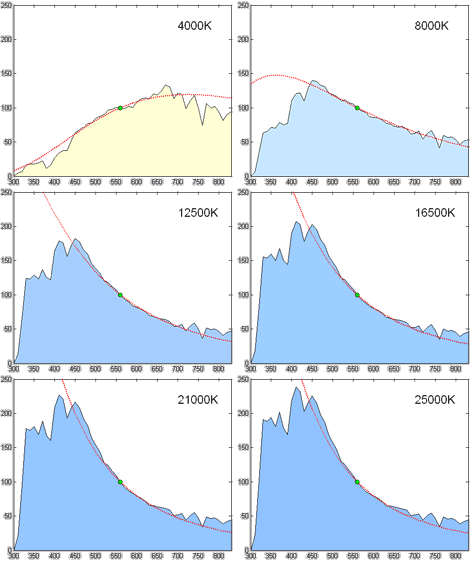
The emission spectrum of a light source varies depending on the light generating mechanism. Thermal sources such as incandescent bulbs produce electromagnetic radiation over a broad and continuous range of wavelengths, including infrared and ultraviolet. A black body radiator is the idealized version of a thermal source. As the temperature of a black body radiator increases, the shape of its spectral distribution changes with more energy emitted at shorter (bluer) wavelengths.

Sources that rely on fluorescence have a different emission spectrum shape than do thermal sources. Some wavelengths will be produced with greater amplitude than others. Fluorescent sources used for lighting, such as fluorescent lamps, white light-emitting diodes, and metal halide lamps are intended to produce light at all wavelengths, but the distribution is different from thermal sources and so colors will appear different under these forms of lighting than under daylight; some colors may match under one light source that don't appear the same under another, a phenomenon called metamerism.

Where light sources use an electric discharge through low pressure gas, the light spectrum may be quite discontinuous, with some wavelengths of light missing or at very low amplitude. Such light sources have a strong tint, such as low pressure sodium lamps, or neon lamps. These lamps are used more for their color effects than for general illumination. Some scientific instruments use discharge tubes to produce light that has only a few wavelengths in it, a so-called "line spectrum". A laser is a single-wavelength source, which would produce light of a very pure color.

Use in art and in color matching

[edit]

Ideally, during the day, an art studio (in the northern hemisphere) should be lit with northern sunlight, because it is considered more neutral and diffused than the direct, "yellowish" quality of southern sunlight. Since many artists' studios lack north-facing windows, full-spectrum lamps are sometimes used to approximate such light. Full-spectrum fluorescent lamps are also used by color scientists, color matchers in paint stores and quilters and others working with fabrics or yarn when working under inadequate lighting conditions to assist in achieving the correct hues as they will later appear in daylight or under gallery lighting.

Use in aquariums

[edit]

Full spectrum lighting is used both for tropical and marine fish as well as many other aquatic pets. The use of full spectrum lighting assists aquarium plants to grow and aids in the health of the fish and the tank as a whole. While plants have adapted to the reception of real sunlight, full spectrum light bulbs often mimic the emphasis of wavelengths of sunlight enough that plants are stimulated to grow. Full spectrum lighting also enhances the natural coloration of fish, plants and other aquatic elements in an aquarium, which are often discolored by artificial lights. Full spectrum lighting is typically used more in fresh-water aquariums since marine or coral-reef aquariums often require intensely blue light.

Use in gardening

[edit]

Gardening under lights keeps plants blooming almost year-round, for a wintertime harvest. Grow lights are specifically intended to support plant growth, although with varying degrees of success and energy efficiency. Some plants grow better when given more of a certain color light, due to the mechanism of photosynthesis. Specifically more blue wavelengths enhance vegetative growth and development, while the addition of increasing amounts of red light enhances budding, flowering and fruiting.

Use in sports turf management

[edit]

Growing Turf in Stadiums in shade under lights keeps turfgrass growing in the middle of winter or in shade. Turf Grow lights are specifically designed to promote turf growth and in particular root growth. This ensures a stable and safe surface for players. However, some grow lights are more effective than others and recently there has been a move to more energy efficient LED systems.

As with all grow lights the light spectrum achieves different things. The red end of the spectrum tends to encourage vegetative growth whilst the blue tends to promote root growth.[3]

Use in seasonal affective disorder

[edit]

In recent years, full-spectrum lighting has been used in the treatment of seasonal affective disorder (SAD) through the use of "light boxes" that mimic natural sunlight, which may not be available in some areas during the winter months. Light is an environmental stimulus for regulating circadian cycles.

Lightbox therapy, otherwise known as phototherapy, is a recognized modality for depression (such as SAD). It is also the primary treatment for circadian rhythm sleep disorders. Depending on the quality of the light, it is estimated that 10,000 lux is needed for effective treatment. Not all light boxes are the same, and some produce only blue or green light.

A reduction in exposure to sunlight during winter months and the shift in times or sunrise and sunset can affect a person's Circadian rhythm/internal clock, serotonin levels and melatonin levels.[4] Symptoms of SAD may be more pronounced in women (75% of SAD cases), in younger adults (18-30), those with depression or a family history of depression, and it is also more common in those who live more than 30 degrees north or south of the equator.[5]

Independent verification

[edit]

The non-profit Lighting Research Center, a group of utility companies, experts and government agencies, established the National Lighting Product Information Program (NLPIP) in the USA to provide objective information about the effectiveness of different lighting systems. According to the NLPIP, full-spectrum light does not provide any improved benefits over similar light systems.[6][7]

A Cornell University study reached mixed conclusions on the use of full-spectrum lighting in restaurants to promote sales.[8]

The National Research Council of Canada Institute for Research in Construction, a Canadian government research and development agency, has published several scientific articles about full-spectrum lighting, collected on their web page. The authors of these papers also have concluded that full-spectrum lighting (~5000 K, CRI>90) does not confer any benefits on performance, mood, or health compared to typical cool-white fluorescent lighting.[9][10]

See also

[edit]

References

[edit]
Revisions and contributorsEdit on WikipediaRead on Wikipedia
from Grokipedia
Full-spectrum light is an artificial light source designed to mimic the of natural daylight, emitting radiation across the entire (approximately 380–780 nm) along with some ultraviolet-A (UVA) components (320–400 nm). Although the term "full-spectrum light" lacks a formal and is often used in , these lights are commonly characterized by a (CCT) of 5000 K or greater and a CIE General (CRI) of at least 90, providing enhanced color accuracy and visual comfort compared to conventional lighting. Developed primarily in the mid-20th century as fluorescent lamps to address concerns over the "unnatural" spectra of early electric lighting, full-spectrum lights have evolved with LED technology to include broader coverage, often extending into near-infrared for applications beyond vision. They are widely used in to support plant across growth stages, in animal to improve broiler weight gain and reduce , and in human-centric environments like offices and therapy settings to potentially alleviate (SAD) symptoms. Scientific evidence for claimed health and performance benefits remains mixed, with early studies suggesting minor improvements in mood, , and dental health among schoolchildren, but many exhibiting poor , small sample sizes, and lack of replication. Regulatory bodies, including the U.S. , have historically cautioned against unsubstantiated promotional claims due to insufficient proof of broad physiological advantages over standard lighting. Ongoing research emphasizes the role of spectral balance, intensity, and non-visual effects on circadian rhythms, though individual variability in response highlights the need for personalized lighting solutions.

Definition and Properties

Definition

Full-spectrum light refers to artificial light sources designed to emit a near-continuous across the visible range of approximately 380 to 780 nanometers, along with some ultraviolet-A (UVA) components (320–400 nm), which support benefits such as vitamin D production in humans, enhanced plant health, and disinfection properties, closely approximating the balanced wavelength distribution and intensity profile of natural sunlight, with significant energy in the blue, green, red, and intermediate regions. This continuity enables high-fidelity color rendering, often quantified by a (CRI) approaching 100, which matches the performance of direct daylight in reproducing object colors accurately. Such lighting prioritizes simulation of the visible portion of the solar to provide illumination that mimics outdoor daylight conditions. The development of full-spectrum light originated in the mid-20th century, primarily through advancements in technology aimed at replicating daylight for industrial workspaces and emerging therapeutic purposes, such as improving visual comfort and under artificial conditions. Early efforts focused on coatings that enhanced balance in fluorescent tubes, building on post-World War II research into lighting's physiological impacts, with notable studies from the onward exploring its equivalence to in biological responses. Full-spectrum light typically includes some UVA components to better mimic natural daylight, and may incorporate infrared (IR) components to provide natural warmth and support photosynthesis and circadian rhythm benefits, distinguishing it from broad-spectrum lighting that may extend further into ultraviolet or infrared wavelengths for specific applications like sterilization or heating. These inclusions enhance biological and health applications, as detailed in subsequent sections. This focus ensures perceptual and chromatic fidelity in the visible range. Common examples of full-spectrum sources include fluorescent lamps with specialized daylight-mimicking phosphors and modern LED fixtures that combine multiple emitters or phosphors to achieve broad, even coverage across visible wavelengths at high correlated color temperatures (CCT) of 5000–6500 K. Special full-spectrum incandescent bulbs, such as Chromalux, provide a smooth, continuous thermal radiation spectrum at around 2800 K with some UVA, offering high color rendering through balanced emission without spectral gaps.

Spectral Characteristics

Full-spectrum light features a (SPD) that provides relatively even coverage across the , spanning approximately 380 to 780 nm. This includes balanced intensity in the violet range (380-450 nm), (450-495 nm), (495-570 nm), (570-590 nm), orange (590-620 nm), and (620-780 nm) regions, with energy peaks typically centered in the green-yellow area to emulate the natural distribution of midday . Key properties of full-spectrum light include a high (CCT) of 5000-6500 K, which simulates daylight conditions, and a smooth, continuous SPD curve with minimal spectral gaps to prevent color or uneven rendering. These characteristics ensure a broad and uniform emission profile, often achieved through advanced coatings or multi-chip LED designs that fill potential deficiencies in regions like (480-520 nm) and . In comparison to natural light, full-spectrum sources approximate the blackbody radiation curve of sunlight, which has an effective temperature of around 5500-5900 K and a continuous spectrum peaking in the visible range. Full-spectrum lights aim to closely replicate this profile in the visible wavelengths, providing a high degree of spectral similarity to midday solar illumination for accurate color perception and environmental simulation. Variations in full-spectrum light primarily arise from differences in CCT within the 5000–6500 K range, with profiles at the lower end (5000–5500 K) having relatively more energy in yellow-orange wavelengths versus those at the higher end (5500–6500 K), which emphasize blue-violet contributions. These adjustments allow tailoring to specific applications while maintaining overall spectral continuity akin to daylight.

Measurement and Evaluation

Measurement Methods

The primary tools for measuring full-spectrum sources are spectrometers, which capture the intensity of across individual wavelengths to determine the (SPD). These instruments typically employ either array spectrometers, utilizing arrays or charge-coupled devices (CCDs) for simultaneous detection across a broad spectrum, or spectrometers, which use gratings to disperse sequentially for higher resolution measurements. Array types are favored for their speed in real-time applications, such as evaluating LED-based full-spectrum lights, while types offer superior precision for detailed spectral analysis. Measurement procedures involve integrating spheres to quantify total luminous flux by uniformly distributing light from the source across the sphere's inner surface, where a detector samples the averaged . This method ensures comprehensive capture of output without angular dependencies, making it suitable for compact full-spectrum sources like lamps or panels. Complementing this, goniophotometers measure angular distribution by rotating the source or detector around the light emission point, providing data on beam spread and intensity at various angles, which is essential for directional full-spectrum fixtures. Following raw data collection, specialized software processes the spectral information to generate plots of versus wavelength, enabling visualization of the full-spectrum profile from to near-infrared ranges. Calibration of these measurement systems relies on standard light sources defined by the (CIE), such as illuminant D65, which represents average midday daylight with a of approximately 6500 K and a well-characterized SPD. By comparing the output of the full-spectrum source against a calibrated D65 reference, discrepancies in spectral balance can be quantified and corrected, ensuring to international standards. The National Institute of Standards and Technology (NIST) provides detailed protocols for such calibrations, often using incandescent or fluorescent sources tuned to CIE specifications. A key challenge in these measurements is accounting for metamerism, where the perceived color of objects shifts under different light sources due to mismatches in composition, even if the sources appear similar overall. Full-spectrum lights, designed to approximate natural daylight, can still induce illuminant metamerism if their SPD deviates subtly from references like D65, affecting color fidelity assessments. Spectrometers mitigate this by providing high-resolution SPD data, allowing researchers to compute metamerism indices, though multiple reference spectra may be needed for comprehensive evaluation.

Key Metrics and Standards

The (CRI) is a quantitative measure of a source's ability to accurately reveal the colors of objects compared to a reference illuminant, such as natural daylight or a , with scores ranging from 0 to 100, where higher values indicate better color fidelity. For full-spectrum sources designed to mimic natural daylight, a CRI greater than 90 is typically targeted to ensure high-quality color reproduction, with values exceeding 95 often recommended for applications requiring precise color accuracy. The (CCT), measured in (K), describes the perceived color appearance of a source, with lower values (e.g., 2700K) appearing warmer and reddish, and higher values (e.g., above 5000K) appearing cooler and bluish. Full-spectrum sources aim for a CCT of 5000K to 6500K to simulate midday daylight, providing a neutral to cool white light that supports visual clarity and . Beyond CRI and CCT, additional metrics evaluate full-spectrum light quality. The ANSI/IES TM-30 method assesses color rendition through the Fidelity Index (Rf), which measures similarity to a reference source on a 0-100 scale, and the Gamut Index (Rg), which quantifies color saturation on a scale around 100, with full-spectrum sources often achieving Rf >90 and Rg between 95 and 105 for balanced rendition. The Scotopic/Photopic (S/P) compares the light's effectiveness in low-light (scotopic) versus bright (photopic) conditions, with full-spectrum sources targeting ratios of 1.5 to 2.1 to enhance visual comfort and perceived brightness in mesopic environments. International standards provide frameworks for evaluating full-spectrum light claims. The IEC 60081 standard specifies performance requirements for double-capped fluorescent lamps, including minimum CRI values (e.g., Ra ≥80 for general service) and spectral distribution guidelines to support color rendering in full-spectrum designs. For LEDs, the Illuminating Engineering Society (IES) guidelines, such as ANSI/IES LM-79 for photometry and the latest ANSI/IES TM-30-24 (approved 2024), outline testing protocols for color metrics and full-spectrum verification, emphasizing claims backed by spectral measurements to avoid misleading marketing.

Biological and Health Applications

In Horticulture and Gardening

Full-spectrum light plays a crucial role in by providing a balanced spectrum that supports across the photosynthetically active radiation (PAR) range of 400–700 nm. Additionally, the inclusion of ultraviolet (UV) wavelengths enhances plant health by promoting phytonutrient accumulation, stress resistance, and acting as a disinfectant against pathogens in controlled environments, while infrared (IR) wavelengths provide natural warmth that aids photosynthesis, improves leaf temperature for growth, and supports circadian rhythms in plants. This range includes wavelengths (around 440 nm), which promote vegetative growth by enhancing production and compact , reducing excessive stem stretching (), and red wavelengths (around 660 nm), which drive flowering and fruiting by stimulating and regulation. Full-spectrum sources, particularly LEDs, deliver these wavelengths in proportions that mimic natural , optimizing energy use for carbon fixation and accumulation compared to narrow-band alternatives. In controlled environments such as indoor farms, greenhouses, and hydroponic systems, full-spectrum light enables precise cultivation by supplementing or replacing natural daylight. For instance, in hydroponic setups, these lights facilitate nutrient-efficient growth without , while in greenhouses, they serve as interlighting for crops like tomatoes to boost light penetration in dense canopies. As of 2025, trends emphasize LED-based full-spectrum systems in vertical and urban farming, where space-efficient, tunable spectra support multi-layer production and reduce energy demands through intelligent controls, aligning with global shifts toward sustainable indoor . The benefits of full-spectrum light include enhanced yields—up to 20 times higher than open-field methods in controlled environments—through improved photosynthetic rates and , alongside year-round production by simulating seasonal light cycles via adjustable photoperiods and intensities. Optimal photosynthetic flux (PPFD) typically ranges from 200–1000 µmol/m²/s, depending on the growth stage and ; for example, vegetative phases benefit from 400–600 µmol/m²/s to foster robust development without stress. In practical applications, such as , full-spectrum LEDs at 800–1000 µmol/m²/s during flowering increase bud and content, while tomato greenhouses using supplemental lighting at 500–800 µmol/m²/s yield larger fruits and earlier harvests. These outcomes underscore the efficiency of full-spectrum light in minimizing waste and maximizing output in modern .

In Aquariums and Aquaculture

In and , full-spectrum simulates the natural of through columns, providing a balanced range of wavelengths essential for marine organisms. This approach is particularly vital in reef tanks and coral facilities, where it supports the growth of scleractinian like Galaxea fascicularis by mimicking shifts from shallow to deeper waters. In fish breeding operations, such maintains balance, reducing issues like excessive algal blooms—known as "green "—through spectra that favor desirable symbiotic relationships over opportunistic proliferation. The spectral composition of full-spectrum light emphasizes wavelengths (440–470 nm) to drive coral fluorescence, enhance zooxanthellae photosynthesis, and limit unwanted by promoting competitive advantages for symbiotic . These peaks align with the absorption bands of and peridinin in zooxanthellae ( spp.), enabling efficient energy transfer and photoacclimation in corals from varying depths. Balancing this with red wavelengths (around 620–700 nm) supports fish health by influencing metabolic processes, though excessive red can stress symbionts, necessitating careful spectral tuning in mixed systems. Key benefits include the promotion of symbiotic in corals, where full-spectrum exposure (400–700 nm) doubles photosynthetic rates in shallow-water species compared to blue-only light, boosting polyp extension, protein content, and survival to 100%. For fish, it regulates circadian rhythms via blue-enriched photoperiods, synchronizing for , , and stress response, which enhances overall vitality in . Typical photoperiods of 8–12 hours mimic natural day-night cycles, optimizing these rhythms without inducing stress. Recent advancements feature waterproof full-spectrum sources, including LED systems, designed for submersible use in deep tanks, delivering adjustable intensities via color temperatures of 10,000–20,000 K to replicate marine environments. These sources outperform traditional at higher irradiances (125–325 μmol m⁻² s⁻¹), supporting growth rates up to 0.040 day⁻¹ while minimizing energy use in settings.

In Animal Agriculture

Full-spectrum lighting is applied in animal agriculture, particularly in poultry production, to improve growth performance and welfare. Studies show that full-spectrum light enhances broiler chicken weight gain compared to conventional LED , with increased body weight and better feed efficiency. It also reduces oxidative stress markers, such as levels, while elevating antioxidant enzymes like and , promoting gut health and overall physiological balance.

In Human Health and Therapy

Full-spectrum light therapy has been employed as a non-pharmacological treatment for (SAD), a form of depression linked to reduced exposure in winter months in areas with limited daylight. Devices emitting full-spectrum visible light at an intensity of 10,000 , typically for 20–30 minutes daily in the early morning, simulate natural to help regulate disrupted circadian rhythms and alleviate symptoms such as low mood and fatigue; UV-free devices are recommended to minimize risks to skin and eyes. This exposure is thought to enhance serotonin production for mood stabilization and normalize secretion for improved sleep patterns. The use of light boxes for SAD originated in the 1980s, following early clinical studies that demonstrated their efficacy, and has since become a standard intervention. devices are classified as Class II medical devices by the U.S. , with oversight ensuring safety and appropriate marketing. Beyond SAD, full-spectrum lighting supports human health by aligning with natural spectral balance to reinforce circadian rhythms, potentially reducing from prolonged artificial light exposure in indoor environments. The inclusion of infrared (IR) components provides natural warmth and aids in circadian rhythm regulation by promoting well-being and enhancing sleep quality. In and settings, such lighting has been associated with enhanced mood and cognitive performance, mimicking daylight to promote alertness without the fatigue linked to dim or unbalanced illumination. Research on variants incorporating UVB wavelengths, including studies as of 2020, highlights their role in facilitating synthesis indoors, addressing deficiencies that contribute to immune and bone health issues in low-sunlight populations. Practical guidelines for full-spectrum light application emphasize dawn-dusk simulation lamps, which gradually increase intensity in the morning to boost energy and alertness while dimming in the evening to signal rest, optimizing therapeutic effects for daily routines. Morning exposure, ideally before 8 a.m., is recommended to maximize circadian entrainment and mood benefits.

Artistic and Technical Applications

In Art and Color Matching

Full-spectrum light plays a crucial role in artistic environments by simulating natural daylight, which minimizes metamerism—the phenomenon where colors appear to match under one light source but differ under another—allowing artists to achieve true color fidelity in and studios. In these settings, light sources with a high Color Rendering Index (CRI) of 95 or greater replicate the full , ensuring that pigments and materials are evaluated accurately without spectral distortions that could lead to mismatched hues during creation or restoration. In industrial applications such as dyeing and , full-spectrum lighting with CRI values exceeding 95 maintains consistency across production batches by providing uniform spectral coverage that reveals subtle color variations and prevents metamerism under varying conditions. This high-fidelity illumination supports precise color matching throughout the , reducing discrepancies that arise from illuminant interactions with fabrics, as demonstrated in studies using multiple standard illuminants like D65 to simulate real-world viewing. For instance, in workflows adhering to ISO 3664 standards, such ensures that proofs and final outputs align without unintended shifts in tone or saturation. Common setups in galleries and professional studios include north-facing skylights, which deliver diffuse, consistent daylight simulation to avoid glare and hotspots while promoting accurate color perception. Alternatively, D50 standard illuminants at approximately 5000K are widely adopted, offering a balanced distribution that mimics horizon daylight and supports reliable color evaluation in art display and technical assessments. These applications yield enhanced visual accuracy, enabling reduced errors in color-critical tasks such as , where full-spectrum light preserves the vibrancy and nuance of fabrics, ensuring designs translate consistently from studio to consumer viewing. By prioritizing such lighting, professionals in these fields achieve greater precision and reliability in their work, minimizing costly revisions due to perceptual mismatches.

In Photography and Displays

In photography, full-spectrum light sources are widely used in studio settings for product and commercial imaging to ensure accurate color reproduction that aligns with daylight conditions, facilitating seamless matching to print and web outputs. These sources, often daylight-balanced LEDs at approximately 5500K, provide a broad spectral distribution that minimizes color shifts and metamerism, allowing photographers to capture true-to-life hues without spectral gaps common in narrower-band lights. For instance, LED panels and bulbs with high color rendering index (CRI) values exceeding 95 emulate natural sunlight, enabling consistent results across various materials like fabrics and metals in e-commerce . In display technology, full-spectrum backlights enhance color accuracy for monitors and televisions used in photo editing and video production, supporting wide gamuts such as Adobe RGB for professional workflows. These backlights, typically incorporating LEDs with extended spectral coverage, allow displays to render over 99% of the Adobe RGB color space, reducing discrepancies between captured images and on-screen previews. Calibration to standards like D65 (around 6500K) ensures that editors can trust the displayed colors, particularly in color-critical tasks like retouching for print media. The adoption of full-spectrum lighting in these applications offers key benefits, including reduced need for color corrections by delivering reliable on-set accuracy and supporting (HDR) workflows through better highlight and shadow detail preservation. In 2025, trends in and QLED displays feature enhanced spectral coverage via technologies and new organic materials, achieving up to 90% BT.2020 gamut for more vivid HDR content without banding. This minimizes workflow inefficiencies, as initial captures under full-spectrum conditions require fewer adjustments in software like . Relevant standards, such as ISO 3664 for viewing conditions, mandate light sources approximating D50 daylight (5000K) with CRI ≥90 and full to prevent evaluation errors in and proofing. Compliance ensures that studio lights and calibrated displays maintain consistency across the production chain, from capture to final output.

Research and Developments

Health and Efficacy Studies

Scientific research on full-spectrum light, which approximates the spectral distribution of natural across visible wavelengths, has primarily focused on its potential therapeutic effects in mood disorders, circadian regulation, and overall well-being. Meta-analyses from the 2010s have evaluated for (SAD), demonstrating moderate efficacy in reducing depressive symptoms. For instance, randomized controlled trials included in these reviews reported response rates of approximately 50-60% in SAD patients treated with bright mimicking full-spectrum exposure, compared to lower rates with or dim light controls. Independent verification through randomized controlled trials, including those supported by the (NIH), has confirmed benefits for SAD, with morning administration of full-spectrum or blue-enriched light advancing circadian phase and alleviating symptoms more effectively than evening exposure. However, these studies have questioned the extension of benefits to non-SAD depression, where evidence from meta-analyses indicates only mild to moderate effects and calls for larger trials due to methodological inconsistencies. In the , research on blue-enriched full-spectrum light has highlighted circadian advantages, such as improved sleep-wake alignment and reduced sleep fragmentation in older adults, with one study showing significant enhancements in rest-activity stability after prolonged morning exposure. Despite these findings, limitations persist in the evidence base. Reviews of for sleep disorders reveal mixed results, with some trials reporting improvements in sleep efficiency and total time, while others show negligible or inconsistent outcomes, particularly for without comorbid depression. Additionally, full-spectrum light without ultraviolet B (UVB) components lacks strong evidence for increasing levels, as synthesis requires UVB wavelengths typically absent in standard full-spectrum sources. Recent longitudinal studies up to 2025 on office environments have linked dynamic full-spectrum lighting aligned with circadian rhythms to improvements in alertness and mood, potentially enhancing productivity, though these effects vary by implementation and population, and direct quantification remains limited. As of November 2025, ongoing standardization efforts by bodies like the Illuminating Engineering Society (IES) emphasize spectral balance for non-visual health effects, but no major regulatory changes have been issued beyond existing FDA cautions on unsubstantiated claims.

Technological Advances

Advancements in (LED) technology have significantly enhanced the production of full-spectrum lighting, primarily through the of phosphor-converted LEDs. These devices combine blue or LEDs with multiple phosphors to generate emission spectra that closely approximate natural , achieving color rendering indices (CRI) exceeding 95. For instance, in 2023 demonstrated the use of -emitting phosphors, such as those based on CaY₂HfScAl₃O₁₂:Ce³⁺, to fill the "cyan gap" in the 470-500 nm range, resulting in full-visible-spectrum white LEDs with improved spectral continuity and CRI values up to 96. By 2025, trends in full-spectrum LED systems emphasize smart, tunable designs that allow users to adjust wavelengths via mobile apps, enabling personalized lighting for diverse needs while maintaining high efficiency. Quantum dot enhancements have further improved energy efficiency, with cadmium-free InP/ZnSe quantum dots integrated into phosphor-converted LEDs to broaden spectra and achieve luminous efficacies over 100 lm/W, serving as superior alternatives to traditional fluorescent sources. Key improvements include balanced spectral outputs that mitigate blue light hazards by reducing peak emissions in the 400-500 nm range, unlike conventional cool-white LEDs, through optimized phosphor blends that emulate diurnal sunlight variations. Integration with (IoT) platforms has enabled automated control in applications like , where sensors adjust full-spectrum outputs in real-time to optimize growth cycles and energy use. These innovations have addressed longstanding challenges in cost and durability; modern full-spectrum LEDs now offer lifespans exceeding 50,000 hours—five times longer than traditional fluorescents' 10,000 hours—while production scaling has reduced per-unit costs by up to 60% compared to early models, facilitating widespread adoption.

References

Add your contribution
Related Hubs
User Avatar
No comments yet.