Hubbry Logo
GM1GM1Main
Open search
GM1
Community hub
GM1
logo
8 pages, 0 posts
0 subscribers
Be the first to start a discussion here.
GM1
GM1
from Wikipedia
GM1
Names
IUPAC name
(2S,4S,5R,6R)-5-acetamido-2-[(2S,3R,4R,5S,6R)-5-[(2S,3R,4R,5R,6R)-3-acetamido-5-hydroxy-6-(hydroxymethyl)-4-[(2R,3R,4S,5R,6R)-3,4,5-trihydroxy-6-(hydroxymethyl)oxan-2-yl]oxyoxan-2-yl]oxy-2-[(2R,3S,4R,5R,6R)-4,5-dihydroxy-6-[(E,2R,3S)-3-hydroxy-2-(icosanoylamino)icos-4-enoxy]-2-(hydroxymethyl)oxan-3-yl]oxy-3-hydroxy-6-(hydroxymethyl)oxan-4-yl]oxy-4-hydroxy-6-[(1R,2R)-1,2,3-trihydroxypropyl]oxane-2-carboxylic acid
Other names
Monosialotetrahexosylganglioside
Identifiers
3D model (JSmol)
ChemSpider
MeSH G(M1)+Ganglioside
UNII
  • InChI=1S/C73H131N3O31/c1-5-7-9-11-13-15-17-19-20-22-24-26-28-30-32-34-52(87)76-44(45(84)33-31-29-27-25-23-21-18-16-14-12-10-8-6-2)41-98-69-61(94)59(92)63(50(39-80)101-69)103-71-62(95)67(107-73(72(96)97)35-46(85)53(74-42(3)82)66(106-73)55(88)47(86)36-77)64(51(40-81)102-71)104-68-54(75-43(4)83)65(57(90)49(38-79)99-68)105-70-60(93)58(91)56(89)48(37-78)100-70/h31,33,44-51,53-71,77-81,84-86,88-95H,5-30,32,34-41H2,1-4H3,(H,74,82)(H,75,83)(H,76,87)(H,96,97)/b33-31+/t44?,45?,46-,47?,48+,49+,50+,51+,53+,54+,55?,56-,57-,58-,59+,60+,61+,62+,63+,64-,65+,66-,67+,68-,69+,70-,71-,73-/m0/s1 checkY
    Key: QPJBWNIQKHGLAU-BVLUPYCXSA-N checkY
  • InChI=1/C73H131N3O31/c1-5-7-9-11-13-15-17-19-20-22-24-26-28-30-32-34-52(87)76-44(45(84)33-31-29-27-25-23-21-18-16-14-12-10-8-6-2)41-98-69-61(94)59(92)63(50(39-80)101-69)103-71-62(95)67(107-73(72(96)97)35-46(85)53(74-42(3)82)66(106-73)55(88)47(86)36-77)64(51(40-81)102-71)104-68-54(75-43(4)83)65(57(90)49(38-79)99-68)105-70-60(93)58(91)56(89)48(37-78)100-70/h31,33,44-51,53-71,77-81,84-86,88-95H,5-30,32,34-41H2,1-4H3,(H,74,82)(H,75,83)(H,76,87)(H,96,97)/b33-31+/t44?,45?,46-,47?,48+,49+,50+,51+,53+,54+,55?,56-,57-,58-,59+,60+,61+,62+,63+,64-,65+,66-,67+,68-,69+,70-,71-,73-/m0/s1
    Key: QPJBWNIQKHGLAU-BVLUPYCXBP
  • O[C@H]1[C@H](O[C@@H]2O[C@H](CO)[C@H](O[C@@H]3O[C@H](CO)[C@H](O)[C@H](O[C@@H]4O[C@H](CO)[C@H](O)[C@H](O)[C@H]4O)[C@H]3NC(C)=O)[C@H](O[C@@]5(C(O)=O)O[C@@]([H])([C@H](O)[C@H](O)CO)[C@H](NC(C)=O)[C@@H](O)C5)[C@H]2O)[C@@H](CO)O[C@@H](OC[C@@H]([C@@H](O)/C=C/CCCCCCCCCCCCCCC)NC(CCCCCCCCCCCCCCCCCCC)=O)[C@@H]1O
Properties
C77H139N3O31
Molar mass 1602.949 g·mol−1
Except where otherwise noted, data are given for materials in their standard state (at 25 °C [77 °F], 100 kPa).
checkY verify (what is checkY☒N ?)

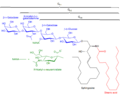
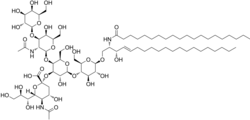
GM1 (monosialotetrahexosylganglioside) the "prototype" ganglioside, is a member of the ganglio series of gangliosides which contain one sialic acid residue. GM1 has important physiological properties and impacts neuronal plasticity and repair mechanisms, and the release of neurotrophins in the brain. Besides its function in the physiology of the brain, GM1 acts as the site of binding for both cholera toxin and E. coli heat-labile enterotoxin (Traveller's diarrhea).[1][2]

GM1 and inherited disease

[edit]

Galactosidases are enzymes that break down GM1, and the failure to remove GM1 results in GM1 gangliosidosis.[3] GM1 gangliosidosis are inherited disorders that progressively destroy neurons in the brain and spinal cord as GM1 accumulates. Without treatment, this results in developmental decline and muscle weakness, eventually leading to severe retardation and death.

GM1 and acquired disease

[edit]

Antibodies to GM1 are increased in Guillain–Barré syndrome, dementia and lupus but their function is not clear.[4] There is some evidence to suggest antibodies against GM1 are associated with diarrhea in Guillain–Barré syndrome.[5]

GM1 antibodies are also seen in multifocal motor neuropathy (MMN), a rare antibody-mediated inflammatory neuropathy.

GM1 and the cholera toxin

[edit]

The bacteria Vibrio cholerae produces a multimeric toxin called the cholera toxin. The secreted toxin attaches to the surface of the host mucosa cell by binding to GM1 gangliosides. GM1 consists of a sialic acid-containing oligosaccharide covalently attached to a ceramide lipid. The A1 subunit of this toxin will gain entry to intestinal epithelial cells with the assistance of the B subunit via the GM1 ganglioside receptor. Once inside, the A1 subunit will ADP ribosylate the Gs alpha subunit, which will prevent its GTPase activity. This will lock it in the active state and it will continuously stimulate adenylate cyclase. The sustained adenylate cyclase activity will lead to a sustained increase of cAMP which will cause electrolyte and water loss, causing diarrhea.[citation needed]

The SGLT1 receptor is present in the small intestine. When the cholera patient is given a solution containing water, sodium and glucose, the SGLT1 receptor will reabsorb sodium and glucose, while water will be passively absorbed with the sodium. This will replace the water and electrolyte loss in the cholera-induced diarrhea.

Therapeutic applications

[edit]

Because of GM1's close role in neuron repair mechanisms, it has been investigated as a possible drug to slow or even reverse the progression of a wide range of neurodegenerative conditions. Controlled phase II studies have indicated that GM1 can ease the symptoms of Parkinson's disease, presumably by countering degeneration of the substantia nigra,[6] and a similar methodology has been pursued to try and limit cellular damage from necrosis and apoptosis occurring after acute spinal cord injury.[7]

Additional images

[edit]

References

[edit]
Revisions and contributorsEdit on WikipediaRead on Wikipedia
from Grokipedia
GM1 (monosialotetrahexosylganglioside) is a sialic acid-containing glycosphingolipid that serves as a major component of neuronal cell membranes, particularly in the (CNS), where it plays essential roles in neural development, signaling, and protection. Structurally, GM1 consists of a backbone—comprising and a —linked via a β-glycosidic bond to a linear tetrasaccharide chain with a single (Neu5Ac) residue attached to the inner : Galβ1-3GalNAcβ1-4(Neu5Acα2-3)Galβ1-4Glcβ1-1′Cer. This amphiphilic molecule orients its glycan head in the outer leaflet of the plasma while embedding its lipid tails in the bilayer, enabling it to organize microdomains known as lipid rafts. GM1 is biosynthesized in the and Golgi apparatus through a sequential pathway initiated from , with GM3 as a key precursor, involving specific glycosyltransferases that add glucose, , , and residues. Its distribution is highly enriched in the , accounting for approximately 10-20% of total gangliosides in adult mammalian brains (alongside GD1a, GD1b, and GT1b, which together comprise over 95%), with concentrations varying by neuronal , developmental stage, and species; it is particularly abundant in synaptic terminals and axons. Outside the CNS, GM1 is present in lower amounts in other tissues such as peripheral nerves, , and fibroblasts, but its levels increase dramatically during neural differentiation. In physiological contexts, GM1 acts as a modulator of neuronal function by facilitating neurotrophin signaling—such as binding nerve growth factor (NGF) to enhance TrkA receptor activity—and promoting neurite outgrowth, synaptic plasticity, and calcium homeostasis. It regulates ion channels (e.g., NMDA and AMPA receptors), neurotransmitter release (including dopamine and opioids), and membrane fluidity, thereby supporting memory formation, cognition, and neuroregeneration while providing protection against excitotoxicity and oxidative stress. As a coreceptor for various proteins and toxins (e.g., cholera toxin), GM1 influences signal transduction within lipid rafts, underscoring its critical role in maintaining CNS integrity and plasticity throughout life.

Overview and Structure

Definition and Classification

GM1, also known as GM1a or monosialotetrahexosylganglioside, is a glycosphingolipid characterized by a ceramide lipid backbone linked to a tetrahexose oligosaccharide chain with a single sialic acid residue attached to the galactose unit in the neutral core structure. This sialic acid moiety imparts a negative charge, distinguishing GM1 as an acidic glycolipid prevalent in cell membranes, particularly those of neural tissues. The term "" was coined in the 1940s by Ernst Klenk for acidic glycosphingolipids isolated from neural tissues. The first structure of a , including , was elucidated in 1963 by Kuhn and Wiegandt, while Svennerholm developed the system and isolated from tissue that same year using chromatographic methods, marking a key advancement in research. Within the family, belongs to the ganglio series, classified based on the number of residues and the length of the neutral chain; for instance, it differs from GM2, which has a trihexose chain, and GD1a, a disialoganglioside with two s on a tetrahexose core. The abbreviation "" originates from the Svennerholm system, where "G" denotes , "M" indicates mono-sialylated, and the numeral "1" specifies the tetrahexosyl backbone. This system, developed for systematic naming of , facilitates comparison across and tissues by reflecting chromatographic mobility and structural features. GM1 is abundantly expressed in mammalian tissues, comprising approximately 10-20% of total gangliosides in the , with elevated levels in gray matter where it contributes significantly to composition.

Chemical Structure

GM1, or monosialotetrahexosylganglioside, has a molecular formula that varies depending on the length of the chain in its moiety, with a representative form being C₇₇H₁₃₉N₃O₃₁ for the variant featuring an 18:1 base and a 22:0 , and its is approximately 1,603 g/mol. Common variants include those with C₁₈ or C₂₀ s, such as C₇₃H₁₃₁N₃O₃₁ ( ~1,547 g/mol) for the 18:1/18:0 form prevalent in bovine brain extracts. The core structure of GM1 consists of a hydrophilic pentasaccharide headgroup attached to a hydrophobic lipid tail. The oligosaccharide chain is composed of (, Neu5Ac) α2,3-linked to the terminal β-D-galactopyranose (Gal), which is in turn β1,3-linked to β-D-N-acetylgalactosamine (GalNAc), β1,4-linked to another β-D-galactopyranose, and finally β1,4-linked to β-D-glucopyranose (Glc); the Glc is glycosidically bonded via its anomeric carbon to the C1 position of the . The comprises a sphingosine base (typically (2S,3R,4E)-2-aminooctadec-4-ene-1,3-diol) N-acylated with a saturated or monounsaturated , conferring variability in chain length and saturation. This architecture renders GM1 amphiphilic, with the polar, negatively charged sialic acid-containing oligosaccharide headgroup interacting with aqueous environments and extracellular proteins, while the nonpolar ceramide tail embeds within lipid bilayers, facilitating GM1's integration into cell membranes and its potential to form micelles in solution at high concentrations. Structural variants of GM1 include minor isoforms such as GM1b, where the sialic acid is α2,3-linked to the internal galactose (Galβ1,3GalNAc) rather than the terminal one, which is more abundant in peripheral nerves and certain cancer cells. Another variant, fucosyl-GM1, features an α1,2-fucose residue attached to the terminal galactose of the GM1 core and exhibits low prevalence in normal tissues but high expression in small cell lung cancer tumors.

Physiological Roles

In the Nervous System

GM1 ganglioside is highly concentrated in sheaths and neuronal of the , where it constitutes approximately 15% of total gangliosides in adults, alongside other major gangliosides such as GD1a, GD1b, and GT1b that together account for over 90% of gangliosides. This enrichment occurs particularly in lipid rafts, dynamic membrane microdomains that facilitate protein clustering and signaling, with GM1's distribution varying by region—higher in the compared to the —and peaking in adulthood. In these structures, GM1 contributes to the structural integrity of axons and dendrites, supporting overall neuronal architecture. During brain development, GM1 plays a crucial role in neuronal differentiation and growth by modulating receptor clustering on the cell surface. It interacts with , enhancing their aggregation and tyrosine phosphorylation to amplify (BDNF) signaling, which promotes neurite outgrowth and neuronal maturation. Studies in cultured neurons demonstrate that GM1 supplementation accelerates elongation and differentiation markers, acting via calcium-dependent mechanisms to guide process extension. This function positions GM1 as a key regulator of early neurodevelopmental events, ensuring proper circuit formation. In mature neurons, supports by stabilizing α-amino-3-hydroxy-5-methyl-4-isoxazolepropionic acid () receptors at postsynaptic sites and influencing (LTP). binding to GluR2 subunits of receptors facilitates their trafficking into synaptic membranes, increasing calcium influx and strengthening excitatory transmission, while protecting against excitotoxic damage. This stabilization is essential for LTP induction in hippocampal synapses, where enhances the magnitude and duration of potentiation following high-frequency stimulation. Additionally, provides neurotrophic support by enhancing the release of BDNF and (NGF) from hippocampal neurons, triggering autocrine loops that sustain neuronal survival and plasticity through Trk activation and intracellular calcium signaling. GM1 also maintains and function in aging brains, preventing neurodegeneration by modulating sodium/potassium-ATPase and calcium-ATPase activities to regulate . Its headgroup interacts with membrane proteins to preserve integrity, reducing and supporting and transmission. These properties help mitigate age-related declines in neuronal excitability and resilience.

In Cell Signaling and Repair

GM1 ganglioside plays a crucial role in modulating cell signaling by interacting with various receptors, particularly tyrosine kinases such as TrkA and platelet-derived growth factor receptor beta (PDGFRβ). Through its oligosaccharide portion, GM1 directly binds to the extracellular domain of TrkA, enhancing receptor autophosphorylation and downstream signaling cascades independent of nerve growth factor (NGF) presence in some contexts. Similarly, exogenous GM1 addition to cell cultures promotes PDGFRβ autophosphorylation in a domain-specific manner, thereby amplifying tyrosine kinase activity and influencing cellular responses like proliferation and differentiation. Although less extensively documented for G-protein coupled receptors, GM1's incorporation into lipid environments facilitates their clustering and activation, contributing to coordinated signal transduction in non-neuronal cells. In membrane organization, is integral to formation, where it clusters signaling molecules, including GPI-anchored proteins, to enhance transduction efficiency. By enriching raft domains, promotes the lateral segregation of GPI-anchored proteins like , enabling their functional association with intracellular effectors and optimizing signal relay without altering overall . This raft-mediated organization is essential for efficient activation of pathways involved in cellular communication, as depletion of disrupts GPI-anchored protein signaling while sparing other transmembrane receptors. GM1 supports neuroprotective repair mechanisms by promoting neurite outgrowth following injury through activation of the PI3K/Akt pathway. In axotomized neurons, elevated GM1 levels at injury sites associate with to initiate PI3K/Akt signaling, fostering axonal regeneration and structural recovery. Exogenous GM1 administration in models reduces neuronal by inhibiting pro-death pathways and preserving cell viability, with treatments decreasing infarct volume and improving functional outcomes in rodent ischemia models. Additionally, exerts anti-inflammatory effects by suppressing activation and release in response to (LPS). Treatment with attenuates LPS-induced production of pro-inflammatory such as TNF-α in , maintaining a homeostatic state and reducing neuroinflammatory damage without altering expression. This modulation occurs even post-activation, highlighting 's potential in mitigating secondary injury cascades. GM1 interacts with growth factors to stabilize receptor complexes, particularly enhancing peripheral nerve regeneration via NGF-TrkA interactions. By binding to TrkA, GM1 stabilizes the NGF-TrkA dimer, promoting sustained autophosphorylation and downstream neurotrophic signaling that accelerates axonal regrowth in peripheral nerves. In vivo studies demonstrate that GM1 potentiates NGF's effects on peripheral nerve repair, leading to improved regeneration rates in injured sciatic nerves.

Metabolism

Biosynthesis

The biosynthesis of ganglioside occurs primarily in the Golgi apparatus of neurons and glial cells, where it proceeds through a series of enzymatic reactions starting from , a precursor. The pathway belongs to the ganglio-series of glycosphingolipids and involves the sequential addition of sugar moieties to build the characteristic carbohydrate chain of , which consists of glucose, , , and linked to . This process is compartmentalized within the Golgi cisternae, with glycosyltransferases localized to specific subcompartments to ensure ordered assembly. The synthesis begins in the , where glucosyltransferase (UGCG) catalyzes the transfer of glucose from UDP-glucose to , forming glucosylceramide (GlcCer). This is followed by the addition of in a β1,4 linkage by β1,4-galactosyltransferase (B4GALT5 or B4GALT6), yielding lactosylceramide (LacCer), the common precursor for gangliosides. In the Golgi, is added to LacCer in an α2,3 linkage by CMP-:LacCer α2,3-sialyltransferase (ST3GAL5, also known as GM3 synthase or ST3Gal V), producing GM3. Subsequent steps involve the attachment of in a β1,4 linkage to GM3 by β1,4-N-acetylgalactosaminyltransferase (B4GALNT1), forming GM2, and finally the addition of another in a β1,3 linkage to GM2 by β1,3-galactosyltransferase (B3GALT4), resulting in GM1. These reactions utilize activated sugar donors such as UDP-, UDP-, and CMP-, with each enzyme acting processively on membrane-bound substrates. Key enzymes in the pathway include UGCG for the initial glucosylation, B4GALT5/6 for lactosylceramide formation, ST3GAL5 for sialylation at the GM3 step, B4GALNT1 for addition, and B3GALT4 as the terminal galactosyltransferase for . These Golgi-resident glycosyltransferases often form multimolecular complexes to coordinate sequential modifications and enhance efficiency. While the outline mentions UDP-galactose ceramide galactosyltransferase (CGT, or UGT8), this enzyme primarily synthesizes galactosylceramide for the galacto-series in rather than the glucosylceramide-based ganglio-series leading to ; the β1,4-galactosyltransferases B4GALT5/6 fulfill the analogous role for LacCer in neuronal . The of is tightly regulated, with upregulation during development as simple gangliosides like GM3 predominate in embryonic stages and complex ones like increase postnatally, driven by changes in and complex formation. Tissue-specific expression is prominent, with distribution varying across regions and enrichment in and neuronal elements, reflecting adaptations to localized neuronal demands. -synthase activity (B3GALT4) is particularly responsive to developmental cues, ensuring elevated synthesis during . Following synthesis, is incorporated into transport vesicles and delivered to the plasma membrane, where it localizes predominantly to the outer leaflet due to the action of flippases that translocate glycosphingolipids from the cytosolic to the luminal face during Golgi processing. This asymmetric distribution positions for roles in extracellular interactions within lipid rafts.

Degradation

The degradation of occurs primarily through intracellular catabolism within lysosomes, where it undergoes sequential by acid hydrolases to break down its complex glycan chain and backbone. This process begins with the action of lysosomal sialidase, also known as neuraminidase 1 (NEU1), which removes the terminal residue from , converting it to asialo- (GA1). NEU1 operates optimally in the acidic lysosomal environment at approximately 4.5, facilitating the initial desialylation step essential for subsequent breakdown. The core enzyme in this pathway is acid β-galactosidase (GLB1), which hydrolyzes the terminal β-linked from asialo-GM1, producing GA2 (GalNAcβ1-4Galβ1-4Glcβ1-Cer); this is followed by β-hexosaminidase A or B, which removes the to yield lactosylceramide (Galβ1-4Glcβ1-Cer). Further degradation of lactosylceramide involves another round of GLB1 activity to form glucosylceramide, followed by (GBA), which cleaves the glucose residue to generate . The pathway culminates in the breakdown of by acid ceramidase into and fatty acids, which are recycled for resynthesis or other metabolic uses. All these enzymes exhibit optima around 4.0–4.5, ensuring efficient activity within the lysosomal lumen. In neurons, the of in plasma membranes is on the order of a few hours, though overall turnover in is slower with a of about 10 days. Impairment of any key , such as GLB1 deficiency, disrupts this sequential degradation, leading to progressive accumulation of undegraded and its intermediates within lysosomes. Protective mechanisms enhance the efficiency of this process, including sphingolipid activator proteins known as saposins (particularly saposin B), which act as chaperones by solubilizing hydrophobic substrates from lysosomal membranes and presenting them to the hydrophilic active sites of glycosidases like GLB1 and GBA. These non-enzymatic cofactors are crucial for overcoming the insolubility of lipid substrates in the aqueous lysosomal milieu, ensuring complete under physiological conditions.

Role in Disease

Inherited Diseases: GM1 Gangliosidosis

GM1 gangliosidosis is a rare autosomal recessive lysosomal storage disorder caused by pathogenic variants in the GLB1 gene, located on chromosome 3p21.33, which encodes the β-galactosidase. These mutations result in deficient β-galactosidase activity, impairing the lysosomal degradation of and leading to its progressive accumulation in neurons and other cells. Over 200 distinct pathogenic variants in GLB1 have been identified, including missense, , and frameshift mutations, with varying impacts on enzyme function depending on the residual activity level. The disorder is classified into three main clinical types based on age of onset and severity. Type I, the infantile form, presents before 6 months of age with , developmental regression, coarse facial features, , and a characteristic cherry-red spot in the ; it progresses rapidly to severe neurodegeneration, seizures, and death typically by age 2 years. Type II encompasses late-infantile (onset 7 months to 2 years) and juvenile (onset 2 to 5 years) subtypes, featuring motor delays, , seizures, and without prominent visceral involvement; survival extends into or early adulthood. Type III, the chronic or adult form, has onset after age 5 years (often in or adulthood), manifesting as mild , gait abnormalities, and slowly progressive cognitive decline, with normal lifespan in some cases. Pathophysiologically, the accumulation of in lysosomes disrupts cellular membrane integrity and lysosomal function, triggering secondary effects such as , mitochondrial dysfunction, and neuronal , particularly in the . This leads to , changes, and vacuolization of neuronal cells, alongside systemic manifestations like due to storage in reticuloendothelial cells and skeletal from accumulation in bone. The buildup also affects , contributing to demyelination and impaired myelination. Diagnosis is confirmed through measurement of β-galactosidase enzyme activity in leukocytes or cultured fibroblasts, which shows reduced or absent levels, often below 5% of normal in severe forms. Genetic testing identifies biallelic GLB1 variants, aiding in carrier detection and prenatal . , such as MRI, reveals characteristic findings including cerebral and cerebellar atrophy, delayed myelination, and T2 hyperintensities in , supporting clinical suspicion. Epidemiologically, GM1 gangliosidosis has a worldwide incidence of approximately 1 in 100,000 to 200,000 live births, though rates are higher in certain populations such as those of Sicilian or Brazilian descent due to founder effects. The disorder affects both sexes equally and shows no strong geographic bias beyond isolated communities with elevated carrier frequencies. Recent studies from 2023 to 2025 have emphasized the role of biomarkers in tracking disease progression. For instance, (CSF) levels of GM1 ganglioside have been shown to correlate strongly with clinical severity scores, providing a potential pharmacodynamic marker for therapeutic trials. Prospective cohorts, including a 10-year study of type II patients, highlight progressive neurodegeneration via serial MRI and neurocognitive assessments, underscoring the need for early intervention. A 2023 retrospective analysis in estimated a local incidence of 1 in 210,000 and detailed symptom trajectories, such as early in 63% of type I cases. As of 2025, phase 1/2 trials using AAV9-GLB1 in type II patients have demonstrated tolerability and early signs of disease stabilization, offering new insights into GM1 accumulation dynamics.

Acquired Diseases and Autoimmunity

Acquired diseases involving GM1 ganglioside primarily arise from immune-mediated targeting, where autoantibodies against GM1 disrupt neural function without underlying genetic defects. In Guillain-Barré syndrome (GBS), an acute inflammatory neuropathy, anti-GM1 IgG antibodies are detected in approximately 20-50% of cases, particularly in the acute motor axonal neuropathy (AMAN) variant, following Campylobacter jejuni infection. These antibodies bind to GM1 at nodes of Ranvier, impairing sodium channel clustering and axonal conduction, leading to rapid-onset weakness and paralysis. The in GBS involves , where lipooligosaccharides (LOS) from C. jejuni structurally resemble , triggering cross-reactive antibodies that infiltrate peripheral . This induces at nodal regions, causing membrane attack complex formation, , and conduction block. Experimental models confirm that anti- binding to nodal recruits complement, disrupting paranodal architecture and function, which correlates with disease severity. Multifocal motor neuropathy (MMN), a chronic autoimmune disorder, features IgM anti-GM1 antibodies in up to 50% of patients, selectively affecting motor nerves and causing progressive, asymmetric weakness without sensory involvement. These antibodies target GM1-enriched nodal and paranodal regions, inducing conduction block through direct interference with voltage-gated sodium channels and complement-mediated axonal injury. Unlike GBS, MMN responds to intravenous immunoglobulin, which neutralizes antibody effects and halts progression. Anti-GM1 antibodies also appear in other acquired conditions, including (CIDP), where they are present in 10-30% of cases and associate with predominantly motor phenotypes and poorer treatment responses, and in systemic lupus erythematosus (SLE), particularly in cases with and neurological features, involving elevated anti-GM1 and anti-asialo-GM1 antibodies that may exacerbate immune complex deposition in renal and neural tissues. In , altered GM1 distribution co-localizes with amyloid-β plaques, promoting fibril formation and , though direct autoantibody involvement remains under investigation. Recent studies from 2023-2025 highlight broader infectious triggers for anti-GM1-mediated neuropathies, including post-COVID-19 complications. In cohorts, anti-ganglioside antibodies, including anti-GM1, were detected in 25% of neuropathy cases, suggesting viral mimicry or immune dysregulation as mechanisms for persistent neurological symptoms like and . These findings expand the role of GM1-targeted beyond bacterial infections, implicating diverse pathogens in nodal disruption.

Interaction with Cholera Toxin

The B-subunit of (CT) forms a homopentameric structure that binds with high affinity to five molecules of on the surface of enterocytes in the , primarily through interactions with the headgroup of GM1. This binding exhibits a dissociation constant (Kd) of approximately 5×10125 \times 10^{-12} M, enabling efficient toxin attachment even at low receptor densities. The specificity arises from hydrogen bonding and van der Waals interactions between the toxin's binding pockets and the terminal and residues of GM1, as revealed by crystallographic studies. Following surface binding, the CT-GM1 complex undergoes , trafficking retrogradely through the Golgi apparatus to the (ER). In the ER, the A-subunit of CT is released and translocated to the , where it catalyzes the of the Gsα subunit of heterotrimeric G proteins, thereby locking Gsα in its GTP-bound active state. This modification constitutively activates adenylate cyclase, leading to elevated intracellular cyclic AMP (cAMP) levels that phosphorylate and open (CFTR) chloride channels on the apical membrane. The resulting chloride efflux drives sodium and water secretion into the intestinal lumen, culminating in profuse secretory with fluid losses up to 20 L per day in severe cases. The density of in the , approximately 10610^6 molecules per cell, represents an evolutionary adaptation that optimizes toxin entry while maintaining epithelial function, as higher densities could disrupt integrity. Similarly, the heat-labile enterotoxin (LT) produced by enterotoxigenic Escherichia coli employs a comparable GM1-binding mechanism to induce analogous diarrheal symptoms. Therapeutically, oral rehydration solutions counteract fluid loss by leveraging the sodium-glucose linked transporter 1 (SGLT1) for coupled Na⁺ and glucose absorption, independent of CT-induced secretion. While no direct therapies target GM1-CT interactions, structural insights from the toxin-receptor complex have informed the development of subunit using the non-toxic B-subunit to elicit protective antibodies.

Therapeutic Potential

Treatments for GM1 Gangliosidosis

Currently, there are no curative treatments for GM1 gangliosidosis, a lysosomal storage disorder caused by deficiency of the β-galactosidase (GLB1), leading to GM1 accumulation in neurons and other cells across disease types I (infantile), II (late infantile/juvenile), and III (adult-onset). Therapeutic strategies focus on reducing substrate accumulation, restoring enzyme activity, and providing supportive management to alleviate symptoms and slow progression, with recent advances emphasizing (CNS) penetration. (ERT), substrate reduction therapy (SRT), , and approaches represent the primary targeted interventions under investigation or in early clinical use. Enzyme replacement therapy involves administration of recombinant human to supplement the deficient enzyme and reduce storage. Approaches include intravenous (IV) formulations with glycosylation modifications to enhance blood-brain barrier (BBB) crossing, which have demonstrated reduced accumulation in the CNS and peripheral tissues in preclinical animal models of gangliosidosis. An alternative is intracerebroventricular (ICV) ERT, delivering the enzyme directly to the CNS; a phase II is underway, and as of November 2025, real-world use has shown a median 29.1% decrease in () levels and stability in several outcome measures. As of 2025, such ERT formulations remain in development phases, with ongoing efforts by organizations like the Cure Foundation to advance clinical translation, though no widespread approvals for CNS-targeted ERT in have been reported globally. These therapies aim to provide sustained enzyme delivery, potentially benefiting all disease types by addressing both visceral and neurological manifestations. Substrate reduction therapy (SRT) employs small-molecule inhibitors to decrease glycosphingolipid biosynthesis, thereby limiting buildup in lysosomes. , an iminosugar inhibitor of glucosylceramide , has been explored off-label and in trials for gangliosidosis, showing relative tolerability in pediatric patients. In phase II clinical trials completed in 2023, treatment in patients with type II (late infantile/juvenile) gangliosidosis demonstrated slowed disease progression, as evidenced by stabilized neurological scores on scales like the Friedreich Rating Scale (FARS)-neurological assessment over 104 weeks. Another SRT candidate, nizubaglustat (AZ-3102), received regulatory clearance and initiated global phase 3 trials (NAVIGATE study) in July 2025 for late-infantile and juvenile and GM2 gangliosidoses, evaluating safety and efficacy in up to 75 participants. This approach is particularly suited for milder phenotypes like type II, where partial activity allows for better tolerance, though long-term efficacy data remain limited. Gene therapy seeks to deliver functional GLB1 genes directly to affected tissues using (AAV) vectors, offering potential one-time treatment. AAV9 vectors, which exhibit strong tropism for CNS and peripheral tissues, have been employed to express GLB1, restoring enzyme activity in preclinical models and early human studies. A prominent example is PBGM01, developed by Passage Bio, an AAV9-based therapy administered via single intravenous infusion in the phase 1/2 Imagine-1 trial (NCT03952637) initiated in 2019 and ongoing through 2025. Interim data from the first eight infantile (type I) patients, reported in 2023, indicated the therapy was well-tolerated up to 28 months post-infusion, with dose-dependent increases in β-galactosidase activity (up to 5.2-fold baseline at high dose) and preliminary evidence of motor function gains, such as improved head control and sitting ability in some participants. These findings suggest potential to halt or reverse early neurodegeneration in severe cases, though full efficacy awaits trial completion. Stem cell therapies, including (HSCT), have been attempted primarily for type I GM1 gangliosidosis to leverage donor-derived production and microglial replacement in the CNS. HSCT outcomes are mixed, with some reports of attenuated visceral symptoms and modest neurological stabilization when performed early (before age 2), but limited impact on severe involvement due to incomplete engraftment and ongoing GM1 storage. Emerging preclinical studies in 2024 explore (iPSC)-derived neuronal replacements, where patient-specific iPSCs harboring GLB1 mutations are corrected via gene editing and differentiated into neural cells for transplantation, showing restored function and reduced substrate accumulation in vitro and in animal models of gangliosidosis. These approaches hold promise for personalized CNS repair but remain investigational, with no clinical trials reported as of 2025. Supportive care remains essential for managing symptoms across all types, including antiepileptic medications (e.g., or ) for seizures, physical and to maintain mobility and prevent contractures, and nutritional support to address feeding difficulties. programs, crucial for early diagnosis and intervention, have been piloted in high-prevalence regions like , where GM1 incidence is elevated due to founder effects; a 2023 pilot study screened for six lysosomal disorders including GM1 using on dried blood spots, identifying cases presymptomatically. Expansions in 2025 aim to integrate GM1 into national neonatal screening protocols in , potentially enabling earlier access to therapies like . The global market for GM1 gangliosidosis treatments is projected to grow from approximately $142 million in 2025 to $652 million by 2032, driven primarily by the advancement of gene therapies like PBGM01 and emerging ERT/SRT options amid increasing trial successes and incentives.

Neuroprotective Applications

Exogenous administration of has been investigated as a neuroprotective for (SCI), primarily through intravenous or intrathecal routes to promote neuronal repair and functional recovery. In the Sygen multicenter phase III trial conducted in the early 2000s, involving over 700 patients with acute SCI, GM1 treatment (administered daily for up to 42 days) demonstrated benefits in severe cases, with improved rates of marked neurological recovery compared to , including enhancements in ASIA motor scores at one year post-injury. Earlier phase II studies also reported greater motor recovery in GM1-treated groups, with average ASIA motor score improvements of approximately 37 points versus 22 points in controls. A contemporary reanalysis of the Sygen data in 2024 confirmed faster recovery trajectories in GM1 recipients, supporting its role in reducing secondary tissue damage like , though overall efficacy in milder injuries remains inconsistent. In (PD), infusions have shown promise in enhancing dopamine neuron survival, potentially through upregulation of glial cell line-derived neurotrophic factor (GDNF) and reduction of . A phase II randomized, delayed-start trial (NCT00037830) involving 44 PD patients treated with intravenous GM1 for 24 weeks reported significant improvements in Unified Parkinson's Disease Rating Scale (UPDRS) motor scores compared to , with benefits persisting in extended treatment up to 120 weeks. Preclinical models indicate that GM1 counters GDNF resistance in GM1-deficient states, promoting dopaminergic protection via enhanced neurotrophic signaling. Long-term open-label studies over five years further affirm slowed UPDRS progression and overall clinical benefits without major adverse events. For and (TBI), GM1 stabilizes neuronal membranes and exerts anti-apoptotic effects to mitigate post-ischemic damage. Preclinical studies in rat models of occlusion demonstrate that GM1 administration reduces infarct volume by up to 25% and attenuates neuronal through Trk receptor-mediated survival pathways. A 2024 investigation confirmed GM1's inhibition of inflammatory responses and in cerebral ischemia-reperfusion injury, leading to improved neurological outcomes. In TBI models, GM1 prevents axonal regeneration inhibition and cognitive deficits by preserving levels in cortical regions. Emerging applications in (AD) and (ALS) leverage GM1's ability to modulate amyloid-beta (Aβ) aggregation and microglial inflammation. In AD models, GM1 inhibits Aβ-induced activation in via Akt/ pathway restoration, reducing and Aβ fibril formation. lipids like GM1 have been shown to suppress Aβ42 aggregation kinetics , potentially altering pathological conformers. For ALS, preclinical data reveal GM1's protection against glutamate excitotoxicity in motor neurons from SOD1 mutant models, preserving viability without altering disease progression in vivo. Delivery of across the blood-brain barrier (BBB) poses challenges due to its amphiphilic nature, addressed through liposomal encapsulation for improved penetration and targeted neuronal uptake. Liposome-incorporated GM1 has demonstrated efficient BBB crossing in rodent models, with brain accumulation enhanced by GM1's affinity for neuronal membranes. Safety profiles from clinical studies indicate GM1 is well-tolerated, with a phase I trial of intravenous liposomal GM1 (Talineuren) in PD patients reporting no serious adverse events over eight weeks and habituating infusion reactions resolving without intervention; long-term data show no evidence of tumorigenicity. Recent developments from 2023 to 2025 highlight GM1's advancing role in , including phase I evaluations of liposomal formulations in PD demonstrating CNS penetration and symptomatic relief. While FDA status has been granted for GM1-related therapies in gangliosidosis, exploratory combinations with BDNF mimetics are under investigation in early-phase studies to amplify neurotrophic effects in neurodegenerative models.

References

Add your contribution
Related Hubs
User Avatar
No comments yet.