Hubbry Logo
Georg KaiserGeorg KaiserMain
Open search
Georg Kaiser
Community hub
Georg Kaiser
logo
8 pages, 0 posts
0 subscribers
Be the first to start a discussion here.
Georg Kaiser
Georg Kaiser
from Wikipedia

Georg Kaiser

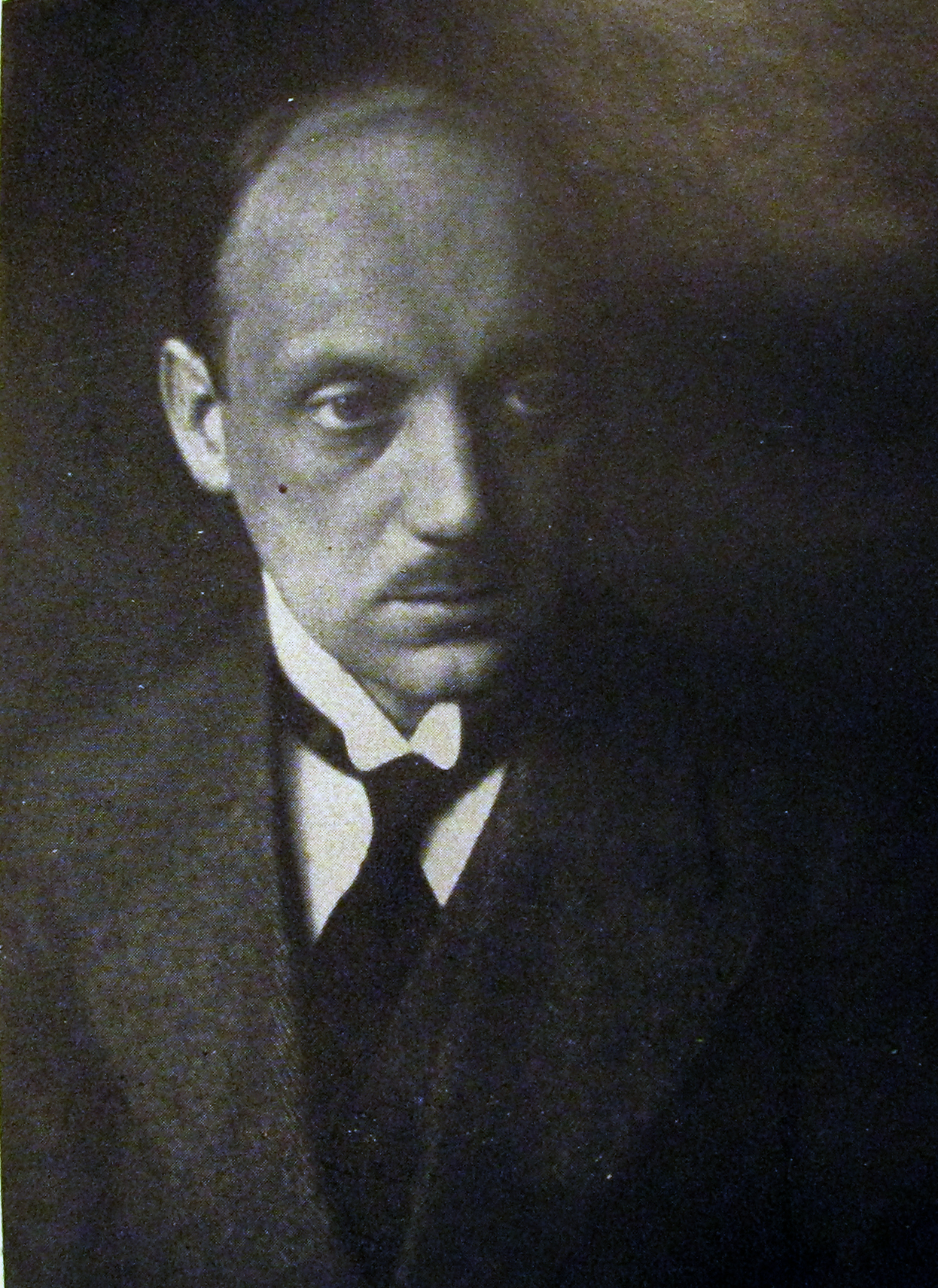
Friedrich Carl Georg Kaiser, called Georg Kaiser, (25 November 1878 – 4 June 1945) was a German dramatist.

Biography

[edit]

Kaiser was born in Magdeburg.

He was highly prolific and wrote in a number of different styles. An Expressionist dramatist, he was, along with Gerhart Hauptmann, the most frequently performed playwright of the Weimar Republic.[1] Georg Kaiser's plays include The Burghers of Calais (1913), From Morning to Midnight (1912), and a trilogy, comprising The Coral (1917), Gas (1918), Gas II (1920).

He died in Ascona, Switzerland, and was buried in Morcote near Lugano.

Work

[edit]

The Burghers of Calais (Die Bürger von Calais), written in 1913, was not performed until 1917. It was Kaiser's first success.[1] The play is very dense linguistically, with its dialogue comprising numerous emotive monologues influenced by the Telegramstil poetics of August Stramm. Like Kaiser's other works of the period, it bears the mark of Friedrich Nietzsche's philosophy, calling upon the modern individual to transcend mediocrity through extraordinary actions; the Expressionist 'New Man' became a commonplace of the genre.

From Morn to Midnight, filmed by Karlheinz Martin in 1920, was written in 1912 and first performed in 1917. One of the most frequently performed works of German Expressionist theatre, its plot concerns a Cashier (played by Ernst Deutsch in Martin's film) in a small bank in W. (ostensibly Weimar) who is alerted to the power of money by the visit of a rich Italian lady. He embezzles 60,000 Marks and absconds to B. (Berlin) where he attempts to find transcendent experiences in sport, romance and religion, only to be ultimately frustrated.

Kaiser's classic Expressionist plays, written just before and during World War I, often called for man to make a decisive break with the past, rejuvenating contemporary society. He eschewed characterization, and particularly character psychology, instead making his protagonists and other characters archetypes, employing highly anti-naturalistic dialogue often comprising lengthy individual speeches.

Kaiser's drama Side by Side (Nebeneinander, 1923), a 'people's play' (Volksstück), premiered in Berlin on 3 November 1923, directed by Berthold Viertel with design by George Grosz. With this play Kaiser moved away from the Expressionism of his previous works. Utilizing a more rounded characterization and more realistic curt, comic dialogue to tell a light-hearted story of an idealistic pawnbroker caught up in the hyperinflation[broken anchor] afflicting Germany at the time (the currency stabilization came a fortnight after the play opened), the play inaugurated the 'new sobriety' (Neue Sachlichkeit) in the drama. "Kaiser has left the cloud that used to surround him," a review in the Weltbühne suggested, "and landed with both feet on the earth."[2][1]

Kaiser's plays, particularly From Morning to Midnight, were highly influential on the German dramatists operating during the 1920s, including Iwan Goll, Ernst Toller and Bertolt Brecht, who drew on Kaiser's use of revue-type scenes and parable, which was influenced by medieval and 16th-century German mystery plays.

Kaiser collaborated with the composer Kurt Weill on his one-act operas Der Protagonist (1926) and Der Zar lässt sich photographieren (1928), also Der Silbersee (1933).

In his later years, he further developed his criticism of the modern machine age that had characterised the Gas trilogy. Imprisoned briefly in 1923 for stealing a loaf of bread during the hyper-inflationary crisis, Kaiser fled to Switzerland when the Nazis came to power in the 1930s (Kaiser went into exile in 1938). There he turned to writing verse dramas on mythological themes, including Pygmalion, Amphitryon, and Bellerophon, and a pacifist drama, The Soldier Tanaka (1940).

The Raft of the Medusa (1945) is a play written in verse that reverses the ethos of The Burghers of Calais in a more pessimistic direction; to avoid bad luck, thirteen children on a life-raft drown the youngest of them.[1] (See the frigate Méduse for the historical shipwreck and The Raft of the Medusa for its famous depiction in art.)

Plays

[edit]
  • 1912: Von Morgens bis Mitternachts (From Morning to Midnight, written; first performed 1917)
  • 1914: Die Bürger von Calais (The Burghers of Calais)
  • 1917: Die Koralle
  • 1918: Gas I
  • 1920: Gas II
  • 1923: Gilles und Johanna
  • 1928: Oktobertag
  • 1938: Die Gärtner von Toulouse
  • 1940: Alain und Elise[3]

Selected filmography

[edit]

Film adaptations

[edit]

Screenwriter

[edit]

Notes

[edit]

References

[edit]
[edit]
Revisions and contributorsEdit on WikipediaRead on Wikipedia
from Grokipedia
''Georg Kaiser'' is a German playwright known for his central role in the Expressionist movement in theatre and as one of the most prolific and influential dramatists of the early 20th century. He wrote approximately seventy plays that rejected naturalism in favor of abstract, symbolic, and antinaturalistic techniques, often exploring themes of industrialization, social transformation, war, and human renewal. His most notable works include From Morn to Midnight, The Citizens of Calais, and the Gas trilogy (The Coral, Gas I, and Gas II). Born on November 25, 1878, in Magdeburg, Germany, Kaiser rose to prominence in the 1910s and 1920s with performances of his plays in major cities such as Frankfurt, Munich, Berlin, and Hamburg. His innovative style, featuring typified characters, condensed language, and dialectical structures, influenced younger dramatists including Bertolt Brecht. During the Weimar Republic, he was among the most frequently performed playwrights in Germany. In 1933, the Nazis banned his works for alleged "cultural Bolshevism," leading to his emigration to Switzerland in 1938, where he continued writing until his death on June 4, 1945, in Ascona. His later plays shifted toward new styles, including idealistic realism and abstract explorations of reality, morality, and human relationships.

Early Life

Birth and Family Background

Georg Kaiser was born on November 25, 1878, in Magdeburg, Germany. In an autobiographical radio statement later published as "Von Magdeburg nach Magdeburg" in Der Querschnitt (1930), he described his origins: "Im Herbst 1878 bin ich geboren. In Magdeburg, wo mein Vater ein Kaufmann war und sechs Söhne hatte." This translates to: "In the autumn of 1878 I was born. In Magdeburg, where my father was a merchant and had six sons." His father worked as a merchant, and the family background was rooted in trade. Kaiser was one of six sons in this merchant household in Magdeburg.

Apprenticeship, Travel, and Entry into Writing

After completing his schooling with the Mittlere Reife, Georg Kaiser began an apprenticeship as a bookseller, which he soon broke off. He then worked in an export-import business in Magdeburg. In 1898 he traveled to South America as a coal trimmer on a freighter and worked from 1898 to 1901 in the office of the German company AEG in Buenos Aires, Argentina. He contracted malaria during his stay, leading to his return to Germany around 1901.

Theatrical Career

Early Plays and First Success

Georg Kaiser's early dramatic output consisted of numerous plays that remained largely unperformed and attracted little public attention. By 1912, none of his works had been staged publicly, resulting in limited impact on the theater scene at the time. His first major success came with Die Bürger von Calais, written in 1914 and first performed in 1917 at the Neues Theater in Frankfurt. The play, inspired by the historical siege of Calais and Auguste Rodin's sculpture of the same name, presented an appeal for peace amid the ongoing World War I. As German audiences grew weary of the conflict, the work's pacifist message and its innovative style gained it widespread popularity in private theaters across German and Austrian cities, establishing Kaiser's reputation as a significant voice in contemporary drama.

Expressionist Period and Major Works

Kaiser established himself as a central figure in German Expressionist drama during the late 1910s and early 1920s, producing plays that sharply critiqued industrialization, capitalism, and the mechanization of human life while exploring the possibility of spiritual regeneration through the Nietzschean concept of the "New Man." His works from this period typically employed archetypal characters rather than psychologically detailed individuals, anti-naturalistic dialogue, extended monologues, and a fragmented, telegraphic style influenced by Telegramstil to convey heightened emotional and existential states. The play Von Morgens bis Mitternachts (written 1912, first performed 1917) exemplifies his Expressionist approach, depicting a lowly bank cashier who embezzles funds in a frantic quest for authentic experience and meaning within a soulless material world, only to confront ultimate disillusionment and death. This work was followed by Die Koralle (1917), which introduces the figure of the Billionaire and initiates the Gas trilogy, a cycle that forms Kaiser's most ambitious Expressionist achievement. Die Koralle (1917), Gas I (1918), and Gas II (1920) collectively form the Gas trilogy, portraying the destructive consequences of industrial capitalism and technological progress through symbolic conflicts between the ruling class and workers, culminating in visions of societal collapse and the search for a transformed humanity free from machine domination. In the trilogy, Kaiser dramatizes the clash between human values and the modern money and machine world, with recurring motifs of rebellion against dehumanizing systems and the aspiration toward a "New Man" capable of spiritual renewal. These plays solidified Kaiser's reputation as the most prolific Expressionist playwright, whose thematic focus on societal transformation and stylistic innovations profoundly influenced the movement's development in German theater.

Shift from Expressionism and Later Plays

In 1923, Georg Kaiser departed from the ecstatic, visionary style of his earlier Expressionist dramas with the play Nebeneinander, a Volksstück that directly engaged the social and economic chaos of German hyperinflation through realistic characters and curt dialogue. This work is regarded as inaugurating the Neue Sachlichkeit (New Objectivity) in drama, emphasizing factual observation and sobriety over subjective intensity. The shift represented a deliberate evolution toward grounded social commentary rather than a decline in ambition. Kaiser went on to collaborate with composer Kurt Weill on several notable stage works that blended dramatic text with music, reflecting his interest in new theatrical forms. These included the one-act opera Der Protagonist (1926), for which Kaiser provided the libretto, marking Weill's operatic debut. The pair followed with the one-act comic opera Der Zar lässt sich photographieren (1928), again with Kaiser's libretto, incorporating jazz-influenced dance elements. Their final joint project was the play with music Der Silbersee (1933), a winter's tale that positioned itself stylistically between Expressionism and Neue Sachlichkeit. Kaiser's subsequent independent plays continued this trajectory toward more intimate and psychologically nuanced themes. These included Oktobertag (1928), which explored complex personal dilemmas, as well as the later works Der Gärtner von Toulouse (1938) and Alain und Elise (1940), the latter of which drew on mythical and archetypal dimensions to portray profound human experiences.

Film and Screen Contributions

Acting Roles

Georg Kaiser had a brief and minor acting career in the German silent film industry, appearing in 11 credits as an actor between 1915 and 1919. These roles were predominantly in short films, with many lacking detailed character names in records, reflecting the peripheral nature of his involvement in acting before he fully committed to playwriting. His screen appearances were short-lived and ended entirely after 1919. Representative examples of his roles include Georg Cords (a Rentier) in Anna, die Perle (1916), Metusalem Waschlappsky in Eine Verfolgte Unschuld (1916), and a Kunstmaler in Das Glück der Irren (1919). He also appeared in films such as Der Überfahrene Hut (1915), Das blonde Vergnügen (1918) as Hans Jung (Freund Dr. Schummrichs), Das Karnickel (1917) as Mann, and Ich heirate meine Puppe (1917) as Fredy, among others. These minor performances highlight a brief early phase in Kaiser's career that did not extend into his later prominence as a dramatist.

Direct Screenwriting Credits

Georg Kaiser wrote screenplays for a handful of German silent films in the late 1910s and early 1920s, representing his limited but direct engagement with the medium during its formative years. He served as writer for Hunderttausend Dollars (1919), an original screenplay directed by Georg Alexander. Kaiser also adapted his own Expressionist play Von morgens bis mitternachts into the screenplay for From Morning to Midnight (1920), directed by Karlheinz Martin. His other direct screenwriting credits from this period include Devoted Artists (1919), Prince Cuckoo (1919) based on Otto Julius Bierbaum's novel, and Alfred von Ingelheim's Dramatic Life (1921) adapted from a novel by Hans Land. Some of these works drew from existing literary sources, including novels or plays by other authors, highlighting Kaiser's role in translating narrative material to the screen rather than solely original creations. These contributions occurred alongside his primary focus on theater and remain modest in number compared to his extensive dramatic output.

Adaptations of His Plays

Several of Georg Kaiser's plays have been adapted into films and television productions, with notable examples emerging during the German silent film era and a particular concentration in post-war German television. One of the most prominent early adaptations is the 1920 silent film From Morning to Midnight, directed by Karlheinz Martin and based on Kaiser's expressionist play Von morgens bis mitternachts, which transfers the stage work into a radically stylized Expressionist cinematic form. In 1940, an American adaptation appeared with The Ghost Comes Home, a comedy directed by Wilhelm Thiele and based on Kaiser's play Der mutige Seefahrer. After World War II, Kaiser's dramatic works received renewed attention through German television, including multiple adaptations of Kolportage broadcast in 1957 (directed by Hans Lietzau), 1964, 1968, and 1980. The play Der Gärtner von Toulouse was also adapted for television in 1965 and 1982. These adaptations reflect the continued relevance of Kaiser's themes and dramatic structures in screen formats, especially within German-language media during the mid-20th century.

Exile and Final Years

Nazi Persecution and Emigration

Nazi Persecution and Emigration With the Nazis' rise to power, Georg Kaiser's dramatic works were banned due to their strong antiwar stance, which clashed with the regime's militaristic and nationalist ideology. This prohibition was part of the broader suppression of expressionist literature and pacifist voices deemed incompatible with National Socialist principles. The ban marked a severe restriction on his professional life in Germany, preventing performances and publication of his plays under the Third Reich. In 1938, Kaiser emigrated to Switzerland to flee the ongoing persecution faced by nonconformist artists and intellectuals. This move allowed him to escape the repressive environment in Nazi Germany, though it ended his direct involvement in the German theater scene. Earlier in his life, during the Weimar Republic, Kaiser had been briefly imprisoned in 1920 for embezzlement, an incident entirely separate from the later political persecution under the Nazis.

Life and Works in Switzerland

After his emigration to Switzerland in 1938, Georg Kaiser lived in straitened circumstances but maintained a prolific creative output. During this exile period, his writing shifted toward pacifist and mythological themes, moving away from earlier expressionist styles. In 1940, he completed the pacifist drama Der Soldat Tanaka, which addressed antiwar sentiments amid the growing global conflict. Kaiser also turned to mythological verse dramas, producing works such as Pygmalion, Zweimal Amphitryon, and Bellerophon, which drew on classical Greek themes to explore human potential and utopian ideals. These plays were collected and published posthumously in 1948 as Griechische Dramen by Artemis-Verlag in Zurich. One of his late works, Das Floß der Medusa, completed in 1943, was inspired by a wartime report of a torpedoed ship carrying child evacuees and centered on a lifeboat adrift at sea containing only children. The work combined his recurring Expressionist motif of the "New Man" or regenerated humanity with late-life misanthropic pessimism, using a morally reborn boy to condemn adult cruelties while underscoring the impossibility of utopian renewal surviving in empirical reality. This reflected an increasingly pessimistic tone in his last works, marked by profound disillusionment with human society.

Death

Georg Kaiser died on June 4, 1945, in Ascona, Switzerland, from an embolism at the age of 66. He resided on Monte Verità during his final months in exile. Kaiser was buried in the Cimitero di Morcote in Morcote, near Lugano, in the Swiss canton of Ticino. His widow, Margarethe Kaiser, subsequently established the Georg Kaiser Archive at the Akademie der Künste in Berlin, which preserves his literary estate and forms a core part of the academy's holdings in modern German literature.

Legacy

Influence on Drama and Expressionism

Georg Kaiser emerged as a central figure in German Expressionist theatre, renowned for pioneering a radically subjective and emotionally intense dramatic style that rejected naturalism in favor of distorted reality to convey inner turmoil and social critique. His works, such as From Morn to Midnight, epitomized the movement's core principles and became exemplary models for Expressionist playwrights. Kaiser's innovative techniques, including episodic structures and symbolic abstraction, helped define the theatrical expression of alienation and spiritual longing during the early twentieth century. Kaiser was exceptionally prolific, authoring about seventy plays throughout his career, which made him one of the most prolific German playwrights of the early 20th century. During the Weimar Republic, he was, alongside Gerhart Hauptmann, one of the most frequently performed playwrights, with his works enjoying widespread staging and audience reception. This prominence reflected his ability to capture the era's generational revolt against traditional order through themes of psychological and societal conflict. Kaiser's dramatic approach exerted lasting influence on fellow Expressionist playwrights such as Ernst Toller and Iwan Goll, as well as on later dramatists including Bertolt Brecht in developments toward epic theatre. Brecht drew upon Kaiser's use of revue-style scenes and parabolic elements, adapting them to his own innovations in political drama. Through these connections, Kaiser's contributions helped shape the evolution of modern German drama beyond the Expressionist period.

Posthumous Recognition and Archives

Kaiser's widow, Margarete Kaiser, established the Georg Kaiser Archive at the Akademie der Künste in Berlin by depositing his literary estate there after his death in 1945. This collection, which forms a core part of the Academy's literature department holdings, includes manuscripts, correspondence, and other personal documents from his career. The Akademie der Künste has organized exhibitions on his life and work, such as "Kunst und Leben. Georg Kaiser (1878–1945)", to commemorate his contributions to German drama. His plays have continued to be adapted for radio and television in the post-war period, particularly in German-speaking countries, attesting to the sustained interest in his dramatic oeuvre beyond his lifetime. These adaptations and the preservation efforts through the archive highlight his lasting presence in cultural memory.

References

Add your contribution
Related Hubs
User Avatar
No comments yet.