Hubbry Logo
Dipeptidyl peptidase-4 inhibitorDipeptidyl peptidase-4 inhibitorMain
Open search
Dipeptidyl peptidase-4 inhibitor
Community hub
Dipeptidyl peptidase-4 inhibitor
logo
8 pages, 0 posts
0 subscribers
Be the first to start a discussion here.
Dipeptidyl peptidase-4 inhibitor
from Wikipedia
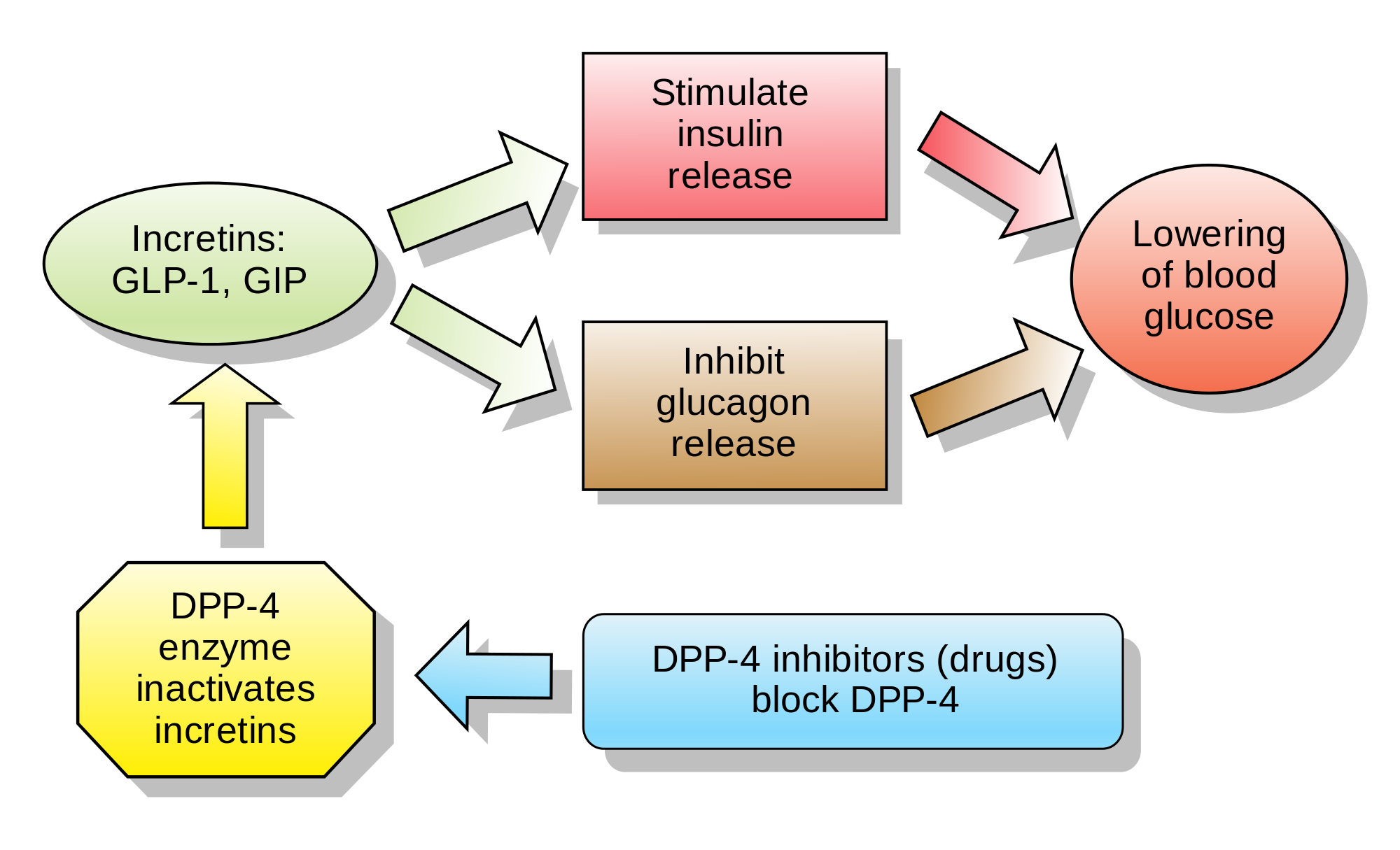
DPP-4 inhibitors and GLP-1

Inhibitors of dipeptidyl peptidase 4 (DPP-4 inhibitors or gliptins) are a class of oral hypoglycemics that block the enzyme dipeptidyl peptidase-4 (DPP-4). They can be used to treat diabetes mellitus type 2.

The first agent of the class—sitagliptin—was approved for marketing by the US Food and Drug Administration (FDA) in 2006.[1]

Glucagon increases blood glucose levels, and DPP-4 inhibitors reduce glucagon and blood glucose levels. The mechanism of DPP-4 inhibitors is to increase incretin levels (GLP-1 and GIP),[2][3][4] which inhibit glucagon release, which in turn increases insulin secretion, decreases gastric emptying, and decreases blood glucose levels.

A 2018 meta-analysis found no favorable effect of DPP-4 inhibitors on all-cause mortality, cardiovascular mortality, myocardial infarction or stroke in patients with type 2 diabetes.[5]

Examples

[edit]

Drugs belonging to this class are:

Berberine, an alkaloid found in plants of the genus Berberis (the "barberry"), inhibits DPP-4, which may at least partly explains the chemical's antihyperglycemic activity.[18]

Adverse effects

[edit]

In individuals already taking sulphonylureas, use of DPP-4-class medications concurrently increases their risk for low blood sugar events relative to those on sulphonylureas alone.[19]

Adverse effects include nasopharyngitis, headache, nausea, heart failure, hypersensitivity, and skin reactions.[citation needed]

In late August 2015, the US FDA issued a warning that drugs like sitagliptin, saxagliptin, linagliptin, alogliptin, and other DPP-4 inhibitors could cause joint pain that can be severe and disabling.[20] However, studies assessing risk of rheumatoid arthritis among DPP-4 inhibitor users have been inconclusive.[21] A 2014 review found that the use of saxagliptin and alogliptin increased individuals' risk of developing heart failure, leading the FDA to add warnings to the labels of these drugs in 2016.[22] A 2018 meta-analysis indicated that the use of DPP-4 inhibitors was associated with a 58% increased risk of developing acute pancreatitis compared to placebo or no treatment.[23] Additionally, a 2018 observational study suggested an elevated risk of developing inflammatory bowel disease, specifically ulcerative colitis, which peaked after three to four years of use and decreased after more than four years.[24] Finally, a 2020 Cochrane systematic review found insufficient evidence to suggest that metformin monotherapy reduced all-cause mortality, serious adverse events, cardiovascular mortality, non-fatal myocardial infarction, non-fatal stroke, or end-stage renal disease when compared to DPP-4 inhibitors for the treatment of type 2 diabetes.[25]

Cancer

[edit]

In response to a report of precancerous changes in the pancreases of rats and organ donors treated with the DPP-4 inhibitor sitagliptin,[26][27] the US FDA and the European Medicines Agency each undertook independent reviews of all clinical and preclinical data related to the possible association of DPP-4 inhibitors with pancreatic cancer. In a joint letter to the New England Journal of Medicine, the agencies stated that they had not yet reached a final conclusion regarding a possible causative relationship.[28] A 2014 meta-analysis found no evidence for increased pancreatic cancer risk in people treated with DPP-4 inhibitors, but owing to the modest amount of data available, the authors were unable to completely exclude possibly increased risk.[29]

Combination drugs

[edit]

Some DPP-4 inhibitor drugs have received approval from the FDA to be used with metformin concomitantly with additive effect to increase the level of glucagon-like peptide 1 (GLP-1) which also decreases hepatic glucose production.[citation needed]

See also

[edit]

References

[edit]
Revisions and contributorsEdit on WikipediaRead on Wikipedia
from Grokipedia
Dipeptidyl peptidase-4 (DPP-4) inhibitors, commonly referred to as gliptins, are a class of oral antihyperglycemic agents primarily used to manage mellitus in adults, often in combination with diet and exercise to improve glycemic control by targeting the system. These medications work by selectively inhibiting the DPP-4 , which normally degrades hormones like (GLP-1) and glucose-dependent insulinotropic polypeptide (GIP); this inhibition prolongs the half-life of these hormones, leading to enhanced glucose-dependent insulin secretion from pancreatic beta cells and reduced release from alpha cells, thereby lowering postprandial and blood glucose levels without significant risk of when used alone. First approved by the U.S. (FDA) in 2006 with sitagliptin as the inaugural agent, DPP-4 inhibitors have become a cornerstone of therapy due to their favorable safety profile, including weight neutrality and low incidence of severe adverse effects. Commonly prescribed DPP-4 inhibitors include sitagliptin (Januvia), saxagliptin (Onglyza), linagliptin (Tradjenta), and alogliptin (Nesina), all of which are administered orally once daily with high and minimal dose adjustments required for most patients, though renal impairment may necessitate modifications for certain agents like sitagliptin and saxagliptin. They are indicated as monotherapy or in combination with other antidiabetic drugs such as metformin, , thiazolidinediones, or insulin, particularly when metformin alone is insufficient, and they demonstrate HbA1c reductions of approximately 0.5% to 1.0% in clinical trials. Cardiovascular outcome trials, including SAVOR-TIMI 53, EXAMINE, TECOS, and CARMELINA, have generally confirmed their neutral to beneficial effects on , though saxagliptin has been associated with a modest increase in hospitalization for ( 1.27). The safety profile of DPP-4 inhibitors is characterized by common mild side effects such as upper infections, nasopharyngitis, and , with a low overall risk of except when combined with insulin secretagogues like . Rare but serious adverse events include , severe reactions (e.g., ), and dermatologic conditions like , prompting FDA warnings for joint pain and risks. Contraindications include , , and history of severe or , with caution advised in patients with renal or hepatic impairment. Compared to other antidiabetic classes, DPP-4 inhibitors offer advantages in tolerability over (lower ) and thiazolidinediones (no or ), positioning them as a preferred option for patients with cardiovascular comorbidities or those intolerant to metformin. Ongoing research explores their potential beyond , such as in new-onset diabetes after transplantation, though evidence remains limited.

Overview

Definition and classification

Dipeptidyl peptidase-4 (DPP-4) inhibitors are a class of oral antihyperglycemic agents that selectively inhibit dipeptidyl peptidase-4, a serine protease enzyme responsible for the rapid degradation of incretin hormones such as glucagon-like peptide-1 (GLP-1) and glucose-dependent insulinotropic polypeptide (GIP). By blocking this enzyme, DPP-4 inhibitors prolong the activity of these incretins, thereby enhancing glucose-dependent insulin secretion and suppressing glucagon release to improve glycemic control in adults with type 2 diabetes mellitus. These medications are typically administered once daily and are approved for use in combination with diet and exercise. DPP-4 inhibitors are classified as incretin-based therapies, one of two main subclasses alongside GLP-1 receptor agonists, which target the system to address the impaired effect observed in . This classification sets them apart from other antidiabetic drug classes, including biguanides like metformin that primarily reduce hepatic glucose output, that directly stimulate insulin release from pancreatic beta cells, and sodium-glucose cotransporter 2 (SGLT2) inhibitors that promote urinary glucose excretion. Unlike these agents, DPP-4 inhibitors offer a low risk of and weight neutrality, making them suitable for patients where avoiding these side effects is a priority. The term "gliptins" is commonly used for this drug class, derived from the shared "-gliptin" suffix in their generic names, such as sitagliptin and linagliptin, reflecting their common . As of 2025, DPP-4 inhibitors are positioned as second- or third-line options in management guidelines, often added to metformin monotherapy or used in combination regimens for patients at high risk for or without compelling indications for agents with cardiovascular benefits, per the (ADA) Standards of Care and ADA/EASD consensus recommendations.

Therapeutic indications

Dipeptidyl peptidase-4 (DPP-4) inhibitors are primarily indicated as an adjunct to diet and exercise to improve glycemic control in adults with mellitus (T2DM). They are recommended for patients who require additional therapy beyond lifestyle modifications, particularly in those with inadequate response to initial treatments. These agents can be used as monotherapy or in combination with other antidiabetic medications, such as , thiazolidinediones, or insulin, especially when metformin is inappropriate due to contraindications like renal impairment (e.g., estimated [eGFR] <30 mL/min/1.73 m²) or intolerance from gastrointestinal side effects. Patient selection prioritizes individuals at low risk for hypoglycemia, guided by shared decision-making that considers comorbidities, cost, and tolerability. As of 2025, emerging evidence from recent trials suggests potential off-label uses in conditions associated with T2DM, including polycystic ovary syndrome (PCOS), where DPP-4 inhibitors like sitagliptin may improve ovarian cycles and metabolic parameters when combined with metformin. In non-alcoholic fatty liver disease (NAFLD, now termed metabolic dysfunction-associated steatotic liver disease [MASLD]), some studies indicate benefits such as reduced liver fat content, though results are mixed and these agents are not recommended as first-line due to superior alternatives like GLP-1 receptor agonists. Evidence for prediabetes remains limited, with no established role in prevention based on current trials. DPP-4 inhibitors are contraindicated in patients with type 1 diabetes, diabetic ketoacidosis, or hypersensitivity to the drug or its components. They should be avoided in individuals with a history of pancreatitis, and use is not recommended concurrently with GLP-1 receptor agonists due to lack of added glycemic benefit. While none are absolutely contraindicated in chronic kidney disease, severe renal impairment (e.g., eGFR <30 mL/min/1.73 m²) requires caution, with some agents like linagliptin needing no adjustment but others (e.g., sitagliptin, saxagliptin) requiring dose reduction to avoid accumulation. Hepatic impairment does not typically necessitate adjustments, but monitoring is advised. Dosing is generally once-daily oral administration, with adjustments based on renal function for specific agents: for example, sitagliptin is reduced to 50 mg daily for eGFR 30–50 mL/min/1.73 m² and 25 mg for eGFR <30 mL/min/1.73 m², while linagliptin remains at 5 mg regardless. Renal function should be monitored periodically, especially in patients with declining eGFR.

Mechanism of action

Role of DPP-4 enzyme

Dipeptidyl peptidase-4 (DPP-4), also known as CD26, is a membrane-bound ectoenzyme that functions as a serine protease. It consists of 766 amino acids and forms homodimers essential for its catalytic activity, with the extracellular domain responsible for substrate binding and cleavage. DPP-4 specifically cleaves N-terminal dipeptides from substrates featuring proline or alanine at the penultimate (position 2) amino acid, thereby inactivating or modifying their biological activity. In its physiological role, DPP-4 primarily degrades incretin hormones such as glucagon-like peptide-1 (GLP-1) and glucose-dependent insulinotropic polypeptide (GIP) following meals, which limits their circulating half-life to approximately 1-2 minutes for GLP-1 and 5-7 minutes for GIP. This rapid postprandial degradation by DPP-4 regulates the incretin effect, which enhances insulin secretion in response to nutrient intake. The enzyme is ubiquitously expressed across various tissues, including the intestines, kidneys, liver, and immune cells such as T lymphocytes, with a soluble form (sDPP-4) circulating in plasma derived partly from membrane shedding or alternative splicing. Recent studies as of 2025 have further implicated DPP-4 in neuroprotection and memory processes via modulation of substrates like neuropeptide Y (NPY), expanding its roles beyond glucose homeostasis. Beyond incretins, DPP-4 processes a diverse array of non-incretin substrates, including cytokines like stromal cell-derived factor-1 (SDF-1) and neuropeptides such as substance P. Cleavage of SDF-1 by DPP-4 modulates its chemotactic activity, thereby influencing immune cell migration and recruitment during inflammatory responses. Similarly, degradation of substance P affects neurogenic inflammation and immune modulation, highlighting DPP-4's broader involvement in immunity and inflammatory processes independent of glucose homeostasis.

Effects on incretin system

The incretin system comprises gut-derived hormones, primarily glucagon-like peptide-1 (GLP-1) secreted by L-cells in the distal intestine and glucose-dependent insulinotropic polypeptide (GIP) released by K-cells in the proximal intestine, which play a key role in postprandial glucose regulation by augmenting insulin secretion from pancreatic beta cells and suppressing glucagon release from alpha cells in a glucose-dependent manner. These hormones are rapidly degraded by dipeptidyl peptidase-4 (DPP-4), limiting the active half-life of GLP-1 to approximately 1-2 minutes and GIP to 5-7 minutes. DPP-4 inhibitors prolong the half-life of active GLP-1 and GIP by preventing their enzymatic cleavage, resulting in a 2- to 3-fold increase in postprandial plasma levels of these incretins. This enhancement restores the incretin effect diminished in type 2 diabetes, thereby improving beta-cell responsiveness to glucose and promoting glucose-dependent insulin secretion while inhibiting glucagon secretion from pancreatic alpha cells. The augmented incretin activity leads to downstream effects that contribute to glucose lowering, including reduced hepatic glucose production through the combined actions of increased insulin and decreased glucagon. Although GLP-1 itself delays gastric emptying and promotes satiety, the modest elevation in incretin levels with DPP-4 inhibition results in limited or no significant impact on these processes, with potential minor contributions to appetite suppression in some contexts. The glucose-dependent nature of these effects—where insulin secretion and glucagon suppression are primarily activated at elevated glucose levels—underlies the low risk of hypoglycemia associated with DPP-4 inhibitors.

Pharmacology

Pharmacokinetics

Dipeptidyl peptidase-4 (DPP-4) inhibitors are orally administered agents with generally high bioavailability exceeding 80%, as seen with sitagliptin (87%), alogliptin (100%), and vildagliptin (85%; approved outside the US, e.g., in the EU), although saxagliptin exhibits around 67% for the parent compound and linagliptin approximately 30%. They demonstrate rapid absorption, with peak plasma concentrations (Tmax) typically achieved within 1 to 3 hours post-dose across the class. Steady-state plasma levels are attained within 1 to 2 days of once-daily administration. Protein binding varies widely from negligible to approximately 99%, for example 38% for sitagliptin, 20% for alogliptin, and up to 99% for linagliptin at low concentrations. Food intake has no clinically meaningful impact on their absorption or overall exposure. Metabolism of DPP-4 inhibitors is primarily hepatic but limited in extent for most agents, with the majority excreted unchanged and few active metabolites formed. Saxagliptin is metabolized via CYP3A4 to a pharmacologically active metabolite (5-hydroxy saxagliptin), contributing to its overall DPP-4 inhibition. In contrast, linagliptin undergoes non-CYP-mediated processes with predominant biliary excretion and minimal active metabolites, while sitagliptin, alogliptin, and vildagliptin (approved outside the US) exhibit negligible CYP involvement, though vildagliptin forms a hydrolytic active metabolite. This profile results in low levels of active metabolites class-wide, minimizing accumulation risks. Elimination pathways vary by agent: renal excretion predominates for sitagliptin (79% unchanged), saxagliptin (75% combined parent and metabolite), alogliptin (76% unchanged), and vildagliptin (85%; approved outside the ), whereas linagliptin is primarily eliminated via the biliary/fecal route (90%). Elimination half-lives generally range from 10 to 24 hours, supporting once-daily dosing—such as 12.4 hours for sitagliptin and 21 hours for alogliptin—although linagliptin's effective is around 12 hours despite a longer terminal phase due to enterohepatic recirculation. Dose adjustments are recommended primarily for renal impairment across the class, except for linagliptin. For instance, alogliptin is reduced to half the standard dose (12.5 mg daily) at eGFR 30-59 mL/min/1.73 m² and to 6.25 mg at eGFR <30 mL/min/1.73 m² or end-stage renal disease. Similar reductions apply to sitagliptin (50 mg or 25 mg) and saxagliptin (2.5 mg) in moderate to severe renal impairment. Hepatic adjustments are minimal, with no changes needed for moderate impairment in sitagliptin, alogliptin, saxagliptin, or linagliptin.

Drug interactions

Dipeptidyl peptidase-4 (DPP-4) inhibitors generally exhibit a low potential for pharmacokinetic interactions due to their minimal involvement in metabolism and limited substrate affinity for major drug transporters, except for specific agents like saxagliptin. However, clinically significant interactions can occur, particularly with modulators for saxagliptin. Strong inhibitors, such as , increase saxagliptin exposure approximately 2.5-fold, necessitating a dose reduction to 2.5 mg daily to avoid excessive inhibition of DPP-4 and potential adverse effects. Conversely, strong inducers like rifampin decrease saxagliptin exposure by about 76%, which may reduce its efficacy; no dose adjustment is recommended, but glycemic control should be monitored closely. For renally cleared DPP-4 inhibitors like sitagliptin, interactions involving organic cation transporter 2 (OCT2) inhibitors such as result in a modest 29% increase in sitagliptin area under the curve (AUC), which is not considered clinically significant and requires no dose adjustment. Pharmacodynamic interactions are more common, particularly additive hypoglycemic effects when DPP-4 inhibitors are combined with insulin secretagogues like or exogenous insulin, potentially increasing the risk of ; a reduction in the dose of the or insulin may be necessary. Similarly, when used with thiazolidinediones (e.g., pioglitazone), patients should be monitored for , as thiazolidinediones promote fluid retention, though DPP-4 inhibitors themselves do not contribute to this risk. No major interactions with food or alcohol have been reported for DPP-4 inhibitors, allowing administration with or without meals. Coadministration of saxagliptin and results in no clinically significant pharmacokinetic interaction. A minor interaction exists with and sitagliptin, where sitagliptin slightly increases AUC by 11% and maximum concentration by 18%, but this does not warrant dose adjustments or routine monitoring beyond standard levels. Emerging data on combinations with sodium-glucose cotransporter 2 (SGLT2) inhibitors show no significant pharmacokinetic or pharmacodynamic interactions, supporting their safe concurrent use for enhanced glycemic control without dose modifications.

Available drugs

Approved DPP-4 inhibitors

Dipeptidyl peptidase-4 (DPP-4) inhibitors approved for clinical use primarily target management as oral monotherapies or in combinations, with approvals varying by regulatory authority. The first globally approved agent, sitagliptin (marketed as Januvia), received U.S. (FDA) approval in 2006. It is a highly selective DPP-4 inhibitor with primary renal excretion, where approximately 79% of the dose is eliminated unchanged in the urine. Sitagliptin is typically dosed at 100 mg once daily, with adjustments to 50 mg or 25 mg for patients with moderate to severe renal impairment. Vildagliptin (Galvus), approved by the (EMA) in 2007 but not available in the United States, undergoes metabolism primarily via through non-CYP pathways, accounting for about 69% of elimination. Caution is advised in hepatic impairment due to its metabolic profile, and the standard dose is 50 mg twice daily. Saxagliptin (Onglyza), approved by the FDA in 2009, features an (BMS-510849) that contributes to its DPP-4 inhibition. It is dosed at 5 mg once daily, reduced to 2.5 mg in renal or hepatic impairment. Following the SAVOR-TIMI 53 trial, the FDA issued a safety warning in 2016 regarding an increased risk of hospitalization, though no elevated risk of major cardiovascular events was observed. Linagliptin (Trajenta), FDA-approved in 2011, is distinguished by its biliary elimination, with less than 5% renal excretion, allowing no dose adjustment for renal impairment and suitability for broad patient populations including those with end-stage renal disease. The fixed dose is 5 mg once daily. Alogliptin (Nesina), approved by the FDA in 2013, is predominantly cleared by the kidneys (60-71% unchanged), with doses adjusted based on renal function: 25 mg for normal, 12.5 mg for moderate, and 6.25 mg for severe impairment. The EXAMINE trial demonstrated cardiovascular neutrality, showing no increase in . Since alogliptin's approval, no new DPP-4 inhibitors have received global (FDA or EMA) authorization as of 2025. Regionally, gemigliptin (Zemiglo) was approved in in 2012 and subsequently in other Asian countries like , while gained approval in in 2012, Korea in 2014, and additional Asian markets such as , and cetagliptin approved by the NMPA in in 2024. Availability varies geographically; generic versions of sitagliptin are widespread internationally, though in the U.S., it remains primarily under brand name until patent expiration in 2026. Vildagliptin, for instance, is not marketed in the U.S. due to regulatory differences.

Combination therapies

Fixed-dose combination (FDC) products incorporating dipeptidyl peptidase-4 (DPP-4) inhibitors are designed to enhance glycemic management in type 2 diabetes mellitus (T2DM) by pairing these agents with complementary therapies, such as metformin, sodium-glucose cotransporter-2 (SGLT2) inhibitors, or thiazolidinediones. These combinations leverage the DPP-4 inhibitor's mechanism of prolonging incretin activity to boost insulin secretion and suppress glucagon, alongside the partner's distinct actions like metformin's reduction of hepatic glucose production. A prominent example is sitagliptin combined with metformin in Janumet, available in strengths such as 50 mg sitagliptin/500 mg metformin or 50 mg sitagliptin/1000 mg metformin, administered twice daily as an adjunct to diet and exercise. This pairing provides dual action on the incretin system and biguanide-mediated glucose lowering without requiring dose adjustments due to pharmacokinetic compatibility. Combinations with SGLT2 inhibitors offer synergistic effects on glycemic control and cardiovascular outcomes, addressing urinary glucose alongside enhancement. Qtern, containing 5 mg saxagliptin and 10 mg dapagliflozin, was approved in 2017 for adults with T2DM inadequately controlled by diet and exercise or monotherapy. Similarly, Steglujan pairs ertugliflozin (5 mg or 15 mg) with sitagliptin (100 mg), approved in 2017, to improve glycemic control through combined SGLT2 inhibition and DPP-4 effects. Other pairings include alogliptin with pioglitazone in Oseni (e.g., 25 mg alogliptin/15 mg, 30 mg, or 45 mg pioglitazone), approved in 2013, which augments insulin sensitivity via action. Triple combinations, such as Trijardy XR (empagliflozin, linagliptin, and metformin), extend this approach for patients needing intensified therapy. These FDCs improve patient adherence by simplifying regimens, reducing pill burden, and potentially lowering costs compared to separate agents, while minimizing adverse reactions through optimized dosing. Pharmacokinetic profiles generally allow co-administration without adjustments, supporting their use in progressive T2DM. By 2025, guidelines increasingly endorse such combinations, particularly DPP-4 inhibitors with metformin or SGLT2 inhibitors, for early intensification in T2DM management, with generics emerging for older formulations like certain metformin-DPP-4 pairings to enhance .

Clinical efficacy

Glycemic control

Dipeptidyl peptidase-4 (DPP-4) inhibitors demonstrate consistent glucose-lowering effects in patients with , primarily through enhancements in the system that promote insulin secretion in a glucose-dependent manner. Meta-analyses of randomized controlled trials indicate that these agents reduce HbA1c by 0.5% to 1.0% as monotherapy compared to , with variations depending on baseline HbA1c levels and specific inhibitor. In combination with other antidiabetic therapies such as metformin or SGLT2 inhibitors, DPP-4 inhibitors provide additive HbA1c reductions of 0.3% to 0.7%, enhancing overall glycemic management without increasing risk. These effects are supported by network meta-analyses up to 2024, which rank agents like and vildagliptin among the most effective for HbA1c control within the class. Key clinical trials exemplify this efficacy. In a phase III monotherapy of sitagliptin 100 mg daily, HbA1c decreased by approximately 0.7% versus over 24 weeks in patients with baseline HbA1c around 8%, with greater reductions (up to 1.4%) in those with higher baseline levels. Similarly, in a 24-week randomized in elderly patients (aged ≥65 years) with , vildagliptin 50 mg twice daily as monotherapy reduced HbA1c by 0.64% from baseline compared to metformin (which reduced HbA1c by 0.75% from baseline), demonstrating non-inferiority and maintaining glycemic control without significant tolerability issues. In elderly patients, DPP-4 inhibitors provide moderate glucose-lowering effects, typically reducing HbA1c by 0.5% to 1.0%, making them suitable for those with mild hyperglycemia. They are recommended as a first-line option for high-age or frail elderly per guidelines due to low hypoglycemia risk, weight neutrality, good tolerability without significant gastrointestinal reactions, and convenience for adherence; linagliptin is particularly advantageous with minimal renal impact requiring no dose adjustment. These results highlight the class's reliability across diverse patient subgroups, including older adults where individualized targets are often prioritized. DPP-4 inhibitors also lower fasting plasma glucose by 20 to 40 mg/dL and postprandial glucose excursions by similar magnitudes, contributing to improved daily glycemic profiles. For instance, vildagliptin reduced fasting blood glucose by about 21 mg/dL versus placebo in meta-analytic comparisons. This class maintains a weight-neutral profile, with meta-analyses showing no significant change in body weight compared to placebo (mean difference -0.20 kg), distinguishing it from therapies that promote weight gain or loss. In comparative efficacy, DPP-4 inhibitors are superior to but generally inferior to GLP-1 receptor agonists, which achieve an additional HbA1c reduction of 0.41% in head-to-head meta-analyses of randomized trials. Their glycemic benefits remain durable for up to 2 years or longer, as evidenced by sustained HbA1c reductions in long-term extension studies with agents like linagliptin and alogliptin, where placebo-adjusted decreases persisted at 0.72% after 52 weeks and beyond in severe renal impairment cohorts. Real-world studies through 2025 confirm these trial findings, particularly in diverse populations, with enhanced adherence and glycemic control observed in combination regimens across Asian and broader cohorts, supporting their role in routine clinical practice.

Cardiovascular and other outcomes

Large-scale cardiovascular outcome trials (CVOTs) have demonstrated that dipeptidyl peptidase-4 (DPP-4) inhibitors are generally neutral with respect to major adverse cardiovascular events (MACE), including cardiovascular death, myocardial infarction, and stroke. The SAVOR-TIMI 53 trial, evaluating saxagliptin in over 16,000 patients with type 2 diabetes and established cardiovascular disease or multiple risk factors, found no significant increase in MACE (hazard ratio [HR] 1.00; 95% CI 0.89-1.12) compared to placebo, though there was a modest increase in hospitalization for heart failure (3.5% vs. 2.8%; HR 1.27; 95% CI 1.07-1.51). Similarly, the EXAMINE trial with alogliptin in approximately 5,400 patients post-acute coronary syndrome showed neutrality for MACE (HR 0.96; 95% CI 0.80-1.14) and no significant elevation in heart failure hospitalization (4.7% vs. 4.9%; HR 0.91; 95% CI 0.67-1.24). The TECOS trial, assessing sitagliptin in over 14,000 patients with type 2 diabetes and cardiovascular disease, also confirmed cardiovascular neutrality (HR 0.99; 95% CI 0.89-1.10 for MACE) with no increase in heart failure hospitalization (HR 1.00; 95% CI 0.83-1.20). The CARMELINA trial, assessing linagliptin in more than 8,200 patients with type 2 diabetes and high cardiovascular or renal risk, confirmed cardiovascular neutrality (HR for MACE 1.02; 95% CI 0.89-1.17) and no increase in heart failure events (HR 1.02; 95% CI 0.85-1.22). Recent meta-analyses, including those up to 2025, reinforce this profile of cardiovascular safety, with pooled data from over 50,000 patients across multiple CVOTs indicating no overall increase in MACE risk (relative risk [RR] 0.96; 95% CI 0.90-1.03) and only a potential signal for heart failure hospitalization with certain agents like saxagliptin (RR 1.13; 95% CI 1.00-1.28). Some analyses suggest a modest 10-15% relative risk reduction in MACE for specific DPP-4 inhibitors in broader populations, though overall neutrality predominates, particularly in high-risk groups. However, these cardioprotective effects are limited compared to other classes such as SGLT2 inhibitors or GLP-1 receptor agonists, which demonstrate more robust reductions in cardiovascular outcomes, with few exceptions among DPP-4 inhibitors. For renal outcomes, DPP-4 inhibitors exhibit neutrality in macrovascular progression but show benefits in preserving kidney function; the CARMELINA trial reported no acceleration of end-stage renal disease and a slower decline in estimated glomerular filtration rate (eGFR) in patients with chronic kidney disease (mean difference -1.31 mL/min/1.73 m²/year; 95% CI -2.26 to -0.36). A 2025 meta-analysis of trials in diabetic kidney disease patients confirmed renoprotective effects, including reduced urinary albumin-to-creatinine ratio (weighted mean difference -12.5 mg/g; 95% CI -20.1 to -4.9) without increased risk of progression to end-stage renal disease. Nonetheless, these renoprotective effects are limited compared to SGLT2 inhibitors or GLP-1 receptor agonists. Beyond cardiovascular and renal effects, DPP-4 inhibitors demonstrate weight neutrality, with clinical trials showing minimal changes of 0 to -1 kg over 1-2 years compared to , attributed to their lack of impact on suppression or gastrointestinal motility. Modest improvements in lipid profiles have been observed, including a 5-10% reduction in triglycerides (pooled mean difference -8.5 mg/dL; 95% CI -14.2 to -2.8) and slight elevations in HDL cholesterol, potentially linked to enhanced incretin-mediated . Regarding bone health, preclinical and observational data indicate potential protective effects through reduced bone resorption markers (e.g., decrease of 10-15%) and preserved density, though large-scale confirmation remains limited. Emerging research as of 2025 highlights properties via modulation of cytokines such as TNF-α and IL-6 (reductions of 15-20% in inflammatory markers in experimental models), suggesting broader pleiotropic benefits in inflammatory conditions comorbid with .

Adverse effects and safety

Common side effects

Dipeptidyl peptidase-4 (DPP-4) inhibitors are generally well-tolerated, with common side effects being mild and occurring at rates similar to or slightly higher than in clinical trials. Upper infections, including nasopharyngitis, are among the most frequently reported, affecting approximately 5-6% of patients treated with agents like sitagliptin, compared to 5% with ; this may relate to the enzyme's role in immune modulation. Headache is another common complaint, with incidences around 3-4% in trials of sitagliptin and alogliptin, often not exceeding rates (e.g., 2.7% vs. 2.3%). Gastrointestinal effects, such as mild or , occur in 2-4% of users, representing a lower risk than with metformin or GLP-1 receptor agonists ( ≈0.95 vs. ). Musculoskeletal symptoms like (joint pain) are reported in about 2-3% of patients, with meta-analyses indicating a modest class-wide increase ( 1.13) potentially linked to DPP-4's influence on . In monotherapy, is rare, with event rates under 2% (e.g., 1.2% vs. 0.9% for sitagliptin), and these agents are weight-neutral, showing no significant change in body weight across studies. These properties—low risk of hypoglycemia and weight neutrality—make DPP-4 inhibitors particularly suitable for elderly patients with type 2 diabetes, who are at increased risk of hypoglycemic events and benefit from agents without significant gastrointestinal reactions or the need for renal dose adjustments, such as with linagliptin. Guidelines, including those from the American Diabetes Association, recommend them as an option for frail or older adults due to good tolerability, low hypoglycemia risk, and convenience of oral administration, which supports adherence. However, their higher cost compared to some alternatives like sulfonylureas may be a disadvantage, potentially limiting accessibility for some elderly patients.

Serious risks

Early post-marketing reports prompted an FDA warning in 2016 to include risk in drug labeling and advise discontinuation if suspected, as symptoms such as persistent severe may indicate this serious condition. However, meta-analyses as of 2024, including those of cardiovascular outcome trials, have found no significant increase in incidence with DPP-4 inhibitors compared to (MH-OR 1.13, 95% CI 0.86-1.47). The absolute risk remains low. Certain DPP-4 inhibitors, notably saxagliptin and alogliptin, have shown an increased risk of heart failure hospitalization, with rates rising by 1-2% compared to in cardiovascular outcome trials. This prompted the FDA to add heart failure warnings to their labels in 2016, recommending avoidance in patients with New York Heart Association class III or IV due to the potential for worsening symptoms. Hypersensitivity reactions, including rare instances of and , have been reported with DPP-4 inhibitors, occurring at a low frequency but with heightened risk in patients concurrently using (ACE) inhibitors. This interaction arises because DPP-4 inhibitors can impair the degradation of and , leading to issues; prompt discontinuation and supportive care are essential if such reactions occur. Meta-analyses as of 2024 found no overall causal association between DPP-4 inhibitors and increased incidence of malignancies, including pancreatic cancer. However, a 2025 population-based cohort study found a higher incidence of colorectal cancer in patients using DPP-4 inhibitors compared to those on other antidiabetic medications. Additionally, a 2025 meta-analysis indicated that DPP-4 inhibitors may be associated with a higher overall cancer risk compared to SGLT2 inhibitors, though causality remains unestablished and further research is needed. Early concerns from rodent studies have not been consistently replicated in human data. As of 2025, emerging data highlight a rare risk of , an autoimmune skin blistering disorder, with incidence less than 0.1% among users, often linked to prolonged therapy and requiring dermatological evaluation and drug withdrawal upon onset. Additionally, routine monitoring of renal function is recommended, particularly in patients with , to guide dose adjustments and detect any declines in estimated . DPP-4 inhibitors are classified as B, indicating no evidence of risk in reproduction studies but limited data; use is generally avoided during and due to insufficient safety information, with alternatives preferred for glycemic control in these populations.

History and development

Discovery of DPP-4

Dipeptidyl peptidase-4 (DPP-4), initially identified as a with specificity for cleaving N-terminal dipeptides from substrates featuring or in the penultimate position, was first described in through histochemical studies on rat kidney tissue by V. K. Hopsu-Havu and G. G. Glenner. This enzyme, originally termed dipeptidyl aminopeptidase IV, was purified from porcine kidney shortly thereafter, revealing its role in hydrolyzing s such as and . Early biochemical characterizations in the late 1960s and 1970s focused on its tissue distribution, particularly in kidney, intestine, and lymphocytes, establishing it as a membrane-bound ectoenzyme involved in . In the 1970s and 1980s, research linked DPP-4 to immune regulation when it was recognized as the T-cell surface antigen CD26, with expression upregulated upon T-cell activation. Studies by Schön et al. in 1989 demonstrated that DPP-4 inhibition impaired interleukin-2 and gamma interferon production in T lymphocytes, highlighting its costimulatory role in T-cell proliferation and immune response modulation. Concurrently, in 1993, Ralf Mentlein's group identified DPP-4's capacity to degrade hormones, including (GLP-1) and glucose-dependent insulinotropic polypeptide (GIP), which exhibit the Xaa-Ala or Xaa-Pro motif at their N-termini. The DPP-4 gene was localized to in 1990 using a partial cDNA probe, with full achieved in 1992 by Misumi et al., confirming its identity as CD26 and a 766-amino-acid type II transmembrane . The marked a pivotal shift toward DPP-4's therapeutic potential in , driven by recognition of GLP-1 as its primary physiological substrate. Seminal work by elucidated GLP-1's effects on insulin secretion and glucose , while Bernard Thorens cloned the GLP-1 receptor in 1993, solidifying the pathway's relevance. In 1998, Christopher F. Deacon and Jens J. Holst hypothesized that DPP-4 inhibition could enhance endogenous GLP-1 levels to improve glycemic control in , proposing it as a novel therapeutic strategy. Preclinical validation followed that year, with Pauly et al. demonstrating that the synthetic inhibitor isoleucine thiazolidide (P32/98) elevated intact GLP-1 concentrations and lowered glucose excursions in Zucker fatty rats after , without causing . These findings laid the groundwork for targeting DPP-4 in metabolic disorders, emphasizing its dual roles in immunity and .

Regulatory approvals and evolution

The first dipeptidyl peptidase-4 (DPP-4) inhibitor, sitagliptin (marketed as Januvia), received approval from the U.S. (FDA) on October 17, 2006, for use as an adjunct to diet and exercise to improve glycemic control in adults with mellitus. The (EMA) followed with approval on March 21, 2007. Vildagliptin (Galvus), the second agent in the class, was approved by the EMA on September 26, 2007, but has not been approved by the FDA due to concerns over hepatotoxicity observed in preclinical studies. These initial approvals marked the introduction of the DPP-4 inhibitor class, targeting the pathway to enhance endogenous insulin secretion and suppress release without significant risk of . Subsequent approvals expanded the class's availability. Saxagliptin (Onglyza) was approved by the FDA on July 31, 2009, and by the EMA on October 1, 2009. Linagliptin (Tradjenta), notable for its biliary excretion and minimal dose adjustment in renal impairment, received FDA approval on May 2, 2011, and EMA approval on August 24, 2011. Alogliptin (Nesina) completed the core FDA-approved agents with approval on January 25, 2013, followed by EMA approval on September 19, 2013, under the brand Vipidia. By 2013, all major DPP-4 inhibitors had regulatory clearance in key markets, with approvals generally based on phase 3 trials demonstrating superior HbA1c reductions compared to (typically 0.5–0.8%) when added to metformin or other therapies. The regulatory landscape evolved significantly post-approval, driven by heightened scrutiny on cardiovascular (CV) safety following the FDA's 2008 guidance requiring new antidiabetic agents to demonstrate no increased CV risk. This led to large-scale, randomized CV outcome trials: SAVOR-TIMI 53 (saxagliptin, 2013), EXAMINE (alogliptin, 2013), TECOS (sitagliptin, 2015), and CARMELINA (linagliptin, 2018), which collectively enrolled over 50,000 patients with and established CV risk factors. These trials confirmed noninferiority to for major adverse CV events (MACE), with s ranging from 0.98 to 1.02, though saxagliptin and alogliptin showed a modest increase in hospitalization for ( 1.27–1.33). In response, the FDA updated labels in April 2016 to include warnings about risk for saxagliptin and alogliptin, advising caution in patients with history of . An additional class-wide warning for severe joint pain was added in August 2015 based on post-marketing reports. Since 2013, no new DPP-4 inhibitors have received initial approvals, but regulatory updates have included expanded indications for combinations (e.g., linagliptin with empagliflozin in 2015) and generic entries, such as sitagliptin in 2023, enhancing accessibility. In 2025, the FDA approved Brynovin, the first oral liquid formulation of sitagliptin, providing an alternative for patients with swallowing difficulties. Ongoing and meta-analyses continue to affirm the class's overall CV neutrality, with no evidence of increased mortality, though use in advanced remains restricted.

References

Add your contribution
Related Hubs
User Avatar
No comments yet.