Hubbry Logo
Heidi AlexanderHeidi AlexanderMain
Open search
Heidi Alexander
Community hub
Heidi Alexander
logo
8 pages, 0 posts
0 subscribers
Be the first to start a discussion here.
Heidi Alexander
Heidi Alexander
from Wikipedia

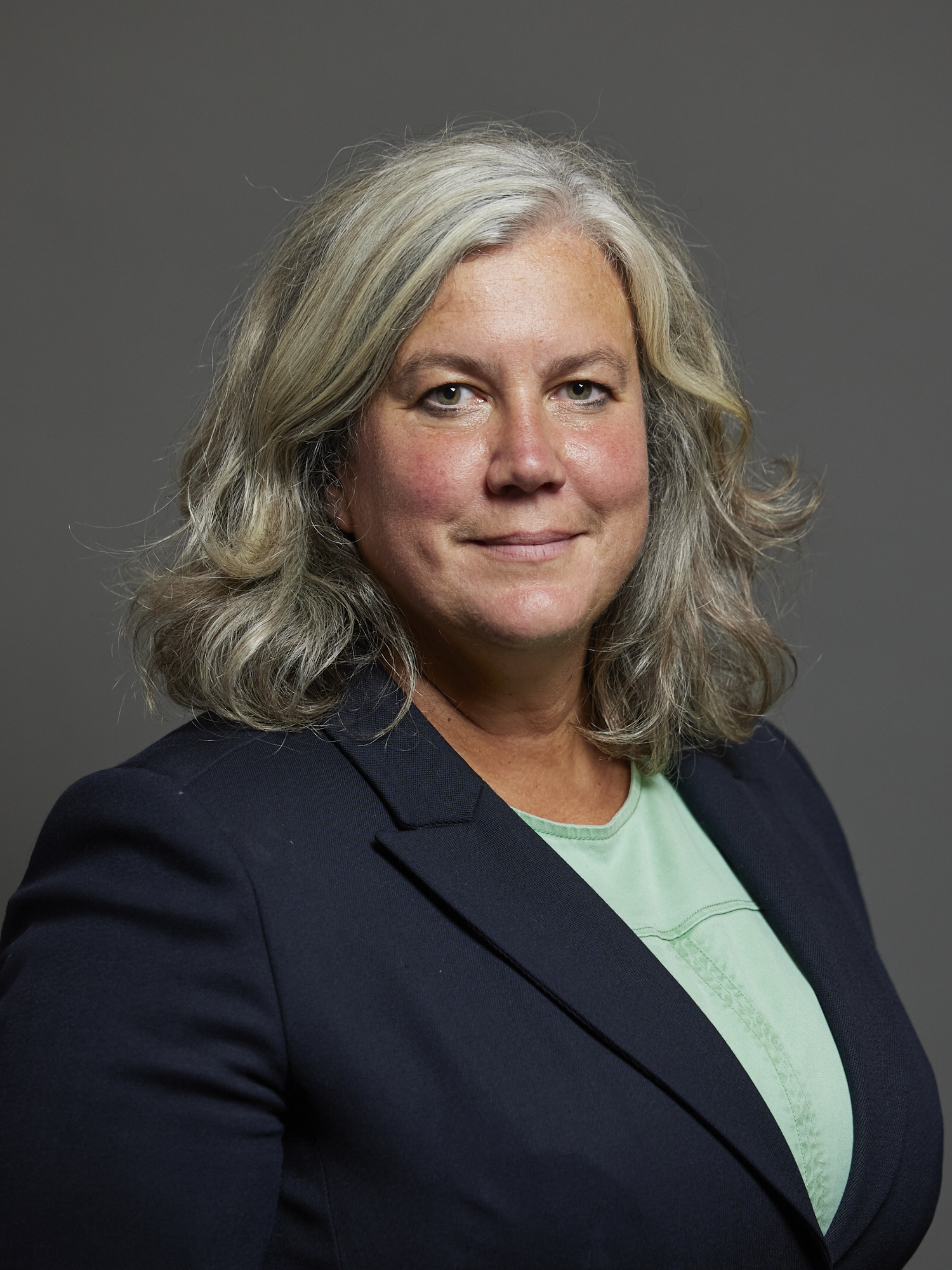
Heidi Alexander (born 17 April 1975) is a British politician who has served as Secretary of State for Transport since November 2024.[1] A member of the Labour Party, she has been the Member of Parliament (MP) for Swindon South since 2024. Previously she was the MP for Lewisham East from 2010 to 2018.

Key Information

Born in Swindon, Alexander studied at Churchfields Comprehensive School (now Lawn Manor Academy) and New College before going on to gain a BA in geography and an MA in European Urban and Regional Change from Grey College, Durham. Alexander then consecutively served as a parliamentary researcher for MP Joan Ruddock and as a campaign manager for the charity Clothes Aid.

Alexander was elected to the Lewisham London Borough Council for Evelyn in 2004 and was elected the MP for Lewisham East in the 2010 general election. Alexander was appointed parliamentary private secretary to Shadow Environment Secretary Mary Creagh before becoming an opposition whip in 2012. Promoted to Deputy Shadow Minister for London and a senior opposition whip in 2013, she became Shadow Secretary of State for Health after the election of Jeremy Corbyn to the Labour leadership. In 2016 she was part of the coordinated resignation from the Shadow Cabinet [2]ostensibly because of Corbyn's response to the EU referendum and the dismissal of Hilary Benn for encouraging fellow Shadow Cabinet members to resign.[3] In 2018 Alexander resigned her seat to become Deputy Mayor of London for Transport where she remained until 2021. In the 2024 general election Alexander was elected the MP for Swindon South. Alexander then served as Minister of State for Courts and Legal Services until she was appointed Transport Secretary in November 2024, replacing Louise Haigh.

Early life and career

[edit]

Alexander was born in Swindon, Wiltshire to Malcolm, an electrician, and Elaine Alexander (née Lanham). She was educated at Churchfields Comprehensive School and New College Sixth Form. Alexander studied at Grey College, Durham,[4][5] where she received a BA in geography and an MA in European Urban and Regional Change.[6]

Alexander had a 6-month placement in the office of Cherie Blair at 10 Downing Street in 1998.[7] She worked as a Parliamentary researcher for Lewisham MP Joan Ruddock from 1999 to 2005, and as campaigns manager for the charity Clothes Aid from 2005 to 2006.[8]

Political career

[edit]

Local government

[edit]

Alexander served as a member of Lewisham London Borough Council for Evelyn from a by-election in 2004 until 2010. She was Deputy Mayor of Lewisham and Cabinet Member for Regeneration from 2006 to 2010. Alexander was selected as the Labour candidate for Lewisham East in October 2009, and elected to Parliament at the 2010 general election.[9]

House of Commons

[edit]

Shortly after her election to Parliament, Alexander was appointed parliamentary private secretary to Mary Creagh, then the shadow environment secretary. She became an opposition whip in 2012,[10] and was promoted to Deputy Shadow Minister for London and a senior Opposition whip in 2013.[7] She served as a member of the Communities and Local Government Committee from 2010 to 2012 and Health Committee from 2016 to 2017.

Following Jeremy Corbyn's election as Labour leader in September 2015, Alexander joined the shadow cabinet as shadow secretary of state for health.[11]

Heidi Alexander became the first shadow cabinet minister to resign in June 2016,[12][better source needed] calling for a new party leader after the EU referendum and dismissal of Hilary Benn.[13] In an opinion piece for The Guardian, Alexander wrote "I loved being the shadow health secretary. But I hated being part of the shadow cabinet...because it was entirely dysfunctional" and "so inept, so unprofessional, so shoddy".[14]

Deputy Mayor of London

[edit]

In May 2018, Alexander resigned her seat in Parliament to become Deputy Mayor of London for Transport under Sadiq Khan.[15] She served as Deputy Chair of Transport for London in her role, and remained on the body's board until the opening of Crossrail.

During her time in the role, she was tasked with maintaining London transport during the COVID-19 pandemic and leading several rounds of government bailout negotiations.[16] She notably worked to tackle delays to the opening of Crossrail and re-opening of Hammersmith Bridge, and took up cycling to promote that method of transport. Initially planning to step down at the end of Khan's first term until the pandemic, she departed her role in late 2021 to "consider her next career move".[17][16]

Return to Parliament

[edit]

In June 2022, Alexander announced her intention to seek selection as the Labour candidate for Swindon South.[18] She was selected in July 2022 as prospective parliamentary candidate for the seat,[19][20] and was successful at the 2024 general election. Alexander was subsequently appointed Minister of State for Courts and Legal Services at the Ministry of Justice.[21][22]

Appointment to Cabinet

[edit]

Alexander was appointed Secretary of State for Transport in November 2024, succeeding Louise Haigh.[1] She was appointed to the Privy Council, giving her the honorific title of The Right Honourable for life.[23]

Political views

[edit]

Alexander supported Andy Burnham in the 2010 and 2015 Labour leadership elections,[24] and Owen Smith in the 2016 Labour leadership election.[25] She chaired Sadiq Khan's campaign for the 2016 London mayoral election.[26]

Alexander opposed the triggering of Article 50 following the EU referendum, proposing a "reasoned amendment" in January 2017 to throw out the article.[27] She co-founded the Labour Campaign for the Single Market in 2017, and is a supporter of the pro-EU group Open Britain.[28][26][29]

In November 2024, Alexander voted in favour of the Terminally Ill Adults (End of Life) Bill, which proposes to legalise assisted suicide.[30]

Personal life

[edit]

Alexander married Martin Ballantyne in 2011.[31][32]

References

[edit]
[edit]
Revisions and contributorsEdit on WikipediaRead on Wikipedia
from Grokipedia
Heidi Alexander (born April 1975) is a British Labour Party politician who has served as since 29 November 2024 and as for South since 4 July 2024. Born in , , to a self-employed electrician father and homemaker mother, she attended local schools and became the first in her family to attend university, earning an undergraduate degree in and a in European urban and regional change from . Alexander entered politics as a councillor in for six years before being elected MP for East in the 2010 , a seat she held until resigning in 2018 to take up the role of for under , where she focused on transport policy and funding. In , she advanced to Shadow Secretary of State for Health from September 2015 to June 2016, resigning amid internal Labour Party divisions following the referendum. After returning to the Commons in 2024, she briefly served as at the from July to November before her appointment to the Transport portfolio, overseeing efforts to deliver cheaper, greener, and more reliable transport networks amid ongoing infrastructure challenges.

Early life and education

Upbringing and family background

Heidi Alexander was born on 17 April 1975 in , , to a working-class . Her father, Malcolm Alexander, worked as a self-employed , while her mother primarily cared for the household and Alexander's younger brother, Stuart. The family resided in , where Alexander attended local schools including Lainesmead Infant and Junior School and Churchfields School. Alexander has described her upbringing as typical for the area, noting a lack of early confidence but an emerging interest in influenced by discussions. Her father held Thatcherite views, which contrasted with her later alignment to the Labour Party, though he expressed pride in her career. She participated in local activities such as at Lawn Netball Club during her youth.

Academic and early professional experience

Alexander attended Churchfields Comprehensive School in Swindon from 1986 to 1991, followed by New College Sixth Form in Swindon from 1991 to 1993. She was the first in her family to attend university, where her political views were shaped through interactions with peers from varied socioeconomic backgrounds. In 1993, Alexander enrolled at , earning a BA Honours in (First Class) in 1996. She returned to Durham for a Master's degree in European Urban and Regional Change, completing it with Distinction in 1999. Following graduation, Alexander's initial professional role was as a holiday representative for First Choice Holidays from 1996 to 1997. In 1998, she undertook a six-month placement in the office of Cherie Booth QC (later Blair) at 10 Downing Street, providing early exposure to policy environments. From 1999 to 2005, she served as a parliamentary researcher for Joan Ruddock MP, handling constituency and policy support in the Deptford area of Lewisham. This role overlapped with the start of her local political involvement but preceded her election as a councillor in 2004.

Political career

Local government roles

Heidi Alexander entered local politics as a Labour Party councillor representing the Evelyn ward in the , holding the position from 2004 to 2010. Her election to in May 2010 prompted her resignation from the council seat later that year. From 2006 to 2010, Alexander served as of the London Borough of while concurrently acting as Cabinet Member for Regeneration, overseeing initiatives aimed at and in the borough. In this dual role, she contributed to local policy on , infrastructure improvements, and community projects, drawing on her prior experience in public affairs and regeneration sectors. These positions established her focus on practical issues, particularly in deprived urban areas like and within her ward.

First term in Parliament (2010–2018)

Heidi Alexander was elected as the Labour for East at the general election on 6 May 2010, receiving 17,966 votes (43.1% of the valid vote) and a majority of 6,216 over the Liberal Democrat candidate, who received 11,750 votes (28.2%). In opposition following Labour's defeat, she initially held junior frontbench roles, including service in the party's whips' office and as Parliamentary Private Secretary to the Shadow Secretary of State for Health, . Alexander became a prominent figure in local health policy through her leadership of the campaign against proposed downgrading of services at Lewisham Hospital under the Healthcare Trust's financial failings. The Trust Special Administrator's 2012 recommendations to cut A&E and maternity services to subsidize deficits elsewhere were challenged by Alexander, Lewisham Council, and campaigners; in July 2013, the ruled the decisions unlawful for exceeding statutory powers, preserving full services at the hospital. This victory highlighted flaws in the government's hospital reorganization process under the Act 2012, with Alexander attributing success to community mobilization and legal scrutiny rather than ministerial intervention. She was re-elected in the 2015 general election with an increased majority, reflecting Labour's hold in the constituency despite national losses. Following Jeremy Corbyn's election as Labour leader, Alexander was appointed Shadow Secretary of State for Health on 14 September 2015, her first position, where she opposed government plans on junior doctors' contracts and NHS funding. On 26 June 2016, amid a shadow cabinet crisis triggered by Labour MPs' no-confidence vote in Corbyn after the EU referendum, Alexander resigned, stating she had "lost confidence in your [Corbyn's] ability to lead our party." Her departure was the first in a mass resignation of over 30 frontbenchers, citing dysfunctional decision-making and ineffective opposition to the Conservative government; she later described the shadow cabinet as hindering substantive policy scrutiny. Alexander supported Owen Smith in the subsequent leadership contest but remained a backbencher thereafter. Re-elected again in the 2017 general election, Alexander continued as a constituency MP focused on transport and housing issues until resigning her seat on 8 May 2018 to accept the role of for Transport under , triggering a .

Shadow cabinet tenure and resignation

Heidi Alexander was appointed Shadow Secretary of State for on 14 September 2015, following Jeremy Corbyn's election as Labour leader earlier that month. In this role, she shadowed the Department of , focusing on NHS funding, staffing shortages, and policy critiques of the Conservative government's reforms, including opposition to further elements in healthcare delivery. Her tenure emphasized calls for increased investment in social care and services, amid Labour's internal shifts under Corbyn's leadership. Alexander's time in the shadow cabinet lasted approximately nine months, marked by growing tensions within the Labour Party after the 23 June 2016 EU referendum, in which the UK voted to leave the European Union. Corbyn's perceived reluctance to campaign vigorously for Remain and his subsequent handling of party dissent—culminating in the dismissal of Shadow Foreign Secretary Hilary Benn on 26 June—eroded confidence among moderate MPs. Alexander resigned that same day, becoming the first shadow cabinet member to do so, citing a "complete loss of confidence" in Corbyn's leadership capacity, particularly his ability to provide effective opposition during Brexit negotiations and unify the party. In her resignation statement, Alexander argued that Corbyn lacked the strategic acumen to address the post-referendum challenges, including economic uncertainty and NHS vulnerabilities exacerbated by potential funding disruptions. Reflecting later, she described the as "dysfunctional," characterized by poor organization, inadequate preparation for Commons debates, and a that prioritized ideology over pragmatic opposition, rendering it "shoddy, inept and unprofessional." Her exit triggered a wave of 21 resignations over the following days, exposing deep divisions between Corbyn's left-wing supporters and centrist elements seeking a more electable direction. Alexander declined to rejoin any reformed under Corbyn, reinforcing her stance against his continued leadership.

Deputy Mayor of London for Transport (2018–2021)

Heidi Alexander was appointed for Transport by Mayor on 8 May 2018, following her resignation as Labour MP for East. In this role, she also served as Deputy Chair of (TfL), overseeing the implementation of the Mayor's Transport Strategy, which emphasized reliable and affordable , healthier streets, and a shift toward zero-emission vehicles. During her tenure, Alexander prioritized the completion and opening of the , contributing to its entry into service in May 2022 after years of delays, which expanded London's capacity by connecting key areas with high-frequency trains. She also led efforts to maintain TfL operations amid the , navigating severe revenue losses—TfL reported a £4 billion shortfall in fare income by mid-2021—and securing repeated short-term government bailouts totaling over £2.5 billion between 2020 and 2021 to avert service cuts and redundancies affecting 7,000 jobs. Alexander advanced environmental policies, including spearheading the expansion of the (ULEZ), which imposed a daily charge on non-compliant vehicles entering from April 2019, later extended citywide in 2023 under her successor; the initiative aimed to cut levels by 45% in by 2022, though it faced opposition from outer borough residents over costs estimated at £12.50 per day for affected diesel drivers. She publicly emphasized politicians' "moral responsibility" to reduce road casualties, supporting initiatives that achieved a 20% drop in killed or seriously injured pedestrians between 2018 and 2021. Alexander resigned from the position on 23 December 2021, having extended her stay beyond the initial plan at the end of Khan's first term to address ongoing TfL funding uncertainties and pandemic recovery; she was succeeded by Seb Dance.

Return to Parliament and ministerial roles (2024–present)

Alexander was elected as the Labour for Swindon South in the general election on 4 July 2024, securing a majority of 9,606 votes over the Conservative candidate. This marked her return to the after a six-year absence, having previously represented East from 2010 to 2018. On 8 July 2024, shortly after the election, she was appointed for Courts and Legal Services at the in the formed under . Alexander's tenure at the lasted until 29 November 2024, when she was promoted to following the resignation of . Her appointment to the Transport brief drew on her prior experience as for from 2018 to 2021, where she oversaw policy implementation at . In this role, she has focused on initiatives such as returning rail services like to public ownership. As of October 2025, she continues to serve as .

Political positions

Transport and infrastructure policy

As for Transport from June 2018 to May 2021, Heidi Alexander served as deputy chair of (TfL), focusing on delivering Sadiq Khan's transport strategy, which prioritized sustainable public transit expansion, reliability, and accessibility. She oversaw efforts to integrate cycling, walking, and low-emission vehicles into London's infrastructure, including advocacy for (ULEZ) enforcement to reduce , though critics argued it disproportionately impacted lower-income drivers without sufficient alternatives. Her tenure coincided with the Elizabeth line's operational rollout, earning her recognition through a train named in her honor upon departure, symbolizing contributions to cross-London connectivity. However, she faced environmental opposition for advancing the project, a road crossing under the Thames projected to increase vehicle traffic and carbon emissions despite mitigations like congestion charging. Upon appointment as on 29 November 2024, Alexander emphasized reforming fragmented rail services through renationalization under , aiming to prioritize passengers over private profits and address chronic delays inherited from prior administrations. In her 2025 speech, she outlined commitments to northern rail investments and regional connectivity, viewing upgrades as drivers of and job creation. On (HS2), she acknowledged delays pushing passenger services beyond the original 2033 target due to "appalling" mismanagement and cost overruns under previous governments, but pledged a "bold reset" to deliver the Birmingham-London core segment while scrutinizing northern extensions for viability. Alexander's infrastructure approach integrates with and , as evidenced by her July 2025 approval of over 50 road and rail schemes— including five strategic road projects and key rail upgrades—expected to enable 39,000 new homes and 42,000 jobs by enhancing connectivity in underserved areas. She advocates for an "integrated " favoring and active travel to cut emissions, while pledging reviews of expansions like Heathrow's third , with emphasis on bolstering rail links to mitigate environmental impacts. Critics, including business stakeholders, have noted her conference addresses lack detailed funding timelines for ambitious reforms, potentially hindering regional buy-in.

Labour Party internal dynamics

Heidi Alexander nominated in the 2015 Labour Party leadership election, one of 36 MPs who did so to ensure he met the nomination threshold and broaden the contest, despite initially favoring . Following Corbyn's victory, she was appointed Shadow Secretary of State for Health in September 2015, reflecting initial willingness to engage with the new left-wing leadership. Tensions emerged amid Labour's internal divisions over Corbyn's leadership style and the party's stance. On 26 June 2016, Alexander resigned from the , stating she had "no confidence" in Corbyn's ability to lead the party to electoral success, particularly after his perceived lukewarm campaign against , which contributed to the UK's referendum defeat. Her departure triggered a mass resignation of 11 members, intensifying calls for Corbyn to step down and highlighting the rift between the party's moderate centre and its hard-left wing. In subsequent commentary, she described Corbyn's operation as "dysfunctional," "unprofessional," and marked by poor decision-making, underscoring systemic issues like inadequate preparation and ideological rigidity that alienated frontbench talent. During the ensuing 2016 leadership contest, Alexander co-chaired Owen Smith's campaign against Corbyn, positioning herself firmly with the anti-Corbyn faction seeking to restore electability through more centrist policies and stronger party unity. Smith's defeat reinforced Corbyn's hold but deepened factional divides, with Alexander exemplifying the moderate MPs who prioritized pragmatic governance over ideological purity. Under Keir Starmer's leadership from 2020, she aligned with the party's shift toward the centre, evidenced by her 2024 return to Parliament and appointment as Secretary of State for Transport in November 2024 following Louise Haigh's resignation, integrating her into a government focused on stabilizing Labour after years of internal strife. This trajectory reflects broader dynamics where figures like Alexander bridged early Corbyn accommodation to eventual opposition, aiding the marginalization of hard-left elements in favor of Starmer's electoral discipline.

Broader ideological stances

Alexander has consistently advocated for Labour to prioritize economic competence and fiscal prudence to regain voter trust, warning in 2015 that public perceptions of the party's mishandling of taxpayers' money posed an existential threat, and rejecting denial of concerns in favor of rebuilding credibility through responsible stewardship. In 2025, as Transport Secretary, she emphasized "fairness" as the guiding principle for taxation, declining to rule out rises on higher earners or companies while pledging protection for modest incomes and stressing the need for balanced revenue sources to fund public services without economic disruption. Her support for infrastructure projects like Heathrow expansion reflects a pro-growth orientation, prioritizing job creation and national economic benefits over blanket opposition to development. On , Alexander has taken a staunchly pro- position, arguing in 2017 that Labour's shadow spokesman was "fundamentally wrong" to endorse exiting it and the , as such moves would harm the economy and national interest. She co-authored pieces in 2018 urging the party to abandon dithering and back permanent membership to counter disarray, dismissing left-wing myths about EU bureaucracy in favor of pragmatic economic alignment. This stance underscores her internationalist outlook, viewing close EU ties as essential for trade, workforce stability, and long-term control through economic strength rather than isolation. In , Alexander's tenure as Shadow Health Secretary from 2015 to 2016 highlighted commitment to bolstering the NHS amid funding pressures, calling for open debate on sustainable financing and criticizing government plans as inadequate for addressing demographic and financial strains. She has defended firm but fair , advocating timely and professional systems to ensure public confidence, while supporting recent government schemes like "one in, one out" returns coordinated with international partners. On gender-related issues, she has publicly opposed briefings targeting senior female ministers, framing such attacks as counterproductive to effective governance. Regarding foreign policy, Alexander has articulated support for a in the Israel-Palestine conflict, defending the UK government's 2025 conditional recognition of Palestinian statehood as advancing Palestinian rights rather than rewarding , while insisting both sides adhere to ceasefire obligations including hostage releases. In January 2026, on Sky News' Sunday Morning with Trevor Phillips, she expressed concern over violence against peaceful protesters in Iran, stating the UK's priority was to stem the violence and urging a peaceful transition of power while calling for restraint amid the repressive regime's crackdown. Her resignation from Jeremy Corbyn's in 2016 stemmed from ideological misalignment with his approach, signaling preference for moderate, evidence-based positions over more radical left-wing foreign policy shifts. This reflects a broader realism in international affairs, favoring alliances and pragmatic diplomacy aligned with UK interests.

Controversies and public criticisms

Disputes over party leadership

In June 2016, following the UK's referendum on membership, Heidi Alexander resigned as Shadow Secretary of State for Health, becoming the first member of Jeremy Corbyn's to do so. In her resignation letter, she stated that she had lost confidence in Corbyn's ability to lead the Labour Party, particularly after his perceived ineffective response to the vote and the sacking of Shadow Foreign Secretary . This action triggered a wave of further resignations, contributing to a broader challenge against Corbyn's leadership within the party. Alexander subsequently endorsed in the ensuing Labour leadership contest, where Smith positioned himself as a unity candidate against Corbyn. In an August 2016 Guardian article, she elaborated on her criticisms, describing Corbyn's leadership style as "unprofessional and shoddy," marked by poor organization, inadequate preparation for key events like , and a failure to build a cohesive team. She emphasized that her decision stemmed from observed dysfunctionality rather than personal ambition or ideological opposition alone, rejecting accusations of participating in a "coup." These events highlighted divisions in the Labour Party between Corbyn's supporters, who prioritized grassroots activism and left-wing policies, and centrists like Alexander, who advocated for effective opposition to the Conservative government and electability concerns. Smith ultimately lost the contest to Corbyn on September 24, 2016, with Corbyn securing 61.8% of the vote, underscoring the entrenched support for Corbyn among party members despite parliamentary dissent. Alexander's stance aligned her with moderate factions, influencing her later roles outside frontline politics.

Policy implementation challenges

During her tenure as Transport Secretary, Heidi Alexander has grappled with significant delays and cost overruns on the (HS2) project, which she described as a "litany of failure" stemming from years of mismanagement, prompting acceptance of all recommendations from an independent review to improve oversight and . The government under her leadership formally delayed HS2's completion beyond the 2033 target, exacerbating criticisms over fiscal accountability and timelines for major . Nationalisation of rail services has presented operational hurdles, with reported sharp increases in on affected lines immediately following the May 25, 2025, of one operator, raising questions about security and performance under public ownership despite pledges for improved value for money. has emphasized no intention to lower fares amid these disruptions, focusing instead on long-term efficiencies. Efforts to expand airport capacity, such as at Heathrow, have triggered environmental and legal opposition, with Alexander confirming intent to proceed under a framework assessing climate, noise, air quality, and economic benefits, even as campaigners and local authorities decry insufficient mitigation. Similar challenges arose at and Gatwick, where judicial reviews and pre-action protocols tested expansion consents, highlighting tensions between growth ambitions and statutory environmental obligations. Proposals to streamline low traffic neighbourhood (LTN) schemes by removing mandatory public vote guidance faced backlash from campaigners, who argued it disregarded widespread local resistance evidenced in prior consultations and reviews showing majority opposition in affected areas. Road improvement programs inherited from previous governments also lacked firm timelines, with Alexander estimating completion "probably" within a decade for key upgrades like junction dualling, underscoring persistent delivery uncertainties in capital-intensive projects. These issues reflect broader constraints in balancing modal shifts toward with practical enforcement, funding limitations, and stakeholder conflicts.

Personal life

Family and personal relationships

Heidi Alexander was born on 17 April 1975 at Great Western Hospital in , , into a working-class . Her father, Malcolm Alexander, worked as a self-employed after training in the trade, while her mother, Elaine, primarily managed the household and cared for Alexander and her brother. The resided in , where Malcolm met Elaine at a local youth club. Alexander married Martin Ballantyne in 2011 at the in south-east . The couple had been living together in the since 2002. No public records indicate they have children. In a 2016 Times interview, Alexander and her father discussed their close family bond despite political differences, with Malcolm identifying as a Thatcher supporter in contrast to her Labour affiliation.

Public persona and interests

Heidi Alexander projects a public persona rooted in her working-class upbringing in , frequently emphasizing her local ties and commitment to in speeches and personal statements. Born to a self-employed electrician father and a mother who primarily cared for the family, she often highlights experiences such as attending Churchfields school, learning to swim at Dorcan pool, and navigating the town's as formative influences shaping her pragmatic approach to policy. This narrative underscores her image as a relatable figure dedicated to giving back to her hometown, positioning herself as first in her family to attend university and driven by a obligation. Limited information is publicly available regarding Alexander's personal hobbies or leisure pursuits, reflecting a focus on professional responsibilities over personal disclosures. She married Martin Ballantyne in 2011 at the in south-east , maintaining a low profile on family matters beyond this. In a 2016 Times interview alongside her father, Malcolm, she discussed and her political motivations stemming from early life observations of hard work and community needs, reinforcing her persona as determined and family-oriented without detailing specific interests.

References

Add your contribution
Related Hubs
User Avatar
No comments yet.