Hubbry Logo
Helene MayerHelene MayerMain
Open search
Helene Mayer
Community hub
Helene Mayer
logo
8 pages, 0 posts
0 subscribers
Be the first to start a discussion here.
Helene Mayer
Helene Mayer
from Wikipedia

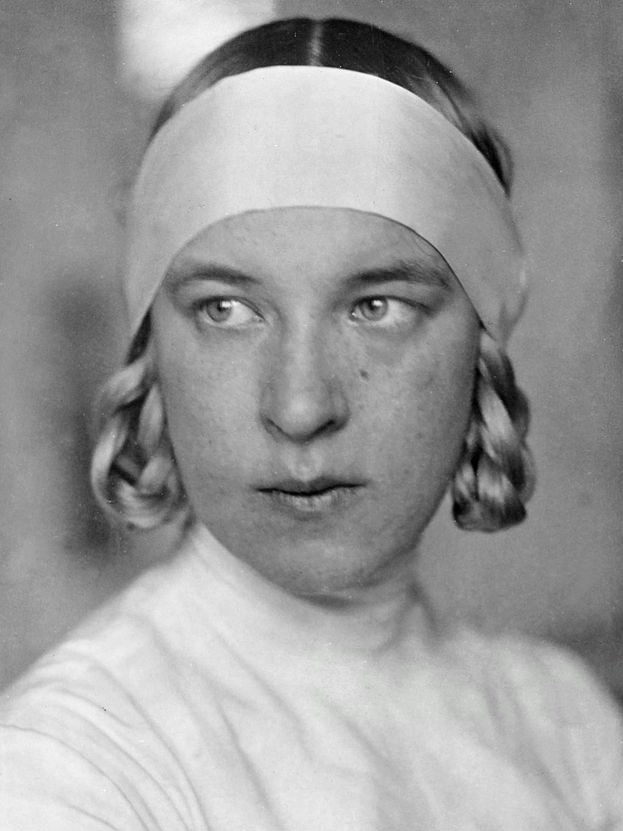
Helene Julie Mayer (20 December 1910 – 10 October 1953) was a German fencer who won the gold medal at the 1928 Olympics in Amsterdam, and the silver medal at the 1936 Olympics in Berlin. She competed for Nazi Germany in Berlin, despite having been forced to leave Germany in 1935 and resettle in the United States because she was of Jewish descent. She studied at American universities, and later returned to Germany in 1952 where she died of breast cancer.

Key Information

Mayer had been called the greatest female fencer of all time,[3] and was named by Sports Illustrated as one of the Top 100 Female Athletes of the 20th Century, but her legacy remains clouded. At the Olympics in Berlin, where she was the only German athlete of Jewish origin to win a medal, she gave the Nazi salute during the medal ceremony and later said it might have protected her family that was in labor camps in Germany. Some consider her a traitor and opportunist, while others consider her a tragic figure who was used not only by Nazi Germany but by the International Olympic Committee to prevent a boycott of the Games.[4]

After the Olympics, she returned to the United States and became a nine-time U.S. champion. She received citizenship in 1941 but returned to Germany in 1952. Mayer died the following year, leaving few interviews and little correspondence.[4]

Family and early life

[edit]

Mayer was born in Offenbach am Main, a city close to Frankfurt.[5] Her mother lda Anna Bertha (née Becker) was Lutheran, and her father Ludwig Karl Mayer, a physician, was Jewish and was born in 1876.[6][7][4] Emmanuel Mayer, her paternal great-grandfather, and Jule Weissman, his wife, were the parents of Martin Mayer, her paternal grandfather who was born in 1841 and who married Rosalie Hamburg, her paternal grandmother.[6]

Mayer was the subject of the book Foiled: Hitler's Jewish Olympian: the Helene Mayer Story (RDR Books, 2002), which focused on how "the Nazis brought Mayer home from self-imposed exile in California to be the token Jew on their team."[6] Her birth certificate listed her as "Israelitischen"; as Jewish.[6] As a child, she was called the "Jewish Mayer", to distinguish her from the "Christian Mayer", a child who lived next door to her, as was reported by the press of the time.[6] In January 1933, the Offenbach Fencing Club rescinded her membership on the basis of new Nazi legislation banning Jews.[8][9] Her ethnic identity reportedly did not become an issue until the Nazi Party rose to power in the early 1930s.[4]

Fencing career

[edit]

Mayer was only 13 when she won the German women's foil championship in 1924.[9] Her technique and talent were spectacular, according to fencing experts who have seen footage of her fencing.[4] By 1930, she had won six German championships.[10]

Olympics

[edit]

Mayer won a gold medal in fencing at the age of 17 at the 1928 Summer Olympics in Amsterdam, representing Germany, winning 18 bouts and losing only 2.[11][9] She became a national hero in Germany and was celebrated, with her photo plastered everywhere. According to a profile in The Guardian, "She was tall, blonde, elegant and vivacious."[4]

In 1931, her father died of a heart attack. She finished fifth at the 1932 Summer Olympics in Los Angeles, having learned, two hours prior to the match, that her boyfriend had died in a military training exercise in Germany.[11][9] She then remained in the U.S. to study for two years as an exchange student at Scripps College, earning a certificate in social work in 1934.[12] She later studied towards a master's degree at the University of California at Berkeley, and fenced for the USC Fencing Club.[11][9] She hoped to join the German diplomatic corps.[4]

After Hitler came to power in 1933, anti-Jewish laws put in place nearly ended her career. Her membership at her German fencing club was terminated, as was her study exchange. She found work teaching German at Mills College in Oakland, California, and later taught at San Francisco City College.[8] She was stripped of her citizenship in Germany in 1935 by the Nuremberg Laws, which considered her non-German.[4]

Mayer giving the Nazi salute at the 1936 Summer Olympics

She accepted an invitation to compete for Germany at the 1936 Summer Olympics, held in Berlin.[13] Joseph Goebbels required of the press that "no comments may be made regarding Helene Mayer's non-Aryan ancestry".[8] She achieved a silver medal in individual women's foil.[8] She gave a Nazi salute on the podium, and later said it might have protected her family that was still in Germany, in labor camps.[8]

International competitions

[edit]

In 1928, she won the Italian national championship. She was the European champion in 1929 and 1931. She was World Foil Champion in 1929–31 and 1937.[11][9]

US competitions

[edit]

Ultimately, she settled in the United States and had a successful fencing career, winning the US women's foil championship 8 times from 1934 to 1946 (1934, 1935, 1937, 1938, 1939, 1941, 1942, and 1946).[8][9]

In 1938, she won the Amateur Fencers League of America's San Francisco Division men's title; however, two days later, she was stripped of the title, as the League adopted a rule banning competition between women and men, stating that since fencing involved physical contact, "a chivalrous man found it difficult to do his worst when he faced a woman." The restriction was later lifted in the 1950s.[14][15]

Return to Germany and death

[edit]

In 1952, Mayer returned to Germany, where she married an old friend, Erwin Falkner von Sonnenburg, in a quiet May ceremony in Munich.[8] The couple moved to the hills above Stuttgart before settling in Heidelberg where she died of breast cancer in October 1953, at age 42.[16][8]

Legacy

[edit]

Mayer was named one of the top 100 female athletes of the 20th century by Sports Illustrated.[17] She was inducted into the USFA Hall of Fame in 1963.[1]

Accomplishments

[edit]
  • 1924: German Foil Champion
  • 1925: German Foil Champion
  • 1926: German Foil Champion
  • 1927: German Foil Champion
  • 1928: German Foil Champion
    • Olympic gold medal, Foil, German Team
    • Winner Foil, Italian National Championships
  • 1929: German Foil Champion
    • World Foil Champion
  • 1930: German Foil Champion
  • 1931: World Foil Champion
  • 1932: German Olympic Foil Team
  • 1933: U.S. Foil Champion (outdoors)
  • 1934: U.S. Foil Champion
  • 1935: U.S. Foil Champion
  • 1936: Olympic silver medal, Foil, German Team
  • 1937: U.S. Foil Champion
    • World Foil Champion
  • 1938: U.S. Foil Champion
  • 1939: U.S. Foil Champion
  • 1941: U.S. Foil Champion
  • 1942: U.S. Foil Champion
  • 1946: U.S. Foil Champion

See also

[edit]

References

[edit]
[edit]
Revisions and contributorsEdit on WikipediaRead on Wikipedia
from Grokipedia
Helene Julie Mayer (20 December 1910 – 10 October 1953) was a German fencer who achieved preeminence in women's foil, securing the Olympic gold medal at the 1928 Amsterdam Games at age 17 as Germany's youngest champion and dominating national and international competitions through the early 1930s. Born to a Jewish father and non-Jewish mother in Offenbach am Main, she won her first German national foil title at 13 and repeated as champion for six consecutive years. Facing expulsion from German sports under Nazi racial policies after 1933, Mayer's citizenship was revoked in 1935, yet the regime reinstated her eligibility as a half-Jewish exception to counter foreign threats ahead of the 1936 Olympics, positioning her as a symbol of purported tolerance. She competed under the swastika-emblazoned uniform, earned silver in foil, and performed the mandatory on the podium alongside other German medalists. Post-1936, Mayer emigrated to the , where she taught at Mills College, naturalized as a citizen, and represented the U.S. at the 1952 Olympics without medaling, before returning to in 1952, marrying, and succumbing to the following year.

Early Life and Background

Family and Upbringing

Helene Mayer was born on 20 December 1910 in , a suburb of , . Her father, Dr. Ludwig Carl Mayer, was a Jewish physician active in local Jewish organizations, while her mother was a Lutheran Christian from a non-Jewish background, making Mayer of mixed heritage under both contemporary and later Nazi racial classifications. Raised in an assimilated, middle-class household, Mayer experienced a conventional upbringing typical of urban German professionals of the era, with her family described as enlightened and not overtly observant in religious practices. From an early age, she displayed athletic inclinations, participating in lessons, though by age nine her interests shifted decisively toward , which she pursued with precocious dedication amid a stable family environment.

Entry into Fencing

Helene Mayer, born on December 20, 1910, in , , developed an early interest in sports, including lessons that enhanced her agility and poise. By age nine, she demonstrated a strong affinity for and commenced lessons at the local Offenbach Fencing Club (FCO 1863), an established institution in her hometown known for its rigorous training programs. In 1920, at approximately ten years old, she formally joined the club, where served partly as a rehabilitative exercise for spinal issues, though her rapid progress revealed innate talent in the discipline. Under the guidance of club masters, Mayer quickly mastered foil technique, emphasizing precision, speed, and strategic footwork—skills that aligned with her athletic build and determination. Her entry into competitive occurred around age 13, when she began entering women's foil events, marking the transition from novice training to national-level aspirations. This early involvement in a prominent German club provided access to high-caliber coaching and peers, fostering the foundational skills that propelled her subsequent dominance in the .

Pre-Nazi Era Achievements

National Dominance

Helene Mayer first demonstrated her exceptional talent in national competitions as a teenager. At the age of 13 in 1924, she captured the German women's foil championship, marking her as the youngest ever to win the title. This victory initiated a dominant run, as she defended the championship successfully each year from 1925 through 1930, securing seven consecutive national titles. Mayer's supremacy in German foil fencing during this era stemmed from her precise footwork, rapid attacks, and tactical acumen, which overwhelmed domestic rivals in tournaments organized by the Deutscher Fechter-Bund. She competed primarily for the Offenbach fencing club, where her consistent victories elevated the sport's profile in and established her as the unchallenged leader in the women's category before the rise of international pressures. By 1930, her record of undefeated national performances underscored a level of mastery rare for such a young athlete, setting the stage for her transition to global competitions.

International Successes and 1928 Olympics

Helene Mayer achieved early international prominence in women's foil fencing in 1928 by winning the Italian national championship. That same year, at the Summer Olympics in Amsterdam from July 28 to August 12, the 17-year-old Mayer competed in the women's individual foil event, held at the Schermzaal fencing hall. In the final round, she secured the gold medal with an undefeated 7-0 victory record, defeating British fencer Muriel Freeman for silver and her German teammate Olga Oelkers for bronze. Mayer's Olympic triumph elevated her status as a fencing prodigy, marking the first for in the event. Building on this success, she captured the inaugural women's world foil championship in 1929, dominating competitors across . She defended her title in , further solidifying her dominance in international competitions before the rise of the Nazi regime. These victories highlighted her technical precision and aggressive style, which overwhelmed opponents in bouts.

Nazi Persecution and Response

Loss of Citizenship and Emigration

Following Adolf Hitler's appointment as on January 30, 1933, the Nazi regime initiated policies targeting individuals of Jewish descent, including Mayer, whose father was Jewish and whose mother was of Protestant background, classifying her as a under emerging racial laws. In that year, shortly after the Nazis consolidated power, Mayer's membership in the Offenbach fencing club—where she had trained since childhood—was revoked, barring her from organized sports in due to her heritage. Mayer had already departed for the in 1934 to pursue studies and compete, winning her first U.S. national foil championship that year while affiliated with a San Francisco club. On September 15, 1935, the Reich Citizenship Law and Law for the Protection of German Blood and German Honor—collectively known as the —were promulgated, revoking full citizenship from and those deemed Mischlinge of the first degree, such as Mayer, rendering them state subjects without political rights and subjecting them to escalating restrictions. Her citizenship revocation occurred while she remained abroad, effectively prohibiting her unrestricted return to and pressuring her family, as Nazi authorities later compelled her mother to urge compliance via telegram. Faced with these legal disabilities and the regime's intensifying antisemitic measures, Mayer chose permanent , resettling in 1935 as an , where she secured temporary academic positions and continued amid professional isolation in her homeland. This decision severed her ties to German institutions, though it preserved her ability to compete internationally until further Nazi interventions.

1936 Olympic Participation

In November 1935, German Olympic authorities extended a formal invitation to Mayer to represent at the 1936 Berlin Games, despite her Jewish paternal heritage classifying her as a under the recently enacted , which had revoked her the prior month. This move served as a symbolic concession to mounting international pressure, including boycott campaigns from and U.S. groups, aimed at highlighting Nazi racial exclusions from sports; Mayer became the sole athlete of partial Jewish descent permitted on the German team, with no other included across disciplines. She accepted the invitation on November 25, 1935, traveling from her U.S. to train in ahead of the event. The women's individual foil competition occurred from August 4 to 5, 1936, at the Deck Athletic Grounds. Mayer advanced through preliminary pools undefeated before entering the final round-robin, where she secured second place with strong performances against most opponents. In the decisive bout, she fell to Hungary's Ilona Elek by a score of 1-6, earning the —Germany's only medal in the event—while Elek took gold and Austria's Ellen Preis bronze, marking a notable instance of three Jewish athletes medaling in the same Olympic discipline under Nazi auspices. During the medal ceremony, Mayer, clad in the German uniform bearing the armband, performed the alongside other podium athletes, as mandated for all German competitors—a that underscored the regime's insistence on ideological conformity even from its token Jewish participant. Following the Games, she departed immediately, resuming her life without reinstatement of citizenship or broader reintegration into German society, highlighting the limited and propagandistic nature of her inclusion.

American Exile and Career

Adaptation and Teaching Role

Following her participation in the 1932 Los Angeles Olympics, Mayer elected to remain in and enrolled at in Claremont, where she pursued studies in European languages, earned a , and instructed to students during the early 1930s. This academic pursuit marked her initial adaptation to life in exile, transitioning from competitive dominance in to educational roles that sustained her financially and preserved her engagement with the sport. Subsequently, Mayer attended Mills College in Oakland, completing a in French around 1933 and founding the institution's program, which drew about 50 participants and formalized club activities. She supplemented her income by teaching German there, later extending similar language instruction to the , while integrating demonstrations and coaching into women's physical education curricula. In this capacity, Mayer produced instructional content, including a 1941 film titled Techniques of Foil Fencing, filmed at UC Berkeley, where she showcased foundational and advanced maneuvers to promote the sport's pedagogy in American academic settings. These efforts reflected her pragmatic adjustment to restricted competitive opportunities as a non-citizen, channeling expertise into and institutional development rather than international bouts.

U.S. Competitions and Citizenship

Following her return to the after the 1936 Berlin Olympics, Helene Mayer established herself as a dominant force in American , joining the Fencing Club and competing in national events. By 1934, while residing in the U.S. for studies, she had already captured the U.S. indoor women's foil title, demonstrating her continued elite form despite earlier disruptions from Nazi policies. She repeated this success in subsequent years, winning the U.S. women's national foil championship nine times between 1934 and 1946, including victories in 1937 where she outperformed international rivals like Ilona Elek-Schacherer. These triumphs underscored her technical mastery and adaptability to American competition formats, where she often fenced left-handed to maintain an edge. In parallel with her competitive record, Mayer contributed to U.S. development by coaching, notably establishing programs at Mills College in , where she earned an M.A. in French in 1933 and later instructed students in the sport. Her role extended to preparing American fencers for international challenges, though canceled the 1940 Olympics for which she qualified as a U.S. representative. Mayer naturalized as a U.S. citizen on June 10, 1941, formalizing her expatriation from after the 1935 had stripped her of citizenship due to her partial Jewish ancestry. This status enabled unrestricted participation in American events and reflected her integration into U.S. society, though she retained ties to her heritage without public political advocacy. Her citizenship preceded a period of sustained domestic dominance, but she ceased major competitions after 1948 amid health issues.

Final Years

Return to Germany

Mayer, who had acquired citizenship in 1941, made an initial postwar visit to during the summer of 1948, forgoing potential participation in the London Olympics at a time when she remained competitively active. She returned permanently in 1952, relinquishing her American residency to resettle in . There, Mayer married an engineer and adopted a quieter life away from the public eye, with scant documentation of her activities; she provided few interviews and preserved little personal correspondence during this final phase. Her decision to repatriate followed nearly two decades in , amid the reconstruction of , though motivations remain sparsely detailed in available records.

Illness and Death

Mayer returned to in 1952 after nearly two decades in the United States, settling initially in the area before moving to . There, she married Falkner von Sonnenburg shortly after her arrival, though the union was brief. She had been diagnosed with several years earlier while in America and undergone treatment, but the disease recurred and advanced rapidly following her . By mid-1953, the cancer had metastasized to her spine, severely limiting her mobility and health. Mayer succumbed to the illness on October 15, 1953, at age 42 in . She was buried in Munich's Nordfriedhof cemetery. Her death marked the end of a career that had spanned national championships, Olympic triumphs, and , overshadowed in its final years by the physical toll of her condition.

Career Accomplishments

Major Titles and Records

Helene Mayer dominated women's foil fencing in the interwar period, securing six consecutive German national championships from 1924 to 1929, starting at age 13 with her first title in 1924. Her international breakthrough came at the 1928 Amsterdam Olympics, where she won the individual foil gold medal at age 17, defeating opponents with a final score of 7-2 against Sweden's Ellen Osiier. She followed with victories in the 1929 and 1931 European foil championships, events recognized as precursors to formal World Championships. After emigrating to the , Mayer won eight U.S. national foil titles between 1934 and 1946, specifically in 1934, 1935, 1937, 1938, 1939, 1941, 1942, and 1946. At the 1936 Olympics, she earned a in individual foil, losing 5-4 in the final to Hungary's Ilona Elek. She captured the official individual foil title in 1937 in , defeating Elek in the final, and added a team foil silver that year. Mayer competed in the 1932 Los Angeles Olympics, placing fifth in individual foil, and in the 1948 London Olympics for the U.S., finishing sixth. Her career totals include three World Championship foil titles (1929, 1931, 1937) alongside her Olympic medals and national successes, establishing her as one of the era's preeminent fencers.
YearCompetitionMedal/Placement
1928Olympic Games (Individual Foil)Gold
1936Olympic Games (Individual Foil)Silver
1929, 1931European/World Foil ChampionshipsGold (each)
1937World Championships (Individual Foil)Gold
1937World Championships (Team Foil)Silver

Legacy and Debates

Posthumous Honors

In 1963, ten years after her death, Mayer was inducted into the Association Hall of Fame, recognizing her contributions to the sport during her American exile and teaching career. Her image was featured on a commemorative issued by the in 1968 as part of a series honoring Olympic athletes, marking her as the only woman depicted in that set. In 2000, the International Fencing Federation designated Mayer the greatest fencer of the 20th century, citing her six consecutive world championships from 1929 to 1937 and Olympic medals. Sports Illustrated also ranked her among the top 100 female athletes of the century that year, highlighting her technical dominance in foil fencing.

Controversies Surrounding Nazi-Era Choices

Helene Mayer, classified as half-Jewish under the enacted on September 15, 1935, was stripped of her German citizenship and expelled from the national team that year, prompting her emigration to the on September 17, 1935, where she took a teaching position at Mills College in . Despite her exclusion amid escalating anti-Semitic policies, including bans on Jewish participation in sports clubs, Mayer accepted an invitation in early 1936 to rejoin the German Olympic team as the sole athlete of partial Jewish descent, a concession extracted by president to avert international boycotts and portray as inclusive. This reinstatement was widely viewed by Nazi authorities as a victory, allowing them to claim non-discrimination in athletics while systematically barring other Jews from representation. Mayer's decision to return to Germany for the August 1936 Berlin Olympics, competing under the swastika-emblazoned flag and saluting after securing a in women's individual foil on August 5, 1936, has sparked enduring debate over whether it constituted acquiescence to or unwitting endorsement of the regime. Critics, including historians analyzing her correspondence and actions, argue that Mayer, aware of Nazi through personal experiences like and exclusion since 1933, prioritized her career over public opposition, effectively compromising with a system she knew targeted her heritage. For instance, she refrained from anti-Nazi statements during her U.S. and complied with medal ceremony protocols, actions some contemporaries and later scholars interpret as facilitating that masked broader Jewish disenfranchisement, as no other German-Jewish athletes were permitted to compete. Defenders counter that her participation defied full exclusionary policies and highlighted inconsistencies in Nazi racial , though evidence suggests her appearance and pre-1933 fame influenced the exception rather than principled resistance. Postwar assessments have amplified scrutiny, with some portraying Mayer's choices as naive opportunism blinded by athletic ambition, evidenced by her failure to address regime atrocities in writings or interviews, such as those in U.S. student publications where she avoided political commentary. Academic reappraisals question the ethics of her salute and flag-bearing, weighing personal survival against complicity in a spectacle that burnished the regime's image before Kristallnacht in November 1938 and the Holocaust. While not accused of active collaboration, her selective reintegration—denied to most Jews—underscores tensions between individual agency and systemic coercion, with sources emphasizing that IOC orchestration, not Mayer's initiative, drove the "token" inclusion, yet her acceptance remains a flashpoint for evaluating athlete responsibility under totalitarianism.

References

Add your contribution
Related Hubs
User Avatar
No comments yet.