Hubbry Logo
HomeyraHomeyraMain
Open search
Homeyra
Community hub
Homeyra
logo
8 pages, 0 posts
0 subscribers
Be the first to start a discussion here.
Homeyra
Homeyra
from Wikipedia

Key Information

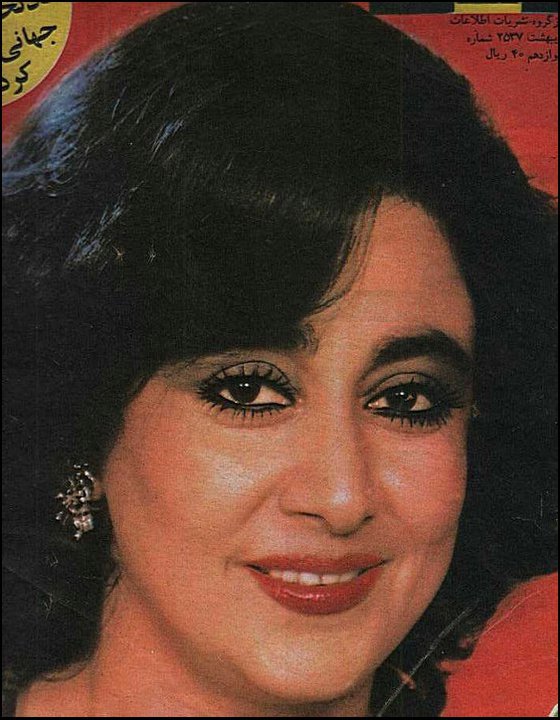
Parvaneh Amir-Afshari (Persian: پروانه اميرافشاری; born March 17, 1945), better known by her stage name Homeyra (حميرا), is an Iranian singer. She is a veteran celebrity of golden age for Iranian music. According to her teacher, Ali Tajvidi her voice is from alto to soprano.[citation needed] Homeyra, with more than half a century of artistic activity, has a legendary popularity among the Iranian people.[1]

Early life

[edit]

Parvaneh Amir-Afshari was born on March 17, 1945, to an aristocratic Iranian family in Tehran, Iran. Her family is from Zanjan[citation needed].

From Homeyra's childhood, their house, in honor of influential people in the government, witnessed large ceremonies with the presence of famous artists of the time, such as Rouhangiz, Gholam-Hossein Banan, Moluk Zarrabi and many others, which was the initial motivation of the daughter of the family to sing.[2][3]

Due to her father's opposition to her daughter’s singing, she began her artistic career under the pseudonym Homeyra. But his father recognizes his daughter's voice, and since he considered his daughter's singing would discredit his family, he bought all of her vinyl discs in Tehran bazaar and stored them at home; and this is the reason why Homeira's voice on vinyl discs were scarce at that time.

After a year, during a trip to Europe of Homeyra's father, she, who had the support of her mother, continues her artistic work.

Homeyra was rejected from her home and family before the revolution, and after the revolution she was rejected from her larger home and family, which was her homeland of Iran and her compatriots. These two tragic events had a profound effects on Homeyra.[2]

Career

[edit]

"Sabram Ata Kon" on Segah Dastgah was Homeyra's first song which was written by Ali Tajvidi and a lyrics by Bijan Taraghi that was broadcast from Radio Tehran in the fall of 1965, It was welcomed by Iranian music experts and the public, which has been recorded in the book of enduring songs. It was welcomed by Iranian music experts and the public.

The song "Pashimanam" other work that Homeyra has collaborated with Ali Tajvidi. "Pashimanam" caused a great change in Iranian traditional music due to its beautiful modulation, which changes its position from Homayoun to Sahagah and returns.

Homeyra's marriage to a composer and master violinist, Parviz Yahaghi created other lasting works in Iranian music.

Homeyra performed successful songs on the prestigious program "Golhâye Rangârang"(Persian: گلهای رنگارنگ "Colorful Flowers") which was broadcast on Radio Iran before the revolution, which helped to establish her artistic credibility.

After parting ways with Parviz Yahaghi, Homeira continued her artistic activity with other well-known artists, during which she added Fusion music and Pop music to her artistic career.[3][4]

Homa Mirafshar, who is a relative of Homeyra, is one of the songwriters who has had the most collaboration with Homeyra. Babak Radmanesh is also one of the composers who has collaborated a lot with Homeyra after the Iranian revolution.[2][3]

According to her teacher Ali Tajvidi, her voice is in the Alto range but she also has the ability to sing soprano.

According to experts, Homeyra's voice is powerful, emotional and beautiful. Homeyra was able to establish a new style (Homeraism) in Iranian traditional music and classical music of the 1940s by presenting a work called "Sabram Ata Kon" and give a special freshness to Iranian traditional music. After the Iranian Revolution, Homeyra was nicknamed the "Credit of Iranian Music" due to her artistic status.[2][5]

Personal life

[edit]

As a teenager, Homeyra married a German-educated Iranian businessman whose family encouraged her to sing professionally.[3] Homeyra's second marriage was to an Iranian musician, Parviz Yahaghi. Homeyra has introduced Parviz Yahaghi as her first and last love. After six years, for personal reasons, their life together ended. During this period, lasting works were made with the voice of Homeyra and the composition of Parviz Yahaghi and the lyrics of Bijan Taraghi who was a family friend of Parviz Yahaghi and Homeyra.[3]

Homeyra was summoned to the courts of the Islamic Revolution after the revolution and, according to her, was reprimanded and harassed. Her third husband, a tie merchant, became virtually unemployed after the revolution. Homeyra remained in Iran until the end of 1982. She left Iran for Afghanistan with her two-year-old daughter, Yasaman, and went to Pakistan; from there she emigrated to Spain and then to Costa Rica in Central America. She suffered from severe depression in Costa Rica and was treated by a psychiatrist for a year.[3] Her husband, meanwhile, immigrated directly to the United States, regardless of his wife and child. Homeyra then immigrated to California and resumed her artwork with the support of Ahmad Massoud, who worked in the field of music outside of Iran. Homeyra loves her homeland, Iran, and has sung many songs for Iran. She has said many times that she never wanted to leave Iran. After the Islamic revolution in Iran, and because of the problems and hardships that it created for her, Homeyra was forced to leave Iran against her will.[2] For a medical condition, she underwent heart and brain surgery in the United States that miraculously recovered her health. Homeyra is committed to God and her personal beliefs, and her interest in mystical issues is reflected in her speech, songs, and lifestyle. She currently lives in Los Angeles. Homeyra has two children, Hengameh and Yasaman, and has a granddaughter, Ariana, from her younger daughter, Yasaman.[2]According to Ali Tajvidi, Homeyra, in addition to her beautiful voice, has a beautiful and emotional personality that has influenced her voice. Homeyra rarely appears in public due to her special beliefs and spirit.[5]

Homeyra is preparing a book of memories from her personal and artistic life and hopes to find an independent publisher to publish it.[3]

Homeyra, with more than half a century of artistic activity, remains one of the few prominent stars of Iranian music.[2]

Other people's views

[edit]

Gholam-Hossein Banan described Homeyra's voice as heavenly and magical, and believed that a voice like Homeyra's voice would not appear for another century.

Ali Tajvidi has described Homeyra's voice as rare, which is in the alto range and has soprano potential in the full range.

Parviz Yahaghi: Homeyra's voice can only be compared to Umm Kulthum's voice in her youth.

Jahanbakhsh Pazouki: Homeyra is a single star in the sky of Iranian art whose light has reached all artists.[2]

Mohammad Heydari: Homeyra and Golpa created a revolution in Iranian traditional music.[2]

Akbar Golpayegani: Homeyra is sun of the Iranian music sky.[6]

Hassan Shamaizadeh: Homeyra's voice is beyond the level of the Middle East, and her vibrations voice are unparalleled.

Discography

[edit]
  • Hamzabonam Bash (1976, March 21)
  • Montazer Berah (1985)
  • Ghanari (2004, November 20)
  • Mahtab-E-Eshgh (1992)
  • Golbarg (1993, June 14)
  • Bahar Bahare (1993, June 17)
  • Entezar (1993, June 17)
  • Darvishan (1993)
  • Bahar-E-Eshgh (1994, May 24)
  • Darya Kenar (1995, December 31)
  • Vaghti ke Eshgh Miad (1995, December 31)
  • Khab o Khiyal (1995)
  • Sharm Va Shekayat (1996)
  • Hedieh (1997)
  • Gozashteh (2008, November 12)
  • Sarnevesht
  • Montazer Bash
  • Eshgh-O-Erfan
  • Bahar-E-Zendeghi
  • Ba Delam Mehraban Sho (1987)

Compilations

[edit]
  • Golhayeh Rangarang
  • 40 Golden Hits of Homeyra (10 July 2008)
  • Homayra, Vol. 1' (2009)
  • Homayra, Vol. 3' (2009)
  • Best of Homeyra (2009)

References

[edit]
[edit]
Revisions and contributorsEdit on WikipediaRead on Wikipedia
from Grokipedia
Homeyra (Persian: حميرا; born Parvaneh Amir-Afshari, March 17, 1945) is an Iranian singer recognized as a veteran figure in the golden age of Persian music. She emerged in the mid-1960s, performing compositions by notable musicians such as Ali Tajvidi and Parviz Yahaghi on Iran's prestigious Golhâye Rangârang. Her , described by Tajvidi as extending from to , enabled her to interpret a wide array of traditional and fusion styles blending Persian folk elements with pop influences. Homeyra's career spans over five decades, marked by the release of numerous albums and enduring hits including "Hamzaboonam Bash," "Doost Daram," and "Sabram Ata Kon," which highlight her emotive delivery and cultural resonance within Iranian audiences. Following the 1979 , she relocated to the , continuing to produce music from and maintaining her prominence among the . Her contributions underscore a pivotal era in Iranian musical history, characterized by artistic innovation prior to post-revolutionary restrictions on female performers.

Biography

Early life

Parvaneh Amir-Afshari, professionally known as Homeyra, was born on March 17, 1945, in Tehran, Iran, into an aristocratic family of landowners with roots in the Zanjan region of Iranian Azerbaijan. Her father, a prominent malek (landlord), controlled extensive estates, including over 150 villages, which afforded the family significant socioeconomic privilege in pre-revolutionary Iran, a context that facilitated access to cultural elites and artistic environments despite traditional constraints on women. This affluent upbringing immersed her in the refined social circles of mid-20th-century Tehran, where Western education and Persian traditions coexisted amid the Pahlavi dynasty's modernization efforts. From an early age, Homeyra was exposed to music through family-hosted gatherings featuring renowned musicians and singers, fostering her innate interest in vocal arts without formal training during childhood. However, her family's high social standing created internal tensions; public performance by women was frowned upon, and as a child, she was prohibited from in front of non-family members, reflecting patriarchal norms that prioritized familial over individual artistic expression. This opposition from her father and the aristocratic milieu later necessitated her adoption of a stage to pursue music discreetly, underscoring the causal link between her privileged yet restrictive early environment and her entry into the profession.

Personal background and marriage

At the age of 16, in 1961, Homeyra—born Parvaneh Amir-Afshari on March 17, 1945—married a German-educated Iranian businessman whose support marked a pivotal shift in her . This afforded her increased autonomy compared to her upbringing in a conservative family environment, where public performance by women was frowned upon. Her husband actively encouraged her vocal pursuits, providing resources for formal music lessons and voice training, which transitioned her from informal singing to structured development. To shield her identity from familial scrutiny and broader societal exposure amid such , she adopted the stage name Homeyra for any emerging professional endeavors. This allowed her to navigate personal constraints while nurturing aspirations that evolved through the early to mid-1960s, distinct from her later career milestones. The union's emphasis on her talents laid foundational personal catalysts, though it preceded subsequent marriages, including to Parviz Yahaghi.

Career

Pre-revolution rise in Iran

Homeyra, born Parvaneh Amir-Afshari in 1945 in to an aristocratic family, entered 's music scene in 1965 with her debut recording of "Sabram Ata Kon," a classical composition by Ali Tajvidi. Broadcast on Radio Tehran, the song received immediate acclaim from audiences, propelling her to overnight fame amid the Pahlavi dynasty's encouragement of artistic expression. This era, marked by the Shah's modernization policies, fostered a vibrant where radio stations played a central role in popularizing musicians through state-supported programming. Her rapid ascent continued through frequent appearances on National Iranian Radio and Television, including the influential "Golhaye Rangarang" program, where she performed tracks composed by Tajvidi and Parviz Yahaghi. These broadcasts highlighted her ability to interpret songs blending traditional Persian melodies with Western influences, resonating with urban listeners during the . Tajvidi, who mentored her and composed many early works, described her voice as exceptionally versatile, ranging from to registers, which allowed her to tackle demanding repertoires. By the early , Homeyra had established herself as one of Iran's premier female vocalists, with hits such as "Pashimanam" and "Sar Gardan" dominating airwaves and live venues. Her success reflected the era's openness to female performers in public media, contrasting with traditional restrictions, and her recordings contributed to the golden age of Iranian , characterized by high production values and widespread accessibility via radio and emerging formats. Empirical indicators of her popularity included repeated plays on national programs and her status as a go-to for composers seeking broad appeal.

Impact of the 1979 Islamic Revolution and exile

The 1979 Islamic Revolution, culminating in the establishment of the on February 11, 1979, imposed stringent cultural restrictions rooted in theocratic interpretations of law, including a comprehensive ban on solo female singing in public settings. This policy, enforced by clerical authorities who deemed women's unveiled voices before unrelated men as potentially provocative, directly targeted performers like Homeyra, whose career had centered on solo vocal performances of secular Persian pop and traditional music. Unlike the pre-revolution era under the Pahlavi monarchy, where state-sponsored media and venues freely broadcast and hosted such artists, the new regime criminalized these activities, shuttering concert halls, confiscating instruments, and purging airwaves of non-approved content, thereby severing the institutional support for production and dissemination. Homeyra's professional activities in Iran were abruptly terminated by these prohibitions, as female soloists faced arrest risks, media blackouts, and societal pressures under the revolutionary government's cultural purges. Compelled by the regime's intolerance for unveiled female performers and the broader clampdown on Western-influenced entertainment, she joined a wave of Iranian artists fleeing suppression, emigrating to the in the immediate aftermath of the revolution, around 1979–1980. This self-exile mirrored the exodus of thousands of cultural figures, driven by policies that prioritized ideological conformity over artistic expression, resulting in a concentrated in cities like , where Persian-language media could sustain limited continuity amid homeland disconnection. The revolution's causal effects extended beyond performance bans to erode the economic and social infrastructure of Iran's music industry, with record production halted for non-religious genres and female artists systematically marginalized from state radio and television, which had previously amplified their reach to millions. For Homeyra, this represented a forced career rupture, stripping access to domestic audiences, collaborators, and venues that had defined her prominence, while the regime's export controls on cultural outputs further isolated exiled creators from their origins. These policy shifts, justified by revolutionary leaders as safeguards against moral corruption, empirically contrasted with the Pahlavi period's liberalization, where female vocalists thrived without such veiling or segregation mandates, underscoring the revolution's role in dismantling secular artistic freedoms through institutionalized censorship.

Post-exile career in the United States

Following her exile after the 1979 , Homeyra relocated to , , establishing herself within the city's large Iranian expatriate community known as "." There, she adapted to producing music independently, targeting audiences through cassette and later digital releases distributed via Persian-language labels and media outlets catering to émigrés. This shift allowed her to sustain artistic output amid the ban on her work in , with recordings emphasizing nostalgic Persian pop and traditional influences resonant with displaced listeners. Homeyra maintained performance activity in the United States, appearing at live events in venues frequented by the Iranian community, such as cabaret-style gatherings that preserved pre-revolutionary musical traditions. Videos of her concerts from the onward demonstrate ongoing stage presence, often featuring reinterpreted classics to evoke cultural continuity for attendees. These appearances, typically at private or community-organized functions, underscored her role in fostering expatriate social bonds through music. By the 2010s, Homeyra leveraged digital platforms to extend her reach, uploading official music videos and archival content to YouTube channels that amassed views among global Persian speakers. Social media accounts on and , active into 2025, facilitated fan engagement, with posts as recent as September 3, 2025, affirming her residence and ongoing connection to audiences. This online pivot complemented physical performances, ensuring relevance without reliance on mainstream Western channels.

Musical style and contributions

Vocal technique and artistic influences

Homeyra's vocal technique demonstrates versatility across registers, with her primary range classified as while possessing the capability to extend into territory, as assessed by her instructor Ali Tajvidi. This adaptability allows for nuanced execution in Persian modal systems known as dastgah, where she exhibits control over phrasing and ornamentation characteristic of traditional Iranian vocal practices. Her voice has been documented to span three octaves, enabling sustained performances that blend emotional depth with technical precision in live and recorded settings. Artistically, Homeyra's style draws from foundational Persian classical traditions, shaped by early immersion in the genre through family gatherings featuring prominent musicians and singers. She underwent secretive training for two years under composer Ali Tajvidi, absorbing methods rooted in radif—the canonical repertoire of Persian vocal music—which informed her command of modal improvisation and melodic elaboration. This foundation incorporates elements from pre-modern masters, emphasizing suited to folk-infused adaptations within dastgah frameworks like Homayoun and Shur, while prioritizing breath control and for endurance in extended pieces. Compared to peers such as , Homeyra's approach highlights interpretive mastery over sheer power, fostering a distinctive emotional resonance derived from these classical antecedents rather than Western pop conventions.

Key themes and repertoire

Homeyra's repertoire predominantly explores themes of romantic love, emotional longing, and personal regret, often conveyed through lyrics that evoke the introspective solitude of the human heart. Songs such as Sabram Ata Kon and Pashimanam exemplify this focus, drawing on motifs of unrequited affection and inner turmoil that resonate with the traditions of classical Persian poets like and Saadi, where love serves as a for spiritual and existential yearning. These lyrical choices reflect a causal link to pre-modern Iranian literary heritage, prioritizing emotional authenticity over narrative resolution, and align with the broader Persian musical emphasis on evoking gham—a profound melancholy rooted in separation and desire. Her interpretive style fuses these themes with traditional instrumentation, notably the and , which provide intricate modal frameworks (dastgahs) that underscore the rhythmic complexity and melodic depth of her performances. This golden-age synthesis, prominent in pre-revolutionary works, maintains continuity in , where the same folk-infused elements persist without marked shift to overt political or nostalgic motifs, preserving a centered on universal human experiences rather than era-specific commentary. Empirical analysis of reveals no substantive evolution toward heightened melancholy post-1979, as her vocal delivery consistently embodies a passionate, tragic intensity across periods.

Discography

Studio albums and singles

Homeyra's pre-revolution output in Iran during the and largely comprised singles and extended plays that gained popularity through radio broadcasts and television appearances, though comprehensive catalogs of individual releases remain sparsely documented outside Persian-language archives. Notable singles from this era, such as "Pashimanam" and "Sargardan," helped establish her as a leading vocalist, often paired with orchestral arrangements typical of the period's . A key studio album from , Golbarg, was released as a cassette by Enterprises, Inc., featuring original compositions reflective of her early style. Following her exile to the after the 1979 Islamic Revolution, Homeyra produced original studio albums through diaspora-focused labels, emphasizing new recordings rather than retrospectives. These include Entezar in 1993, Darya Kanar in 1995, and Vahkti Khey Eshgh Miyad also in 1995. Bahare Eshgh appeared in 1993 via Records, distributed to Iranian expatriate communities. Later releases encompassed Dream (Khabe Va Khiyal) in 1999 and Hedieh as a CD album in 2001 on Avang Music. Post-exile singles, such as Zemzemeh (Bemoon, Bemoon) in 2022, continued her output alongside albums.

Compilations and later releases

"40 Golden Hits of Homeyra", a two-disc compilation aggregating 39 tracks primarily from her pre-revolution recordings, was released by Taraneh Records on July 10, 2008, targeting Iranian expatriate audiences with remastered selections of popular songs such as "Hamzaboonam Bash" and "Mosafere Gharib". The album, spanning over four hours, emphasized her signature sentimental ballads and light classical interpretations without new material. Subsequent volumes in the "Homayra Golden Songs" series followed, with the initial installment released in compiling 31 tracks including "Vay Vay" and "Bemoon Bemoon", followed by Volume 4 in 2009. These collections, distributed via cassette and later CD formats in markets, preserved archival recordings amid limited access to originals due to post-revolution bans in . In the digital era, platforms enabled broader dissemination of these compilations; for instance, "Best of Homayra - Persian Music" emerged around 2009 with 26 tracks like "Sabram Ata Kon", available on streaming services for global Persian-speaking listeners. No verified re-recordings or official live albums post-exile have been documented, though unofficial YouTube uploads of compilation tracks proliferated from the 2010s, reflecting ongoing fan-driven archival efforts.

Reception and legacy

Acclaim and cultural impact

Homeyra is widely regarded as an icon of the of Iranian music, with her vocal prowess spanning from to , as noted by her teacher Ali Tajvidi, enabling distinctive interpretations of traditional and pop repertoire. This range has been praised by music experts for its uniqueness, contributing to her status as a beloved figure among Persian audiences. Her recordings, particularly classical and pop songs, continue to resonate, evidenced by millions of streams on platforms like , where tracks such as "Alame Ashgh" have amassed over 3 million plays. In the Persian diaspora, Homeyra's work has played a key role in cultural preservation, with rereleases of her catalog on labels like Taraneh Records canonizing her contributions as essential to Iranian heritage amid post-revolution suppression of music. Her style has influenced subsequent s in the genre, maintaining the continuity of Persian folk and pop traditions in exile communities, particularly in . Sustained popularity is reflected in ongoing streaming metrics, including weekly listens in the tens of thousands for top songs on services like , underscoring her enduring appeal among listeners. Homeyra's acclaim extends to her role in fostering and identity for the , where her performances and recordings serve as a bridge to pre-revolutionary cultural expressions, free from contemporary ideological constraints. This impact is quantifiable through high engagement on digital platforms, with tracks like "Aman Az Dard-E Doori" exceeding 9 million plays, highlighting her lasting influence on global Persian consumption.

Criticisms and debates

Homeyra's career, spanning pre- and post-revolutionary eras, has elicited few documented criticisms, reflecting her entrenched status among Iranian music enthusiasts both in and the . Unlike some contemporaries accused of compromising with the Islamic Republic's cultural restrictions, Homeyra's and continued against the —evident in her public denunciations labeling it "mercenary" and "blood-soaked"—have positioned her as a symbol of resistance rather than collaboration. This stance has garnered acclaim from protesters and expatriates but predictably provoked backlash from regime-aligned outlets, which portray artists like her as perpetuators of Western undermining Islamic values. Debates surrounding her artistry center more on stylistic evolution than personal conduct. Some critics within the Iranian purists argue that her blend of pop and traditional elements, prominent since her breakthrough with songs like "Sabr-e Ata" in 1965, prioritizes commercial appeal over rigorous adherence to radif-based techniques, potentially diluting Persian musical heritage amid exile's commercial pressures. However, such views remain marginal, as evidenced by her consistent ranking among top pre-revolutionary vocalists in informal polls and discussions, where detractors are outnumbered by admirers citing her emotional delivery and technical prowess. Personal life aspects, including her from Parviz Yahaghi in the and health challenges in later years, have fueled speculative media narratives but not substantive artistic debates. Yahaghi's reported opposition to her career initially, followed by , underscores early familial tensions common among female performers in mid-20th-century , yet these have not tarnished her professional legacy. Overall, Homeyra's avoidance of overt political entanglement in her music—focusing instead on themes of and longing—has insulated her from the ideological fractures dividing other exiled artists, allowing her repertoire to serve as a cultural bridge rather than a battleground.

References

Add your contribution
Related Hubs
User Avatar
No comments yet.