Hubbry Logo
HopsinHopsinMain
Open search
Hopsin
Community hub
Hopsin
logo
8 pages, 0 posts
0 subscribers
Be the first to start a discussion here.
Hopsin
Hopsin
from Wikipedia

Key Information

Marcus Jamal Hopson (born July 18, 1985), known professionally as Hopsin, is an American rapper, songwriter, and record producer from Los Angeles, California. He is known for his use of white colored eye contacts in his music videos and performances.

He was first signed by Los Angeles-based record executive Jerry Heller to his label Ruthless Records, through which Hopson released his debut studio album, Gazing at the Moonlight (2009). That same year, he founded his own independent label, Funk Volume to release his second and third albums—Raw (2010) and Knock Madness (2013)—before signing with Warner Records to release his fourth, Pound Syndrome (2015). The latter album peaked within the top 20 of the Billboard 200 and remains his most commercially successful release. His successor label, Undercover Prodigy was launched in a joint venture with 300 Entertainment in 2016, through which he released his fifth album, No Shame (2017) to lesser commercial success and mixed critical reception.

In addition to his own output, Funk Volume has signed and released projects for aesthetically-similar regional artists SwizZz and Dizzy Wright, as well as Southern rapper Jarren Benton before its dissolution in 2016. In 2020, he joined the board of directors for media-based technology company Artist Republik.[4]

Early life

[edit]

Marcus Hopson was born on July 18, 1985, in Los Angeles, and was raised in the largely Hispanic Panorama City neighborhood of Los Angeles. He attended James Monroe High School, where he was placed into special education classes.[5] Hopsin has been an avid skateboarder since the age of twelve, and many of his music videos feature him skateboarding.[6] He started rapping at sixteen years old, and took his hobby more seriously by 2003 which is the year the majority of the tracks from Hopsin's self-produced album Emurge were recorded.[7] In 2004, Hopsin and a group of friends were arrested for vandalizing James Monroe High School property. It was supposed to be a school prank but later they were all charged and held on $20,000 bail. Hopsin, who dropped out earlier that year, was sent to Los Angeles County Jail where he spent 8 days.[8] Upon his release, he began to pursue a career in music, purchased a microphone, and installed FL Studio (known as FruityLoops at the time) on his computer.[5] He credits Eminem as the rapper that initially got him interested in hip hop music.[9]

Music career

[edit]

2003–2009: Career beginnings, Ruthless Records and Funk Volume

[edit]

Hopsin began recording his debut project Emurge in 2002 and was eventually released locally in 2003, copies of the project are very sparse and hard to find, a bootleg version appeared online in 2008 and had many extra songs on it, however to this day the album has never been released officially.[10] Hopsin had initially signed with Ruthless Records in 2007 and even began recording his debut album as early as 2004.[11] He was originally hailed as one of the driving forces behind attempting to bring Ruthless Records back to previous glory.[12] Hopsin's lead single from his debut album "Pans in the Kitchen" was released on May 27, 2008.[13] The album was set to be self-produced by Hopsin and feature no collaborations with other artists.[12] However his debut album, Gazing at the Moonlight was not released until October 27, 2009, with little to no promotion.[14] Shortly after the album's release, Hopsin sought his release from Ruthless Records due to lack of financial compensation, artist support, and promotion.[15] Shortly before the departure from Ruthless Records, Hopsin founded his own independent label, Funk Volume, with Damien Ritter. SwizZz, Damien Ritter's younger brother and a former classmate of Hopsin at Monroe High, was the first artist to be signed to Funk Volume. Shortly after launching Funk Volume, both Hopsin and SwizZz released a collaborative mixtape titled Haywire in June 2009 to promote the label.[16] Funk Volume originally wanted to sell it for retail sale, but were unable due to Hopsin still being contracted by Ruthless Records at the time.[17] On mixtape website DatPiff, it has been certified Gold for being downloaded over 100,000 times and it later made available for purchase for digital download via iTunes and Amazon.com.

2010–2011: Success with Funk Volume and Raw

[edit]

Hopsin released "Nocturnal Rainbows" as the first single off of his upcoming second album Raw on August 1, 2010.[18] On October 8, 2010, Hopsin released a music video for the song "Sag My Pants", the second single off Raw on YouTube. The video became a YouTube success and currently has over 37 million views.[19] In the song Hopsin pokes fun and disses other rappers such as Lil Wayne, Drake, Soulja Boy, Lupe Fiasco, Rick Ross and Tomica Wright, the owner of Ruthless Records. Hopsin's second album, Raw, was released on November 19, 2010. In March 2011, Hopsin went on a two-month nationwide tour to promote Raw with the I Am RAW tour.[20]

In July 2011, Hopsin released the fourth installment of his "Ill Mind of Hopsin" video series which later received over 21 million views on YouTube. In it he disses Tyler, the Creator of the Los Angeles hip hop collective, Odd Future.[21] On October 31, 2011, Hopsin was featured in a mobile battle rap game, Battle Rap Stars by Jump Shot Media.

2012–2013: Mainstream breakthrough and Knock Madness

[edit]
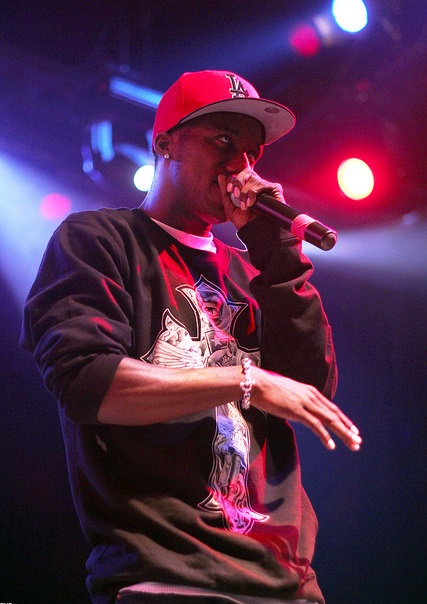
Hopsin performing in Toronto on May 16, 2013

In January 2012, Hopsin landed a spot on MTV2's "Sucker Free Sunday" by appearing in Tech N9ne's music video for "Am I A Psycho?".[22] In February 2012 Hopsin appeared on the front cover of XXL as part of their annual "Top 10 Freshmen list" along with fellow rappers French Montana, MGK, Danny Brown, Roscoe Dash, Iggy Azalea, Macklemore, Don Trip, and Kid Ink.[23] In July 2012, Hopsin released the fifth installment of his "Ill Mind of Hopsin" video series which hit YouTube with huge success. It had received over 1 million views in less than 24 hours and currently has over 50 million views.[24][25][26] In "Ill Mind of Hopsin 5" Hopsin expresses his frustration with jaded youth and disenchantment towards other rappers who are unrelatable. It had also charted at number 17 on Billboard's Hot R&B/Hip-Hop Digital songs chart.[27] In October 2012, Hopsin made an appearance on a BET Cypher during the 2012 BET Hip Hop Awards alongside Schoolboy Q, Mac Miller and Mystikal.[28][29]

Hopsin's album, Knock Madness was released on November 26, 2013, to fairly good success in US Rap Charts.[30] Featured guests for the album include Dizzy Wright, SwizZz, Jarren Benton, and Tech N9ne. He has said the album has more of a positive message and said it is "better than Dr. Dre's Detox."[31] Hopsin and the rest of the Funk Volume artists went on a three-month worldwide tour in the fall of 2012 which included 58 shows in 60 days in the United States, Europe, and Australia.[32][33]

In December 2012, Hopsin had hinted on his Facebook and Twitter pages that he and Travis Barker are working on a project together, further details on the project were yet to be released. However, in late December, Travis Barker would say they are working on a collaboration EP which would be released in 2013.[34][35] Then on February 5, 2012, Hopsin would say all the production had been finished for the EP.[36] On January 24, 2013, Funk Volume released a music video featuring the entire roster; Hopsin, Dizzy Wright, SwiZzZ, Jarren Benton and DJ Hoppa for a song titled "Funk Volume 2013."[37] On March 30, 2013, performed at the 2013 Paid Dues festival in San Bernardino, California.[38]

On July 18, 2013, Hopsin released "Ill Mind Six: Old Friend" on his YouTube channel. At the end of the video, the release date for Knock Madness was confirmed as November 26, 2013.[30] He later said that the song is not the sixth song in the "Ill Mind of Hopsin" series, and is instead a track on Knock Madness titled "Old Friend".[39] Knock Madness was released on November 26, 2013, by Funk Volume and debuted at number 76 on the Billboard 200 with first-week sales of 12,000 copies. The album contains guest appearances from SwizZz, Dizzy Wright, Jarren Benton and Tech N9ne along with being production primarily by Hopsin himself. It was also supported by the singles "Hop Is Back" and "Rip Your Heart Out". Following the Knock Madness tour beginning in December 2013, Hopsin planned to go on a hiatus also saying, "When I take a break, I am still going to be making music, I am [just] not going to be out publicly promoting shit. I am just going to be in my own house, doing whatever the fuck I want to do. Finding myself as a person."[40]

2014–2015: Pound Syndrome

[edit]

On January 30, 2014, while on tour, Hopsin was scheduled to perform a show in Fort Collins, Colorado, but feeling deeply depressed and even suicidal he walked out the back door of the venue before the performance. He hid in a house under construction until he called a friend to pick him up.[41][42] However, on July 11, 2015, to make amends, he performed a free show for fans in Fort Collins at the same venue where he was originally to perform and dedicated a song titled "Fort Collins" on his album Pound Syndrome.[43]

On July 1, 2014, Hopsin posted a picture of his mugshot stating that he would be releasing "Ill Mind of Hopsin 7" on July 18, 2014. He then stated that it was for sure the realest song he has ever wrote in his career.[44][45] The video for "Ill Mind of Hopsin 7" had gotten over 1 million YouTube views in a day. On "Ill Mind of Hopsin 7", Hopsin lyrically shares his religious beliefs, his views on other religious beliefs and the connections between religion, history and governance.

Hopsin had revealed on his Instagram that he would be retiring from rap and moving to Australia. However, on December 25, 2014, Hopsin shared a video on his YouTube channel called "The REAL reason Hopsin left the music industry" with label mate Jarren Benton inspired by the film Dumb and Dumber To which stated that he was not quitting rap and it was all a joke, also revealing that he will be releasing a new album called Pound Syndrome in 2015.[46][47][48][49]

On May 27, 2015, an interview was released on Sway Calloway's YouTube channel, touching on his appearance at Soundest Music Festival, and announcing that Pound Syndrome would be released on July 24. In the interview, he said that this is "definitely the best album that [he's] ever created, hands down."[50] In June 2015, both "Sag My Pants" and "Ill Mind of Hopsin 5" were certified Gold by the RIAA. On June 1, 2015, the first single off the album "Crown Me" was released. The second single "Fly" was released on July 8, 2015. Also in July 2015, it was announced that Hopsin had signed a distribution deal with Warner Bros. Records. Pound Syndrome was released on July 24, 2015. The album debuted at number 17 on the Billboard 200 with first-week sales of 17,000 copies.[51]

2016–2018: Undercover Prodigy and No Shame

[edit]

In January 2016, Hopsin had announced on social media that his label Funk Volume, is "officially dead", due to ongoing business issues and financial disputes with his business partner and co-founder of the label, Damien Ritter.[52] In March 2016, Hopsin released "Ill Mind of Hopsin 8".[53] The song was a diss track directed towards Damien Ritter and Funk Volume.[54] Hopsin officially left Funk Volume after the song's release and went on to create a new label called Undercover Prodigy.[55] Hopsin later went on to release more singles with his new label with, "Bout the Business" on April 20,[56] "Die This Way" on May 31,[57] "False Advertisement" on August 25,[58] and "Scrollin" with Futuristic off his As Seen on the Internet album on August 26.[59]

In February 2017, Hopsin confirmed he was working on his next studio album and released the singles "All Your Fault", and "Bus That" on April 17.[60][61] On September 22, 2017, Hopsin released the lead single to his fifth album titled, "The Purge".[62] The following single, "Happy Ending", was released as the second single on October 13.[63] In the same month, Hopsin confirmed in an interview that he signed a distribution deal with 300 Entertainment.[64][65] On November 1, 2017, Hopsin released the third single, "Witch Doctor", and announced and revealed the album's title and cover of his fifth studio album titled, No Shame.[66] The album was released on November 24, 2017, and debuted at number 42 on the US Billboard 200 chart.[67]

Following the release of No Shame, Hopsin later went on to release music videos from the album with, "Ill Mind of Hopsin 9", being released the same day as the album's fourth single.[68][69] "Panorama City" and "Tell'em Who You Got It From" were released in January and February 2018, respectively.[70][71] In July 2018, Hopsin appeared on a single and music video with Canadian rapper Dax titled, "YourWorthIt.org".[72][73] In December 2018, Hopsin released the singles "Low-Key" and "Hell's Carol".[74][75]

2019–present: Hiatus and return to music

[edit]

On January 28, 2019, Hopsin released another collaboration with Dax titled, "You Should've Known".[76][77][78] Hopsin later went on to release the singles "The Old Us" and "Picasso" on February 28 and May 8, respectively.[3][79][80][81] On July 15, 2019, Hopsin released a new song titled, "I Don't Want It".[82] In the song, he announces that he will be taking a break from music to recover from problems in his personal life.[83]

On February 16, 2020, Hopsin uploaded a video to his YouTube channel announcing his return from his hiatus and announcing an upcoming album.[84] On April 21, Hopsin released a new single titled, "Covid Mansion".[85]

In September 2020, Hopsin joined the advisory board of music social networking startup Artist Republik.[86]

Controversy

[edit]

Tyler, the Creator

[edit]

In July 2011 Hopsin released "Ill Mind of Hopsin 4" which in the second verse he disses Tyler, the Creator of the Los Angeles hip hop collective, Odd Future and his "Yonkers" music video.[21] Hopsin said that he hates Odd Future's music, noting its negativity and "random" lyrical content and criticizing the group's production values.[87] Tyler responded via Formspring, stating that although "[Hopsin] can rap," Tyler felt that Hopsin was "bitter" and attempting to "get a name" by dissing Tyler and Odd Future.[88] Hopsin later said he did not have a beef with Tyler.[89]

Soulja Boy

[edit]

Hopsin's feud with Soulja Boy dates back to Hopsin's single "Sag My Pants", in which he disses Soulja. In late 2011, Soulja Boy called Hopsin "dope" but said that he wouldn't bother dissing him until Hopsin got more known.[90] On August 25, 2012, Soulja Boy made controversial comments towards Hopsin on one of his webcam chats with his fans when Soulja stated "Fuck Hopsin. I'm about to go in the studio and record this Hopsin diss real quick". He continued, saying: "That nigga's a bitch; fuck that bitch ass nigga."[90] Two days later on August 27, 2012, Hopsin and Soulja confronted each other on Tinychat where Hopsin goaded Soulja into dissing him.[91] On September 3, 2012, Soulja released a Hopsin diss entitled "That Nigga Not Me", to which Hopsin has not responded. In an interview with Tim Westwood following that diss, Hopsin put down the diss song as horrible and said the only rapper he has legitimate beef with is Soulja Boy. He also said he is contemplating "smashing the hell out of Soulja's career."[92]

Orlando arrest

[edit]
Photo by the Orlando Police Department, August 26, 2012

On August 25, 2012, Hopsin was scheduled to perform at Club 57 West, a popular night club located in Orlando, Florida. At the last minute, the club promoters chose to pull the last opening act, causing a verbal altercation between the club promoters and the artist's entourage. Some witnesses claim Hopsin tried to settle the argument verbally, while Hopsin claims he tried to defuse a fight outside of the club on his way to 7-Eleven (without indicating whether this was the same conflict, or something unrelated). At one point, Hopsin even offered 15 minutes of his own set to help find a solution to the problem.[93] Hopsin was detained shortly thereafter once police responded to the initial call stemming from the altercation inside the club. According to court records, he was arrested for disorderly conduct. On September 21, the assistant state attorney decided not to officially file the information. Hopsin later commented on the case, referring to the police officer as a racist.[94]

"Happy Ending"

[edit]

Hopsin’s critically panned[95][96] 2017 single "Happy Ending", off of No Shame, revived criticism for its depiction of Asian women as hyper-sexualized and submissive massage parlor workers.[97][98] The video was also initially taken down by YouTube for including nudity; Hopsin criticized the decision, stating that there were no visible nipples and he wore a "dick sock" to hide his genitalia.[99][100] He later apologized for any offense he caused to the Asian community with the video.[101]

Acting career

[edit]

Hopsin got his start in entertainment appearing as a background extra in movies and Disney Channel TV shows such as John Tucker Must Die, Even Stevens, Lizzie McGuire, Cold Case, Malcolm in the Middle and Gilmore Girls among many others.[102] His most notable work was on That's So Raven, which he worked on for several years, starting when he was 15.[103] In the entire course of his appearances he only had a speaking part a single time.[102] He also made an appearance in the 2009 film Fame as a rapper. In 2015, Hopsin co-starred in the second season of the TV drama series Murder in the First.[104]

Public image

[edit]

In 2004, Hopsin began wearing colored eye contacts in appearances in interviews, music videos, and performances. He stated that he used the contacts to give himself a memorable appearance and differentiate himself from other African American rappers.[105]

Hopsin is against drug and alcohol usage, and has criticized how mainstream entertainers promote usage of drugs and alcohol to youth. In some of his tracks, such as "Nocturnal Rainbows", he emphasizes his dislike for drugs (most notably crystal meth) and the irreversible damage they are capable of. Hopsin has stated that he tries to be a hip hop musician who can instill positive influences in people who listen to his music.[105][106] He follows a straight edge lifestyle, and has claimed to have never drank alcohol, taken recreational drugs, or smoked.[107]

Discography

[edit]

Studio albums

Filmography

[edit]

Films

[edit]
Title Year Role Other notes
Max Keeble's Big Move 2001 Pizza Parlor Guy Extra
Fame 2009 Senior Rapper Supporting role
Bomb the World 2010 Face Starring role
Independent Living: The Funk Volume Documentary 2013 Himself Starring role

Television

[edit]
Title Year Role Other notes
That's So Raven 2003 Guy #2 Extra
1 episode ("To See or Not to See")
Murder In The First 2015 Fatty B
Paradise City 2021 Gabriel

Video games

[edit]
Title Year Role Console
Battle Rap Stars 2011 Himself For Android and iPhone

References

[edit]
[edit]
Revisions and contributorsEdit on WikipediaRead on Wikipedia
from Grokipedia
Marcus Jamal Hopson (born July 18, 1985), known professionally as Hopsin, is an American rapper, record producer, director, and actor from the San Fernando Valley area of , . He began his music career in the early 2000s, recording local mixtapes and self-producing tracks before signing with in 2007, through which he released his debut album Gazing at the Moonlight. In 2009, Hopson co-founded the independent label , releasing subsequent albums such as Raw (2010) and (2013), the latter achieving notable success on U.S. rap charts. His signature style includes white contact lenses for a distinctive visual aesthetic in music videos, which gained significant traction on via the viral "Ill Mind of Hopsin" series addressing personal and industry critiques. Following disputes that led to his 2014 departure from , Hopson continued independently with projects like (2015) and No Shame (2017), emphasizing self-directed production and lyrical introspection on themes of and autonomy.

Early life

Upbringing and family background

Marcus Jamal Hopson, known professionally as Hopsin, was born on July 18, 1985, in Panorama City, a neighborhood in the section of , . He was raised in this predominantly area, where he lived in the family home into early adulthood before relocating to a more affluent suburb. Hopson grew up with two brothers in a household led by his parents, who remained together as of interviews in the mid-2010s. His mother worked at a medical company, while his father held jobs as a and took on extra work in television and film production. The environment was marked by his father's heavy alcohol consumption, described by Hopson as sufficient "for the entire ," alongside frequent between his parents that occurred several times a week. Hopson has recounted witnessing these altercations as a , which instilled and led him to normalize physical conflict, prompting him to seek refuge at friends' homes where he envied the absence of such turmoil. During his upbringing, Hopson experienced , being shy and ostracized by peers—particularly other Black children—for behaviors perceived as "acting white," which contributed to extensive at school. He attended High School in the area, where these challenges shaped his early interests in and writing raps in seclusion. These family dynamics and neighborhood influences fostered a turbulent childhood, later addressed by Hopson through to break cycles of learned aggression.

Entry into hip-hop and early influences

Marcus Jamal Hopson, known professionally as Hopsin, began pursuing hip-hop at the age of 16, around 2001, after developing an interest in two years earlier. He credits as the primary influence who sparked his engagement with the genre, drawing stylistic comparisons to early records characterized by aggressive delivery and introspective lyricism. Additional inspirations include , reflecting Hopsin's multifaceted artistic background that extended beyond rap to visual and performance elements. By 2003, Hopsin elevated his hobby into a more dedicated endeavor, self-producing the majority of tracks for his initial project, Emurge, which he began recording in and released locally that year. This unreleased album on a wider scale marked his entry into production, where he handled beats alongside , foreshadowing his independent approach. Lacking formal , his early work emphasized raw skill development through , prioritizing technical proficiency in rhyme schemes and flow over mainstream trends. Hopsin's commitment intensified in 2004 when he dropped out of high school during his senior year to focus exclusively on , forgoing traditional paths in favor of self-taught mastery. This period solidified his DIY , influenced by the accessibility of tools, allowing him to bypass gatekeepers and experiment freely before securing a label deal. His pre-label output, though limited in distribution, demonstrated an early critique of commercial hip-hop via personal narratives, setting the foundation for his later independent stance.

Music career

2003–2009: Ruthless Records, initial releases, and Funk Volume formation

In 2003, Hopsin independently released his debut project Emurge locally in Los Angeles, a self-produced effort recorded primarily in 2002 that showcased his early rapping and production skills using FL Studio software, though copies remain scarce and it garnered minimal distribution beyond underground circles. Hopsin signed with Ruthless Records in 2007 under executive Jerry Heller, the label's co-founder known for managing N.W.A., marking his entry into a major hip-hop imprint despite the label's diminished prominence post-Eazy-E's death in 1995. During this period, he continued self-producing tracks but faced delays in album rollout due to limited label support. In 2008, while still contractually tied to Ruthless, Hopsin co-founded the independent label Funk Volume with business partner Damien Ritter (also known as Dame Ritter), aiming to retain creative control and handle distribution independently amid frustrations with traditional label structures. Hopsin's Ruthless debut, Gazing at the Moonlight, arrived on October 27, 2009, featuring 16 tracks with themes of street life and personal struggle, but it sold poorly—peaking outside the Billboard 200—with critics noting inadequate promotion from the label, which provided only basic advances like $500 monthly stipends. This underwhelming reception prompted Hopsin to exit Ruthless shortly thereafter, shifting focus to Funk Volume for future self-reliant releases.

2010–2013: Breakthrough with Raw and

Hopsin released his second studio album, Raw, on November 19, 2010, via his independent label , marking his first project fully under his own control after departing . Self-produced by Hopsin, the album featured 18 tracks emphasizing raw lyricism, elements, and critiques of the music industry, with standout singles like "Sag My Pants" gaining traction through music videos. To promote Raw, Hopsin embarked on the two-month "I Am RAW" nationwide tour starting in March 2011, which helped build grassroots fan support despite limited mainstream commercial success initially. Parallel to Raw's rollout, Hopsin began uploading the "Ill Mind of Hopsin" video series to YouTube, starting with installments in 2010 that showcased introspective and confrontational bars over self-produced beats. "Ill Mind of Hopsin 4," released in 2011, addressed personal struggles and industry disillusionment, while "Ill Mind of Hopsin 5," dropped on July 18, 2012, went viral, critiquing reliance on government assistance and promoting self-reliance, amassing over 145 million views to date and significantly boosting his online visibility. These videos, often filmed low-budget with Hopsin's signature white eye contacts, propelled his independent profile, leading to increased streams and fan engagement without major label backing. By 2013, Hopsin's momentum culminated in the release of his third studio album, , on November 26 via , distributed by . Featuring collaborations with labelmates like and , the 18-track project debuted at number 76 on the and achieved notable placement on U.S. rap charts, reflecting growing commercial viability. Key tracks such as "Ill Mind of Hopsin 6" (released July 17, 2013, as a promotional single) further amplified buzz, with the album's themes of perseverance and industry navigation solidifying Hopsin's breakthrough as an self-sustained artist. During this period, expanded, signing talents like and releasing collective tracks like "Funk Volume 2013" to highlight the roster's synergy.

2014–2015: Pound Syndrome and escalating independence

In July 2014, Hopsin released the single "Ill Mind of Hopsin 7" on July 18, which featured lyrics challenging religious beliefs and organized faith, garnering significant online discussion and views on platforms like YouTube. To build anticipation for his next project, he staged a publicity stunt later that year, publicly announcing his retirement from rap and plans to relocate to Australia, only to reveal it as a promotional tactic for his forthcoming album. This self-orchestrated narrative highlighted his hands-on approach to marketing, bypassing traditional label-driven promotion strategies. Pound Syndrome, Hopsin's fourth studio album, was announced for release on July 24, 2015, via with distribution support from Warner Bros. Records, a deal secured earlier that year to expand reach without ceding ownership or creative . The project exemplified his escalating , as Hopsin handled all production, , and mixing himself using his signature live drumming style, with no guest features or external collaborators. Preceding singles included "Crown Me" on June 1, 2015, and "" on July 8, 2015, both self-produced and emphasizing themes of perseverance and industry critique. Upon release, Pound Syndrome debuted at number 17 on the chart, moving 17,149 copies in its first week, marking Hopsin's highest-charting to date and underscoring the viability of his independent model augmented by targeted major distribution. The album's structure, including skits and raw lyricism addressing personal struggles and societal issues, reinforced his reputation for unfiltered artistry, free from mainstream compromises. This period solidified Hopsin's shift toward greater operational independence within , prioritizing direct fan engagement via and video content he directed and edited personally, setting the stage for future self-managed ventures.

2016–2018: Challenges with Undercover Prodigy and No Shame

In early 2016, Hopsin terminated his partnership with amid escalating conflicts with co-founder Damien Ritter, whom he accused of financial impropriety, including withholding royalties and mismanaging label funds. On March 7, 2016, he released "Ill Mind of Hopsin 8" as a diss track enumerating these issues, claiming Ritter's actions had depleted the label's resources and stalled artist advancements, leading to its effective dissolution. This acrimonious split, rooted in disputes over profit distribution—where Hopsin alleged he received only 20% despite being the primary revenue generator—left him financially strained and operationally unmoored, prompting the establishment of Undercover Prodigy as his solo independent label later that year. The shift to Undercover Prodigy introduced operational hurdles typical of bootstrapped independence, such as self-funding production, distribution logistics, and marketing without a major infrastructure, compounded by the emotional toll of the prior fallout. Hopsin issued few releases in , focusing instead on rebuilding, though he debuted tracks like "Bout the Business" under the new banner to signal continuity. By February 20, 2017, in the single "All Your Fault," he publicly apologized for prolonged absences from music, attributing delays to internal chaos and personal recovery from the disputes. These challenges delayed major projects, as Hopsin navigated sample clearances, budget constraints, and the absence of collaborative support previously provided by . No Shame, his fifth studio , emerged on November 24, 2017, distributed via Undercover Prodigy in collaboration with to mitigate independent rollout risks. Spanning 20 tracks with a runtime of 73 minutes, it featured sparse guest appearances from Eric Tucker, Joey Tee, and Michael Speaks, alongside self-produced beats emphasizing raw introspection on the Funk Volume implosion, strains, and industry betrayals. Hopsin described the project as a candid reckoning with two years of adversity, including Ritter's alleged and its ripple effects on his career momentum. Into 2018, he continued addressing these transitions in interviews, admitting to past immaturity in business dealings that exacerbated the split, while affirming Undercover Prodigy's viability for future self-reliant endeavors despite persistent solo management demands.

2019–present: Hiatus, sparse releases, and REBIRTH era

Following the release of No Shame in 2017, Hopsin adopted a lower profile, issuing only occasional singles amid an extended hiatus from major projects. On January 28, 2019, he collaborated with Dax on the track "You Should've Known," marking one of his few outputs that year. This was followed by the standalone single "Covid Mansion" on April 21, 2020, which addressed pandemic-related isolation. In March 2021, Hopsin released "Alone With Me," produced by himself and positioned as part of his anticipated sixth studio album, tentatively titled Minor Disturbance. Activity dwindled further after 2021, with Hopsin citing personal reflection and creative reevaluation in sparse updates, leading to a multi-year gap in substantive releases. He reemerged in February 2023 with "Arrival," a self-produced single serving as an introductory piece to the Minor Disturbance narrative series, featuring high-concept visuals blending rap with cinematic . This kicked off a brief flurry of activity, including "Rebirth" on March 10, 2023—a track with a self-directed depicting themes of resurrection and industry critique, released under his Undercover Prodigy imprint. Additional 2023 singles like "" (featuring The Future Kingz) and "Single on Singel" (featuring Adriana Aslani) continued the serialized approach, emphasizing self-reliant production and lore-driven content akin to arcs. The REBIRTH era, centered on these 2023 outputs, represented an attempt to revive his career through episodic, visually ambitious drops rather than a traditional rollout, drawing influences from rap styles while maintaining his signature raw on personal accountability and mental struggles. However, Minor Disturbance as a cohesive project remained unreleased by late 2025, with subsequent promises of expansions yielding no further full-length work, resulting in renewed sparsity. Hopsin's output since has prioritized quality over quantity, aligning with his history of independence but underscoring challenges in sustaining momentum post-hiatus.

Musical style and artistry

Production techniques and influences

Hopsin employs a self-reliant production approach, handling the majority of beat creation, recording, and initial mixing for his projects independently. Early in his career, he produced his debut album Emurge entirely in a basement setup using rudimentary tools, including an $8 Walmart microphone and downloaded recording software, without external producers or studio rentals. This DIY method extended to subsequent works, where he credits himself for primary production on albums such as Raw (2010) and Knock Madness (2014), gradually upgrading to a full home studio built over years of investment. He utilizes FL Studio as his primary digital audio workstation, enabling efficient layering of elements like piano melodies, string samples, and percussive patterns characteristic of his tracks. His techniques emphasize dense, atmospheric arrangements with undertones, featuring heavy 808 bass, rapid rolls, and cinematic synths to complement introspective or aggressive lyrics. This style supports high-energy flows and series like "Ill Mind of Hopsin," where production aligns closely with thematic intensity. Hopsin's production draws from a range of hip-hop influences, including Dr. Dre's polished beats and DMX's raw aggression, which inform his blend of melodic hooks and hard-hitting drums. He has acknowledged broader artistic inspirations such as , , , and for rhythmic complexity and innovation. Eminem's impact is particularly evident in structured, narrative-driven tracks like "Ill Mind of Hopsin 9," where Hopsin emulates multisyllabic schemes and emotional depth in both lyrics and backing instrumentation. Collaborations with further highlight shared affinities for choppy, high-tempo production suited to rapid delivery.

Lyrical themes: Critiques of industry and personal responsibility

Hopsin's lyrics recurrently assail the hip-hop industry's promotion of superficiality and commercialism, portraying it as a mechanism that elevates inauthentic artists while marginalizing genuine talent. In "Ill Mind of Hopsin 5," released on July 18, 2012, he denounces the prevalence of "fake" rappers who glamorize , drug use, and idleness, arguing that such content brainwashes impressionable into emulating a destructive lifestyle devoid of real aspiration. He specifically critiques record labels for prioritizing marketability over skill, claiming they "push niggas that's labelin' drugs, but are drug free" and foster a cycle where "talentless motherfuckers" dominate airwaves, leading to widespread disillusionment among fans. This theme extends to tracks like "Ill Mind of Hopsin 4," where he lambasts the genre's shift toward fabricated personas and diminished lyrical depth, positioning himself as a counterforce intent on restoring authenticity. Complementing these indictments, Hopsin advocates personal responsibility as an antidote to societal and self-inflicted malaise, urging listeners to confront their flaws and excise negative influences. Central to this is "Ill Mind of Hopsin 5," where he implores individuals to "cut the bad fruit off of the tree" by abandoning toxic relationships and habits, emphasizing that success demands sacrifice and proactive effort: "You want to succeed? You have to try / Your actions made a fat bitch out of you." He frames victimhood as a choice, rejecting excuses rooted in environmental or peer pressures propagated by the industry, and instead promotes through disciplined ambition. On the album No Shame, this evolves into raw self-reckoning, as Hopsin details his own accountability for relational betrayals, lapses, and impulsive decisions, portraying shame not as debilitation but as a catalyst for growth and behavioral correction. Tracks like "What's My Purpose?" further probe existential introspection, questioning life's direction while underscoring the need for personal agency amid chaos. Through these motifs, Hopsin consistently links industry corruption to individual agency, positing that true reform begins with rigorous self-examination over external blame.

Business ventures and independence

Founding and operation of Funk Volume

Funk Volume was co-founded in 2008 by rapper Hopsin and Damien "Dame" Ritter, Ritter's brother being the rapper , who became the label's first signee after Hopsin himself. The label originated in amid Hopsin's frustrations with his prior deal at , emphasizing a DIY to retain creative control and direct artist-fan connections via platforms like and . Operations centered on bootstrapped independence, with handling business logistics including self-booked tours, merchandise , and pre-order physical copies to recoup production costs before digital releases. Each artist typically sold at least 1,000 hard copies pre-sale, while Hopsin averaged 3,000 to 5,000, enabling profit from streaming and downloads thereafter; revenue streams diversified into live performances, apparel, and online content like Ustream broadcasts for fan engagement. The label avoided major distribution deals, prioritizing artist autonomy in production and lyrics, and signed talents such as in 2012, Jarren Benton, and DJ Hoppa, fostering a roster focused on lyric-driven hip-hop over commercial trends. By 2014–2015, had expanded through rigorous touring—such as a 2015 schedule of 52 shows across 61 days—and achievements like Hopsin and earning XXL Freshman honors in 2012 and 2013, respectively, alongside in 2014, building a dedicated fanbase in Middle America via grassroots promotion and collaborations. Ritter's Stanford MBA background informed lean operations, including home-based management and equitable revenue splits that improved with successive releases, positioning the label as a self-sustaining entity reliant on Hopsin's flagship visibility from viral tracks like "Ill Mind of Hopsin 5," which garnered over 1 million views in 24 hours.

Fallout with partners and self-reliant model

In early 2016, Hopsin publicly severed ties with , the independent label he co-founded with Damien in 2008, citing irreconcilable disputes over financial mismanagement and creative control. On January 7, 2016, Hopsin announced via that the label was "officially dead," attributing the collapse primarily to Ritter's actions, including alleged gambling debts that strained company resources and unequal profit distribution where Ritter purportedly retained a disproportionate share despite equal ownership. In his March 2016 track "Ill Mind of Hopsin 8," Hopsin elaborated on the fallout, accusing Ritter of , vindictiveness, and prioritizing personal gain over the label's artists, which led to internal conflicts and the departure of key roster members like . Ritter countered in interviews, claiming Hopsin failed to contribute sufficiently to label operations, exhibited conflicts of interest by pursuing solo ventures, and escalated tensions through public threats to exit as early as January 2016. The dissolution resulted in lawsuits and asset disputes, with ceasing operations by mid-2016, forcing artists to seek independent paths or new affiliations. Despite a partial in 2020–2021 via joint podcasts addressing past grievances as a case of "black men growing up," the split underscored the risks of unbalanced partnerships in independent hip-hop ventures. Post-fallout, Hopsin adopted a fully self-reliant model under his newly formed imprint, Undercover Prodigy, established in 2016, emphasizing total control over production, distribution, marketing, and merchandising without external partners or major label interference. He self-produced albums like No Shame (2017), handling engineering, video direction, and direct-to-fan sales via platforms such as his YouTube channel, which amassed millions of views independently after a temporary ban. In interviews, Hopsin advocated treating music careers as self-education in business fundamentals, warning against reliance on labels and crediting his DIY approach—rooted in learning from Funk Volume's failures—for sustaining tours selling thousands of tickets per show without advances or royalties splits. This model enabled sparse but deliberate releases, such as the 2024 REBIRTH era singles, prioritizing artistic autonomy over volume.

Controversies and feuds

Diss tracks and artist rivalries

Hopsin has incorporated disses into numerous tracks as a means of critiquing perceived inauthenticity in hip-hop, often targeting mainstream artists without eliciting sustained responses. In his 2011 track "Ill Mind of Hopsin 4," released on July 21, he specifically attacked Tyler, the Creator's unconventional appearance and persona, rapping lines such as "Your last was the biggest waste, yellow nigga, you ain't trippy, you a faggot." Tyler responded indirectly via Formspring, acknowledging Hopsin's skill but dismissing him as "bitter" and seeking clout, though no dedicated diss track followed. Hopsin later clarified in interviews that the conflict did not represent a deep-seated , framing it as part of his broader commentary on Odd Future's eccentric style. A more reciprocal exchange occurred with Soulja Boy, stemming from Hopsin's 2010 single "Sag My Pants," which mocked Soulja's signature style and commercial approach to rap. Soulja Boy retaliated in 2012 with "That Nigga Not Me," asserting his from such criticisms and downplaying Hopsin's relevance. Hopsin contemplated a full response, publicly debating whether to "smash the hell out of and his whole career" during a UK tour, and in a Tim Westwood interview, identified Soulja as the only rapper with whom he held "legitimate ." The rivalry highlighted Hopsin's independent ethos against Soulja's mainstream pop-rap trajectory but did not escalate to further tracks. In September 2018, Hopsin engaged in a brief spat with after Lucas challenged Hopsin's implied superiority in fan discussions. Hopsin tweeted that he would "break [Lucas's] soul" in a rap battle, while also shading Logic in the same post for similar reasons. Lucas fired back via tweets questioning Hopsin's credentials, but the two resolved the tension privately via phone call, with Hopsin confirming on that "everything's all good between us" and no beef persisted. This incident underscored Hopsin's pattern of provocative online rhetoric, often amplifying his self-reliant image without leading to recorded diss tracks. Beyond these, Hopsin's disses frequently appear as verses within larger critiques rather than standalone rivalries. On the 2013 freestyle "Hop Is Back," he targeted and for stylistic inconsistencies and hype-driven success, explaining in a interview that it stemmed from frustration with industry favoritism rather than personal animosity. Similarly, his 2017 album No Shame included bars against , , and , which Hopsin described in discussions as exposing "fake" personas for authenticity's sake, akin to confrontational dynamics in skateboarding culture. These elements, while generating buzz, rarely prompted counter-disses, positioning Hopsin's approach as lyrical venting over mutual feuds. On August 26, 2012, Hopsin was arrested by the for prior to a scheduled performance at a local venue. The arrest took place onstage, prompting an angry fan to punch through a glass door and resulting in the show's cancellation. Court records indicate that on September 21, 2012, the assistant state attorney opted not to file formal charges. Hopsin subsequently described the incident as racially motivated by an unfair officer. In September 2016, Hopsin faced arrest in , , charged with following an altercation with a identified in reports as his pregnant girlfriend at a . He pleaded in court on September 7, receiving an Apprehended Violence Order restricting contact with the victim and a two-year good behavior bond. Hopsin contested certain media characterizations of the plea and potential in statements, emphasizing elements. The event led to temporary detention and fears of a travel ban from . In 2017, he addressed the ordeal in the track "Hotel in ," portraying it as a moment of personal turmoil.

Backlash over explicit content

In October 2017, Hopsin released the song "" from his album No Shame, which depicts his purported visit to an Asian involving a sexual encounter for payment, drawing widespread condemnation for its explicit and perceived racial stereotypes. Critics described the track and accompanying video as reducing Asian women to sex objects and promoting exploitative narratives, with outlets labeling it racist and offensive. The video was removed from shortly after release, prompting Hopsin to defend it on by asserting there was no and criticizing the platform's decision after his significant effort in production. U.S. Representative publicly denounced the video on October 18, 2017, accusing it of celebrating and mocking victims of , urging music platforms to reject such content. Reviews of No Shame highlighted "" as emblematic of the album's controversial elements, including aggression and explicit themes that alienated portions of Hopsin's audience expecting his more introspective style. Hopsin later reflected on the album's "controversial stuff" in interviews, framing it as raw personal expression amid personal turmoil, though it contributed to broader perceptions of inconsistency in his otherwise critique-heavy . Earlier, in April 2017, Hopsin faced removal from the Canadian Music Week lineup following a citing "violently sexist" in his track "All Your Fault," which included graphic descriptions of gendered violence and explicit relational conflicts. The , supported by 49 signatures and referencing public funding for the event, argued the content conflicted with anti-violence standards, marking an instance where Hopsin's provocative language led to professional repercussions. These episodes underscored tensions between Hopsin's independent artistic risks and audience or institutional expectations, with detractors viewing the explicit elements as undermining his claims to principled rap.

Acting and multimedia pursuits

Film and television appearances

Hopsin debuted in acting with a minor role as a pizza parlor kid in the 2001 family comedy film . He followed this with a guest appearance as Guy #2 in the October 22, 2004, episode "Five Finger Discount" of the sitcom . In the 2009 musical drama Fame, a of the 1980 film, Hopsin played a senior rapper, delivering a performance that highlighted his hip-hop skills amid the story of aspiring performers at a New York arts school. He took a leading role as Face in the independent low-budget film Bomb the World, showcasing his versatility beyond music in a centered on underground creativity. Hopsin's most substantial television role came in 2015, portraying the recurring character Fatty B—a streetwise informant tied to criminal elements—in nine episodes of season two of the TNT crime drama Murder in the First, which explored dual homicide investigations in . His behind-the-scenes involvement included preparation for intense scenes, as documented in production clips. In 2021, he appeared as , a key band member navigating personal and professional turmoil, across all eight episodes of the Prime Video series Paradise City, a rock-themed spin-off from American Satan featuring a cast of musicians and actors.

Video game and other media roles

Hopsin's track "The Purge" was featured on the in-game radio station Highwaymen Radio in , released on February 15, 2019, by . The song, from his 2010 mixtape Raw, integrated into the game's post-apocalyptic soundtrack alongside other hip-hop selections. Additionally, the collaboration "Bass" by featuring Hopsin and appeared in , a 2020 remake developed by Vicarious Visions, as part of its licensed music roster emphasizing skate culture-aligned tracks. These inclusions represent Hopsin's primary engagements with media, limited to musical contributions rather than voice or character portrayals. No verified records exist of Hopsin performing or voice roles in video games or non-film/television media such as animations or interactive projects.

Public image and worldview

Branding and visual aesthetics

Hopsin employs a striking visual branding centered on white-out contact lenses, which create an all-white eye appearance, distinguishing him in hip-hop visuals and performances. This aesthetic choice, implemented consistently since early in his career around 2007, aims to subvert initial judgments and emphasize his outsider status within the genre. He has stated that the lenses provoke underestimation, enabling him to surprise audiences with his lyrical depth and production skills. The white-eyed look appears prominently in music videos, live shows, and interviews, fostering an eerie, memorable persona that aligns with themes of and societal in his work. Originating from a desire for uniqueness after dropping out of high school to pursue music, this element became integral to his self-presentation, often paired with casual like hoodies and fitted caps to maintain an accessible yet unconventional image. Album artwork under his direction reinforces this branding through dark, surreal designs that evoke psychological tension, as seen in promotions for projects like Pound Syndrome in 2015, where imagery amplifies his raw, unfiltered artistic identity. While Funk Volume's label graphics incorporated bold, minimalist logos during its operation from 2007 to 2015, Hopsin's personal aesthetics prioritize the ocular signature over rigid stylistic uniformity post-label independence.

Positions on drugs, materialism, and cultural decay

Hopsin has consistently advocated against and alcohol use, maintaining personal throughout his career and attributing his stance to spiritual convictions and empirical observations of addiction's consequences. In a 2013 interview, he stated, "I'm anti-drugs, 100 percent. I don't like or alcohol. I never did either of the two, and I don't plan on it," emphasizing a preference for "permanent over temporary escape." This position is reflected in his 2013 track "Ill Mind of Hopsin 6," where he recounts the destructive impact of crystal meth on a childhood friend, warning listeners that lead to familial ruin and irreversible harm, as in the lyrics: "Yo mama told you that are bad, / But you ain't listen till the fire burned yo ass now you understand." He has publicly criticized rap's normalization of , positioning himself as an outlier in a genre often glorifying intoxication. Regarding , Hopsin critiques the pursuit of wealth and status as hollow distractions that undermine and genuine relationships, particularly within hip-hop's ethos. In "Ill Mind of Hopsin 5" (2012), he lambasts societal fixation on superficial gains, about "brain cells rotting from " alongside critiques of chasing luxury without substance, framing as a barrier to intellectual and moral growth. He has expressed disdain for rap's emphasis on opulence and , noting in personal reflections how such elements alienated him from mainstream trends despite his affinity for the genre's beats. Hopsin contrasts this with self-reliant values, arguing that true success derives from lyrical integrity rather than flashy displays, a view he promotes to counter the genre's wealth-obsessed narratives. Hopsin attributes cultural decay in hip-hop and broader society to the erosion of lyrical depth, promotion of vice, and abandonment of substantive critique, often decrying shifts toward and commercial pandering. He has publicly lamented the "ruin" of black culture through diminished artistic standards, as seen in 2015 social media outbursts where he asserted his intellectual superiority and dismissed artists like Drake as inauthentic to hip-hop's . In tracks like "Ill Mind of Hopsin 5," he targets youth indoctrination into drugs, violence, and apathy, viewing these as symptoms of a decaying value system that prioritizes over accountability. Hopsin positions his work as a counterforce, aiming to "wake up" listeners against industry-driven degradation, though this has drawn accusations of from peers who see his commentary as disconnected from realities. His critiques extend to trap music's perceived emphasis on production over intelligibility, perpetuating a cycle of low-effort consumption.

Reception and legacy

Commercial achievements and fanbase dynamics


Hopsin achieved notable commercial success as an independent rapper through his label , founded in 2007, by leveraging viral content and direct fan engagement rather than major label support. His "Ill Mind of Hopsin" video series, particularly "Ill Mind of Hopsin 5" released in 2012, garnered significant digital traction, debuting at No. 17 on the R&B/Hip-Hop Digital Songs chart with 20,000 downloads in its first week. This viral momentum propelled him onto the Social 50 chart and contributed to sustained streaming performance, with the track accumulating over 110 million streams as of 2025.
His albums demonstrated solid independent sales figures. (2013) debuted at No. 76 on the , selling 12,000 copies in its first week. (2015) was projected to sell 14,000–16,000 traditional copies in its debut week according to industry tracker Hits Daily Double. Overall, Hopsin's catalog has generated over 2 billion lead streams on , reflecting long-term digital viability despite the collapse of in 2016 amid internal disputes. With approximately 1 million monthly listeners as of recent data, his output sustains revenue streams estimated at around $47,000 monthly from platforms alone. Hopsin's fanbase dynamics center on a dedicated core of independent hip-hop enthusiasts who value his self-reliant model and critiques of mainstream industry practices, enabling sold-out world tours without major distribution. This loyalty stems from his emphasis on authenticity and direct artist-fan connections via and , fostering a niche following that prioritizes lyrical substance over commercial trends. However, the fanbase remains relatively contained compared to major-label peers, with growth tempered by his outspoken positions and the 2016 Funk Volume fallout, which disrupted momentum but retained support among those aligned with his ethos. His approach has influenced other independents, highlighting a dynamic where fan devotion compensates for limited crossover appeal in broader hip-hop circles.

Critical evaluations and ongoing debates

Critics have frequently praised Hopsin's technical ability and self-production skills while critiquing his lyrical content as overly preachy and didactic. In a review of his 2017 album No Shame, described it as a "misfired " that targets multiple foes ineffectively, marking it as the weakest in his due to inconsistent execution and forced aggression. Similarly, Sputnikmusic's analysis highlighted the album's late collapse into subpar tracks, including the "extremely awful and incredibly racist" "," underscoring flaws in thematic depth despite strong delivery. Evaluations of earlier works like (2014) reveal a divide: commended its full self-production and appeal to dedicated fans for maintaining artistic control, yet Spectrum Pulse noted the anti-drug messaging felt manipulative rather than intellectually engaging, prioritizing emotional appeals over substantive reasoning. of The Needle Drop echoed this ambivalence in his critique, acknowledging skill but faulting the project for lacking innovation amid Hopsin's rigid opposition to mainstream trends. Ongoing debates center on Hopsin's self-positioning as a lyrical purist critiquing and commercial rap's emphasis on and superficiality, which some view as authentic resistance and others as elitist or corny posturing. In a 2016 discussion with VladTV, Hopsin argued against classifying trap artists like as lyricists, prioritizing content depth over beats, fueling broader hip-hop conversations on what constitutes "real" lyricism versus accessible style. Fan and critic discourse, as aggregated on platforms like Musicboard (average rating 2.6/5), often labels his introspective Ill Mind series as try-hard or cringeworthy for blending personal anecdotes with societal indictments on and cultural vanity, though defenders cite tracks addressing and loss as evidence of raw genuineness. This tension persists in evaluations of his independence, with some crediting his anti-industry stance for cult appeal and others arguing it limits broader impact by alienating potential audiences through unrelenting aggression.

References

Add your contribution
Related Hubs
User Avatar
No comments yet.