


Community hub
Recent from talks
Contribute something
Nothing was collected or created yet.
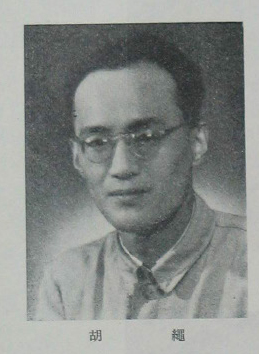
Hu Sheng
View on WikipediaKey Information


Hu Sheng (11 January 1918 – 5 November 2000), was a Chinese Marxist theorist and historian. He was President of the Chinese Academy of Social Sciences from 1985 to 1998, and also served as Vice-Chairman of the seventh and eighth National Committees of the Chinese People's Political Consultative Conference[1] and member of the 12th Central Committee of the Chinese Communist Party.[2]
Biography
[edit]Hu was born on 11 January 1918 in Suzhou, Jiangsu Province. He enrolled in the philosophy Department of Peking University in the year of 1934. He started involving in the communist revolutionary activities in Shanghai from 1935, mainly in the cultural activities and campaigns of resistance led by the Chinese Communist Party against the Japanese.[1] After the Second Sino-Japanese War broke out in 1937, he moved to Central China and joined the Chinese Communist Party. From the age of 17 to 30, Hu wrote numerous articles for the Communist and other progressive newspapers and magazines and his published works summed up more than 1 million Chinese characters and had a great impact on ideological and cultural circles as well as young intellectuals.
Hu was responsible for the Party's theory research and publicity works for a long time after the People's Republic of China was formed in 1949. He also wrote a number of major works on Chinese and the Chinese Communist Party's history.[3] He was the president of the Chinese Academy of Social Sciences from 1985 to 1998. In 1996, Hu donated most of his books to a library in Hubei Province and established a fund to award outstanding young intellectuals.[3]
He became the member of the 12th Central Committee of the Chinese Communist Party from 1982 to 1987. In 1988, he became the vice-chairman of the National Committee of the 7th Chinese People's Political Consultative Conference. He served for the second term and retired from office in 1998.[2] He was also vice chairman of the Hong Kong Basic Law Drafting Committee which was responsible for drafting the Hong Kong Basic Law, the constitution of the Hong Kong Special Administrative Region after it was handed over to China 1997.
Hu died of an illness on 5 November 2000 in Shanghai at the age of 82. Entrusted by the party's Central Committee, the Vice President Hu Jintao came to Shanghai to bid farewell to Hu Sheng, and to convey to Hu Sheng's family members. There were also concerns expressed from General Secretary Jiang Zemin and other members of the Politburo Standing Committee of the party's Central Committee.[3]
References
[edit]

- ^ a b Song, Yuwu (2013). Biographical Dictionary of the People's Republic of China. McFarland. p. 254.
- ^ a b "Hu Sheng 胡绳". China Vitae.
- ^ a b c "Body of Hu Sheng Cremated in Shanghai". People's Daily. 13 November 2000.

Hu Sheng
View on GrokipediaEarly Life
Birth and Upbringing
Hu Sheng, originally named Xiang Zhidi, was born on 11 January 1918 in Suzhou, Jiangsu Province, into a teacher's family.[7] Suzhou, a historic cultural hub in early 20th-century Jiangsu, provided an environment steeped in scholarly traditions amid the socio-economic upheavals of the Republican era, including rural agrarian challenges and urban intellectual ferment influenced by national reform movements. His family's educational background likely fostered an early appreciation for learning, setting the stage for his later intellectual pursuits.Education and Early Influences
Hu Sheng began his formal education in 1925, receiving ten years of schooling focused on core subjects including language, history, and geography.[8] In 1927, he enrolled in the junior high section of the Fourth Zhongshan University District Suzhou Middle School, which later became Jiangsu Suzhou Middle School, progressing to the senior high normal department after graduating from junior high in 1931.[9] At Peking University, he studied in the Philosophy Department from 1934 to 1935 but did not complete his degree, instead engaging in self-directed learning thereafter.[10] During his university period, he audited lectures such as Tang Yongtong's overview of philosophy and Zhang Yi's history of Western philosophy, broadening his intellectual foundation.[8] The Japanese invasion on September 18, 1931, profoundly impacted Hu during his high school years, igniting strong patriotic sentiments amid national crisis.[11] This event prompted him to explore progressive ideas, including initial contacts with Marxist-Leninist texts through underground channels.[11] At age 15, around 1933, he co-edited the monthly magazine Baihe, publishing an article under the pen name "Hu Sheng," which he retained lifelong, signaling his emerging engagement with intellectual discourse.[12] These experiences fostered Hu's ideological shift toward communism, driven by a quest to address China's existential threats through revolutionary thought, setting the stage for his later commitments without yet formalizing political involvement.[11]Revolutionary Involvement
Joining the CCP
Amid the outbreak of the Second Sino-Japanese War in 1937, which intensified national unrest and calls for resistance against Japanese aggression, Hu Sheng relocated to Wuhan and formally joined the Chinese Communist Party in January 1938.[12] His decision was driven by years of intellectual engagement with Marxist theory, including readings of works by Qu Qiubai and other influences that drew him to the party's anti-imperialist and revolutionary ideals, coupled with prior participation in CCP-led cultural and propaganda activities since 1935.[12] Upon entry, the party recognized his contributions to progressive publications and waived the standard probationary period, admitting him directly as a full member.[12] In the immediate aftermath, Hu continued underground cultural and united front work in Wuhan, serving as an editor for party-affiliated periodicals such as All-People Weekly and Save China, which promoted anti-Japanese unity and mobilization efforts until Wuhan's fall in October 1938.[12]Activities During Wartime
During the Sino-Japanese War, Hu Sheng contributed to the Communist Party's revolutionary efforts through cultural and propaganda activities, focusing on anti-Japanese mobilization. After engaging with underground CCP publications and Marxist texts amid the national crisis, he participated in party-led cultural work in Shanghai starting in late 1935, which included writing and promoting抗日救亡 (anti-Japanese salvation) initiatives.[11] Following the outbreak of full-scale war in 1937, Hu advanced party objectives by editing publications in key locations such as Wuhan. He served as editor for outlets like Quanmin Zhoukan, Quanmin Kangzhan, and Jiu Zhongguo, which disseminated messages of unified resistance against Japanese invasion while subtly aligning with communist perspectives under the United Front framework.[9] His roles extended to similar editorial work in Xiangfan and other areas, emphasizing organizational propaganda to bolster enemy-rear efforts and ideological outreach.[13] Into the subsequent civil war phase, Hu continued intellectual contributions to the liberation struggle, including critiques of Nationalist policies that urged peace while supporting CCP positions, thereby aiding the party's narrative against internal adversaries up to 1949.[14]Academic Career
Historiographical Research
Hu Sheng's historiographical research primarily focused on applying the Marxist materialist conception of history to pre-modern Chinese society, emphasizing the evolution of social formations through dialectical processes. He integrated social and intellectual history, viewing ideological developments as reflections of material conditions, which allowed for a systematic critique of traditional historiographical idealism. This approach positioned ancient Chinese history within a framework of class struggle and economic base-superstructure dynamics, contributing to early Marxist interpretations of feudalism and primitive societies in China.[15][16] Methodologically, Hu advocated rigorous adherence to historical materialism, rejecting metaphysical interpretations in favor of empirical analysis grounded in dialectical laws. His work promoted the unification of archaeological evidence, textual sources, and Marxist theory to reconstruct ancient social morphologies, influencing a generation of historians to prioritize productive forces and relations of production in narrating China's pre-modern past. This entailed a critical reevaluation of Confucian historiography, substituting it with analyses of economic contradictions driving historical change.[17][15] Pre-1980s publications by Hu underscored these themes, including his 1946 assessment of advancements in Chinese historical studies under materialist guidance, which reviewed progress in understanding ancient societal stages amid wartime intellectual efforts. Such contributions helped establish foundational texts for Marxist historiography, focusing on general historical materialism rather than contemporaneous events.[18][17]Leadership at CASS
Hu Sheng was appointed President of the Chinese Academy of Social Sciences (CASS) succeeding Ma Hong, who had followed the inaugural president Hu Qiaomu, and held the position until succeeded by Li Tieying. His selection reflected his established reputation as a historian and theorist, enabling him to guide the academy's direction amid China's evolving academic landscape.[19] During his tenure, Hu Sheng oversaw CASS's alignment with the reform and opening-up policies, promoting institutional efforts to advance social sciences research in support of national development. He advocated for strengthening social science studies to address contemporary challenges, emphasizing their role in policy formulation and theoretical innovation under state guidance. This included fostering research institutes' contributions to economic and societal reforms, though specific restructuring measures under his administration focused on enhancing research quality and relevance rather than major organizational overhauls.Political Roles
CCP Central Committee Service
Hu Sheng was elected as a full member of the 12th Central Committee of the Chinese Communist Party (CCP) at the 12th National Congress held in September 1982, serving through to the 13th National Congress in 1987.[20] His selection reflected his longstanding revolutionary experience and expertise in Marxist theory and party history.[21] During this period, Hu contributed to the Central Committee's deliberative functions by directing the Party History Research Office under the CCP Central Committee, where he oversaw the compilation of key historical works such as The Seventy Years of the Communist Party of China.[21] This role enabled his involvement in drafting significant party documents, supporting the theoretical orientation of the CCP toward historical reflection and Marxist principles amid early reform discussions.[21]CPPCC Vice Chairmanship
Hu Sheng served as Vice Chairman of the seventh and eighth National Committees of the Chinese People's Political Consultative Conference (CPPCC) from 1988 to 1998.[22][23] During this tenure, he was a member of the CPPCC's Chinese Communist Party (CCP) leading group, contributing to the organization's united front work.[21] In his CPPCC role, Hu Sheng advanced political consultation, democratic supervision, and participation in state affairs, fostering collaboration with non-CCP democratic parties and personages without party affiliation.[21] He emphasized the CPPCC's function in promoting national unity and social stability, aligning with broader reform and opening-up efforts.[21] His concurrent leadership at the Chinese Academy of Social Sciences provided scholarly input to these consultative processes.[21] Through speeches and positions, he advocated for policy advice that reinforced unity across diverse sectors, supporting the CPPCC's advisory mechanisms on national development.[21]Intellectual Contributions
Marxist Theoretical Works
Hu Sheng contributed to the popularization of Marxist philosophy through a series of works written between 1936 and 1948, producing six books that emphasized substantive analysis, logical rigor, and accessible explanations of core concepts for a wider Chinese audience.[24] These efforts adapted dialectical materialism to everyday philosophical understanding, such as in New Philosophy's View of Life, bridging abstract theory with practical social views amid revolutionary contexts.[24] In post-revolutionary China, Hu advanced Marxist theory by stressing its dynamic evolution, particularly in response to global and domestic transformations. In his later years, he reflected deeply on modern Chinese history, blending philosophy, party history, and broader historical analysis to address ongoing reforms.[25] His 1994 address, "Marxism is a Developing Theory," examined over a century of international political, economic, and technological shifts to argue for Marxism's ongoing adaptability and vitality, countering notions of its rigidity.[26] This perspective influenced debates on theory's application beyond dogma, integrating empirical changes into philosophical frameworks. Hu's collection Marxism and Reform and Opening Up compiles essays from 1983 to 1996 that explore Marxism's intersections with China's modernization, advocating contextual adaptations while maintaining fidelity to dialectical principles in social and economic restructuring.[27] These writings positioned Marxist dialectics as a tool for analyzing reform-era contradictions, contributing to theoretical discourses on Sinicized Marxism without historical specificity.[27]Writings on Party History
Hu Sheng served as chief editor for A Concise History of the Communist Party of China (Seventy Years of the CPC), a comprehensive volume that chronicles the party's formation in 1921 through its developments up to 1991, emphasizing key events like the establishment of rural revolutionary bases and the anti-Japanese united front.[3][28] This work applies historical materialism to analyze party milestones, portraying the CCP's evolution as a dialectical process driven by class struggle and adaptation to China's semi-colonial conditions.[9] In the book, Hu framed pivotal moments—such as the Long March and the founding of the People's Republic—as triumphs of Marxist-Leninist principles over internal and external contradictions, integrating archival materials to substantiate the party's role in national liberation.[29] His editorial oversight ensured alignment with official narratives, influencing subsequent historiography by standardizing interpretations of the party's ideological maturation and organizational resilience.[9] His work also played a key role in shaping the historiography paradigm of the Communist Party of China, integrating systematic analysis of party history with Marxist principles.[30]Legacy
Influence on Chinese Scholarship
Hu Sheng played a pivotal role in shaping Marxist historiography standards in Chinese academia through his foundational works and theoretical frameworks, which emphasized materialist interpretations of modern Chinese history. His book Imperialism and Chinese Politics (1945) is regarded as a cornerstone of pre-1949 Marxist historiography, establishing paradigms for analyzing feudal structures, imperialism, and revolutionary necessities that influenced subsequent scholarly standards. [31] These contributions promoted a revolutionary historical perspective, integrating Marxist methods with empirical research on party and national history, thereby setting benchmarks for historiographical rigor in socialist-era academia. [32] As President of the Chinese Academy of Social Sciences from 1988 to 1998, Hu exerted institutional influence by fostering environments for innovative scholarship, supporting trailblazing research initiatives that expanded academic resources and methodologies among younger scholars. [33] This leadership facilitated the modernization of historiographical approaches, encouraging the application of Marxist paradigms to contemporary issues and enabling broader discourse in social sciences. His efforts in promoting cross-cultural exchanges, such as with Japanese Marxist historians, further disseminated these standards internationally while reinforcing domestic academic development. [34] Hu received recognition during his era for advancing social science discourse, particularly through popularizing Marxist theory and linking historical innovation to evolving realities, which stimulated deeper engagements with party history and philosophical underpinnings in Chinese scholarship. [35] His key writings served as foundational texts that guided generations in applying dialectical materialism to historical analysis.Death and Commemoration
Hu Sheng died of illness on 5 November 2000 in Shanghai at the age of 82.[1] Official announcements from the People's Daily described him as an outstanding member of the Chinese Communist Party and a renowned Marxist theorist and historian.[1] His body was cremated on 12 November 2000 in Shanghai, with the event reflecting institutional recognition of his contributions to the party and scholarship.[2] In 2018, marking the 100th anniversary of his birth, China remembered Hu Sheng as a renowned historian and former CPPCC vice chairman, highlighting his enduring contributions to the CPC.[22]References
- https://en.prolewiki.org/wiki/Library:A_Concise_History_of_the_Communist_Party_of_China