Hubbry Logo
Infrared search and trackInfrared search and trackMain
Open search
Infrared search and track
Community hub
Infrared search and track
logo
8 pages, 0 posts
0 subscribers
Be the first to start a discussion here.
Infrared search and track
from Wikipedia
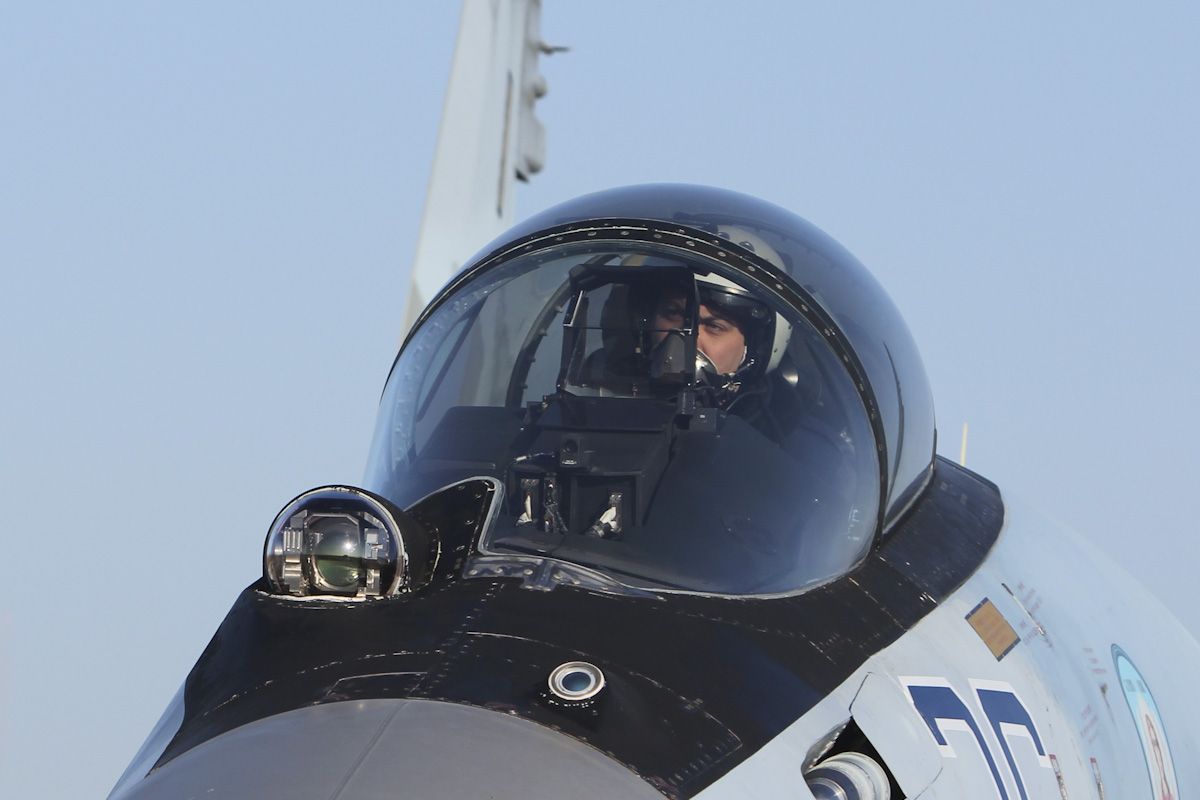
An IRST sensor on a Sukhoi Su-35

An Infrared Search and Track (IRST) system (sometimes called infrared sighting and tracking) detects and tracks objects that emit infrared radiation, such as the infrared signatures of jet aircraft and helicopters.[1]

A generalized case of forward-looking infrared (FLIR) systems, IRST systems provide all-around situation awareness. Their thermographic cameras are passive: unlike radar, they do not emit radiation and therefore do not add to an aircraft's emissions signature. Within range, an IRST's angular resolution is better than radar because infrared has a shorter wavelength than radar emissions. But an IRST's range is less than radar because infrared emissions are attenuated by the atmosphere and by poor weather (although less so than visible light).

History

[edit]

Early systems

[edit]
An April 1966 photo of an F-8E Crusader of VMF(AW)-235 at Da Nang shows the IRST in front of the canopy.
AN/AAA-4 IRST under the nose of an F-4 Phantom

IRSTs first appeared in the F-101 Voodoo, F-102 Delta Dagger, and F-106 Delta Dart interceptors. The F-106 had an early IRST mounting replaced in 1963 with a production retractable mount.[2] An IRST was added to the F-8 Crusader (F-8E variant). A similar Texas Instruments AN/AAA-4 was installed under the nose of early production aircraft F-4 Phantom B and C models.[3][4] It was not installed on later F-4Ds due to limited capabilities,[5] but retained the bulge; some F-4Ds had the IRST receiver retrofitted in a modified form.[4]

The F-4E eliminated the AAA-4 IRST bulge and received an internal gun mount which took up the area under the nose.[6] The F-4J which had a pulse-Doppler radar also eliminated the AAA-4 IRST receiver and bulge under the nose.[7]

The first use of IRST in a Eurasian country was the Mikoyan-Gurevich MiG-23,[8] which used the (TP-23ML) IRST; later versions used the (26SH1) IRST.[9] The Mikoyan-Gurevich MiG-25PD was also equipped with a small IRST under the nose.[10]

The Swedish Saab J-35F2 Draken (1965) and J 35J Draken also used IRST units, a Hughes Aircraft Company N71.[11]

Later systems

[edit]

IRST systems re-appeared on more modern designs starting in the 1980s with the introduction of 2-D sensors, which cued both horizontal and vertical angle. A cued search is a search performed in a relatively small volume to acquire a target whose position is approximately known. The target´s position can have been approximately obtained by other sensors or supplied from an external source. Sensitivities were also greatly improved, leading to better resolution and range. In more recent years, new systems have entered the market. In 2015, Northrop Grumman introduced its OpenPod IRST pod,[12] which uses a sensor by Leonardo.[13] The United States Air Force is currently incorporating IRST systems for its fighter aircraft fleet, including the F-15, F-16, and F-22.[14][15]

Optronique secteur frontal (IRST) of the Dassault Rafale, below the cockpit and to the side of the refueling boom. On the left, the main IR sensor (100 km range), on the right a TV/IR identification sensor with laser rangefinder (40 km range)
Eurofighter Typhoon with PIRATE IRST
F/A-18F Super Hornet with AN/ASG-34(V)1 IRST21 sensor in a modified drop tank on its centerline

While IRST systems are most common amongst aircraft, land-based, ship and submarine systems are available.[16][17][18]

Distributed Aperture Systems

[edit]

The F-35 is equipped with infrared search and track system AN/AAQ-37 Distributed Aperture System (DAS), which consists of six IR sensors around the aircraft for full spherical coverage, providing day/night imaging and acting as an IRST and missile approach warning system.[19]

Chengdu J-20 and Shenyang FC-31 is assumed to share the similar design concept with their system. IRST systems can also be used to detect stealth aircraft, in some cases, outperforming traditional radar.[20]

Technology

[edit]

These were fairly simple systems consisting of an infra-red sensor with a horizontally rotating shutter in front of it. The shutter was slaved to a display under the main interception radar display in the cockpit. Any IR light falling on the sensor would generate a "pip" on the display, in a fashion similar to the B-scopes used on early radars.

The display was primarily intended to allow the radar operator to manually turn the radar to the approximate angle of the target, in an era when radar systems had to be "locked on" by hand. The system was considered to be of limited utility, and with the introduction of more automated radars they disappeared from fighter designs for some time.

Performance

[edit]

Detection range varies with external factors such as

  • clouds
  • altitude
  • air temperature
  • target's attitude
  • target's speed

The higher the altitude, the less dense the atmosphere and the less infrared radiation it absorbs - especially at longer wavelengths. The effect of reduction in friction between air and aircraft does not compensate for the better transmission of infrared radiation. Therefore, infrared detection ranges are longer at high altitudes.

At high altitudes, temperatures range from −30 to −50 °C - which provide better contrast between aircraft temperature and background temperature.

The Eurofighter Typhoon's PIRATE IRST can detect subsonic fighters from 50 km from the front and 90 km from the rear[21] - the larger value being the consequence of directly observing the engine exhaust, with an even greater increase being possible if the target uses afterburners.

The range at which a target can be identified with sufficient confidence to decide on weapon release is significantly inferior to the detection range - manufacturers have claimed it is about 65% of the detection range.

Tactics

[edit]
MiG-29 nose showing radome and S-31E2 KOLS IRST

With infrared homing or fire-and-forget missiles, the fighter may be able to fire upon the target without having to turn on its radar sets at all. Otherwise, the fighter can turn the radar on and achieve a lock immediately before firing if desired. The fighter could also close to within cannon range and engage that way.

Whether or not they use their radar, the IRST system can still allow them to launch a surprise attack.

An IRST system may also have a regular magnified optical sight slaved to it, to help the IRST-equipped aircraft identify the target at long range. As opposed to an ordinary forward looking infrared system, an IRST system will actually scan the space around the aircraft similarly to the way in which mechanically (or even electronically) steered radars work. The exception to the scanning technique is the F-35's DAS, which stares in all directions simultaneously, and automatically detects and declares aircraft and missiles in all directions, without a limit to the number of targets simultaneously tracked.

When they find one or more potential targets they will alert the pilot(s) and display the location of each target relative to the aircraft on a screen, much like a radar. Again similarly to the way a radar works, the operator can tell the IRST to track a particular target of interest, once it has been identified, or scan in a particular direction if a target is believed to be there (for example, because of an advisory from AWACS or another aircraft).

IRST systems can incorporate laser rangefinders in order to provide full fire-control solutions for cannon fire or launching missiles (Optronique Secteur Frontal). The combination of an atmospheric propagation model, the apparent surface of the target, and target motion analysis (TMA) IRST can calculate the range.

List of modern IRST systems

[edit]

The best known modern IRST systems are:

Fighter aircraft carry the IRST systems for use instead of radar when the situation warrants it, such as when shadowing other aircraft, under the control of Airborne Early Warning and Control (AWACS) aircraft, or executing a ground-controlled interception (GCI), where an external radar is used to help vector the fighter to a target and the IRST is used to pick up and track the target once the fighter is in range.

See also

[edit]

References

[edit]
[edit]
Revisions and contributorsEdit on WikipediaRead on Wikipedia
from Grokipedia
Infrared search and track (IRST) is a passive electro-optical sensor system designed to detect, track, and identify airborne targets, such as aircraft and missiles, by capturing their infrared radiation signatures without emitting signals itself. These systems operate across infrared wavelengths, typically in the mid-wave band (3–5 μm), to provide wide-field-of-view surveillance for situational awareness in military applications. IRST systems enhance capabilities by enabling "see first, strike first" operations, where pilots can identify threats at ranges up to 100–160 km before adversaries detect them via . Key components include scanning , such as afocal zoom telescopes and fast steering mirrors for , along with high-resolution focal plane arrays (e.g., 640 × 512 pixels with 15 μm pitch) to process imagery. Algorithms for detection handle challenges like atmospheric , clutter from backgrounds, and multiple targets, achieving high detection rates (around 95%) with low false alarms through techniques like transforms and motion analysis. Historically, IRST technology evolved from early multi-element detectors in the to modern linear array sensors integrated on platforms like the F-14 Tomcat (AN/AAS-42 system, deployed in 1991) and (PIRATE system). Over 350 systems have been delivered worldwide by manufacturers like , with advancements including podded variants like the Legion Pod for F-15 and F-16 aircraft, logging extensive operational hours since the 1990s. Advantages include immunity to radar jamming and electronic countermeasures, making IRST essential for stealthy , target prioritization, and integration with weapons systems in contested environments.

Operating Principles

Detection Mechanisms

Infrared search and track (IRST) systems passively detect targets by sensing infrared radiation emitted or reflected from objects, primarily thermal emissions governed by principles. All objects above emit infrared radiation due to their , with intensity and spectral distribution described by , which quantifies the B(λ,T)B(\lambda, T) of a blackbody at wavelength λ\lambda and TT as: B(λ,T)=2hc2λ51ehc/λkT1,B(\lambda, T) = \frac{2hc^2}{\lambda^5} \frac{1}{e^{hc / \lambda k T} - 1}, where hh is Planck's constant, cc is the , and kk is Boltzmann's constant. This law determines detection thresholds by relating target temperature to emitted photon flux; hotter sources like aircraft engines (often exceeding 1000 K) produce stronger mid-wave peaks, while cooler friction-induced heating (e.g., aerodynamic skin friction at 300–500 K) contributes lower-intensity signatures. Target signatures arise from concentrated heat sources such as jet exhaust plumes, turbine blades, and airframe friction, contrasting with uniform background emissions from the environment. IRST systems primarily operate in two atmospheric transmission windows to minimize absorption by water vapor, carbon dioxide, and aerosols: the mid-wave infrared (MWIR) band from 3 to 5 μm and the long-wave infrared (LWIR) band from 8 to 12 μm. The MWIR band captures emissions from high-temperature sources like engines, offering higher transmission in low-aerosol, low-humidity conditions but degrading with increased water vapor continuum absorption. In contrast, the LWIR band is suited for ambient-temperature targets, providing broader transmission in humid or aerosol-laden atmospheres (e.g., coastal environments) due to lower overlap with strong molecular absorption lines, though it suffers more from water vapor at longer ranges. These bands enable detection through atmospheric paths where transmission can exceed 80% in clear conditions, following Beer's for exponential . Detection methods in IRST divide into scanning and staring approaches, each balancing field-of-view coverage, sensitivity, and complexity. Mechanical scanning employs moving optics, such as nodding or rotating mirrors, to sweep a linear detector array across the scene, sequentially mapping infrared signatures into electrical signals while using techniques like time-delay integration to boost signal-to-noise ratio against clutter. This method suits wide-area surveillance but introduces mechanical vulnerabilities and slower frame rates. Staring detection, conversely, uses solid-state two-dimensional focal plane arrays (e.g., mercury cadmium telluride detectors) to capture the entire field simultaneously without moving parts, integrating photons over frame periods (typically 16–33 ms) for enhanced sensitivity to dim targets, though it requires corrections for spatial aliasing and nonuniformity. Modern IRST favors staring arrays for their compactness and reliability in airborne applications.

Tracking Processes

In infrared search and track (IRST) systems, tracking processes begin after initial detection, focusing on maintaining continuous target tracks amid noisy data, clutter, and potential multi-target scenarios. These processes integrate predictive modeling, measurement association, and refinement techniques to estimate target position, , and over time. Central to this is the use of recursive algorithms that predict target motion based on prior states and update estimates with new measurements, ensuring robust performance in dynamic environments such as airborne or naval . Kalman filtering serves as a foundational method for predicting target motion in noisy IR data, providing optimal state estimates by modeling target dynamics as a with . The filter operates in two steps: prediction, which propagates the state estimate forward using a motion model (e.g., constant velocity for non-maneuvering targets), and update, which corrects the prediction with incoming measurements weighted by their . In IRST applications, variants like the unscented Kalman filter (UKF) extend this to nonlinear measurement models inherent in angle-only IR sensors, improving accuracy for multitarget scenarios by better approximating probability distributions without errors. For instance, UKF-based trackers on airborne IRST platforms have demonstrated superior estimation and robustness against clutter compared to linear Kalman approaches. Angle-of-arrival (AOA) estimation in IRST relies on focal plane arrays (FPAs), which capture imagery as a two-dimensional array of intensities, enabling precise bearing and measurements for distant point-like . Centroiding techniques compute the target's angular position by calculating the intensity-weighted of the detected signal blob on the FPA, often using algorithms like the -of-mass method: the coordinates are given by xˉ=xiIiIi\bar{x} = \frac{\sum x_i I_i}{\sum I_i} and yˉ=yiIiIi\bar{y} = \frac{\sum y_i I_i}{\sum I_i}, where IiI_i is the intensity at (xi,yi)(x_i, y_i). This sub- accuracy refines AOA estimates beyond the FPA's instantaneous , crucial for track initiation and maintenance in scanning or staring IRST configurations. For multi-target resolution, advanced data association methods like multiple hypothesis tracking (MHT) and the probabilistic data association filter (PDAF) address ambiguities in cluttered IR environments, such as ocean backgrounds with sun glint or false alarms. MHT maintains multiple tentative tracks (hypotheses) for each detection, scoring them based on likelihoods including (SNR) from IR measurements, and prunes low-probability branches to resolve associations over time; this has proven effective in shipboard IRST for sustaining tracks against maneuvering threats and variable clutter. Complementing this, PDAF handles single-track updates in moderate clutter by computing posterior probabilities for measurement-to-track associations, incorporating measurement likelihoods in the update step. The state update fuses predictions with a probabilistic combination of measurements: x^kk=x^kk1+Kk(zkHkx^kk1)\hat{x}_{k|k} = \hat{x}_{k|k-1} + K_k (z_k - H_k \hat{x}_{k|k-1}), where zkz_k is the mixed innovation adjusted by association probabilities βj\beta_j, derived from Gaussian likelihoods p(zjx)p(z_j | x), Kalman gain KkK_k, and observation matrix HkH_k. In IRST contexts, PDAF enhances track continuity by rejecting spurious detections while confirming true targets through sequential validation gates. Clutter rejection is integral to these processes, often employing background subtraction to isolate target signatures from environmental noise in IR imagery. Techniques subtract estimated background frames (e.g., via temporal averaging or median filtering on FPAs) from current detections, reducing false tracks from sources like thermal variations or solar reflections; this preprocessing feeds cleaner measurements into Kalman or MHT updates, improving overall multi-target resolution in dense scenarios. Track confirmation rules, such as requiring M detections out of N scans, further ensure reliability before declaring a firm track.

Historical Development

Early Systems (1940s–1960s)

The development of () detectors in the 1940s marked a pivotal advancement in sensing technology, enabling the first practical airborne systems for military applications. Initially discovered in 1933 by Edgar Kutzscher at the University of Berlin, photoconductive detectors were refined during in , where they achieved sensitivity to wavelengths up to approximately 3 μm, suitable for detecting heat signatures from aircraft engines and exhausts. By 1943, German engineers at in produced films using evaporation techniques, leading to the Kiel IV airborne warning system deployed on night fighters and coastal defenses to detect Allied bombers and ships at ranges limited by the era's rudimentary optics and electronics. In the United States, Robert J. Cashman at developed improved detectors in 1944, transitioning the technology from ground-based to airborne prototypes, though initial systems relied on active illumination due to low sensitivity to passive emissions. Postwar efforts accelerated the integration of PbS-based infrared search capabilities into , with the first operational trials occurring in 1945 as German forces tested PbS-equipped night fighters toward the war's end. The U.S. advanced this with Project Redbird, culminating in the AN/AAS-1 infrared scanner, a passive PbS detector system installed on Douglas B-26 Invader bombers for night intruder missions. Combat-tested by the U.S. Air Force's 3rd Bombardment Wing in Korea from July to December 1952, the AN/AAS-1 detected heat signatures from vehicles and but was constrained to short ranges under 10 km due to its single-detector scanning mechanism. British developments paralleled this, adapting infrared seeker technology from the project—later the missile—for broader search roles; early PbS-based prototypes informed passive homing systems tested on RAF in the late , emphasizing engine plume detection without emissions. By the 1950s, infrared search and track transitioned to jet fighters, with detectors integrated into U.S. interceptors like the and , providing passive acquisition cues for beyond-visual-range engagements. These early systems, operational by the mid-1950s, represented the jet age's first widespread airborne IRST implementations, often paired with for verification. However, significant challenges persisted, including the need for thermoelectric cooling to reduce thermal noise in PbS cells, which added weight and complexity, and narrow fields of view—typically under 10 degrees—necessitating mechanical scanning that limited real-time coverage and increased vulnerability to clutter from ground sources or the sun. Detection ranges remained modest, generally below 10 km against typical jet targets, hampered by atmospheric absorption and the detectors' sluggish response times.

Cold War Advancements (1970s–1990s)

During the era from the 1970s to the 1990s, infrared search and track (IRST) systems matured through the widespread adoption of (HgCdTe) detectors, which provided superior sensitivity in the mid-wave infrared spectrum (3–5 μm) compared to prior materials. These photovoltaic detectors operated effectively when cryogenically cooled to approximately 77 K using or Joule-Thomson coolers, dramatically reducing thermal noise and enabling reliable detection of heat signatures from aircraft engines and exhaust plumes. This transition represented of infrared technology, allowing for longer detection ranges and better performance in adverse weather conditions, as HgCdTe's tunable bandgap facilitated optimized wavelength response for aerial targets. Key advancements included the integration of these sensors into operational fighter platforms. The U.S. Navy's AN/AAS-42 IRST, deployed on the F-14D Tomcat starting in the late 1980s, featured a linear array of 256 HgCdTe elements and marked an early implementation of for automatic and tracking. On the Soviet side, derivatives of the TP-26 infrared sighting system—initially developed for the MiG-23 in the 1970s and refined for the MiG-29 Fulcrum in the 1980s—provided passive detection capabilities, with the TP-26 variant achieving up to 85 km against afterburning targets. European efforts saw the incorporating (FLIR) systems during the 1980s, enhancing low-level strike missions with detection, though dedicated air-to-air IRST matured later in the period. The 1982 Falklands War further highlighted the potential of advanced infrared seekers, with the AIM-9L Sidewinder's all-aspect capability achieving an approximately 80% success rate in engagements, inspiring expanded IRST applications for beyond-visual-range detection. By the , these systems routinely demonstrated 50–100 km ranges against high-heat targets, supported by introductory digital processing algorithms that enabled multi-target tracking and reduced false alarms.

Post-Cold War Innovations (2000s–Present)

Following the end of the , infrared search and track (IRST) systems underwent significant evolution, driven by the need to counter emerging stealth technologies and asymmetric threats. A key innovation was the introduction of distributed aperture systems (DAS), exemplified by the AN/AAQ-37 DAS integrated into the U.S. F-35 Lightning II fighter during the 2000s. This system employs multiple sensors positioned around the to deliver 360-degree spherical situational awareness, enabling simultaneous missile warning, fire control, and without relying on emissions that could reveal the platform's position. Complementing DAS, the (EOTS) on the F-35 combines (FLIR) imaging with IRST capabilities, providing precision air-to-air and air-to-surface targeting while maintaining low observability. In the 2010s and 2020s, IRST advancements increasingly incorporated (AI) and to enhance automated detection and classification, particularly against low-observable targets. Neural networks have been applied to process imagery for identifying small, stealthy objects like drones or low-signature , improving accuracy in cluttered environments by distinguishing from decoys or background noise. For instance, deep convolutional neural networks have boosted the performance of small target detectors, enabling real-time analysis and reducing false positives in operational scenarios. Industry efforts, such as those by , have focused on -enabled staring IRST sensors with wide fields of view for long-range tracking. These integrations address the limitations of traditional by adapting to variable environmental conditions and evolving profiles. Advancements continued with podded systems like the Legion Pod for U.S. fighters, achieving operational maturity by the early 2020s, as of 2025. Specific national developments highlighted the global push for advanced IRST, including China's integration of IRST with (AESA) radars on naval platforms like the Type 052D destroyers during the 2010s, creating multi-spectral sensor suites for enhanced maritime surveillance. The overall IRST market has grown substantially, reaching approximately $7.3 billion by 2025, fueled by demand for passive detection systems in contested airspace. Post-9/11 security priorities emphasized counter-stealth capabilities, accelerating IRST adoption to detect low-radar-cross-section (RCS) threats that evade traditional radars.

Core Technologies

Sensor Configurations

Infrared search and track (IRST) sensors employ focal plane array (FPA) technologies as the core detection elements, converting infrared radiation into electrical signals for imaging. Cooled indium antimonide (InSb) FPAs, operating in the mid-wave infrared (MWIR) spectrum of 3–5 μm, provide high sensitivity for detecting thermal signatures from distant targets, such as jet engine exhaust, due to their photovoltaic response and low noise equivalent temperature difference (NETD) when cryogenically cooled. Uncooled microbolometer FPAs, constructed from materials like vanadium oxide (VOx), detect long-wave infrared (LWIR) radiation through thermal resistance changes and are preferred for their reduced size, weight, power, and cost (SWaP-C), enabling deployment in resource-constrained environments despite higher NETD values compared to cooled alternatives. Sensor configurations vary by platform to optimize integration and performance. Pod-mounted setups, such as the IRST21 system, attach externally to aircraft like the F/A-18E/F Super Hornet via a modified centerline , housing the FPA and in a streamlined enclosure for aerodynamic compatibility and easy retrofitting across platforms including the F-15C and F-16. Recent developments include the IRST21 Block II, featuring advanced LWIR focal plane arrays for improved detection ranges, entering full-rate production in 2025. Integrated nose-mounted configurations embed the sensor directly into the aircraft , as seen in chin pod designs below the nose, minimizing drag while maintaining a forward-looking field of regard. Helmet-cued systems interface with helmet-mounted displays, such as the Joint Helmet Mounted Cueing System (JHMCS), to display IRST imagery and symbology, enabling pilots to designate targets and cue weapons via head movements for rapid engagement. Optical components form the front-end architecture, with telescopes focusing incoming rays onto the FPA to achieve the desired resolution, often incorporating aspheric lenses for compact, aberration-free performance in MWIR or LWIR bands. Beam splitters enable dual-band operation by separating wavelengths, directing MWIR to one FPA detector and LWIR to another for enhanced target discrimination across atmospheric conditions. Cooling systems for InSb FPAs typically use cryocoolers, which employ a closed cycle to reach operating temperatures of approximately 77 , suppressing dark current and improving without liquid cryogens. Resolution in IRST sensors is characterized by the instantaneous (IFOV), typically ranging from 0.1 to 1 , which determines the per and trades off against the total field of regard—finer IFOV enhances target localization but narrows coverage, often achieved with pixel pitches of 5–17 μm in modern FPAs. Platform-specific trade-offs influence design: aircraft-mounted IRST prioritize low weight (approximately 225 kg for pods) and volume to preserve and , while naval systems on ships or larger vessels accommodate bulkier apertures and cooling for extended ranges, leveraging the platform's stability and power availability.

Signal Processing Techniques

Infrared search and track (IRST) systems rely on to transform raw sensor outputs into reliable detection data, beginning with techniques to mitigate detector imperfections and environmental interference. Non-uniformity correction () addresses pixel-to-pixel variations in focal plane responsivity, which arise from manufacturing differences and temperature fluctuations, by applying gain and offset adjustments derived from scenes or shutter mechanisms. Temporal filtering complements NUC by suppressing random noise and through frame differencing or averaging over short sequences, isolating persistent signals from transient fluctuations in dynamic scenes. Image enhancement techniques further refine the processed signals for clearer target discrimination. Edge detection algorithms, such as gradient-based operators like Sobel or Canny, identify boundaries by computing intensity gradients, aiding in the delineation of potential targets against cluttered backgrounds in IRST imagery. Histogram equalization improves contrast by redistributing pixel intensities to span the full , particularly effective for low-contrast infrared scenes where targets exhibit subtle thermal signatures. Brief preprocessing of IRST signals enables effective with complementary sensors, such as , by aligning infrared detections with multi-spectral measurements through coordinate transformation and association gating prior to higher-level integration. For frequency-domain clutter removal, the (FFT) converts spatial infrared frames into the frequency domain, allowing selective filtering to attenuate low-frequency clutter components like clouds or while preserving high-frequency target edges. The 2D underlying FFT is given by: F(k,l)=1MNm=0M1n=0N1f(m,n)e2πi(kmM+lnN)F(k, l) = \frac{1}{MN} \sum_{m=0}^{M-1} \sum_{n=0}^{N-1} f(m, n) e^{-2\pi i \left( \frac{km}{M} + \frac{ln}{N} \right)} where f(m,n)f(m, n) is the input image of size M×NM \times N, and F(k,l)F(k, l) represents the transformed coefficients; an inverse transform reconstructs the filtered image.

Metrics

Detection and Tracking Ranges

The detection range of search and track (IRST) systems is fundamentally determined by the physics of and sensitivity, often approximated by the equation R(Atargetεσ4πNEΔTD2)1/4R \approx \left( \frac{A_{\text{target}} \cdot \varepsilon \cdot \sigma}{4\pi \cdot \text{NE}\Delta T \cdot D^2} \right)^{1/4}, where RR is the detection range, AtargetA_{\text{target}} is the projected area of the target, ε\varepsilon is the target's , σ\sigma represents the target's radiance (typically from exhaust or heating), NEΔT\text{NE}\Delta T is the noise equivalent temperature difference of the , and DD is the 's diameter. This fourth-root dependence arises from the of combined with the 's collection area scaling with D2D^2, enabling long-range detection of point-like sources against low-background skies. The equation assumes a point-source valid for distant targets and neglects atmospheric effects for baseline calculations. Key factors influencing these ranges include target aspect and atmospheric conditions. Frontal aspects present smaller infrared signatures due to reduced engine plume visibility, limiting detection to shorter distances compared to side or rear profiles, where hot exhaust can extend ranges by factors of 1.5–2. Atmospheric , primarily from and aerosols, causes significant signal loss; in humid conditions, transmission can drop by 20–50% over 50 km in mid-wave bands, as absorption peaks around 6–7 μm and aerosols scatter radiation more effectively at high relative . These effects are modeled using lowtran or modtran codes, emphasizing the need for slant-path corrections in . Modern cooled IRST systems, such as those integrated on fourth- and fifth-generation fighters, achieve detection ranges exceeding 100 km against fighter aircraft with hot engines in clear conditions, with tracking ranges typically around 50 km for sustained lock-on and fire control quality data. For example, systems like the PIRATE on the demonstrate frontal detection up to 100 km and rear-aspect ranges up to 150–165 km under optimal visibility. By 2025, uncooled IRST variants, leveraging arrays for reduced size and cost, offer detection ranges of approximately 20–30 km for similar aerial targets, suitable for shorter-range platforms or unmanned systems. In comparison to , IRST excels in clear atmospheric conditions by providing passive, low-probability-of-intercept detection without emissions that could reveal the platform's position, enabling first-look advantages against stealthy targets. However, IRST performance degrades markedly in cloudy or foggy weather due to and absorption, whereas offers more consistent all-weather operation albeit with vulnerability to electronic countermeasures.

Resolution and Sensitivity Factors

The angular resolution of an infrared search and track (IRST) system is fundamentally limited by the diffraction of infrared wavelengths through the sensor's optics, approximated by the Rayleigh criterion as θ ≈ λ / D, where θ is the angular resolution in radians, λ is the central wavelength (typically 3–5 μm for mid-wave infrared), and D is the aperture diameter. For a modest 10 cm aperture in the mid-wave band, this yields a diffraction-limited resolution on the order of 0.04 milliradians (mrad), enabling the system to resolve point-like targets such as aircraft engines at tactical ranges while balancing field of view and precision. This optical limit interacts with the detector's instantaneous field of view (IFOV), defined as the detector element size divided by the focal length, to determine overall system resolvability without aliasing. Thermal sensitivity in IRST systems is quantified by the noise equivalent temperature difference (NEΔT), which represents the smallest detectable temperature change yielding a of 1, typically ranging from 10–50 millikelvin (mK) for cooled focal plane arrays (FPAs) using materials like (HgCdTe). Lower NEΔT values enhance the detection of subtle thermal contrasts from targets against background clutter, with cooled detectors achieving this performance by operating at cryogenic temperatures (e.g., 77 K) to suppress thermal . The pitch in these FPAs, commonly 15–30 μm, directly influences sensitivity by affecting the fill factor and sampling efficiency; smaller pitches (e.g., 15 μm) improve but increase readout and fabrication complexity. Additional factors degrade resolution and sensitivity under operational conditions, including blooming from saturated bright sources like jet plumes, where excess photoelectrons spill into adjacent pixels, reducing contrast and track accuracy. Integration time trade-offs further complicate performance: longer exposures (up to 10 ms) boost signal accumulation for faint targets but introduce motion blur for high-speed objects, while shorter times (1–10 ms) mitigate smearing in dynamic scenarios at the cost of sensitivity. In advanced IRST applications, discriminating decoys from real targets demands sub-milliradian resolution below 0.1 mrad to resolve fine angular details like aspect ratios or plume structures.

Tactical Applications

Integration in Combat Scenarios

Infrared Search and Track (IRST) systems enable stealthy beyond-visual-range (BVR) engagements by providing passive detection and tracking of enemy without emitting signals, thereby maintaining the operator's low observability during approach. This capability is particularly valuable against stealthy targets, as IRST detects heat signatures from engines and airframes that radar cross-section reductions cannot fully mitigate, allowing for silent cueing of infrared-guided missiles like the AIM-9X Sidewinder. For instance, in air-to-air intercepts, IRST facilitates a non-emitting vector to low-observable threats, such as fifth-generation fighters, by acquiring targets at ranges exceeding 50 kilometers under optimal conditions, enhancing first-look, first-shot advantages in contested environments. In ground attack scenarios, IRST supports by passively identifying heat-emitting assets like vehicles or installations, cueing precision-guided munitions without compromising the platform's position through active emissions. This integration allows aircraft to perform and strike missions in high-threat areas, fusing IRST data with onboard weapons systems for rapid handoff to or GPS-guided bombs. During U.S. exercises in the early 2020s, such as the 2022 operational testing at , IRST-equipped F-15C aircraft demonstrated effective ground target location via passive , underscoring its role in suppressing enemy air defenses without alerting. IRST's incorporation into networked warfare amplifies its utility through data links that share sensor tracks across platforms, enabling cooperative targeting in distributed operations. For example, the Legion Pod's advanced datalink, tested in 2021 Northern Edge exercises, allows pod-to-pod communication for multispectral target geolocation, reducing engagement timelines by distributing detection burdens among aircraft like F-15 and F-16 formations. This networked approach supports tactics such as high-altitude searches, where IRST exploits extended line-of-sight to scan for low-observable threats at elevations above 30,000 feet, prioritizing cues over to avoid electronic warfare vulnerabilities in joint NATO-style operations.

Countermeasure Vulnerabilities

Infrared search and track (IRST) systems are vulnerable to spoofing by expendable decoys such as flares, which emit intense to mimic or overwhelm target signatures, thereby diverting tracking from the defended platform. These pyrotechnic devices, typically composed of magnesium-based compositions burning at 2000–2200 K, produce radiant intensities of 0.5–1 MW in IR bands like 3–5 µm or 8–12 µm, exceeding the target's emissions to seduce sensors or induce false alarms. (DIRCM), an active jamming technology, further degrade IRST effectiveness by directing modulated or lamp energy at incoming threats, disrupting seeker tracking through optical breaklock or false guidance commands; this approach concentrates energy efficiently, requiring less power than omnidirectional systems while targeting conscan, spin-scan, or focal-plane-array seekers. Unlike countermeasures, —strips of metallized material dispersed to create false echoes—is ineffective against IRST, as it does not emit or reflect significant radiation and targets only RF signatures. Stealth technologies exploit IRST weaknesses by minimizing signatures through low- coatings, such as polyurethane-based that reduce surface emissivity from approximately 0.95 to ≤0.5 across key IR bands (1–3 µm, 3–5 µm, and 8–14 µm), thereby halving radiated emissions and making platforms appear significantly cooler in imaging—effectively dropping detectability by about 50% against passive IR sensors. Environmental factors severely attenuate IRST performance, with cloud cover and rain acting as natural jammers by scattering and absorbing IR radiation; for instance, transmittance through 1–6 km thick clouds can drop below 0.005%, while moderate rainfall (2.5 mm/hr) reduces it to ~6.7% over 1.8 km, representing attenuations of up to 99% and 93%, respectively, in relevant wavelengths (3–5 µm and 8–12 µm). Electronic warfare enhancements, including IR jammers integrated into DIRCM suites, amplify these vulnerabilities by introducing artificial interference that mimics or overwhelms environmental noise. Notable developments include the Russian President-S DIRCM system, introduced in the mid-2010s following development in the early 2010s, which equips platforms like the Ka-52 and Mi-28 helicopters with turreted emitters for precise threat jamming, marking a key advancement in directional IR countermeasures. By 2025, evolving decoy technologies are incorporating AI to create more realistic and adaptive infrared emitters, such as robotic systems that dynamically adjust signatures to counter AI-enhanced discrimination algorithms in IRST, thereby improving resistance to automated threat rejection in deception campaigns.

Contemporary Systems

Airborne Implementations

Airborne implementations of infrared search and track (IRST) systems have become to modern fighter and , providing passive detection capabilities that complement systems in contested environments. These systems are typically integrated into pods or embedded within the to enhance without emitting detectable signals. Key examples include podded and embedded configurations on fourth- and fifth-generation platforms, enabling long-range for air-to-air and air-to-surface missions. In the United States, the Legion Pod, developed by Lockheed Martin, represents a prominent podded IRST solution for legacy fighters. Introduced in the 2010s and achieving operational flights on the F-16 in 2020, the Legion Pod utilizes the IRST21 sensor to deliver long-range detection beyond 100 km against aerial targets, supporting integration on F-15C and F-16 aircraft. In October 2025, Lockheed Martin was awarded a $233 million contract for full-rate production of IRST21 Block II systems. This modular system enhances beyond-visual-range engagements by passively tracking heat signatures from aircraft engines and airframes. For fifth-generation platforms, the F-35 Lightning II employs the Electro-Optical Targeting System (EOTS), with Advanced EOTS (also known as EOTS II), an upgraded version planned for Block 4 upgrades with initial service expected in the early 2030s (delayed from original timelines). Paired with the Distributed Aperture System (DAS), it enables 360-degree spherical coverage for threat detection and missile warning, fusing data to provide pilots with omnidirectional situational awareness. European aircraft feature advanced embedded IRST systems, with the Eurofighter Typhoon's Passive Infrared Airborne Tracking Equipment (PIRATE) serving as a benchmark. Operational since 2003, PIRATE operates in the long-wave , allowing detection of subsonic fighters at ranges up to approximately 80 km in all aspects and 150 km from the rear (depending on conditions), while supporting simultaneous tracking of multiple targets. On the , the (OSF) provides integrated IRST and capabilities, mounted in the nose to offer passive search and track over a wide field of regard, enhancing the aircraft's multirole versatility in air superiority and strike roles. Asian developments underscore the global proliferation of IRST technology. China's Chengdu J-20 stealth fighter incorporates an integrated IRST system in its nose radome, debuting with initial operational capability in 2017 to enable passive detection aligned with its beyond-visual-range combat doctrine. In India, the indigenous IRST system is under development for integration with platforms like the HAL Tejas Mk2, supporting enhanced with radars such as the Uttam AESA on variants like the Mk1A; an IRST prototype for the Tejas MkII was unveiled at in February 2025. These airborne IRST systems are increasingly integrated with AESA radars for mutual cueing, where radar data directs the IRST to specific sectors, reducing search time and improving detection efficiency in multispectral operations. This synergy has been demonstrated in platforms like the F-15 and Eurofighter, allowing seamless transitions between active and passive modes to maintain low observability.

Non-Aircraft Platforms

Infrared search and track (IRST) systems have been adapted for naval platforms to enhance and threat detection in maritime environments, particularly for anti-missile and air defense roles. The U.S. Navy's Zumwalt-class destroyers (DDG 1000) incorporate an advanced electro-optical/infrared (EO/IR) suite supplied by Integrated Defense Systems, featuring five sensors from that provide 360-degree surveillance coverage. This suite supports automated detection, tracking, and classification of airborne threats, including incoming missiles, enabling precise cueing for weapon systems without relying on emissions to maintain stealth. Deployed in the 2010s, these systems exemplify the integration of IRST technology in surface combatants for littoral and open-ocean operations. Ground-based IRST implementations focus on portable and fixed installations for air defense and perimeter security, often serving as cueing mechanisms for man-portable air-defense systems (MANPADS). For instance, cueing systems for man-portable air-defense systems (MANPADS) like the U.S. Army's missile employ integrated components enabling 360-degree azimuthal scanning to detect low-flying threats and guide the missiles, improving response times in dynamic battlefield scenarios. Additionally, fixed border arrays utilize passive EO/IR sensors, such as those in FLIR Systems' ground-based thermal imaging networks, to monitor vast perimeters for unauthorized or vehicle incursions, offering persistent detection over challenging terrains with minimal manpower. These arrays, deployed in observation towers or unattended ground sensor networks, achieve effective ranges up to several kilometers for human-sized targets under varying weather conditions. A notable example is HGH Infrared Systems' Wide Area (WAS), a ground-based electro-optical director that automatically detects, tracks, and classifies , helicopters, and unmanned aerial vehicles (UAVs) for air defense applications, including integration with MANPADS for rapid threat engagement. Unmanned platforms, including larger UAVs and small unmanned aircraft systems (sUAS), leverage compact IRST variants for intelligence, surveillance, reconnaissance (ISR), and detect-and-avoid (DAA) functions. The MQ-9 Reaper UAV's Multi-Spectral Targeting System-B (MTS-B), developed by , integrates a mid-wave alongside electro-optical cameras and designators to detect and track targets at extended ranges suitable for persistent ISR missions, typically supporting engagements beyond 20 kilometers for cooperative scenarios. For smaller platforms, emerging DAA systems in 2025 incorporate EO/IR to enable beyond-visual-line-of-sight (BVLOS) operations and collision avoidance, with ' Due Regard Radar and associated EO/IR suites pursuing Order (TSO) certifications to facilitate safe integration into low-altitude airspace. These adaptations address regulatory requirements for sUAS, using for non-cooperative air traffic detection in urban or congested environments. The shift toward non-airborne IRST applications reflects broader market trends, with global demand projected to drive the overall IRST sector from approximately USD 7.5 billion in 2023 to USD 10.2 billion by 2030, fueled by investments in naval vessels and ground-based defenses amid rising geopolitical tensions. However, deploying IRST on ground vehicles introduces unique challenges, such as high-frequency vibrations from terrain traversal that degrade stability and quality, necessitating advanced isolation mounts and stabilization algorithms to preserve detection accuracy during mobile operations. Mitigation strategies, including wire-rope isolators and ruggedized , are critical to ensure reliable performance in armored or unmanned ground vehicles.

References

Add your contribution
Related Hubs
User Avatar
No comments yet.