Hubbry Logo
IsoelectronicityIsoelectronicityMain
Open search
Isoelectronicity
Community hub
Isoelectronicity
logo
8 pages, 0 posts
0 subscribers
Be the first to start a discussion here.
Isoelectronicity
Isoelectronicity
from Wikipedia
Carbon monoxide molecule
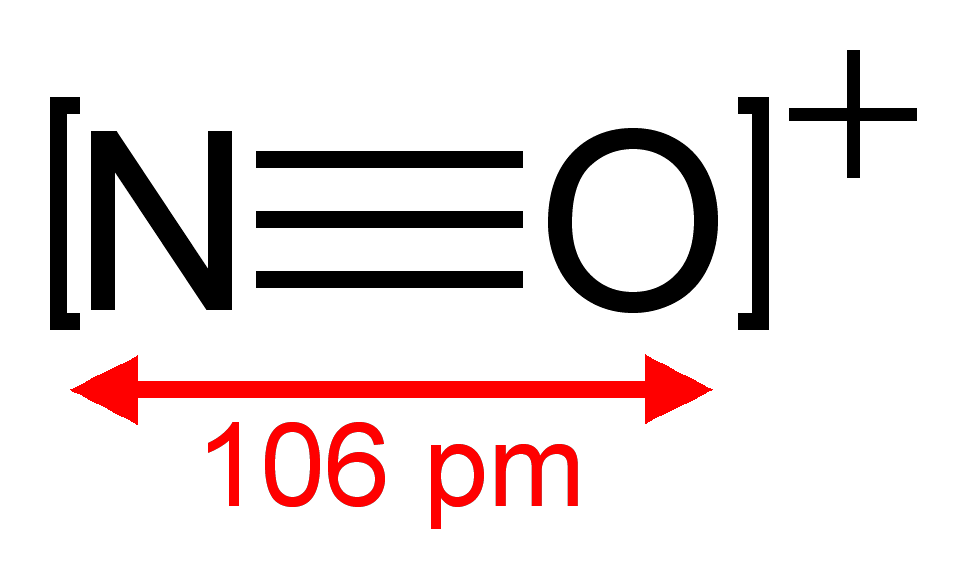
Nitrosonium ion
Carbon monoxide and nitrosonium are isoelectronic

Isoelectronicity is a phenomenon observed when two or more molecules have the same structure (positions and connectivities among atoms) and the same electronic configurations, but differ by what specific elements are at certain locations in the structure. For example, CO, NO+
, and N
2
are isoelectronic, while CH
3
COCH
3
and CH3N=NCH3 are not.[1]

This definition is sometimes termed valence isoelectronicity. Definitions can sometimes be not as strict, sometimes requiring identity of the total electron count and with it the entire electronic configuration.[2] More usually, definitions are broader, and may extend to allowing different numbers of atoms in the species being compared.[3]

The importance of the concept lies in identifying significantly related species, as pairs or series. Isoelectronic species can be expected to show useful consistency and predictability in their properties, so identifying a compound as isoelectronic with one already characterised offers clues to possible properties and reactions. Differences in properties such as electronegativity of the atoms in isolelectronic species can affect reactivity.

In quantum mechanics, hydrogen-like atoms are ions with only one electron such as Li2+
. These ions would be described as being isoelectronic with hydrogen.

Examples

[edit]
Three valence isoelectronic amino acids
Dimethyl ether
Azomethane
Both molecules have the same electron configuration, but due to the double bond and extra atom in azomethane, they are not isoelectronic

The N atom and the O+
ion are isoelectronic because each has five valence electrons, or more accurately an electronic configuration of [He] 2s2 2p3.

Similarly, the cations K+
, Ca2+
, and Sc3+
and the anions Cl
, S2−
, and P3−
are all isoelectronic with the Ar atom.

CO, CN
, N
2
, and NO+
are isoelectronic because each has two atoms triple bonded together, and due to the charge have analogous electronic configurations (N
is identical in electronic configuration to O so CO is identical electronically to CN
).

Molecular orbital diagrams best illustrate isoelectronicity in diatomic molecules, showing how atomic orbital mixing in isoelectronic species results in identical orbital combination, and thus also bonding.

More complex molecules can be isoelectronic also. For example, the amino acids serine, cysteine, and selenocysteine are all valence isoelectronic to each other. They differ by which specific chalcogen is present at one location in the side-chain.

CH
3
COCH
3
(acetone) and CH
3
N
2
CH
3
(azomethane) are not isoelectronic. They do have the same number of electrons but they do not have the same structure.

See also

[edit]

References

[edit]
Revisions and contributorsEdit on WikipediaRead on Wikipedia
from Grokipedia
Isoelectronicity is a fundamental concept in chemistry describing atoms, ions, or molecules that possess the same number of s, resulting in identical or highly similar configurations despite differences in their atomic nuclei. For atoms and ions, this typically means the same total count, such as the atom (Ne) and the sodium cation (Na⁺), both having 10 s and a configuration. In molecules, isoelectronic share the same number of valence s and structural connectivity, exemplified by (CO), dinitrogen (N₂), and the (CN⁻), all with 14 s. This principle, rooted in the octet rule for many main-group elements, explains similarities in chemical behavior, stability, and physical properties among isoelectronic species. For instance, in isoelectronic series of ions like O²⁻, F⁻, Ne, Na⁺, and Mg²⁺ (all with 10 electrons), increasing nuclear charge leads to progressively smaller ionic radii due to stronger attraction on the electron cloud. Such series are crucial for analyzing periodic trends and predicting ion sizes in crystal lattices. Beyond basic atomic and ionic comparisons, isoelectronicity aids in understanding molecular bonding and reactivity, as seen in tetrahedral species like BF₄⁻, CF₄, and SiF₄, which exhibit analogous geometries and stability. The concept extends to heavier p-block elements, where it helps interpret deviations from the , such as expanded octets. Overall, isoelectronicity provides a framework for correlating structure-property relationships, facilitating predictions in synthetic chemistry and .

Fundamentals

Definition

Isoelectronic species are atoms, ions, or molecules that possess the same total number of , leading to analogous electron configurations despite differences in their atomic numbers and nuclear charges. This equivalence in electron count allows for structural and behavioral similarities, as the electrons occupy equivalent orbitals and energy levels, though the varying nuclear charges influence the spatial distribution of these electrons. The term "isoelectronic" was first introduced in 1926 by Arthur A. Blanchard in the context of . It later gained usage in molecular in , where it was employed as a for "isosteric" in a 1935 by R. de L. Kronig, and achieved prominence through its application in chemical bonding theory by . Pauling employed the concept extensively in his seminal 1939 work, The Nature of the Chemical Bond and the Structure of Polyatomic Molecules, to explain parallels in molecular geometries and bond characteristics among species with identical counts, such as certain metal carbonyl complexes and ionic crystals. At its core, isoelectronicity manifests in sequences where the electron number remains fixed while the number of protons () increases progressively across elements or ions. This progression results in a rising , as additional protons enhance the attraction on the shared electron cloud without a corresponding increase in shielding, thereby contracting the overall size and altering properties like reactivity. Such sequences underscore the periodic nature of electronic structures, providing a framework for predicting chemical analogies independent of specific elemental identities.

Electron Configuration Basis

Isoelectronic species are characterized by having the same number of electrons arranged in identical quantum mechanical orbitals, forming the foundational basis for their shared electronic structure. This is expressed through notation, which describes the distribution of electrons into subshells following the order of increasing energy levels. For instance, species with a neon-like configuration, such as the neutral neon atom (), fluoride anion (), sodium cation (Na⁺), and magnesium dication (Mg²⁺), all exhibit the ground-state arrangement 1s22s22p61s^2 2s^2 2p^6, accommodating ten electrons in the same orbital pattern. The uniformity in these configurations arises from the application of the , which dictates that electrons fill atomic orbitals starting from the lowest energy state and proceeding to higher ones, adhering to the and Hund's rule for maximum stability. In isoelectronic sets, this principle ensures that electrons occupy the same subshells and spin arrangements regardless of the differing atomic numbers of the species involved, thereby conferring similar chemical behaviors and reactivity patterns. For example, the sequential filling of the 1s, 2s, and 2p orbitals in neon-like species results in a closed-shell configuration that is energetically favorable and inert. A key quantum mechanical factor influencing these configurations is the effective nuclear charge (ZeffZ_{\text{eff}}), which represents the net positive charge felt by valence electrons after accounting for shielding by inner electrons. It is approximated by the formula Zeff=ZσZ_{\text{eff}} = Z - \sigma where ZZ is the atomic number (nuclear charge) and σ\sigma is the screening constant derived from the electron cloud's shielding effect. In isoelectronic species, the identical electron arrangement keeps σ\sigma relatively constant, so an increase in ZZ directly raises ZeffZ_{\text{eff}}, intensifying the attraction on the shared electrons and altering orbital sizes without changing the configuration itself. This framework, originating from Slater's shielding model, underscores why isoelectronic ions with higher ZZ exhibit more compact electron distributions while retaining the same overall electronic architecture.

Properties

Atomic and Ionic Sizes

In isoelectronic species, which share the same electron configuration such as the neon-like [Ne] (1s² 2s² 2p⁶), atomic and ionic radii decrease systematically with increasing atomic number (Z) due to the progressively stronger nuclear attraction on the identical electron cloud. For instance, in the neon isoelectronic series, the ionic radius of O²⁻ (Z=8) is larger than that of F⁻ (Z=9), which in turn exceeds Na⁺ (Z=11) and Mg²⁺ (Z=12). This trend is also evident in the argon isoelectronic series with 18 electrons ([Ar] configuration: 1s² 2s² 2p⁶ 3s² 3p⁶), where ionic radii decrease with increasing nuclear charge in the sequence Cl⁻ (Z=17), K⁺ (Z=19), Ca²⁺ (Z=20), Sc³⁺ (Z=21). This trend is quantified through effective ionic radii derived from crystallographic data, as shown in the table below for representative species in the series (values in picometers, pm, for VI where applicable).
SpeciesIonic Radius (pm)Z
O²⁻1408
F⁻1339
Na⁺10211
Mg²⁺7212
The neutral atom is typically excluded from such ionic radius comparisons, as it does not form stable ionic compounds, though its calculated aligns conceptually between F⁻ and Na⁺. The underlying mechanism involves the (Zeff), which represents the net positive charge experienced by valence electrons after accounting for shielding by inner electrons. In an isoelectronic series, the number of electrons remains constant, so Zeff increases directly with , as the additional protons enhance the nucleus's pull without added shielding. This compresses the electron cloud, contracting the orbitals and reducing the overall size; for example, the 2p orbitals in Mg²⁺ are drawn closer to the nucleus than in O²⁻ due to the higher Zeff. Qualitatively, this orbital contraction can be visualized as a series of concentric probability densities around the nucleus, where higher pulls the outer contour inward, shrinking the species' effective volume while maintaining the same distribution shape. These radii are experimentally determined primarily through X-ray crystallography of ionic compounds, which measures interatomic distances in crystal lattices and assigns effective radii by assuming additivity (e.g., rion = dinteratomic/2 for like ions). Seminal compilations, such as those by Shannon, provide standardized values for isoelectronic sequences like the neon series, enabling precise trend analysis across the periodic table.

Stability and Bonding

In isoelectronic sequences of cations, the effective nuclear charge (ZeffZ_{\text{eff}}) increases with atomic number while maintaining the same number of electrons, leading to electrons being held more tightly and thus higher ionization energies. This trend enhances the thermodynamic stability of higher-ZZ species, as removing an electron requires progressively more energy. For example, in the neon isoelectronic sequence (e.g., F^-, Ne, Na+^+, Mg2+^{2+}), ionization energies rise sharply: approximately 3.40 eV for F^-, 21.56 eV for Ne, 47.29 eV for Na+^+, and 80.13 eV for Mg2+^{2+}. This increased ZeffZ_{\text{eff}} also results in smaller ionic radii for higher-ZZ cations, which in turn elevates lattice energies in ionic compounds formed by these ions. (UU) is proportional to the product of ion charges divided by their separation distance, as given by Uq1q2rU \propto \frac{q_1 q_2}{r}, where smaller rr amplifies UU and contributes to greater compound stability. Isoelectronic molecules exhibit similar bonding patterns due to identical counts, enabling analogous (MO) overlaps and configurations. For instance, N2_2 and CO, both with 14 valence electrons, form triple bonds characterized by one σ\sigma and two π\pi bonds, as depicted in their MO diagrams where the highest occupied molecular orbital (HOMO) is a filled σ2p\sigma_{2p} and the lowest unoccupied molecular orbitals (LUMOs) are π\pi^*. These shared electronic structures yield comparable bond strengths and stabilities, underscoring the role of isoelectronicity in dictating covalent bonding motifs. In the periodic table, electron affinities of neutral atoms generally become more negative (more favorable for electron addition) toward higher Z approaching noble gas configurations, reflecting enhanced nuclear attraction, though noble gases themselves exhibit near-zero or positive values due to their closed-shell stability. Specific noble gas values include Ne at +29 kJ/mol (endothermic) and Ar at +96 kJ/mol, highlighting their reluctance to gain electrons and reinforcing the exceptional stability of these configurations.

Examples

Simple Ions

One prominent example of isoelectronic simple ions is the neon series, which includes the oxide ion (O²⁻), fluoride ion (F⁻), neutral neon atom (Ne), sodium ion (Na⁺), and magnesium ion (Mg²⁺). All these species possess 10 electrons and share the ground-state electron configuration 1s22s22p61s^2 2s^2 2p^6. Despite identical electron counts, their ionic radii decrease progressively from O²⁻ (140 pm) to F⁻ (133 pm) to Na⁺ (98 pm) to Mg²⁺ (79 pm), with Ne having a calculated atomic radius of approximately 38 pm, owing to the increasing nuclear charge (Z from 8 to 12) that exerts a stronger pull on the shared electron cloud. This size contraction results in higher charge density for the cations, leading to enhanced Lewis acidity; for instance, Mg²⁺ undergoes hydrolysis in aqueous solution to form slightly acidic conditions via the reaction [\ceMg(H2O)62+\ce[Mg(H2O)5OH]++H+][ \ce{Mg(H2O)6^{2+}} \rightleftharpoons \ce{[Mg(H2O)5OH]+ + H+} ], while the anions O²⁻ and F⁻ exhibit basic behavior through proton acceptance. Another key series is the argon isoelectronic set, comprising the chloride ion (Cl⁻), neutral argon atom (Ar), potassium ion (K⁺), and calcium ion (Ca²⁺), each with 18 electrons and the electron configuration [ \ce{Ne} ] 3s^2 3p^6. Their radii follow a similar decreasing trend—Cl⁻ (181 pm) > Ar (71 pm calculated atomic radius) > K⁺ (138 pm) > Ca²⁺ (100 pm)—driven by rising nuclear charge (Z from 17 to 20), which enhances effective nuclear attraction and stability in ionic lattices. These ions are integral to common ionic compounds like potassium chloride (KCl) and calcium chloride (CaCl₂), where their closed-shell configurations promote high lattice energies and structural integrity. Another collection of isoelectronic ions is Cl⁻, K⁺, Ca²⁺, and Sc³⁺, all possessing 18 electrons and sharing an argon-like electron configuration [ \ce{Ne} ] 3s^2 3p^6. This set demonstrates the same principle as the neon series, where increasing nuclear charge (from 17 for Cl⁻ to 21 for Sc³⁺) results in progressively smaller ionic radii due to enhanced effective nuclear charge on the identical electron cloud: Cl⁻ (181 pm), K⁺ (138 pm), Ca²⁺ (100 pm), Sc³⁺ (74.5 pm). In everyday salts, isoelectronic pairs such as F⁻ and Na⁺ (both neon-configured) appear in (NaF), forming a compact ionic structure due to their comparable sizes and electronic similarities, which also manifest in akin reactivity patterns during reactions with multivalent cations like Ca²⁺ or Ag⁺.

Molecular Species

Isoelectronicity extends to molecular species, where molecules or polyatomic ions possessing the same number of valence electrons exhibit analogous structures, bonding patterns, and spectroscopic properties due to similar electron configurations. This concept highlights how varying nuclear compositions can yield comparable molecular geometries and reactivities when the total valence electron count is identical. A prominent example involves diatomic with 14 valence electrons, such as N₂, CO, and NO⁺. These molecules share a between the central atoms, resulting in strong, short bonds with dissociation energies around 945–1072 kJ/mol and bond lengths of approximately 1.10–1.13 . Their vibrational stretching frequencies, observed in or Raman spectra, fall in the 2100–2350 cm⁻¹ range, reflecting the rigidity of the and enabling spectroscopic identification as a group. Triatomic molecules with 16 valence electrons, including NO₂⁺, N₂O, and CO₂, adopt linear geometries as predicted by for AX₂ systems, where A is the central atom and X represents terminal atoms with no lone pairs on the central atom. This electron count leads to bond angles of 180° in all cases, with double bonds to terminal atoms: for instance, O=N=O in NO₂⁺ and CO₂, and N=N=O in N₂O. The linear structure minimizes electron repulsion and contributes to their stability and similar reactivity in bond-breaking processes. Polyatomic ions and molecules like BF₄⁻ and SiF₄ are isoelectronic with 32 valence electrons and exhibit tetrahedral geometries, consistent with VSEPR for AX₄ systems. The central B or Si atom in each uses sp³ hybridization to form four equivalent σ-bonds with fluorine atoms, resulting in bond angles of 109.5° and no lone pairs on the central atom. This hybridization similarity underscores their comparable Lewis acidity and structural integrity.

Applications

In Analytical Chemistry

In analytical chemistry, isoelectronicity plays a key role in spectroscopic techniques by producing comparable spectral features that facilitate the identification and differentiation of chemical species. Isoelectronic species share identical electron configurations, leading to similar electronic energy levels and transition probabilities, which manifest as analogous absorption or emission patterns shifted by nuclear charge effects. For instance, in photoelectron spectroscopy, atomic anions like Ni⁻ and molecular counterparts like TiO⁻ exhibit nearly identical photoelectron angular distributions and binding energy spectra due to their superatomic electronic structures, enabling the correlation of atomic and molecular states for structural assignment. Similarly, in vibrational spectroscopy, isoelectronic diatomic molecules such as N₂ and CO display closely related vibrational frequencies—2359 cm⁻¹ for N₂ and 2143 cm⁻¹ for CO—arising from their triple bonds and comparable force constants, allowing subtle distinctions in mixtures via infrared absorption for gas-phase analysis. These similarities aid in qualitative identification, as spectra of unknown species can be matched to known isoelectronic analogs to confirm composition without exhaustive calibration. In , isoelectronic ions or molecules often produce similar fragmentation pathways owing to their comparable bond strengths and electronic stability, which is exploited to identify unknowns in complex mixtures. For example, CO and N₂, both with nominal m/z 28, yield distinct yet analogous fragment ions—CO⁺ fragments primarily to C⁺ (m/z 12) and O⁺ (m/z 16), while N₂⁺ produces N⁺ (m/z 14)—reflecting their isoelectronic nature but differing atomic compositions; high-resolution resolves these by exact mass (CO at 27.9949 vs. N₂ at 28.0061), enabling unambiguous differentiation in environmental or atmospheric samples. This approach is particularly useful in tandem MS for tracing isotopic variants or contaminants, where fragmentation similarity narrows candidates before resolution by mass accuracy. Isoelectronicity also informs qualitative analysis through shared solubility behaviors in precipitation reactions, stemming from comparable lattice energies and ion polarizabilities. Pseudohalide ions like OCN⁻ and SCN⁻, both with 16 valence electrons, form sparingly soluble silver salts—AgOCN (solubility 0.0072 g/100 g at 18°C) and AgSCN (solubility ≈1.7×10^{-5} g/100 g at 20°C)—yielding white precipitates with similar K_{sp} values (~10^{-12}), attributable to their linear structures and electronic analogy to halides. These trends allow grouped testing in anion identification schemes, where isoelectronic precipitates respond alike to confirmatory reagents like , enhancing selectivity in inorganic mixtures without isolating each species.

In Materials Design

Isoelectronic substitutions play a pivotal role in materials design by enabling precise control over electronic properties without significantly disrupting the host lattice structure. In , isoelectronic impurity pairs such as aluminum-nitrogen (Al+N) act as deep-level traps that enhance tunneling currents in p-n junctions while preserving the overall lattice parameters and avoiding free carrier introduction. These traps create localized states within the band gap, facilitating applications in high-speed devices where carrier recombination or transport needs modulation without net doping effects. Alloy systems like AlGaAs exemplify isoelectronic design in III-V semiconductors, where aluminum substitutes for —both elements with identical valence electron counts—allowing seamless from 1.42 eV in GaAs to approximately 2.16 eV in AlAs. This substitution maintains near-lattice matching (mismatch <0.1% for typical compositions), enabling the fabrication of high-quality heterostructures for optoelectronic devices such as lasers and high-electron-mobility transistors. The tunable direct-to-indirect transition around 45% Al content further optimizes performance in light-emitting and photodetecting applications by minimizing defects at interfaces. In ionic conductors, isoelectronic or charge-balanced substitutions in structures enhance oxygen ion mobility by subtly altering local coordination environments and vacancy formation. For instance, substituting Ca²⁺ for La³⁺ in compositions like La_{1-x}Ca_xFeO_{3-δ} introduces oxygen vacancies to maintain charge neutrality, thereby increasing bulk ionic conductivity up to two orders of magnitude at 800°C compared to the undoped parent phase. This effect stems from the expanded lattice and reduced of oxygen ions around the larger La³⁺ ions, promoting faster pathways essential for solid oxide fuel cells and electrolyzers. Such designs leverage the tolerance of the ABO₃ framework to A-site mixing, ensuring structural stability while boosting transport properties. For catalytic materials, isoelectronic metal clusters maintain consistent geometries and electron counts, allowing systematic tuning of reactivity in processes. trimer clusters like Ru₃(CO)₁₂, with 48 valence electrons, serve as precursors for supported catalysts that selectively hydrogenate alkenes and aromatics under mild conditions, achieving turnover frequencies exceeding 100 h⁻¹ for at 60°C. Isoelectronic analogs, such as Os₃(CO)₁₂, exhibit similar cluster frameworks but enhanced thermal stability, preserving the triangular metal core and CO ligation during activation on supports like alumina, which is critical for sustained performance in industrial s without fragmentation into mononuclear species. This preservation of cluster integrity ensures reproducible density and selectivity toward desired products like saturated alkanes.

References

Add your contribution
Related Hubs
User Avatar
No comments yet.