Recent from talks
Nothing was collected or created yet.
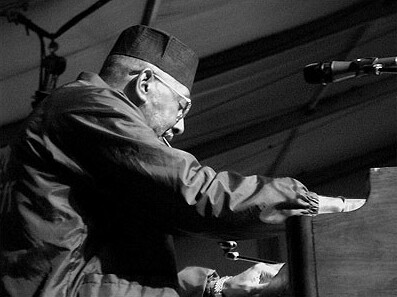
Jimmy McGriff
View on Wikipedia
Key Information
James Harrell McGriff (April 3, 1936 – May 24, 2008)[1] was an American hard bop and soul-jazz organist and organ trio bandleader.
Biography
[edit]Early years and influences
[edit]Born in Germantown, Philadelphia, Pennsylvania,[2] McGriff started playing piano at the age of five and by his teens had also learned to play vibes, alto sax, drums and upright bass.[3] He played bass in his first group, a piano trio. When he joined the United States Army, McGriff served as a military policeman during the Korean War. He later became a police officer in Philadelphia for two years.[1]
Music kept drawing McGriff's attention away from the police force. His childhood friend, organist Jimmy Smith, had begun earning a substantial reputation in jazz for his Blue Note albums (the two played together once in 1967) and McGriff became entranced by the organ sound while Richard "Groove" Holmes played at his sister's wedding. Holmes went on to become McGriff's teacher and friend and they recorded together on two occasions in 1973 for two Groove Merchant records.
McGriff bought his first Hammond B-3 organ in 1956, spent six months learning the instrument, then studied at New York's Juilliard School. He also studied privately with Milt Buckner, Jimmy Smith, and Sonny Gatewood. He was influenced by the energy and dynamics of organist Buckner and the diplomatic aplomb of Count Basie, and by local organists such as Howard "The Demon" Whaley and Austin Mitchell.
1960s: First combos
[edit]McGriff formed a combo that played around Philadelphia and often featured tenor saxophonist Charles Earland (who soon switched permanently to organ, and became one of the instrument's renowned performers). During this time, McGriff also accompanied such artists as Don Gardner, Arthur Prysock, Candido and Carmen McRae, who came through town for local club dates.[1]
In 1961, McGriff's trio was offered the chance to record an instrumental version of Ray Charles' hit "I've Got a Woman" by Joe Lederman's Jell Records, a small independent label.[2] When the record received substantial local airplay, Juggy Murray's Sue label picked it up and recorded a full album of McGriff's trio, released in 1962.[2] The album also turned out another hit in McGriff's "All About My Girl",[3] establishing McGriff's credentials as a fiery blues-based organist, well-versed in gospel, soul and "fatback groove".
McGriff recorded a series of popular albums for the Sue label between 1962 and 1965, ending with what still stands as one of his finest examples of blues-based jazz, Blues for Mister Jimmy. When producer Sonny Lester started his Solid State record label in 1966, he recruited McGriff to be his star attraction. Lester framed McGriff in many different groups, performing a wide variety of styles and giving the organist nearly unlimited opportunities to record. McGriff was heard everywhere from an all-star tribute to Count Basie: The Big Band (1966), a series of "organ and blues band" albums such as Honey (1968) and A Thing to Come By (1969), funk classics like Electric Funk (1970), covering pop hits ("Cherry", "Blue Moon", "The Way You Look Tonight") and such original singles as "The Worm" and "Step One".
During this time, McGriff performed at clubs and concert halls worldwide. He settled in Newark, New Jersey, and eventually opened his own supper club, The Golden Slipper - where he recorded Black Pearl and another live album, Chicken Fried Soul with Junior Parker in 1971. Beginning in 1969, he also performed regularly with Buddy Rich's band, though the two were only recorded once together in 1974 on The Last Blues Album Volume 1.
1970s–1980s
[edit]McGriff "retired" from the music industry in 1972 to start a horse farm in Connecticut. But Sonny Lester's new record company, Groove Merchant, kept issuing McGriff records at a rate of three or four a year. By 1973, McGriff was touring relentlessly and actively recording again. Around this time, disco was gaining a hold in jazz music and McGriff's flexibility proved infallible.[3] He produced some of his best music during this period: Stump Juice (1975), The Mean Machine (1976), Red Beans (1976) and Outside Looking In (1978). These albums still stand out today as excellent documents of McGriff's organ playing.[1]
By 1980, McGriff broke away from Sonny Lester and began working actively with producer Bob Porter (and recording engineer Rudy Van Gelder). McGriff began a long relationship with Milestone Records collaborating with Rusty Bryant, Al Grey, Red Holloway, David "Fathead" Newman, Frank Wess and Eric Alexander.
In 1986, McGriff started a popular partnership with alto saxophone player Hank Crawford. Their partnership yielded five co-leader dates for Milestone records: Soul Survivors (1986), Steppin' Up (1987), On the Blue Side (1989), Road Tested (1997), and Crunch Time (1999), as well as two dates for Telarc Records: Right Turn on Blue (1994) and Blues Groove (1995).
1990s–2000s
[edit]Between 1994 and 1998, McGriff also experimented with the Hammond XB-3, an organ synthesizer that increased the organ's capabilities with MIDI enhancements.[3] This gave McGriff an unnatural synthesized sound, which probably explains his retreat from the instrument on late recordings such as 2000's McGriff's House Party (featuring fellow organist Lonnie Smith). House Party did include the use of the XB-3; however, he did not use the MIDI functions.
McGriff was one of the first B3 players to add MIDI to the upper keyboard of his personal B3 to add and extend "his sound" beyond just the drawbar sound of the B3. He incorporated synthesizers in his live performances as he liked vibes, piano, strings, brass and other sounds that could only be created by a synthesizer and which the classic B3 cannot provide. Jimmy purchased the XB-3 as he had more control over the MIDI functions, and the XB-3 weighs about half of the classic B3, which made it easier to move.
Along with the soul-jazz sound, McGriff experienced renewed popularity in the mid-1990s, forming 'The Dream Team' group, which featured David "Fathead" Newman (a longtime saxophonist with Ray Charles) and drummer Bernard Purdie, and recording The Dream Team (1997), Straight Up (1998), McGriff's House Party (2000), Feelin' It (2001), and McGriff Avenue (2002) albums.
On March 29, 2008, McGriff was given a last private concert by Bill "Mr. B3" Dilks and drummer Grant MacAvoy in his honor in Voorhees Township, New Jersey. Dilks brought his B3 and played for McGriff, his wife Margaret, their guests, and the folks at the Genesis Health Care Center. As Dilks said, "The Hammond reaches its players far beyond where the conscious mind lives".
A resident of Voorhees Township, New Jersey, McGriff died there at age 72 on May 24, 2008, of complications of multiple sclerosis.[4][5][6]
Discography
[edit]As leader/co-leader
[edit]- I've Got a Woman (Sue, 1962)
- One of Mine (Sue, 1963)
- Jimmy McGriff at the Apollo [live] (Sue, 1963)
- Christmas with McGriff (Sue, 1963)
- Jimmy McGriff at the Organ (Sue, 1964)
- Topkapi (Sue, 1964)
- Blues for Mister Jimmy (Sue, 1965)
- Christmastime (Jell, 1965)
- Where the Action's At! [live] (Veep, 1966)
- The Big Band (Solid State, 1966) - also released as A Tribute to Basie
- A Bag Full of Soul (Solid State, 1966)
- Cherry (Solid State, 1966)
- A Bag Full of Blues (Solid State, 1967)
- I've Got a New Woman (Solid State, 1967)
- Honey (Solid State, 1968)
- The Worm (Solid State, 1968)
- Step 1 (Solid State, 1969)
- A Thing to Come By (Solid State, 1969)
- The Way You Look Tonight (Solid State, 1969)
- Electric Funk (Blue Note, 1970)
- The Dudes Doin' Business (Capitol, 1970) - with Junior Parker
- Soul Sugar (Capitol, 1970)
- Something to Listen To (Blue Note, 1971)
- Black Pearl [live] (Blue Note, 1971)
- Jimmy McGriff/Junior Parker [AKA Chicken Fried Soul] [live] (United Artists, 1971) - with Junior Parker
- Groove Grease (Groove Merchant, 1971)
- Let's Stay Together (Groove Merchant, 1966/1972 [rel. 1972])
- Fly Dude (Groove Merchant, 1972)
- Black and Blues (Groove Merchant, 1963/1971 [rel. 1972])
- Good Things Don't Happen Everyday (Groove Merchant, 1972) - reissue of The Dudes Doin' Business
- Concert: Friday the 13th - Cook County Jail [live] (Groove Merchant, 1973) - split album with Lucky Thompson + George Freeman + O'Donel Levy
- Giants of the Organ Come Together (Groove Merchant, 1973) - with Richard Groove Holmes
- Giants of the Organ in Concert [live] (Groove Merchant, 1973) - with Richard Groove Holmes
- The Main Squeeze (Groove Merchant, 1974)
- Stump Juice (Groove Merchant, 1975)
- The Mean Machine (Groove Merchant, 1976)
- Red Beans (Groove Merchant, 1976)
- Tailgunner (LRC [Lester Radio Corporation], 1977)
- Outside Looking In (LRC, 1978)
- City Lights (JAM [Jazz America Marketing], 1981)
- Movin' Upside the Blues (JAM, 1982)
- The Groover (JAM, 1982)
- Countdown (Milestone, 1983)
- Skywalk (Milestone, 1984)
- State of the Art (Milestone, 1985)
- Soul Survivors (Milestone, 1986) - with Hank Crawford
- The Starting Five (Milestone, 1987)
- Steppin' Up (Milestone, 1987) - with Hank Crawford
- Blue to the 'Bone (Milestone, 1988)
- On the Blue Side (Milestone, 1990) - with Hank Crawford
- You Ought to Think About Me (Headfirst, 1990)
- In a Blue Mood (Headfirst, 1991)
- Right Turn on Blue (Telarc, 1994) - with Hank Crawford
- Blues Groove (Telarc, 1995) - with Hank Crawford
- The Dream Team (Milestone, 1997)
- Road Tested (Milestone, 1997) - with Hank Crawford
- Straight Up (Milestone, 1998)
- Crunch Time (Milestone, 1999) - with Hank Crawford
- McGriff's House Party (Milestone, 2000) - with Dr. Lonnie Smith and Eric Alexander
- Feelin' It (Milestone, 2001)
- McGriff Avenue (Milestone, 2002)
LP/CD compilations
[edit]- A Toast to Jimmy McGriff's Greatest Hits (Sue, 1965)
- Jimmy McGriff's Greatest Organ Hits (Veep Records/United Artists, 1968)
- If You're Ready, Come Go with Me (Groove Merchant, 1974)
- Flyin' Time (Groove Merchant, 1975) 2LP
- Supa Cookin' (Groove Merchant, 1975) - with Richard Groove Holmes; 2LP
- Alive & Well (51 West/CBS, 1980) - Groove Merchant and LRC material
- Soul Brothers (Milestone, 1989) - with Hank Crawford
- Georgia On My Mind (LRC, 1989)
- The Jazz Collector Edition (Laserlight, 1991)
- Pullin' Out The Stops! The Best Of Jimmy McGriff [AKA Greatest Hits] (Blue Note, 1994)
- Funkiest Little Band In The Land (Laserlight, 1996)
- Dig On It: The Groove Merchant Years (Connoisseur Collection, 2000)
- 100% Pure Funk (LRC, 2001)
- The Best of Hank Crawford & Jimmy McGriff (Milestone, 2001)
- The Best of the Headfirst Years (Headfirst/K-Tel, 2003)
- The Best of the Sue Years 1962-1965 (Stateside, 2006)
Charted singles
[edit]| Single | Year | US | US |
|---|---|---|---|
| "I've Got A Woman (Part I)" | 1962 | 20 | 5 |
| "All About My Girl" | 1963 | 50 | 12 |
| "M.G. Blues" | 95 | — | |
| "The Last Minute (Part I)" | 99 | — | |
| "Kiko" | 1964 | 79 | 19 |
| "The Worm" | 1968 | 97 | 28 |
References
[edit]- ^ a b c d "Jimmy McGriff | Biography & History". AllMusic. Retrieved January 9, 2020.
- ^ a b c Colin Larkin, ed. (1997). The Virgin Encyclopedia of Popular Music (Concise ed.). Virgin Books. p. 821. ISBN 1-85227-745-9.
- ^ a b c d Fordham, John (June 4, 2008). "Jimmy McGriff: Preacher and musician who saw himself as king of the blues-rooted Hammond organ". The Guardian. Retrieved January 5, 2011.
- ^ Ratliff, Ben. "Jimmy McGriff, 72, Jazz and Blues Organist", The New York Times, May 28, 2008. Accessed March 17, 2011. "Jimmy McGriff, who since the early 1960s was one of the most popular jazz and blues organists, died on Saturday in Voorhees, N.J. He was 72 and lived in Voorhees."
- ^ Schudel, Matt (May 28, 2008). "Jimmy McGriff; Jazz, Blues Organist". Washington Post.
- ^ "Acclaimed organist had a wide audience". Los Angeles Times. May 27, 2008.
- ^ a b "Jimmy McGriff Chart History". Billboard.
External links
[edit]- Jimmy McGriff at AllMusic
- The New York Times Obituary
- Illustrated Discography
- Jimmy McGriff discography on jazzlists.com
Jimmy McGriff
View on GrokipediaLife and career
Early life and influences
James Harrell McGriff Jr. was born on April 3, 1936, in the Germantown neighborhood of Philadelphia, Pennsylvania, to parents who were both accomplished pianists.[4] His father, a pianist, encouraged his early interest in music, and McGriff began playing piano at the age of five, often performing on the organ during services at his family's Baptist church.[5] He received a drum set as a gift at age eight and, by the time he graduated high school, had also taken up the alto saxophone, upright bass, and vibraphone, largely teaching himself these instruments through persistent practice.[6] His cousins, saxophonist Benny Golson and soul singer Harold Melvin, further immersed him in Philadelphia's vibrant musical scene from a young age.[4] Following high school, McGriff was drafted into the U.S. Army during the Korean War era, where he served as a military policeman but also played in the service band, gaining initial exposure to ensemble performance.[3] After his discharge around 1953, he spent two years on the Philadelphia police force before pursuing formal music studies.[5] He enrolled at the Combs College of Music in Philadelphia to focus on piano and organ, while also attending the Juilliard School briefly for six months and taking private lessons with organists Milt Buckner, Jimmy Smith, and Sonny Gatewood.[3] In 1956, inspired by a performance from organist Richard "Groove" Holmes, McGriff purchased his first Hammond B-3 organ and began self-teaching the instrument under Holmes's mentorship, marking a pivotal shift toward his signature sound.[6] McGriff's formative influences drew deeply from blues, gospel traditions in Black churches, and jazz pioneers, including early admiration for saxophonist Benny Golson and pianist Ahmad Jamal.[4] He was particularly shaped by the innovative Hammond organ styles of Jimmy Smith and Groove Holmes, as well as the swing-era organ work of Milt Buckner and the rhythmic drive of Count Basie.[5] These elements fueled his development before transitioning to a professional jazz career in the early 1960s. By the late 1950s, he was gigging in Philadelphia's R&B and blues clubs, forming an early organ combo that featured young tenor saxophonist Charles Earland, with whom he collaborated frequently around 1960.[5]1960s breakthrough
McGriff's breakthrough came in 1962 when he signed with the independent New York label Sue Records after a scout heard his instrumental cover of Ray Charles' "I've Got a Woman" during a club performance. Released as a single that year, the track peaked at number 20 on the Billboard Hot 100 and number 5 on the R&B chart, marking one of the label's first major hits in the jazz realm.[7][4] This success led to his debut album, I've Got a Woman, issued later in 1962, which nearly reached the pop Top 20 and solidified his reputation for blending soulful R&B with jazz organ improvisation.[4] Building on this momentum, McGriff formed his first organ trio, typically featuring guitar and drums, to showcase the Hammond B-3's capabilities in intimate settings. The group performed regularly at East Coast clubs, where he honed his blues-infused grooves drawing from influences like Jimmy Smith.[2] Key releases on Sue followed, including At the Organ (1963) and One Step Ahead (1964), the latter highlighting his rhythmic drive and melodic phrasing in trio configurations. Another single from 1963, "All About My Girl," climbed to number 50 on the Hot 100 and number 12 on the R&B chart, further boosting his profile in the burgeoning soul-jazz movement.[4] By 1965, McGriff transitioned to Solid State Records, a subsidiary of United Artists, expanding his sound with fuller arrangements while retaining the organ's central role. Albums like Blues for Mister Jimmy (initially on Sue but reissued in context with his evolving style) and A Bag Full of Soul (1966) emphasized funky, accessible grooves that appealed to both jazz enthusiasts and broader audiences in the hard bop scene. These works exemplified his early experimentation with the Hammond B-3, prioritizing bluesy, danceable lines over complex harmonic exploration to capture the era's crossover energy.[4]1970s and 1980s developments
In 1972, amid shifting dynamics in the jazz industry, Jimmy McGriff briefly retired from music to manage a horse farm in Connecticut.[4] He returned to performing and recording the following year, aligning with Sonny Lester's newly established Groove Merchant label, which became a key outlet for his output during the mid-1970s.[8] McGriff's Groove Merchant period emphasized a fusion of funk and jazz, evident in albums such as Stump Juice (1975, Groove Merchant Records), which incorporated rhythmic grooves and bluesy organ lines, and Red Beans (1976), featuring upbeat tracks that highlighted his improvisational flair. By 1978, he had shifted to the Lester Radio Corporation (LRC) label for Outside Looking In, an effort that continued exploring soulful, accessible jazz arrangements while maintaining his signature Hammond B-3 tone.[9] These releases reflected a broader stylistic experimentation, blending traditional organ trio formats with contemporary funk elements. Entering the 1980s, McGriff joined Milestone Records, where he produced a series of soul-jazz albums, including the collaborative Steppin' Up (1987) with saxophonist Hank Crawford, showcasing tight interplay between organ and horns. His partnership with drummer Buddy Rich, which began in the late 1960s, yielded the 1974 Groove Merchant recording The Last Blues Album Volume 1 and involved ongoing performances that extended into the decade, reinforcing McGriff's reputation in live settings.[8] [10] Meanwhile, McGriff owned and operated The Golden Slipper, a Newark nightclub that served as a vital hub for the local jazz scene until its closure in the late 1970s, hosting numerous performances and recordings that nurtured emerging talent.[2] Throughout this era, McGriff leaned into a more commercial soul-jazz sound, incorporating electric influences through his Hammond organ and emphasizing organ-guitar duos in live shows, often featuring collaborators like Jimmy Ponder for dynamic, blues-infused dialogues.[11] Despite emerging personal challenges, including the onset of health issues in the 1980s, he maintained an active touring schedule, performing across the East Coast and sustaining his connection to club audiences.[5]1990s and 2000s
In the 1990s, McGriff returned to the Milestone label, where he resumed a productive phase of recording, including solo efforts and deepened collaborations with saxophonist Hank Crawford. Their partnership, which began in the mid-1980s, produced five joint albums between 1986 and 1999, with notable peaks in the decade such as The Dream Team (1997) and Crunch Time (1999), blending soul-jazz grooves with blues-inflected improvisation.[12][13][14] McGriff explored technological adaptations in his sound during this period, notably incorporating the Hammond XB-3 synthesizer organ on McGriff's House Party (2000, Milestone), which fused traditional Hammond B-3 tones with electronic effects for a modern edge while retaining soul-jazz roots. The album featured guest organist Dr. Lonnie Smith on select tracks, alongside guitarist Rodney Jones and drummer Bernard Purdie, emphasizing rhythmic drive and bluesy melodies.[15][5][16] Entering the 2000s, McGriff continued releasing straight-ahead jazz albums on Milestone, including Feelin' It (2001) and McGriff Avenue (2002), which highlighted his signature organ trio format with swinging interpretations of standards and originals. These works underscored a return to core soul-jazz sensibilities amid evolving jazz landscapes. He maintained an active touring schedule with organ trios through the early 2000s, including international engagements like a 2004 Japan tour alongside Joey DeFrancesco and Reuben Wilson.[17][14][18] McGriff was diagnosed with multiple sclerosis in 1996, a condition that gradually impacted his mobility but did not halt his performances until 2007, when he navigated stages using a motorized cart. Despite these challenges, he recorded steadily, with McGriff Avenue marking his final studio album.[19][20][18] Throughout the period, McGriff mentored emerging organists, including Joey DeFrancesco, through collaborative jam sessions and events such as the 2004 Organ Summit in Toronto and a 2001 Hammond summit featuring multiple B-3 players. These interactions passed on techniques rooted in Philadelphia's soul-jazz tradition.[21][22][18]Death and legacy
In his final years, McGriff battled multiple sclerosis, a condition he had been diagnosed with many years earlier, which increasingly limited his performances.[20] On May 24, 2008, he died at age 72 in Voorhees Township, New Jersey, from complications of the disease.[2][5] McGriff's death prompted immediate tributes in major publications, with The New York Times obituary praising his role in popularizing the funky soul-jazz organ sound of the 1960s through hits like his instrumental version of Ray Charles's "I've Got a Woman."[2] Similarly, The Guardian highlighted his blues-rooted mastery of the Hammond organ, positioning him as a key figure in blending jazz with gospel and R&B influences.[5] McGriff's legacy endures as one of the pioneers who elevated the Hammond B-3 organ within hard bop and soul-jazz, particularly through his fusion of blues grooves with jazz improvisation, alongside contemporaries like Jimmy Smith and Richard "Groove" Holmes.[23] His Philadelphia roots contributed significantly to the city's status as a hub for jazz organists, where he mentored emerging talents such as Charles Earland, who joined McGriff's band and developed his own organ style from the experience.[24] McGriff also owned the Golden Slipper nightclub in nearby Newark, New Jersey, providing a venue for East Coast organ trios and fostering the regional scene.[2] His influence persists among modern organists and in the soul-jazz revival, emphasizing accessible, groove-oriented playing that bridges jazz traditions with popular music.[5][25]Musical style and equipment
Key influences and technique
McGriff's organ playing drew heavily from the innovations of Jimmy Smith, whose bebop adaptations on the Hammond B-3 established the instrument as a jazz staple, as well as from studies with Milt Buckner, a pioneer of boogie-woogie organ roots, and Richard "Groove" Holmes, admired for his soulful, emotive phrasing.[3][5] Blues traditions, including those exemplified by Wild Bill Davis's rhythmic drive, further grounded his approach, blending gospel fervor from black church music with secular grit.[26][5] Central to his technique was proficient pedal bass work, employing walking lines to anchor grooves while freeing the right hand for solos that evoked the bold, declarative punch of horn sections.[27] McGriff manipulated the Hammond B-3's drawbars to craft tonal variety, shifting registrations for percussive attacks and warm sustains that amplified his blues-inflected lines.[28] He adopted the Leslie speaker early for its swirling vibrato effects, integrating it into his setup by 1956 following his U.S. Army service as a military policeman during the Korean War.[5][29] Unlike more improvisationally dense players, McGriff prioritized groove-oriented execution, where rhythmic propulsion took precedence, allowing him to fuse R&B's infectious syncopations with jazz harmony for a swinging, accessible feel rooted in blues and gospel.[3][30] His sound was more deeply immersed in blues shadings than Smith's swinging bebop flair—McGriff once called himself the "king of organ blues"—yet it veered less toward the overt funk of Jack McDuff's ensembles.[5][30] This core style laid the groundwork for his 1970s adaptations toward funkier rhythms.[3]Signature sound and innovations
Jimmy McGriff's signature sound on the Hammond B-3 organ was characterized by a deep, bluesy tone infused with gospel phrasing and a gritty, rhythmic drive that evoked church-like voicings, often described as greasy blues licks supported by heavy left-hand bass lines and deep pocket funkiness.[31] This approach, rooted in blues more than bebop improvisation, featured concise, jukebox-ready grooves that prioritized funky swing and riff-based melodies, making his playing accessible and emotionally resonant.[5][4] He achieved this timbre through rich, thick drawbar settings—such as 868000000 or 888000000 on the upper manual and 848000000 or 838000000 on the lower—combined with subtle vibrato/chorus (C3 setting) and percussion off or soft for a dramatic, organic swell.[31] McGriff's innovations advanced soul-jazz by bridging hard bop's improvisational depth with commercial R&B's accessibility, as seen in his early 1970s incorporation of electric bass and funk rhythms on albums like Electric Funk (1970), an early jazz-funk experiment with arranger Horace Ott that featured strong guitar and bass grooves.[4] In the 1990s, he explored synthesized textures via the Hammond XB-3 organ synthesizer, which added MIDI capabilities for enhanced effects without fully abandoning the instrument's organic feel, though he largely reverted to traditional sounds by the late decade for recordings like Straight Up (1998).[32][5] His trio format evolved from the guitar-drums lineup of the 1960s, as on his 1962 Sue Records debut, to incorporating horns in 1980s collaborations, such as with alto saxophonist Hank Crawford and tenor saxophonist Eric Alexander, expanding the ensemble's textural range while maintaining blues-based grooves.[8][5] Throughout his career, McGriff favored the Hammond B-3 paired with Leslie speakers for their rotating modulation and dramatic effect, avoiding over-electrification in favor of the instrument's classic warmth until his brief XB-3 phase; he customized the latter for modern applications but emphasized its blues-gospel heritage.[31][32] These preferences underscored his contributions to soul-jazz's popularity, with R&B chart successes like "The Worm" (Top 30, 1969) demonstrating how his playing fused jazz harmony with blues and funk to broaden the genre's appeal.[4]Discography
As leader
Jimmy McGriff led numerous recording sessions over his career, resulting in over 30 original studio and live albums that highlighted his distinctive Hammond B-3 organ sound and evolving stylistic range.[33] These works, primarily issued on independent jazz labels, captured his leadership in small combo settings, emphasizing blues-infused grooves and rhythmic drive. In the 1960s, McGriff's initial output as a leader centered on trio configurations blending blues and jazz elements, often drawing from soulful R&B influences to create accessible yet sophisticated organ-driven sets. His debut, I've Got a Woman (1962, Sue Records), featured interpretations of Ray Charles material alongside originals, establishing his gritty, emotive style with guitarist Lonnie Youngblood and drummer Earl Young. This was followed by At the Organ (1963, Sue Records), a showcase of his fluid phrasing and bluesy phrasing in a compact trio format.[34] By Blues for Mister Jimmy (1965, Sue Records), the focus sharpened on raw blues expressions, with McGriff's trio delivering extended improvisations rooted in gospel-tinged soul-jazz. Notable live recordings from this era, such as club sessions capturing his energetic trio interplay, further documented his rising club circuit presence, though formal releases like these remained studio-oriented.[35] The 1970s and 1980s marked a shift toward funk-soul integrations, where McGriff expanded his ensembles to incorporate electric rhythms and horn sections, reflecting broader soul-jazz trends while maintaining his blues core. Stump Juice (1975, Capitol Records) exemplified this evolution with its punchy, groove-heavy tracks featuring clavinet and wah-wah effects for a more contemporary edge. Red Beans (1976, Groove Merchant) delved deeper into funky vamps and orchestral backdrops, conducted by Brad Baker, blending McGriff's organ swells with rhythmic percolations.[36] Outside Looking In (1978, Galaxy Records) sustained this soulful momentum, emphasizing introspective ballads alongside upbeat funk numbers in a quartet setting. Later, Steppin' Up (1987, Milestone Records), co-led with Hank Crawford, returned to a bluesier funk hybrid with guest horns, signaling a bridge to his mature phase.[37] McGriff's 1990s and 2000s albums returned to a purer jazz emphasis, prioritizing ensemble interplay and acoustic organ tones in larger groups, often evoking his early influences while incorporating modern sidemen. Red Carpet (1992, Milestone Records) featured a septet with tenor saxophonist Eric Alexander, delivering swinging standards and originals in a post-bop vein.[38] The Dream Team (1997, Milestone Records) assembled an all-star lineup including trumpeter John Swana and guitarist Russell Malone for sophisticated, harmony-rich explorations of blues-jazz territory.[39] McGriff's House Party (2000, Milestone Records) brought a celebratory tone with dual organs alongside Lonnie Smith, mixing house-party vibes with intricate trio-quartet dynamics.[40] His final studio effort, McGriff Avenue (2002, Milestone Records), underscored a late-career jazz focus through vibrant arrangements, capping decades of leadership with renewed vitality.[41]Compilations
Jimmy McGriff's compilation albums serve as key retrospectives of his career, reissuing tracks from his original recordings to highlight his evolution in soul-jazz and hard bop organ styles across decades. The earliest notable compilation is A Toast to Jimmy McGriff's Greatest Hits (1965, Sue Records), which aggregates his breakthrough 1960s singles from the Sue label, including "All About My Girl," "M.G. Blues," and "Kiko," capturing the raw energy of his early trio work.[42][43] Reissues from the 1970s and 1980s periods focus on his Groove Merchant era, with Pullin' Out The Stops! The Best of Jimmy McGriff (1994, Milestone; reissued 1997, Blue Note) compiling funky, groove-oriented tracks like "The Worm" and "Ain't It Funky Now" from albums such as Electric Funk and Groove Grease, emphasizing his transition to more electric and soul-infused sounds.[44][14] Posthumous releases include tributes and rare selections, such as reissues of classic material. McGriff's discography encompasses over 10 major compilations, including label-specific retrospectives from Blue Note and Solid State in the 2000s, which feature digital remasters of his classic Solid State recordings from the 1960s, such as tracks from The Big Band and A Bag Full of Blues, enhancing accessibility through improved audio quality.[44][45] Thematic sets like The Best of the Sue Years 1962-1965 (2006, Collectables) spotlight his soul-jazz hits, drawing from his most popular periods to showcase signature tracks such as "I've Got a Woman" and "Discotheque U.S.A."[46]Charting singles
Jimmy McGriff achieved commercial success primarily through his early 1960s singles on the Sue Records label, which blended soul-jazz organ grooves with R&B appeal, marking a breakthrough for the Hammond B-3 in crossover hits. His debut single, "I've Got a Woman (Part 1)" (1962), a rearrangement of Ray Charles' 1954 hit, peaked at number 20 on the Billboard Hot 100 and number 5 on the R&B chart, introducing McGriff's gritty, blues-inflected organ style to a broad audience.[47][3][4] Follow-up releases sustained this momentum, with "All About My Girl" (1963) reaching number 50 on the Hot 100 and number 12 on the R&B chart; the track, featured on his album At the Organ, highlighted McGriff's trio dynamic and shuffling rhythm that resonated in jukeboxes and radio play.[47][48] Other notable charting singles from the era included "Kiko" (1964), which climbed to number 79 on the Hot 100 and number 19 on the R&B chart, and "M.G. Blues" (1963), bubbling under at number 95 on the Hot 100.[47][49] These tracks exemplified the soul-jazz crossover that defined McGriff's peak R&B popularity, drawing from gospel roots and urban blues to appeal beyond jazz circles.[4] McGriff's chart presence extended into the late 1960s with "The Worm" (1968) on Solid State Records, peaking at number 97 on the Hot 100 and number 28 on the R&B chart; this funky, extended-groove instrumental from the album of the same name reflected his shift toward more experimental soul-jazz but marked the end of significant single success.[47][49] Overall, McGriff notched five Billboard Hot 100 entries, all concentrated in the 1960s, underscoring his early commercial peak before a focus on album-oriented releases diminished single charting in later decades.[47]| Single | Year | Label | Hot 100 Peak | R&B Peak |
|---|---|---|---|---|
| "I've Got a Woman (Part 1)" | 1962 | Sue | 20 | 5 |
| "All About My Girl" | 1963 | Sue | 50 | 12 |
| "M.G. Blues" | 1963 | Sue | 95 | — |
| "Kiko" | 1964 | Sue | 79 | 19 |
| "The Worm" | 1968 | Solid State | 97 | 28 |
