Hubbry Logo
John JustinJohn JustinMain
Open search
John Justin
Community hub
John Justin
logo
8 pages, 0 posts
0 subscribers
Be the first to start a discussion here.
John Justin
John Justin
from Wikipedia

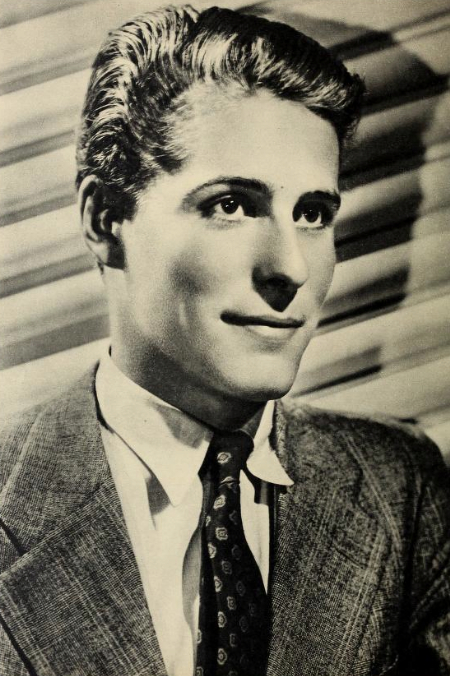
John Justin (24 November 1917 – 29 November 2002) was a British stage and film actor.[1]

Key Information

Early life

[edit]

John Justinian de Ledesma was born in Knightsbridge, London, England, the son of a well-off Argentine rancher.[2] Though he grew up on his father's estancia, he was educated at Bryanston School in Bryanston, Dorset.[3] He developed an interest in flying and became a qualified pilot at the age of 12, though he was not allowed to fly solo at the time because of his age.

Acting career

[edit]

Justin became interested in acting at a young age. By the age of 16, he had joined the Plymouth Repertory. In 1937, he briefly trained with the Royal Academy of Dramatic Art, but did not like it and soon joined the repertory company of John Gielgud.[3] Among the plays he appeared in was Dear Octopus.[2]

The Thief of Bagdad

[edit]

In 1938, he auditioned for and was cast in the role for which he is perhaps best remembered, Ahmad in the 1940 version of The Thief of Bagdad, opposite Sabu. To do so, he had to sign a seven-year contract with Alexander Korda.

Second World War

[edit]

The Second World War broke out during the film's production. After completing the picture, Justin joined the Royal Air Force, serving as a test pilot and flying instructor.[3][4] He was injured in a crash.[2]

He was given leave to work on two films, The Gentle Sex (1943) with Leslie Howard, and Journey Together (1944), an RAF feature film with a cast led by Richard Attenborough, Jack Watling, David Tomlinson, and Edward G. Robinson. Bessie Love, whose career began in the silent era, also appeared in the cast.

Post-war

[edit]

With the war's end, Justin returned to acting. In 1948, he did a stint at the Shakespeare Memorial Theatre, Stratford-on-Avon, appearing in King John, The Merchant of Venice, The Winter's Tale, Othello, Hamlet, and Troilus and Cressida. He also made the film Call of the Blood (1948).

In 1949, he appeared on stage in Peter Pan and was in Antigone on the BBC. Justin was in Return to Tyassi (1950) on the West End and appeared in The Angel with the Trumpet (1950).

Justin appeared in the film The Sound Barrier (1952) and played the lead in Hot Ice (1952). After appearing in Uncle Vanya (1952) on stage, he focused on film work.

He was in The Village (1953), a Swiss film; Melba (1953), a biopic; King of the Khyber Rifles (1954), a Hollywood film with Tyrone Power for 20th Century Fox; Seagulls Over Sorrento (1954) with Gene Kelly. He then had two leading roles, in The Teckman Mystery (1954) with Margaret Leighton and The Man Who Loved Redheads (1955) with Moira Shearer.

Fox called him back for Untamed (1955) and Warwick Films used him in Safari (1956) with Victor Mature. Justin had a good role in Fox's Island in the Sun (1957), romancing Dorothy Dandridge.

In 1957, he appeared on stage in Dinner with the Family. In 1959 he joined the Old Vic, where his plays included The Double Dealer, As You Like It, and The Importance of Being Earnest.

He made his Broadway debut in 1960 in the play Little Moon of Alban and was in The Spider's Web (1960). He was later in stage productions of Much Ado About Nothing (1963), Death of a Salesman (1965), and As You Like It (1965).

Between 1963 and 1970 he made no film appearances. In 1968 he played Thorin Oakenshield in the BBC Radio adaptation of The Hobbit.[5]

Later career

[edit]

On stage he was in Lulu (1971), toured South Africa in Who Killed Santa Claus? (1971), and appeared in Old Fruit (1974), and A Man And His Wife (1974).

His later films include Ken Russell's Savage Messiah (1972), Lisztomania (1975) and Valentino (1977).

In 1979, he played the ghoulish lover in the BBC's Christmas ghost story Schalcken the Painter, based on the 1839 story Strange Event in the Life of Schalken the Painter by Sheridan Le Fanu.

His love was for the stage.[2] He called his film career "a mistake".[3]

Personal life

[edit]

Justin was married three times, first to dancer and choreographer Pola Nirenska. His second marriage, to actress Barbara Murray, lasted from 1952 to 1964; they had three daughters. From 1970 to his death in 2002, he was married to Alison McMurdo.[2]

Complete filmography

[edit]

References

[edit]
[edit]
Revisions and contributorsEdit on WikipediaRead on Wikipedia
from Grokipedia
John Justin (born John Justinian de Ledesma; 24 November 1917 – 29 November 2002) was a British stage and actor best known for his leading role as Prince Ahmad in the 1940 fantasy adventure The Thief of Bagdad. Born in to an Argentinian rancher father, he spent much of his childhood in before returning to for at Bryanston in Dorset and training at the Royal Academy of Dramatic Art (RADA). Justin's acting career began in the 1930s, with early stage appearances in repertory theatres in Plymouth (1933) and Liverpool, John Gielgud's company (1937), where he adopted the professional name John Justin. His film debut came in 1937 with a small role in Dark Journey, but he gained prominence through The Thief of Bagdad, a lavish production interrupted by World War II that showcased his debonair screen presence alongside stars like Sabu and Conrad Veidt. During the war, he served as a pilot instructor in the Royal Air Force while contributing to propaganda films such as The Gentle Sex (1943) and Journey Together (1945). Post-war, Justin balanced a prolific theatre career with cinema, performing leading roles on the West End stage in productions like Peter Pan (1949, as Captain Hook and Mr. Darling), and at the Old Vic in Shakespearean works including As You Like It and The Importance of Being Earnest (1959). Notable films from this period include David Lean's The Sound Barrier (1952), Island in the Sun (1957), and The Teckman Mystery (1954), often portraying romantic leads or authoritative figures. Later in his career, he appeared in Ken Russell's eccentric biopics Savage Messiah (1972) and Lisztomania (1975), as well as the comedy Valentino (1977) and his final film, Trenchcoat (1983). He also undertook international work, including recitals for the British Council in West Germany in 1975. In his personal life, Justin married three times: first to dancer (dissolved), then to actress in 1952 (divorced 1964, with whom he had three daughters), and finally to Alison McMurdo in 1970. He died in on 29 November 2002, five days after his 85th birthday, leaving a legacy as a versatile performer who prioritized theatre but left an indelible mark on British cinema.

Early life

Family background

John Justin was born John Justinian de Ledesma on 24 November 1917 in , . He was the son of an Argentine rancher, whose profession as a landowner in significantly shaped the family's lifestyle and Justin's early years. His father, a naturalized Englishman, but the family's ties to remained strong. Much of Justin's childhood was spent on his father's ranches in , where he experienced a rugged, outdoor environment that contrasted with his urban birthplace. This period in , beginning shortly after his birth, exposed him to a world of vast landscapes and equestrian activities, fostering an early fascination with and . During his time there, Justin developed a keen interest in , learning to fly at the age of 12, though authorities denied him permission to solo due to his . No direct family members are recorded as influencing this passion, but the expansive Argentine setting likely encouraged his exploratory pursuits. For his professional acting career, Justin shortened his birth name to John Justin, a decision made during his early theater work, as the full surname de Ledesma was considered too cumbersome for the stage. His father strongly opposed his entry into acting, viewing it as an unstable path, which added tension to family dynamics during his adolescence. He eventually returned to England, where he pursued formal education.

Education and early interests

John Justin was educated at in Dorset, , where he spent his formative years after returning from his family's ranch in . He left the school at the age of 16, having faced challenges that influenced his decision to pursue interests outside formal academics. Although later proved a setback in his early rehearsals. From a young age, Justin developed a strong passion for , influenced by his time in where his family had connections to ranching life. This interest led him to qualify as a pilot during his , though he was not permitted to fly solo until later due to age restrictions. His enthusiasm for flying persisted and shaped his early pursuits, eventually directing him toward related opportunities in his professional life. At 16, defying his father's wishes, Justin took his initial steps into theater by joining the Plymouth Repertory Company, where he gained practical experience in a variety of roles. He briefly trained at the Royal Academy of Dramatic Art (RADA) in 1937, funded by his grandmother, but found the program unsuitable—describing it as "no more than a for girls"—and soon departed to join John Gielgud's repertory company. These early experiences honed his skills and solidified his commitment to the stage.

Acting career

Early theater and film beginnings

John Justin's professional acting career began in his mid-teens, driven by a passion for despite familial opposition. At the age of 15, he made his stage debut in August 1933 with the Plymouth Repertory Company, where he performed a variety of roles ranging from youthful characters to elderly figures, honing his versatility through intensive repertory work. This early experience at Plymouth Rep marked his entry into professional theater, building foundational skills in character portrayal and stage presence. Following his Plymouth tenure, Justin continued in regional theater, joining the Liverpool Repertory Company, where his surname was shortened from Justinian de Ledesma to Justin for professional use. In 1937, he briefly enrolled at the Royal Academy of Dramatic Art (RADA), funded by his grandmother, but soon departed to pursue practical opportunities, transitioning to the London stage by joining John Gielgud's company at the Queen's Theatre. These regional productions provided rigorous training in ensemble acting and quick role adaptations, essential for his development as a performer. In London, Justin appeared in several notable pre-war productions under Gielgud's direction, including Richard II, The Merchant of Venice, and The School for Scandal in 1937, which exposed him to classical repertoire and heightened his dramatic technique. The following year, he played the role of Hugh Randolph in Dodie Smith's Dear Octopus (1938), a family drama that showcased his ability to handle contemporary dialogue and emotional depth. In 1939, he took a supporting part as a footman in Oscar Wilde's The Importance of Being Earnest, further demonstrating his range in comedic timing. These West End engagements elevated his profile among theater professionals and paved the way for screen opportunities. Justin's film career commenced modestly with an uncredited bit role in the 1937 spy thriller Dark Journey, directed by Victor Saville and produced by , featuring stars like and . This debut, though minor, introduced him to the technical demands of cinema, such as working with cameras and larger crews, and benefited from Korda's production environment, which later facilitated more prominent casting. His early theater experiences, emphasizing physicality and poise—partly informed by his budding interest in —equipped him for the dynamic roles that would follow.

Breakthrough in The Thief of Bagdad

John Justin was cast as Prince Ahmad in Alexander Korda's lavish 1940 production of The Thief of Bagdad, a role that marked his breakthrough in cinema after his uncredited debut in Dark Journey (1937). Relatively unknown at the time, Justin auditioned alongside the young star Sabu in a lighthearted, mischievous manner, not expecting to land the part, but his matinee-idol looks and charm secured him the romantic lead opposite the thief character. To take on the role, he signed a seven-year contract with Korda, binding him to London Films and elevating his status from stage actor to film star. In the story, Ahmad is a benevolent ruler deposed by the villainous Jaffar, embarking on a quest that blends adventure and romance in an Arabian Nights-inspired fantasy. Justin's collaboration with his co-stars added depth to the film's ensemble dynamic, particularly in scenes emphasizing camaraderie and courtly intrigue. He shared key interactions with Sabu, who played the street-smart thief Abu, as the two characters form an unlikely after Ahmad's , with Abu's youthful energy contrasting Justin's poised princely demeanor. The romantic subplot paired Justin with as the unnamed princess, whose forbidden love drives much of the narrative, while portrayed the bumbling , her father, contributing through his scenes with Justin's Ahmad in the opulent palace settings. These pairings highlighted the film's blend of swashbuckling action and whimsical fantasy, with Justin's performance anchoring the more earnest emotional threads amid the spectacle. The production faced significant challenges, beginning in late 1938 at Denham Studios in under initial director Ludwig , but marked by disorganization, including a lack of a finished script and creative clashes between Korda and Berger over the film's intimate versus epic tone. Wartime disruptions escalated in September 1939 when Britain declared war on , halting filming and forcing Korda to relocate the unfinished project to Hollywood, where additional directors like and Tim Whelan completed it in 1940 using facilities. filming presented further hurdles, as the process was relatively new in Britain; cinematographer Georges Périnal employed vivid, expressive hues—such as deep reds and blues—to create the film's magical atmosphere, including innovative blue-screen traveling mattes for flying sequences, though it required multiple takes to achieve the desired vibrancy. Critics hailed The Thief of Bagdad as a pinnacle of fantasy filmmaking upon its December 1940 release, praising its dazzling visuals, score, and special effects as influential benchmarks that rivaled in enchantment and innovation. Justin's portrayal of was noted for its handsome, Fairbanksian charm, forming a striking pair with Duprez, though some found the romance somewhat restrained compared to the film's exuberant action. The film's status as a fantasy classic was cemented by its six Academy Award nominations, including wins for color cinematography and art direction, and its enduring appeal as escapist entertainment during wartime. For Justin, the role provided an immediate career boost, thrusting him into prominence in British cinema and opening doors to leading parts in subsequent Korda productions.

World War II service

Following the completion of his role in The Thief of Bagdad in 1940, John Justin volunteered for service in the Royal Air Force at the outbreak of . His prior experience learning to fly in his youth aided his rapid progression through training. Justin served as a pilot and flying instructor in the RAF, contributing to the training of new airmen during the . He also undertook duties involving aircraft testing and later transported VIPs in his capacity as an experienced aviator. These responsibilities highlighted his technical skills in , drawing on his pre-war piloting qualifications. In 1943, Justin sustained injuries in a plane crash while performing his duties, which temporarily sidelined him from active service. The incident required recovery time, during which he was granted leave to participate in two RAF propaganda films: The Gentle Sex (1943), directed by Leslie Howard, and Journey Together (1945), a documentary-style production about pilot training. These appearances allowed him to blend his military role with limited acting work, though the injury's effects lingered, influencing his physical demands in subsequent aviation tasks. Justin's RAF service created a significant hiatus in his acting career from 1940 to 1945, shifting his focus entirely to military obligations amid the global conflict. With the war's end in 1945, he transitioned back to civilian life, resuming professional theater work that year.

Post-war theater achievements

Following the end of World War II, John Justin resumed his acting career with a focus on the stage, beginning with the role of Robert Browning in The Barretts of Wimpole Street at the Richmond Theatre in 1945. This performance marked his return to theater, showcasing his ability to portray romantic leads with elegance and depth. He followed this with Admetus in the mock-Greek comedy The Thracian Horses at the Lyric Theatre, Hammersmith, in 1946, co-starring with Eileen Herlie. In 1948, Justin joined the Shakespeare Memorial Theatre at Stratford-upon-Avon for a significant season, taking on multiple classical roles that highlighted his versatility in Shakespearean repertoire. These included the Dauphin in King John, Lorenzo in The Merchant of Venice, Florizel in The Winter's Tale, Cassio in Othello, and notably Horatio in Hamlet, opposite Paul Scofield as the Prince. His portrayal of Horatio was praised for its quiet intensity and loyalty, contributing to the production's success in reviving post-war interest in Elizabethan drama. A highlight of his early work came in 1949 when he played the dual roles of Mr. Darling and in J.M. Barrie's Peter Pan at the Scala Theatre, a production that ran during the season and demonstrated his flair for whimsical yet menacing characters. Throughout the 1950s, Justin continued to excel in Shakespeare, notably as Romeo in and Orlando in at , where his performances were acclaimed for their youthful vigor and romantic appeal. In 1959, Justin rejoined the Old Vic Company for a prominent season, portraying Mellefont in William Congreve's The Double Dealer opposite Maggie Smith, Orlando once more in As You Like It, John Worthing in Oscar Wilde's The Importance of Being Earnest, and the lead in Shakespeare's Richard II, a role that challenged his usual suave persona with a more introspective intensity. This period solidified his reputation as a leading man in classical theater. His Broadway debut followed in 1960, playing Lt. Kenneth Boyd in James Costigan's Little Moon of Alban at the Longacre Theatre, a drama exploring themes of faith and forgiveness during the Irish Troubles. Justin's stage career extended into the with roles that spanned genres and character ages, reflecting his enduring commitment to live performance. In 1963, he appeared as Don Pedro in at the , and in 1965, he took on the demanding part of in Arthur Miller's at the repertory. A later standout was his portrayal of in A.A. Milne's Toad of Toad Hall at the Queen's Theatre in 1964, where he ad-libbed a line—"It's only half past December"—to delight audiences during the holiday run. Over his career, Justin's roles ranged from romantic leads in his twenties to authoritative figures into his seventies, embodying characters from 22 to 75 years old. He often expressed that theater was his true calling, dismissing much of his film work as secondary and valuing the immediacy of live audiences over screen roles.

Post-war and later film roles

After , John Justin resumed his film career sporadically, viewing cinema primarily as a means to support his preferred work in theater. His first major post-war role came in David Lean's (1952), where he portrayed the ambitious Philip Peel, a character central to the film's exploration of risks and family tensions. In the , Justin appeared in several British productions, often as a romantic or enigmatic lead. Notable examples include his portrayal of the aging in The Man Who Loved Redheads (1955), the investigative sleuth in the thriller The Teckman Mystery (1954), and the Denis Archer in the colonial drama Island in the Sun (1957). These roles highlighted his matinee idol charm but were interspersed with stage commitments, reflecting his secondary interest in film. Justin's film output remained limited through the and , with appearances in Ken Russell's biographical films Savage Messiah (1972), where he played the artist Lionel Shaw, (1975), and Valentino (1977), depicting a figure from the star's circle. He later reflected on his overall film career as "a mistake," undertaken mainly to finance his theater pursuits, resulting in just over a dozen screen credits from 1946 to 1983. His final film role was as the Marquis de Pena in the Disney comedy-thriller Trenchcoat (1983), marking the end of a cinematic journey that, while not his passion, showcased his versatility in supporting and character parts.

Personal life

Marriages and relationships

John Justin's first marriage was to the Polish-born dancer and choreographer in 1946, who was seven years his senior; the union ended in divorce in 1949. In 1952, Justin married the British actress , with whom he shared a professional connection in the acting world, having co-starred in productions such as the 1952 film Hot Ice. The marriage, which coincided with Justin's active period in theater and film, dissolved in 1964. Justin wed for a third time in 1970 to Alison McMurdo, a marriage that endured until his death and marked a period of relative stability amid his later career endeavors.

Family and children

John Justin and his second wife, actress , had three daughters during their marriage: Felicity, Virginia, and Joanna. The daughters were born between 1952 and 1964, the period of the couple's union, and Murray often prioritized family life over her acting career, notably turning down a major contract with to focus on raising them in their home. Following the in 1964, the daughters maintained a close relationship with their mother, who continued to emphasize her role as a parent above professional pursuits. Justin's later years were spent in with his third wife, Alison McMurdo, but specific details on his ongoing involvement with his daughters or any grandchildren are not widely documented in contemporary accounts.

Health issues and death

During , John Justin sustained injuries in a plane crash while serving as a and flying instructor in (RAF). He recovered sufficiently to continue his duties, transitioning to an instructor role and later flying VIPs. No long-term effects from the incident are documented in available accounts. In his later years, following his retirement from acting after his final film appearance in Trenchcoat (1983), Justin lived quietly, with no publicly reported age-related or other health conditions. John Justin died on 29 November 2002 in Petersfield, Hampshire, England, at the age of 85. The cause of death was not publicly specified. He was cremated, with the location of his ashes unknown. Obituaries in The Guardian and The Telegraph paid tribute to his elegant screen presence and notable roles, such as Prince Ahmed in The Thief of Bagdad (1940), marking the end of a career spanning stage and film. No details of funeral arrangements or peer tributes beyond these notices have been recorded.
Add your contribution
Related Hubs
User Avatar
No comments yet.