Hubbry Logo
John RinglingJohn RinglingMain
Open search
John Ringling
Community hub
John Ringling
logo
8 pages, 0 posts
0 subscribers
Be the first to start a discussion here.
John Ringling
John Ringling
from Wikipedia

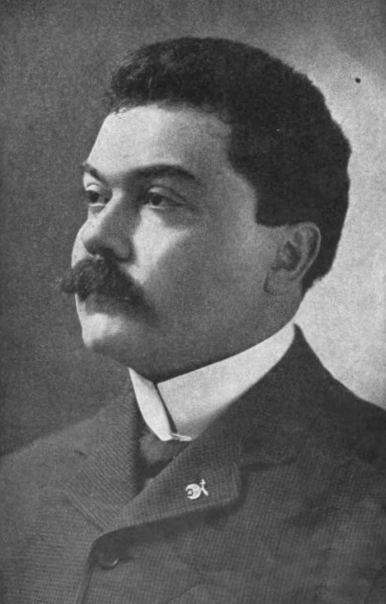
John Nicholas Ringling (May 31, 1866 – December 2, 1936) was an American entrepreneur who is the best known of the seven Ringling brothers, five of whom merged the Barnum & Bailey Circus with their own Ringling Bros. World's Greatest Shows to create a virtual monopoly of traveling circuses and helped shape the modern circus. In addition to owning and managing many of the largest circuses in the United States, he was also a rancher, a real estate developer and art collector.[1] He was inducted into the Florida Artists Hall of Fame in 1987.[2]

Key Information

Early circus life

[edit]
Ringling Brothers with Barnum & Bailey. John is pictured second from bottom.
The Ringling Bros from top to Bottom John Charles Albert C Alfred Charles Agustus G and Henrey

John was born in McGregor, Iowa, the fifth son in a family of seven sons and a daughter born to a French mother, Marie Salomé Juliar, and German father, August Ringling (a farmer and harness maker). The original family name was "Ruengeling". Five of those sons worked together to build a circus empire.[3]

The Ringlings started their first show in 1870 as "The Ringling Bros. United Monster Shows, Great Double Circus, Royal European Menagerie, Museum, Caravan, and Congress of Trained Animals", charging a penny for admission. In 1882, it was known as "The Ringling Bros. Classic and Comic Concert Company". By 1889, the circus was large enough to travel on railroad cars, rather than animal-drawn wagons. [citation needed]

In 1905, John married Mable Burton. In 1907, the brothers bought the Barnum & Bailey circus for $400,000 from the estate of James Anthony Bailey and ran the two circuses as separate entities until the end of the 1918 season.[4] John worked the circus with his brothers, declaring "We divided the work; but stood together." John took the advance position, traveling ahead and booking the appearances and Charles was the operating manager.[citation needed]

Building the circus empire

[edit]
Statue of elderly man in suit, holding a brimmed hat and walking stick.
Statue of John Ringling near the Circus Ring Hall of Fame in Sarasota, Florida.
The Cà d'Zan mansion in Sarasota was designed for Mable and John Ringling by Dwight James Baum and built by Owen Burns.

After purchasing Barnum & Bailey's Greatest Show on Earth from the estate of James Bailey in 1907, the Ringling brothers were recognized as the "Circus Kings" in the United States as they controlled not only the show that carried their own name, but also the Barnum & Bailey circus and the Adam Forepaugh and Sells Brothers Circus.[5]

In the early 1900s the ranks of the brothers began thinning as Otto died unexpectedly in 1911. Four years later, the oldest sibling, Al Ringling also died, followed by brother Henry in 1918. At the same time that family management was evolving, the Ringlings were challenged by keeping two mammoth circuses touring during World War I. Manpower shortages, combined with railroad restrictions and the 1918 flu pandemic all contributed in the decision to merge the Ringling Bros World's Greatest Shows and the Barnum & Bailey Greatest Show on Earth at the end of the 1918 season.[6] On October 8, 1918, the Ringling Bros. season concluded after performances in Waycross, Georgia, and the circus trains were routed to the Barnum & Bailey Winter Quarters in Bridgeport, Connecticut.[7] During the winter of 1918-19 the two circuses were combined into one enormous show,[8] and on March 29, 1919, the Ringling Bros. and Barnum & Bailey Circus debuted at Madison Square Garden in New York City.

After the death of Alf T. Ringling in 1919, brothers John and Charles made the decision to move the Winter Quarters to Sarasota, Florida, in 1927[9] where the brothers were having success in real estate speculation.[10] Although a resident of Sarasota, Charles died in 1926 before the move was complete. With the death of brother Charles, John was now the last of the Ringling brothers. Although other family members had inherited stock in the company, as President he continued to manage the circus in the years prior to The Great Depression.[11]

During the 1920s, Ringling built Gray Crag, a 20-room manor house on an estate that was their summer residence in Alpine, New Jersey, atop the New Jersey Palisades and overlooking the Hudson River. Ringling would bring the circus troupe across the river from Yonkers, New York, with acrobats and animals to entertain their guests at parties. With the financial and personal difficulties that Ringling faced during the Great Depression, control of the property was lost and the house was ultimately demolished in November 1935.[12][13]

In 1909 John and his wife, Mable began spending their winters in Sarasota. The couple bought bay front property from Mary Louise and Charles N. Thompson, another circus manager who engaged several members of the Ringling family in land investments on the Florida Gulf Coast. Ringling commissioned a 30-room mansion which was inspired by the Venetian Gothic palaces, designed by New York architect Dwight James Baum, and built by Owen Burns, It was completed in 1926 and named Cà d'Zan, "The House of John" in Venetian. Later a museum was built on the grounds of the estate for their art collection. Because of their investments in real estate and the later development of the circus winter quarters as a tourist attraction, John and his brother, Charles are seen as pioneers in the development of Sarasota.[14] After some 40 years in the entertainment business, along with his ownership of railroads, oil field and ranches John had become one of the richest men in the world.[15] In addition he was a world traveler as he was always looking for new acts for his circus. It was during these travels to Europe that he began establishing a collection of old world masterpieces and a collection of Baroque art[16] including four cartoons for tapestries by Peter Paul Rubens.[17]

In 1929, John Ringling bought the American Circus Corporation, which consisted of the Sells-Floto Circus, the Hagenbeck-Wallace Circus, the John Robinson Circus, the Sparks Circus, Buffalo Bill's Wild West Show, and the Al G. Barnes Circus. He bought them from Jerry Mugivan, Bert Bowers, and Ed Ballard, for $1.7 million (approximately $31,130,000 today).[18] With that acquisition, Ringling owned all of the major traveling circuses in America.[19]

In 1933, the last of the Brothers Ringling, ill and aging John, who had owned more circuses than any other man on earth and whose fortune was once estimated to be $50,000,000, hobbled into a Federal Court in Brooklyn to testify on the loan that brought him low. The firm that held his note was in bankruptcy. At a prize fight in 1929, Mr. Ringling related, he met William M. Greve, president of New York Investors, Inc. (realty), who agreed to lend him $1,700,000. As collateral Mr. Ringling put up one-half of all his circus stocks. Shortly afterward New York Investors sold the Ringling note to the now bankrupt subsidiary. While ill last year, Mr. Ringling had been unable to meet an interest payment of about $18,000. Financier Greve promptly marched out to Coney Island. Threatening to attach the circus receipts, Financier Greve demanded: "Put all your assets in a bag and give them to me."

That night, despite a fever of 104, Mr. Ringling was put in a wheelchair and brought to another room. Over the protest of his nurse he signed papers which gave most of his assets to New York Investors. Later he learned that swift Mr. Greve had formed a voting trust to hold the Ringling stocks and manage the circuses, another trust to hold some of the Titians, Rembrandts, Hals, Rubens from his famed collection in Sarasota, Fla. Mr. Ringling was left with nothing. But he was one of the five voting trustees, and as soon as he could pay off the loan he would get his bag of assets back.[20]

Other businesses and activities

[edit]

Ringling was involved in many businesses, including; railroads in Missouri, Montana, Ohio, Oklahoma, and Texas; oil in Oklahoma; real estate in Florida.[3][21]

Namesakes

[edit]
  • Ringling, Montana, was named for John Ringling,[30] who at one time was president of the White Sulphur Springs and Yellowstone Park Railway.[29] John Ringling had a family summer home in White Sulphur Springs and purchased the hot springs there with the intent of building a resort spa and $1 million dollar 220-room hotel.[31]
  • Ringling, Oklahoma, also named for Ringling, when the Oklahoma, New Mexico and Pacific Railway created the town.[26]
  • The World War II Liberty Ship SS John Ringling was named in his honor.
  • John Ringling Causeway, a road bridge in Sarasota, Florida, over Sarasota Bay connecting Sarasota to Lido Key and Longboat Key. Ringling lived in Sarasota during summers for many decades. Ringling had built the first bridge, in 1925. The current bridge is now the third one (the first one was replaced in 1950, the second one in 2000).

Decline in later life

[edit]

Ringling's health soon began to fail and the Great Depression (which gripped the nation almost as soon as he acquired the American Circus Corporation) dealt a severe financial blow to the John Ringling empire. He lost virtually his entire fortune, but was able to retain his home, the museum and his extensive art collection. His wife, Mable, died in June 1929 and he remarried on June 19, 1930, to Emily Haag Buck in Jersey City, New Jersey.[32]

Ringling was voted out of control of the business in 1932 by its board of directors and Sam Gumpertz was named vice president and general manager of the circus.[33]

John and Emily Haag Buck divorced on July 6, 1936.[34][35]

Death

[edit]

John Ringling died on December 2, 1936, in New York City. He was the last Ringling brother to die, as well as the longest-lived of the Ringling brothers. He was the only brother to reach his 70s.[34][36] Once one of the world's wealthiest men, he died with only $311 in the bank.[37] At his death, he willed his Sarasota mansion, the museum, and his entire art collection to the state of Florida. The house, Cà d'Zan, and the John and Mable Ringling Museum of Art offer visitors a glimpse into the lifestyle of the Roaring 20s, a renowned art collection and library.[38] Another of John's legacies is the Ringling College of Art and Design, which asked to adopt his name because of the cultural influence of the museum and its collection. A museum devoted to the Ringling Brothers Circus has been established on the estate also.

After his death, the circus was operated by his nephew, John Ringling North, who sold the circus to Judge Roy Hofheinz of Houston and Washington, D.C., promoters Irvin Feld and Israel Feld in 1967.[39]

In 1991, John and Mable Ringling and his sister, Ida Ringling North, were exhumed from their original resting places and reburied at the John and Mable Ringling Museum of Art, just in front and to the right of the Ca d'Zan. It is called the secret garden and John is buried between the two women.

The Ringling family

[edit]

There were seven Ringling brothers and one sister (Ida), four of them (Alf, Al, Charles, and Otto) partnered with John to create the Ringling Bros. circus:[40][41][42][43]

  • Albert Charles "Al" Ringling (1852–1916).
  • Augustus Gustav "Gus" Ringling, Jr. (1854–1907); also listed as Charles August (Gus).[40][41]
  • William Henry Otto "Otto" Ringling (1858–1911).[44]
  • Alfred Theodore "Alf T." Ringling (1861–1919).
  • Charles Edward "Charley" Ringling (1863–1926); also listed birth year 1864.[45]
  • John Nicholas Ringling (1866–1936).
  • Henry William George Ringling (1868–1918).[46]
  • Ida Loraina Wilhelmina Ringling (1874–1950).[47]

References

[edit]
[edit]
Revisions and contributorsEdit on WikipediaRead on Wikipedia
from Grokipedia
John Nicholas Ringling (May 31, 1866 – December 2, 1936) was an American entrepreneur best known as one of the five founding brothers of the Ringling Bros. Circus, which grew into the world's largest circus operation, and for his later pursuits as an art collector and real estate developer in . Born in , to German immigrant father August Ringling, a harness maker, and French immigrant mother Marie Salome Juliar, John was the fifth of eight children (seven sons and one daughter) in a modest family that relocated to , in 1875. At age 17, he joined his older brothers—Albert, , Alfred, and —in launching the Ringling Bros. World's Greatest Shows on May 19, 1884, initially as a modest wagon-based operation featuring , clowning, and equestrian acts. Under John's business acumen, particularly in and routing, the circus transitioned to rail travel in 1890, enabling nationwide expansion; by 1900, it employed over 300 people and featured exotic animals, and in 1907, the brothers acquired the rival Barnum & Bailey Circus for $400,000, merging it into the Ringling Bros. and Barnum & Bailey Combined Shows, which became synonymous with American spectacle. In his later years, Ringling diversified beyond the circus, amassing one of the world's premier collections of Baroque art—over 600 Old Master paintings, including 13 Rubens masterpieces—alongside his wife, Mable Burton, whom he married in 1905. The couple began wintering in Sarasota in 1909, where John purchased 20 acres in 1911 and spearheaded ambitious developments during the 1920s Florida land boom, acquiring and transforming barrier islands like St. Armands Key, Lido Key, and Longboat Key into upscale residential areas; he also constructed the Ringling Causeway in 1925 to connect them to the mainland. His crowning architectural achievement was the Venetian Gothic mansion Ca' d'Zan ("House of John" in Venetian dialect), completed in 1925 at a cost of $1.5 million, which served as their Sarasota residence and housed part of their art collection. Ringling further expanded his circus empire in 1929 by purchasing the American Circus Corporation, but the Great Depression eroded his fortune; following Mable's death in 1929 and a brief, unsuccessful second marriage to Emily Haag Buck in 1930 (ending in divorce in 1936), he died of pneumonia in New York City at age 70, virtually penniless. Ringling's enduring legacy lies in his bequest of his Sarasota properties—including Ca' d'Zan, the John and Mable Ringling Museum of Art (opened in 1949), and the Circus Museum—to the state of Florida in 1936, transforming the region into a cultural hub that attracts hundreds of thousands of visitors annually. His vision elevated Sarasota from a sleepy fishing village to a center of arts and tourism, while his circus innovations set standards for the industry until its sale to the Feld family in 1967.

Early Life

Birth and Family Background

John Nicholas Ringling was born on May 31, 1866, in , to immigrant parents August Ringling, a harness maker from , , and Marie Salomé Juliar of French descent. He was the sixth of seven sons in a that also included one daughter, with his siblings comprising Albert, Augustus, Otto, Alfred, Charles, Henry, and sister Ida. The Ringling family lived in modest circumstances as artisans in post-Civil War , where August's trade as a harness maker provided essential skills in craftsmanship that later influenced his sons' abilities in building wagons and performance equipment for their entertainment ventures. Some siblings faced early deaths, including Henry in 1918 and in 1911 from natural causes. During John's childhood, the family resided in McGregor for about twelve years before moving to , exposing the brothers to the vibrant world of local fairs and traveling shows that steamed along the , sparking their interest in performance arts amid the era's rural scene.

Entry into Entertainment

The Ringling family, of German immigrant origins and modest means, had settled in , by the mid-1870s, where the brothers honed their performance skills amid economic hardship. In this rural setting, the five active brothers—Al, Alf T., , , and the youngest, John—began staging informal acts as acrobats, jugglers, and comedians in local halls, drawing inspiration from passing traveling shows without any formal training. Their self-taught routines emphasized variety , blending sketches, instrumental music, and physical feats learned through observation and practice, often constructing simple props like balancing poles from household items. John Ringling, at age 14 in 1880, contributed to these early efforts by assisting with and prep, but he joined the active troupe at 16 in late , taking on roles as a and singer to round out the vaudeville-style lineup. The brothers' first professional outing came on , , in , billed as the "Ringling Brothers Classic and Comic Company," a hall-based where two brothers danced, two played instruments, and one sang comic songs, earning modest profits used to buy formal attire like evening suits and top hats. John, as the youngest performer, often handled clowning duties, delivering humorous monologues and pratfalls that engaged small audiences of locals, while the group navigated challenges such as inconsistent turnout and rudimentary staging in second-floor venues. By 1883, the brothers expanded their act by incorporating and more elaborate comedy bits, still performing in halls during winters while building their own wagons for mobility—a testament to their resourceful, hands-on learning amid limited funds and no mentors. This evolution culminated in adding a small circus tent to their repertoire by 1884, marking the shift from pure to hybrid shows, though they continued facing hurdles like weather disruptions and the need to route performances around regional competitors through . John's emerging involvement in band support and basic financial tracking during these years laid groundwork for his later , as the troupe scrimped to afford essentials like a rented horse for transport.

Circus Career

Founding the Ringling Brothers Circus

The was officially founded on May 19, 1884, in , by the five brothers Albert (Al), Alfred T. (Alf), , John, and Otto Ringling, in partnership with veteran showman Gus "Yankee" Robinson. The inaugural production was a modest one-ring show featuring a limited roster of performers, horses, and basic acts such as and equestrian displays, operating from a single rented horse-drawn wagon. John Ringling, then 18 years old and the youngest brother, assumed primary responsibility for and finances from the start, overseeing budgeting, vendor negotiations, and to keep the fledgling enterprise solvent. His meticulous approach to cost and route scheduling proved essential during the circus's formative phase. The early tours focused on Midwest locales, beginning with short wagon-drawn routes through and nearby states like and , drawing crowds in small towns and fairgrounds. By the late , the operation had expanded to regional circuits, with the brothers introducing free street parades—colorful processions of wagons, costumed performers, and animals—to generate excitement and boost attendance without additional cost. These parades, often held upon arrival in a new town, became a signature innovation that differentiated the Ringlings from competitors. John's strategic foresight extended to transportation upgrades and ; in , he negotiated the circus's transition to rail, loading wagons onto flatcars for the first time, which extended tour durations and enabled broader Midwest coverage while reducing wear on animals and equipment. Complementing this, he secured winter quarters in Baraboo—a dedicated site on family land for , prop storage, and off-season repairs—that anchored operations and fostered year-round efficiency until the site's expansion in later decades. Rooted in the 1890s expansions, a pivotal milestone occurred in 1887 when the show was rebranded as the Ringling Bros. United Monster Shows, Great Double Circus, signaling the addition of a second ring to accommodate simultaneous acts and larger audiences, alongside a of exotic animals. This formalized the shift from a local novelty to a structured regional powerhouse, with John handling the financial restructuring to support the doubled performance capacity and increased overhead.

Mergers and Expansions

In 1907, the Ringling brothers acquired the Barnum & Bailey Circus for $410,000 following the death of James A. Bailey, marking a pivotal expansion in their operations. John Ringling played a key role in overseeing the integration of acts and logistics, ensuring the two shows operated as separate entities while leveraging shared resources for greater efficiency. This purchase eliminated their primary competitor and allowed the Ringlings to dominate the American circus landscape by combining renowned performers, animals, and spectacle elements from both troupes. The circuses remained distinct until 1919, when wartime labor shortages and rail disruptions prompted a full merger into the Ringling Bros. and Barnum & Bailey Combined Shows, adopting the famed slogan "The Greatest Show on Earth." The combined production featured an expansive format with three rings and multiple stages, accommodating over 1,200 performers and staff to deliver simultaneous acts on a grand scale. Under the brothers' direction, including John's strategic input, the show embarked on extensive national tours, scaling operations to reach broader audiences across the . Further consolidation came in 1929 when John Ringling personally negotiated the acquisition of the American Circus Corporation for $1.7 million, absorbing five prominent circuses including Sells-Floto, Hagenbeck-Wallace, Al G. Barnes, Sparks, and John Robinson. This move granted the Ringlings control over a major portion of the U.S. circus industry, streamlining routes and resources to minimize competition and maximize profitability. John Ringling's oversight extended to the logistical innovations that supported these expansions, such as coordinating massive rail transports comprising nearly 100 cars to move performers, animals, and equipment across vast distances. These feats enabled year-round touring and set new standards for circus mobility in the early .

Leadership After Family Losses

Following the deaths of his brothers in 1911 from , Alfred in 1919 from heart disease, and Charles in 1926 from a cerebral hemorrhage related to heart issues, John Ringling assumed full control as the sole surviving brother actively involved in the circus operations. This transition marked a period of solitary stewardship amid personal grief, with John directing the Ringling Bros. and Barnum & Bailey Combined Shows through its operational height in the late 1920s. Under John's leadership, the circus modernized its performances by emphasizing elaborate aerialist routines and expanded animal acts, including parades and exhibitions, to captivate growing audiences in . However, these innovations coincided with emerging labor challenges, such as the 1927 lawsuit by sideshow performers George and Willie Muse against the circus for decades of exploitative unpaid work, highlighting tensions over worker treatment. John also refined the iconic "Big Top" format, enhancing the three-ring spectacle with synchronized lighting and music to create a more immersive experience, though early debates on animal handling began to surface amid public scrutiny. The circus reached its financial zenith in the late 1920s, grossing millions annually—part of a cumulative $53.4 million from 1918 to 1932—fueled by record attendance and rail-based tours across the U.S. Yet, early indicators of overextension appeared, including John's ambitious 1929 acquisition of the American Circus Corporation for $1.7 million, which strained resources despite bolstering the show's dominance. John played a hands-on role in managing the winter quarters after relocating them from Baraboo, Wisconsin, to Sarasota, Florida, in 1927, overseeing the construction of new facilities that employed hundreds and invested over $500,000 in infrastructure to support off-season training and repairs. This move not only centralized operations in a warmer climate but also reflected John's vision for integrating the circus with local development, ensuring year-round readiness for the touring season.

Business Ventures

Real Estate Investments

In the early , John Ringling began diversifying his investments into , acquiring 20 acres of waterfront property in Sarasota in 1911 as part of a broader vision to transform the area into a premier cultural and residential destination, often described as the "St. Petersburg of the South." This initial purchase marked the start of extensive land acquisitions during the land boom of the , where Ringling, leveraging circus profits, bought large tracts on barrier islands including , St. Armands Key, and Longboat Key, often in partnership with developer Owen Burns. By the mid-, these holdings formed the basis of John Ringling Estates, a planned luxury community featuring wide boulevards, canals, and imported statuary to attract affluent buyers. The partnership with Burns eventually dissolved amid disputes during the land bust. To support this development, Ringling invested in infrastructure, constructing the John Ringling Causeway in 1925 at a cost of $750,000, which connected Sarasota to Longboat Key and St. Armands Key, opening on February 2, 1926, and facilitating property sales that reportedly reached $1 million in a single day shortly after. A centerpiece of his personal investment was the construction of , a 56-room Venetian Gothic mansion on Sarasota Bay, built between 1924 and 1926 for $1.5 million and designed by Dwight James Baum as a showcase of opulence inspired by palaces Ringling admired during European travels. Beyond , Ringling pursued oil leases in the , including financial backing for railroads serving the Healdton oil fields in , such as the Ringling & Oil Fields Railroad extension completed in 1917, though these ventures yielded limited success amid fluctuating markets. He also explored operations to transport circus equipment and personnel, supplementing the primary rail system and enabling efficient across waterways, particularly during winter quarters relocations. These real estate and related efforts underscored Ringling's strategy to secure long-term wealth independent of seasonal circus revenues.

Art Collection and Acquisitions

John Ringling developed a profound interest in European art during his travels abroad starting in , rapidly building a collection that included over 600 paintings spanning the Late Medieval period through the 19th century, with notable works by artists such as , , and . His acquisitions encompassed not only paintings but also sculptures, antiquities, and architectural elements, with an estimated expenditure of around $3 million on the core collection, though its appraised value reached approximately $14 million by the late 1930s. Influenced by his wife Mable's shared enthusiasm for the arts, Ringling's pursuits were motivated by a vision to elevate Sarasota's cultural standing and create a lasting legacy beyond his circus enterprises. A pivotal acquisition occurred in 1926, when Ringling purchased dozens of paintings along with two complete paneled rooms—the salon and library—from the contents of the John Jacob Astor mansion on Fifth Avenue in New York City, which were dismantled and shipped to his Sarasota estate to furnish and adorn his properties. This purchase, part of broader European-inspired buying sprees, highlighted his strategy of acquiring intact ensembles to evoke grandeur, including French furnishings and artworks that complemented his growing Baroque focus. Other significant additions during this period included four Rubens tapestry cartoons from the Duke of Westminster for $100,000 and over 1,000 Cypriot antiquities in 1928, further diversifying the collection with classical and Renaissance elements. To showcase his holdings, Ringling commissioned the construction of the John and Mable Ringling Museum of Art between 1929 and 1931 on his Sarasota Bayfront estate (now part of the broader Ringling property developed through his real estate interests), designing it as a U-shaped Renaissance-style gallery with 21 rooms inspired by Italy's . The museum, completed under architect John H. Phillips at a cost of about $1.2 million, served as a dedicated space for public appreciation of pieces like Rubens's The Rape of Europa, underscoring Ringling's commitment to cultural prestige and educational access in .

Other Financial Interests

Beyond his core circus operations, John Ringling pursued speculative investments in railroads to capitalize on emerging transportation networks in the early . In the , he acquired significant stakes in the expansion of the Chicago, Milwaukee & St. Paul Railway, particularly through leasing arrangements for short-line segments in that facilitated regional freight and passenger services. He also co-founded and served as president of the White Sulphur Springs & Yellowstone Park Railway, a 23-mile line completed in connecting White Sulphur Springs to the mainline near the town later named Ringling in his honor, aimed at boosting lumber and agricultural transport to support his broader ranching interests. These ventures exemplified Ringling's strategy to leverage rail infrastructure for in underdeveloped areas, though returns were modest compared to his entertainment empire. Ringling extended his portfolio into commodities through and leases, seeking stable revenue streams amid fluctuating resource markets. In the , he secured interests in oil fields, including support for the Ringling & Oil Fields Railroad extension to the Healdton fields near the Texas border, which transported crude from productive wells and yielded mixed but promising dividends during the post-World War I boom. Earlier explorations in Texas provided exploratory returns but highlighted the risks of volatile extraction costs. During the , Ringling actively engaged in the , focusing on and banking sectors to hedge against industrial cycles. He served as a director for several Florida-based banks, where his influence helped finance local development amid the land boom. Heavy investments in , such as power and companies, positioned him to benefit from national infrastructure growth, with his board roles providing insider leverage for timely purchases. These equities formed a key pillar of his portfolio, offering dividends that offset the seasonal nature of circus revenues, which peaked in summer but waned in winter quarters. This diversification strategy buffered the circus's inherent seasonality, transforming Ringling's wealth from entertainment into a multifaceted empire estimated at $200 million by 1929, encompassing industrial speculations that amplified his financial resilience during prosperous years.

Personal Life

Marriages

John Ringling married Mable Burton, an native with family connections to the Tampa-Sarasota area, in 1905 in . The union, which lasted until Mable's death, was marked by deep affection and mutual interests in and travel, with Mable playing a pivotal role in elevating John's social standing through her poise and involvement in cultural pursuits. As a devoted partner, she collaborated with John on the design of their Sarasota residence, , reflecting their shared vision for opulent living inspired by European aesthetics. The couple had no children. Mable Ringling died on June 8, 1929, in at age 54 from complications of diabetes and , a loss that profoundly affected John. Following Mable's death, Ringling remarried on December 19, 1930, to Emily Haag Buck, a New York socialite, in a private ceremony at the Jersey City mayor's office. The marriage was short-lived and fraught with conflict, characterized by mutual accusations of cruelty and incompatibility; Ringling filed for in 1933, citing Emily's "ungovernable temper," and the union ended in a final decree in July 1936. No children resulted from this second marriage either. Throughout his life, Ringling remained childless, with his circus empire eventually passing to nephews such as , son of his sister Ida, who assumed leadership roles after Ringling's death.

Residences and Lifestyle

John Ringling maintained primary residences tied to his circus operations and personal interests, beginning with the family's winter quarters in , where the established their base along the Baraboo River from 1884 until 1918 to prepare for the touring season. In 1911, he acquired his first winter home in , on 20 acres of waterfront property, marking the start of his deep investment in the area as a seasonal retreat from the rigors of circus management. By the mid-1920s, Ringling commissioned the construction of , a lavish 36,000-square-foot, 56-room mansion completed in 1926 in the Venetian Gothic style, featuring opulent details such as gold-leaf ceilings, marble baths, and imaginative decorations that reflected his admiration for European grandeur. Ringling's lifestyle embodied the extravagance of his success, blending showmanship with high-society pursuits; he hosted elaborate social gatherings at during , turning the estate into a hub for family, friends, and elite visitors amid its fine furnishings and bayfront setting. He indulged in aboard the Zalophus, a 125-foot luxury vessel he purchased in 1922 for $200,000, equipped with six staterooms and servant cabins, which he used for leisurely voyages starting from Jacksonville in January of that year to entertain associates and promote his ventures. Complementing this opulence were his annual European travels, undertaken frequently for scouting circus acts but also for leisure, where he drew inspiration from Venetian palaces that shaped his Sarasota estate. As a flamboyant showman, Ringling played a pivotal social role in elevating Sarasota's status as a destination, relocating the and Barnum & Bailey winter quarters there in 1927 to stimulate and economic growth while hosting previews of circus spectacles to draw public attention. His daily routines reflected a drive fused with philanthropic inclinations, overseeing circus preparations and developments alongside participation in community events that advanced Sarasota's cultural profile, all while maintaining an air of refined extravagance in his personal affairs. This second marriage to Emily Haag in 1930 briefly influenced his residential focus, reinforcing his commitment to Sarasota as a primary base.

Later Years

Financial Decline

The of October 1929 delivered a devastating blow to John Ringling's financial empire, wiping out much of his wealth accumulated through circus operations and diversified investments. Ringling had heavily invested in stocks and during the booming , but the crash triggered widespread devaluations, leaving him with substantial losses exacerbated by over-leveraged loans that he had taken to fund ambitious projects. These loans, including a $1.7 million advance secured against half his circus stock, became untenable as economic conditions worsened during the , forcing him to default on interest payments by 1936. Ringling's failed ventures further accelerated his decline, with collapses in oil exploration and railroad investments draining his resources amid the economic downturn. In , he backed an oil drilling operation east of , leasing land to the Associated Oil and Gas Company and funding costs estimated at $45,000 to $100,000, only for the well to yield sulfur water instead of oil, marking a significant setback even before the crash. Railroad holdings, including stakes in local lines tied to his Sarasota developments, faced bankruptcy proceedings as the Depression curtailed transportation revenues and growth stalled. Additionally, the high costs of storing his prized collection in warehouses during the lean years added to his mounting expenses, as sales were impossible in the depressed market. From 1930 to 1936, Ringling endured relentless legal battles, including IRS audits scrutinizing his partnership's tax returns from 1918 to 1932, which revealed underreported profits of approximately $6.5 million through fraudulent deductions and omitted income from ticket sales and concessions. These audits led to indictments against six associates, including his and lawyer, for , while Ringling himself faced claims of owing millions in . Creditor lawsuits compounded the pressure, culminating in the seizure of his circus stocks and art assets by lender William M. Greve after a default, with Ringling testifying in federal court amid the lender's own . To stave off total ruin, he sold stakes in the circus to his nephew around 1934, but persistent debts forced a filing in October 1936. Despite his optimistic denials and attempts to launch new shows for a comeback, these efforts failed, leaving him with virtually no assets by year's end.

Health Issues and Death

In the early 1930s, John Ringling's health began to decline significantly, marked by the onset of heart disease and the first of several heart attacks in 1932. These conditions were aggravated by mounting financial pressures from the , including massive debts and over 100 lawsuits related to his business ventures, as well as the emotional toll of his strained second marriage to Emily Haag Ringling, whom he accused in court of actions that were hastening his demise. Ringling's condition worsened in late 1936 when he developed bronchial pneumonia amid his ongoing frailty. He passed away on December 2, 1936, at the age of 70, from bronchial pneumonia, while at his residence on Park Avenue; those present included his sister Ida Ringling North, nephew John Ringling North, longtime friend John Hennessy, and his physician Dr. Maurice Costello. A private funeral service was conducted in Sarasota, Florida, shortly after his death. Due to family disputes and estate complications, Ringling's body was initially placed in a temporary vault in New Jersey. It was not permanently interred until 1991, when it was moved to the grounds of the John and Mable Ringling Museum of Art in Sarasota, alongside his first wife Mable and sister Ida, under a simple granite marker in the site's Secret Garden. At the time of his death, Ringling's estate faced overwhelming debts exceeding $2 million, including substantial arrears, leaving only about $300 in cash despite assets valued over $23 million, such as his renowned art collection. The Ringling Bros. and Barnum & Bailey Circus passed to his nephew , while personal holdings, including properties and the museum, became the subject of contentious proceedings that dragged on for more than a decade amid family legal battles and creditor claims.

Legacy

Cultural and Philanthropic Impact

John Ringling's most enduring philanthropic contribution came through his 1936 will, which bequeathed his 66-acre Sarasota estate, including the mansion, the Museum of Art with its collection of over 600 European paintings and antiquities, and a $1.2 million endowment to the people of for the purpose of establishing and maintaining a public art institution. The bequest aimed to promote art appreciation and education, but legal challenges stemming from Ringling's debts delayed state assumption of control until 1946. The had opened to the in , and the state of assumed full control in 1946, establishing it formally as the John and Mable Ringling Museum of Art. Under state stewardship, the evolved into a multifaceted cultural complex, incorporating expansions that enhanced its scope and accessibility. In 1948, the first director, A. Everett "Chick" Austin Jr., established the Circus Museum using Ringling family memorabilia, which later grew to include the Tibbals Learning Center in with its renowned miniature circus model and interactive exhibits on circus history. Further developments, such as the Ulla R. and Arthur F. Searing Wing in 2007 and the Kotler-Coville in 2018, expanded gallery space for , while the Historic Asolo Theater supports programs. In 2000, governance transferred to , which invested significantly in restoration and programming; the museum had been designated the official State Art Museum of two decades earlier in 1980, solidifying its role in preserving Ringling's vision. In 2025, a proposal to transfer governance to was rejected, ensuring continued management by and affirming community commitment to Ringling's vision. Beyond the museum, Ringling's philanthropy extended to education in the 1920s and early 1930s, including collaboration with educator Ludd M. Spivey to found the John and Mable Ringling School of Art in 1931, which provided training in fine and applied arts and later became . His investments in Sarasota's infrastructure, such as bridges and causeways, preserved developments that boosted local tourism by attracting visitors to the region's cultural landmarks. Ringling's foresight transformed Sarasota from a sparsely populated, swampy outpost into a vibrant cultural hub, fostering ongoing programs in visual and performing arts that draw hundreds of thousands of visitors annually (406,510 in 2023–24) and underscore his commitment to public enrichment.

Namesakes and Honors

John Ringling's influence is commemorated through several namesakes in , where he played a pivotal role in development. The John Ringling Causeway, a prominent bridge spanning Sarasota Bay to connect the mainland with St. Armands Key and , was named in his honor to recognize his contributions to the region's infrastructure and real estate ventures. Similarly, Ringling College of Art and Design traces its origins to 1931, when it was established through a collaboration between circus impresario John Ringling and Dr. Ludd M. Spivey as an art school initially affiliated with Southern College; it achieved full independence in 1979 and continues to operate as a leading institution for creative education. Ringling received notable posthumous honors for his cultural and entrepreneurial legacy. He was inducted into the Florida Artists Hall of Fame in 1987, acknowledging his patronage and collection of European art that shaped Sarasota's artistic landscape. In 2015, he was enshrined in the Florida Tourism Hall of Fame by Visit Florida, celebrating his role in promoting the state through circus operations and developments that attracted visitors. The U.S. Postal Service issued a 5-cent stamp in 1966 as part of the American Circus series to mark the centennial of his birth, featuring a and highlighting his foundational impact on the industry. Additionally, a prominent of Ringling stands near the Circus Ring of Fame in St. Armands Circle, Sarasota, as a tribute to his leadership in the Ringling Bros. and Barnum & Bailey Circus. Cultural events and markers further perpetuate Ringling's legacy. The annual Circus Sarasota festival, held since 1991 by the Circus Arts Conservatory, draws inspiration from his establishment of Sarasota as the circus's winter headquarters in 1927, featuring international performers and preserving traditional big-top artistry. Historical markers honor his contributions at key sites, including the marker in , which details the origins of the family enterprise he expanded, and various Sarasota plaques noting the winter quarters he relocated there. As of 2025, Ringling's enduring relevance is evident in ongoing initiatives at The John and Mable Ringling Museum of Art, such as the archival processing and digitization of circus collections, including historic films and route books, to make them accessible for research and public engagement. Scholarly examinations of his entrepreneurship, such as the 2020 thesis "Beyond the Big Top: The Legacy of John Ringling and the American Circus," analyze his business strategies in circus management and Florida investments, underscoring his broader economic impact.

References

Add your contribution
Related Hubs
User Avatar
No comments yet.