


Community hub
Recent from talks
Contribute something
Nothing was collected or created yet.
Jonathan Howe
View on Wikipedia
Jonathan Trumbull Howe (born August 24, 1935) is a retired four-star United States Navy admiral.[1] He was the Special Representative for Somalia to United Nations Secretary-General Boutros Boutros-Ghali from March 9, 1993, succeeding Ismat Kittani from Iraq, until his resignation in February 1994.[2] During his time in Somalia he oversaw UNOSOM II operations including the 'Bloody Monday' raid which killed dozens and was a decisive turning point in the UNSOM II mission.[3][4]
Key Information


Howe was also the former Deputy National Security Advisor in the first Bush Administration. He was also President of The Arthur Vining Davis Foundations.[5]
Early life and education
[edit]Howe is a 1957 graduate of the United States Naval Academy at Annapolis, Maryland, and earned Master of Arts, Master of Arts in Law and Diplomacy, and Doctor of Philosophy degrees from the Fletcher School of Law and Diplomacy at Tufts University from 1968 to 1969.[6][7]
Naval and government service
[edit]Howe's naval career spanned nearly 36 years and included sea assignments and commands on nuclear submarines and surface warships.[8]
He began his career with the U.S. Navy in 1958 assigned to the USS Bremerton.[9]
Howe's early years in the Navy were spent in submarines.[10]
He served from 1962–1964 as a nuclear engineer on the USS George Washington (SSBN-598), the first U.S. operational ballistic missile submarine. Following that assignment, he served as Engineering Officer on the USS Patrick Henry (SSBN-599) from 1965–1967.[11]
Howe's naval surface ship commands included the USS Berkeley (DDG-15) (1974–1975), Destroyer Squadron 31 (1977–1978), and Cruiser-Destroyer Group Three (1984–1986) and aircraft carrier Battle Group Foxtrot.[10]
Howe was Military Assistant to the Assistant to the President for National Security Affairs from 1969–1974.[12] His contributions centered on military intelligence sharing and reinforcing the U.S.-China relationship during the Cold War.[13] Howe accompanied Henry A. Kissinger on one of the Nixon administration's initial trips to China in October 1971.[14] He also accompanied President Richard M. Nixon on the historic presidential visit to China in February 1972.[12][15]
His other assignments include Assistant to the Vice President for National Security Affairs (1975–1977), Chief of Staff of the Seventh Fleet in Yokosuka, Japan (1978–1980), Senior Military Assistant to the Deputy Secretary of Defense from 1981 to 1982, Director of the State Department's Bureau of Political-Military Affairs from 1982 to 1984, deputy chairman, NATO Military Committee, Brussels, Belgium (1986–1987), and Assistant to the Chairman of the Joint Chiefs of Staff (1987–1989). He served simultaneously as Commander in Chief, Allied Forces Southern Europe in Naples, Italy, and Commander, United States Naval Forces Europe starting in May 1989. Following that assignment, he was named Deputy Assistant to the President for National Security Affairs by President George H. W. Bush in 1991, succeeding Robert M. Gates when he moved on to become CIA director.[16] He retired from the United States Navy in 1992.
During his time as Deputy Assistant he was directly involved in the pursuit of President Manuel Noriega of Panama.[17][18]
Service in Somalia
[edit]In 1992, Howe was selected by the Clinton Administration to head UNOSOM II - the UN operation in Somalia that took over from the US in May.[4] In this capacity he came under criticism for remaining physically distant from field operations[17][4] and for his pursuit of Somali military leader Mohamed Farrah Aidid, which was called a "personal vendetta."[17] The State Department and the NSC staff supported the strategy that removing Aideed would mprove stability in the region.[19]
On July 12, 1993, Howe oversaw the event Somalis call Bloody Monday.[4] According to American war correspondent Scott Peterson a group of Somali elders had gathered at a house to discuss a way to make peace to end the violence between Somali militias and the UN forces.[4] The gathering had been publicized as a peace gathering in Somali newspapers the day before the attack.[4] After being tipped off by an undercover operative, American Cobra attack helicopters launched TOW missiles and 20 mm caliber cannon fire at the structure.[4] According to a Somali survivor, American ground troops killed 15 survivors at close range with pistols, a charge American commanders deny.[4] According to the International Committee of the Red Cross there were over 200 Somali casualties.[3] Four Western journalists were killed at the scene by Somalis following the attacks.[4]
Howe claimed that the mission took out a "very key terrorist planning cell" and that no civilians were killed. He stated, "We knew what we were hitting. It was well planned."[4] The event is considered a turning point in the war as Somalis turned from wanting peace to wanting revenge, ultimately leading to the Black Hawk Down Incident.[3] Human Rights Watch declared that the attack "looked like mass murder."[20]
Personal life
[edit]Howe is the author of the 1971 book Multicrises: Seapower and Global Politics in the Missile Age[21] and the 2025 book Opportunity Lost or Mission Impossible?[22]
Howe was chairman of the board of the World Affairs Council of Jacksonville from 2006–2012.[23] The World Affairs Council of Jacksonville began its own Academic WorldQuest program in 2005, the Admiral Jonathan T. Howe Academic WorldQuest, which features a trivia-style six-round, ten-question competition.[24]
He also served as chairman of the board of Fleet Landing, and was a past president of the Rotary Club of Jacksonville.[25]
Admiral Howe was married to Dr. Harriet Mangrum Howe, whom he met in high school; her father, Richard C. Mangrum, was a U.S. Marine Corps general and served as Assistant Commandant of the Marine Corps.[26] Howe's father, Hamilton W. Howe, was a US Navy Admiral awarded the Navy Cross for sinking a German U-boat in the Atlantic during World War II.[27] Harriet was an assistant professor of sociology at the University of North Florida.[28]
Admiral Howe has six children and currently resides in Florida.
Awards and decorations
[edit]On January 13, 1993, after retirement, he received the National Security Medal.[29]
 Navy Surface Warfare Officer insignia
 Silver SSBN Deterrent Patrol insignia with six gold stars [citation needed]
- Defense Distinguished Service Medal with one silver oak leaf cluster


- Navy Distinguished Service Medal with one gold award star

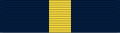
 Defense Superior Service Medal
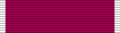 Legion of Merit with two award stars
 National Security Medal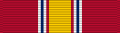
 National Defense Service Medal with two bronze service stars
- Navy Sea Service Deployment Ribbon with service star


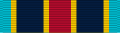 Navy and Marine Corps Overseas Service Ribbon


Notes
[edit]- ^ "Nixon Legacy Forum Transcript: The Opening to China" (PDF). Nixon Foundation. November 14, 2014.
- ^ Department of Public Information, United Nations (March 21, 1997). "United Nations Operation in Somalia II – (UNISOM II)". Retrieved November 15, 2006.
- ^ a b c Megas, Natalia (January 6, 2019). "Did the U.S. Cover Up a Civilian Massacre Before Black Hawk Down?". Retrieved March 17, 2019.
- ^ a b c d e f g h i j Peterson, Scott (2000). Me against my brother : at war in Somalia, Sudan, and Rwanda : a journalist reports from the battlefields of Africa. New York: Routledge. ISBN 0415921988. OCLC 43287853.
- ^ "Board of Trustees and Staff". The Arthur Vining David Foundations. Archived from the original on October 4, 2006. Retrieved November 15, 2006.
- ^ "Nomination of Jonathan T. Howe to be Deputy Assistant to the President for National Security Affairs". George Bush Presidential Library and Museum. November 19, 1991. Archived from the original on August 25, 2004. Retrieved November 15, 2006.
- ^ "Jonathan Howe". Hall of Valor: Medal of Honor, Silver Star, U.S. Military Awards. November 9, 2024. Retrieved April 2, 2025.
- ^ Marbut, Max (January 12, 2012). "Workspace: Jonathan Howe, executive director, Arthur Vining Davis Foundations". Jax Daily Record. Retrieved April 11, 2025.
- ^ Department of State Office of Press Relations.
- ^ a b "Nomination of Jonathan T. Howe To Be Deputy Assistant to the President for National Security Affairs". The American Presidency Project. November 19, 1991. Retrieved April 11, 2025.
- ^ Howe, Lieutenant Commander Jonathan T.; Navy, U.S. (August 1, 1967). "Polaris Duty: Pinnacle Or Predicament?". U.S. Naval Institute. Retrieved May 14, 2025.
- ^ a b "Nixon Legacy Forum Transcript: The Opening to China" (PDF). Nixon Foundation. November 14, 2014. Retrieved May 14, 2025.
- ^ "Kissinger Party Flying to Peking; Is Due W ednesday". The New York Times. October 17, 1971. Retrieved May 14, 2025.
- ^ "Kissinger to Begin Trip To Peking on Saturday". The New York Times. October 15, 1971. Retrieved May 14, 2025.
- ^ "Richard Nixon Presidential Library Document Withdrawal Record" (PDF). Nixon Foundation. February 29, 1972. Retrieved May 14, 2025.
- ^ "Bush Names Security Deputy". The New York Times. November 20, 1991. Retrieved November 15, 2006.
- ^ a b c "'Briefcase admiral' blamed in Somalia crisis: American UN envoy". The Independent. October 8, 1993. Archived from the original on June 14, 2022. Retrieved March 17, 2019.
- ^ Kempe, Frederick (1990). Divorcing the dictator : America's bungled affair with Noriega. New York: G.P. Putnam's Sons. ISBN 0399135170. OCLC 20933992.
- ^ Poole, Walter S. (2005). The Effort to Save Somalia, August 1992-March 1994 (PDF). Washington, DC: Joint History Office, Office of the Chairman of the Joint Chiefs of Staff. ISBN 0-16-075594-8.
- ^ "SOMALIA". www.hrw.org. Retrieved March 17, 2019.
- ^ Howe, Jonathan T. (1971). Multicrises: Seapower and Global Politics in the Missile Age. Cambridge, MA: MIT Press. ISBN 0-262-08043-5. OCLC 159041.
- ^ "Opportunity Lost or Mission Impossible?: My Year in Somalia as Special Representative of the UN Secretary-General, 1993–1994: Howe, USN (Ret.), ADM Jonathan T.: 9798338340370: Amazon.com: Books". Amazon.com. Spend less. Smile more. May 14, 2025. Retrieved May 14, 2025.
- ^ Mathis, Karen Brune (June 22, 2012). "Howe retires as World Affairs Council chairman, Cook is successor". Jax Daily Record. Retrieved April 2, 2025.
- ^ Hester, Britt (May 14, 2024). "Creekside High School Triumphs at the 2024 Admiral Jonathan T. Howe Academic WorldQuest". The World Affairs Council of Jacksonville. Retrieved April 11, 2025.
- ^ Marbut, Max (January 12, 2012). "Workspace: Jonathan Howe, executive director, Arthur Vining Davis Foundations". Jax Daily Record. Retrieved April 2, 2025.
- ^ Patton, Charlie (June 12, 2006). "City will meet the world through his steering". Florida Times-Union. Swarthmore College – Swarthmore in the News, June 29, 2006. p. B-1. Archived from the original on July 19, 2007.
- ^ "Hamilton Howe". Hall of Valor: Medal of Honor, Silver Star, U.S. Military Awards. November 5, 2024. Retrieved April 11, 2025.
- ^ "Sociology Department faculty". University of North Florida. Archived from the original on September 23, 2006. Retrieved November 15, 2006.
- ^ "Remarks on Presenting the National Security Medal to Admiral Jonathan T. Howe and an Exchange With Reporters". The American Presidency Project. Retrieved November 15, 2006.
External links
[edit]
Jonathan Howe
View on GrokipediaEarly Life and Education
Family Background and Upbringing
Jonathan Trumbull Howe was born on August 24, 1935, in San Diego County, California, to Rear Admiral Hamilton Wilcox Howe (1904–1993), a U.S. Navy officer, and Margaret Washington Backus (1903–1977).[8][9] His father's naval service exposed Howe to a tradition of military discipline and patriotism from an early age, with the family likely experiencing relocations associated with postings at naval bases.[10] Howe's upbringing in this environment fostered an affinity for service, culminating in his appointment to the United States Naval Academy in Annapolis, Maryland, where he entered as part of the Class of 1957. The familial emphasis on naval duty, reinforced by his father's rear admiral rank achieved through decades of active duty, shaped Howe's early worldview and career trajectory.[2][10]Naval Academy Training and Graduation
Jonathan Trumbull Howe entered the United States Naval Academy in Annapolis, Maryland, in 1953 as part of the Class of 1957.[11] The academy's four-year regimen for midshipmen emphasized a core curriculum of mathematics, physics, engineering, naval architecture, and international relations, supplemented by mandatory physical conditioning, seamanship exercises, infantry drills, and ethical leadership training through the brigade's company-based structure.[12] Howe's participation in this program built foundational skills in naval operations and officer development, preparing graduates for commissioned service amid the Cold War-era demands on the U.S. Navy. During his tenure, Howe demonstrated strong academic aptitude, contributing to the class's overall record of 848 commissions upon completion.[11] The training culminated in rigorous final examinations, capstone projects, and demonstrations of proficiency in navigation and tactics, reflecting the academy's focus on producing versatile line officers. Howe graduated with distinction on June 7, 1957, earning recognition for superior performance in the demanding environment.[13] [14] This achievement positioned him for immediate sea duty as a newly commissioned officer, marking the transition from midshipman to active naval service.[12]Naval Career
Initial Sea Assignments and Commands
Howe commenced his sea service immediately following graduation from the United States Naval Academy in June 1957, reporting aboard the heavy cruiser USS Bremerton (CA-130) as F Division Officer from September 1957 to May 1958, where he gained initial experience in surface ship operations during routine deployments.[12] In late 1958, he completed Basic Submarine Officer’s Class, qualifying for submarine duty, and briefly served as Supply Officer aboard the submarine USS Tench (SS-417) from January to April 1959, marking his early exposure to undersea warfare platforms.[12] Transitioning to the nuclear submarine force, Howe served as a nuclear engineer aboard USS George Washington (SSBN-598) from 1962 to 1964, contributing to engineering operations on the United States' first operational ballistic missile submarine during its initial strategic deterrent patrols.[10] This assignment honed his technical expertise in nuclear propulsion and submerged deterrence missions amid the Cold War emphasis on sea-based nuclear capabilities. Howe's initial command at sea came in the surface fleet, assuming command of the guided-missile destroyer USS Berkeley (DDG-15) from 1974 to 1975, during which the ship conducted deployments focused on fleet exercises and antisubmarine warfare training in the Pacific.[13] He followed this with command of Destroyer Squadron 31 from 1977 to 1978, overseeing a squadron of destroyers in tactical coordination and readiness operations. These early commands demonstrated his progression from junior officer roles to leadership in surface strike group elements, aligning with the Navy's post-Vietnam emphasis on blue-water proficiency.Key Staff Roles and Promotions
Howe progressed through key staff assignments that honed his expertise in strategic planning and interagency coordination, contributing to his advancement to flag officer ranks. After initial sea tours, he served on the National Security Council staff as a military assistant from 1969 to 1974, supporting presidential decision-making on defense matters.[3] He subsequently acted as Assistant to the Vice President for National Security Affairs from 1975 to 1977, advising on foreign policy and military implications.[3] Within the Navy, he directed the Politico-Military and Planning Division in the Office of the Chief of Naval Operations, shaping naval contributions to national security policy.[3] He also functioned as Chief of Staff to the Commander of the Seventh Fleet in Yokosuka, Japan, managing operational planning and coordination for U.S. forces in the Western Pacific.[3][15] Upon promotion to rear admiral, Howe continued in high-level staff roles, including Senior Military Assistant to the Deputy Secretary of Defense from 1981 to 1982, where he facilitated defense policy execution.[16][3] He then directed the Bureau of Politico-Military Affairs at the Department of State from 1982 to 1984, bridging military operations with diplomatic initiatives.[16][3] Advancing to vice admiral, he served as Deputy Chairman of the NATO Military Committee in Brussels, Belgium, and as Assistant to the Chairman of the Joint Chiefs of Staff from 1987 to 1989, influencing alliance strategy and joint military advice to national leaders.[3] Howe's staff experience culminated in his promotion to full admiral in 1989, coinciding with his designation as NATO Commander of Allied Forces Southern Europe in Naples, Italy, and Commander of U.S. Naval Forces Europe in London, roles he held until 1991.[3] These positions underscored his transition from staff advisory functions to senior command, reflecting consistent recognition of his strategic acumen across naval, joint, and allied contexts.[3]Achievement in Naval Operations and Strategy
Howe's operational achievements in the U.S. Navy began with sea commands that honed tactical proficiency in surface warfare. He commanded the guided-missile destroyer USS Berkeley (DDG-15) from 1974 to 1975, overseeing its deployment and combat systems readiness during routine Pacific operations.) This was followed by leadership of Destroyer Squadron 31 from 1977 to 1978, where he coordinated multiple destroyer units in fleet exercises emphasizing anti-submarine warfare and formation tactics essential to forward naval presence. Later, as commander of Cruiser-Destroyer Group Three starting in 1984, Howe directed a larger battle group integrating cruisers, destroyers, and support vessels, focusing on integrated strike group operations that enhanced power projection capabilities in contested waters.[14] In strategic staff roles, Howe contributed to fleet-level planning and execution. As chief of staff to the Commander, Seventh Fleet in Japan, he supported operational command of the U.S. Navy's largest forward-deployed numbered fleet, managing deployments across the Western Pacific and Indian Ocean amid heightened tensions with the Soviet Union, ensuring seamless coordination of carrier strike groups and amphibious readiness.[14] His tenure emphasized strategic deterrence through multinational exercises and logistics sustainment, bolstering U.S. alliances in Asia. Subsequently, as deputy chairman of the NATO Military Committee in Belgium, Howe advised on alliance-wide operational strategies, integrating naval assets into NATO's forward defense posture against potential Warsaw Pact incursions.[14] At the pinnacle of his career, Howe held dual four-star commands from May 1989: Commander, U.S. Naval Forces Europe (London) and Commander in Chief, Allied Forces Southern Europe (Naples). In these roles, he orchestrated naval strategy for the European theater during the waning Cold War, overseeing maritime operations in the Mediterranean, North Atlantic, and Baltic approaches. This included directing NATO naval exercises, intelligence coordination, and force posture adjustments amid the fall of the Berlin Wall and Gulf War buildup, maintaining deterrence while facilitating alliance interoperability with Mediterranean partners like Italy, Greece, and Turkey.[14] [4] His leadership ensured U.S. naval dominance in Europe's waters, supporting broader strategic objectives of containment and post-Cold War transition. These contributions earned Howe multiple high-level decorations attesting to operational and strategic excellence. He received two Navy Distinguished Service Medals for exceptionally meritorious service in positions of great responsibility, reflecting superior command performance.[2] Six Defense Distinguished Service Medals recognized his sustained impact on national defense through joint and allied operations.[2] A Defense Superior Service Medal further highlighted superior contributions to Department of Defense priorities in naval strategy.[2]Government Service
National Security Council Positions
Jonathan Howe served on the National Security Council staff from July 1969 to December 1973 as military assistant to the Assistant to the President for National Security Affairs, Henry Kissinger.[17] [18] In this capacity, he supported policy coordination on defense and foreign affairs, including memoranda on strategic issues such as arms control and international relations.[18] His work involved drafting and reviewing documents that informed presidential decision-making during the Nixon administration.[19] From 1975 to 1977, Howe acted as Assistant to the Vice President for National Security Affairs and military assistant to Vice President Nelson Rockefeller.[17] [20] This role entailed advising on national security matters interfacing with the NSC, managing foreign policy inputs for the vice president's office, and handling military-related briefings amid ongoing Cold War tensions.[20] Howe returned to senior NSC involvement as Deputy Assistant to the President for National Security Affairs—commonly known as Deputy National Security Advisor—from November 7, 1991, to January 19, 1993, under National Security Advisor Brent Scowcroft during the George H. W. Bush administration.[3] [21] Nominated on November 19, 1991, while serving as Commander in Chief of Allied Forces Southern Europe, he succeeded Robert Gates and focused on integrating military and diplomatic strategies, particularly in the post-Cold War transition and Gulf War aftermath.[3] [21] His tenure emphasized interagency coordination on emerging global threats, drawing on his naval command experience.[21]Diplomatic and Advisory Roles
Howe served as Assistant Secretary of State for Politico-Military Affairs from May 10, 1982, to July 1984.[5][22] In this non-career appointee role, he directed the Bureau of Politico-Military Affairs, which coordinates U.S. foreign policy on security assistance, conventional arms transfers, defense trade controls, and participation in international arms control regimes.[23] His responsibilities included advising the Secretary of State on military-diplomatic interfaces, such as regional conflicts and alliance management, leveraging his naval background to bridge operational military perspectives with State Department objectives.[24] During his tenure under the Reagan administration, Howe contributed to U.S. policy responses in ongoing geopolitical tensions, including analysis of the Iran-Iraq War and support for allied security cooperation.[25] For instance, on December 1, 1983, he authored a memorandum to Secretary of State George P. Shultz assessing Iraq's military capabilities and U.S. strategic interests amid the conflict.[26] He also engaged in congressional testimony on arms control matters, such as the Intermediate-Range Nuclear Forces (INF) negotiations, emphasizing verifiable reductions in nuclear arsenals.[27] These efforts underscored his advisory function in aligning military readiness with diplomatic initiatives to deter aggression and promote stability.[28]Leadership in Somalia
Appointment to UNOSOM II
In early 1993, following the completion of the U.S.-led Unified Task Force (UNITAF) operation under Operation Restore Hope, the United Nations sought to transition humanitarian and stabilization efforts in Somalia to a broader multinational framework. On March 5, 1993, United Nations Secretary-General Boutros Boutros-Ghali appointed retired U.S. Navy Admiral Jonathan T. Howe as his Special Representative for Somalia, with the appointment taking effect on March 9.[29] Howe, a four-star admiral with extensive experience in naval operations and national security policy, was tasked with leading the unified command structure for the impending UNOSOM II mission, which aimed to expand beyond humanitarian relief to include nation-building elements such as disarmament, reconciliation, and governance support.[6] The appointment occurred amid Security Council deliberations that culminated in Resolution 814 on March 26, 1993, establishing UNOSOM II as a Chapter VII enforcement operation with up to 28,000 personnel from multiple nations. Howe's selection by the Clinton administration reflected U.S. interest in maintaining influence over the mission post-UNITAF, leveraging his prior roles in the National Security Council and familiarity with multinational coalitions. Assigned the rank of Under-Secretary-General for an initial six-month term, he was granted broad authority to coordinate military, civilian, and humanitarian components, including oversight of troop-contributing countries and liaison with Somali factions. This positioned Howe to direct UNOSOM II's headquarters in Mogadishu, succeeding the more limited UNOSOM I mandate.[6] Howe's military background, including command of carrier battle groups and strategic planning in the Persian Gulf, was cited as qualifying him for managing the complex security environment, where clan-based militias posed ongoing threats to aid delivery and stability. The U.S. retained a significant role, contributing quick-reaction forces and intelligence support, underscoring the hybrid nature of UNOSOM II under Howe's leadership.[6] His mandate emphasized impartial enforcement while prioritizing Somali reconciliation, though early implementation revealed tensions between UN ambitions and local power dynamics.Operational Implementation and Humanitarian Efforts
Upon his appointment as Special Representative of the Secretary-General for Somalia on March 5, 1993, Admiral Jonathan T. Howe oversaw the transition from the U.S.-led Unified Task Force (UNITAF) to UNOSOM II, which formally assumed command on May 4, 1993, under United Nations Security Council Resolution 814.[30] This shift implemented a broader Chapter VII mandate authorizing up to 28,000 personnel, including over 22,000 troops from 27 nations, to establish a secure environment through disarmament, faction reconciliation, and institutional rebuilding, marking the largest multilateral peacekeeping force deployed at the time.[6] Howe's leadership emphasized phased operational rollout, beginning with securing key ports and airports for logistics, followed by voluntary disarmament incentives for cooperative factions and targeted arrests of those obstructing the process, such as issuing warrants for militia leaders responsible for attacks on UN personnel.[6] Operational implementation under Howe involved coordinating a unified command structure with Turkish Lieutenant-General Çevik Bir as Force Commander, focusing on nationwide deployment to protect humanitarian corridors and conduct armory inspections without prior notification to warlords, aiming to neutralize heavy weapons stockpiles.[31] This included establishing regional task forces for mine clearance, infrastructure repair, and police training to restore basic governance, with early successes in northern Somalia where greater operational confidence allowed for sustained patrols and local militia buy-in.[6] Howe advocated for enhanced U.S. special operations support to enforce compliance, arguing that apprehending key figures like Mohamed Farah Aidid would accelerate disarmament and enable broader mandate fulfillment, though this shifted resources from initial stabilization to enforcement actions.[6] Humanitarian efforts remained central to UNOSOM II's initial phase, building on UNITAF's relief operations by securing aid distribution amid famine conditions that had displaced nearly 1 million refugees and internally displaced persons. Under Howe's direction, the mission coordinated with six primary UN agencies—including the Food and Agriculture Organization and UNICEF—to deliver food, medical supplies, and vaccination programs, prioritizing protection of over 100 relief convoys monthly in southern Somalia where clan violence previously halted deliveries.[32][33] Efforts extended to repatriation support and resettlement, with UNOSOM II forces facilitating the return of thousands of refugees from Ethiopia and Kenya by mid-1993, alongside water infrastructure rehabilitation that increased access for 500,000 civilians in Mogadishu and Baidoa districts. These operations underscored the mandate's dual security-humanitarian focus, though Howe's emphasis on enforcement occasionally strained NGO partnerships wary of militarized aid protection.[33]Military Engagements and Turning Points
Under Howe's leadership as Special Representative for the UN Secretary-General, UNOSOM II transitioned from primarily humanitarian stabilization to targeted military operations against Somali National Alliance (SNA) militias led by General Mohamed Farrah Aidid following the June 5, 1993, ambush on Pakistani peacekeepers, which killed 24 UN troops and prompted UN Security Council Resolution 837 authorizing the apprehension of those responsible.[34] This marked a pivotal shift, as UN forces, including U.S. quick reaction forces, began offensive actions to neutralize Aidid's command structure, including the seizure of Radio Mogadishu on June 6, 1993, to curb SNA propaganda broadcasts, and subsequent raids that disabled or destroyed militia weapons caches and technical vehicles across Mogadishu.[34][30] A critical turning point occurred on July 12, 1993, during Operation Michigan, when U.S. AH-1 Cobra helicopters under UNOSOM II command struck the Abdi House in Mogadishu—a suspected SNA leadership meeting site—resulting in 50 to 70 Somali deaths, predominantly clan elders and civilians, an action Howe had approved as part of escalating efforts to capture Aidid after issuing a $25,000 reward for his arrest on June 17.[31][35] Dubbed "Bloody Monday" by Somalis, the raid intensified SNA retaliation, including rocket attacks on UN compounds and U.S. aircraft, transforming the mission into sustained urban combat and drawing criticism from U.S. military leaders for expanding beyond disarmament into warlord pursuit without adequate ground forces.[6][36] Further engagements in August 1993 involved the deployment of U.S. Task Force Ranger for high-risk raids targeting Aidid's lieutenants, culminating in the October 3–4 Battle of Mogadishu, where SNA militias downed two U.S. Black Hawk helicopters with RPGs, killing 18 American soldiers and wounding 73 amid intense street fighting that required Pakistani and Malaysian UN reinforcements for extraction.[30] This event represented another major turning point, exposing vulnerabilities in UNOSOM II's hybrid command structure—lacking unified U.S. operational control—and accelerating the U.S. decision to withdraw forces by March 1994, as articulated in President Clinton's policy shift away from nation-building.[35][6] Howe's insistence on continuing manhunts despite these setbacks, including rejecting Aidid's reported peace overtures, underscored the operation's causal progression from targeted arrests to broader insurgency, with over 1,000 Somali combatants killed in UNOSOM II clashes by late 1993.[37][34]Strategic Challenges and Policy Criticisms
Under Howe's leadership as Special Representative of the Secretary-General for UNOSOM II, the mission encountered significant strategic challenges stemming from an expansive mandate under UN Security Council Resolution 814, which tasked the operation with disarmament, restoration of governance, and economic reconstruction amid ongoing clan-based violence.[35] The transition from the U.S.-led UNITAF to the multinational UNOSOM II force was hampered by delays, inadequate troop commitments from member states, and a lack of sufficient resources, leaving the 28,000-strong contingent underprepared for sustained nation-building over an intended two-year timeline.[36] Following the June 5, 1993, ambush on UN personnel that killed 24 Pakistani soldiers, UNOSOM II faced a dilemma in enforcing Resolution 837's call for arresting perpetrators and disarming factions like Mohamed Farah Aideed's Somali National Alliance (SNA), as selective targeting risked elevating warlords' status while broad disarmament lacked coercive mechanisms to avoid alienating the populace.[38] Rules of engagement posed further hurdles, balancing humanitarian imperatives with self-defense amid ambushes and militia tactics, compounded by varying national contributions' training deficiencies and reluctance to engage in nighttime operations or urban combat.[35] Overreliance on firepower, including requests for AC-130 gunships denied by U.S. authorities, alienated Somali communities and forfeited operational legitimacy, as precision strikes often resulted in civilian casualties and fueled propaganda against the UN.[31] Mission creep exacerbated these issues, with initial humanitarian focus expanding to police and judicial reforms staffed by only a handful of personnel, underscoring a mismatch between ambitious ends and limited means that strained coalition unity and public support.[38] Policy criticisms centered on Howe's aggressive stance toward Aideed, whom he labeled a "criminal" and "terrorist" for allegedly using civilians as shields, which critics argued personalized the conflict and narrowed UN objectives from societal rebuilding to targeted manhunts.[39] Actions such as raids on SNA arms caches and the radio station were decried as escalatory acts tantamount to war, pursued despite warnings from U.S. officers about risks to low-flying helicopters from rocket-propelled grenades. Detractors, including some military observers, portrayed Howe as naive and bunker-bound, lacking ground-level combat insight, which isolated UN troops in a guerrilla quagmire and reflected cultural arrogance in imposing centralized governance on fragmented clans without adequate adaptation.[40] These approaches, while defended as necessary responses to SNA attacks, were blamed for UNOSOM II's ultimate strategic shortfall, as the failure to secure lasting disarmament or political reconciliation prolonged instability despite short-term humanitarian gains.[38]Post-Retirement Contributions
Executive Roles in Foundations
Following his retirement from the United States Navy in 1992, Jonathan Howe assumed the role of Executive Director of the Arthur Vining Davis Foundations, a private philanthropic organization headquartered in Jacksonville, Florida.[14] Recruited in 1991 by foundation trustee Max Morris, Howe relocated to Jacksonville upon leaving active service and government positions, including his tenure as Special Representative of the UN Secretary-General in Somalia.[14] In this capacity, he directed the foundation's grantmaking activities, which had disbursed over $260 million since its establishment in 1966 to support enduring institutional efforts rather than direct aid programs.[14] The foundations under Howe's leadership prioritized funding in higher education, medical research, religious initiatives, and public broadcasting, including contributions to documentary productions by filmmakers such as Ken Burns.[14] Grants supported prominent institutions like the University of North Florida, Mayo Clinic, California Institute of Technology, and Stanford University, with an evolving emphasis on environmental stewardship and interfaith dialogue.[14] Howe's approach emphasized long-term preservation of cultural and educational entities, aligning with the foundations' mission derived from the bequest of industrialist Arthur Vining Davis.[14] Howe held the executive directorship until approximately 2012, after which Nancy J. Cable succeeded as president, marking the transition to new leadership focused on continued programmatic expansion.[41] [42] During his tenure, the organization maintained a low-profile operational model, avoiding high-visibility advocacy in favor of targeted institutional support.[14]Academic and Public Engagement
Following his service as Executive Director of the Arthur Vining Davis Foundations starting in June 1995, Howe engaged in academic instruction and public discourse on national security, peacekeeping operations, and international relations. In 1993, shortly after retiring from the Navy, he served as a visiting professor at the National War College in Washington, D.C., imparting lessons from his operational experience in strategic planning and multinational coalitions.[17][43] Howe has sustained public engagement through affiliations with organizations promoting global awareness, notably in Jacksonville, Florida, where the annual Admiral Jonathan T. Howe Academic WorldQuest competition—organized by the World Affairs Council of Jacksonville—honors his contributions. Launched as a high school trivia and debate program on international affairs, it culminates in events at the University of North Florida and national competitions in Washington, D.C., with the 20th iteration held on February 28, 2025.[44][45] The program's naming reflects Howe's advocacy for educating youth on foreign policy challenges, drawing from his firsthand involvement in complex interventions like UNOSOM II. He has also contributed to public understanding via interviews and retrospectives on Somalia, including a 1990s discussion with PBS Frontline emphasizing coalition unity of purpose amid operational difficulties, and a 2004 U.S. Naval Institute analysis highlighting the need for shared values in multinational forces to avoid mission failures.[35][36] These efforts underscore Howe's post-service focus on distilling empirical lessons from humanitarian-military operations without endorsing unsubstantiated policy expansions.Personal Life and Legacy
Family and Private Interests
Vice Admiral Jonathan T. Howe was married to Harriet Mangrum Howe from 1959 until her death on January 21, 2022.[46] [47] The couple had six grown children.[13] Harriet Howe, a retired professor of sociology, was the daughter of Lieutenant General Richard C. Mangrum, a Marine Corps aviator.[47] Howe and his family resided in Jacksonville, Florida.[48]Overall Impact and Assessments
Admiral Jonathan Howe's tenure as Special Representative of the UN Secretary-General for Somalia from March 1993 to March 1994 marked a pivotal shift in the UNOSOM II mission from humanitarian relief to ambitious nation-building, including efforts to establish police, judicial systems, and political reconciliation among factions. Under his leadership, progress included the signing of the Addis Ababa accords by 15 Somali factions and initial stabilization in parts of the country, representing contributions from 68 nations. However, the mission encountered severe resource constraints, with only 28% of required staff in place by early May 1993, exacerbating vulnerabilities after the June 5, 1993, ambush on Pakistani peacekeepers by Mohamed Farah Aidid's forces. Howe advocated a dual-track approach of political negotiation and military pressure on Aidid, but inadequate troop deployments and UN bureaucratic delays hindered effective implementation.[35][36] Assessments of Howe's impact highlight strategic miscalculations in escalating confrontation with Aidid, leading to urban warfare for which UNOSOM II was unprepared, culminating in the October 3-4, 1993, Battle of Mogadishu that resulted in 18 U.S. deaths and prompted American withdrawal by March 1994. Analyst Alex de Waal, writing from a humanitarian perspective, criticized the policy under Howe for initiating an unnecessary fight with Aidid's militias post-June ambush, reflecting overreliance on military coercion amid poor understanding of Somali clan dynamics and casualty aversion. Military evaluations, such as those from the U.S. Naval Institute, attribute broader mission failure to mismatched mandates and resources rather than solely leadership, noting Howe's defense that unified international commitment and front-loaded capabilities were lacking; he emphasized that operations like Somalia require resources proportionate to objectives to avoid partial commitments. These shortcomings contributed to a lasting U.S. policy aversion to nation-building interventions, influencing caution in later conflicts like Afghanistan and Iraq.[36][40][35] Howe's naval career, culminating in four-star rank and roles in strategic planning, underscored his expertise in multinational operations, evidenced by decorations including the Defense Distinguished Service Medal. Post-Somalia, his legacy includes advocacy for realistic peacekeeping resourcing, as articulated in reflections on aligning national interests with UN mandates. While some retrospective analyses fault his handling of clan politics and escalation, crediting initial humanitarian successes under UNITAF's transition, the intervention's collapse reinforced lessons on the limits of external imposition in failed states without sustained political will.[35][36]Awards and Honors
Naval and Military Decorations
Admiral Jonathan Howe earned the Surface Warfare Officer insignia through qualification in surface naval operations. He received six Defense Distinguished Service Medals, denoted by oak leaf clusters including a silver oak leaf in lieu of a fifth award, for exceptionally meritorious service in senior joint commands.[2][1][13]
Howe was awarded two Navy Distinguished Service Medals, with a gold star for the second, recognizing superior leadership in naval roles such as Commander in Chief, U.S. Naval Forces Europe.[2][1][13]
The Defense Superior Service Medal was granted for distinguished joint duty performance.[2][1][13]
He earned the Legion of Merit at least twice, with a gold star for the second award, for meritorious conduct in operational and strategic positions; additional sources indicate a possible third award.[2][13]
Among campaign and service awards, Howe received the National Defense Service Medal and the Navy and Marine Corps Sea Service Deployment Ribbon.[1][13]