Hubbry Logo
Nuclear propulsionNuclear propulsionMain
Open search
Nuclear propulsion
Community hub
Nuclear propulsion
logo
8 pages, 0 posts
0 subscribers
Be the first to start a discussion here.
Nuclear propulsion
Nuclear propulsion
from Wikipedia
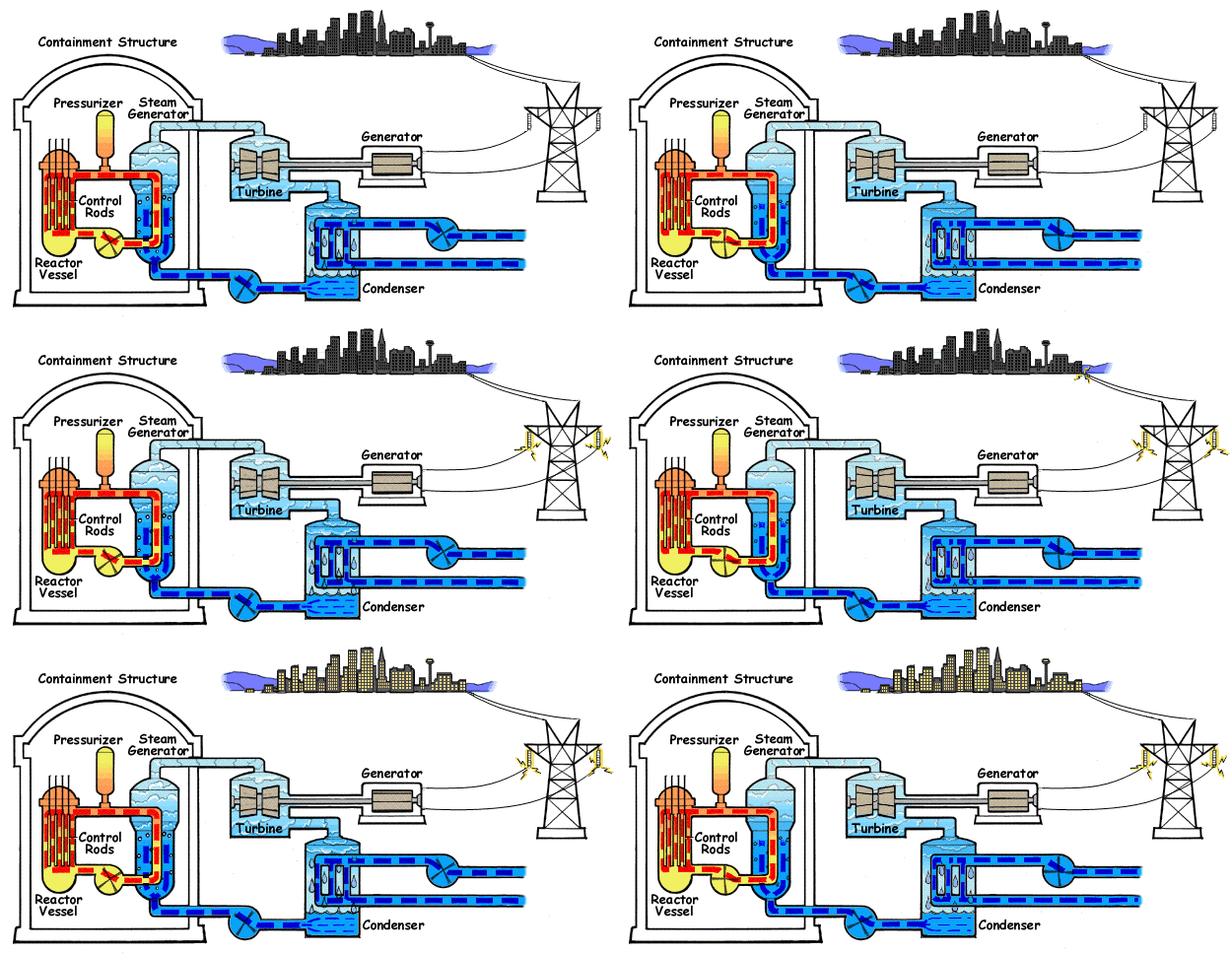
Pressurised water reactors are the most common reactors used in ships and submarines. The pictorial diagram shows the operating principles. Primary coolant is in orange and the secondary coolant (steam and later feedwater) is in blue.

Nuclear propulsion includes a wide variety of propulsion methods that use some form of nuclear reaction as their primary power source.[1] Many aircraft carriers and submarines currently use uranium fueled nuclear reactors that can provide propulsion for long periods without refueling. There are also applications in the space sector with nuclear thermal and nuclear electric engines which could be more efficient than conventional rocket engines.

The idea of using nuclear material for propulsion dates back to the beginning of the 20th century. In 1903 it was hypothesized that radioactive material, radium, might be a suitable fuel for engines to propel cars, planes, and boats.[2] H. G. Wells picked up this idea in his 1914 fiction work The World Set Free.[3]

Surface ships, submarines, and torpedoes

[edit]
USS Nimitz (CVN-68), lead ship of the Nimitz-class of nuclear-powered aircraft carriers
A Delta-class nuclear-powered submarine

Nuclear-powered vessels are mainly military submarines, and aircraft carriers.[1] Russia is the only country that currently has nuclear-powered civilian surface ships, mainly icebreakers. The US Navy currently (as of 2022) has 11 aircraft carriers and 70 submarines in service, that are all powered by nuclear reactors. For more detailed articles see:

Civilian maritime use

[edit]

Military maritime use

[edit]

Torpedo

[edit]

Russia's Channel One Television news broadcast a picture and details of a nuclear-powered torpedo called Status-6 on about 12 November 2015. The torpedo was stated as having a range of up to 10,000 km, a cruising speed of 100 knots, and an operational depth of up to 1000 metres below the surface. The torpedo carried a 100-megaton nuclear warhead.[4]

One of the suggestions emerging in the summer of 1958 from the first meeting of the scientific advisory group that became JASON was for "a nuclear-powered torpedo that could roam the seas almost indefinitely".[5]

Aircraft and missiles

[edit]
A picture of an Aircraft Nuclear Propulsion system, known as HTRE-3 (Heat Transfer Reactor Experiment no. 3). The central EBR-1 based reactor took the place of chemical fuel combustion to heat the air. The reactor rapidly raised the temperature via an air heat exchanger and powered the dual J47 engines in a number of ground tests.[6]

Research into nuclear-powered aircraft was pursued during the Cold War by the United States and the Soviet Union as they would presumably allow a country to keep nuclear bombers in the air for extremely long periods of time, a useful tactic for nuclear deterrence. Neither country created any operational nuclear aircraft.[1] One design problem, never adequately solved, was the need for heavy shielding to protect the crew from radiation sickness. Since the advent of ICBMs in the 1960s the tactical advantage of such aircraft was greatly diminished and respective projects were cancelled.[1] Because the technology was inherently dangerous it was not considered in non-military contexts. Nuclear-powered missiles were also researched and discounted during the same period.[1]

Aircraft

[edit]

Missiles

[edit]

Spacecraft

[edit]

The attraction of nuclear propulsion and power in space is built on the theoretical energy efficiency and endurance that can be delivered with a nuclear system, enabling it to function over long distances.[9] However, the systems needed to protect humans in both the space-lift and operations phases are significant detriments. Many types of nuclear propulsion have been proposed as follows.[10]

Nuclear pulse propulsion

[edit]

Nuclear thermal rocket

[edit]
Bimodal nuclear thermal rockets conduct nuclear fission reactions similar to those employed at nuclear power plants including submarines. The energy is used to heat the liquid hydrogen propellant. The vehicle depicted is the "Copernicus" an upper stage assembly being designed for the Space Launch System (2010).[13]

Bimodal nuclear thermal rockets conduct nuclear fission reactions similar to those employed at nuclear power plants including submarines. The energy is used to heat the liquid hydrogen propellant.[14] Advocates of nuclear-powered spacecraft point out that at the time of launch, there is almost no radiation released from the nuclear reactors. Nuclear-powered rockets are not used to lift off the Earth. Nuclear thermal rockets can provide great performance advantages compared to chemical propulsion systems. Nuclear power sources could also be used to provide the spacecraft with electrical power for operations and scientific instrumentation.[13] Examples:

Ramjet

[edit]

Direct nuclear

[edit]

Nuclear electric

[edit]

Nuclear electric propulsion is a type of spacecraft propulsion system where a nuclear reactor generates thermal energy which is converted to electrical energy, that drives an ion thruster or other electrical spacecraft propulsion technology.[16] Examples of nuclear electric systems:

  • SNAP-10A, launched into orbit by USAF in 1965, was the first use of a nuclear reactor in space and of an ion thruster in orbit.
  • US-A satellite series, launched by into orbit by the USSR, included Kosmos 1818 and Kosmos 1867 in 1987, using the TOPAZ nuclear reactor and a "Plazma-2 SPT" Hall-effect thruster.
  • Project Prometheus, NASA development of nuclear propulsion for long-duration spaceflight, begun in 2003.[17]
  • Transport and Energy Module (TEM). In April 2011, Anatoly Perminov, head of the Russian Federal Space Agency, announced that it is going to develop a nuclear-powered spacecraft for deep space travel.[18][19] Preliminary design was done by 2013, and 9 more years are planned for development (in space assembly). The price is set at 17 billion rubles (600 million dollars).[20] The nuclear propulsion would offer mega-watt class power and would consist of a space nuclear power and a matrix of ion engines[21][22] According to Perminov, the propulsion will be able to support human mission to Mars, with cosmonauts staying on the Red planet for 30 days. This journey to Mars with nuclear propulsion and a steady acceleration would take six weeks, instead of eight months by using chemical propulsion – assuming thrust of 300 times higher than that of chemical propulsion.[23][24]

Ground vehicles

[edit]

Automobiles

[edit]

The idea of making cars that used radioactive material, radium, for fuel dates back to at least 1903. Analysis of the concept in 1937 indicated that the driver of such a vehicle might need a 50-ton lead barrier to shield them from radiation.[25]

In 1941, a Caltech physicist named R. M. Langer espoused the idea of a car powered by uranium-235 in the January edition of Popular Mechanics. He was followed by William Bushnell Stout, designer of the Stout Scarab and former Society of Engineers president, on 7 August 1945 in The New York Times. The problem of shielding the reactor continued to render the idea impractical.[26] In December 1945, a John Wilson of London, announced he had created an atomic car. This created considerable interest. The Minister of Fuel and Power along with a large press contingent turned out to view it. The car did not show and Wilson claimed that it had been sabotaged. A later court case found that he was a fraud and there was no nuclear-powered car.[27][28]

Despite the shielding problem, through the late 1940s and early 1950s debate continued around the possibility of nuclear-powered cars. The development of nuclear-powered submarines and ships, and experiments to develop a nuclear-powered aircraft at that time kept the idea alive.[29] Russian papers in the mid-1950s reported the development of a nuclear-powered car by Professor V P Romadin, but again shielding proved to be a problem.[30] It was claimed that its laboratories had overcome the shielding problem with a new alloy that absorbed the rays.[31]

In 1958, at the height of the 1950s American automobile culture there were at least four theoretical nuclear-powered concept cars proposed, the American Ford Nucleon and Studebaker Packard Astral, as well as the French Simca Fulgur designed by Robert Opron[32][33] and the Arbel Symétric. Apart from these concept models, none were built and no automotive nuclear power plants ever made. Chrysler engineer C R Lewis had discounted the idea in 1957 because of estimates that an 80,000 lb (36,000 kg) engine would be required by a 3,000 lb (1,400 kg) car. His view was that an efficient means of storing energy was required for nuclear power to be practical.[34] Despite this, Chrysler's stylists in 1958 drew up some possible designs.

In 1959 it was reported that Goodyear Tire and Rubber Company had developed a new rubber compound that was light and absorbed radiation, obviating the need for heavy shielding. A reporter at the time considered it might make nuclear-powered cars and aircraft a possibility.[35]

Ford made another potentially nuclear-powered model in 1962 for the Seattle World's Fair, the Ford Seattle-ite XXI.[36][37] This also never went beyond the initial concept.

In 2009, for the hundredth anniversary of General Motors' acquisition of Cadillac, Loren Kulesus created concept art depicting a car powered by thorium.[38]

Other

[edit]

The Chrysler TV-8 was an experimental concept tank designed by Chrysler in the 1950s.[1] The tank was intended to be a nuclear-powered medium tank capable of land and amphibious warfare. The design was never mass-produced.[39]

The X-12 was a nuclear powered locomotive, proposed in a feasibility study done in 1954 at the University of Utah.[40]

The Mars rovers Curiosity and Perseverance are powered by a radioisotope thermoelectric generator (RTG), like the successful Viking 1 and Viking 2 Mars landers in 1976.[41][42]

See also

[edit]

Further reading

[edit]

References

[edit]
Revisions and contributorsEdit on WikipediaRead on Wikipedia
from Grokipedia
Nuclear propulsion is a technology that employs reactors to generate heat or for , enabling extended operations without reliance on frequent refueling or external oxidizers. Primarily implemented in naval applications using pressurized water reactors to produce steam for turbines driving propellers, it powers and aircraft carriers, with the Navy's fleet demonstrating over 5,400 reactor-years of operation as of recent assessments. The inaugural achievement came with the , the world's first nuclear-powered submarine, launched in 1954 and commissioned in 1955, which proved the feasibility of unlimited submerged endurance and fundamentally altered undersea strategic capabilities. In space exploration, nuclear propulsion concepts such as nuclear thermal propulsion (NTP) heat propellants like directly via cores to achieve specific impulses roughly double those of chemical rockets, potentially reducing Mars transit times and enabling heavier payloads. Globally, more than 160 nuclear-powered ships operate with over 200 s, predominantly military, underscoring the technology's reliability and power density advantages over conventional systems. Key defining characteristics include high from fission, which supports stealthy, long-duration missions in and sustained high-speed transits in surface vessels, alongside an empirical record marked by zero accidents or significant releases in U.S. naval operations spanning more than five decades. While early programs for nuclear propulsion were abandoned due to technical and cost hurdles, naval implementations have faced minimal controversies, with levels for personnel consistently below civilian occupational limits and far lower than comparable non-nuclear maritime risks. Ongoing developments in space NTP, supported by and the Department of Energy, aim to revive tested designs from the 1960s program for future human missions beyond .

Fundamentals and Principles

Core Mechanisms

Nuclear propulsion derives energy from controlled reactions within a reactor core, where neutrons split fissile isotopes such as , releasing approximately 200 million electron volts (MeV) of energy per fission event, primarily as of fission fragments and prompt neutrons that rapidly thermalizes into through interactions with fuel and structural materials. This process sustains a , as each fission produces 2 to 3 neutrons capable of inducing further fissions, moderated to thermal energies by materials like or to enhance fission cross-sections while control rods of neutron-absorbing elements such as or regulate reactivity to maintain steady power output. The reactor core, typically comprising thousands of fuel rods clad in zirconium alloy and containing dioxide pellets, operates at temperatures exceeding 300°C, with transferred by a primary to prevent meltdown and extract efficiently. In (PWR) designs, dominant in marine nuclear , the —demineralized water—is maintained at pressures around 2,250 pounds per absolute (psia) to suppress , enabling direct to a secondary without radioactive release. This separation preserves integrity, as the secondary steam drives turbines linked to propellers via reduction gears or powers electric motors in integrated systems. Alternative core mechanisms, such as in nuclear thermal propulsion for , directly heat a like passing through the core channels, achieving exhaust velocities over 8 kilometers per second for higher than chemical rockets, though terrestrial applications prioritize closed-loop cycles for sustained operation. Core criticality is achieved by balancing neutron economy, with excess reactivity compensated over the fuel cycle as fission products like build up and absorb neutrons, necessitating precise refueling intervals typically every 10-20 years in . Safety features, including negative temperature and void coefficients in light-water moderated cores, inherently reduce reactivity under fault conditions, enhancing stability.

Types of Systems

Nuclear propulsion systems utilize fission reactors to generate , which is converted into mechanical or for or vehicle motion, categorized primarily as or electric based on the energy conversion mechanism. systems employ reactor to vaporize or expand a directly driving turbines or nozzles, while electric systems generate from nuclear to power motors, propellers, or plasma/ thrusters. Marine nuclear propulsion relies almost exclusively on thermal systems with pressurized water reactors (PWRs), where high-pressure primary transfers heat to a secondary steam loop powering turbines connected to shafts or electric generators. PWRs dominate due to their proven safety, compactness, and ability to operate at high power densities; as of 2025, they equip over 200 reactors in more than 160 vessels worldwide, including U.S. carriers with A1B reactors delivering 700 MWt and Russian icebreakers with KLT-40S PWRs at 35 MWe. Variations include Soviet-era liquid metal fast reactors (LMFRs) using lead-bismuth eutectic for higher efficiency in submarines like the K-278 Komsomolets, though these posed maintenance challenges from coolant solidification risks. In space applications, nuclear thermal (NTP) systems heat low-molecular-weight propellants like by flowing them through core channels, producing via nozzle expansion with specific impulses around 900 seconds, enabling faster transit times to Mars compared to chemical . U.S. ground tests under the program in the 1960s achieved full-power operations, and selected designs from industry teams in 2021, with demonstrations targeted for the late 2020s. Nuclear electric (NEP) converts heat to —via engines or thermoelectric generators—to energize electrostatic or electromagnetic thrusters, yielding specific impulses exceeding 3,000 seconds but with thrust-to-power ratios suited for gradual acceleration in interplanetary trajectories. advanced NEP concepts post-2020 through expert panels evaluating megawatt-scale reactors for outer solar system missions. Less common types include gas-cooled reactors, tested in the 1950s for potential aircraft propulsion via direct air cycle or closed Brayton systems, as in the U.S. HTRE-3 reactor experiment, but abandoned due to radiation shielding mass and material durability issues under high temperatures. Bimodal nuclear systems integrate NTP with electrical generation for missions requiring both high-thrust maneuvers and sustained power, as conceptualized in studies for versatile deep-space vehicles.

Historical Development

Origins in Nuclear Fission Research (1940s)

The discovery of nuclear fission in 1938 provided the theoretical foundation for controlled energy release, but systematic research in the 1940s under the Manhattan Project shifted focus to practical chain reactions. On December 2, 1942, Enrico Fermi's team achieved the world's first sustained nuclear chain reaction in the Chicago Pile-1 reactor beneath the University of Chicago's Stagg Field, using natural uranium and graphite moderator to produce 0.5 watts initially, scaling to 200 watts. This experiment, part of plutonium production efforts for atomic bombs, validated the controllability of fission, enabling subsequent Hanford and B-Reactor facilities to generate megawatt-scale thermal output by 1944 for fissile material breeding. These developments demonstrated that fission could yield high energy density—far exceeding chemical fuels—without atmospheric dependence, prompting early considerations for propulsion applications requiring compact, long-duration power. Postwar declassification of principles in spurred interest in non-weapon uses, including naval to overcome diesel-electric ' limitations like limited submerged endurance and refueling needs. U.S. Navy leaders, recognizing fission's potential for via heat exchangers, initiated conceptual studies in the mid-1940s; by 1946, the explored designs for capable of indefinite submerged operation at speeds over 20 knots. The Naval Research Laboratory conducted foundational experiments on and neutronics throughout the decade, adapting Manhattan-era data to marine constraints like shielding and size. These efforts culminated in the 1948 establishment of the Nuclear Reactors Program under the Atomic Energy Commission, prioritizing pressurized water reactors for their compatibility with existing . Initial challenges included managing shielding—requiring lead and layers adding thousands of tons—and from high-temperature coolants, but fission research's empirical data on criticality (e.g., k-effective values near 1.0 in early piles) informed compact core designs. By , theoretical models projected nuclear plants delivering 10,000-20,000 shaft horsepower continuously, drawing directly from wartime fission cross-section measurements and fuel enrichment techniques developed for weapons-grade uranium-235. This era's work, though pre-prototype, established causal links between sustained fission and : heat from U-235 or Pu-239 fission directly boiling for turbines, bypassing inefficiencies.

Initial Prototypes and Testing (1950s)

The U.S. Navy's development of nuclear propulsion in the 1950s centered on land-based prototypes to validate (PWR) designs for submarines. The S1W prototype, built at the National Reactor Testing Station in , utilized enriched fuel with water as both coolant and moderator. It achieved initial criticality on March 30, 1953, enabling extensive testing that informed the propulsion system for . This submarine, the first nuclear-powered vessel, was launched on January 21, 1954, and commissioned on September 30, 1954, after prototype validation confirmed reliable operation at full power. Parallel efforts addressed sodium-cooled reactors for enhanced performance. The S2G prototype, a liquid-metal-cooled reactor, began operation in 1955 at the Kesselring site in New York, supporting the USS Seawolf (SSN-575), which was commissioned in 1957. Testing revealed challenges with sodium's reactivity and corrosion, influencing later PWR dominance in naval applications. These prototypes demonstrated sustained generation but required shielding innovations to manage during operations. In , the (ANP) program tested reactors for potential airborne use. The (ARE), conducted at , operated a molten-salt-fueled reactor from November 8 to 12, 1954, achieving temperatures up to 860°C at 2.5 MW thermal power. This demonstrated feasibility of high-temperature, circulating-fuel systems tolerant to vibrations and accelerations, though fuel processing complexities persisted. Ground-based tests advanced direct-air-cycle engines. At the National Reactor Testing Station, the Heat Transfer Reactor Experiments (HTRE) series evaluated nuclear-heated turbojets. HTRE-1 operated from 1955 to 1956, followed by HTRE-3, which integrated a engine variant and ran at 15,000 pounds of thrust equivalent in 1957, confirming but highlighting weight and shielding penalties that undermined practicality.

Peak Cold War Programs (1960s-1980s)

During the 1960s, the United States expanded its nuclear naval propulsion capabilities amid escalating Cold War tensions, commissioning the USS Enterprise (CVN-65) in 1961 as the world's first nuclear-powered aircraft carrier, capable of sustained high-speed operations without refueling limitations of fossil fuels. This was followed by the deployment of George Washington-class submarines, with the lead ship entering service in 1959 but achieving full operational capability in the early 1960s, armed with Polaris ballistic missiles for strategic deterrence. By the mid-1960s, the U.S. Navy had shifted entirely toward nuclear propulsion for new submarines and carriers, producing Skipjack- and Permit-class attack submarines and Lafayette-class fleet ballistic missile submarines, enhancing underwater endurance and stealth for extended patrols. In the 1970s and 1980s, the U.S. introduced the Nimitz-class carriers, with (CVN-68) commissioned in 1975, featuring twin A4W reactors that enabled operations for over 20 years between refuelings and speeds exceeding 30 knots. Concurrently, the Ohio-class submarines began construction in the late 1970s, entering service in 1981 with missiles, representing a leap in payload and quieting technology derived from advanced reactor designs. These programs, managed under the Naval Nuclear Propulsion Program established in 1948, emphasized pressurized water reactors for reliability, with over 200 reactors built by the 1980s, powering a fleet that maintained continuous at-sea deterrence. The aggressively pursued nuclear submarine programs to counter U.S. advances, commissioning Yankee-class (Project 667A) submarines starting in 1967, with 34 units built by 1974, each powered by VM-4 reactors and capable of launching SS-N-6 missiles. Production peaked at approximately seven s annually in the early 1960s, expanding to Delta-class (Project 667B) in the 1970s, with 61 Yankee and Delta vessels completed between 1967 and 1977 for second-strike capabilities. Experimental designs like the Alfa-class (Project 705) in the 1970s featured liquid metal-cooled reactors for high speeds over 40 knots, though plagued by reliability issues due to aggressive engineering trade-offs. In parallel, U.S. space nuclear propulsion efforts peaked with the program, initiated in 1961 as an evolution of , developing nuclear thermal rockets for potential Mars missions. Ground tests of NERVA engines, such as the series, demonstrated specific impulses up to 850 seconds in the late 1960s, far exceeding chemical rockets, but the program was terminated in 1973 due to shifting priorities post-Apollo. Soviet counterparts explored similar nuclear rocket concepts from 1965 to 1986, though details remain limited and impacted by the 1986 Chernobyl incident. Nuclear propulsion for aircraft and missiles saw limited Cold War culmination; Project Pluto's Tory-IIC nuclear ramjet test in 1961 validated sustained operation but was canceled in 1964 over fallout concerns and alternatives. Aircraft programs, rooted in 1950s prototypes like the NB-36H, yielded no operational vehicles by the due to shielding mass and safety challenges. These naval and space initiatives underscored nuclear propulsion's strategic primacy, prioritizing endurance and power density for deterrence over other domains.

Dormancy and Recent Revivals (1990s-2025)

Following the in 1991, nuclear propulsion research entered a period of relative dormancy, characterized by reduced funding and prioritization amid post-Cold War budget constraints and shifting geopolitical priorities. Space-based nuclear thermal propulsion (NTP) efforts, which had peaked with programs like in the , received only sporadic, low-level support after its cancellation in , with U.S. investments limited to basic design improvements rather than full-scale development. marine applications persisted without major innovation lulls; the U.S. Naval Nuclear Propulsion Program continued operating existing reactors on and carriers, accumulating over 177 million miles of safe steaming by 2025, though new classes like the emphasized incremental efficiency gains over radical redesigns. Civilian marine propulsion remained largely stagnant, with no new large-scale nuclear-powered merchant vessels commissioned globally since the 1980s, due to high costs, regulatory hurdles, and preference for conventional fuels. Renewed interest emerged in the , driven by ambitions for crewed Mars missions and deep-space exploration, prompting revivals primarily in space nuclear propulsion. initiated feasibility studies for NTP systems, which offer roughly double the propellant efficiency of chemical rockets, enabling faster transit times—potentially reducing Mars round-trips from 2-3 years to under 1 year. In 2021, launched the Demonstration Rocket for Agile Cislunar Operations () program, partnering with to develop and ground-test an NTP engine by 2027, with $300 million allocated for prototyping high-assay low-enriched fuels to enhance safety and proliferation resistance. Complementary nuclear electric propulsion (NEP) concepts advanced, with demonstrating ion thruster integrations in 2025 for potential Mars cargo missions. By 2025, these efforts gained momentum through industry collaborations; conducted successful high-temperature fuel tests for NTP reactors at NASA's in January, validating ceramic-metallic fuels capable of 2,700-3,000 K operating temperatures. The U.S. Space Force's SPAR Institute initiated projects in 2024 for agile nuclear propulsion in operations, while continued operational space fission reactors, such as those powering telecom satellites since the 1990s. Marine revivals were more limited; commissioned the lead Arktika-class nuclear in 2020 for routes, extending operational reach amid resource extraction demands, but Western civilian programs showed no comparable progress. Overall, these developments reflect a pivot toward space applications, contingent on sustained funding to overcome technical risks like radiation shielding and engine restarts in .

Marine Applications

Military Submarines and Surface Vessels

Nuclear propulsion in military submarines originated with the United States Navy's USS Nautilus (SSN-571), the world's first nuclear-powered submarine, which was commissioned on September 30, 1954, after its keel was laid in 1952 and launched on January 21, 1954. This vessel demonstrated the feasibility of sustained underwater operations without the need for frequent surfacing to recharge batteries or refuel, achieving speeds over 20 knots submerged and completing the first undersea transit of the in 1958. The technology enabled attack submarines (SSNs) for anti-surface, anti-submarine, and intelligence roles, as well as ballistic missile submarines (SSBNs) for strategic deterrence, with classes evolving from Nautilus to Skipjack (1959), Permit (1960s), (1970s-1990s), Seawolf (1990s), and (2000s onward). As of 2025, the U.S. operates 48 SSNs and 14 SSBNs of the Ohio class, all powered by pressurized water reactors using highly fuel that supports 20-33 years of operation without refueling. The primary advantages of nuclear propulsion for submarines include virtually unlimited endurance limited only by crew provisions, high sustained speeds exceeding 30 knots submerged, and enhanced stealth due to the absence of diesel engine noise and the need to snorkel, allowing operations for up to six months underwater. These capabilities provide superior tactical flexibility compared to diesel-electric submarines, which must surface periodically for air and battery charging, making nuclear SSNs dominant in blue-water naval warfare. Other navies have adopted similar systems: the United Kingdom fields Astute-class SSNs and Vanguard-class SSBNs using steam turbine propulsion; France operates Rubis and Suffren-class SSNs with pump-jet propulsors driven by electric motors from turbo-generators; Russia maintains approximately 30 nuclear submarines including Borei-class SSBNs and Yasen-class SSNs, often with liquid metal or pressurized water reactors; and China has around 12 nuclear submarines, including Type 093 SSNs and Type 094 SSBNs transitioning to electric drive systems. For surface vessels, nuclear propulsion is employed almost exclusively in U.S. Navy aircraft carriers, beginning with USS Enterprise (CVN-65), commissioned in 1961 as the first nuclear-powered carrier with eight reactors. The Nimitz class, entering service in 1975, features two A4W reactors per ship, enabling 20-25 years of service before refueling and speeds over 30 knots, with 10 vessels operational as of 2025. The newer Gerald R. Ford class, starting with CVN-78 commissioned in 2017, uses two A1B reactors for increased supporting electromagnetic catapults and directed energy weapons, with the class designed for 50-year lifespans. Overall, the U.S. maintains 11 nuclear carriers, providing global without reliance on logistics. No other navy currently operates nuclear-powered surface combatants, though previously fielded nuclear cruisers like the Kirov class, most of which have been decommissioned.

Civilian Shipping and Icebreakers

The , launched on July 21, 1959, by the as part of President Eisenhower's initiative, represented the world's first nuclear-powered designed for civilian cargo and passenger transport. Equipped with a producing 74 megawatts thermal power, it achieved speeds up to 24 knots and demonstrated 280,000 nautical miles of operation without refueling during its service from 1962 to 1972. Despite technical success, economic unviability—stemming from high construction costs exceeding $50 million (equivalent to over $500 million today), limited cargo capacity of 9,000 tons due to shielding requirements, and port access restrictions from nuclear regulations—led to its decommissioning. No subsequent U.S. commercial nuclear ships were built, as prices remained low and regulatory hurdles persisted. Other nations pursued similar demonstrations with limited success. Germany's , operational from 1968 to 1979, served as an ore carrier and with a 10-megawatt but faced frequent technical issues and was converted to diesel after public opposition to nuclear risks. Japan's Mutsu, launched in 1970, encountered radiation leaks and was repurposed solely for , never entering commercial service. These efforts highlighted inherent challenges for nuclear propulsion in open-ocean merchant shipping: reactors require heavy shielding (adding 20-30% to vessel displacement), crew training is specialized, and waste handling complicates international port calls under conventions like the International Maritime Organization's nuclear guidelines. As of 2025, no operational nuclear-powered commercial cargo or passenger ships exist globally, though feasibility studies by firms like indicate potential viability for large container vessels if lifecycle costs—including $200-500 million initial reactor investments—are offset by zero-emission fuel savings amid decarbonization mandates. Such proposals emphasize small modular reactors (SMRs) like or high-temperature gas-cooled designs for enhanced safety and refueling intervals exceeding 10 years, but regulatory harmonization and public acceptance remain barriers. Nuclear propulsion has found niche success in civilian icebreakers, primarily operated by to support commercial shipping along the . The Soviet Union's Lenin, commissioned in 1959 with three OK-150 reactors totaling 44 megawatts, became the first nuclear-powered surface vessel and broke ice up to 2.5 meters thick, enabling year-round navigation and resource extraction. Decommissioned in 1989 after refuelings and a 1974 reactor leak, it paved the way for the Arktika class (Project 10520), including the 1975 flagship Arktika, which held the record for reaching the in 1977 with 75,000 shaft horsepower from two OK-900A reactors. These vessels, managed by state-owned Rosatomflot since 2008, escort cargo ships, support oil and gas platforms, and facilitate tourism, operating in ice thicknesses up to 2.8 meters at speeds of 2-3 knots. Russia maintains the world's sole fleet of nuclear icebreakers as of 2025, with seven operational units including upgraded Arktika-class ships like Yamal (1992) and 50 Let Pobedy (2007), each displacing 25,000 tons and powered by twin 171-megawatt thermal reactors for 20-year fuel cycles. The newer Project 22220 universal icebreakers, such as Arktika (2016), Sibir (2017), and Ural (2019), feature RITM-200 reactors delivering 175 megawatts thermal, dual-draft hulls for river and sea operations, and capacities to break 3-meter ice at 2 knots, with displacements up to 33,500 tons. Four more— Yakutia, Chukotka, Leningrad, and Stalingrad—are under construction or nearing completion at Baltic Shipyard, expanding the fleet to 11 by 2030 to handle projected Northern Sea Route traffic growth to 200 million tons annually. Advantages include unlimited range without refueling logistics in remote Arctic conditions, reducing emissions compared to diesel-electric alternatives that require frequent resupply, though high upfront costs ($1-2 billion per vessel) and specialized maintenance limit adoption elsewhere. No other nation operates nuclear icebreakers commercially, with Finland and Canada relying on diesel for their fleets due to lower ice demands and regulatory preferences for non-nuclear propulsion.

Torpedoes and Autonomous Underwater Vehicles

Nuclear propulsion for torpedoes has historically been limited by the challenges of miniaturizing reactors to fit within the constrained dimensions of , which typically measure and 5-7 meters in length, while managing heat dissipation, criticality risks, and operational reliability in a single-use device. Early Soviet efforts in the focused primarily on nuclear warheads for torpedoes like the T-5 and T-15, rather than propulsion, with the T-15 featuring a 1.5-meter and thermonuclear yield but relying on chemical propellants for transit. No operational nuclear-propelled torpedoes emerged from these programs due to engineering hurdles, including the need for compact, high-power-density reactors capable of sustained underwater operation without manned support. The most prominent example of nuclear propulsion in a torpedo-like system is Russia's (formerly Status-6), an autonomous (UUV) designed for intercontinental ranges exceeding 10,000 km at speeds up to 100 knots, powered by a compact liquid-metal-cooled . Development traces to Soviet concepts in the but accelerated post-2015 under President Putin's strategic announcements, with the system intended for deployment from submarines like the to deliver a 2-megaton capable of inducing localized radioactive tsunamis via detonation. As of 2023, testing continues, with full operational capability projected no earlier than 2027, though Western analysts question the maturity of its propulsion amid reported accidents and reliance on unproven high-yield cobalt-salted designs for area denial. Poseidon's nuclear propulsion enables indefinite loiter times and evasion of defenses, distinguishing it from battery- or rocket-powered es, but its large size (over 2 meters diameter, 20+ meters length) classifies it more as a strategic UUV than a tactical . In autonomous underwater vehicles (AUVs), nuclear propulsion remains experimental and deterrence-oriented, with Poseidon's reactor providing multi-year endurance for stealthy, deep-ocean missions unattainable by chemical fuels or advanced batteries. Chinese researchers proposed in 2022 a disposable micro-reactor for swarming heavyweight torpedoes/AUVs, targeting 30-knot sustained speeds for 200+ hours and ranges over 10,000 km, using heat-pipe technology to miniaturize a 10-50 kW thermal output system jettisoned post-mission to avoid recovery costs and risks. This , detailed by Beijing-based teams, aims to counter carrier groups but faces feasibility doubts, as compact reactors historically struggle with economy and in saline environments, and no prototypes have been verified. North Korea's 2023 Haeil UUV claims nuclear capabilities, but evidence points to conventional with a radiological rather than reactor-driven movement. Overall, nuclear AUV prioritizes strategic asymmetry over tactical utility, constrained by proliferation risks and international norms against nuclear deployment.

Aerospace Applications

Nuclear-Powered Aircraft Programs

The United States launched the Nuclear Energy for the Propulsion of Aircraft (NEPA) project in May 1946 under the U.S. Army Air Forces, with Fairchild Engine and Airplane Corporation tasked to assess nuclear propulsion feasibility for aircraft. This evolved into the Aircraft Nuclear Propulsion (ANP) program, managed by the Atomic Energy Commission and the Air Force, focusing on compact reactors to enable unlimited endurance for strategic bombers amid Cold War demands. Ground-based prototypes, including General Electric's Heat Transfer Reactor Experiments (HTRE), tested direct-air-cycle concepts where reactor-heated air drove turbojets; HTRE-3 operated from 1958 to 1960 at the National Reactor Testing Station in Idaho, achieving up to 5 MW thermal power but suffering a control rod withdrawal error causing a nuclear excursion and partial fuel meltdown on November 18, 1958. Aerial tests involved the , a modified B-36 that carried an unshielded 1 MW ARE aloft for 47 flights between June 1955 and 1957 to evaluate shielding effectiveness against , though the reactor never powered the aircraft's engines. The program advanced designs like the , intended as a fully nuclear-powered , but encountered insurmountable engineering hurdles: reactors required massive shielding—estimated at 50 tons of lead and for crew protection—resulting in aircraft weights exceeding practical limits and compromising performance. Additional challenges included efficient to air without corrosion or melting components, crash risks dispersing radioactive material over populated areas, and high development costs surpassing $1 billion by the late 1950s. The Soviet Union pursued parallel efforts starting in 1955, adapting the Bear bomber into the Tu-95LAL flying laboratory, which completed about 40 flights with an onboard reactor to test shielding and operations, but the reactor remained disconnected from propulsion systems. The Tu-119 variant explored nuclear turbojet integration, while Myasishchev's bureau proposed similar designs, yet programs stalled due to comparable issues of excessive shielding mass, inadequate reactor compactness, and radiation hazards during potential failures. No Soviet nuclear aircraft achieved powered flight. Both programs were terminated in the early 1960s: the U.S. effort ended in 1961 under President Kennedy, who redirected funds amid advancing intercontinental ballistic missiles diminishing the strategic need for ultra-long-range bombers, while Soviet initiatives faded by the mid-1960s without viable prototypes. Technical assessments concluded that nuclear propulsion offered marginal range benefits over at prohibitive shielding and safety costs, rendering it impractical for atmospheric flight.

Nuclear-Powered Missiles and Ramjets

The United States pursued nuclear ramjet propulsion for cruise missiles through Project Pluto, launched in January 1957 by the Lawrence Livermore Laboratory to develop engines that heated intake air via an unshielded nuclear reactor, enabling theoretically unlimited endurance without fuel mass constraints. This system powered the proposed Supersonic Low Altitude Missile (SLAM), a Mach 3 vehicle roughly the size of a locomotive, designed to skim terrain at low altitudes for evasion, loiter over targets, and deliver up to 24 thermonuclear warheads or act as a radiological "doomsday" device by trailing fallout from its reactor exhaust. Ground tests of Tory reactor prototypes at the Nevada Test Site's Jackass Flats included the Tory-IIA's static run on May 14, 1961, marking the first operational nuclear ramjet with 513 megawatts thermal output for 112 seconds, though challenges persisted in achieving sustained flight without excessive vibration or material erosion. The program highlighted propulsion advantages like high specific impulse from continuous nuclear heating but faced insurmountable drawbacks, including unavoidable radiation plumes hazardous to friendly forces and populations, imprecise terminal guidance in an era pre-GPS, and rapid obsolescence against intercontinental ballistic missiles (ICBMs), leading to cancellation in 1964 after $150 million expenditure (equivalent to about $1.5 billion in 2023 dollars). Russia's (: SSC-X-9 Skyfall), unveiled by President in March 2018, aims to revive nuclear ramjet concepts with a ground-launched, low-altitude propelled by a compact for claimed intercontinental range exceeding 20,000 km, hypersonic speeds up to Mach 6 in bursts, and stealthy terrain-following flight to bypass defenses. Development, rooted in post-Soviet research at facilities like the range, encountered severe setbacks, including a September 2019 liquid-fueled explosion during a liquid propellant test that killed five nuclear scientists and released , underscoring risks in miniaturizing reactors for aerodynamic stability and shielding against re-entry stresses. Despite official assertions of "unlimited" loiter capability and invulnerability to interception, independent analyses question feasibility due to persistent issues with reactor longevity, thermal management in inlets, and fallout generation, potentially rendering it more a radiological than precise weapon. On October 26, 2025, Putin announced completion of "decisive" ground and flight tests, positioning it for serial production, though Western assessments remain skeptical given historical delays and the absence of verified operational deployment amid Russia's broader hypersonic and ICBM priorities. No other verified nuclear-powered missile or programs have advanced to deployment, with Soviet-era efforts like the Burya focusing on conventional s rather than nuclear thermal cycles, and contemporary pursuits in nations such as limited to conceptual hypersonic studies without confirmed integration. These systems' core appeal—eliminating propellant mass for global reach—clashes with practical liabilities: s demand heavy fuel and cooling, emit detectable compromising stealth, and risk catastrophic dispersal in failures, as evidenced by Burevestnik's accidents and Pluto's exhaust exceeding 100,000 rads per hour at 500 feet. implications persist, with such weapons evading treaties like due to their hybrid propulsion, yet their niche utility diminishes against satellite-guided precision strikes and layered defenses.

Space Applications

Nuclear Thermal Propulsion

Nuclear thermal propulsion (NTP) employs a to heat a cryogenic , usually , which expands rapidly and is expelled through a to generate . The core, fueled by enriched , transfers fission-generated heat directly to the without combustion, enabling exhaust velocities far exceeding those of chemical rockets. Typical for NTP systems ranges from 850 to 900 seconds, approximately double the 450 seconds of advanced chemical propulsion, allowing for greater efficiency in usage and shorter interplanetary transit times. Development of NTP in the United States began in 1955 under the Atomic Energy Commission, evolving into the Rover program, which tested prototypes like the Kiwi series starting in 1959 at the . The subsequent program, a collaboration between and the AEC, integrated these into flight-like engines, conducting 28 successful full-power ground tests between 1964 and 1969, including the NRX series that achieved thrust levels up to 334 kilonewtons and chamber temperatures over 2,750 . These tests validated solid-core designs with moderators and hydrogen-cooled elements, demonstrating operational reliability but highlighting challenges such as under prolonged high-temperature exposure. Funding for ended in 1973 amid post-Apollo budget constraints, despite plans for integration into upper stages for potential crewed Mars missions. NTP offers high thrust-to-weight ratios comparable to chemical engines while providing superior efficiency, making it suitable for rapid transits to Mars—potentially reducing one-way trip times to 3-4 months versus 6-9 months with chemical propulsion, thereby minimizing crew and microgravity effects. The technology's propellant simplicity—requiring no oxidizer—reduces system complexity and mass, though shielding adds weight, estimated at 10-20% of total propulsion system dry mass in mature designs.
ParameterChemical RocketsNuclear Thermal Propulsion
Specific Impulse (s)~450~900
Thrust MechanismFission-heated expansion
Propellant + Oxidizer only
Exhaust Temperature (K)~3,500~2,500-3,000
In the , interest revived with NASA's space nuclear propulsion efforts and a 2023 partnership with on the Demonstration Rocket for Agile Cislunar Operations (), aiming for an orbital NTP demonstration by 2027 using a low-enriched core. The project sought to address fuel performance and in-space operability but was canceled in July 2025 after analysis showed diminishing returns relative to advancing chemical propulsion and launch cost reductions, shifting focus to non-nuclear alternatives for near-term mobility. Despite cancellation, ground-based fuel qualification continues under NASA's Nuclear Thermal Propulsion Element, targeting high-assay low-enriched fuels to mitigate proliferation risks while sustaining performance. Challenges persist in achieving long-duration burns without excessive fuel swelling or damage, necessitating advanced materials like ceramic-metallic () composites or tungsten-carbide coatings. No NTP system has undergone testing, underscoring the need for verified in-orbit data to confirm ground test extrapolations.

Nuclear Electric Propulsion

Nuclear electric propulsion (NEP) employs a reactor to generate , which powers electric thrusters such as or Hall-effect systems to accelerate propellant, typically or other inert gases, for . Unlike nuclear propulsion, NEP does not directly heat the propellant; instead, the reactor's output drives a power conversion system—often a dynamic cycle like Brayton or —to produce high-voltage for the thrusters, enabling specific impulses exceeding 5,000 seconds. This approach decouples power generation from thrust production, allowing operation independent of solar proximity. Development of NEP concepts dates to the late under U.S. programs like the (SNAP), with achieving the first orbital operation in 1965 alongside an experimental . Subsequent efforts included the SP-100 reactor program in the for multi-megawatt systems and 's in the early 2000s, which advanced ion propulsion integration but was curtailed due to funding shifts. In 2020, initiated a technology maturation plan for NEP, focusing on reactor designs, power conversion, and thruster scalability for deep-space missions; by 2025, studies emphasized applications for Mars transits and outer-planet exploration, such as reduced trip times to via enhanced maneuverability. NEP offers advantages in efficiency and mission flexibility, achieving delta-V values suitable for prepositioning or robotic to crewed Mars missions, with potential transit times shortened by factors of 1.5–2 compared to chemical for opposition-class trajectories. Systems scale from kilowatts for probes to megawatts for , providing continuous without solar degradation beyond Mars orbit. However, low thrust density—typically millinewtons per kilowatt—necessitates long acceleration phases, limiting use for rapid crewed escapes. Key challenges include achieving compact, lightweight reactors with power densities above 1 kWe/kg for operation, managing radiative rejection in dynamic cycles without excessive mass, and mitigating /gamma effects on and via shielding that adds significant dry mass. Technology readiness remains low for integrated systems, with ground-tested components like high-temperature Brayton turbines showing promise but unproven in orbit; radiation-hardened thrusters and propellant management for years-long burns also require validation. Ongoing efforts target these via subscale testing, aiming for flight demonstrations by the 2030s to enable sustained outer solar system operations.

Nuclear Pulse and Direct Methods

Nuclear pulse propulsion utilizes controlled nuclear detonations to generate thrust for spacecraft, with each explosion imparting momentum to a pusher plate via directed plasma. The concept originated with physicist Stanislaw Ulam's 1940s idea of external nuclear blasts for propulsion, later formalized in , a U.S. effort from 1958 to 1965 led by engineers Ted Taylor and . tested non-nuclear analogs and designed fission-based systems using shaped charges of or hydrogen bombs ejected rearward, detonating 30-100 meters away to produce plasma channeled by tungsten ablative plates. Ground tests in 1959-1962 at Point Loma, , validated pusher plate dynamics with chemical explosives simulating yields up to 0.54 kilotons. Performance metrics for Orion variants included specific impulses of 2,000-6,000 seconds for atomic bombs and up to 100,000 seconds for potential fusion pulses, enabling exhaust velocities of 20-100 km/s—orders of magnitude beyond chemical rockets' 4.5 km/s. Proposed designs ranged from 4,000-ton low-orbit vehicles to 8-million-ton interstellar ships, capable of Mars round-trips in 3-4 months or Alpha Centauri reaches in a century at 3-10% lightspeed. The program ended in 1965 due to the 1963 Partial Test Ban Treaty prohibiting atmospheric and space nuclear tests, though feasibility studies persisted into the 1970s. Recent analyses, such as Project New Orion, explore laser-ignited pulses for yields of 1-10 tons per shot, potentially yielding 10-20 km/s velocities with reduced fallout. Direct nuclear propulsion methods employ nuclear reactions to impart to without intermediary heat exchangers or elements, allowing higher temperatures and efficiencies limited only by chemistry. In fission fragment direct drives, heavy ions from fission (with energies of 80-100 MeV per fragment) escape a porous reactor and directly ionize or collide with expelled gas, achieving specific impulses exceeding 10,000 seconds. Gas-core reactor variants, studied in the 1960s Rover/NERVA programs' extensions, maintain fissioning plasma separated from by transparent walls or vortex flow, enabling direct radiative or convective ing up to 50,000 K and exhaust velocities of 20-50 km/s. Nuclear saltwater rockets, theorized by in 1997, eject fissile salt-water mixtures for continuous micro-explosions, producing Isp of 1,000-10,000 seconds but risking atmospheric contamination if not space-launched. These direct approaches face containment challenges, as fission products erode materials at extreme fluxes, though magnetic confinement in plasma cores mitigates this. Conceptual designs project thrust-to-weight ratios of 0.1-1.0, suitable for high-acceleration maneuvers, but development stalled post-Apollo due to shifts to electric systems. Experimental validation remains limited to subcritical tests, with no flight hardware built. Fusion analogs, like the 2019 Fusion Driven Rocket, extend direct conversion by channeling alpha particles into for 10^5-10^6 s Isp, though unproven at scale.

In-Space Testing and Reactors

The conducted the first in-space test of a with the mission, launched on April 3, 1965, aboard an Atlas-Agena rocket into a 700 km . The , a compact fast-spectrum design using enriched and moderator, generated 30.5 kW power and 500 W electrical output via thermoelectric conversion. It operated successfully for 43 days before automatic shutdown due to a non-nuclear electronics failure, with the core remaining intact and no detectable increase beyond nominal levels. This test validated key technologies like autonomous criticality and orbital heat rejection but highlighted vulnerabilities in supporting systems, limiting operational duration to under 10% of the one-year goal. The pursued more extensive in-space reactor deployments through the Radar Ocean Reconnaissance Satellite (RORSAT) program, utilizing fast-spectrum reactors from 1970 to 1988 across approximately 33 missions. Each produced about 100 kW thermal and 3-5 kW electrical power via thermionic converters, powering for naval , with reactors boosted to disposal orbits post-mission using solid rockets. Complementary efforts included the TOPAZ-I thermionic reactor on Kosmos 1818 in 1980, delivering 5 kW electrical from 150 kW thermal using moderated uranium cores. These systems demonstrated sustained high-power operation in but faced reliability issues, including coolant leaks and failures, with no direct propulsion testing. In-space reactor operations incurred risks, exemplified by the Kosmos 954 incident, where a BES-5-equipped RORSAT launched in September 1977 failed to execute its end-of-life boost, reentering uncontrolled on January 24, 1978, over northern Canada. The reactor, containing 30-50 kg of highly enriched uranium, fragmented upon reentry, dispersing radioactive debris over 124,000 km², though the core itself did not fully vaporize due to partial fuel retention mechanisms. Canadian and U.S. recovery teams located and secured fragments, confirming cesium-144 and other isotopes but no widespread health impacts; the Soviet Union compensated Canada $3 million for cleanup costs. Similar partial failures occurred in other RORSATs, contributing to the program's termination amid international pressure and the Outer Space Treaty's emphasis on avoiding nuclear contamination. No nuclear propulsion systems—such as or electric —have undergone in-space testing to date, with efforts confined to ground-based simulations due to technical, safety, and regulatory hurdles. NASA's project, featuring 1-10 kW fission reactors for surface power, completed the KRUSTY ground demonstration in 2018 but awaits orbital validation, potentially via lunar missions, without propulsion integration. The DARPA-NASA program aimed for the first in-space nuclear thermal propulsion demonstration using high-assay low-enriched uranium by 2027, targeting cislunar operations, but was canceled in June 2025 amid technical and budgetary challenges. These historical and recent activities underscore reactors' feasibility for power but reveal persistent gaps in propulsion-specific orbital testing, driven by fission product containment needs and propulsion exhaust dynamics untestable on .

Terrestrial Applications

Ground Vehicles and Experimental Prototypes

Efforts to develop nuclear propulsion for ground vehicles emerged in the 1950s, fueled by post-World War II optimism about atomic energy's potential to provide indefinite operational endurance without refueling. The United States led initial explorations, primarily through military programs seeking advantages in logistics and sustained mobility for tanks and transport systems. However, technical barriers—chiefly the need for heavy radiation shielding to protect crews and environments, which added hundreds of tons to vehicle weight—prevented progression beyond conceptual designs and non-propulsive power prototypes. No operational nuclear-propelled ground vehicles were ever fielded, as shielding requirements rendered systems impractical for maneuverability, combat survivability, and accident mitigation. The , proposed in 1955 under the U.S. Army's Advanced Tank Systems (ASTRON) program, exemplified ambitious concepts. This design weighed approximately 25 tons, featured a pod-like turret housing a 90 mm , and incorporated amphibious capabilities via water-jet . It envisioned a compact driving a gas turbine generator for electric motors, enabling theoretical ranges limited only by mechanical wear rather than fuel. A full-scale wooden mock-up was constructed by 1957, demonstrating the innovative low-profile, shielded crew compartment elevated above the tracks for obstacle clearance. Despite these features, the project advanced no further; integration of an actual reactor proved infeasible due to shielding mass exceeding vehicle viability and risks of reactor damage in battlefield conditions. The Army abandoned the effort by the late 1950s, prioritizing conventional diesel-electric systems. Proposals for nuclear-powered locomotives similarly remained theoretical, with no experimental prototypes constructed. In the United States, concepts like the X-12 Atomic , envisioned in the as a 160-foot engine fueled by for year-long operation, highlighted potential for heavy-haul efficiency but ignored practical issues such as track warping from reactor exhaust heat and evacuation challenges in populated areas. Soviet and British designs echoed these ideas, proposing reactor-heated steam or systems for , yet all stalled at feasibility studies due to shielding costs and proliferation risks. A specialized lead-shielded locomotive operated in the -1960s to transport experimental reactors for programs, but it relied on conventional diesel . The closest approximations to mobile nuclear systems were the U.S. Army Nuclear Power Program's experimental reactors, developed from for remote power generation rather than direct vehicle propulsion. The ML-1 (Mobile Low-Power Reactor No. 1), tested from 1961 to 1965 at the National Reactor Testing Station in , produced up to 300-1400 kW thermal (about 0.3 MWe electrical) using a nitrogen-cooled, water-moderated design with a . Mounted on trailers for or , it aimed for rapid deployment at forward bases, with setup in days. Despite achieving criticality in 1961, the prototype suffered corrosion, control instabilities, and failure to reach full power, leading to program cancellation in 1965 after $17 million invested. These units underscored propulsion challenges: even decoupled from mobility demands, compactness for ground transport compromised reliability and safety, with radiation containment demanding excessive mass. Subsequent analyses confirmed causal impediments to nuclear ground propulsion, including meltdown vulnerabilities in collisions, crew exposure during maintenance, and economic infeasibility compared to fossil fuels. By the , interest waned amid environmental concerns and non-proliferation treaties, shifting focus to stationary or marine applications where containment was feasible. Modern discussions occasionally revive micro-reactors for hybrid military vehicles, but historical precedents affirm persistent barriers without breakthroughs in shielding or reactor miniaturization.

Stationary and Hybrid Uses

![General Electric HTRE-3 nuclear test reactor][float-right] Stationary nuclear propulsion systems primarily encompass land-based reactors designed for testing and validating propulsion technologies destined for mobile platforms, such as , ships, and rockets, without the hazards of in-flight or at-sea operations. These facilities enable controlled experimentation, component qualification, and operator training under simulated propulsion conditions. In the United States, the program of the 1950s utilized stationary test reactors to develop nuclear-heated turbojet engines. The Heat Transfer Reactor Experiment No. 3 (HTRE-3), constructed by and tested at the National Reactor Testing Station in starting in , integrated a 2-megawatt thermal with modified J47 turbojet engines to demonstrate from fission to compressed air for generation. This setup achieved reactor criticality and sustained operation at up to 1 megawatt, providing data on materials endurance under propulsion-relevant temperatures exceeding 1,000°C, though the program encountered challenges including a partial meltdown incident in 1961 due to control rod failure. For naval applications, the U.S. Naval Nuclear Propulsion Program operates land-based prototypes that replicate pressurized water reactors from submarines and carriers, such as the S9G prototype for Virginia-class submarines. Located at facilities like the in , these stationary plants, operational since the , generate to drive turbines and electric generators, mirroring shipboard cycles while allowing for iterations and on non-mobile hardware. As of 2023, these prototypes support over 200 reactor-years of cumulative operation, ensuring system safety and efficiency before deployment. Ground testing for propulsion, as in the program from 1961 to 1973, involved stationary reactors like the Kiwi series at the , where propellant was heated to 2,500 K and exhausted through nozzles to measure exceeding 800 seconds—twice that of chemical rockets. These tests, totaling over 30 reactor runs, validated graphite-core durability but were discontinued due to program cancellation. Contemporary efforts, including NASA's Demonstration Rocket for Agile Cislunar Operations () project, plan similar land-based hot-fire tests at starting in the late 2020s to de-risk space nuclear propulsion. Hybrid nuclear propulsion systems on Earth combine nuclear energy with auxiliary power sources to optimize performance, reliability, or responsiveness, though practical terrestrial implementations remain limited compared to pure nuclear designs. French Barracuda-class (Suffren-class) nuclear attack submarines, commissioned from 2020, employ hybrid electric propulsion where a 150-megawatt K15 generates electricity for permanent magnet synchronous motors driving propulsors, allowing silent low-speed operation (up to 20 knots) via battery-buffered electric drive alongside higher-speed turbine modes. This configuration enhances acoustic stealth and maneuverability over traditional steam turbine systems. Conceptual hybrid designs, such as those integrating lithium-cooled fast reactors with kerosene-fueled turbines for high-thrust applications, have been proposed to balance nuclear endurance with chemical boost for takeoff or acceleration, potentially applicable to advanced terrestrial vehicles like hypersonic ground-launched systems. However, no full-scale terrestrial hybrids have entered operational service, constrained by regulatory, safety, and complexity barriers; most development focuses on maritime or domains where nuclear baseline power pairs with electric or chemical augmentation.

Strategic Advantages and Achievements

Military and National Security Impacts

Nuclear propulsion has profoundly enhanced capabilities, particularly in submarines and aircraft carriers, by providing virtually unlimited endurance and range without reliance on frequent refueling or visible exhaust signatures. In submarines, this allows extended submerged operations, enabling stealthy patrols that conventional diesel-electric vessels cannot match due to their need for periodic surfacing to recharge batteries via diesel engines. The U.S. Navy's nuclear-powered fleet, including over 70 , has accumulated more than 177 million miles of safe operation, demonstrating reliability in sustaining operational tempo critical for undersea dominance. For , nuclear-powered submarines (SSBNs) form the sea-based leg of the , ensuring a survivable second-strike capability essential for strategic deterrence. These vessels, such as the U.S. Ohio-class with 14 boats each capable of carrying up to 20 II D-5 submarine-launched , remain hidden at sea, surviving a potential first strike to deliver retaliatory nuclear forces. This invulnerability underpins doctrines, deterring aggression from adversaries like and , whose own fleets—Russia with 12 SSBNs and with 6—highlight the technology's role in global power balances. Aircraft carriers like the Nimitz-class further amplify , operating indefinitely at high speeds across oceans to support rapid response and sustained presence without logistical vulnerabilities tied to fuel supply chains. This capability has enabled the U.S. to maintain forward-deployed forces, deterring conflicts and responding to crises, as evidenced by operations from the through modern theaters. Overall, nuclear propulsion shifts from attrition-based to operational persistence, conferring asymmetric advantages in contested environments while mitigating risks of or interdiction of fuel supplies.

Efficiency and Performance Metrics

Nuclear propulsion systems in naval applications demonstrate superior endurance and operational flexibility compared to conventional fossil fuel-based systems, primarily due to the high of . Pressurized water reactors (PWRs) powering U.S. submarines and aircraft carriers achieve thermal efficiencies of approximately 33%, constrained by the need for compact design and variable power output rather than optimization for stationary power generation. Virginia-class attack submarines, equipped with the producing around 210 MW thermal power, operate for 33 years without refueling, enabling submerged speeds exceeding 25 knots limited only by crew provisions rather than fuel exhaustion. Nimitz-class aircraft carriers, with dual A4W reactors each delivering 104 MW shaft power, sustain speeds over 30 knots and require refueling only once mid-life after about 25 years of service. This contrasts sharply with diesel-electric submarines, which must surface frequently for limitations, and oil-fired surface ships, which refuel every few weeks and operate at roughly 50% lower speeds for equivalent hull sizes. In space contexts, nuclear thermal (NTP) systems excel in (Isp), a key metric of efficiency measuring thrust per unit of consumed, typically reaching 850–900 seconds—approximately double the 450 seconds of chemical rockets. Historical tests in the achieved Isp values of 825–875 seconds with thrust levels scalable to 25,000–250,000 pounds-force, while modern designs target up to 900 seconds using low-enriched uranium fuels tested at facilities like . This performance stems from heating directly via fission heat to high exhaust velocities without , reducing mass needs and enabling faster interplanetary transits, such as potential Mars round-trips shortened by months compared to chemical . Nuclear electric propulsion (NEP) prioritizes even higher Isp, often exceeding 5,000 seconds depending on the electric thruster type (e.g., or Hall-effect), though at the cost of lower density suitable for continuous, low-acceleration missions rather than rapid maneuvers. Thruster efficiencies (η) in NEP systems range from 50–90%, with overall system performance hinging on power conversion from the reactor to , where high-power processing units (PPUs) achieve at least 92% efficiency in converting megawatt-scale nuclear output. Compared to NTP's high- profile, NEP's metrics favor fuel savings over speed, with specific power densities (power per unit mass) critical for deep-space viability, though reactor specific masses (α) around 1–5 kW/kg remain engineering challenges.
Propulsion TypeSpecific Impulse (s)Thrust CharacteristicsPrimary Application
Chemical Rockets~450High thrust, short durationLaunch and ascent
Nuclear Thermal850–900High thrust, moderate durationPlanetary transits
Nuclear Electric>5,000Low thrust, long durationDeep space cruising
These metrics underscore nuclear propulsion's strategic edge in enabling sustained high-performance operations unattainable with chemical or alternatives, though realization depends on overcoming compactness and heat management constraints.

Environmental and Economic Realities

Nuclear propulsion systems, whether for marine vessels, space vehicles, or terrestrial prototypes, produce no or conventional air pollutants during operation, unlike fuel-based alternatives that contribute to atmospheric CO2, , and levels. In maritime applications, this results in significantly lower lifecycle emissions; for example, nuclear-powered ships emit fewer gases and particulates, positioning them as a viable option for decarbonizing the shipping sector, which generates about 1 billion metric tons of CO2 annually. Empirical monitoring of U.S. nuclear-powered warships in ports has confirmed no elevation in environmental beyond natural background levels, underscoring the efficacy of designs. Radioactive waste from nuclear propulsion reactors, including spent fuel and activated components, constitutes a primary environmental concern, but its volume is minimal compared to byproducts—such as the billions of tons of coal ash and sludge generated yearly—and is managed through specialized disposal protocols. U.S. , for instance, have safely decommissioned dozens of vessels since the 1980s with processed at secure facilities, avoiding widespread ecological release; historical data indicate no measurable long-term impacts from over 160 operational nuclear-powered ships accumulating more than 177 million miles of service. In space contexts, nuclear thermal propulsion testing requires environmental impact assessments to mitigate risks from potential ground releases, but operational systems in pose negligible planetary once deployed, with confined to the reactor core. Critics, often from institutions exhibiting anti-nuclear biases, amplify scenarios, yet probabilistic assessments for modern designs show rates orders of magnitude below those of chemical propulsion systems prone to fuel spills or events. Economically, nuclear propulsion entails high upfront capital expenditures for reactor fabrication and integration, with naval examples like U.S. aircraft carriers costing hundreds of millions more in initial outlay than conventional counterparts due to specialized shielding and . Development for space nuclear thermal systems has been estimated at $4-6 billion over 10-15 years, encompassing fuel qualification, testing, and infrastructure, reflecting the complexity of achieving high-temperature, radiation-resistant materials. Despite this, operational economics favor nuclear for sustained, high-intensity missions; nuclear-powered vessels require refueling only every 20-25 years versus frequent logistics, yielding lifecycle savings through enhanced endurance and payload efficiency—such as LNG carriers potentially transporting 40% more cargo annually at over 40% reduced propulsion costs. For applications, analyses indicate nuclear options become cost-competitive for large surface combatants when fuel prices exceed certain thresholds, as the absence of resupply vulnerabilities offsets premiums via superior utilization rates. Civilian adoption lags due to regulatory hurdles and financing challenges, though recent white papers project viability hinges on scaling modular reactors to amortize costs across fleets.

Technical Challenges and Criticisms

Safety and Radiation Risks

Nuclear propulsion systems in naval vessels have operated with an exemplary safety record, accumulating over 134 million miles of steaming and more than 5,700 reactor-years without any environmental release of from operations. This performance stems from robust engineering features, including multiple redundant shutdown mechanisms and structures that prevent fission product dispersal even under severe conditions such as flooding or collision. In contrast to civilian stationary s, naval designs prioritize compact, high-reliability cores with enriched fuel and , reducing the likelihood of core damage propagation. Crew occupational radiation exposure remains negligible, with U.S. naval personnel averaging 0.007 rem per person annually in 2018—well below the federal limit of 5 rem and comparable to or less than natural over the same period. Shielding, strict access controls to compartments, and monitoring ensure doses stay under 1% of regulatory thresholds, with epidemiological studies showing no elevated cancer risks attributable to service on nuclear vessels. Incidents involving nuclear-powered ships, such as the 1963 USS Thresher sinking or 1968 USS Scorpion loss, resulted from non-nuclear failures like hull implosions under pressure, with reactors automatically scrammed and no subsequent detected externally. In space nuclear thermal propulsion (NTP), radiation risks center on launch-phase criticality or reentry scenarios, but systems are engineered to remain subcritical and non-fissile during ascent, with reactor activation deferred until orbital insertion. Historical ground tests, such as those under from 1964 to 1973, experienced propellant leaks and engine anomalies but no radiological releases, as cores operated in controlled facilities with containment. Potential environmental hazards from failed launches are mitigated by low-enriched fuels and dispersion modeling, yielding public risk probabilities below 10^{-6} per mission according to safety analyses. Terrestrial experimental prototypes, including early reactor tests in the , encountered operational challenges like sodium fires but confined to site perimeters without off-site . Overall, nuclear propulsion's profile benefits from militarized standards exceeding civilian norms, though foreign programs, such as Soviet incidents like the 1961 K-19 leak or 1985 refueling accident, highlight risks from less stringent maintenance, resulting in contained but elevated crew exposures. These cases underscore that outcomes correlate with operational discipline and design margins rather than inherent propulsion hazards.

Engineering and Cost Barriers

Nuclear propulsion systems face significant engineering challenges primarily due to the extreme operational environments required for efficient performance. In nuclear thermal propulsion (NTP), reactor cores must operate at temperatures exceeding 2,500 K to achieve specific impulses around seconds, necessitating like tungsten-rhenium alloys or carbon composites that resist degradation and hydrogen corrosion from flow. However, these materials often suffer from rapid under prolonged exposure, limiting engine lifespan to mere hours of cumulative operation in historical tests. Radiation-induced damage further complicates design, as fast neutrons from fission embrittle structural components, creating voids, dislocation loops, and swelling that compromise mechanical . In space applications, shielding adds substantial mass—potentially 20-30% of vehicle dry weight—while still failing to fully mitigate crew exposure during reactor startup, demanding innovative or solutions that balance with minimal . from reactor instabilities and integration with cryogenic fluids like exacerbates fatigue, as demonstrated in ground tests where throats cracked under . Testing infrastructure poses additional hurdles, requiring specialized facilities for non-nuclear analogs or expensive hot-fire simulations under vacuum, with historical programs like incurring billions in facility construction alone. Cost barriers stem from these complexities, with the program's total expenditure reaching approximately $2 billion (in 1970s dollars) for development without achieving flight qualification, leading to its cancellation in 1973 amid shifting priorities toward the . Contemporary efforts, such as NASA's nuclear propulsion initiatives, face similar escalations; lifecycle costs for a single NTP demonstrator could exceed $1-2 billion, driven by regulatory oversight, supply chain limitations for fuels, and the absence of commercial production scales. Maritime adaptations, like those proposed for ships, amplify expenses through specialized shielding and crew training, rendering them uneconomical against diesel alternatives despite fuel efficiency gains. These factors have historically deterred widespread adoption, confining operational nuclear propulsion to select naval vessels where strategic imperatives outweigh fiscal constraints.

Proliferation and Regulatory Hurdles

Nuclear propulsion technologies, especially employing highly (HEU) at levels exceeding 90% U-235, present proliferation risks through the potential diversion of for weapons-grade stockpiles and the transfer of expertise in compact design applicable to cores. Such systems enable prolonged submerged operations but rely on fuel cycles that overlap with production pathways if reprocessing occurs, heightening concerns in states pursuing dual-use capabilities. Empirical data from (IAEA) monitoring indicate that while operational naval fuel remains under national control, historical cases like Iran's enrichment program demonstrate how propulsion-related infrastructure can mask broader fissile ambitions. The 2021 AUKUS agreement, under which the United States and United Kingdom committed to providing Australia— a non-nuclear-weapon state—with nuclear-powered submarines using HEU reactors, exemplifies these risks by potentially eroding Non-Proliferation Treaty (NPT) norms, as Article IV permits peaceful nuclear energy but excludes routine IAEA safeguards on military fuel, creating verification gaps. Critics, including analyses from nonproliferation experts, argue this sets a precedent for technology diffusion to allies, with Australia's projected need for 1,000+ kilograms of HEU over decades raising diversion scenarios despite assurances of no weapons intent. Proponents counter that sealed naval cores minimize theft risks compared to civilian reactors, supported by U.S. Navy data showing no fissile losses from over 200 reactor-years of operation. Regulatory frameworks impose export controls to mitigate proliferation, with the U.S. Atomic Energy Act (Section 57 b.(2)) explicitly authorizing naval propulsion exports only under presidential waiver and , prohibiting transfers of complete plants or prototypes without demonstrating non-weapons end-use. The (NSG) guidelines, adopted by 48 states as of 2023, classify propulsion-related dual-use items like high-assay low-enriched uranium (HALEU) fuel fabrication tech as trigger list items requiring safeguards adherence. Internationally, the NPT's voluntary safeguards agreements exempt programs, but proposals at 2022 Review Conferences called for optional IAEA access to naval fuel accounting to enhance transparency without compromising operations. For space nuclear propulsion, such as nuclear thermal rockets using low-enriched uranium, proliferation risks are lower due to smaller fissile inventories (typically under 500 kg per engine) and ground-testing protocols, but regulatory hurdles center on launch approvals under U.S. Code Title 51, mandating FAA assessments of orbital debris and re-entry radiation hazards per guidelines. The Nuclear Safety Launch Approval process, involving the Interagency Nuclear Safety Review Board since 1980, delayed 's in the 2000s by requiring probabilistic risk analyses showing containment probabilities above 99.9% for launch failures. Recent bimodal nuclear thermal propulsion tests face fabrication and requirements from the Department of Energy, with 2023 reports citing a 5-7 year timeline for full regulatory clearance due to novel ground-test facilities. Maritime civilian applications, like Russia's nuclear icebreakers, encounter additional barriers under the International Maritime Organization's SOLAS Chapter VIII, which mandates port-state controls and conventions but lacks harmonized fuel cycle oversight, complicating commercial viability as noted in a 2025 DNV analysis projecting 10+ years for new flag-state approvals. These hurdles stem from causal trade-offs: stringent rules prevent accidents like the 1968 Thule B-52 crash dispersing plutonium, but they inflate costs—U.S. naval refuelings exceed $1 billion per vessel—deterring proliferation while stifling innovation.

Future Developments and Prospects

Ongoing Programs and Tests (2020s)

In the United States, the Demonstration Rocket for Agile Cislunar Operations () program, a joint effort by and the , aimed to demonstrate nuclear thermal propulsion (NTP) in orbit by 2027 to enable faster Mars missions and operations, with a allocated as of 2023; however, the program was cancelled in July 2025 due to technical and budgetary challenges. Parallel efforts include Electromagnetic Systems (GA-EMS) conducting high-impact fuel tests for NTP systems at in January 2025, validating ceramic-metallic () fuel elements under extreme conditions to support future reactor designs. The U.S. Space Force's Space Power & for Agility, Responsiveness & Resilience (SPAR) Institute, established in late 2024, is advancing nuclear propulsion technologies for resilient space operations, building on prior initiatives like fission surface power system targeted for lunar demonstration in the late 2020s. For naval applications, the U.S. Navy's Columbia-class program continues development of the S1B , featuring an electric drive propulsion system that eliminates traditional reduction gears for improved stealth and efficiency; as of October 2025, the lead ship USS Columbia (SSBN-826) is 60% complete, with initial deterrent patrols planned for fiscal year 2030 and a total program cost exceeding $130 billion for 12 boats. Russia's operates modernized Yasen-M (Project 885M) nuclear-powered attack , with launched in 2019 and additional hulls commissioned through the , emphasizing quiet propulsion and hypersonic missile integration amid ongoing fleet upgrades. is advancing its Type 093B Shang-class nuclear attack , projected for operational deployment by the mid- with enhanced quieting and sensor suites, while of the nuclear-powered began in 2025 at Shipyard, incorporating indigenous reactors for unlimited endurance to challenge U.S. naval dominance. These programs reflect sustained investment in nuclear propulsion for strategic deterrence, though progress in nations like and is hampered by opaque reporting and potential reliability issues in reactor designs.

Potential Missions and Scalability

Nuclear thermal propulsion (NTP) systems hold potential for crewed Mars missions by reducing transit times from to Mars by up to 25% compared to chemical propulsion, thereby minimizing exposure to cosmic and microgravity effects. Such systems could enable round-trip missions within 1,000 days, supporting NASA's Artemis program extensions to lunar gateways and eventual Mars landings targeted for the . Nuclear electric propulsion (NEP) variants offer scalability for robotic deep-space probes to outer planets like or Saturn, providing continuous low-thrust trajectories for missions requiring high delta-v, such as sample returns from Europa. In maritime applications, nuclear propulsion could power large container ships for transoceanic routes, eliminating dependence and enabling zero-emission operations over 20-30 year lifespans without refueling, as demonstrated by existing that have accumulated over 177 million miles of safe operation. Potential missions include trade routes via nuclear icebreakers scaled for commercial cargo, addressing decarbonization goals under IMO regulations by 2050, though regulatory hurdles limit current civilian adoption to prototypes like Russia's planned SMR-equipped vessels. Pressurized water reactors, proven in over 160 nuclear-powered ships including and carriers, could be adapted for 20,000-25,000 TEU container vessels, offering 50% higher speeds than diesel equivalents for just-in-time logistics. Scalability of nuclear propulsion derives from modular designs, allowing power outputs from 10-100 MW for to 300-500 MW for carriers or ships, with small modular reactors (SMRs) enabling prefabrication and series production to reduce costs by 30-50% through . In space, NTP engines support subscale demonstrations (e.g., 10-50 kN ) that scale to full 100-250 kN systems for Mars delivery, as outlined in NASA's development roadmaps, while bimodal configurations integrate with power generation for hybrid missions. Economic viability hinges on fleet-wide deployment, projecting lifecycle savings from fuel elimination offsetting initial capital premiums of $100-200 million per vessel.

Policy and International Competition

The operates one of the world's largest fleets of nuclear-powered naval vessels, including over 80 and 10 aircraft carriers, under a framework administered by the Department of Energy's Division, which prioritizes operational autonomy, stealth, and stringent limits for personnel, with average annual doses below 1% of regulatory limits since the program's . This approach stems from first naval deployments in 1954 with , enabling indefinite submerged operations without reliance on limitations plaguing diesel-electric alternatives. In parallel, U.S. space nuclear propulsion , formalized in a 2020 , aims to develop fission-based systems like nuclear thermal propulsion (NTP) for reducing Mars transit times to under six months and enhancing orbital maneuverability, with ongoing demonstrations targeted for the late 2020s to counter emerging threats in space. Internationally, nuclear marine propulsion faces no comprehensive prohibitive treaties akin to those governing nuclear weapons, as propulsion reactors use highly for energy rather than for detonation, though export controls under Section 123 agreements limit technology transfers to prevent proliferation risks. maintains a monopoly on operational nuclear-powered icebreakers, with eight vessels in service or under construction as of 2025 using reactors to support Arctic shipping along the , where annual transits reached 36 million tons of cargo in 2023, bolstering resource s amid geopolitical isolation from Western sanctions. , accelerating its nuclear submarine program, commissioned its seventh Type 094 Jin-class in early 2025, featuring improved quieting and missiles with 10,000+ km range, as part of a buildup projecting over 70 submarines by 2030 to challenge U.S. dominance in the Western Pacific, where acoustic detection gaps persist due to propulsion noise reductions. This competition extends to space, where U.S. NTP efforts, including DARPA's program with a 2027 in-orbit test, compete against opaque Russian and Chinese programs; leverages heritage from 1970s NTP tests, while advances bimodal nuclear /electric systems for lunar bases, prompting U.S. analyses to warn of strategic vulnerabilities if domestic development lags, as foreign advances could enable persistent orbital presence without chemical fuel resupply constraints. International guidelines, such as the UN Principles on Sources , mandate risk mitigation for launches but impose no bans on propulsion deployment, allowing unilateral pursuits that heighten dual-use concerns in contested domains. 's 2024 initiation of nuclear-powered LNG carrier designs signals export ambitions to , potentially eroding U.S. naval edges in endurance-dependent scenarios.

References

Add your contribution
Related Hubs
User Avatar
No comments yet.