



Community hub
Recent from talks
Contribute something
Nothing was collected or created yet.
Karl Kendrick Chua
View on Wikipedia
Karl Kendrick Tiu Chua[2] (Chinese: 蔡榮富; Pe̍h-ōe-jī: Chhòâ Êng-hù; pinyin: Cài Róngfù;[3] born July 14, 1978)[1] is a Filipino economist who served as the Director-General of the National Economic and Development Authority (NEDA) and Secretary of Socioeconomic Planning under the Duterte administration from 2021 to 2022. He was appointed by President Rodrigo Duterte as acting secretary in April 2020, and became the official secretary on June 2, 2021, succeeding Ernesto Pernia.[4][5] A former World Bank senior economist, he previously served as an undersecretary of the Department of Finance.[6][7]
Key Information


Early life and education
[edit]Chua was born to a Chinese Filipino family on July 14, 1978.[1][8] He was raised in Manila where he attended Xavier School in San Juan and graduated high school in 1996.[9] While in high school, he participated in outreach programs in the Correctional Institution for Women, Payatas and Barasoain in San Juan where he also taught Catechism, English and mathematics to urban poor children.[8]
He attended the Ateneo de Manila University and earned a Bachelor of Science in Management Engineering in 2000.[1][10] He later enrolled at the University of the Philippines Diliman, graduating from the U.P. School of Economics in 2003 with a Master of Economics. In 2011, Chua received Doctor of Philosophy in the same discipline also from U.P. where he served as research assistant to professors Solita Monsod, Felipe Medalla and Benjamin Diokno for a study on the country's slowing economy in 2005 which resulted in the implementation of an expanded value-added tax in the country.[1]
Career
[edit]Chua started his career as a system analyst with Accenture (Andersen Consulting) from 2000 to 2002.[6] In 2004, he started teaching mathematics and economics at his alma mater, Ateneo de Manila, a year after completing his M.Ec. at U.P. He was then hired as a research analyst for the World Bank Group in 2005 and resigned from his teaching job when he was promoted as its country economist for the Philippines in 2008.[10] As an economist for World Bank, Chua spent a year and half in different places in Mindanao, including Marawi and Tawi-Tawi, where he led a team of researchers conducting a comprehensive jobs report on the impoverished island region.[1] He served as a World Bank senior economist from 2012 until his resignation to join government service in September 2016.[10]
Chua was sworn in as Undersecretary for the Strategy, Economics and Results Group of the Department of Finance on September 29, 2016. As Finance undersecretary, he served as strategic adviser to Secretary Carlos Dominguez III and President Duterte's cabinet economic development cluster.[11] In 2017, Chua was frequently seen participating in congressional deliberations on the administration's comprehensive tax reform bill which aimed to decrease personal income taxes and introduce higher consumption taxes to support the government's Build! Build! Build program. He was described as the "poster boy of tax reform" by several media outlets and was instrumental in the passage of the Tax Reform for Acceleration and Inclusion Act (TRAIN Act) in December 2017.[7][1]
Chua also served as the administration's point person in Congress for its second tax reform agenda to lower corporate income taxes in the country in 2019. Initially named the Corporate Income Tax and Incentives Reform Act (CITIRA), the bill aimed to decrease corporate taxes from 30 to 20 percent to encourage job creation while transforming the incentive program into performance-based incentives.[12] He is also credited for the passage of legislations increasing the sin tax on tobacco and alcohol products and introducing a sugary drink tax and excise taxes on electronic cigarettes and vapes to fund the universal health care program signed into law in February 2019.[10][13] On April 17, 2020, following President Duterte's acceptance of National Economic and Development Authority secretary Ernesto Pernia's resignation due to "personal reasons" and "differences in development philosophy" with some Cabinet members as the country battled the COVID-19 pandemic, Chua was appointed as the agency's acting secretary.[4]
As socioeconomic secretary, Chua was tasked to formulate the country's economic recovery measures and a "new normal" plan following the financial shocks caused by the COVID-19 crisis in the country.[14] In May 2020, he reintroduced a modified corporate tax reform bill as one such measure under the post-COVID-19 Philippine Program for Recovery with Equity.[15] Under the Corporate Recovery and Tax Incentives for Enterprises Act (CREATE) which replaced the earlier CITIRA, corporate income taxes will be reduced to 25 percent in the short term to spur economic activity in the aftermath of the pandemic. Chua also announced that the Balik Probinsya program or relocation of businesses and workers to provinces outside Metro Manila is included in the new tax incentives package, and that the government was considering levying taxes on digital goods and introducing a new sin tax as new revenue sources.[15] He also announced the full implementation of the Philippine national identity cards as an agency priority.[16]
President Duterte appointed Chua as the official Secretary of Socioeconomic Planning and the Director-General of NEDA on April 22, 2021.[17][18] His nomination was confirmed by the Commission on Appointments on June 2, making him the youngest secretary in the Duterte Cabinet.[2][5]
Personal life
[edit]Chua is married to Alanna Chua, whom he met in 2001 through the Ateneo Christian Life Community, of which they were both members. They wed on November 28, 2009.[8] They have one son together, Keid Ashby, born in 2015.[1]
Awards
[edit]Chua is a recipient of the 2018 Outstanding Young Men and Women of the Philippines (TOYM) Award in the field of Economic Development.[19]
References
[edit]- ^ a b c d e f g h Pedrasa, I.P. (July 23, 2017). "Poster boy of tax reform". Philippine Daily Inquirer. Retrieved May 23, 2020.
- ^ a b Ramos, Christia Marie (June 2, 2021). "'A nerd with K-pop looks:' NEDA chief Karl Chua breezes through CA". Philippine Daily Inquirer. Archived from the original on June 2, 2021. Retrieved June 3, 2021.
- ^ "總統令新國家經濟發展署長加快實施國家身份證" [President Orders New National Economic Development Administrator to Expedite Implementation of National ID Card]. Chinese Commercial News (in Chinese). April 22, 2020. Retrieved December 22, 2021.
- ^ a b Lopez, M.L. (April 17, 2020). "DOF's Karl Chua is new NEDA chief as Ernesto Pernia resigns". CNN Philippines. Archived from the original on April 24, 2020. Retrieved May 23, 2020.
- ^ a b Tamayo, Bernadette E. (June 2, 2021). "Karl Chua breezes through CA, is officially NEDA chief". The Manila Times. Archived from the original on June 2, 2021. Retrieved June 3, 2021.
- ^ a b Rivas, R. (April 17, 2020). "Who is Karl Chua, NEDA's new acting secretary?". Rappler. Retrieved May 23, 2020.
- ^ a b Cigaral, I.N. (April 17, 2020). "NEDA chief Pernia resigns; DOF's tax reform 'poster boy' named replacement". The Philippine Star. Retrieved May 23, 2020.
- ^ a b c Mendoza, P.R. (September 11, 2017). "Finance Undersecretary Karl Kendrick T. Chua: Pushing for tax reform through gentle persuasion". Philippines Graphic. Retrieved May 23, 2020.
- ^ Sta. Ana, F.S. (December 4, 2017). "XXX". BusinessWorld. Retrieved May 23, 2020.
- ^ a b c d "Secretary's Corner". National Economic and Development Authority. Archived from the original on May 31, 2020. Retrieved May 23, 2020.
- ^ Cu, R. (September 29, 2016). "Public finance luminaries join DOF". BusinessMirror. Retrieved May 23, 2020.
- ^ Rada, J.G. (September 30, 2019). "CITIRA bill expected to generate 1.5 million new jobs—DOF official". Manila Standard. Retrieved May 23, 2020.
- ^ de Vera, B.O. (February 21, 2020). ""Sin" tax collections seen reaching P480B by 2024". Philippine Daily Inquirer. Retrieved May 23, 2020.
- ^ Mendez, C. (April 19, 2020). "Acting NEDA chief tasked to present 'new normal' plan". The Philippine Star. Retrieved May 23, 2020.
- ^ a b de la Cruz, J.M. (May 13, 2020). "Citira, now CREATE, cuts CIT to 25%; means P259 billion in revenue loss till 2022". BusinessMirror. Retrieved May 23, 2020.
- ^ Leyco, C.S. (April 23, 2020). "ID system tops NEDA chief's priorities". Manila Bulletin. Retrieved May 23, 2020.[permanent dead link]
- ^ Valente, Catherine S. (April 22, 2021). "Duterte appoints Karl Chua as NEDA chief". The Manila Times. Archived from the original on April 23, 2021. Retrieved June 3, 2021.
- ^ Ranada, Pia (April 22, 2021). "Karl Chua no longer just acting NEDA chief". Rappler. Archived from the original on April 22, 2021. Retrieved June 3, 2021.
- ^ Soliman, M.P. (January 10, 2019). "JCI names 11 TOYM 2018 honorees". BusinessWorld. Retrieved May 23, 2020.
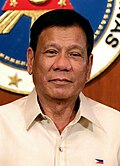

Karl Kendrick Chua
View on GrokipediaEarly life and education
Upbringing and family influences
Karl Kendrick Chua attended Xavier School in San Juan, Philippines, graduating in the class of 1996.[11] In a March 2022 speech at the school's Grade 12 Closing Ceremonies, Chua described his parents' sacrifices to enroll him and his brother there, noting they "worked very hard" to provide access to what they viewed as the best education available, reflecting a family emphasis on academic achievement as a pathway out of limited circumstances.[11] He contrasted this with broader Filipino experiences, stating that for those without "power" or "connections," education represented "the only way out of poverty."[11] No public records detail his parents' professions or specific socioeconomic origins beyond these accounts, though the choice of a Jesuit institution suggests parental prioritization of rigorous, values-based schooling over more accessible options.[11] Chua later enrolled his son, Keid Ashby Chua, at the same school, indicating intergenerational continuity in valuing its educational environment.[6][12]Academic training and qualifications
Chua obtained a Bachelor of Science degree in Management Engineering from Ateneo de Manila University in 2000.[9] He subsequently pursued advanced studies in economics at the University of the Philippines School of Economics (UPSE), earning a Master of Arts in Economics in 2003.[3] Chua completed his Doctor of Philosophy in Economics from UPSE in 2011, with a specialization in fiscal policy.[4] His doctoral research focused on empirical analysis of fiscal issues, building on his prior graduate work in macroeconomic and public finance topics.[1] In addition to his formal degrees, Chua served as a professional lecturer in mathematics and economics at Ateneo de Manila University, applying his expertise in quantitative methods and economic theory to undergraduate instruction.[6] These qualifications equipped him with interdisciplinary skills in engineering, applied mathematics, and rigorous economic analysis, particularly in fiscal and policy domains.[8]Professional career
World Bank economist (2004–2016)
Chua joined the World Bank in 2004 as a research analyst in its Manila office, where he contributed to economic analysis focused on the Philippines over a 12-year tenure ending in September 2016.[4] He progressed through roles emphasizing empirical macroeconomic assessment, eventually becoming senior country economist for the Philippines by 2012.[3] In this capacity, his work centered on tax policy and administration, public expenditure management, macroeconomic forecasting, statistical capacity building, and labor market dynamics, often involving data-driven evaluations of fiscal gaps and growth drivers.[3] As task team leader for key publications, Chua oversaw the 2015 Philippine Economic Update: Making Growth Work for the Poor, which analyzed inclusive growth strategies and recommended broadening the tax base to fund social programs amid rising inequality.[13] His tax policy notes informed subsequent reports, such as the October 2016 Philippine Economic Update, highlighting the need for combined administrative efficiencies and structural reforms to close a projected revenue shortfall of up to 4% of GDP.[14] Chua publicly advocated for these reforms, stating in 2015 that both tax administration improvements and policy changes were essential to generate revenues for poverty reduction, projecting potential eradication within a generation under sustained 7-8% annual growth.[15] Chua's analyses extended to regulatory barriers, where he critiqued cumbersome business regulations as constraints on private investment, recommending simplification to sustain projected 5.8% GDP growth in 2015 amid strong domestic demand.[16][17] His research emphasized the political economy of tax reform and local fiscal capacity, drawing on first-hand data from Philippine institutions to underscore causal links between weak enforcement and revenue shortfalls.[3] These efforts positioned the World Bank's Manila team, under his input, as a key external advisor on evidence-based fiscal strategies, though outcomes depended on domestic implementation amid noted institutional challenges.[18]Department of Finance undersecretary (2016–2020)
Karl Kendrick Chua was appointed Undersecretary for Strategy and Chief Economist at the Department of Finance on September 28, 2016, and sworn in the following day by Finance Secretary Carlos Dominguez III.[19] In this position, he led economic policy research for priority reforms, guided initiatives from conceptualization to execution, and provided strategic fiscal advice to the Finance Secretary and the Cabinet Economic Development Cluster.[19] Chua headed the Strategy, Economics, and Results Group (SERG), established under Executive Order No. 31 signed by President Rodrigo Duterte on June 28, 2017, and formalized by Department Order 4-2017 on January 20, 2017.[20] The SERG, reporting directly to the Finance Secretary, focused on delivering fiscal policy recommendations, conducting research to underpin socioeconomic programs, and driving departmental reforms aimed at inclusive growth, poverty alleviation, and improved public welfare.[20] Chua's leadership emphasized coordination with Congress on the Comprehensive Tax Reform Program (CTRP), aligning fiscal strategies with the administration's ten-point socioeconomic agenda for sustainable financing.[20][4] During his tenure, Chua spearheaded the technical team that secured passage of key legislation, including the Tax Reform for Acceleration and Inclusion (TRAIN) Law, which lowered personal income tax rates while introducing excise taxes on sin products such as tobacco, alcohol, and e-cigarettes to fund infrastructure under the Build, Build, Build program and the Universal Health Care initiative.[2][9] He also oversaw implementation of the Rice Tariffication Law as part of broader efforts to reform the tax system toward greater equity and efficiency.[9] These reforms shifted taxation from consumption-based burdens to targeted sin taxes, generating revenues estimated to support long-term development priorities.[2] Chua's role concluded in April 2020 upon his designation as acting Director-General of the National Economic and Development Authority.[21]NEDA Director-General and Socioeconomic Planning Secretary (2020–2022)
Karl Kendrick Chua was appointed acting Director-General of the National Economic and Development Authority (NEDA) and Socioeconomic Planning Secretary on April 17, 2020, succeeding Ernesto Pernia amid the onset of the COVID-19 pandemic.[22][23] His formal appointment to the permanent role occurred on April 22, 2021, with confirmation by the Commission on Appointments on June 2, 2021.[24][25] In these capacities, Chua served as the government's chief economic planner, responsible for formulating and implementing the Philippine Development Plan, coordinating inter-agency economic policies, and advising on fiscal and monetary strategies during economic recovery efforts.[26] Upon assuming the acting role, Chua prioritized fast-tracking infrastructure projects, enhancing social protection programs, and bolstering health infrastructure to mitigate the pandemic's impacts.[2] He led the update of the Philippine Development Plan 2017-2022 to incorporate crisis response measures, emphasizing a "build back better" approach focused on structural transformation and innovation.[27][26] Under his leadership, NEDA projected economic recovery to pre-pandemic growth levels by the end of 2022, contingent on vaccine rollout and safe economic reopening, while targeting a poverty rate reduction to 14% and attainment of upper middle-income status.[28][29][30] Chua advocated shifting COVID-19 management toward treating the virus as endemic, adjusting metrics to prioritize vaccination rates and minimizing severe cases over total infections.[31] He coordinated with the Development Budget Coordination Committee on fiscal planning, including the FY 2021 and 2022 budgets, and emphasized innovation's role in achieving sustainable growth through the National Innovation Council.[32][33] NEDA under Chua also contributed to international frameworks, such as the UN Socioeconomic and Peacebuilding Framework for COVID-19 response.[34] His tenure concluded in June 2022 with the end of the Duterte administration, during which he prepared a transition plan highlighting needs for full economic reopening and education recovery.[35][36]Key policy contributions
Tax reforms and fiscal policy architecture
During his tenure as Undersecretary of Finance from 2016 to 2020, Karl Kendrick Chua led the Department of Finance's technical team in developing and securing congressional passage of the Comprehensive Tax Reform Program (CTRP), a multi-package initiative to overhaul the Philippine tax system for greater simplicity, fairness, and efficiency.[2] The program's first package, the Tax Reform for Acceleration and Inclusion (TRAIN) Act (Republic Act No. 10963), was signed into law on December 19, 2017, reducing personal income tax rates by exempting annual incomes up to PHP 250,000 and restructuring higher brackets to alleviate burdens on low- and middle-income earners while imposing graduated increases up to 35% for top earners.[37] To offset revenue losses and broaden the tax base, TRAIN introduced higher excise taxes on tobacco, alcohol, sugary beverages, and petroleum products, generating an estimated PHP 60-80 billion in additional annual revenue initially directed toward universal healthcare, infrastructure, and poverty reduction programs.[37] Chua served as the administration's primary advocate in legislative deliberations, defending TRAIN's design as a balanced approach to fiscal sustainability that corrected distortions in the pre-existing tax code, such as over-reliance on indirect taxes and narrow income tax coverage. Empirical data post-enactment showed Bureau of Internal Revenue collections rising from PHP 1.61 trillion in 2017 to PHP 2.01 trillion in 2018, attributing much of the growth to TRAIN's broadened base and improved compliance incentives, though short-term inflationary pressures from fuel excises were acknowledged. He emphasized viewing CTRP holistically, integrating personal tax relief with sin tax hikes to promote public health and environmental goals while funding the government's ten-point socioeconomic agenda.[40] Beyond TRAIN, Chua contributed to fiscal architecture by spearheading technical inputs for the Rice Tariffication Law (Republic Act No. 11203), enacted in March 2019, which replaced import quotas with tariffs to liberalize rice markets, reduce consumer prices, and rationalize agricultural subsidies, yielding PHP 10-15 billion annually in tariff revenues for farmer support programs.[9] For CTRP Package 2, he advocated rationalizing fiscal incentives and lowering the corporate income tax rate from 30% to 25%, arguing that high rates deterred investment relative to ASEAN peers; these proposals laid groundwork for the subsequent Corporate Recovery and Tax Incentives for Enterprises (CREATE) Act in 2021.[41] His data-driven framework prioritized empirical modeling of revenue neutrality, progressivity, and growth impacts, aiming to transition the Philippines toward a consumption- and investment-led fiscal model less dependent on regressive levies.[4]Economic planning and liberalization initiatives
Chua directed the revision of the Philippine Development Plan (PDP) 2017-2022 in 2021 to incorporate pandemic-induced disruptions, prioritizing enhanced education investments and expanded social security coverage to bolster human capital resilience and long-term productivity.[42][43] For the subsequent PDP cycle, he outlined core pillars including deployment of smart infrastructure to improve connectivity, promotion of regional equity to reduce disparities, fostering innovation through R&D incentives, and strategies for climate change mitigation and adaptation to safeguard economic stability.[44][45] These elements aimed to transition the Philippines toward upper-middle-income status by targeting sustained GDP growth above 6% annually post-recovery.[46] Upon his April 2020 appointment amid the COVID-19 crisis, Chua established immediate planning priorities: accelerating the National ID system's rollout for efficient aid distribution and data integration, crafting a comprehensive economic recovery framework with fiscal stimuli exceeding 10% of GDP, and sustaining the Build, Build, Build program's momentum through Php 4.5 trillion in infrastructure projects to stimulate demand and job creation.[2][47] NEDA under Chua coordinated inter-agency efforts to align these with medium-term targets, such as elevating infrastructure spending to 5-6% of GDP by 2022.[48] Chua championed legislative liberalization to dismantle ownership barriers hindering foreign direct investment (FDI), urging Congress to prioritize three bills certified urgent by President Duterte in April 2021: amendments to the Public Service Act (PSA), Foreign Investments Act (FIA), and Retail Trade Liberalization Act (RTLA).[49][50] These reforms sought to cap foreign equity limits at 40% only for natural monopoly utilities like electricity and water distribution, while permitting 100% ownership in telecommunications, domestic shipping, railways, airlines, and retail trade with lowered capital thresholds from $2.5 million to $200,000.[51][52] The PSA amendments, signed into law on March 22, 2022, were projected to unlock $5-10 billion in annual FDI inflows by broadening market access and competition.[52][53] Chua emphasized their causal role in post-pandemic rebound, arguing that eased restrictions would enhance efficiency, innovation, and export competitiveness without compromising national security.[51][54]Economic leadership during crises
Response to COVID-19 pandemic
As Director-General of the National Economic and Development Authority (NEDA) and Acting Socioeconomic Planning Secretary from mid-2020, Karl Kendrick Chua led the formulation of economic strategies to mitigate the pandemic's impacts on the Philippines, emphasizing fiscal resilience built from pre-crisis reforms such as tax measures that had lowered the debt-to-GDP ratio to around 40% and accumulated buffers.[55] In September 2020, he briefed on the FY 2021 national budget, which allocated substantial resources for health responses, social protection, and economic stimulus amid projections of a severe contraction.[56] Chua projected a 9.6% GDP contraction for 2020—the worst on record—followed by 4-5% growth in 2021, but warned that restoring pre-pandemic output levels would take approximately 10 years without accelerated reforms.[57] He highlighted the role of stringent quarantines in exacerbating output losses while acknowledging their necessity for containing virus spread, estimating long-run costs from the combined health and lockdown effects at significant multiples of initial GDP hits.[58] In May 2021, under his guidance, NEDA advocated recalibrating containment measures to balance health risks with economic reopening, prioritizing faster solution deployment over prolonged restrictions.[59] By late 2021, Chua proposed shifting policy metrics to treat COVID-19 as endemic, akin to Singapore's model, by focusing on vaccination rates—targeting 70-80% coverage—and minimizing severe cases and deaths rather than zero infections, to enable sustained recovery without recurrent lockdowns.[60][31] This data-oriented approach aligned with empirical evidence from high-vaccination jurisdictions showing diminished lethality, supporting eased mobility and business operations. In October 2020, he endorsed international aid like the UN's P1.4 billion package to bolster resilience against future shocks.[61] Into 2022, as full Secretary, Chua underscored the economy's rebound with relaxed rules, projecting optimistic growth trajectories while maintaining priorities in infrastructure and human capital investments to counter pandemic-induced disparities in education and health.[62][45] These efforts contributed to a framework integrating short-term relief with long-term structural reforms, though recovery remained uneven due to vaccination lags and global supply disruptions.[63]Recovery strategies and infrastructure focus
As Director-General of the National Economic and Development Authority (NEDA) from 2020 to 2022, Karl Kendrick Chua prioritized economic recovery strategies that balanced health risk management with growth resumption, aiming for a return to pre-pandemic output levels by early 2022.[64] His approach emphasized efficient COVID-19 risk mitigation to enable broader economic reopening, including adopting a mindset of treating the virus as endemic to sustain long-term recovery.[60] Key elements included accelerating mass vaccination efforts, targeting higher coverage including children, and centering interventions on alleviating poverty through targeted support for vulnerable populations.[65] Chua advocated for innovative solutions to enhance resilience, such as leveraging technology for health and economic monitoring, while formulating the Philippine Program for Recovery with Equity and Solidarity to promote inclusive rebound.[66][67] Infrastructure development formed a cornerstone of Chua's recovery framework, positioned as a counter-cyclical stimulus to generate jobs and stimulate demand. He continued oversight of the "Build, Build, Build" program, which elevated public infrastructure spending to 4.5% of GDP—doubling historical averages—and prioritized shovel-ready projects for rapid implementation amid the pandemic.[56] Chua directed efforts toward "smart infrastructure" initiatives designed to directly improve living standards, with a blueprint emphasizing allocation to poorer regions to address regional disparities.[68] This included expanding beyond traditional roads and transport to digital and information technology infrastructure, ensuring fiscal sustainability for sustained investment under subsequent administrations.[69] Chua integrated climate change adaptation into infrastructure planning, urging greater emphasis on resilient designs to mitigate environmental risks and support long-term economic stability.[46] He highlighted infrastructure, alongside innovation, as one of his final priorities before departing NEDA, confident in the program's role in fostering V-shaped recovery trajectories through public-private partnerships and efficient project execution.[70][71]Controversies and criticisms
Debates over TRAIN law impacts
The Tax Reform for Acceleration and Inclusion (TRAIN) Act, signed into law on December 19, 2017, introduced excise tax hikes on petroleum products, automobiles, and sweetened beverages alongside reductions in personal income tax rates for most brackets, with Karl Kendrick Chua leading the Department of Finance's technical team in its formulation and congressional advocacy.[2] [1] Chua defended the measure as essential for correcting fiscal imbalances, projecting that up to 30 percent of its incremental revenues would fund social protection programs, potentially lifting 21 million Filipinos from poverty over time through expanded infrastructure and human capital investments.[37] Critics, including analyses from the Philippine Institute for Development Studies (PIDS), contended that TRAIN exacerbated poverty and income inequality in its initial years by imposing regressive consumption taxes that disproportionately burdened low-income households, with the poor experiencing net losses when combining income tax relief against price increases in essentials like fuel and transport.[72] [73] Inflation accelerated post-implementation, averaging 4.3 percent from January to June 2018 and peaking at 6.7 percent in October, prompting claims from groups like IBON Foundation that the law amplified the effects of global oil price surges on vulnerable populations without adequate immediate mitigation.[74] [75] [76] Chua rebutted PIDS findings as committing "sins of omission" by underemphasizing offsetting factors like targeted cash transfers to the bottom 50 percent of earners, arguing these provided swift relief to neutralize short-term dislocations.[77] Proponents, including Chua, highlighted TRAIN's fiscal gains, with the law contributing to a 16.4 percent revenue surge to PHP619.84 billion in the first quarter of 2018 alone and generating an estimated PHP575.8 billion in additional collections from 2018 to 2021, enabling sustained funding for the "Build, Build, Build" program and social services that benefited 99 percent of taxpayers via lower income taxes.[78] [79] [80] Chua maintained that TRAIN accounted for only 0.4 percentage points of 2018's inflation, attributing the bulk to exogenous factors like rising global crude oil prices rather than the reforms themselves, a view echoed by divided economists who noted the law's role in broadening the tax base without derailing overall growth.[81] [82] By 2023, the Supreme Court upheld the law's constitutionality, affirming its role in stabilizing revenues amid ongoing debates over its distributive equity.[83]Fiscal policy and public communication critiques
Chua's advocacy for comprehensive tax reforms, including the Tax Reform for Acceleration and Inclusion (TRAIN) law enacted in 2018, drew criticism for exacerbating inflation and disproportionately burdening low-income households through excise taxes on fuel, sugary drinks, and other goods.[84] Critics, including Senator Bam Aquino, argued that the law fueled price spikes in essentials like rice and transportation, contributing to public discontent amid rising costs, and called for its suspension or repeal.[85] A 2019 analysis by the Philippine Institute for Development Studies (PIDS) labeled TRAIN as regressive, estimating it imposed a higher relative burden on poorer deciles compared to wealthier ones, contradicting Department of Finance assertions of progressivity.[86] Chua defended the measures, attributing less than 0.5% of inflation to TRAIN while emphasizing long-term revenue gains for social programs, but detractors contended that short-term hardships were understated and mitigation efforts, such as fuel vouchers, inadequate.[87] Broader fiscal policy critiques targeted Chua's role in NEDA's endorsement of expansionary spending during the COVID-19 recovery, with opponents questioning the sustainability of deficit financing that pushed the debt-to-GDP ratio above 60% by 2022.[88] Some analysts argued that NEDA projections under Chua's leadership, including optimistic growth forecasts tied to infrastructure push via the "Build, Build, Build" program, overlooked fiscal risks from delayed projects and revenue shortfalls, potentially inflating expectations without corresponding austerity measures.[89] These views, often from opposition-aligned outlets, portrayed the approach as prioritizing stimulus over prudence, though Chua countered with data showing fiscal incentives' inefficiencies, advocating targeted reforms to curb indiscriminate tax breaks costing billions annually.[90] On public communication, Chua encountered backlash for virtual participation in key congressional sessions, notably the August 2021 House budget hearing where lawmakers criticized his absence in person as disrespectful to oversight processes amid economic scrutiny.[91] He issued an apology, citing health protocols, but the incident fueled perceptions of detachment from public accountability.[91] Additionally, efforts to explain TRAIN's benefits were dismissed by some as overly technical or evasive, with social media amplifying accusations of downplaying inflation's human costs, such as transport strikes in 2018 protesting diesel tax hikes.[92] Critics from progressive circles claimed NEDA communications under Chua perpetuated a false dichotomy between health measures and economic reopening during the pandemic, framing data-driven arguments as insensitive to lockdown hardships despite empirical modeling presented.[89] Chua maintained transparency through presentations, like cost-benefit analyses of modified enhanced community quarantines, but public trust lagged, evidenced by persistent online vitriol labeling him a "tax villain."[92][88]Post-government roles
Private sector leadership at Ayala Corporation
Karl Kendrick Chua transitioned to the private sector in June 2023, joining Ayala Corporation as Managing Director and Group Head for Data Science and Artificial Intelligence.[93] In this capacity, he oversees the integration of AI and advanced analytics into the conglomerate's decision-making processes across its diverse portfolio, including banking, real estate, telecommunications, and infrastructure.[5] Drawing parallels to his public-sector emphasis on empirical data for policy formulation, Chua has prioritized embedding data-driven tools to enhance operational efficiency and strategic foresight within Ayala's subsidiaries.[10] Chua's leadership extends to board roles at Ayala-affiliated entities, including directorships at AC Ventures and AC Industrials, where he contributes to investment strategies leveraging technology for growth.[9] He has also served as a non-executive director at Bank of the Philippine Islands (BPI), Ayala's flagship banking unit, applying fiscal expertise to oversee risk management and digital transformation initiatives.[93] Under his guidance, Ayala has pursued collaborations such as partnerships with academic institutions like the University of the Philippines to advance AI capabilities, aiming to position the group at the forefront of technological innovation in the Philippines.[94] A key focus of Chua's tenure involves supporting Ayala's vision for smart, sustainable urban development, where data analytics inform infrastructure connectivity—encompassing roads, rail systems, water supply, power distribution, and broadband networks—to drive long-term economic resilience.[5] This approach aligns with verifiable metrics from Ayala's operations, such as enhanced predictive modeling for resource allocation, though specific quantitative outcomes remain tied to ongoing implementations as of mid-2025.[95] His efforts underscore a continuity from government-led reforms, emphasizing causal linkages between data infrastructure and tangible productivity gains without unsubstantiated projections.[96]Corporate board directorships and advisory positions
Following his tenure as Secretary of Socioeconomic Planning and NEDA Director-General, Karl Kendrick T. Chua transitioned to private sector roles, including several board directorships and advisory positions. He was elected as an independent director of D&L Industries, Inc., effective June 3, 2023, contributing to the company's corporate governance committee.[97][98] At Bank of the Philippine Islands (BPI), he serves as a non-executive director, with additional responsibilities as a board director of its subsidiary, BPI Direct BanKo, Inc., a microfinance savings bank.[93][99] Chua also holds directorships in Ayala Corporation-affiliated entities, including AC Ventures Holdings Corp. and AC Industrials, Inc., leveraging his expertise in data-driven strategy.[9] In advisory capacities, he was appointed as a board advisor to the LH Paragon Group in early 2023, focusing on growth prospects amid economic recovery.[100] He further advises Golden ABC, Inc., Matimco, Inc., and Oakridge Realty Development Corporation, roles that align with his background in economic planning and fiscal policy.[9] These positions reflect Chua's post-government emphasis on integrating AI, data analytics, and strategic oversight in corporate governance.[93]Personal life
Family and personal background
Chua was born to Filipino parents of Chinese descent and raised in Manila, where he attended Xavier School for 13 years, a formative experience he has described as the best gift from his family.[11] His father, Arsenio Chua, started married life in 1976 with limited resources of 6,000 pesos, underscoring a background of modest beginnings that emphasized the value of education.[11] Chua married Alanna Chua in 2009 after a period of focused career development; the couple delayed starting a family until later in their marriage.[92] They have one son, Keid Ashby Chua, born around 2016, whose name derives from Chua's hobby of astronomy, specifically the star Keid in the constellation Eridanus.[92][7] Chua has entrusted his son's early education to Xavier School, continuing the family tradition.[101]Public persona and interests
Karl Kendrick Chua presents a professional public persona characterized by expertise in economic policy and a reserved demeanor. Media descriptions from 2017 portray him as a "coy" figure who appears youthful despite early signs of gray hair, positioning him as the "poster boy" for tax reforms during his tenure as Department of Finance Undersecretary.[92] In public interviews and statements, he articulates complex fiscal strategies with emphasis on holistic implementation, such as advocating for the Comprehensive Tax Reform Program as an integrated package to mitigate impacts like inflation.[40] His interests align closely with data-driven governance and technological innovation, evident in his advocacy for evidence-based policymaking during government service and his subsequent role leading data science and AI initiatives at Ayala Corporation.[10] Chua has publicly supported programs enhancing national resilience and economic development, reflecting a commitment to empirical approaches in public administration.[102] Limited personal hobbies are disclosed, with his public profile centered on professional pursuits in economics and policy reform.Awards and recognition
Professional honors and commendations
Chua received the Ten Outstanding Young Men (TOYM) Award for Economic Development in 2018 from the Junior Chamber International (JCI) Philippines, recognizing his contributions to fiscal reforms and economic policy during his tenure at the Department of Finance.[9] The award, formally presented in January 2019, honors individuals under 40 for outstanding achievements in their fields, with Chua cited for his role in implementing the Tax Reform for Acceleration and Inclusion (TRAIN) law and advancing data-driven governance.[2] No additional professional honors or commendations are documented in public records from government or corporate affiliations.References
- https://www.[rappler](/page/Rappler).com/business/258267-things-to-know-karl-chua-neda-acting-secretary/
- https://cpbrd.[congress](/page/Congress).gov.ph/ff2022-33-revenue-impact-of-train-laws-on-bir-tax-collections-2020-2021/