
.jpg/250px-Agriculture_Secretary_William_Dar_-_November_2019_(cropped).jpg)


.jpg)
Community hub
Recent from talks
Contribute something
Nothing was collected or created yet.
William Dar
View on Wikipedia
William Dollente Dar (born April 10, 1953) is a Filipino horticulturist and civil servant who served as the Secretary of Agriculture under the Duterte administration. He was appointed by President Rodrigo Duterte on August 5, 2019, to replace Emmanuel Piñol.[1] Dar held the same position under President Joseph Estrada in an acting capacity from 1998 to 1999. He is also a former Director General of ICRISAT.
Key Information

.jpg)
Profile
[edit]Dar was born and educated in Santa Maria, Ilocos Sur. A horticulturist, he received his Bachelor of Science in Agricultural Education and Master of Science in Agronomy degrees from the then Mountain State Agricultural College (MSAC), now known as Benguet State University (BSU), and Ph.D. in Horticulture degree from the University of the Philippines Los Baños. After serving on the faculty of the Benguet State University, he became the first director of the Philippine Bureau of Agricultural Research (BAR) in 1988. This was a period when the Philippines started to invest much in building a national system of advanced agricultural research institutes, such as the Philippine Rice Research Institute, PhilRice.[citation needed]
William Dar was designated the executive director of the Philippine Council for Agriculture, Aquatic, and Natural Resources Research and Development (PCAARRD) and served on the governing boards of international research bodies such as the IRRI and CIMMYT and at ICRISAT. He also served for a brief while as Acting Secretary of Agriculture and as Presidential Adviser on Rural Development during the presidency of Joseph Estrada. He was selected as Director General of ICRISAT in the year 1999. He has continued ever since in that position. He has written the book "Feeding the forgotten poor". Dr William Dar was conferred with MS Swaminathan Award for leadership in agriculture on June 24, 2013.

On August 5, 2019, Dar was appointed by President Rodrigo Duterte to replace Emmanuel Piñol as the Secretary of the Philippine Department of Agriculture.[1]
ICRISAT
[edit] | This section may contain information not important or relevant to the article's subject. (June 2022) |
ICRISAT, which is an international agricultural research center in the consortium of CGIAR centers had faced multiple crises in the 1990s. The issue at the core had to do with whether ICRISAT should focus entirely on the arid land agricultural challenges of sub Saharan Africa, and move the headquarters to a location in Africa. The continued differences at the level of Governance over this matter had led to lack of clarity in research priorities and programs. During 1997–1999, there were three successive Directors General. William Dar is credited with steering this debate from one of India-versus-Africa to a more fruitful discussion on India and Africa. Agencies in India have granted significant financial resources to ICRISAT since 2002. An example is the Dorabji Tata Trust, one of the large charities connected to the House of Tata. In spite of increased support and expressions of relevance of ICRISAT research in India, a set of external reviews commissioned by the World Bank and the CGIAR Science Council in 2003 recommended the shifting of ICRISAT headquarters to a location in sub Saharan Africa.[2] This recommendation was not accepted by the membership of CGIAR in the Annual General Meeting of CGIAR in 2003.[3] Since then, investor confidence in the stability of ICRISAT has grown. The annual revenues grew from less than US$24 million in 2003 to $52 million in 2009.[4] Major investors now include the Bill and Melinda Gates Foundation, besides the Governments of US (USAID), UK (DFID)and India (ICAR and DBT besides State Governments).
An important development in this period was the formation of a wide range of partnerships with non-corporate as well as corporate private sector in India. Some of the international administrators considered this development a risk to the reputation of an inter-governmental organization and it was included as a term of reference in an externally commissioned review in 2009. This external review in 2009 analysed the developments and agreed that there was indeed evidence of stability in programs and confidence among partners and investors.[5]
References
[edit]External links
[edit]- What ICRISAT Thinks Archived May 20, 2010, at the Wayback Machine
- SATrends:ICRISAT e-Newsletter
- SASA:ICRISAT e-Newsletter
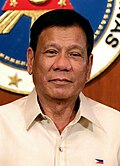

William Dar
View on GrokipediaEarly Life and Education
Childhood and Family Background
William Dollente Dar was born on 10 April 1953 in Danuman West, Santa Maria, Ilocos Sur, Philippines, to impoverished farming parents.[1][2] He grew up in a rural, flood-prone village in northern Luzon amid a community of industrious yet resource-scarce agrarian families.[11] Dar's early life was marked by the hardships of subsistence farming, with his parents' modest circumstances shaping his formative years in Santa Maria, where he was both raised and initially schooled.[1] Family support extended beyond his immediate parents; an uncle, Augustin Dollente, later aided his pursuit of higher education despite the economic constraints.[1]Academic Training and Early Influences
William Dar was born on April 10, 1953, to poor farmer parents in Santa Maria, Ilocos Sur, Philippines, which instilled an early appreciation for agricultural challenges faced by rural communities.[1] [3] His uncle, Augustin Dollente, played a pivotal role by funding his higher education, enabling Dar to pursue studies in agriculture despite his family's limited resources.[1] This familial support directed him toward agricultural education as a means to address poverty and improve farming practices, shaping his lifelong commitment to the sector.[1] Dar began his formal academic training in 1969 at Mountain State Agricultural College (now Benguet State University), earning a Bachelor of Science in Agricultural Education in 1973.[12] [2] He continued at the same institution, completing a Master of Science in Agronomy in 1976, which deepened his focus on crop production and soil management.[1] These degrees provided foundational knowledge in practical farming techniques and educational methodologies, influenced by the college's emphasis on hands-on agricultural research in the northern Philippine highlands.[2] Subsequently, Dar advanced his expertise by pursuing a Doctor of Philosophy in Horticulture at the University of the Philippines Los Baños, which he completed in 1980.[1] [13] [2] This specialization honed his skills in fruit and vegetable cultivation, building on his earlier agronomy training and reflecting an early interest in high-value crops suited to smallholder farmers, further motivated by his rural upbringing and observations of subsistence agriculture's limitations.[1] His academic progression from education to specialized horticultural research underscored a pragmatic approach to enhancing agricultural productivity through science.[13]Early Professional Career
Roles in Philippine Agricultural Research
Dar's involvement in Philippine agricultural research began after his academic training, when he joined the faculty of Benguet State University, eventually rising to Professor 6 and Vice President for Research and Development from 1985 to 1987, where he focused on advancing institutional research capabilities in horticulture and related fields.[2] In 1988, he was appointed as the founding director of the Department of Agriculture's Bureau of Agricultural Research (DA-BAR), the first such position in the newly established agency tasked with generating, verifying, and disseminating appropriate agricultural technologies to farmers.[1][14][15] During his tenure, the Philippines initiated significant investments in building a national agricultural research infrastructure, positioning BAR as a central hub for technology transfer and applied research amid post-Marcos economic recovery efforts.[1] From 1994 to 1998, Dar served as executive director of the Philippine Council for Agriculture, Forestry and Natural Resources Research and Development (PCARRD), then under the Department of Science and Technology, where he directed national research priorities, coordinated multi-agency R&D programs, and promoted science-based strategies to enhance productivity in crops, livestock, and fisheries.[1][3] In this role, he emphasized integrating research with rural development, serving on governing boards that aligned domestic efforts with global standards while addressing local challenges like soil degradation and varietal improvement.[15][16] These positions established Dar as a key architect of the country's research ecosystem, bridging academia, government agencies, and field applications to support evidence-driven agricultural advancements.[14]Development of Horticultural Expertise
Dar obtained his foundational training in agriculture through a Bachelor of Science in Agricultural Education from Benguet State University (then Mountain State Agricultural College) in 1973, followed by a Master of Science in Agronomy from the same institution.[17] He then pursued a Doctor of Philosophy in Horticulture at the University of the Philippines Los Baños, completing it in 1980, which provided specialized knowledge in crop physiology, breeding, and production systems.[1][12] Upon earning his doctorate, Dar joined the faculty at Benguet State University, advancing to the rank of Professor 6, the highest professorial level in the Philippine academic system.[2][14] In this capacity, he conducted research and teaching in horticultural science, focusing on practical applications for Philippine agriculture, including crop management and yield improvement in varied agroecological zones.[13] His work at BSU, located in the vegetable-producing Cordillera highlands, emphasized techniques for temperate horticultural crops, aligning with regional needs for resilient production amid environmental challenges.[3] From 1985 to 1987, Dar served as Vice President for Research and Development at BSU, directing initiatives that integrated horticultural research with extension services to enhance farmer adoption of improved varieties and practices.[2][12] This administrative role deepened his expertise by bridging theoretical horticulture with on-farm implementation, fostering innovations in seed systems and sustainable cultivation that informed his subsequent contributions to national agricultural policy.[1]Leadership at ICRISAT
Appointment and Initial Reforms
William Dar was appointed Director General of the International Crops Research Institute for the Semi-Arid Tropics (ICRISA) on January 1, 2000, by the institute's Governing Board, succeeding predecessors amid a period of institutional instability.[18][19] At the time, ICRISAT grappled with severe financial constraints, including a budget reduced to US$22 million following three rounds of staff downsizing between 1997 and 1999, alongside low employee morale, high turnover, and centralized management that hindered collaboration across locations.[18] External pressures compounded these issues, with a CGIAR review recommending a potential relocation of headquarters from Hyderabad, India, to sub-Saharan Africa to better align with regional priorities.[20] In his inaugural address shortly after assuming office, Dar introduced the guiding principle of "Science with a Human Face," emphasizing research oriented toward the practical needs of smallholder farmers in semi-arid regions rather than purely academic pursuits.[18] Within the first week, he articulated a revised vision, mission, and research strategy aimed at enhancing farmer productivity and resilience, while addressing immediate operational deficiencies such as campus disrepair by coordinating cleanup efforts with security personnel to restore a professional environment.[20] Dar also advocated successfully to maintain the Hyderabad headquarters, arguing its strategic value for ongoing research continuity and proximity to key partners.[20] These early actions laid the groundwork for stabilizing ICRISAT, fostering a renewed sense of "Team ICRISAT" to rebuild staff trust and collaboration.[18] Dar initiated efforts to decentralize operations toward regional hubs in locations like Kenya and Mali, promoting greater autonomy and relevance to local contexts, while beginning to forge stronger partnerships with national agricultural systems, NGOs, and the private sector to diversify funding sources beyond traditional donors.[18] He launched the Inclusive Market-Oriented Development (IMOD) approach as a foundational strategy, integrating market linkages with technological interventions to empower dryland farmers economically from the outset of his tenure.[18] These reforms marked a shift from inward-focused crisis management to outward-oriented impact, setting the stage for subsequent financial recovery and expanded influence.[20]Strategic Transformations and Impacts
Upon assuming the role of Director General of the International Crops Research Institute for the Semi-Arid Tropics (ICRISAT) in 2000, William Dar implemented a series of strategic transformations to address institutional challenges including financial decline, low staff morale, and unclear research direction. Central to his approach was the adoption of "Science with a Human Face," a framework prioritizing pro-poor agricultural research aimed at enhancing the well-being of smallholder farmers in semi-arid regions.[21] This involved shifting focus from purely technical outputs to integrated solutions that incorporated socio-economic factors, such as linking scientific innovations directly to farmer needs and market opportunities.[21] Dar introduced Inclusive Market-Oriented Development (IMOD), a strategy designed to connect smallholder farmers with markets through value chain enhancements, technology adoption, and policy advocacy.[21] Organizational reforms included decentralization, establishing regional hubs in Kenya and Mali to improve responsiveness to local contexts, alongside the creation of Centers of Excellence in Genomics (CEG) and the Platform for Transgenic Technology and Crop Protection (PTTC) to advance cutting-edge research in drought-tolerant and high-yield crop varieties.[21] In 2011, he launched the Knowledge Sharing and Innovation (KSI) program, leveraging ICT for extension services to disseminate technologies more effectively to remote farming communities.[21] These changes were complemented by efforts to foster a participative leadership style, emphasizing employee motivation, clear goal-setting, and improved internal communication to reverse high turnover and rebuild trust.[20] Financially, Dar's tenure marked a turnaround, quadrupling ICRISAT's budget from approximately US$21-22 million in 2000 to US$85 million by 2014, while increasing staff by 50% and building substantial reserves.[1][21] This enabled expanded partnerships with donors like the Bill & Melinda Gates Foundation and private sector entities, amplifying research scale and funding for mandate crops such as chickpeas, pigeonpeas, sorghum, millets, and groundnuts.[21] The impacts of these transformations were substantial, with ICRISAT's agricultural research for development (AR4D) generating an estimated US$70 in economic returns for every dollar invested, yielding a 35% internal rate of return.[21] Innovations reached millions of smallholder farmers, particularly through drought-resilient varieties that boosted productivity; for instance, in Eastern and Southern Africa, pigeonpea cultivation area doubled to 1.1 million hectares by 2014, with yields rising from 590 kg/ha to 900 kg/ha, thereby increasing farmer incomes and resilience to climate variability.[21] Under Dar's vision, updated in the Strategic Plan to 2020 as "a prosperous, food-secure, and resilient dryland tropics," the institute evolved into a globally recognized leader in semi-arid agriculture, influencing policy and technology adoption across Africa, Asia, and beyond.[21][22]Global Contributions to Semi-Arid Agriculture
Under William Dar's leadership as Director General of the International Crops Research Institute for the Semi-Arid Tropics (ICRISAT) from 2000 to 2014, the organization prioritized "Science with a Human Face," an approach centering research on the needs of smallholder farmers in drought-prone regions to enhance productivity and resilience.[23] This strategy redefined ICRISAT's vision as achieving "improved well-being of the poor of the semi-arid tropics" through integrated technologies tailored to rainfed agriculture, where over 800 million smallholders depend on crops vulnerable to erratic rainfall and soil degradation.[23] Dar advocated for a "Grey to Green Revolution," promoting sustainable intensification in drylands via diversified cropping systems that combined mandate crops such as sorghum, pearl millet, chickpea, pigeonpea, and groundnut with improved soil and water management practices.[24] Key initiatives under Dar included scaling integrated watershed management programs, which captured rainwater, reduced erosion, and boosted yields in semi-arid India and South Asia by integrating crop-livestock systems and micro-enterprises; these efforts were replicated across partner countries, demonstrating yield increases of up to 6 tons per hectare in select irrigated dryland schemes.[25] [26] ICRISAT developed and disseminated drought-tolerant crop varieties, such as hybrid pearl millets yielding 20-30% higher under water stress and groundnut lines resistant to aflatoxin, reaching millions of farmers through seed systems and partnerships with national programs in sub-Saharan Africa and Asia.[26] [27] These advancements addressed biophysical constraints in semi-arid tropics, where 90% of vulnerable populations are smallholders facing recurrent droughts, by emphasizing farmer-led adoption over top-down interventions.[28] Dar's tenure expanded ICRISAT's global reach, forging alliances with over 100 partners that quadrupled operational funding from $22 million to $85 million annually by 2014, enabling technology transfer to dryland regions in 50 countries and benefiting millions of marginal farmers through enhanced food security and income diversification.[29] [30] This legacy included institutional reforms that shifted focus from pure research to impact-oriented scaling, such as biofortified crop pipelines and climate-resilient hybrids, which have sustained productivity gains in semi-arid ecosystems post-tenure.[23][15]Tenure as Secretary of Agriculture
Appointment under Duterte Administration
![President Duterte administers oath to William Dar][float-right] On August 5, 2019, President Rodrigo Duterte appointed William Dar as acting Secretary of Agriculture, replacing Emmanuel Piñol, who was reassigned as chairman of the Mindanao Development Authority.[31][17] The oath-taking ceremony occurred at Malacañan Palace, where Duterte personally administered the oath to Dar.[32] This marked Dar's return to the Department of Agriculture (DA) leadership, having previously served as acting secretary from July 1998 to May 1999 under President Joseph Estrada.[1] Dar's selection was influenced by his extensive experience in agricultural research and international leadership, including his tenure as director-general of the International Crops Research Institute for the Semi-Arid Tropics (ICRISAT) from 2000 to 2014.[14] Executive Secretary Salvador Medialdea announced the appointment, highlighting Dar's expertise amid ongoing challenges in the Philippine agriculture sector, such as stagnant growth rates.[31] Following the oath, Duterte's initial directive to Dar emphasized reversing the sector's anemic performance, setting the stage for policy reforms.[33] The Commission on Appointments confirmed Dar's appointment as permanent Secretary of Agriculture on December 17, 2019, affirming his role through the remainder of the Duterte administration.[17] This confirmation came after evaluations of his qualifications and prior contributions, including agricultural growth achieved during his 1998-1999 stint, where the sector expanded by over 3.8% annually.[17]Key Policy Initiatives and Reforms
Upon his appointment as Secretary of Agriculture on August 5, 2019, William Dar introduced the "New Thinking" framework to overhaul Philippine agriculture, comprising eight paradigms: modernization through mechanization and technology adoption; industrialization to process raw produce into higher-value products; export promotion to access global markets; farm consolidation to create viable economic units from fragmented smallholdings; value chain development for efficient linkages from farm to consumer; science- and evidence-based research and development; a farmer-centric approach emphasizing inclusivity and prosperity; and sustainable practices to ensure long-term resilience.[34] This strategy aimed to achieve food security while doubling farmers' incomes, shifting from subsistence to market-oriented production.[34] A cornerstone reform under Dar's tenure was the intensified implementation of Republic Act 11203, the Rice Tariffication Law enacted on March 5, 2019, which replaced import quotas with tariffs to liberalize rice trade and generate funds for domestic competitiveness.[35] The law established the PHP10 billion annual Rice Competitiveness Enhancement Fund (RCEF), allocated for hybrid seeds, mechanization, extension services, and credit, with Dar designating 70% of funds to machinery procurement and farmer training to reduce production costs from PHP12.52 per kilogram to PHP11.52 per kilogram by 2021.[36] He described the measure as the "best agriculture reform ever," enabling affordable rice access while subsidizing local upgrades, including PHP5,000 unconditional cash assistance to over 2.3 million rice farmers.[37][38] Dar launched rice productivity initiatives inspired by historical programs, proposing Masagana 150 to achieve 7.5 metric tons per hectare of inbred rice at PHP8.38 per kilogram production cost, and Masagana 200 targeting 10 tons per hectare with hybrid varieties, integrating precision farming, soil health management, and block farming clusters of 25-50 hectares for collective mechanization.[39] These efforts prioritized hybrid seed distribution, aiming to cover 1.2 million hectares by 2022, alongside contract growing schemes to link farmers with buyers and reduce post-harvest losses.[40] Broader reforms emphasized modernization via the OneDA agenda, including digitalization for traceability in meat and crops, infrastructure like cold storage chains, and 100% budget utilization for high-impact projects such as irrigation expansion and farm-to-market roads.[41][42] Dar advocated strong producer organizations, promoting trust farming and contract arrangements to enhance bargaining power and attract private investment, with agricultural loans projected to rise from PHP222 billion in 2018 to PHP350 billion by 2022.[43][44]Production Achievements and Economic Outcomes
During William Dar's tenure as Secretary of Agriculture from November 2019 to June 2022, the Philippines achieved record-high production levels in key staple crops, particularly palay (unmilled rice) and corn, amid challenges including typhoons, the COVID-19 pandemic, and African Swine Fever. National palay output rose from 18.81 million metric tons (MMT) in 2019 to 19.29 MMT in 2020 and reached an all-time high of 19.96 MMT in 2021, reflecting a cumulative increase of approximately 6.1% over the period despite erratic weather and logistical disruptions.[45][46] Corn production similarly hit a record 8.3 MMT in 2021, supported by expanded hybrid seed distribution and improved irrigation coverage under Dar's modernization push.[46] These gains were attributed to policy shifts like the Rice Tariffication Law of 2019, which boosted farmer productivity by 15.6% in palay per hectare in 2021 through market liberalization and input subsidies.[45] The following table summarizes annual palay production volumes during Dar's leadership:| Year | Palay Production (MMT) | Year-over-Year Change |
|---|---|---|
| 2019 | 18.81 | - |
| 2020 | 19.29 | +2.5% |
| 2021 | 19.96 | +3.4% |