
Recent from talks
Kazi Nazrul Islam
Knowledge base stats:
Talk channels stats:
Members stats:
Kazi Nazrul Islam
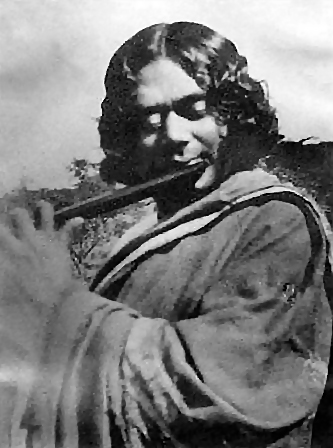
Kazi Nazrul Islam (24 May 1899 – 29 August 1976) was an Indian Bengali poet and short story writer, journalist, lyricist and musician. He was later given Bangladeshi citizenship and the title national poet of Bangladesh. Nazrul produced a large body of poetry, music, messages, novels, and stories with themes, that included equality, justice, anti-imperialism, humanity, rebellion against oppression and religious devotion. Nazrul Islam's activism for political and social justice as well as writing a poem titled as "Bidrohī", meaning "the rebel" in Bengali, earned him the title of "Bidrohī Kôbi" (Rebel Poet). His compositions form the avant-garde music genre of Nazrul Gīti (Music of Nazrul).
Born in the British Raj period into a Bengali Muslim Kazi family from Churulia in Asansol,then in Burdwan district in Bengal Presidency (now in West Bengal, India), Nazrul Islam received religious education and as a young man worked as a muezzin at a local mosque. He learned about poetry, drama, and literature while working with the rural theatrical group Leṭor Dôl, Leṭo being a folk song genre of West Bengal usually performed by the people from Muslim community of the region. He joined the British Indian Army in 1917 and was posted in Karachi. Nazrul Islam established himself as a journalist in Calcutta after the war ended. He criticised the British Raj and called for revolution through his famous poetic works, such as "Bidrohī" ('The Rebel') and "Bhangar Gan" ('The Song of Destruction'), as well as in his publication Dhūmketu ('The Comet'). His nationalist activism in Indian independence movement led to his frequent imprisonment by the colonial British authorities. While in prison, Nazrul Islam wrote the "Rajbôndīr Jôbanbôndī" ('Deposition of a Political Prisoner'). His writings greatly inspired Bengalis of East Pakistan during the Bangladesh Liberation War.
Nazrul Islam's writings explored themes such as freedom, humanity, love, and revolution. He opposed all forms of bigotry and fundamentalism, including religious, caste-based and gender-based. Nazrul wrote short stories, novels, and essays but is best known for his songs and poems. He introduced the ghazal songs in the Bengali language and is also known for his extensive use of Arabic and Persian influenced Bengali words in his works.
Nazrul Islam wrote and composed nearly 4,000 songs—many recorded by the Gramophone Company of India—collectively known as Nazrul Gīti. In 1942 at the age of 43, he began to be affected by an unknown disease, losing his voice and memory. A medical team in Vienna diagnosed the disease as Pick's disease, a rare incurable neurodegenerative disease. Dr. Bidhan Chandra Roy, then the Chief Minister of West Bengal, was aware of Nazrul's illness and visited Vienna to meet with Dr. Hoff. The disease caused Nazrul Islam's health to decline steadily and forced him to live in isolation. Dr. Hoff opined that the disease was advanced and that Nazrul had little chance of recovery. Dr. Ashok Bagchi, a neurosurgeon from Kolkata, also played a role in Nazrul's treatment while in Vienna. He was also admitted in Ranchi (Jharkhand) psychiatric hospital for many years. The ailing Indian poet was taken to Bangladesh with the consent of the Government of India on 24 May 1972, at the invitation of the Government of Bangladesh. His family accompanied him and relocated to Dhaka. Later, on 18 February 1976, the citizenship of Bangladesh was conferred upon him. He died on 29 August 1976.
Nazrul Islam was born at the late British Raj on Wednesday 24 May 1899 in the village of Churulia, Asansol Sadar, Paschim Bardhaman district of the Bengal Presidency (now in West Bengal, India). He was born into the Bengali Muslim Taluqdar family of Churulia and was the second of three sons and a daughter. Nazrul Islam's father Kazi Faqeer Ahmed was the imam and caretaker of the local Pirpukur mosque and mausoleum of Haji Pahlawan. Nazrul Islam's mother was Zahida Khatun; he had two brothers, Kazi Saahibjaan and Kazi Ali Hussain, and a sister, Umme Kulsum. He was nicknamed Dukhu Miañ ( literally, 'the one with grief'). Nazrul Islam studied at a maktab and madrasa, run by a mosque and a dargah respectively, where he studied the Quran, Hadith, Islamic philosophy, and theology. Following his father's death in 1908, the then 10 year old Nazrul Islam took his father's place as a caretaker of the mosque to support his family. He also assisted teachers in the school. He later worked as the muezzin at the mosque.
Attracted to folk theatre, Nazrul Islam joined a leto (travelling theatrical group) run by his uncle Fazle Karim. He worked and travelled with them, learning to act, as well as writing songs and poems for the plays and musicals. Through his work and experiences, Nazrul Islam began studying Bengali and Sanskrit literature, as well as Hindu scriptures such as the Puranas. Nazrul Islam composed folk plays for the group, which included Chāshār Shōng ('the drama of a peasant'), and plays about characters from the Mahabharata including Shokunībōdh ('the Killing of Shakuni), Rājā Judhisthirer Shōng ('the drama of King Yudhishthira), Dātā Kōrno ('the philanthropic Karna'), Ākbōr Bādshāh ('Akbar the emperor'), Kobi Kālidās ('poet Kalidas'), Bidyan Hutum ('the learned owl'), and Rājputrer Shōng ('the prince's sorrow').
In 1910, Nazrul Islam left the troupe and enrolled at the Searsole Raj High School in Raniganj. In school, he was influenced by his teacher, a Jugantar activist, Nibaran Chandra Ghatak, and began a lifelong friendship with fellow author Sailajananda Mukhopadhyay, who was his classmate. He later transferred to the Mathrun High English School, studying under the headmaster and poet Kumud Ranjan Mullick. Unable to continue paying his school fees, Nazrul Islam left the school and joined a group of kaviyals. Later he took jobs as a cook at Wahid Confectionery, a well-known bakery of the region, and at a tea stall in the town of Asansol. In 1914, Nazrul Islam studied in the Darirampur School (now Govt. Nazrul Academy) in Trishal, Mymensingh District. Amongst other subjects, Nazrul Islam studied Bengali, Sanskrit, Arabic, Persian literature and Hindustani classical music under teachers who were impressed by his dedication and skill.
Nazrul Islam studied up to grade 10 but did not appear for the matriculation pre-test examination; instead in 1917, he joined the British Indian Army at the age of eighteen. He had two primary motivations for joining the British Indian Army: first, a youthful desire for adventure and, second, an interest in the politics of the time. Attached to the 49th Bengal Regiment, he was posted to the Karachi Cantonment, where he wrote his first prose and poetry. Although he never saw active fighting, he rose in rank from corporal to havildar (sergeant), and served as quartermaster for his battalion.
Hub AI
Kazi Nazrul Islam AI simulator
(@Kazi Nazrul Islam_simulator)
Kazi Nazrul Islam
Kazi Nazrul Islam (24 May 1899 – 29 August 1976) was an Indian Bengali poet and short story writer, journalist, lyricist and musician. He was later given Bangladeshi citizenship and the title national poet of Bangladesh. Nazrul produced a large body of poetry, music, messages, novels, and stories with themes, that included equality, justice, anti-imperialism, humanity, rebellion against oppression and religious devotion. Nazrul Islam's activism for political and social justice as well as writing a poem titled as "Bidrohī", meaning "the rebel" in Bengali, earned him the title of "Bidrohī Kôbi" (Rebel Poet). His compositions form the avant-garde music genre of Nazrul Gīti (Music of Nazrul).
Born in the British Raj period into a Bengali Muslim Kazi family from Churulia in Asansol,then in Burdwan district in Bengal Presidency (now in West Bengal, India), Nazrul Islam received religious education and as a young man worked as a muezzin at a local mosque. He learned about poetry, drama, and literature while working with the rural theatrical group Leṭor Dôl, Leṭo being a folk song genre of West Bengal usually performed by the people from Muslim community of the region. He joined the British Indian Army in 1917 and was posted in Karachi. Nazrul Islam established himself as a journalist in Calcutta after the war ended. He criticised the British Raj and called for revolution through his famous poetic works, such as "Bidrohī" ('The Rebel') and "Bhangar Gan" ('The Song of Destruction'), as well as in his publication Dhūmketu ('The Comet'). His nationalist activism in Indian independence movement led to his frequent imprisonment by the colonial British authorities. While in prison, Nazrul Islam wrote the "Rajbôndīr Jôbanbôndī" ('Deposition of a Political Prisoner'). His writings greatly inspired Bengalis of East Pakistan during the Bangladesh Liberation War.
Nazrul Islam's writings explored themes such as freedom, humanity, love, and revolution. He opposed all forms of bigotry and fundamentalism, including religious, caste-based and gender-based. Nazrul wrote short stories, novels, and essays but is best known for his songs and poems. He introduced the ghazal songs in the Bengali language and is also known for his extensive use of Arabic and Persian influenced Bengali words in his works.
Nazrul Islam wrote and composed nearly 4,000 songs—many recorded by the Gramophone Company of India—collectively known as Nazrul Gīti. In 1942 at the age of 43, he began to be affected by an unknown disease, losing his voice and memory. A medical team in Vienna diagnosed the disease as Pick's disease, a rare incurable neurodegenerative disease. Dr. Bidhan Chandra Roy, then the Chief Minister of West Bengal, was aware of Nazrul's illness and visited Vienna to meet with Dr. Hoff. The disease caused Nazrul Islam's health to decline steadily and forced him to live in isolation. Dr. Hoff opined that the disease was advanced and that Nazrul had little chance of recovery. Dr. Ashok Bagchi, a neurosurgeon from Kolkata, also played a role in Nazrul's treatment while in Vienna. He was also admitted in Ranchi (Jharkhand) psychiatric hospital for many years. The ailing Indian poet was taken to Bangladesh with the consent of the Government of India on 24 May 1972, at the invitation of the Government of Bangladesh. His family accompanied him and relocated to Dhaka. Later, on 18 February 1976, the citizenship of Bangladesh was conferred upon him. He died on 29 August 1976.
Nazrul Islam was born at the late British Raj on Wednesday 24 May 1899 in the village of Churulia, Asansol Sadar, Paschim Bardhaman district of the Bengal Presidency (now in West Bengal, India). He was born into the Bengali Muslim Taluqdar family of Churulia and was the second of three sons and a daughter. Nazrul Islam's father Kazi Faqeer Ahmed was the imam and caretaker of the local Pirpukur mosque and mausoleum of Haji Pahlawan. Nazrul Islam's mother was Zahida Khatun; he had two brothers, Kazi Saahibjaan and Kazi Ali Hussain, and a sister, Umme Kulsum. He was nicknamed Dukhu Miañ ( literally, 'the one with grief'). Nazrul Islam studied at a maktab and madrasa, run by a mosque and a dargah respectively, where he studied the Quran, Hadith, Islamic philosophy, and theology. Following his father's death in 1908, the then 10 year old Nazrul Islam took his father's place as a caretaker of the mosque to support his family. He also assisted teachers in the school. He later worked as the muezzin at the mosque.
Attracted to folk theatre, Nazrul Islam joined a leto (travelling theatrical group) run by his uncle Fazle Karim. He worked and travelled with them, learning to act, as well as writing songs and poems for the plays and musicals. Through his work and experiences, Nazrul Islam began studying Bengali and Sanskrit literature, as well as Hindu scriptures such as the Puranas. Nazrul Islam composed folk plays for the group, which included Chāshār Shōng ('the drama of a peasant'), and plays about characters from the Mahabharata including Shokunībōdh ('the Killing of Shakuni), Rājā Judhisthirer Shōng ('the drama of King Yudhishthira), Dātā Kōrno ('the philanthropic Karna'), Ākbōr Bādshāh ('Akbar the emperor'), Kobi Kālidās ('poet Kalidas'), Bidyan Hutum ('the learned owl'), and Rājputrer Shōng ('the prince's sorrow').
In 1910, Nazrul Islam left the troupe and enrolled at the Searsole Raj High School in Raniganj. In school, he was influenced by his teacher, a Jugantar activist, Nibaran Chandra Ghatak, and began a lifelong friendship with fellow author Sailajananda Mukhopadhyay, who was his classmate. He later transferred to the Mathrun High English School, studying under the headmaster and poet Kumud Ranjan Mullick. Unable to continue paying his school fees, Nazrul Islam left the school and joined a group of kaviyals. Later he took jobs as a cook at Wahid Confectionery, a well-known bakery of the region, and at a tea stall in the town of Asansol. In 1914, Nazrul Islam studied in the Darirampur School (now Govt. Nazrul Academy) in Trishal, Mymensingh District. Amongst other subjects, Nazrul Islam studied Bengali, Sanskrit, Arabic, Persian literature and Hindustani classical music under teachers who were impressed by his dedication and skill.
Nazrul Islam studied up to grade 10 but did not appear for the matriculation pre-test examination; instead in 1917, he joined the British Indian Army at the age of eighteen. He had two primary motivations for joining the British Indian Army: first, a youthful desire for adventure and, second, an interest in the politics of the time. Attached to the 49th Bengal Regiment, he was posted to the Karachi Cantonment, where he wrote his first prose and poetry. Although he never saw active fighting, he rose in rank from corporal to havildar (sergeant), and served as quartermaster for his battalion.
Recent media