Hubbry Logo
Kim WardKim WardMain
Open search
Kim Ward
Community hub
Kim Ward
logo
8 pages, 0 posts
0 subscribers
Be the first to start a discussion here.
Kim Ward
Kim Ward
from Wikipedia

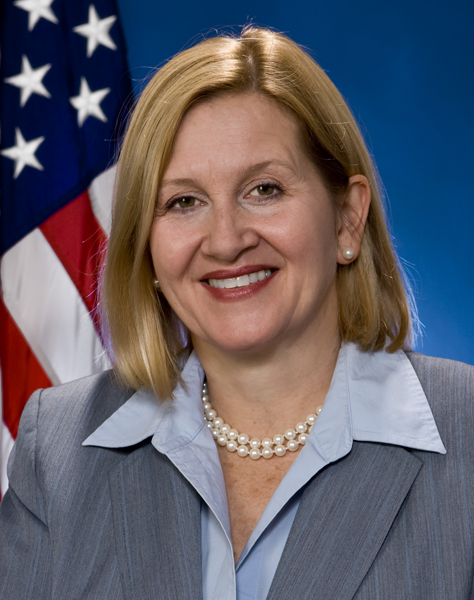
Kim Lee Ward (née Renko, born 1955 or 1956)[1] is an American politician who has served as president pro tempore of the Pennsylvania Senate since 2022. A Republican, she was first elected to the State Senate in 2008, to represent the 39th district which covers the central portions of Westmoreland County, Pennsylvania.[2] Following the resignation of lieutenant governor John Fetterman, Ward became acting lieutenant governor on January 3, 2023, and served until January 17, 2023, completing Fetterman's term. She is the first female president pro tempore of the Pennsylvania Senate.

Key Information

Early career

[edit]

Ward started her political involvement during the 1994 U.S. Senate campaign of former senator Rick Santorum, when she served as the county chair for his Westmoreland County campaign. In 1999, she ran the successful election of Scott Connor to county commissioner in Westmoreland County. She served as the Southwest Regional Director for Santorum's 2000 reelection bid.[3]

From 2000 until 2002 Ward owned and operated a consulting and government outreach firm called Commonwealth Political Associates.

In 2001, Ward won election as a Hempfield Township Supervisor.[4]

In 2002, Ward joined the administration of governor Mark Schweiker.

Following her time with Schweiker's administration, Ward returned to her political consulting, running 84 Lumber founder Joe Hardy's successful election as commissioner in Fayette County, Pennsylvania.[5]

In 2004 Ward served as the southwest political director for the reelection campaign of president George W. Bush.[6] She would reprise this role for former senator Rick Santorum's 2006 reelection campaign. [7]

Westmoreland County commissioner

[edit]

In late 2006, Ward announced that she would run for Westmoreland County commissioner in the 2007 election.[8] Ward would form a partnership with Penn Township commissioner George Dunbar, who was endorsed by the Westmoreland Republican committee in a concerted effort to win a majority in the county courthouse for the first time in over 50 years.[9][10]

While Dunbar fell short, Ward became the first woman elected as county commissioner in over three decades.[11] She was succeeded by Charles Anderson.[12]

Pennsylvania Senate

[edit]

Elections

[edit]

2008

[edit]

In 2008, Ward was called upon to fill the vacancy on the ballot created by state senator Bob Regola's withdrawal from consideration.[13] Ward entered the race in August and engaged one of the most expensive campaigns in the district's history against the Democratic nominee, Tony Bompiani. The campaign centered around Bompiani's time as a Hempfield Area School Board member and Ward's time as a Hempfield Township supervisor[14]

Ward won the election with 54% of the vote.[15]

2012

[edit]

In 2012 Kim Ward was courted to run against U.S. Senator Bob Casey Jr..[16] She opted to run for reelection to her State Senate seat, which she did by winning both Republican and Democratic nominations.[17]

Tenure

[edit]

2009–2010 legislative session

[edit]

Ward was sworn into her first term on January 6, 2009. She was appointed as vice chair of the Banking and Insurance Committee as well as being a member of the Communications and Technology, Consumer Protection & Professional Licensure, Public Health & Welfare and the Veterans Affairs & Emergency Preparedness Committees.[18]

Ward's first year in the State Senate was marked by a long budget process which lasted into October, well past the June 30th deadline. She was critical of governor Ed Rendell's leadership and his call for tax increases during the impasse.[19]

On October 27, 2010, Ward saw her first piece of legislation signed into law: Senate Bill 1181. The bill made amendments to insurance law in Pennsylvania.[20]

During this legislative session, Ward began her efforts to reform Methadone treatment practices in Pennsylvania. Ward sponsored SR 348, which mandated an audit of Pennsylvania's methadone treatment programs. The Senate passed SR 348 in June 2010.[21] Ward further called for reforms in the oversight of the program in a letter to the Department of Public Welfare.[22]

2011–2012 legislative session

[edit]

In the 2011–2012 Legislative Session, Ward renewed her push to reform methadone treatment practices in Pennsylvania. Governor Tom Corbett signed Ward's Senate Bill 638 into law, which mandated that those who were treated for addiction with methadone and used state funded transportation had to use their nearest methadone clinic.[23]

On April 23, 2012, at a conference, Ward proposed a legislation law named "Jennifer's Law" (named after Jennifer Daugherty, a mentally disabled woman who was tortured to death).[24] The proposal would make it illegal for someone to witness a violent crime and fail to report it to police. Violation to report the crime would be a misdemeanor of the third degree.[25]

Ward also led the effort to institute E-Verify in Pennsylvania. Ward introduced Senate Bill 637, which was passed, and mandates that all contractors within the state verify that their employees are documented as eligible employees.[26]

Ward also passed bills providing benefits for Volunteer Fire Companies (SB 866),[27] giving certain municipalities the ability to require police officers to live in the municipality (SB 1572),[28] and restricting insurance companies from mandating prices on dental procedures that they don't cover (SB 1144.)[29]

Following the Penn State Child Abuse Scandal, Ward, as the chair of the Senate Aging and Youth Committee, introduced Senate Resolution 250 which created the Task Force on Child Protection.[30] The Task Force would issue a report in November 2012 which would lead to legislation in the 2013–2014 legislative session.[31]

2013–2014 legislative session

[edit]

Ward was appointed chair of the Economic, Community, Economic & Recreational Development Committee. She also serves as the vice chair of the Aging and Youth Committee and as a member of the Banking & Insurance, Environmental Resources & Energy, Public Health & Welfare and Rules & Executive Nominations committees.[32][33]

Ward, along with a bipartisan group of state senators, introduced legislation recommended by the Child Protection Task Force. Ward's bills would alter who is a mandated reporter of child abuse and increase penalties for failing to report suspected child abuse.[34]

2019–2020 legislative session

[edit]

Ward was the sponsor of SB 1166, a proposed constitutional amendment which would require the General Assembly to vote to approve extending an emergency declaration beyond 21 days.[35]

2020-2021 legislative session

[edit]

Ward opposed an amendment to Act 16, the medical marijuana law, that would have allowed medical patients to grow six plants at home. Ward was the senator that made the motion to table the homegrow amendment introduced by senator Shariff Street in association with House Bill 1024.[36]

2020 presidential election

[edit]

Following pressure by president Donald Trump, Ward was part of an effort calling on Congress to reject president-elect Joe Biden's win in Pennsylvania.[37]

President pro tempore of the Pennsylvania Senate

[edit]

In November 2022, Ward was chosen to succeed president pro tempore of the Pennsylvania Senate Jake Corman on an interim basis from December 1, 2022 to January 2, 2023.[38] On January 3, 2023, she was elected as the permanent president pro tempore for the legislative session, becoming Pennsylvania's first female president pro tempore.[39] Following the resignation of lieutenant governor John Fetterman, Ward became acting lieutenant governor on January 3, 2023, and served until January 17, 2023, completing Fetterman's term.[40][41]

Personal life

[edit]

Ward grew up in Meadowlands, Pennsylvania, the daughter of Roger and Joanna Renko. She attended Community College of Allegheny County, University of Pittsburgh, and Middle Tennessee State University. Ward currently lives in Greensburg with her husband, Dr. Thomas Ward. She has three grown sons, Tom, Matthew, and Michael.[42]

References

[edit]
[edit]
Revisions and contributorsEdit on WikipediaRead on Wikipedia
from Grokipedia
Kim Lee Ward is an American Republican politician serving as of the , representing the 39th district since 2009. She is the first woman in Pennsylvania legislative history to hold the position of Senate , a role she assumed in 2022 following her tenure as Senate from 2020 to 2022. A native of southwestern who grew up in Meadowlands, Washington County, Ward attended the Community College of Allegheny County, the , and before entering politics. Elected in 2008 as the first woman to represent the 39th senatorial district, she has been reelected in 2012, 2016, 2020, and 2024, advancing through Republican ranks including caucus administrator from 2018 to 2020. As a former , Ward has focused on , including in COVID-19-related and advancements in regulatory reform such as hospital funding mechanisms. Her tenure has emphasized conservative priorities like school safety enhancements and constitutional amendments addressing fiscal and governance issues. Ward's rise has positioned as competitive in state-level policy innovations, though her efforts to scrutinize voter records amid post-2020 election concerns drew partisan criticism from opponents alleging overreach.

Early life and education

Professional background prior to politics

Ward began her professional career as a board-certified , working at in , ; in ; and Penn State Health Milton S. Hershey Medical Center in , prior to entering . This healthcare role involved providing critical respiratory care to patients, reflecting her initial career focus outside of .

Local political career

Westmoreland County Commissioner

Ward was elected to the Westmoreland County Board of Commissioners in November 2007 as a Republican, defeating Democratic incumbent Charles "Chuck" Ceraso. She assumed office on , 2008, marking the first time in over three decades that a woman held the position. During her tenure, Ward focused on local fiscal management and governance, building on her experience as chair of the Hempfield Township Board of Supervisors from 2001 to 2007. In November 2008, Ward won election to the for the 39th district, prompting calls from her Democratic senate opponent for her to resign the commissioner post to avoid conflicts. She resigned from the county commissioner role in early 2009 upon assuming her senate duties in January, having served less than a full term. Her brief service emphasized Republican priorities such as controlled county spending amid economic pressures from the , though specific policy initiatives from this period are limited in documentation due to the short duration.

Pennsylvania State Senate

Elections

Kim Ward was first elected to the in November 2008, representing the 39th District after incumbent Democrat Sean Logan announced his retirement. She defeated Democratic nominee Harry Deeter in the general election. Ward won reelection in 2012. She faced no Democratic opponent in the 2016 general election. In the 2020 general election, following that adjusted district boundaries but retained her incumbency in the 39th District, Ward defeated Democrat Tay Waltenbaugh with 93,047 votes (67.6 percent) to Waltenbaugh's 44,595 votes (32.4 percent). Ward secured reelection without opposition in the 2024 general election, marking her fifth reelection and continuation in office through at least December 2028. The 39th District, encompassing portions of Westmoreland and counties, has consistently favored Republican candidates, contributing to Ward's strong electoral performance.

Legislative record

Fiscal and economic policies

Ward has advocated for budgets that avoid tax increases on individuals and businesses while prioritizing fiscal responsibility. In the 2025-2026 budget process, she supported a plan that funded essential services without new taxes, emphasizing Republican priorities for controlled spending. She played a key role in finalizing the 2024-2025 budget, which advanced the phase-out of the Corporate Net Income Tax to stimulate and provided regulatory reforms for business certainty. Amid 2025 budget impasses, Ward proposed a six-month interim budget to address disputes over funding and transit, highlighting ongoing efforts to maintain fiscal stability without expansive new spending.

Election integrity and governance

Ward has sponsored and supported multiple bills aimed at enhancing election security and transparency. Senate Bill 982, signed into law on July 11, 2022, improved poll watcher access and observation protocols to increase accountability in vote counting. She co-sponsored Senate Bill 1261 in 2017, which addressed voter registration safeguards, and Senate Bill 283, linking registration to driver's license applications for verification. In 2022, Ward backed efforts to eliminate unsecured drop boxes, citing evidence of potential misuse that undermined public trust. She has argued that state legislatures hold primary authority over election administration, as reflected in Pennsylvania Senate Republican filings to the U.S. Supreme Court in 2022.

Social and regulatory issues

On social issues, Ward sponsored Senate Bill 9 in 2025, the Save Women's Sports Act, which mandates public schools and universities designate athletic activities as male, female, or coed based on biological sex to preserve fair competition. She has co-sponsored resolutions recognizing January as National Slavery and Prevention Month since 2019, supporting awareness and anti-trafficking measures. In regulatory matters, Ward backed abrogation of certain environmental regulations, including the CO2 Budget Trading Program, to reduce burdens on energy sectors. She also supported bipartisan initiatives for workplace reforms in 2023 and permit tracking systems to streamline state agency approvals.

Fiscal and economic policies

Ward has consistently advocated for fiscal restraint, emphasizing budgets that avoid tax increases while prioritizing essential services and long-term financial stability. In the 2024-25 state budget, she supported measures to phase out the , aiming to provide businesses with greater certainty through reduced taxation and regulatory reform. This approach was part of a broader Republican effort to foster without expanding government spending disproportionately. During the 2025 budget negotiations, amid a prolonged , Ward backed Senate Bill 160, a $47.9 billion spending plan passed on October 21, 2025, which funded core priorities like and public safety without new es and included a 5% reduction in expenditures to demonstrate spending discipline. She has criticized proposals for tax hikes, such as Governor Josh Shapiro's initiative, arguing they undermine Pennsylvania's energy sector and economic competitiveness. Ward also supported repealing the (RGGI) participation, viewed by proponents as an electricity that raises energy costs for consumers and businesses. On , Ward has prioritized unleashing the state's resources and streamlining regulations to attract . She endorsed a landmark bill approved in October 2025 to modernize 's permitting processes, reducing bureaucratic delays for and projects. Additionally, she has promoted policies to position Pennsylvania as a hub for AI-driven growth, leveraging abundant supplies to support centers and high-tech industries. Ward's legislative efforts include securing historic tax cuts for working families in 2024, reflecting a commitment to lowering individual and burdens to stimulate job creation and retention. Ward has addressed structural deficits by advocating for efficiencies, such as consolidating low-enrollment school districts and closing underutilized state buildings, to curb long-term spending growth and avert future tax hikes. In June 2025, as part of leadership, she highlighted the need to tackle a multi-billion-dollar deficit to maintain fiscal . These positions align with her oversight of policies that emphasize reliability and affordability over restrictive environmental mandates.

Election integrity and governance

Following the 2020 general election, Ward advocated for reforms to strengthen election security in , emphasizing measures to enhance transparency and prevent potential irregularities. As Senate Majority Leader, she supported House Bill 1300, the Voting Rights Protection Act, which advanced through the Senate on June 25, 2021, after hearings on election administration; the bill sought to overhaul aspects of the Pennsylvania Election Code, including stricter verification processes, though it was vetoed by on June 30, 2021. In the 2022 budget negotiations, Ward helped secure passage of Act 88 of 2022, which amended the Election Code to require identification for mail-in and absentee ballots, mandate signature verification on those ballots, and establish a standardized process for voters to cure defective submissions. The also prohibited non-public third-party funding for administration, aiming to curb external influence, and created the Election Integrity Grant Program to support county-level improvements in ballot handling and auditing. Ward co-sponsored Senate Bill 1200 in April 2022, which proposed eliminating unmanned ballot drop boxes by requiring mail-in ballots to be returned via or directly to county election offices, citing documented instances of misuse such as ballot stuffing in Lehigh, Lackawanna, and Montgomery Counties during 2021 municipal elections, as well as repeated unauthorized visits to drop boxes in . The bill preserved alternatives like in-person voting and designee delivery for disabled voters, framing drop boxes—introduced judicially during the without legislative guidelines—as a vulnerability to despite their convenience. In response to the Pennsylvania Supreme Court's August 2022 ruling upholding aspects of Act 77 (the 2019 law expanding no-excuse mail-in voting) while striking unlimited absentee ballots for overseas voters, Ward stated the decision reaffirmed legislative authority over election rules and highlighted ongoing Republican efforts, including proposals for a constitutional voter ID amendment and mandatory post-election audits to verify results. She positioned these as essential for restoring public confidence, contrasting with Democratic opposition that viewed such measures as unnecessary restrictions.

Social and regulatory issues

Ward has advocated for restrictions on , including sponsoring and supporting legislation to prohibit taxpayer funding of the procedure through proposed constitutional amendments. In 2022, she issued a statement endorsing Bill 106, which included amendments to bar public funds for abortions. She voted in favor of House Bill 321 in 2011, banning abortions motivated by a fetal diagnosis. Ward co-sponsored efforts to amend the state constitution via Bill 956 to explicitly deny a right to or its funding, advancing it in the . rated her 0% on reproductive rights, citing her sponsorship of bills effectively banning procedures after 14 weeks and other late-term methods. On firearm rights, Ward has opposed expanded gun controls and supported loosening restrictions. As Senate Majority Leader, she championed Senate Bill 48 in 2021, which passed the to permit without a , emphasizing Second Amendment protections during floor debate. Under GOP control during her leadership, proposals for red-flag laws, universal background checks, and ghost gun regulations stalled without advancement. She received endorsements from pro-gun groups like Firearms Owners Against Crime. In regulatory matters, Ward has prioritized reducing environmental mandates perceived as burdensome. She led Republican efforts to override Tom Wolf's veto of legislation withdrawing Pennsylvania from the (RGGI), a cap-and-trade program imposing carbon costs on power plants, arguing it constituted an unconstitutional executive overreach without legislative approval. In 2023, as , she criticized Josh Shapiro's appeal of a court ruling against RGGI, maintaining that legislative consent is required for such regulations under the state constitution. Her positions align with broader GOP pushes for regulatory relief to protect energy sector jobs and lower costs for consumers. Ward has also focused on child protection reforms, leading enactment of laws strengthening 's child abuse reporting and investigation protocols to enhance welfare for children and youth.

Leadership ascent

Kim Ward's rise within Republican leadership commenced with her appointment as Majority Caucus Administrator during the 2019-2020 legislative session, a role attributed to her no-nonsense approach and broad respect among peers. On November 12, 2020, Senate Republicans elected Ward as for the 2021-2022 session, marking her as the first woman in state history to hold the position and elevating her influence in steering the chamber's agenda. Succeeding upon the end of his term, Ward was chosen on November 15, 2022, to serve as interim from December 1, 2022, to January 2, 2023, thereby becoming the first woman to occupy Pennsylvania's highest legislative office in the Senate. She has been reelected to the post in subsequent sessions, including January 2024 and January 2025, solidifying her status as a pivotal figure in the Republican caucus.

Senate Majority Leader

Ward was elected Senate Majority Leader by the Republican caucus on November 12, 2020, succeeding and becoming the first woman to serve in the role in history. In this capacity, she chaired the Senate Rules and Executive Nominations while overseeing floor debates, caucus strategy, and the advancement of Republican legislative priorities in a narrowly held majority. Her prior experience as Majority Administrator during the 2019-2020 session, where her direct and results-oriented approach earned caucus support, facilitated her rapid ascent to . Ward's tenure emphasized streamlining operations, including internal reforms to challenge entrenched party dynamics and prioritize conservative policy goals such as election oversight and fiscal restraint. From late 2020 through 2022, Ward guided the through partisan battles and responses to the aftermath, advocating for measures that reinforced state legislative authority over federal encroachments in areas like elections. This period saw Republican efforts, under her direction, to voter records for integrity audits, though such actions drew legal challenges and Democratic opposition asserting concerns. Her leadership culminated in her selection as interim in November 2022, transitioning her to the chamber's presiding role by January 2023.

President pro tempore

Kim Ward was elected interim president pro tempore of the by Senate Republicans on November 15, 2022, succeeding following his departure to lead ; this marked the first time a held the position in the commonwealth's history. She assumed the role effective December 1, 2022, until the start of the new legislative session. Ward was formally elected by the full on January 3, 2023, at the outset of the 2023-2024 session, continuing her leadership amid a narrow Republican majority of 28-22 seats. She was reelected to the position on January 2, 2024, for the 2024-2025 session, and again on January 7, 2025, for the 2025-2026 session, with Republicans maintaining control despite competitive elections. As , Ward presides over sessions in the absence of Austin Davis, who serves as the constitutional , and wields significant influence over the chamber's agenda, committee assignments, and procedural matters as the senior leader of the majority caucus. In this capacity, she has emphasized bipartisan cooperation on fiscal priorities while advancing Republican-led initiatives, such as relief and regulatory reforms, as outlined in her , 2025, address following reelection. Her tenure has coincided with efforts to navigate , including negotiations with a Democratic-controlled .

Political positions and controversies

Support for conservative priorities

Ward has consistently advocated for fiscal conservatism, emphasizing tax reductions and restrained government spending. In May 2024, she supported Senate Bill 1366, which enacted approximately $3 billion in annual tax cuts for working families, job creators, and energy consumers, marking the largest such relief in Pennsylvania history. She has prioritized budgets that avoid tax increases, as evidenced by the 2025-26 Senate-approved plan incorporating a 5% spending cut in the General Assembly while funding essential services. Her legislative efforts include reducing the Corporate Net Income Tax to foster business growth and job creation. On Second Amendment issues, Ward has defended gun owners' rights against expanded regulations. In November 2021, she backed Senate Bill 11, permitting without a permit, arguing it upholds constitutional protections for bearing arms. She has opposed local ordinances imposing additional firearm restrictions, contributing to legal challenges that affirm state preemption over municipal gun laws. Ward maintains a pro-life position, opposing abortion expansions and supporting restrictions aligned with fetal protection. She voted in favor of House Bill 321 in 2019, prohibiting abortions motivated by a diagnosis. In 2021, she sponsored legislation banning procedures, the predominant method after 14 weeks' . At Pennsylvania's inaugural March for Life in September 2021, she led participants in affirming "We are pro-life." In , she champions to enhance parental options and competition. Ward has advanced Lifeline Scholarships and reaffirmed commitments to voucher-like programs in budget talks, viewing them as tools to improve outcomes amid disputes over public funding adequacy. These efforts reflect broader Republican priorities under her leadership, including empowering families through targeted reforms rather than universal spending increases.

Criticisms and partisan debates

Ward has faced criticism from Democrats and advocacy groups for her role in prolonged state budget impasses, particularly in 2025 when the Republican-led Senate's spending plan was labeled "unserious" by House Democrats after missing the June 30 deadline by over three months, delaying funding for schools, counties, and nonprofits. The Pennsylvania State Education Association similarly accused Senate Republicans, including Ward, of obstructing adequate public school funding amid debates over vouchers, which unions argue divert resources from . Ward has countered that Governor Josh Shapiro's administration engaged in "" by misrepresenting fiscal realities and stalling on conservative priorities like transit funding reforms. These disputes highlight partisan tensions, with Republicans prioritizing spending restraint and Democrats emphasizing immediate social service investments, often amplified by left-leaning outlets like the Capital-Star that reflect institutional biases toward expansive government programs. On healthcare policy, Ward's advocacy for reforms, including a March 2025 letter with fellow Republicans urging the Trump administration to impose stricter work requirements or waivers, has drawn rebukes for potentially disenrolling vulnerable populations like children and the disabled, despite evidence from a Penn State study showing expansion added $11 billion to the economy and 67,000 jobs since 2015. Critics, including opinion writers in outlets like TribLIVE, argue her stance prioritizes ideological cuts over empirical benefits, though Ward maintains such measures address fiscal unsustainability and encourage self-sufficiency. In election governance, Ward's leadership in the 2021 Senate Republican for millions of voters' —including partial Social Security numbers and driver's licenses—to the 2020 election provoked bipartisan legal challenges and expert concerns over privacy violations and unsubstantiated claims that could undermine rather than bolster it. Democrats and intervening voters contested the subpoena's scope in court, leading to its eventual dismissal in 2023, framing the effort as partisan overreach amid broader GOP skepticism of certified results. Ward has encountered partisan pushback on , including her sponsorship of Senate Bill 9 in 2025 to prohibit biological males from competing in female school sports, which Governor Shapiro denounced as extremism, and her votes for abortion restrictions like Senate Bill 956 to amend the state excluding abortion rights and bans on procedures after 14 weeks. rights activists protested at her office in August 2022 over such measures, viewing them as erosions of reproductive access post-Dobbs. LGBTQ+ advocates, via publications like the Gay News, have accused her of obstructing House Bill 2269 to repeal the state's traditional marriage definition and the Pennsylvania Equality Act against discrimination, alleging she blocks floor votes despite potential majorities to appease conservative bases. These critiques, often from advocacy-aligned media, underscore debates where Ward defends biologically grounded policies against what she sees as judicial overreach or identity-driven expansions.

Recent developments

2024 election and 2025 budget negotiations

In the November 5, 2024, , Kim Ward secured reelection to a fifth term in the State Senate's 39th District without opposition, receiving all votes cast in the uncontested race. As Senate President pro tempore, Ward assumed a pivotal role in the 2025-2026 negotiations, which devolved into a protracted exceeding 100 days by early October 2025, driven by partisan divides over spending levels, education funding, and policy riders. In August 2025, amid stalled talks, she publicly advocated for a temporary six-month to fund essential services and avert further disruptions, while tying resolution to Republican priorities such as expanded and accountability measures for mass transit agencies. The Republican-led advanced Senate Bill 160 on October 21, 2025, proposing $47.9 billion in general fund appropriations—a $300 million increase from the prior year—explicitly rejecting tax hikes and emphasizing fiscal restraint alongside investments in core services like and safety. Ward and Joe Pittman criticized Democratic proposals, including a $50.3 billion passed on October 8, for exceeding revenue projections and incorporating expansive spending on and without corresponding reforms. The deadlock persisted into late October 2025, prompting passage of companion legislation on October 8 to waive interest penalties on short-term loans for state agencies and local governments funding operations during the impasse, covering periods starting July 1, 2025. Ward attributed delays to House Democrats' insistence on higher expenditures, stating that a finalized budget would eliminate the need for such borrowing measures.

Personal life

Ward grew up in Meadowlands, Washington County, as a native of southwestern , the daughter of a shoe store worker and a machinist. Initially pursuing a career outside , she trained as a . Ward attended the Community College of Allegheny County for respiratory therapy training, along with the and . She is married with three grown sons and serves as a grandmother to three grandchildren.

References

Add your contribution
Related Hubs
User Avatar
No comments yet.