Hubbry Logo
Lake PalestineLake PalestineMain
Open search
Lake Palestine
Community hub
Lake Palestine
logo
8 pages, 0 posts
0 subscribers
Be the first to start a discussion here.
Lake Palestine
Lake Palestine
from Wikipedia

Lake Palestine is a freshwater reservoir in northeast Texas, created for industrial, municipal, and recreational purposes.

Key Information

Description

[edit]
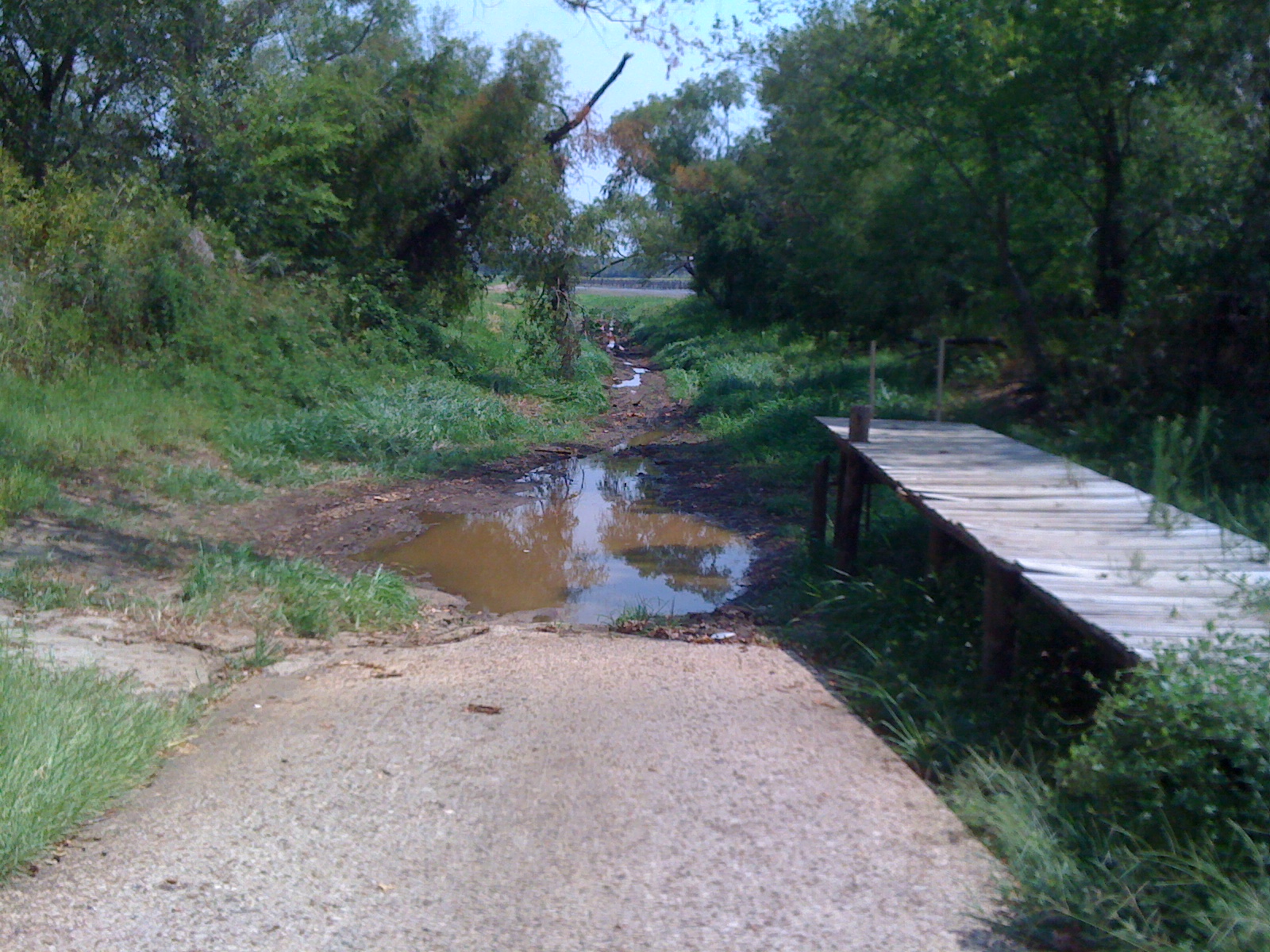
A large section of dry lake-bed, located near the lake's northwesternmost section during Summer 2011 drought conditions.
A public boat launch located near the city of Chandler. High water levels are seen here (March 2015).

The reservoir was formed by the construction of the 5720-foot-long Blackburn Crossing Dam on the Neches River.[2] The project was started in 1960 and completed on June 13, 1962. The resulting lake is 18 miles long, stretching northwest to southeast, with 135 miles of shoreline. The widest part of the lake is 4 miles across.[3] The lake is primarily fed by waters from the Neches River and Kickapoo Creek.

The lake is located in parts of four counties: Anderson, Cherokee, Henderson, and Smith.

According to the Texas Water Development Board 2012 Survey, the storage capacity of Lake Palestine is 367,312 acre-feet with a surface area of 23,112 acres at the conservation pool elevation of 345 feet above mean sea level. The drainage area above the dam is approximately 839 square miles.[4]

The Tarrant Regional Water District and the City of Dallas Water Utilities partnered to build a $2.3 billion pipeline which extends 150 miles from Lake Palestine to Lake Benbrook. The project began in 2014 and is expected to be completed in phases between 2018 and 2030. Area businesses expressed alarm at the possibility that cities could pump the lake dry at any time, however officials stated that lake level declines would be 50 percent from evaporation and 50 percent pumped water, in line with management at other lakes.[5]

The lake offers an array of freshwater fish species including bass, crappie and catfish.

See also

[edit]

References

[edit]
[edit]
Revisions and contributorsEdit on WikipediaRead on Wikipedia
from Grokipedia

Lake Palestine is a man-made reservoir located on the Neches River in East Texas, spanning northeastern Anderson, southeastern Henderson, southwestern Smith, and northwestern Cherokee counties.
Impounded by an earthfill dam 5,720 feet long and 75 feet high, owned and operated by the Upper Neches River Municipal Water Authority, it provides conservation storage of 367,312 acre-feet with a surface area of 23,112 acres at the conservation pool elevation of 345 feet above mean sea level.
Authorized in 1956, deliberate impoundment commenced in 1962 with the original dam's completion, followed by an enlargement project finished in 1971 to increase capacity.
The reservoir's primary functions include municipal and industrial water supply, floodwater storage and control, recreation such as boating and fishing, and support for wildlife preservation.

Geography and Hydrology

Location and Basin

Lake Palestine is a situated in , spanning primarily Anderson, Cherokee, Henderson, and Smith counties, impounded by a on the . The lake's main channel follows the , which demarcates the boundary between Henderson County to the west and Smith County to the east. The reservoir lies within the Neches River Basin, the third-largest river basin entirely contained in by watershed area and the fourth-largest by average flow volume. This basin drains approximately 10,011 square miles, encompassing the and its tributaries upstream of the lake, with the Angelina River contributing to the broader system downstream near the basin's confluence with the Sabine River. Positioned about 15 miles southwest of , and adjacent to the city of —for which the lake is named—the reservoir occupies a landscape in the ecoregion, featuring rolling terrain with dense pine-hardwood forests, sandy soils, and elevations ranging from 250 to 500 feet above sea level. The surrounding includes gently sloping hills and bottomlands typical of this humid subtropical forest region, supporting a mix of loblolly and shortleaf pines interspersed with oaks and other hardwoods.

Physical Characteristics and Formation

Lake Palestine is an artificial reservoir impounded on the Neches River in eastern Texas, engineered primarily for municipal and industrial water supply with secondary flood control capabilities. The lake's formation relies on the Blackburn Crossing Dam, an earthfill embankment structure that creates the reservoir by damming the river, controlling water flow and storage within the Neches River Basin. The spans 5,720 feet in length, including the , and reaches a maximum height of 75 feet above the streambed, with a top width varying from 20 to 21.3 feet. Its design incorporates an emergency for overflow management, enabling the structure to handle peak discharges up to 187,056 cubic feet per second. At full pool elevation of 345 feet above mean , the exhibits a surface area of 25,560 acres, a maximum depth of 58 feet near the , and an average depth of 16 feet. The conservation storage capacity stands at 411,290 acre-feet, while total storage, including flood pool allocation, reaches approximately 1,045,000 acre-feet, supporting regulated releases for downstream flood mitigation alongside sustained water yield.

Hydrology and Water Levels

Lake Palestine receives its primary inflow from the and tributaries such as Kickapoo Creek, with a contributing drainage area of approximately 839 square miles upstream of the Blackburn Crossing . The reservoir operates at a conservation pool elevation of 345 feet above mean , corresponding to a storage capacity of 367,312 acre-feet and a surface area of 23,112 acres. Water levels typically fluctuate by up to 2.2 feet annually under normal conditions, influenced by seasonal rainfall patterns in the region, where higher inflows occur during wetter spring and fall periods due to convective storms and frontal systems. Historical records demonstrate significant responses to climatic extremes, with dam operations used to moderate levels and prevent flooding or excessive drawdown. During the severe 2011-2012 drought, one of Texas's most intense on record, water levels fell approximately 5 feet below conservation pool, reaching around 340 feet, exposing shorelines and reducing storage amid statewide precipitation deficits exceeding 50% below average. In contrast, flood events have pushed levels higher; the record crest of 349.31 feet occurred on May 19, 1989, following heavy upstream rainfall, while levels reached 349.02 feet during events in 2007, 2014, and 2015, activating spillways to release excess flow. These fluctuations highlight the lake's sensitivity to basin-wide , with inflows varying from minimal during prolonged dry spells to peaks exceeding design capacities during intense storms. As part of the upper Basin, Lake Palestine plays a key role in regional flow regulation, attenuating peak discharges to downstream reaches, including B.A. Steinhagen and the , thereby reducing flood risks in the lower basin and maintaining navigable depths for commercial traffic in Sabine Lake. Outflows are controlled via the dam's service and emergency spillways, with the emergency crest at 345 feet and maximum design elevation at 355.3 feet, ensuring controlled releases that support ecological baseflows while mitigating extremes from the 10,000-square-mile upstream influences. Empirical data from USGS and state monitoring underscore stable long-term management, with levels recovering post-drought through natural recharge and operational storage.

History

Planning and Initial Development

The severe droughts of the early 1950s in underscored the need for expanded to support burgeoning industrial and municipal demands in , prompting regional authorities to prioritize development over reliance on unregulated river flows. The Upper Neches River Authority initiated planning for what would become Lake Palestine as a strategic response to these pressures, focusing on harnessing the for dependable supply amid post-World War II economic expansion in counties like Anderson, Henderson, Smith, and Cherokee. Application No. 1975 was submitted to the State Board of Water Engineers, culminating in the issuance of Permit No. 1832 on July 12, 1956, which authorized the to impound up to 410,000 acre-feet of storage primarily for industrial purposes (with an initial annual allocation of 84,000 acre-feet) and secondary municipal and recreational uses. This permit reflected a pragmatic assessment of the site's within an 839-square-mile , emphasizing for local growth rather than ecological preservation of the free-flowing river system. Feasibility evaluations during the planning phase highlighted the reservoir's potential to mitigate supply shortages for expanding industries and populations, while incorporating recreational benefits to garner broader support, without delving into detailed for construction, which followed authorization. These efforts aligned with statewide initiatives to catalog and develop systematically, as outlined in contemporaneous water planning documents that stressed economic utility in drought-prone regions.

Construction and Early Operations

Construction of the Blackburn Crossing Dam, which impounds Lake Palestine on the in Anderson and counties, , commenced in 1960 under the auspices of the Upper Neches River Municipal Water Authority. The project, engineered by Forrest and Cotton, Inc., aimed primarily to provide municipal and industrial , with the original structure designed to create a extending upstream from the site approximately 4 miles east of Frankston. The dam reached completion on June 13, 1962, marking the initiation of deliberate impoundment that year. This earthen structure, spanning 5,720 feet in length, facilitated the accumulation of water to support regional demands, particularly for the city of , by harnessing the Neches River's flow for controlled storage. Initial filling operations proceeded methodically to achieve the conservation pool elevation, establishing the reservoir's baseline capacity for without immediate reliance on downstream or power integrations, which were not primary design objectives. Early post-construction activities emphasized hydrological stabilization and monitoring to verify the reservoir's efficacy for potable and industrial applications, reflecting causal priorities of inflow and control in the Neches basin. By the mid-1960s, the lake's operational framework solidified its role in mitigating seasonal variability in river discharge, providing a reliable augmentation to local aquifers and surface diversions.

Enlargement and Modernization

The enlargement of Lake Palestine commenced on , 1969, as a response to escalating water requirements stemming from expansion in municipalities including Tyler, Jacksonville, and , alongside demands from regional industrial activities. This initiative formed part of a multi-stage development framework originally authorized in 1956 by the , aiming to augment the reservoir's storage beyond its initial constraints to support sustained municipal and industrial allocations. Engineering efforts focused on elevating the Blackburn Crossing Dam's structure and the conservation pool elevation from 317 feet to 345 feet above mean , which expanded the lake's surface area and depth profile. The project concluded on March 3, 1971, yielding a designed conservation storage capacity of 411,840 acre-feet— a substantial rise from the pre-enlargement volume of 30,500 acre-feet—thereby bolstering the reservoir's reliability for amid projected growth in user withdrawals. Post-completion modifications to the , including enhancements documented in subsequent inspections, further refined hydraulic performance and flood mitigation without altering core storage parameters. These adjustments addressed operational efficiencies identified in routine evaluations by state authorities.

Ecology and Environment

Aquatic and Terrestrial Ecosystems

The of Lake Palestine features a community shaped by the impoundment of the , with dominant sport species including (Micropterus salmoides), (Pomoxis annularis), (P. nigromaculatus), (Ictalurus punctatus), (I. furcatus), and (Pylodictis olivaris). (Morone chrysops) and (M. chrysops × M. saxatilis), the latter introduced as a non-native predator to enhance dynamics, contribute to seasonal abundances, particularly during upstream migrations in spring. These populations reflect reservoir-specific conditions, where limited natural spawning substrates favor reliance on empirical to sustain biomass and angler harvest. State-directed stocking programs introduce non-native and genetically selected strains to counter recruitment shortfalls, including annual releases of hybrid striped bass at 10 fish per acre and Florida-strain largemouth bass at 1,000 fingerlings per kilometer of shoreline. Boating activities vector additional non-native aquatic organisms, such as invasive plants, altering habitat structure, though deliberate stockings prioritize species balances observed in electrofishing surveys and creel data. Terrestrial ecosystems border the reservoir in riparian zones dominated by pine-hardwood forests of the West Gulf Coastal Plain ecoregion, incorporating loblolly pine () with deciduous hardwoods like oaks and hickories adapted to periodic flooding. These transitional habitats sustain ( virginianus), which forage on understory vegetation and browse influenced by water level cycles. Avian species, including woodpeckers and waterbirds, exploit the edge effects for nesting and insect resources, while amphibians such as bullfrogs (Lithobates catesbeianus) and tree frogs thrive amid drawdown-exposed mudflats and reflooded shallows, exhibiting life histories resilient to the reservoir's hydrologic regime.

Wildlife Management and Conservation Efforts

The (TPWD) oversees wildlife management at Lake Palestine, with a primary focus on sustaining populations through targeted stocking programs. Annual stocking of at rates of 10 fish per acre—temporarily increased to 15 per acre in 2021—and or Lone Star at 1,000 fish per kilometer of shoreline has supported consistent success, particularly for largemouth bass tournaments. enhancement efforts include a 2012 TPWD project funded by $10,000 from the Reservoir Fisheries Habitat Project, which planted five species of native aquatic vegetation within 30 protective exclosure cages along over one mile of shoreline to provide cover, food sources, and improved for fish while reducing and algal blooms. These initiatives leverage natural features such as standing timber, rocks, and boat docks to bolster prey species like and shad, contributing to stable predator populations. Conservation measures emphasize control and population monitoring to maintain ecological balance. TPWD conducts bimonthly treatments from November to March and monthly from May to , treating hundreds of acres annually—such as 196.2 acres of giant and common in 2021–2022—often using private contractors since 2022, alongside annual vegetation surveys and public education via signage to prevent spread. Regular assessments via , gill netting, and creel surveys demonstrate population stability post-impoundment and after events like the 2018 : catch rates averaged 55.3 fish per hour with a proportional stock density (PSD) of 63 indicating good size structure; remain abundant at 19.0 per net night; and have rebounded to 3.4 per net night by 2021. Updated regulations, such as the 2021 trophy limits for and (25 fish daily, with caps on larger sizes), promote sustainable without overly restrictive measures that could limit recreational access. For waterfowl, management integrates hunting opportunities with habitat considerations, permitting duck hunting on lake surfaces and Upper Neches River Municipal Water Authority properties under state regulations, accessible via TPWD's Annual Public Hunting Permit. Nearby TPWD-managed areas like Gus Engeling Wildlife Management Area support alongside small game, ensuring regional sustainability through controlled seasons and public access that balances utilization with preservation. These efforts yield practical outcomes, including high angler harvest rates—94% of caught are kept—and rebounding temperate bass stocks, reflecting effective integration of and conservation.

Environmental Impacts and Challenges

Lake Palestine, like many reservoirs, experiences eutrophic conditions due to enrichment from upstream agricultural runoff and discharges, resulting in elevated chlorophyll-a levels and high biological productivity. The Commission on Environmental Quality (TCEQ) classifies the lake as eutrophic based on assessments incorporating total phosphorus, total nitrogen, and secchi depth metrics, with data from 2016-2020 indicating productivity levels that support dense growth but risk oxygen depletion in deeper strata. An earlier U.S. Agency survey confirmed this status, noting the reservoir's nutrient-rich state fosters algal proliferation, though primary uses such as remain supported under monitored conditions. Sedimentation from eroded soils in the 8,700-square-mile basin, exacerbated by row-crop farming and construction, has progressively reduced storage capacity since impoundment in 1962, with upstream tributaries contributing fine silts that settle in low-velocity zones. The Angelina & Neches River Authority (ANRA) reports ongoing sediment accumulation on the lake bottom, prompting localized dredging to preserve navigable depths in coves and channels, as full-scale reservoir dredging proves economically unfeasible without forgoing hydropower and flood control benefits. These interventions, including private dock maintenance, mitigate shallowing but highlight the irreversible trade-off of impoundment: sediment trapping enhances water clarity short-term yet demands perpetual management to counter basin-wide erosion rates estimated at 1-2 tons per acre annually in vulnerable sub-watersheds. Invasive species, notably giant salvinia (), have proliferated since at least 2008, forming expansive floating mats that outcompete native vegetation, block sunlight, and lower dissolved oxygen, thereby degrading fish habitats and recreational access. (TPWD) efforts, including applications and mechanical removal, target infestations in areas like Cobb Creek, where dense coverage persists despite controls, illustrating how reservoir stagnation facilitates non-native establishment over the dynamic, scouring flows of the pre-dam . Periodic algal blooms, linked to spikes during warm seasons (water temperatures reaching 30-35°C), further challenge by producing taste-and-odor compounds and potential toxins, though TCEQ monitoring indicates no widespread exceedances threatening designated uses as of 2024. These impacts underscore causal realities of —nutrient retention and habitat homogenization yield reliable supply at the cost of ecological shifts unamenable to full reversal without dismantling .

Water Management

Primary Purposes and Operations

Lake Palestine functions primarily as a for municipal and industrial water supply in , with secondary objectives of and incidental flood control through storage and regulated releases of inflows. The Upper Neches River Municipal Water Authority (UNRMWA), established in , operates the facility under its mandate to store, control, conserve, and distribute unappropriated river flows for these utilitarian ends, prioritizing regional water security over other considerations. Conservation storage capacity stands at 367,312 acre-feet, supporting authorized diversions that meet primary demands without reliance on ecological quotas. Daily operations involve monitoring and adjusting lake levels to balance withdrawals, inflows, and outflows, including controlled releases averaging tens of cubic feet per second (CFS) to fulfill downstream obligations and maintain . UNRMWA conducts periodic drawdowns for maintenance, removal, and preservation, as governed by its rules ensuring quantity and purity for supply purposes. These practices have enabled sustained withdrawals—such as contractual supplies to entities like the City of Palestine—accommodating regional growth, with historical data from Water Development Board planning indicating no chronic shortages under normal hydrologic conditions.

Allocation and Supply Infrastructure

The Trinity River Authority of Texas (TRA) oversees water allocation from Lake Palestine, primarily through long-term contracts that prioritize municipal and industrial users in while accommodating downstream demands. Contracts supply raw water to the cities of Tyler, , and , with Tyler holding rights to approximately 15 million gallons per day (MGD) from the reservoir alongside its Lake Tyler sources, while relies on Lake Palestine for a significant portion of its municipal needs, estimated at over 50% of its allocation share. accesses water via the Integrated Pipeline project, coordinated with Tarrant Regional Water District, transporting up to 100 MGD eastward to supplement metropolitan supplies during droughts. Supply infrastructure consists of intake structures, raw water pumping stations, transmission pipelines, and treatment facilities tailored to contract holders. Tyler's system features the Lake Palestine Water Treatment Plant, capable of processing up to 20 MGD, supported by variable frequency drive pumps and recent upgrades including $240,000 in design contracts for equipment replacement to address aging infrastructure and ensure reliability. Pipelines extend from the lake's intake near Frankston to treatment sites, with additional booster stations maintaining pressure for distribution; for instance, a $2.1 million water line project in Tyler enhances delivery to northern areas. Dallas's allocation relies on the 140-mile Integrated Pipeline, completed in phases since 2013, which conveys untreated water from Lake Palestine westward for treatment at downstream facilities. Texas Water Development Board (TWDB) evaluations project Lake Palestine's firm yield—calculated under drought-of-record conditions—supports contracted demands through 2060, with total storage of 367,312 acre-feet at conservation pool elevation enabling an annual yield exceeding 200,000 acre-feet when combined with inflows, though and variability necessitate monitoring. Local prioritization allocates first to upstream users like Tyler and for essential services, with excess available for export; conservation measures, including mandatory restrictions during 2025 treatment plant outages, have reduced per capita use by up to 20% in affected areas, extending supply viability amid competing industrial and agricultural pressures.

Recent Developments in Resource Planning

In the early , planning advanced for the Integrated (IPL), a 149-mile transmission system designed to convey up to 350 million gallons per day from Lake Palestine eastward in the Neches River Basin to reservoirs in , including connections to Cedar Creek Reservoir and delivery points for Water Utilities. This interbasin transfer initiative, led by the Tarrant Regional Water District and , addressed projected water shortages in the rapidly growing Dallas-Fort Worth metroplex amid droughts, such as the severe 2011 event that reduced Lake Palestine's levels significantly. Construction progressed in phases, with Phase 3 focusing on the Lake Palestine intake pump station and initial conveyance to Cedar Creek by 2022, enabling initial deliveries while preserving local allocations through firm yield calculations estimating sustainable exports of over 100,000 acre-feet annually without compromising regional reliability. The IPL was incorporated into the 2021 Texas Regional Water Plans, particularly Region C, which identified interbasin transfers from as a key strategy for resilience, projecting that such could offset up to 20% of unmet demands in by 2070 under moderate growth scenarios. These plans, coordinated by the Water Development Board, emphasized empirical modeling of inflows, , and sedimentation to confirm Lake Palestine's excess capacity—rooted in its 1956 authorization with a conservation pool yield supporting both local users like the City of Tyler and export sales for revenue generation. Economic analyses highlighted benefits for Lake Palestine's operators, such as the North East Municipal Water , through wholesale contracts yielding millions in annual revenue to fund maintenance and upgrades, countering claims of depletion by demonstrating that transfers utilize only surplus beyond local firm commitments. Opposition from some stakeholders, including legislative efforts in 2025 to restrict exports via Senate amendments, has been criticized as parochial resistance prioritizing short-term local control over broader economic pragmatism, despite hydrological data affirming —Lake Palestine's average inflows exceed 1.5 million acre-feet yearly, far surpassing combined municipal and export demands. Proponents argue such transfers exemplify causal realism in water management, leveraging geographic surpluses to mitigate urban shortages without new reservoirs, as evidenced by IPL's role in stabilizing supplies during the 2022-2023 dry periods. Ongoing upgrades, like Tyler Water Utilities' 2025 enhancements to the Lake Palestine Plant, further integrate these transfers by improving pumping efficiency for both local treatment and feeds.

Recreation and Economy

Recreational Activities and Access

Lake Palestine supports a variety of recreational activities, including , , , , and . Boating is facilitated by multiple public and private access points, allowing for leisurely cruises, houseboating, and high-speed water sports such as skiing and tubing in designated open areas. The lake's 25,600 acres provide ample space for these pursuits, with coves suitable for calmer activities and broader expanses near the for more dynamic ones. Fishing, particularly for , draws significant participation, supported by special regulations including a 14-inch minimum limit. Annual bass tournaments, ranging from local events to competitions like the Bass Pro Tour Heavy Hitters, underscore the lake's reputation among anglers. Bank and boat-based are accessible, with opportunities for other under standard limits. Access to the lake is provided through five public boat ramps managed by entities like , accommodating various vessel sizes and offering parking for hundreds of vehicles. Over a dozen private marinas and campgrounds supplement these with additional ramps, docking, and overnight facilities, ensuring broad public entry without commercial full-service marinas requiring trailered launches. Camping and occur on surrounding public lands and nearby state parks, with sites offering basic amenities for extended stays. Regulations enforced by the Upper Municipal Water Authority and focus on water quality preservation and ing compliance, promoting responsible use through boundaries, licensing requirements, and limits that prevent overexploitation while maintaining safety. No excessive restrictions impede general , with rules calibrated to sustain the resource for ongoing public enjoyment.

Tourism and Local Economic Contributions

Tourism at Lake Palestine primarily revolves around , , and waterfront lodging, generating revenue through events that attract regional visitors and stimulate private sector activity. The lake hosts numerous tournaments, including (MLF) events such as the General Tire Heavy Hitters competition, which draw professional anglers and spectators, contributing to local spending on accommodations, fuel, and supplies. For instance, the relocation of an MLF tournament from the lake in February 2021 due to a resulted in lost revenue for communities, underscoring the events' economic significance. Series like the Randall Reed Palestine Lake Tournaments further support this, with multiple annual competitions fostering demand for guide services and bait shops. These activities bolster and related enterprises, creating seasonal and full-time jobs in and marinas. Facilities such as Lake Palestine and The Villages employ staff for operations tied to visitor influxes, with ongoing hiring for roles in and during peak seasons. Local businesses benefit indirectly through increased patronage, aligning with broader patterns where lake-based recreation supports private enterprise without relying on public subsidies. While precise lake-specific figures are limited, the reservoir's role in regional contributes to economic multipliers, as evidenced by storm-related disruptions that highlight dependencies on steady visitor traffic for revenue stability. Prior to the reservoir's impoundment between 1962 and 1966, the surrounding area depended on agriculture, timber, and small-scale commerce, with limited water-based recreation. The lake's development introduced a new economic pillar, shifting toward tourism-driven growth that has sustained private investments in waterfront properties and services, yielding a net positive by diversifying income sources beyond traditional rural activities. This transition reflects causal benefits from infrastructure enabling scalable visitor economies, outweighing the stasis of pre-dam conditions.

Property Development and Private Use

The impoundment of Lake Palestine between and spurred the development of waterfront properties, including single-family homes and multi-unit resorts catering to private owners and seasonal visitors. By the 1980s, demand for lakeside had grown, leading to the establishment of facilities such as Lake Palestine Resort, which offers cabins, RV sites, and marina access for private use. Similar private ventures proliferated, including Flat Creek Marina & RV Camping with over 50% waterfront sites and full hookups, and Lake Palestine Gateway RV Park providing direct lake access for RVs. These developments reflect market-driven responses to recreational demand, with property listings showing active sales of lakefront homes valued in the mid-six figures on average. Private docks and boathouses are regulated by the Upper Neches River Municipal Water Authority (UNRMWA), which issues construction permits and annual licenses to riparian owners, charging $25 base fee plus $0.05 per linear foot of shoreline frontage. These rules allow personal investments in waterfront amenities—such as piers for and —while limiting public resource strain by confining access to leaseholders. Compliance ensures structures do not impede navigation or water quality, enabling owners to enhance property utility without collective subsidization. Market values around Lake Palestine have risen with demand, with median listing prices for area homes reaching $232,000 in 2025, though lakefront premiums push averages higher amid limited supply. Resulting property tax revenues, at an effective rate of 1.62% in Palestine—above the national median but below Texas's 1.67%—fund local infrastructure like roads and emergency services without relying on broader public funding. Instances of regulatory disputes, such as a 2025 Henderson County lawsuit involving a private development plaintiff, underscore occasional zoning hurdles that can delay market-led expansion. Such interventions risk stifling growth by prioritizing restrictions over property rights, contrasting with the authority's streamlined permitting for individual enhancements.

References

Add your contribution
Related Hubs
User Avatar
No comments yet.