Hubbry Logo
Lake SebuLake SebuMain
Open search
Lake Sebu
Community hub
Lake Sebu
logo
8 pages, 0 posts
0 subscribers
Be the first to start a discussion here.
Lake Sebu
Lake Sebu
from Wikipedia

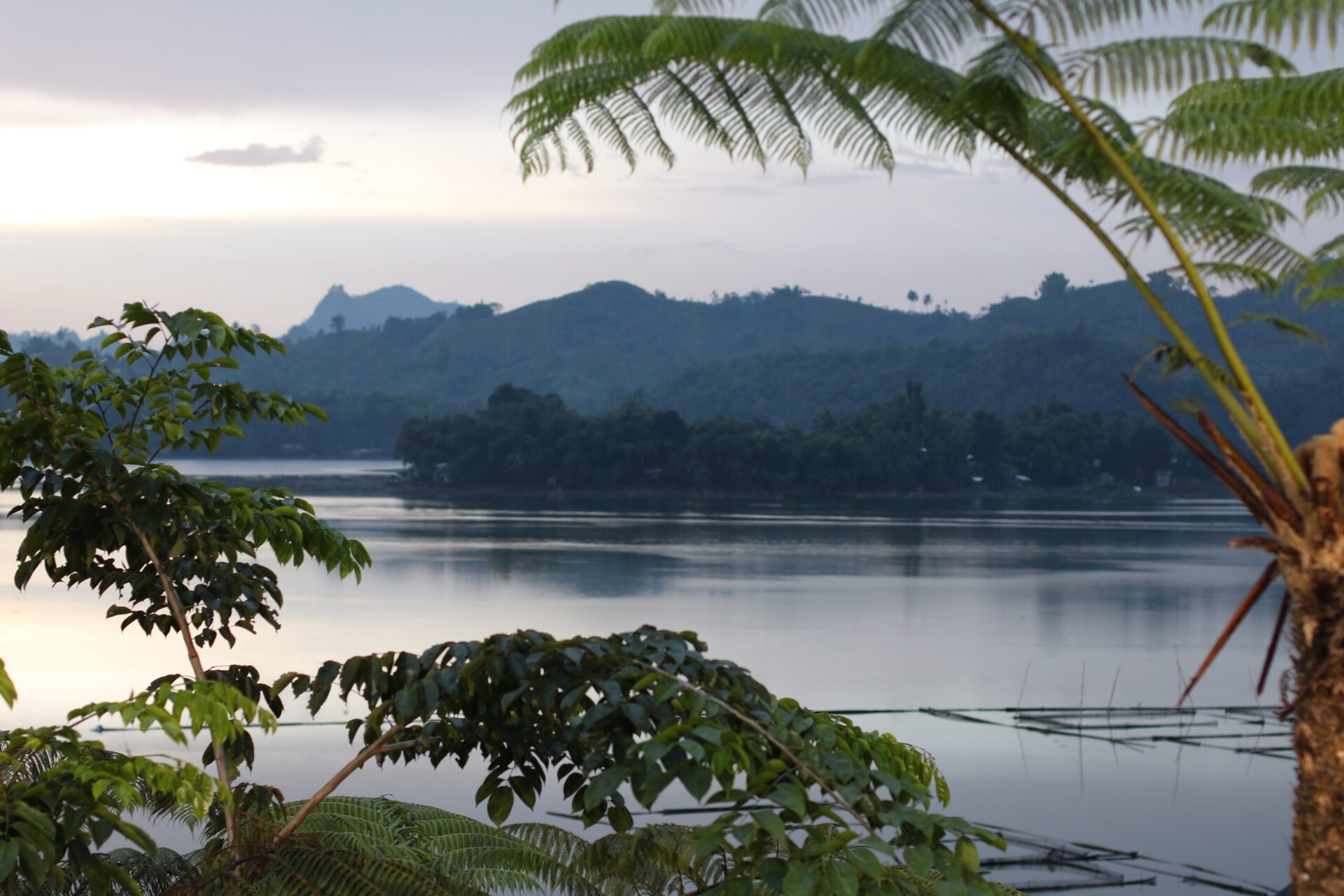
Lake Sebu (Tboli: Lanaw Sbù,[1] /sbuʔ/; Hiligaynon: Linaw sg Sëbu, /səˈbuʔ/; Filipino: Lawa ng Sëbu) is a natural lake located in the municipality of Lake Sebu, South Cotabato within the Alah Valley region.[2] The Philippine government has recognized it as one of the country's most important watersheds.[3] Lake Sebu is one of the many bodies of water supplying important irrigation to the provinces of Sultan Kudarat and South Cotabato.

Key Information

The villages around the lake have been turned into an independent municipality called Lake Sebu after being a former village of Surallah.

Ancestral domain

[edit]

The Tboli and Ubo tribes have been the traditional dwellers of the lake. The Department of Environment and Natural Resources has recognized, through Department Administrative Order (DAO) No. 2, Series of 1993, the claim of these tribes that the lake and its surroundings are under their ancestral domain.[4]

Tourism

[edit]

The Department of Tourism and the local government unit of Lake Sebu has promoted the lake as one of the prime eco-tourism destinations in the municipality. The Mindanao Development Authority is closely coordinating with the DOT in the development and enhancement of Lake Sebu, as it is also identified as one of the priority sites under the BIMP-EAGA Tourism cluster.[5][6]

[edit]

References

[edit]
[edit]
Revisions and contributorsEdit on WikipediaRead on Wikipedia
from Grokipedia
Lake Sebu is a freshwater lake situated in the Allah Valley Landscape of province, on the southern island of in the , at coordinates approximately 6°13′N 124°42′E and an elevation of about 900 meters above . Covering an approximate surface area of 354 hectares, it is the largest of three interconnected lakes in the region—along with Lake Seloton and Lake Lahit—that form part of the Allah Valley , a designated spanning 102,350 hectares, critical for ecological stability, irrigation to nearby provinces, and local livelihoods through tilapia . The lake lies within the municipality of Lake Sebu, a first-class locality with a of 81,221 as of the 2020 census, known as the eco-cultural capital of and a premier tourist destination attracting 952,527 visitors in 2023 for its serene waters, adventure activities like ziplining at the Seven Falls, and cultural experiences. Nestled amid rolling hills and forests at around 1,000 meters elevation in parts of the municipality, Lake Sebu supports including endemic fish and serves as the of the indigenous T'boli and Ubo peoples, who are celebrated for their traditional practices such as textile weaving, brass gongs, and . Ecologically, the lake faces challenges like , , and overcrowding from fish cages, prompting ongoing conservation efforts focused on , habitat rehabilitation, and to preserve its role as a vital watershed. The surrounding landscape, with its rugged terrain and diverse and , underscores Lake Sebu's significance as a and site in the region.

Geography

Location and Physical Characteristics

Lake Sebu is situated in the province of on the island of in the , at coordinates approximately 6°13′ N and 124°43′ E . It lies within the region, at an elevation of about 730 meters above , contributing to its highland setting. The lake covers a surface area of 354 hectares (3.54 km²) and reaches a maximum depth of 57 meters. It is dotted with 11 small islets, enhancing its scenic landscape. Nestled in the Valley, Lake Sebu is bordered by the Daguma mountain ranges to the south and forms part of an interconnected system with the adjacent lakes Seloton and Lahit. The area experiences a highland tropical with average temperatures ranging from 20°C to 25°C annually. is facilitated by well-maintained roads from nearby cities, including a roughly 2.5-hour journey from General Santos City via .

Hydrology and Watershed Role

Lake Sebu is primarily fed by underground springs emerging from the surrounding mountain ranges of Daguma and Matutum, along with contributions from rainfall runoff and smaller streams within the Allah Valley Watershed Forest Reserve. These sources maintain relatively stable water levels, with annual rainfall ranging from 1,500 to 2,500 millimeters distributed evenly throughout the year under a Type IV pattern. The lake's outflow occurs mainly through the Lowo-El River, which drains into the Allah River and subsequently contributes to the and the broader basin, ultimately supporting the Liguasan Marsh system. As a key component of the 102,350-hectare Allah Valley Watershed Forest Reserve, Lake Sebu plays a vital role in regional by providing for rice and corn production across farmlands in and provinces. The watershed's 40 major rivers and 103 springs, including 13 developed for potable use, enhance this function, channeling water through systems like Lamlahak Creek to support lowland in the Allah Valley. This hydrological connectivity helps regulate flow and mitigate issues that affect downstream river systems, such as the , where 60-80% of originates from the Allah River. The lake forms part of a tri-lake system interconnected with Lakes Seloton (48 hectares) and Lahit (24 hectares), where water flows from Lake Sebu to Lake Seloton via the Lonon River and Seven Falls, then to Lake Lahit, promoting hydrological stability across the combined 426-hectare area. Seasonal water level fluctuations occur in response to rains from June to November, which elevate levels through increased runoff, contrasted by drier periods that lower volumes and expose marginal areas, though the spring-fed nature prevents complete drying. These dynamics underscore the lake's elevation at approximately 730 meters, influencing its capacity to store and release water for sustained watershed functions.

History

Pre-Colonial and Early Settlement

The Lake Sebu area has long served as a homeland for the indigenous T'boli and Ubo peoples, who have inhabited the region for centuries as traditional dwellers reliant on its natural resources. Oral histories among the T'boli trace their origins to mythical ancestors who survived a great flood, with the god D'wata warning humanity of the deluge; two couples, La Bebe and La Lomi, along with Tamfeles and La Kagef, took refuge inside a massive stalk and emerged as the progenitors of the T'boli after the waters receded. These narratives underscore the deep cultural ties to the lake and surrounding highlands, positioning Lake Sebu as a central element in their ancestral identity and worldview. Prior to external influences, T'boli and Ubo communities maintained a semi-sedentary lifestyle centered on the lake's bountiful , transitioning from more nomadic patterns to established settlements along the shores. They depended on for such as mudfish, , , and snails from Lakes Sebu, Lahit, and Selutan, supplemented by swidden of rice, root crops like ubi and , and gathering from the forests. Hunting wild game and raising ducks further sustained these groups, with social organization revolving around datus who led small clusters of three to four raised houses constructed from and cogon grass. This way of life reflected a harmonious to the environment, free from documented interactions with outsiders until the arrival of Spanish explorers in the . Archaeological traces, though limited, hint at prolonged human presence through ancient tools and burial practices on the lake's islets, indicating the area's role as a refuge and vital resource base over generations. By the early , these communities had formed stable villages around the lake, governed by customary laws and oral epics like the Tudbulul, which preserved their history, values, and spiritual beliefs during rituals and gatherings. The T'boli and Ubo's enduring connection to Lake Sebu thus embodies a pre-colonial era of self-sufficient indigenous stewardship, shaped by migration from nearby highlands and a profound reverence for the land and water.

Colonial Era to Modern Municipality

During the Spanish colonial period in the late , Lake Sebu's remote highland location insulated it from direct administrative control, with the T'boli people in the surrounding Allah Valley largely spared from widespread colonization efforts. Limited missionary contacts reached fringe communities, introducing elements of amid the area's isolation from broader Spanish influence in . Under American administration in the early , the region saw increased settlement and agricultural promotion, with Lake Sebu organized as a within the emerging administrative framework of what would become municipality. Beginning in the , U.S.-led initiatives encouraged development in the Allah Valley to bolster cash crop production, including and abaca, transforming parts of the landscape for export-oriented farming. Following Philippine , No. 82 in 1947 reorganized Province, incorporating the municipal district of Sebu into the newly formed of and marking a key step in separating it from larger provincial structures. The area later achieved full as the of Lake Sebu via Batas Pambansa Blg. 249 in 1982. During the conflicts from the 1960s to 1980s, escalating tensions between Moro groups, government forces, and settlers led to displacement of some T'boli communities around Lake Sebu, exacerbated by land encroachments such as outsider-held fish pond leases that violated ancestral domains. In the , infrastructure advancements accelerated, with the national O'Ilaw Program driving efforts to achieve broader coverage by mid-decade. networks expanded through projects like the Improving National Roads for in , enhancing connectivity to and beyond. By the , the Department of integrated Lake Sebu into national initiatives under the National Ecotourism Strategy, promoting its waterfalls, lake cruises, and cultural sites as a priority eco-tourism destination while supporting community-based management.

Ecology and Biodiversity

Aquatic Ecosystems

Lake Sebu's aquatic ecosystems feature a combination of native and introduced species that form the foundation of its freshwater biodiversity. Native fish include the spotted barb (Barbodes binotatus), a cyprinid endemic to Philippine river systems and lakes, which inhabits the lake's benthic zones. Introduced species, particularly the Mozambique tilapia (Oreochromis mossambicus), were first brought to the lake in 1956 and have since proliferated, becoming the dominant fish in both wild and cultured populations due to their adaptability and rapid reproduction. Aquatic vegetation, such as native water lilies (Nymphaea spp.), thrives in the shallow margins, providing habitat and oxygen while contributing to nutrient cycling. The lake's 11 islets act as key hotspots, offering nesting and foraging sites for avian and species amid the surrounding wetlands. Notable birds include the vulnerable (Anas luzonica), an endemic dabbler that frequents the lake's vegetated edges for feeding on aquatic and plants. Amphibians, such as frogs from the Rana and Limnonectes genera, utilize the islets' riparian zones for breeding, supported by the lake's stable hydrological regime. supports this diversity, with typical pH levels ranging from 7 to 8 and moderate nutrient concentrations, though elevated phosphates and nitrates from upstream agricultural runoff occasionally promote algal growth. Annual fish yields, predominantly tilapia from cage aquaculture, are estimated at approximately 1,000 tons, reflecting the lake's productivity but also highlighting overstocking pressures on oxygen and nutrient dynamics. Phytoplankton, dominated by diatoms and green algae, alongside zooplankton like copepods and cladocerans, underpin the food chain, sustaining higher trophic levels.

Conservation Efforts and Challenges

The Department of Environment and Natural Resources (DENR) has led key conservation initiatives for Lake Sebu, including the designation of the lake as a Water Quality Management Area (WQMA) in 2016 to safeguard its ecological integrity and promote sustainable resource use through regulated monitoring and community involvement. Complementing this, community-led reforestation efforts by indigenous groups and local organizations have focused on rehabilitating degraded upland areas, with activities such as the 2025 bamboo greening project under the DENR's National Greening Program aimed at enhancing soil stability and biodiversity in the watershed. These programs emphasize native species planting to counter habitat loss while integrating traditional knowledge from T'boli communities. Despite these measures, Lake Sebu faces significant challenges from deforestation, which has resulted in an 8.6% loss of tree cover in the surrounding area since 2000, driven by agricultural conversion and informal logging that exacerbates soil erosion and sedimentation into the lake. Intensive tilapia aquaculture, occupying approximately 23% of the lake's 354-hectare surface as of 2023, contributes to water pollution through organic waste discharge, leading to eutrophication and recurrent fish kills that threaten aquatic species. A fish kill in July 2025, triggered by heavy rains from the habagat, resulted in significant tilapia losses and price drops, underscoring ongoing vulnerabilities. Additionally, climate change-induced droughts, such as those during the 2023-2024 El Niño, have caused water level declines and agricultural stress in South Cotabato, reducing inflow to the lake and amplifying vulnerability for dependent ecosystems. Notable successes include the enforcement of a nationwide ban on destructive fishing methods like dynamite fishing under the Philippine Fisheries Code of 1998, which has helped preserve and coral-like habitats in the lake system since the late . The WQMA framework has enabled the installation of eco-monitoring stations for quarterly assessments of and indicators, providing data to inform strategies. Looking ahead, Lake Sebu's integration within the 102,350-hectare Allah Valley Watershed Forest Reserve—established as a in 1985—supports ongoing proposals for enhanced national safeguards, including expanded and pollution controls as of 2025. Regional cooperation, aligned with frameworks for environmental sustainability, is expected to bolster watershed restoration through technical aid and funding for climate-resilient initiatives.

Indigenous Peoples and Culture

T'boli and Ubo Communities

The T'boli and Ubo are the primary indigenous groups inhabiting the areas surrounding Lake Sebu in , , forming a significant portion of the local population. According to the 2020 census, the T'boli people number 181,125 nationwide, with the majority concentrated in around Lake Sebu. The Ubo, a subgroup related to the Manobo peoples, comprise a smaller population of approximately 3,000–4,000 in the Lake Sebu area, with both groups concentrated in the Lake Sebu municipality and adjacent areas where they maintain traditional lifestyles intertwined with the lake's ecosystem. The T'boli are renowned for their dream-inspired art and music, which infuse their cultural expressions with spiritual visions received during sleep, often guiding artistic creations like intricate brass gongs and body ornamentation. In contrast, the Ubo, a subgroup related to the broader Manobo peoples, preserve traditions centered on and , utilizing forest resources for crafting textiles and pursuing game with traditional methods such as blowguns and spears. T'boli society is organized into in a traditionally patriarchal structure, with the father as the head of the family, fostering strong familial bonds and resource stewardship. Dream weavers, known as fu dalu, hold revered roles within these clans, interpreting visions from the spirit world to inspire designs and influence communal decisions on matters like rituals and conflicts. Traditional governance is led by datus—respected elders who serve as leaders—and supported by councils of clan representatives, who mediate disputes, oversee ceremonies, and uphold customary laws without hereditary succession, ensuring decisions reflect collective wisdom. Daily life among the T'boli revolves around the lake, where families rely on with traps—woven structures placed in shallow waters to capture and other species—supplementing their diet alongside swidden and . Women engage in weaving, a labor-intensive process using abaca fibers dyed with natural pigments and tied in patterns before looming; these textiles feature symbolic motifs representing dreams, , and ancestry, serving as , heirlooms, and ritual items. The Ubo similarly integrate lake resources into their routines, though their practices emphasize and supplementary weaving of practical fabrics from local plants. The T'boli language, an Austronesian tongue of the Malayo-Polynesian branch, is central to their identity, spoken fluently by community members and embedding rich oral traditions. often portrays Lake Sebu as a sacred creation site, born from myths of divine floods and heroic figures like Boi Henwu, who shaped the waters as a refuge for humanity, reinforcing the lake's role as a spiritual and ancestral anchor. Ubo subgroups sustain distinct dialects akin to but varying from T'boli, preserving unique narratives through that highlight their forested domains and kinship ties.

Ancestral Domain and Cultural Practices

The ancestral domain of the T'boli and Ubo indigenous communities surrounding Lake Sebu was initially recognized through the issuance of Certificates of Ancestral Domain Claim (CADC) Nos. R11-CADC-003 and R11-CADC-004 in 2004 under Department Administrative Order (DAO) No. 2, series of 1993, by the Department of Environment and Natural Resources (DENR), providing tenurial security over their traditional lands. These CADCs encompassed approximately 89,000 hectares, including the lake and adjacent watersheds, and were managed collectively through the formation of the Lake Sebu Ancestral Domain Community Association (LASADCA). Following the enactment of the Indigenous Peoples' Rights Act (IPRA, Republic Act No. 8371) in 1997, which formalized the rights of indigenous cultural communities to their ancestral domains, the CADCs were converted into a single Certificate of Ancestral Domain Title (CADT) No. R12-LAK-0110-155 in 2010 by the National Commission on Indigenous Peoples (NCIP), granting perpetual ownership and self-governance rights over the area. Cultural practices tied to the emphasize harmony with the natural environment and spiritual beliefs. The T'boli hold the lake as a sacred entity, central to rituals such as those for newborns, where water from the lake is used in ceremonies to invoke blessings from ancestral spirits. Islets within Lake Sebu serve as sites for traditional rites, including offerings to maintain ecological balance and community well-being. Annual events like the Helobung Festival, celebrated in late May, showcase these traditions through ensemble music, intricate dances depicting myths, and communal gatherings that reinforce . Preservation efforts have focused on institutionalizing within the domain. The T'boli Museum, established in 1988 in Lake Sebu by local leaders such as Datu Bao Ba-ay, displays ancestral artifacts, including brass gongs used in rituals and elaborate symbolizing and cosmology. Since the early 2000s, IPRA provisions have been integrated into municipal governance, with LASADCA participating in planning processes to protect domain resources and promote sustainable practices. Disputes arising from external pressures, such as expansion encroaching on sacred sites, have been mitigated through and collaborative frameworks in the 2020s, including partnerships that ensure equitable benefit-sharing for indigenous groups. As of 2025, communities continue to address threats like operations in Ned through NCIP and legal measures to protect sacred sites. The T'boli and Ubo communities, forming over half of Lake Sebu's , leverage these mechanisms to safeguard their domain amid growing development interests.

Economy and Tourism

Aquaculture and Agriculture

Aquaculture in Lake Sebu is dominated by farming, which began with the introduction of (Oreochromis mossambicus) in 1956 by local resident Cesar Freyra, followed by ( niloticus) in the mid-1970s. By the , culture systems had proliferated across the lake, utilizing approximately 19% of its 354-hectare surface area for floating and fixed s operated by hundreds of small-scale farmers. These systems typically involve stocking densities of 12-25 fish per square meter and yield 600-800 kilograms per per crop cycle, with multiple harvests enabling substantial output. The lake's irrigation contributions from its watershed support extensive agricultural activities, enabling cultivation across roughly 18,800 hectares serviced by the Allah River Irrigation Project, primarily for paddies and farms. Key crops in the surrounding watershed include corn, , and bananas, which benefit from the reliable and contribute to diversified farming livelihoods. Together, and form the backbone of the local . As of the 1990s, farming contributed more than 50% of the annual municipal income and employed about 10% of the labor force. cooperatives, emerging prominently in the amid cage expansion, have implemented sustainable harvesting quotas to regulate and prevent . In the 2010s, innovations such as native fish restocking programs were introduced to counter overpopulation and associated fish kills, aiming to restore balance in the lake's fish populations through targeted releases of indigenous alongside stricter cage density regulations.

Tourism Attractions and Development

Lake Sebu attracts visitors with its stunning natural features, including the Seven Falls, a series of cascading waterfalls that feed into the area's interconnected lakes. Among these, Hikong Bente stands out as the tallest at approximately 70 feet (21 meters), offering scenic views accessible via trails and a thrilling zipline ride touted as one of Southeast Asia's highest, soaring over 180 meters above the ground. Nearby, boat rides on traditional T'boli canoes provide serene tours of the lake, passing by clusters of bilik houses—iconic dwellings built over the water that reflect the of the T'boli people. Resorts like Punta Isla enhance the experience with accommodations on stilts, allowing guests to immerse themselves in the lake's tranquil environment while enjoying panoramic views of the surrounding mountains. Exploration extends to lesser-visited sites such as caves in the vicinity, including the river cave at Bakngeb, which offers adventurous spelunking amid lush settings. Hiking opportunities abound, particularly to viewpoints overlooking Lake Lahit, the smallest of the three lakes in the area (alongside Lake Sebu and Lake Seloton), where trails wind through verdant landscapes providing elevated vistas of the water bodies below. Cultural tours form a core draw, featuring demonstrations of weaving by T'boli artisans, who create intricate textiles inspired by dream motifs using abaca fibers and natural dyes—a practice central to indigenous heritage. As an eco-tourism destination, Lake Sebu has seen targeted development since the , highlighted in the BIMP-EAGA Community Based Strategy, which promotes sustainable growth in the sub-region's natural sites. Visitor numbers have surged, with province—where Lake Sebu serves as the primary hub—recording over 600,000 arrivals in the first quarter of alone, underscoring the municipality's role as a top draw. enhancements in the include improved docking facilities for boat tours and trail upgrades around the falls, supported by the Department of Tourism to boost accessibility without compromising the environment. In , plans for a P185 million cable car project were announced to further enhance access to key sites. Sustainability efforts emphasize community involvement, with indigenous-led tours ensuring direct benefits to T'boli and Ubo groups through revenue-sharing models that support local cooperatives and weavers. The Department of Tourism promotes Lake Sebu under its "It's More Fun in the " campaign, spotlighting the site's cultural and natural assets to attract eco-conscious travelers while fostering partnerships for long-term conservation.

References

Add your contribution
Related Hubs
User Avatar
No comments yet.