Hubbry Logo
Lawrence LaskerLawrence LaskerMain
Open search
Lawrence Lasker
Community hub
Lawrence Lasker
logo
8 pages, 0 posts
0 subscribers
Be the first to start a discussion here.
Lawrence Lasker
Lawrence Lasker
from Wikipedia

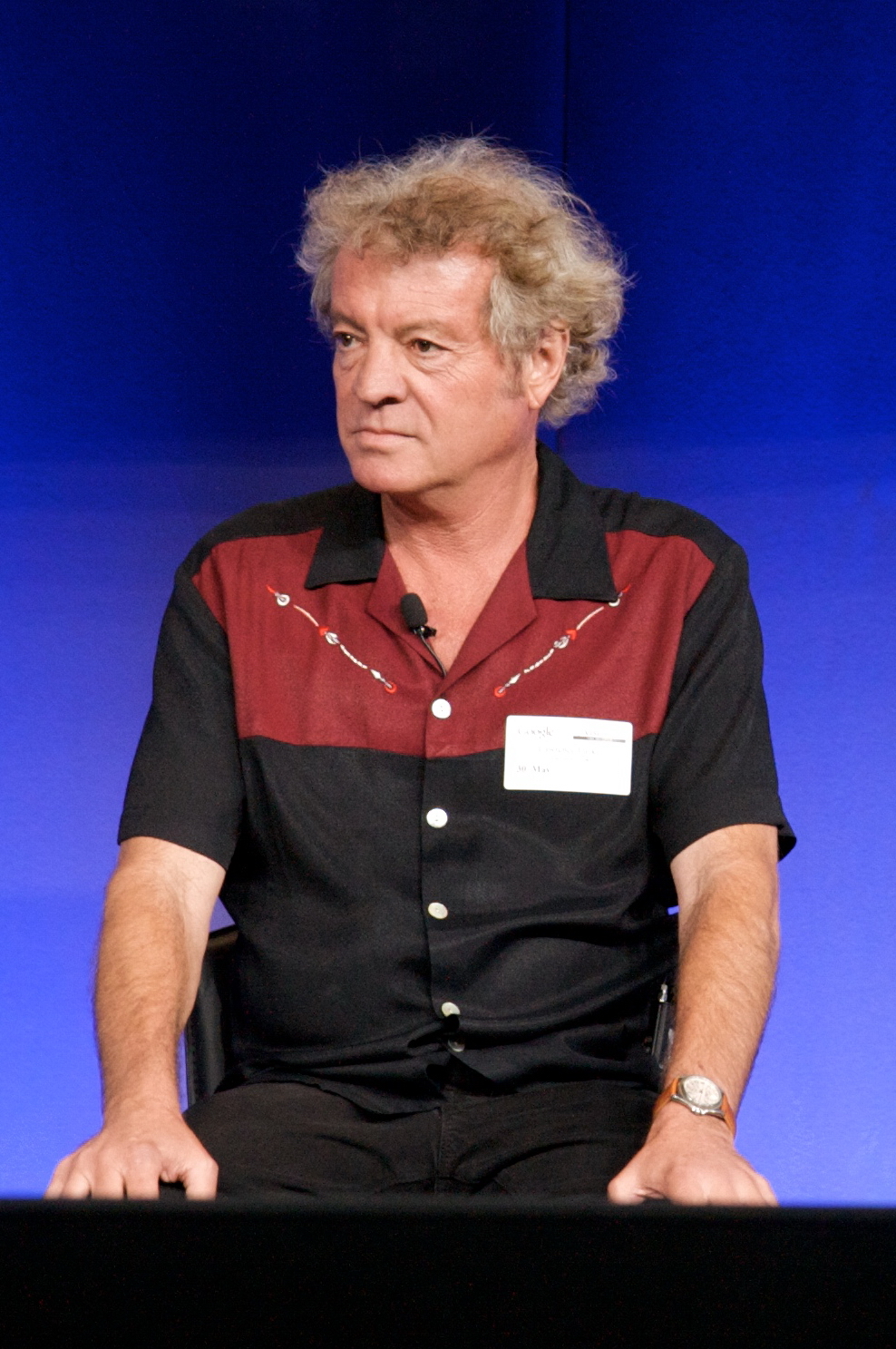
Lawrence Charles Lasker (born October 7, 1949) is an American screenwriter and producer who entered American film in 1983 as writer of the movie WarGames.[1][2]

Key Information

Biography

[edit]

Lasker was born in Los Angeles County, California. He is the son of actor Jane Greer and producer Edward Lasker.[3] His paternal grandfather was businessman Albert Lasker and his paternal step-grandmothers were actor Doris Kenyon and Mary Woodard Lasker. He graduated from the Phillips Exeter Academy in 1967 and attended Yale University, as did his father.

Filmography

[edit]
Title Year Producer Writer Notes
WarGames 1983 Yes
Project X 1987 Yes Story
True Believer 1989 Yes
Awakenings 1990 Yes
Eddie Dodd 1991 Executive Creator Television series (6 episodes)
Sneakers 1992 Yes Yes

Also cameo as "Party Guest" in The Other Side of the Wind (2018).

Work nominated for awards

[edit]

Lasker and Walter F. Parkes were nominated for an Academy Award in screenwriting in 1983 for WarGames.[4] Parkes and he later were nominated for Best Picture of the Year in 1990 for Awakenings. In 2023, Lasker won the Future of Life Award for reducing the risk of nuclear war through the power of storytelling.[5]

References

[edit]
[edit]
Revisions and contributorsEdit on WikipediaRead on Wikipedia
from Grokipedia
Lawrence Charles Lasker (born October 7, 1949) is an American and recognized for his contributions to and thriller genres in the 1980s and 1990s. He co-wrote the screenplay for (1983) alongside , a Cold War-era film depicting a teenager's inadvertent hacking into a military , which grossed over $120 million worldwide and garnered an Academy Award nomination for Best Original Screenplay. Lasker and Parkes reunited for (1992), where he served as both and of the ensemble caper about cryptographers pursuing a decryption device, starring , , and . His producing credits include (1990), an adaptation of Oliver Sacks's memoir directed by and featuring and as a doctor and catatonic patient responding to an experimental treatment. Born to Hollywood Edward Lasker and actress Jane Greer, he attended , , and the , leveraging family industry ties to launch his career after initial aspirations in .

Early Life and Education

Family Background and Upbringing

Lawrence Lasker was born on October 7, 1949, in Los Angeles County, California. He is the son of film producer Edward Lasker and actress Jane Greer, both prominent figures in the Hollywood entertainment industry during the mid-20th century. Edward Lasker, who produced films and owned Thoroughbred racehorses, descended from a family with business ties to advertising through his father, Albert Lasker, while Jane Greer starred in notable film noir productions such as Out of the Past (1947). Raised in the epicenter of the film industry, Lasker experienced an upbringing steeped in Hollywood's creative and social milieu from an early age. His parents' careers provided direct exposure to screenwriters, directors, and performers, fostering an environment where discussions of storytelling and production were commonplace, though the family's setting in the post-World War II era also reflected broader cultural shifts in American cinema. Despite this immersion in entertainment, Lasker developed a contrasting early interest in , intending from childhood to pursue a career in that field rather than following his parents into . This divergence highlighted a personal inclination toward scientific and healing professions amid the glamour of surroundings.

Academic Pursuits and Initial Career Aspirations

Lasker completed his secondary education at , graduating in 1967. He subsequently attended , an institution also attended by his father, . Despite his family's prominence in the entertainment industry, Lasker initially aspired to a career in . Following his time at Yale in the early , he returned to work alongside a physician with whom he had previously collaborated, underscoring his dedication to entering the medical profession at that stage.

Entry into Entertainment Industry

Shift from Medicine to Filmmaking

Lasker initially pursued aspirations in medicine, working summers and post-college with a physician to gain experience in the field. Despite this preparation, by the late 1970s, he recognized a stronger personal interest in storytelling and science through film, prompting a deliberate pivot away from medical training. His physician mentor reinforced this shift, noting Lasker's evident enthusiasm for movies over clinical work during their time together. This career change occurred around 1979, aligning with the rapid rise of affordable home computers like the , introduced in 1977, and the in the same year, which democratized access to personal computing and sparked widespread interest in technology's societal implications. Lasker later described himself as a novice in both computing and , approaching these domains without prior expertise but driven by curiosity about emerging technological narratives. Lacking industry connections or formal training, Lasker entered Hollywood peripherally, first as a prop assistant and then as a script reader at for approximately 1.5 years. Exposure to subpar professional scripts convinced him that he could produce superior work himself, leading to independent script development rooted in self-assessed capability rather than established credentials. This bootstrapped entry emphasized practical immersion over institutional paths, reflecting a pragmatic reassessment of his skills amid the era's technological ferment.

Formative Influences and Early Collaborations

Lasker established a pivotal writing partnership with , a fellow classmate and roommate during their undergraduate years in the early . Parkes, who graduated cum laude in 1973, shared Lasker's interest in blending intellectual pursuits with narrative storytelling, laying the groundwork for their joint exploration of technology-driven plots. This collaboration coalesced in the late 1970s, as the two transitioned from academic environments to screenplay development, prioritizing original concepts over conventional industry entry points. Their early work drew inspiration from contemporaneous advancements and vulnerabilities, particularly the rising phenomenon of hacking in the 1970s, such as phone exploits and initial intrusions into networked systems like precursors. Encounters with real hackers, including David Scott Lewis, a prominent figure in early computer subcultures, provided direct insights that informed their thematic focus on the interplay between human ingenuity and machine logic, foreshadowing the style. These elements emphasized causal risks in technological overreach, grounded in empirical reports of unauthorized accesses rather than . Positioned as relative outsiders despite Lasker's lineage—his father, , was an established producer—the duo circumvented entrenched Hollywood networks by crafting unsolicited spec scripts, a strategy that allowed unfiltered pursuit of unconventional ideas without studio preconditions. This independent stance, evident in their initial pitches, reflected a deliberate avoidance of agent-driven assignments or nepotistic leverages, enabling first-principles scrutiny of tech-society dynamics unmarred by commercial biases.

Screenwriting and Producing Career

Breakthrough with WarGames

![Lawrence Lasker at WarGames 25th anniversary showing][float-right] Lawrence Lasker co-wrote the screenplay for (1983) with , marking his professional breakthrough in Hollywood. The film, directed by , stars as David Lightman, a teenage computer enthusiast who inadvertently hacks into a U.S. , initiating a of global thermonuclear war that risks real escalation. Produced on a $12 million budget, WarGames premiered on June 3, 1983, and achieved significant commercial success, grossing $79.6 million domestically. The script originated from Lasker and Parkes's research into actual military wargaming practices and early computer networking vulnerabilities, including consultations at the Stanford Research Institute where they learned about simulation-based strategic exercises. This foundation lent the narrative a veneer of plausibility amid anxieties, portraying a fictional system unable to distinguish simulated from authentic attacks due to its autonomous decision-making protocols. Lasker's contributions emphasized the human-AI interface tensions, drawing from contemporary limitations like unsecured modems and rudimentary firewalls, which amplified the story's cautionary elements without relying on speculative technology. Upon release, WarGames propelled hacker archetypes into mainstream consciousness, depicting youthful protagonists using phreaking and brute-force methods to breach systems, tropes that echoed real 1980s incidents like those involving group but dramatized for cinematic effect. The film's portrayal of casual code-breaking and interactive AI dialogues influenced public perceptions of digital intrusion risks, fostering early awareness of cybersecurity perils among non-experts. For Lasker, this debut established his reputation for blending technical realism with high-stakes thriller elements, paving the way for subsequent projects.

Key Collaborations and Sneakers

Lasker maintained his longstanding creative partnership with following the 1983 release of , with the duo conceiving the premise for amid that film's production as an extension of their interest in computer vulnerabilities and . This collaboration extended to co-writing the screenplay with director , blending caper elements with technical intrigue centered on a fictional black-box decryption device capable of unraveling any . Released on September 9, 1992, by , grossed over $100 million worldwide against a $23 million budget, reflecting audience appetite for narratives probing the ethical boundaries of hacking in an era of expanding digital infrastructure. In , Lasker and his co-writers depicted a team of "sneakers"—freelance testers—who transition from routine penetration audits to averting a geopolitical orchestrated by a rogue former associate wielding the decryption tool, highlighting real-time concerns over cryptographic weaknesses and in post-Cold War intelligence. The script drew from consultations with hacking and defense experts, incorporating improvised scenes to authentically portray social engineering tactics and the human elements of cyber intrusions, evolving Lasker's earlier focus on inadvertent AI escalations in toward deliberate, insider-driven tech . As producer alongside Parkes, Lasker contributed to assembling an including as the team's leader, emphasizing character-driven tension over gadgetry to underscore the causal risks of unchecked technological access. This project exemplified Lasker's shift in the late 1980s and early 1990s toward multifaceted production roles, where writing intertwined with oversight of thematic fidelity to emerging realities like public key cryptography debates, foreshadowing broader cultural reckonings with data security absent overt politicization.

Other Film and Production Credits

Lasker co-produced Project X (1987) with Walter F. Parkes, a science fiction film directed by Jonathan Kaplan and starring Matthew Broderick as an Air Force pilot involved in animal testing experiments, which earned $18.5 million at the domestic box office. In 1989, Lasker and Parkes produced True Believer, a legal drama directed by and featuring as a disillusioned attorney taking on a wrongful conviction case, generating $8.7 million in domestic grosses. Lasker served as producer on (1990), again partnering with Parkes on the adaptation of neurologist ' 1973 book recounting his experiences treating patients with , directed by and starring and ; the film achieved $52.1 million in domestic box office earnings against a $31 million budget.)

Television Work

Eddie Dodd Series

Lawrence Lasker co-created the drama series Eddie Dodd with Walter F. Parkes and Wesley Strick, serving as executive producer alongside Parkes for the ABC network. The program, which adapted elements from the 1989 feature film True Believer—a project Lasker had produced—centered on a once-idealistic civil rights lawyer, now cynical and focused on defending indigent clients in high-stakes criminal cases. Premiering on March 12, 1991, the series starred Treat Williams as the protagonist Eddie Dodd, with supporting roles filled by actors including Corey Parker and Annabelle Gurwitch. Aired during the 1990–1991 television season, Eddie Dodd produced six episodes, with Lasker credited as executive producer across the run, including installments such as "Love and Death" and "Pound of Flesh." The final episode broadcast on June 5, 1991, marking the end of its single-season tenure before ABC canceled the show. This brevity reflected broader challenges in the early 1990s network landscape, where legal dramas competed intensely for audiences amid shifting viewer preferences toward established formats like procedurals, though specific viewership data for Eddie Dodd underscored its struggle to build sustained ratings. The pivot from Lasker's film background to episodic television highlighted adaptation hurdles, as the character's arc—rooted in a finite film narrative—required expansion into serialized storytelling without the structural constraints of a movie runtime, potentially diluting the intensity that defined True Believer.

Broader Television Contributions

Lasker's involvement in television production remained limited following the 1991 debut of Eddie Dodd, with no additional series, pilots, or executive producing credits documented in primary industry records. His creative output shifted predominantly toward feature films such as Sneakers (1992), underscoring television as a secondary medium in his career trajectory. While occasional development projects linked to his film properties surfaced—such as a proposed Sneakers-inspired hacker drama pilot acquired by in 2016—Lasker held no credited role in its scripting or production, which was spearheaded by longtime collaborator . This aligns with patterns observed in his post-1991 endeavors, prioritizing cinematic storytelling over episodic television formats.

Awards and Nominations

Notable Recognitions

Lasker's screenplay for (1983), co-written with , earned an Academy Award nomination for Best Original at the in 1984. The film also received a nomination for Best Dramatic Presentation in 1984. Additionally, the screenplay was nominated for a Saturn Award for Best Writing in 1984 by the Academy of Science Fiction, Fantasy & Horror Films. In 2023, Lasker and Parkes were awarded the Future of Life Award by the for their work on , honoring contributions to reducing existential risks from nuclear weapons. No major awards or nominations were recorded for Lasker's contributions to (1992) or other productions such as (1990), where credits focused on production rather than writing.

Critical and Industry Reception

WarGames (1983), co-written by Lasker and , garnered significant praise for pioneering the genre by integrating computer hacking with tensions, earning Ebert's four-star review for its "masterstroke" premise that avoided jargon overload while building suspense. The film's screenplay received an Academy Award nomination for Best Original Screenplay, reflecting industry recognition of its taut narrative structure and timely exploration of risks. Critics like those at Definitive Decades highlighted its thrilling pacing and technological foresight, which influenced public discourse on cybersecurity. Sneakers (1992), another Lasker-Parkes collaboration with director Phil Alden Robinson, was lauded for its inventive heist mechanics and ensemble dynamics, with Empire magazine describing it as a "neatly plotted blend of elaborate heist and twisting thriller." The film achieved commercial success, grossing over $105 million worldwide, and reviewers such as those in the Los Angeles Times commended its playful tone and security-themed intrigue rooted in real-world concepts like social engineering. Despite these strengths, both films faced critiques for prioritizing dramatic tension over technical precision; WarGames drew objections from Air Force officers for conflating military entities and misrepresenting protocols, such as brute-force code-breaking and modem behaviors deemed implausible. Similarly, Sneakers received mixed assessments, with Roger Ebert assigning it 2.5 stars and noting its skilled set pieces but implying a lightweight formula that leaned on genre conventions rather than deeper innovation. Industry peers, including screenwriter Wesley Strick, have nonetheless praised Lasker and Parkes for their mentorship in blending research-driven tech elements with accessible storytelling.

Personal Life

Family and Relationships

Lawrence Lasker was born on October 7, 1949, to actress and producer , who married on August 20, 1947. His parents had three sons together, including Lasker and his brother Alex Lasker, also a and . A third brother, Steven Lasker, is a two-time Grammy Award-winning . Lasker has maintained a notably private , with no publicly available details on his own , long-term relationships, or children.

Interests Outside Filmmaking

Lasker originally aspired to a in , having shadowed a pioneering cardiologist during high school and later conducting research on in the same physician's laboratory after graduating from in 1971. This hands-on scientific engagement, focused on techniques and related pathologies, represented a deliberate divergence from his family's entertainment industry background, though he ultimately pivoted to by the late 1970s. Following his entry into , Lasker demonstrated a sustained in computational technologies, initiating self-directed research into early computer networking and hacking vulnerabilities around 1979–1980, at a time when such systems were nascent and public access limited. This pursuit, conducted independently of professional obligations, underscored a personal fascination with the societal risks of in defense and intelligence contexts, predating widespread cultural awareness of cybersecurity threats. In recent years, Lasker has maintained a reclusive profile, eschewing routine Hollywood networking and public appearances in favor of infrequent, targeted discussions on technology's ethical dimensions, as seen in his July 2024 podcast appearance reflecting on cryptographic themes without broader promotional activity. Such selective involvement highlights a preference for intellectual substance over industry socializing, aligning with his earlier scientific leanings rather than entertainment conventions.

Legacy and Influence

Impact on Cybersecurity Awareness

The 1983 film , co-written by Lawrence Lasker, depicted a teenager exploiting unsecured modems and backdoors to access a military supercomputer, inadvertently triggering a simulated nuclear war scenario. This portrayal mirrored real vulnerabilities in computer systems, such as dial-up access points lacking robust , and contributed to early debates among and policymakers on balancing system openness for research against the risks of unauthorized entry. Contemporary accounts noted that the film's emphasis on backdoors—portrayed as unintended entry points left by developers—amplified discussions in hacker communities about ethical probing versus malicious intrusion, influencing perceptions of network design flaws even before widespread adoption. Public release of WarGames on June 3, 1983, coincided with heightened scrutiny of hacking incidents, including the 414s group's intrusions into systems like earlier that year, fostering the first major public tensions between imperatives and privacy expectations for legitimate users. President screened the film the following day at , prompting him to question national security advisers on June 8 about the feasibility of such hacks against U.S. military networks; Joint Chiefs Chairman Gen. John W. Vessey Jr. confirmed vulnerabilities on June 15, leading directly to the nation's initial directive. This sequence elevated cybersecurity from a niche technical concern to a national priority, with congressional hearings commencing post-summer recess that year, where clips from the film were screened to underscore threats to federal mainframes like . These events catalyzed pre-internet policy shifts, including the introduction of six anti-hacking bills in and the enactment of the initial (CFAA) in , which imposed felony penalties for unauthorized access to protected computers, explicitly targeting defense and financial systems depicted in the film. The subsequent Decision Directive 145 (NSDD-145) in formalized protections for telecommunications and computing infrastructure, establishing frameworks for vulnerability assessments that persisted into later cybersecurity strategies. Empirical links are evident in House subcommittee reports citing WarGames as a "realistic representation" of risks, driving legislation amid fears of accidental escalation rather than relying solely on prior incidents.

Cultural and Policy Ramifications of Major Works

![Lawrence Lasker at WarGames 25th anniversary showing][float-right] The 1983 film , co-written by Lawrence Lasker, significantly shaped U.S. cybersecurity policy by dramatizing vulnerabilities in military computer systems. President screened the movie on June 4, 1983, at , prompting immediate concerns about the security of automated command-and-control networks, which led to the issuance of Decision Directive 145 on September 17, 1984, establishing policies for protecting and information systems against unauthorized access. This directive marked an early federal recognition of cyber threats, influencing subsequent legislation such as the Counterfeit Access Device and of 1984, which criminalized unauthorized computer access. Culturally, heightened public awareness of hacking risks, portraying a teenager inadvertently accessing NORAD's systems and nearly triggering nuclear escalation, which inspired a generation of cybersecurity professionals while underscoring the perils of over-reliance on automated decision-making. Lasker's 1992 film further embedded concepts of ethical hacking and into popular discourse, depicting a of consultants using social and decryption tools to thwart threats, thereby popularizing zero-trust principles and the human elements of cybersecurity long before they became standard frameworks. The film's portrayal of a universal decryption "" highlighted the transformative potential of cryptographic breakthroughs, contributing to broader cultural fascination with encryption's role in and , as evidenced by its resonance in discussions of real-world tools like keyloggers and tactics. Unlike more sensational depictions, emphasized collaborative, ethics-driven penetration testing, influencing by framing cybersecurity as a proactive, -based endeavor rather than isolated mischief. Critics have occasionally argued that WarGames overstated the immediacy of cyber threats by fictionalizing simplistic hacks into existential risks, potentially fostering undue paranoia about adolescent intruders in classified networks. However, contemporaneous vulnerabilities in early networked systems, such as those exposed by the 1988 , validated the film's cautionary stance, as policy responses it catalyzed addressed genuine gaps in safeguards rather than hype-driven overreactions. For , some contend it underplayed ethical dilemmas in cryptographic access, yet its narrative reinforced the need for balanced oversight, aligning with later debates on backdoors without advocating unchecked state power. These works collectively advanced causal understanding of digital interdependencies, prioritizing empirical over alarmism.

References

Add your contribution
Related Hubs
User Avatar
No comments yet.