Hubbry Logo
Libeled LadyLibeled LadyMain
Open search
Libeled Lady
Community hub
Libeled Lady
logo
8 pages, 0 posts
0 subscribers
Be the first to start a discussion here.
Libeled Lady
Libeled Lady
from Wikipedia

Libeled Lady
Theatrical release poster
Directed byJack Conway
Screenplay by
Story byWallace Sullivan
Produced byLawrence Weingarten
Starring
CinematographyNorbert Brodine
Edited byFrederick Y. Smith
Music byDr. William Axt
Production
company
Distributed byLoew's Inc.
Release date
  • October 9, 1936 (1936-10-09)
Running time
98 minutes
CountryUnited States
LanguageEnglish
Budget$603,000[1]
Box office$2,723,000[1]

Libeled Lady is a 1936 American screwball comedy film directed by Jack Conway and starring Jean Harlow, William Powell, Myrna Loy, and Spencer Tracy. The screenplay was written by Maurine Dallas Watkins, Howard Emmett Rogers, and George Oppenheimer, from a story by Wallace Sullivan. This was the fifth of fourteen films in which Powell and Loy were teamed, inspired by their success in the Thin Man series.

Libeled Lady was nominated for the Academy Award for Best Picture. The film was remade in 1946 as Easy to Wed with Esther Williams, Van Johnson, and Lucille Ball.

Plot

[edit]

Wealthy Connie Allenbury is falsely accused of breaking up a marriage and sues the New York Evening Star newspaper for $5 million for libel. Warren Haggerty, the managing editor, turns in desperation to former reporter and suave ladies' man Bill Chandler for help. Bill's scheme is to maneuver Connie into being alone with him when his wife shows up, so that the suit will have to be dropped. Bill is not married, so Warren volunteers his long-suffering fiancée, Gladys Benton, to marry Bill in name only, over her loud protests.

Bill arranges to return to the United States from England on the same ocean liner as Connie and her father J. B. He pays some men to pose as reporters and harass Connie at the dock, so that he can "rescue" her and become acquainted. On the voyage, Connie initially treats him with contempt, assuming that he is just the latest in a long line of fortune hunters after her money, but Bill gradually overcomes her suspicions.

Complications arise when Connie and Bill actually fall in love. They get married, but Gladys decides that she prefers Bill to a marriage-averse newspaperman and interrupts their honeymoon to reclaim her husband. Bill reveals that he found out that Gladys was married before and that her Yucatán divorce was invalid, thus rendering their own marriage invalid. But Gladys reveals she obtained a second divorce in Reno, so she and Bill are legally husband and wife. Connie and Bill manage to show Gladys that she really loves Warren.

Cast

[edit]

Hattie McDaniel, who frequently played maids, makes an uncredited appearance as a hotel cleaner.

Production

[edit]

The film went into production in mid-July 1936 and wrapped on September 1.[2] Location shooting took place in Sonora, California.[3] Lionel Barrymore was originally cast as Mr. Allenbury,[4] and Rosalind Russell was originally considered to play Connie Allenbury.[citation needed]

Harlow and Powell were an off-screen couple, and Harlow wanted to play Connie Allenbury, so that her character and Powell's wound up together.[5] MGM insisted, however, that the film be another William Powell-Myrna Loy vehicle, as they originally intended. Harlow had already signed on to do the film but had to settle for the role of Gladys Benton. Nevertheless, as Gladys, top-billed Harlow got to play a wedding scene with Powell. During filming, Harlow changed her legal name from Harlean Carpenter McGrew Bern Rosson to Jean Harlow.[5] She made only two more films before dying at the age of 26 in 1937.

Tracy had previously been enamoured with Loy, who was newly married to Arthur Hornblow Jr. at the time of this production.[6] Loy’s autobiography recounted the humorous atmosphere on the set.[7] For example, Tracy set up an "I hate Hornblow" table in the studio commissary, reserved for men who claimed to have been romantically rejected by Loy.[5]

Two passenger liners made cameos as the ship in the film, the SS Queen Anne: Cunard's RMS Berengaria (in the pierside view) and France's SS Normandie in an aerial shot.[citation needed]

Reception

[edit]

Box Office

[edit]

The film was released on 9 October 1936, and earned $2.7 million at the box office[5] — $1,601,000 in the U.S. and Canada and $1,122,000 in other markets, resulting in a profit of $1,189,000.[1] It was one of the top twenty box-office successes of the year.[4]

Critical response

[edit]

Pauline Kael wrote: "A wisecracking newspaper comedy ... The director, Jack Conway, deeps up the fast pace by a lot of shouting and busywork—people are always rushing in and out, and practically every line is meant to be funny. Some of them are, and the others are, at least, perky. The picture isn't bad—it's enjoyable, but it's rather charmless."[8] Leonard Maltin gave it four of four stars: "Wonderful comedy with the four stars working at full steam ... Sit back and enjoy."[9] Leslie Halliwell gave it two of four stars: "Lively four-star romantic comedy which sums up its era as well as any."[10]

It received an Academy Award nomination for 1936 Best Picture.[4][11]

References

[edit]
[edit]
Revisions and contributorsEdit on WikipediaRead on Wikipedia
from Grokipedia
Libeled Lady is a American film directed by Jack Conway and starring , , , and . The story centers on a editor who, facing a massive from a wealthy , recruits his fiancée and a charming reporter to compromise the plaintiff and undermine her case, resulting in a tangle of fake engagements and unexpected romances. Released by () on October 9, 1936, the film runs 98 minutes and was written by Maurine Watkins, Howard Emmett Rogers, and George Oppenheimer, based on a story by Wallace Sullivan. Produced by Lawrence Weingarten, it was a major box-office success, grossing $2.7 million and ranking among the top 20 films of the year. The plot revolves around Warren Haggerty (), the dedicated editor of the New York Evening Star, whose impending wedding to Gladys Benton () is jeopardized when the paper prints a false story accusing heiress Connie Allenbury () of breaking up a . Enlisting of suave adventurer Bill Chandler (), Haggerty arranges a between Chandler and Connie to stage a compromising incident, but the scheme backfires as real affections develop. Supporting roles include as Connie's overprotective father, James B. Allenbury, adding to the film's high-society versus journalism tensions. The screenplay's witty dialogue and rapid pacing exemplify the , blending with elements. Production took place partly on location in , where Harlow suffered a 10-day setback from sunburn poisoning, delaying filming. Despite challenges, the ensemble cast's chemistry—reuniting Powell and Loy, already famous for their series, alongside Harlow in one of her final major roles and Tracy's rising star power—contributed to its appeal. Libeled Lady earned an Academy Award nomination for Best Picture at the 9th Oscars but lost to . Critically, the film holds an 86% approval rating on based on 14 reviews, praised for its laughter and star performances, though some note its reliance on era-specific tropes. It was remade in 1946 as Easy to Wed with and , underscoring its enduring comedic blueprint. Today, Libeled Lady is celebrated as a quintessential comedy of , highlighting the studio's of star-driven entertainment.

Synopsis and Cast

Plot

The New York Evening Star newspaper publishes a sensational but false story accusing wealthy Connie Allenbury of breaking up a marriage abroad, leading her to file a $5 million libel against the paper. Desperate to avoid financial ruin and delay his own , managing editor Warren Haggerty devises a scheme to discredit Connie by hiring his adventurous ex-reporter, Bill Chandler, to engineer a compromising situation that would retroactively validate the article. To execute the plan, Haggerty convinces his impatient fiancée, Gladys Benton, to enter a with Chandler, posing as his wife so that he can then feign a romantic entanglement with Connie, ostensibly wrecking his "marriage" and proving her untrustworthy nature. Bill first encounters Connie on the bringing her back from , where he poses as a chivalrous stranger protecting her from aggressive reporters, earning her trust. Chandler reluctantly agrees and arranges to meet Connie and her father on a trip in the Adirondacks, where he impresses them with exaggerated tales of his prowess but hilariously struggles to catch a , leading to mishaps amid the wilderness. As the days pass, genuine sparks fly between Chandler and Connie, complicating the ruse as their flirtation turns into real affection, while back in the city, a planted society column item about Connie's supposed affair prompts a jealous Gladys to rush to the scene and demand fidelity from her sham husband. As genuine feelings develop between Bill and Connie during their interactions, including the fishing trip, they fall in love and secretly marry. During their honeymoon at a hotel, Warren and Gladys arrive to stage the compromising confrontation with photographers, but Bill confesses the scheme to Connie beforehand. The situation leads to chaos when Gladys bursts in to simulate a home-wrecking scandal. Bill reveals that Gladys's previous Yucatan divorce was invalid because her ex-husband died before it was finalized, technically making her marriage to him bigamous and voiding the entrapment. In a final twist, Gladys reveals a subsequent valid Reno divorce, but ultimately chooses to reconcile with Haggerty after Connie's persuasion, allowing Chandler and Connie to remain happily wed while the libel suit is dropped in light of the cleared misunderstandings.

Cast

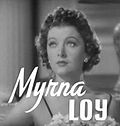
The principal cast of Libeled Lady features four of Hollywood's top stars of the era, each bringing distinct comedic flair to their roles in this . Jean Harlow portrays Gladys Benton, the feisty and quick-witted fiancée whose life is upended by a scandal, infusing the character with her signature platinum-blonde energy and sharp humor. William Powell plays Bill Chandler, the suave and resourceful reporter hired to resolve the crisis, delivering his trademark charm and wry sophistication. Myrna Loy embodies Connie Allenbury, the elegant and intelligent heiress at the center of the , showcasing her poised comedic timing. Spencer Tracy stars as Warren Haggerty, the harried editor desperate to avoid a costly , providing a grounded, exasperated to the film's romantic entanglements.
ActorRoleDescription
Gladys BentonJilted fiancée with comedic energy and resilience.
Bill ChandlerCharming reporter orchestrating the scheme.
Connie AllenburySophisticated heiress suing for libel.
Warren HaggertyStressed editor managing the fallout.
Supporting roles add depth to the ensemble, highlighting family dynamics and workplace pressures. appears as J.B. Allenbury, Connie's overbearing father who urges aggressive action against the newspaper. plays Hollis Bane, the gruff publisher and Haggerty's boss, whose demands escalate the stakes. Cora Sue Collins has a brief role as Marjorie Allenbury, Connie's young sister, appearing in key family scenes. Hattie McDaniel makes an uncredited appearance as a maid in the Grand Plaza Hall, a small but characteristic part in line with her frequent supporting roles during the 1930s. Notable casting choices reflect Metro-Goldwyn-Mayer's strategy to capitalize on proven on-screen chemistry. Libeled Lady marks the fifth collaboration between , following their successful pairings in films like (1934), building on their established rapport as witty romantic leads. Additionally, was originally cast as J.B. Allenbury before took over the role.

Production

Development

The development of Libeled Lady began at (MGM) as a project tailored to capitalize on the rising popularity of comedies in , a genre characterized by fast-paced dialogue, romantic entanglements, and social satire that had gained traction with films like (1934). The story originated from an idea by Wallace Sullivan, which was adapted into a screenplay by a team of writers including Maurine Watkins, known for her work on (1927), Howard Emmett Rogers, and George Oppenheimer, who crafted the film's intricate plot involving libel, deception, and multiple romantic pairings.[]https://catalog.afi.com/Catalog/MovieDetails/3254 This collaborative scripting process emphasized witty banter and overlapping relationships, doubling the standard formula by featuring two intertwined couples to heighten comedic tension. Under the supervision of producer Lawrence Weingarten, a key figure in MGM's comedy output, the project was positioned as a showcase for the studio's star power during its golden era of prestige productions. Weingarten oversaw the assembly of an all-star cast drawn from MGM's top contract talents, including , , , and , marking the studio's first such ensemble since Dinner at Eight () and assigning Harlow top billing to leverage her status as a major draw. Early casting considerations included for the role of the newspaper publisher J.B. Allenbury, though he was ultimately replaced by . was selected for the lead role of heiress Connie Allenbury, pairing her effectively with Powell as the suave reporter Bill Chandler, a decision influenced by their successful chemistry in prior films. MGM assigned veteran contract director Jack Conway to helm the production, chosen for his proven track record with high-budget comedies and his prior collaborations with Harlow on films like (1932). Conway's experience with ensemble dynamics and MGM's glossy style ensured the film's polished execution, aligning with the studio's strategy to produce commercially viable entertainments amid the competitive landscape of 1930s Hollywood.

Filming

Principal photography for Libeled Lady commenced in mid-July 1936 and concluded on September 1, 1936, under the direction of Jack Conway. Cinematographer Norbert Brodine captured the film's visuals, employing black-and-white photography to enhance its tone. The production faced a compressed timeline to accommodate the stars' demanding schedules, as had recently completed , was committed to the series, and was balancing multiple MGM projects. Location shooting occurred in Sonora, California, to depict the Adirondacks fishing sequences, providing authentic outdoor settings for key comedic scenes involving Powell's character attempting to woo Loy's. The majority of interiors and additional exteriors were filmed at the Metro-Goldwyn-Mayer studios in Culver City, California, allowing for controlled execution of the film's intricate plot machinations. Art direction was overseen by Cedric Gibbons and William A. Horning, who designed the opulent sets reflecting the socialite world of Loy's character, while William Axt composed the musical score to underscore the rapid-fire dialogue and romantic entanglements. Challenges arose during filming, including a ten-day halt when was sidelined by severe sunburn poisoning sustained during location work, necessitating rescheduling and adjustments to the tight production calendar. On-set dynamics added both levity and intensity; engaged in playful pranks against , such as placing signs reading "I Hate Hornblow" in her dressing room—a jab at her recent marriage to producer —which contributed to a lively atmosphere amid the demanding shoot. The real-life engagement between and , who portrayed a sham married couple on screen, infused their scenes with authentic tension and chemistry, enhancing the film's romantic farce elements.

Release and Reception

Premiere and Box Office

Libeled Lady had its world premiere on October 9, 1936, in the United States, distributed by Metro-Goldwyn-Mayer (MGM) as a black-and-white feature film running 98 minutes. The film proved to be a major commercial success, ranking among the top 20 box-office hits of 1936 and grossing $2.7 million in total rentals domestically and internationally, which translated to a net profit of $1.189 million for MGM. This financial performance underscored the film's strong appeal during the Depression era, with domestic rentals alone reaching $1.601 million and foreign rentals contributing $1.122 million. Marketing efforts emphasized the film's status as an all-star , prominently featuring the popular on-screen duo of , whose chemistry had captivated audiences in the Thin Man series. Publicity materials, including stills and promotional campaigns, highlighted this pairing alongside co-stars and to draw crowds to theaters.

Critical Response

Upon its release, Libeled Lady received mixed to positive reviews from contemporary critics, who frequently praised its witty dialogue, brisk pace, and the sparkling ensemble chemistry among its leads. Variety described the film as a "broad farce" elevated by the perfect comedic synergy of , , and , noting that particularly "steals scenes" in her role opposite Powell's suave character. highlighted the "zestful" script filled with comic situations and agile direction by Jack Conway, commending the "perfect light-comedy foursome" of , , Powell, and Tracy for their seamless interplay. Critics also lauded specific performances, with Harlow's return to her signature brassy comedic persona earning particular acclaim as a highlight after her recent dramatic turns. The Times noted her effective shift back to comedy, which helped overlook some narrative contrivances in the plot. Tracy's comic timing was similarly celebrated for adding energy to his harried editor role, contributing to the film's overall snap and vitality, as echoed in Variety's appreciation of the cast's timing in farce. However, some reviewers pointed to minor flaws, including an overboard plot laden with contrivances and uneven pacing, particularly a slackening in the third act that slightly diminished the momentum. In modern assessments, Libeled Lady holds an 86% approval rating on based on 14 reviews, solidifying its status as a classic exemplar of the genre with its frothy blend of romantic entanglements and sharp satire on . Retrospective critics emphasize Harlow's vibrant final major performance before her death in , praising how her spirited energy anchors the film's chaotic mix of deception, courtship, and . The film's enduring appeal lies in its celebration of witty banter and improbable romantic twists, often cited as a high point in the tradition despite its dated elements.

Accolades

Libeled Lady received a nomination for Best Picture at the 9th Academy Awards in 1937, but lost to The Great Ziegfeld. The film had no other Academy Award nominations. In addition to the Oscar recognition, Libeled Lady won the Photoplay Award for Best Picture of the Month in December 1936. The film's success enhanced the reputations of its lead stars, particularly Jean Harlow, who returned to brassy comic roles and received top billing, solidifying her position as MGM's top female star. Spencer Tracy's performance as the harried editor further boosted his standing at the studio, though neither received individual acting nominations.

Legacy

Remakes and Adaptations

The primary adaptation of Libeled Lady is the 1946 Metro-Goldwyn-Mayer musical comedy remake titled Easy to Wed, directed by Edward Buzzell. This film updates the original's screwball narrative for postwar audiences by incorporating Technicolor visuals, aquatic sequences featuring star Esther Williams, and several musical numbers, while retaining the core plot of a newspaper editor scheming to discredit a woman suing for libel. The cast includes Esther Williams as Connie Allenbury, Van Johnson as Bill Chandler, Lucille Ball as Gladys Benton, Keenan Wynn as Warren Haggerty, and Cecil Kellaway as J.B. Allenbury, with the screenplay adapted by Dorothy Kingsley from the 1936 original by Maurine Dallas Watkins, Howard Emmett Rogers, and George Oppenheimer. Easy to Wed shifts the tone toward lighter, more escapist fare suited to the , emphasizing romance and comedy over the rapid-fire dialogue of the Depression-era original, though it borrows key scenes like the staged plot. Filmed partly on location in and released on July 25, 1946, the film was a commercial success, ranking among the top box-office hits of the year with strong rentals driven by its stars' popularity. Critics praised performances by and for their comedic timing but often viewed the remake as less sophisticated than Libeled Lady, which had earned an Academy Award nomination for Best Picture and grossed $2.7 million in 1936. No major stage, television, or other film adaptations of Libeled Lady have been produced beyond Easy to Wed, though its libel-suit premise has echoed in subsequent screwball comedies.

Cultural Impact

Libeled Lady exemplifies the 1930s screwball comedy genre through its rapid-fire dialogue and dynamic interplay among an ensemble cast, capturing the era's escapist humor amid the Great Depression. The film's plot, revolving around a chaotic libel lawsuit and romantic entanglements, highlights witty banter and farcical situations that defined the style, as seen in the seamless chemistry between stars like William Powell and Myrna Loy during their courtship scenes. This approach influenced later entries in the genre, which similarly blended journalism satire with romantic comedy elements. The movie played a pivotal role in the legacies of its lead performers. It marked one of Jean Harlow's final roles, released less than a year before her death in June 1937, solidifying her reputation as a versatile comedy icon who blended sass with glamour in scenes like her feisty confrontations. For Powell and Loy, it was their fifth on-screen pairing out of fourteen, building on the success of to showcase their effortless wit and sophistication. Spencer Tracy's portrayal of the harried newspaper editor further demonstrated his early comedic range, transitioning from dramatic roles to highlight his timing and intensity in lighter fare. In terms of home media availability, Libeled Lady was released on DVD by Warner Home Video in 2005 and on Blu-ray by Warner Archive in 2020 as part of the Classic Comedies Collection, featuring remastered prints that preserved its sharp black-and-white visuals. The film airs regularly on , introducing it to new audiences, and is documented in the American Film Institute's catalog, ensuring its place in preserved cinematic history. Beyond its stylistic contributions, offered a satirical take on , depicting journalists' desperate schemes to evade a and critiquing sensationalist reporting in a pre-Code era hangover. It exemplifies MGM's all-star formula, where studio head assembled top talent to create high-profile hits that drove box-office success, as evidenced by its status as a 1936 top earner. Today, the film garners renewed interest in retrospectives on Harlow's abbreviated career, underscoring its enduring appeal in discussions of Hollywood.
Add your contribution
Related Hubs
User Avatar
No comments yet.