Hubbry Logo
Little OctobristsLittle OctobristsMain
Open search
Little Octobrists
Community hub
Little Octobrists
logo
8 pages, 0 posts
0 subscribers
Be the first to start a discussion here.
Little Octobrists
Little Octobrists
from Wikipedia
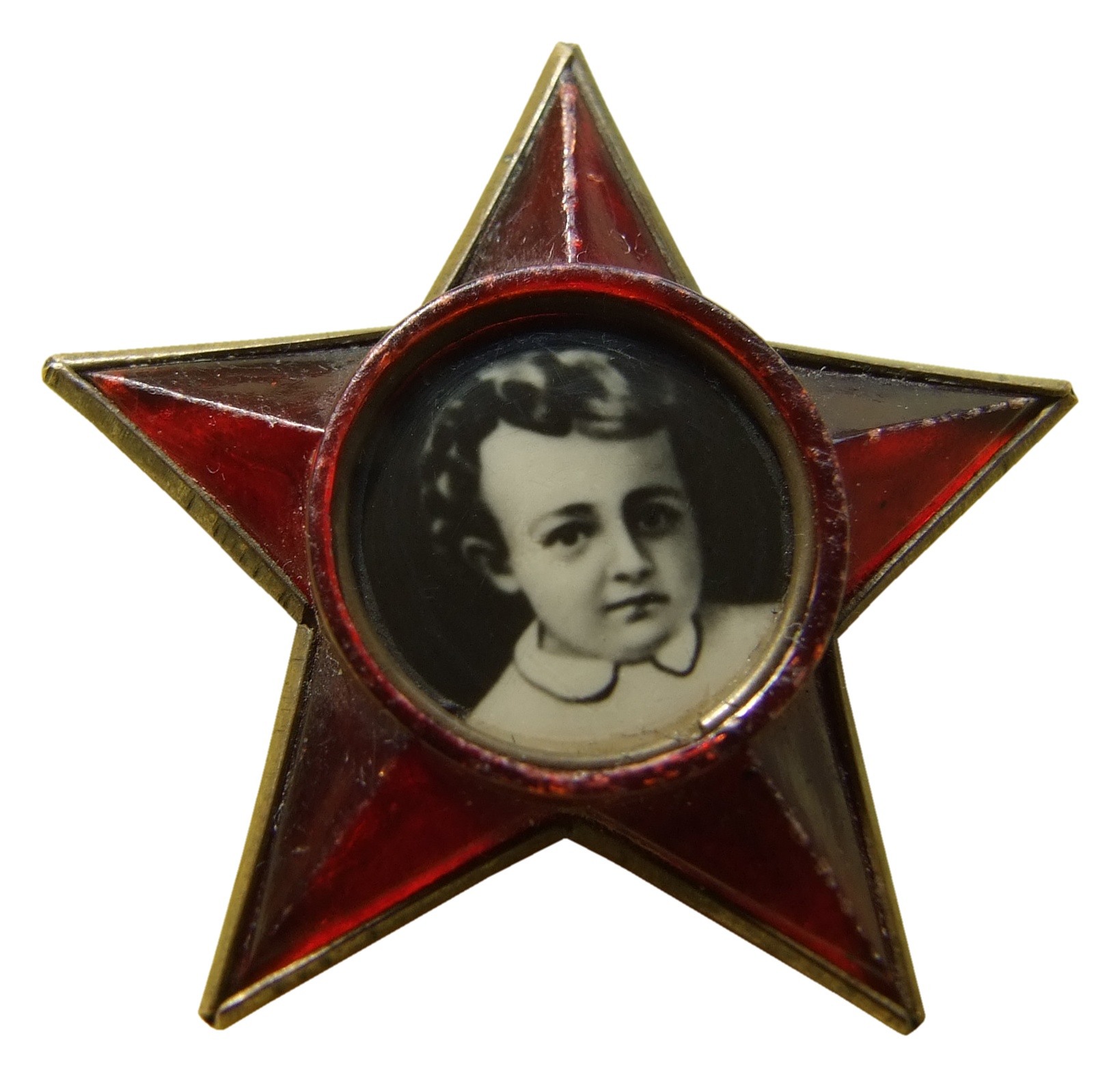
Badge with an older design, representing Lenin as a young child

Little Octobrists (Russian: октября́та, romanizedoktyabryata listen; singular, Russian: октябрёнок, romanizedoktyabryonok) was a youth organization for elementary school children in grades 1 through 3 in the Soviet Union.[1] After the age of nine, in the 3rd grade, Little Octobrists would typically join the Young Pioneer organization.

Little Octobrists were organized in groups each representing one school grade level. The group was divided into subgroups called little stars (Russian: звёздочки, romanized: zvyozdochki), of five children each. Each group of Little Octobrists was under the leadership of one Young Pioneer from the Young Pioneer detachment. Every Little Octobrist wore a ruby-coloured five-pointed star badge with the portrait of Vladimir Lenin in his childhood. The symbol of the group was the little red flag.

Description

[edit]

On July 18, 1924, the VI Congress of the RLKSM wrote in its resolution "On the organizational development of children's groups": "... it is possible for the communist movement to cover younger children, 8-11 years old, by creating a junior branch of the children's communist movement."

The term "Octobrists" appeared in 1923–1924, when the first groups of children began to appear in Moscow, into which children of the same age as the Great October Socialist Revolution were admitted.[citation needed]

The same resolution of the VI Congress of the RLKSM established the structure of the October organization: a group of Octobrists of 25 children organized under the pioneer detachment was divided into links of 5 people (later the links began to be called asterisks and could reach 7-10 children; according to the regulations on the All-Union Pioneer Organization (1957) .) - up to 8 people; Regulations on the All-Union Pioneer Organization (1967) - 5-6 schoolchildren). The group is led by a Komsomol member allocated by the RLKSM cell and who is an assistant to the leader of the pioneer detachment. The pioneers are in charge of the squads, and October assistants are selected to help the pioneers. There was a group council, which consisted of its leader, link leaders and their assistants, that is, an Octobrist could only be an assistant linkman and an ordinary member of the group board. In 1957, the Octobrists gained the right to lead the stars.

Groups of Octobrists were created in the first grades of schools and operated until the Octobrists entered the pioneers and the formation of pioneer detachments. Initially, after joining the ranks of the Octobrists, children wore a red star sewn on their shirt, on their left chest.[citation needed] issue a badge - a five-pointed ruby star with a portrait of Lenin as a child. The group's symbol was the red October flag.

The group (in some schools - a detachment) of the Octobrists consisted of several units, called "stars", each of which usually included 5 children - the symbol of a five-pointed star. The principle of creating a detachment of Octobrists was simple: a detachment is a school class. As a rule, in the "star" every October, he held one of the "positions" - the commander of the "star", florist, orderly, librarian, political informer, or sportsman. In some schools, the commander of the "star", at the request of the teachers, sewed a stripe on the sleeve of his tunic (squad leader - 2 stripes).[citation needed]

The activities of the Octobrists took place mainly in a playful way and were organized by teachers and counselors. The All-Union October Week was held annually on April 16–22. At the school for the Octobrists, "Lenin's readings" could be organized, when on the 22nd of each month the appointed senior pupil came to the class and read stories about V.I. Lenin (his birthday was April 22, 1870).[citation needed]

Printed editions

[edit]

All-Union magazines (Vesyolye Kartinki and Murzilka for preschool age and elementary grades, Koster, Young Technician and Young Naturalist for pre-pioneer and pioneer age) and republican magazines were published for the Octobrists. For example, in the Moldavian SSR the magazine "Steluza" ("Star") was published in the Moldavian and Russian languages, in the Estonian SSR the magazines Täheke ("Star") and Pioneer were published in Estonian. The magazine "Barvinok" was published in Kiev in Russian and Ukrainian. Various pioneer newspapers also published materials intended for the Octobrists.[citation needed]

Annually for the Octobrists, the Malysh publishing house issued the Zvezdochka desk calendar. Methodological materials on work with October were regularly published in the journals "Vozhaty", "Elementary School", "Education of Schoolchildren".

Age hierarchy of communist youth organizations in the Soviet Union

[edit]
Pioneer badge (USSR)

Little Octobrists - primary school students - children aged 7 to 9; (Octobrists were admitted as pioneers in the third grade, excellent students - in the fall, around October 29 or November 7, the rest - in the spring, around April 22.

Pioneers - middle school students (grades 3–4 to 8) - adolescents aged 8 to 15; (Pioneers were accepted into the Komsomol from the age of 14, those who were not accepted into the Komsomol, upon reaching the age of 15, automatically ceased to be pioneers)

Komsomol members - youth aged 14 to 28; with top leadership permitted to stay in Komsomol beyond 28 years.

See also

[edit]

References

[edit]
Revisions and contributorsEdit on WikipediaRead on Wikipedia
from Grokipedia
The Little Octobrists (Russian: октябрёнок, plural октябрята) were a state-sponsored organization in the Soviet Union comprising schoolchildren aged 7 to 9, structured as preparatory groups attached to school Pioneer detachments to instill foundational communist values and behaviors. Originating in 1923 from initial Komsomol-initiated children's collectives in Moscow, the organization expanded nationwide as the lowest tier in the USSR's hierarchical youth system, which progressed from Octobrists to Young Pioneers (ages 9–14), Komsomol (ages 14–28), and ultimately the Communist Party of the Soviet Union. Membership, nominally voluntary but in practice near-universal among eligible children due to the integrated nature of Soviet schooling and societal pressures, involved group activities focused on collective discipline, anti-individualist ethics, and veneration of Lenin and the October Revolution—symbolized by a five-pointed red star badge worn on the chest. This early mechanism, embedded in the Soviet educational apparatus, prioritized causal formation of to the proletarian state over autonomous development, with rituals like oath-taking and formations (termed "little stars") reinforcing hierarchical obedience and ideological from the primary grades. Activities included school-based games, drills, and lessons drawn from Bolshevik history, aiming to preempt influences by embedding and party devotion in impressionable minds. The organization's persistence until the USSR's dissolution in underscores its role in sustaining the regime's long-term reproduction through generational pipelines, though post-Soviet analyses highlight its function as a tool for suppressing independent thought under the guise of communal upbringing. No formal "achievements" beyond participation metrics are recorded, as success was measured by seamless transition to higher tiers rather than individual merit.

Origins and Historical Development

Founding in the Early Soviet Period

The Little Octobrists (oktyabryata in Russian) emerged in the early as an informal precursor to more structured Soviet organizations, aimed at politicizing children too young for the Young Pioneers. The term first appeared in 1923–1924, initially denoting collectives of children born in 1917—the year of the Bolshevik —symbolizing the "children of the revolution" raised under Soviet power. These early groups formed spontaneously in urban centers like , often under the guidance of local activists and members, who sought to extend ideological education to and early ages (roughly 4–7 years) amid the consolidation of Bolshevik control post-Civil War. This development paralleled the formal establishment of the Young Pioneers in May 1922 for children aged 10–14, reflecting the Soviet regime's systematic approach to generational following the USSR's founding in December 1922. The Little Octobrists served as a preparatory stage, emphasizing basic collectivist habits, hygiene, and rudimentary loyalty to Lenin and the party through play-based activities in kindergartens and nurseries, which had proliferated under the for (Narkompros) since 1918. By mid-decade, participation became near-universal in state-run institutions, with an estimated hundreds of thousands enrolled by , though records were inconsistent due to the decentralized, experimental nature of early implementation. The organization's roots lay in Bolshevik efforts to combat perceived "bourgeois" influences on youth amid famine, war communism's aftermath, and rural resistance, prioritizing urban proletarian children as vanguards of the new society. Narkompros directives from onward promoted "socialist upbringing" (sotsialisticheskoe vospitanie), viewing as critical for eradicating individualism and instilling —principles undiluted by later Stalinist centralization. Critics within the party, including some pedagogues, noted tensions between ideological rigidity and child , but empirical needs for workforce preparation and loyalty screening drove expansion despite resource shortages.

Institutionalization and Expansion (1920s–1950s)

The Little Octobrists, or oktyabryata, emerged as an informal grouping in 1923–1924, initially denoting children aged approximately 7–9 born in or around 1917, the year of the Bolshevik , with early cells forming in kindergartens and schools under the auspices of local Pioneer detachments. Formal institutionalization occurred in the late , establishing it as a structured preparatory for children in grades 1–3 (ages 7–10), supervised by teachers, members, and older Pioneers to instill basic Soviet values prior to Pioneer induction. This development aligned with the Bolshevik regime's push for early ideological mobilization, positioning the group as the lowest tier in the youth hierarchy below the Young Pioneers and . In the , amid Stalin's consolidation of power and the expansion of compulsory seven-year (introduced via decrees in 1930–1931), the Little Octobrists integrated deeply into the school system, with enrollment tied to primary as a mechanism for mass . Activities emphasized collective discipline, Lenin veneration, and anti-religious sentiments, often through Pioneer-led "stars" (subgroups of 5–10 children), reflecting the era's emphasis on eradicating "bourgeois" via state-controlled routines. By the late , the organization's reach grew with and drives, though exact membership figures remain sparse; participation became quasi-mandatory in urban and collective farm schools, serving as a filter for identifying loyal families during purges. World War II disrupted operations, with many activities suspended or redirected toward patriotic mobilization, such as scrap collection drives, but postwar reconstruction from 1945 onward accelerated expansion under Khrushchev's educational reforms, which extended schooling and reinforced youth organizations as tools for ideological continuity. By the 1950s, near-universal enrollment among eligible children—estimated in the millions given rising school populations—marked the peak of institutional entrenchment, with induction ceremonies on November 7 (anniversary of the Revolution) standardizing rituals across the USSR's republics. This growth mirrored the Soviet state's monopolization of childhood, subordinating familial and religious influences to party-directed conformity.

Evolution Under Later Leaders (1960s–1980s)

During the Brezhnev era (1964–1982), the Little Octobrists organization experienced minimal structural reforms, preserving its foundational role as a preparatory stage for the Young Pioneers by integrating communist into elementary curricula. Activities centered on collective games, learning Soviet history—particularly the and Lenin's life—and participation in rituals like induction ceremonies on , with members wearing badges featuring a youthful portrait of Lenin. This continuity reflected the regime's emphasis on stable ideological socialization amid , with groups organized by grade level under Pioneer council oversight and nearly universal enrollment for children aged 7–9 upon entering . Membership remained broad, encompassing the vast majority of eligible schoolchildren, as the organization functioned as an extension of the state system rather than a voluntary entity, fostering early habits of collectivism and loyalty through symbols like small red banners carried in parades. By the late 1970s and early 1980s, under brief leadership transitions to Andropov (1982–1984) and Chernenko (1984–1985), no substantive alterations occurred, though broader Soviet policies introduced elements of military-patriotic starting in , which indirectly influenced Octobrist activities via school programs emphasizing defense readiness and historical reverence for the Great Patriotic War. These efforts aimed to counteract perceived moral decline but retained the core focus on without adapting to emerging societal critiques. With Gorbachev's ascension in 1985 and the onset of and , the Little Octobrists persisted without fundamental overhaul, continuing rituals and badge-wearing as mechanisms of "" to reinforce amid ideological loosening. However, the era's reforms exposed tensions in compulsory youth , as public questioned rigid structures, leading to waning enthusiasm and formal dissolution in 1991 alongside the Young Pioneers and USSR's collapse; by the late , participation, while still mandatory in schools, symbolized the fading efficacy of top-down socialization in a period of systemic unraveling.

Organizational Framework

Membership Criteria and Age Groups

The Little Octobrists organization encompassed children aged 7 to 10, corresponding to the initial years of primary schooling in the . This range positioned it as the entry-level group in the of communist youth formations, preceding the Young Pioneers for ages 10 to 14. Enrollment aligned with the start of at age 7, facilitating early integration into state-directed socialization efforts. Membership criteria emphasized accessibility for school-attending children within the specified age bracket, with no formal ideological vetting or competitive selection process applied at this preparatory stage. Participation was organized via schools and kindergartens, where class teachers formed groups of 10 to 15 children led by elected "starostas" (group leaders), rendering it effectively universal among public school pupils. Children joined upon school entry, often through collective enrollment events that included reciting a simple pledge of adherence to organizational rules promoting values such as diligence, truthfulness, and respect for elders. Exclusion was rare and typically limited to cases of parental refusal or non-attendance, though social pressures ensured high compliance rates exceeding 90% in urban and rural areas by the mid-20th century. Variations in age boundaries occurred over time; early iterations around 1923–1924 targeted children born in 1917 (initially aged 6–7), but standardized practice settled on 7–9 by , extending occasionally to 10 before Pioneer transition. Rural implementations sometimes adjusted for delayed school starts, but urban standards prevailed in official guidelines.

Internal Structure and Leadership

The Little Octobrists operated without an autonomous central apparatus, functioning as the preparatory tier within the broader All-Union Pioneer Organization named after V.I. Lenin, which provided overarching administrative and ideological direction. Local units were embedded in primary schools, kindergartens, and farm nurseries, organized by classroom or grade level into small s typically numbering 5 to 10 children per group, known as a "" (zvezda). These groups emphasized discipline and basic socialist norms, with activities coordinated through school schedules rather than a separate bureaucratic . At the grassroots level, leadership was exercised by adult supervisors, primarily school teachers affiliated with the Communist Party or Komsomol activists, who handled daily oversight, including enrollment, moral education, and enforcement of behavioral codes like diligence and collectivism. Each Octobrist star was directly guided by a designated older member of the Young Pioneers, drawn from the local Pioneer detachment, serving as a junior counselor to model conduct and facilitate transitions to Pioneer ranks upon reaching age 10. Komsomol committees bore ultimate responsibility for supervising both Pioneer and Octobrist units, ensuring alignment with party directives on youth indoctrination, though operational control often devolved to educators due to the young age of participants. Higher-level coordination occurred through regional and national bodies of the Pioneer organization, where Octobrist matters were subsumed under Pioneer councils without dedicated Octobrist-specific committees or elected child representatives, reflecting the preparatory nature of the group. oversight extended via doshkoms (school party committees), which vetted adult leaders for ideological reliability and intervened in cases of lax supervision, as documented in internal reports from the emphasizing intensified control amid perceived declines in youth engagement. This structure prioritized into the Soviet youth pipeline—Octobrists to Pioneers to —over horizontal autonomy, with leadership selections favoring loyal communists to instill early proletarian consciousness.

Activities and Methods of Socialization

Daily and Educational Programs

The daily and educational programs of the Little Octobrists were integrated into the Soviet elementary , primarily for children aged 7 to 9, focusing on fostering collectivist habits, , and basic ideological awareness through age-appropriate activities. These programs emphasized group games, songs, reading, drawing, and simple labor tasks to instill values such as mutual assistance, respect for elders, and love of work, with the organization's slogan underscoring that "only those who love labor can be called Octobrists." Activities were often conducted in school "star" groups—small collectives named after the emblem—where children recited rules like studying diligently, aiding the weak, and befriending Pioneers, reinforcing early preparation for advanced youth organizations. Educational elements included simplified lessons on , , and civic duties, delivered via stories, plays, and crafts that highlighted Soviet heroes like Lenin and the , aiming to build responsible attitudes toward collective labor and national loyalty from the outset of formal schooling. Daily routines typically involved short after-class sessions or integrated school periods for tasks such as classroom cleaning, caring for plants or animals, and group exercises promoting teamwork, with participation tracked to encourage progression to the Young Pioneers around age 9 or 10. These programs, while ostensibly recreational, served as mechanisms for initial , prioritizing conformity to state ideals over individual creativity.

Political Indoctrination Techniques

The Little Octobrists organization utilized symbols to foster early identification with Soviet revolutionary heritage and communist leadership. Children aged 7 to 9 wore a badge depicting a young , introduced in 1924, which linked participants symbolically to the and instilled veneration for Lenin as a foundational figure. Additional emblems, such as small red banners and holiday flags bearing hammers, sickles, and the , reinforced national and ideological unity during parades and group events. Initiation rituals served as key mechanisms for embedding and . Formal induction ceremonies occurred annually on , commemorating the , where older Young Pioneers pinned badges on new members standing at attention, often with recitations of pledges emphasizing hard work, school devotion, and preparation for communist ideals. These events, coupled with parades and organized visits to sites like or war memorials, cultivated emotional reverence for Soviet history and leaders through repetitive, performative acts. Stories of exemplary figures, such as —who reportedly denounced his family for acts—were propagated to prioritize state over familial ties. Educational methods integrated rote memorization and narrative instruction to embed communist values. School primers and texts, such as Azbuka (1990 edition) and Chitaem sami (1982), taught Lenin's biography, the Revolution's triumphs, and principles of collectivism, labor discipline, and anti-capitalist patriotism through simplified stories and rules. Group activities in school-based brigades and detachments emphasized conformity via , sessions, and competitions, with children encouraged to report deviations from norms, fostering and ideological adherence from the earliest grades. Militaristic and patriotic elements were introduced subtly through games and collective exercises, preparing children for future defense roles while promoting the "collective way of life." Wall newspapers and visits to exemplary groups reinforced these through visual and emulation, aiming to supplant individual or family influences with party-directed morality. By age 9 or 10, this groundwork transitioned participants toward the Young Pioneers, ensuring progressive deepening of .

Symbols, Rituals, and Propaganda Materials

Emblems, Uniforms, and Badges

The principal emblem of the Little Octobrists was a , typically rendered in ruby-red enamel, centered with a portrait of as a child. This design symbolized the organization's ideological roots in the and Lenin's early life, with the star evoking communist motifs of guidance and collectivism. The was awarded upon admission, usually around age seven, and pinned directly to the child's clothing, most commonly the , using a simple clasp or pin. Postwar variants standardized the form with a photographic or illustrated depiction of young Lenin encircled by radiating points, often measuring about 1.25 cm in diameter for wearability on young children. Earlier iterations, such as those from the and , included metallic constructions or simpler engravings, reflecting material constraints and evolving production techniques in the Soviet era. The group lacked a dedicated or distinct from broader Soviet symbols, though red flags bearing imagery occasionally appeared in organizational contexts to reinforce thematic unity. Little Octobrists did not wear a formalized akin to that of older Pioneer members, who donned red neckerchiefs and caps; instead, the badge served as the sole mandatory identifier, affixed to standard school attire or everyday clothing to integrate ideological signaling into daily life without imposing additional . This approach emphasized accessibility for primary-school-aged children, prioritizing the badge's visibility over elaborate dress codes, though regional variations in pinning placement—often on the chest or —emerged based on local customs.

Initiation Rites and Ceremonies

The initiation into the Little Octobrists occurred formally at age seven, generally upon entry into , serving as an early step in Soviet for children aged 7–9. These ceremonies, introduced as part of the organization's establishment in , aimed to position inductees as "Lenin's grandchildren," linking them symbolically to the 1917 and the communist lineage. Events were typically scheduled on November 7, the anniversary of the Revolution, in school assemblies or public squares, with children standing at attention in groups. Older Young Pioneers performed the key ritual of pinning the membership badge—a five-pointed red star emblazoned with a profile portrait of the young Vladimir Lenin—onto each child's chest, signifying acceptance into the organization's ranks and the youth hierarchy. This badge, worn daily on uniforms or clothing, embodied ideals of revolutionary heritage and personal emulation of Lenin, distinguishing Octobrists from non-members through visible affiliation. Unlike the Young Pioneers' standardized solemn oath, Little Octobrist rites lacked a formal pledge; instead, inductees recited simplified organizational tenets, such as commitments to diligent study, aiding comrades, and upholding , often accompanied by songs or declarations reinforcing collectivism. Post-pinning, Pioneers might present a small red flag (flazhok) to the new members, evoking Bolshevik banners and symbolizing guardianship over the "little stars." Membership was portrayed as an earned honor based on demonstrated good behavior and readiness, though near-universal enrollment ensured broad ideological reach, with ceremonies fostering a sense of communal duty from an early age.

Printed Publications and Media

The principal printed publications targeted at Little Octobrists were children's magazines designed to instill Soviet values through illustrated stories, poems, and educational content emphasizing collective labor, , and revolutionary history. Murzilka, founded in as a monthly literary-artistic under the auspices of the and Pioneer organizations, served as a key outlet for Octobrist-aged children (typically 7-9 years old), featuring material on nature, , and ideological themes like anti-religious sentiment and proletarian to foster early communist . Similarly, Vesyolye Kartinki provided accessible, picture-heavy content suitable for and early elementary readers, promoting themes of and Soviet achievements, though it catered more broadly to young children while aligning with Octobrist goals. Books and textbooks reinforced these messages through narratives glorifying Octobrist participation in societal tasks. For instance, Sto oktiabriat (One Hundred Little Octobrists), published in 1930 by Lenizdat with illustrations by Vladimir Konashevich, depicted children collecting waste paper as a model of organized, state-directed initiative, reflecting early Soviet emphasis on mobilizing youth for economic campaigns. Another example, Oktiabriata na uchebe (Little Octobrists at School), issued as a magazine-textbook in the early 1930s, used verses and stories to illustrate improvements in ethnic minority lives post-October Revolution, serving as didactic tools in classrooms. Specialized works like Igry malen'kikh oktyabryat (Games of Little Octobrists) by N. Panova (Molodaya Gvardiya, 1934) outlined physical activities tied to ideological training. Republican-level publications extended this reach, such as Stelyutsa (Little Star) in the Moldavian SSR, which mirrored all-Union magazines in format and purpose. The Malysh publishing house annually produced desk calendars tailored for Octobrists, featuring motivational imagery and dates commemorating revolutionary events to integrate into daily routines. These materials collectively functioned as vehicles for state-controlled narrative, prioritizing causal links between individual behavior and collective Soviet progress over independent , as evidenced in their repetitive glorification of Leninist symbols and anti-bourgeois motifs.

Position in the Soviet Youth System

Hierarchy Among Communist Youth Organizations

The Little Octobrists formed the foundational level of the 's tiered communist youth organizations, designed as a preparatory stage for children entering , typically aged 7 to 10. This entry-level group fed directly into the subsequent All-Union Leninist Young Pioneer Organization ( All-Union Pioneer Organization), which enrolled children aged 10 to 15 and emphasized more structured ideological training and collective activities. The progression mirrored a pyramid structure, with broad participation at the base narrowing through selective advancement, ultimately aiming to cultivate loyalty culminating in potential membership in the of the (CPSU) for the most committed individuals. Overseeing the Little Octobrists were local Pioneer detachments, which assumed supervisory roles in schools and communities, guiding Octobrist activities and recommending suitable children for Pioneer initiation upon age eligibility. Pioneers, in turn, prepared members for the All-Union Leninist Communist League of Youth (), restricted to ages 14 to 28 and serving as a direct political extension of the CPSU, with responsibilities including mobilization for state campaigns and ideological enforcement. This hierarchical chain ensured continuous , as each level reinforced communist values while identifying and grooming future leaders; committees vetted applicants from Pioneer ranks based on demonstrated reliability, with only a fraction advancing to CPSU candidacy. Membership in the Little Octobrists and Pioneers approached universality among Soviet schoolchildren, reflecting their integration into the system, whereas admission—while widespread, encompassing tens of millions—required evidence of ideological conformity and excluded underperformers. The CPSU reserved full membership for subsets emerging from leadership, often after probationary candidacy periods, enforcing a meritocratic filter aligned with party priorities. This structure, formalized by the early and maintained until , prioritized at lower tiers to sustain the regime's ideological pipeline.

Pathway to Advanced Groups

The Little Octobrists served as the entry-level organization in the Soviet youth hierarchy, targeting children aged 7 to 9 to foster initial habits of collectivism, obedience, and rudimentary knowledge of Leninist principles through games, songs, and school-linked activities. This stage prepared participants for advancement to the All-Union Leninist Young Pioneer Organization, the next tier for ages 9 to 14, which emphasized more formalized drills, labor brigades, and ideological instruction. The transition typically occurred upon entering the third or fourth grade, around age 9, aligning with the Soviet educational system's integration of youth groups. Admission to the Young Pioneers was generally expected for Octobrists in good standing, though not universally automatic; it required endorsements from school authorities or Octobrist group leaders based on demonstrated reliability, academic effort, and participation, with exceptional performers sometimes admitted earlier, such as in October rather than the standard spring ceremony. The process culminated in a ritualistic initiation where children recited the Pioneer oath—committing to emulate Lenin, protect the Motherland, and labor for communism—while receiving the red Pioneer neckerchief and badge in a public school assembly. This event symbolized progression from passive followers to active recruiters and supervisors of remaining Octobrists. Successful Pioneers, in turn, were groomed for the (Leninist Communist Union of Youth) at ages 14 to 15, where entry involved stricter scrutiny of personal records, ideological commitment, and peer recommendations, serving as a selective filter toward eventual candidacy. This sequential structure ensured ideological continuity, with each level building on the prior to produce disciplined adherents, though empirical participation rates showed near-universal enrollment at the Octobrist and Pioneer stages—over 90% of eligible urban schoolchildren by the 1970s—reflecting state compulsion via schools rather than voluntary zeal.

Criticisms and Controversial Aspects

Mechanisms of Ideological Control and Child Manipulation

The Little Octobrists organization facilitated ideological control by mandating near-universal enrollment upon entry into at age seven, integrating children into a state-supervised from the outset of formal schooling and normalizing participation through peer and school-based administration. This process exploited children's developmental reliance on group acceptance, embedding —defined as unwavering loyalty to the and state—as a foundational value, with activities structured around "brigades" that emphasized tasks over individual pursuits. Badges featuring a and portrait of young served as constant visual reminders of revolutionary heritage, conditioning recipients to associate with Bolshevik origins and fostering early devotion to Lenin as a moral exemplar. Peer surveillance and self-criticism mechanisms reinforced control, drawing on examples like , a child glorified in for denouncing his parents as class enemies, to normalize informing on family or peers for deviations from Communist norms such as or religious adherence. Group competitions and public evaluations tracked behavior via records that influenced progression to the Young Pioneers at age ten, creating incentives for compliance through promises of status and deterrents via shaming or exclusion, while parents faced pressure to report children's infractions to maintain household standing. Rituals, including induction ceremonies on —the anniversary of the —tied personal milestones to state mythology, manipulating affective bonds by simulating familial or communal belonging within a politicized framework that prioritized state loyalty over private affections. These techniques operated causally through psychological levers of early and social reinforcement, sidelining family influence by framing parental authority as subordinate to collective oversight, with empirical patterns showing high enrollment rates (approaching totality in urban schools by ) that sustained ideological across generations. U.S. military analyses of Soviet systems, while potentially emphasizing adversarial aspects, align with declassified records indicating deliberate design to preempt alternative worldviews, as evidenced by the organization's role in character formation (vospitanie) that equated truthfulness with allegiance rather than independent inquiry. Academic examinations of symbolism confirm how such tools engineered , suppressing ethnic or familial priors in favor of homogenized Soviet citizenship.

Suppression of Individualism and Family Influence

The Little Octobrists organization, established in 1924 for children aged 7 to 9, served as an initial mechanism for embedding collectivist values in Soviet youth, prioritizing group conformity and state loyalty from the earliest stages of formal education to counteract potential individualistic tendencies fostered within the family unit. Membership was near-universal among first- through third-grade students, organized into classroom-based "brigades" and "links" that enforced collective discipline through peer-led activities such as group competitions for orderly behavior and cooperative play with shared toys, discouraging solitary pursuits or personal initiative outside the group's framework. These practices aligned with broader Soviet educational doctrine, as articulated by theorists like Anton Makarenko in the 1920s and 1930s, which subordinated individual thought to collective norms to mold the "new Soviet person" devoted to communal labor and party goals. Indoctrination emphasized patriotism toward the Soviet Motherland over personal or familial attachments, with rituals like induction ceremonies on November 7—commemorating the October Revolution—featuring badges bearing Lenin's image and collective pledges to uphold socialist virtues such as hard work and mutual aid among comrades. Children were taught to view the collective as the primary unit of identity, reinforced by visits to revolutionary sites and assemblies that celebrated group achievements, thereby eroding space for individualistic expression that might derive from home environments. This early socialization aimed to preempt family-based values, as Soviet preschool and youth programs from the 1920s onward promoted sharing and joint responsibilities in state institutions like nurseries, where group cribs and communal tasks were standard to instill habits of subordination to the collective. Family influence was systematically diminished by positioning the organization as a surrogate authority, encouraging devotion to the state that could supersede parental bonds; for instance, narratives glorifying figures like —who, as a young Pioneer, reportedly denounced his family for counter-revolutionary activities—were propagated to underscore loyalty to the above kinship ties, an ethos extending to Little Octobrists through shared preparatory curricula. With kindergartens and schools functioning as extended state caregivers—especially as maternal employment rose post-1930s—these groups provided alternative communities for self-expression, reducing reliance on family for moral guidance and channeling children's energies toward communist consciousness. Parents were nominally urged to reinforce collectivist habits at home, such as assigning "socially useful" chores, but the overarching intent was to align family practices with state , subordinating private loyalties to prevent divergence. By age 9 or 10, transition to the Young Pioneers built on this foundation, ensuring continuity in suppressing familial in favor of hierarchical allegiance.

Empirical Outcomes and Failures in Moral Formation

Despite extensive efforts to embed communist values such as collectivism, loyalty to the , and through rituals and symbols from age seven, the Little Octobrists yielded primarily superficial adherence rather than deep moral transformation, as evidenced by widespread youth disillusionment and the Soviet system's eventual . Participation rates were near-universal in schools, with children internalizing basic slogans and emblems like badge depicting young Lenin, fostering short-term conformity and progression to the Young Pioneers organization. However, longitudinal assessments reveal that this early failed to produce generations insulated against , with family narratives of pre-revolutionary life and exposure to systemic contradictions—such as promised equality amid visible privileges for elites—undermining ideological commitment. Empirical indicators of failure include youth-led uprisings in satellite states, where students and young workers, products of analogous pipelines starting with equivalent children's groups, rejected Soviet oversight in , citing discrepancies between Marxist utopianism and observed oppression. Within the USSR, revelations in further eroded trust, as indoctrinated youth confronted official admissions of prior fabrications, leading to apathy and performative ritualism rather than genuine conviction by the 1970s–1980s. Soviet education, including Octobrist activities emphasizing heroic collectivism over , correlated with stagnant ethical practices: official data from the late Brezhnev era documented rising , , and black-market reliance among cohorts exposed from childhood, signaling a " bear market" where ideological rhetoric decoupled from practical . Post- assessments underscore the fragility of this formation, with rapid societal pivots toward private enterprise and religious revival among former Octobrists' generations indicating rejection of instilled collectivist morals in favor of self-interest, as private gains supplanted state loyalty amid . While Soviet propagandists claimed successes in curbing "bourgeois ," independent analyses attribute the USSR's dissolution to indoctrination's inability to sustain motivational , as movements shifted to informal networks prioritizing personal over directives, presaging systemic breakdown. This outcome aligns with causal patterns where early ritualistic exposure generated compliance but not resilience against reality's dissonances, such as Khrushchev-era policy failures and unspoken familial critiques, ultimately fostering cynicism over enduring socialist ethics.

Dissolution and Enduring Legacy

End of the Organization in 1991

The Little Octobrists organization ceased operations amid the rapid political upheavals of , triggered by the failed August 19–21 coup attempt against by hardline elements, which eroded the authority of the Communist Party of the Soviet Union (CPSU). On August 23, 1991, Russian President issued a decree suspending CPSU activities across the , effectively halting the party's control over affiliated institutions, including youth organizations like the Little Octobrists that were ideologically and administratively tied to it. This suspension extended nationwide as Gorbachev resigned as CPSU General Secretary on August 24, leading to the party's de facto dismantling and the immediate discontinuation of mandatory ideological programs in schools, where Little Octobrist enrollment and rituals had been enforced. By September 1991, practical manifestations of the organization, such as uniform requirements and symbolic badges, were officially canceled in many regions, reflecting the broader rejection of Soviet-era structures amid economic chaos and rising . The formal end aligned with the Soviet Union's dissolution on December 26, 1991, when the voted to disband the USSR, rendering the centrally directed youth system obsolete as independent republics prioritized sovereignty over communist continuity. No successor entity was established, and remaining artifacts like badges became relics rather than active symbols, with post-Soviet education shifting away from mandatory .

Post-Soviet Assessments and Modern Echoes

Following the on December 26, , the Little Octobrists organization ceased operations as part of the broader collapse of communist youth structures, with no formal revival under the Russian Communist Party or other entities in the immediate post-Soviet period. Historical assessments, particularly from Western and scholars, frame the group as an entry-level mechanism for state-directed , instilling rudimentary patriotism and collectivism from age seven through rituals like badge ceremonies and group oaths, though suggests limited long-term ideological retention, as evidenced by the rapid erosion of Soviet loyalty among youth during (1985–1991). In , surveys indicate persistent Soviet nostalgia— with 49% of respondents in a 2018 poll viewing the USSR positively—sometimes extending to childhood memories of Octobrist activities as benign or formative, yet analysts note this overlooks the causal role in suppressing dissent, contributing to generational conformity that masked underlying systemic failures exposed by the coup attempt. In non-Russian post-Soviet states, such as and , assessments emphasize the organization's role in cultural and trauma, with post-1991 textbooks portraying it as a tool of totalitarian control rather than voluntary play, reflecting de-Sovietization efforts amid / integration. Ukrainian historians, post-2022 , have reassessed it anecdotally as non-traumatic for some but emblematic of imposed that failed to foster genuine , given high rates of post-Soviet disillusionment—e.g., only 28% of youth retained communist affiliations by 2000. These views prioritize causal realism over nostalgic narratives prevalent in Russian , which often downplay indoctrination's coercive elements. Contemporary Russian initiatives echo the Little Octobrists' model of early-age state integration, notably the Movement of the First, established by presidential decree on December 18, 2022, targeting children aged 6–18 for "civic-patriotic" through chapters, badges, and promoting to the state and "traditional values." By February 2024, it enrolled over 4.9 million participants, mirroring the near-universal enrollment of Soviet Octobrists (over 90% of eligible children by the ) but adapted to counter "Western liberalism" rather than , with activities including historical reenactments and anti-NATO simulations. Analysts compare it directly to Pioneers and Octobrists for its hierarchical progression and ideological primacy, signaling a revival of centralized youth mobilization amid militarization, as seen in synergies with Yunarmiya (founded 2016, 1.2 million members by 2023). While proponents claim voluntary enhancement of creativity, critics highlight parallels in preempting , potentially yielding similar outcomes of short-term compliance over enduring innovation.

References

Add your contribution
Related Hubs
User Avatar
No comments yet.