Hubbry Logo
Cub ScoutCub ScoutMain
Open search
Cub Scout
Community hub
Cub Scout
logo
8 pages, 0 posts
0 subscribers
Be the first to start a discussion here.
Cub Scout
Cub Scout
from Wikipedia
Hong Kong Cubs
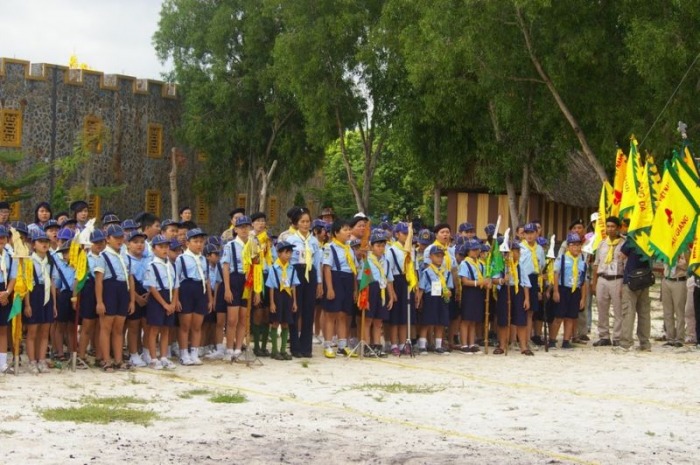
Vietnamese Cubs
Indonesian Cubs

Cubs or Wolf Cubs are programs associated with some Scout organizations, for young children, usually between 8 and 12, who are too young to be Scouts and make the Scout Promise. A participant in the program is called a Cub and a group of Cubs is called a "Pack".

The Wolf Cub program was originated by The Scout Association in the United Kingdom in 1916 to provide a program for boys who were too young to be Boy Scouts and make the Scout Promise. It was adopted by some other Scout organizations. Most Scout organizations, including The Scout Association, no longer use the Wolf Cub program and have replaced it with other program but have retained the name Cubs. Others, including some Traditional Scouting organizations, maintain the original Wolf Cubs program.

Originally, cubs program were open only to boys, while young girls could join the Brownies. Some Cub organizations are open to both girls and boys, although not necessarily in the same unit. A few organizations also operate a Sea Cub version of Cubs.[1]

Foundation

[edit]
A British Wolf Cub in the late 1960s

Wolf Cubs was started by The Scout Association in 1916, nine years after the establishment of the Boy Scout Movement, to cater to younger boys who were too young to be Boy Scouts. During these first years, many troops had either allowed younger boys to join or had set up an informal junior or cadet Scout troops. In 1916, articles in a Scout leaders' journal, Headquarters Gazette outlined "Junior Scout" and then "Wolf Cub" schemes. However, Robert Baden-Powell wanted something quite different from a watered-down Boy Scout program and recognised that too close of an association between the junior program and the Boy Scouts would detract from both. Baden-Powell wanted a junior scheme with a name, uniform and other identity and program distinct from the Scouts.

In 1916, Baden-Powell published his outlines for such a scheme, it was to be called Wolf Cubs. Baden-Powell asked his friend Rudyard Kipling[2] for the use of his Jungle Book history and universe as a motivational frame for the Wolf Cub scheme. The scheme was given a publicity launch at The Boy Scouts Association's Imperial Headquarters in Buckingham Palace Road, Westminster, on Saturday 24 June 1916.[3] Baden-Powell wrote a new book, The Wolf Cub's Handbook, the first edition of which was published in December 1916. He collaborated with Vera Barclay in devising the Wolf Cub training program and badges, which were published in the second edition.[4] On 16 December 1916, a public display of the Wolf Cubs was held at Caxton Hall, Westminster,[3] to which Kipling was invited; he was unable to attend but sent Baden-Powell a letter of apology, praising his work with the Scout Movement.[5] Vera Barclay co-founded Wolf Cubs with Baden-Powell in 1916.

From the 1960s, many organizations varied or abandoned the Wolf Cub Jungle Book theme. Some organizations changed the name to Cubs, Cub Scouts or similar but retained the Jungle Stories and Cub ceremony as tradition—such as the use of Jungle Book names (as described below); and the Grand Howl which signals the start and end of Cub Meetings. Other organizations kept the name but dropped the Jungle Book theme.

Originally, Cubs was open only to boys while the Brownies were set up as a parallel for young girls in Girl Guides organizations. This remains the situation in some places. Most World Organization of the Scout Movement (WOSM) member organizations admitted girls to Cubs while others have separate co-ed units with a different theme. Most member Union Internationale des Guides et Scouts d'Europe (UIGSE) member organizations have two single-sex units both named Wolf Cubs and both in the jungle theme.

Cubs has ideals of spiritual and character growth, citizenship training, and personal fitness.[citation needed] Cubs provides a positive, encouraging peer group, carefully selected leaders [citation needed] who provide good role models and a group setting where values are taught to reinforce positive qualities of character.[citation needed]

Organization

[edit]

Cubs are organized in packs, which are sometimes linked to a Scout group, providing all the age programs known as a "Scouting family". Adult leaders of Cub packs take the names of The Jungle Book's main characters. In many countries the leader of the Pack is called Akela; subordinate leaders are named Bagheera, Baloo, Rikki-Tikki-Tavi, etc., by how many sub-leaders the pack has. A few very big packs need so many sub-leaders that their names must extend to include Tabaqui and Shere Khan, but that tends to be the cue for the pack to split into two packs. Cubs have a distinctive two-finger salute according to the Jungle theme, in contrast to the three-finger salute of the Boy Scouts. However, in The Scout Association of the United Kingdom (UK) and some of its overseas branches, the two-finger salute was later replaced by the three-finger salute. Historically, Cubs wear a distinctive headdress, which is a tight-fitting green felt cap with green felt visor, yellow pipings, and an emblem at the front—although in some countries this has been replaced by more contemporary headgear or dispensed with entirely.

Just as Scout troops are subdivided into patrols, Cub packs are divided into small teams. Baden-Powell named the team a Six, which refers to the six Cubs in each team. In most countries Sixes are mixed-age groups with the oldest as sixer ("leader"). In Scouting America, the teams are called dens, with each den serving either boys or girls in the same school grade.

Youths from older age programs are actively encouraged to assist as Cub leaders. In The Scout Association in the UK and in its branches such as in Australia, these were originally called Cub Instructors. Scouts Australia now uses the term Youth Helper for such persons, whilst in the United Kingdom they are called Young Leaders. In Canada, a Scout who assists in the Cub program is designated as a Kim. In the United States, the term Den Chief is used.

In many European countries (especially where the Jungle theme still has a strong part in the program), St. Francis of Assisi is the patron saint of Cubs, because of his relationship with wolves.

Cubs in national organizations

[edit]

Australia

[edit]

Baden-Powell Scouts' Association

[edit]

The Baden-Powell Scouts' Association in Australia operate a "Wolf Cub" program between its Koalas' program and Boy Scout. Wolf Cub packs are themed on "The Jungle Book" by Rudyard Kipling, a friend of Baden-Powell. Wolf Cub packs are divided into Sixes, with each six being identified by a coloured triangular patch on the shoulder of the Cub's shirt. Each Six is led by a "Sixer" and a "Seconder", who have their rank indicated by horizontal yellow stripes sewn onto their left arm.

In Scouts Australia, the Cubs program is open to all children (girls and boys) ages 8–11.[6] The uniform is a navy blue, button-up or polo-style, short-sleeved shirt with a yellow collar, sleeves and shoulders.[7] Patrols are identified by a coloured band/ring (red, yellow, green, orange, blue, black, white, grey, tan, purple) worn around their scarf, above their woggle.[8] Patrol Leaders wear a second band/ring on the other side of their scarf which is white with two blue stripes. They are supported by their Assistant Patrol Leader, who will step into the leadership role if the Patrol Leader is away, and will help at Unit Councils. They wear a white band/ring with one blue stripe.

Together, the Patrol Leaders and Assistant Patrol Leaders from every patrol make up the Unit Council. They take a leading role in planning and running activities.

Austria

[edit]

In Pfadfinder und Pfadfinderinnen Österreichs Cubs is the program for children between the ages of 7 and 10. The jungle theme is the symbolic framework. The first pack was started in the autumn of 1920 in Vienna. In the beginning, there were different symbolic frameworks: red Indians (taken from "Kibbo Kift" written by John Hargrave) and Robinson Crusoe. In the 1930s the Jungle theme was introduced.

Canada

[edit]

In 1916, the Wolf Cubs program was introduced as part of Scouts Canada with a program following that of its UK parent organization, The Scout Association. Cubs is open to youth of both sexes, ages 8 to 10 inclusive.[9] Sixes wear a coloured triangular patch, rather than a distinctive woggle. (If brown, for example, the six is known as Brown Six.) The Cub motto is "Do Your Best" and the promise, the vow recited in opening ceremonies is:[10]

"I promise to do my best,
to do my duty to God and the King,
to keep the law of the Wolfcub pack,
and do a good turn every day."

Cub Camp, Crivitz, Germany, 2007

Hong Kong

[edit]

The tradition of Cubs in Hong Kong was inherited from the Hong Kong branch of The Scout Association of the United Kingdom. It is the largest program of the Scout Movement in Hong Kong. A Pack is headed by a Cub Leader (團長), with several Assistant Cub Leaders (副團長) and Instructors (教練員). The division within a Pack is called a Six (小隊). Each Six has a Sixer (隊長) and a Seconder (隊副 or 副隊長). Each Six is distinguished by a colour and is named after it. Each Cub of the Six wears a woggle with the colour of his Six. The Promise and Law for Cubs are simplified. Traditionally, the logo of the Wolf Cub denotes the Cub but it is rarely used.[11][12]

Ireland

[edit]

In Ireland, the program is known as both Cubs and Macaoimh, depending on the tradition from which the particular Scout troop comes.

Netherlands

[edit]

The jungle theme is the symbolic framework of the Welpen (Cubs). Welpen wear green uniforms. Among a horde ("pack") of Cubs, the cubs are divided into nesten ("nests"). Each nest has a Gids (Guide) and a Helper. Like all age programs, Welpen is open to both boys and girls, but Scout Groups can have single-sex units. Starting in 2010, the symbolic framework of the Welpen will be based on a modified version of the Jungle Book with two main characters: the boy Mowgli and the girl Shanti. The new Welpen program will gradually replace the four programs in the age group Scouting Nederland had before Welpen, Kabouters (Brownies), Dolfijnen ("Dolphins") and Esta's. Dolfijnen has a water-based symbolic framework, and Esta's has a specially developed co-ed symbolic framework. The new Welpen contains elements from all four previous age programs.

New Zealand

[edit]

In New Zealand, the Cubs program largely follows that of the United Kingdom, though it is administered under the main Scouts New Zealand association. The Cubs program is for children aged 8 to 11 years. They meet weekly at their Scout Hall and take part in all sorts of activities. There are approximately 410[13] scout groups in New Zealand, all of which have a cub program, typically along with other programs for younger kids (Keas) and older Scouts, Venturers and Rovers. Scouts New Zealand Sections Archived 2018-12-13 at the Wayback Machine.

Poland

[edit]
Cub from Poland, 2009

In the Polish Scouting and Guiding Association, Cubs and Brownies' program is called "zuchy" and is open to children ages 6–10. Cubs are organized into packs where they learn to integrate into a collective of friends. Any kind of learning is accomplished by playing games. They can earn three Cub Stars "Gwiazdki zuchowe" and a lot of individual and group merit badges.[14]

Singapore

[edit]

In Singapore, the junior program of the Singapore Scout Association was known as the Cadet Scouts (from a junior program pre-dating Cubs) until 2005 when it was renamed to Cubs in line with international practice.

The Cubs' age range is from 7–12 and they use the Jungle Book Theme. Each Cub Pack is led by a Cub Leader assisted by Asst. Cub Leaders. Packs are subdivided into small groups of six cubs, called Sixes. Sixes are led by the Sixer and the Asst. Sixer. Most Cub Packs in Singapore are affiliated with schools and the teachers are the Cub Leaders and Asst. Cub Leaders. Some parents are also involved and actively serve as Volunteer Adult Leaders (VAL).

The highest Award for a Cub is the Akela Award. It is awarded to Cubs who complete the badge scheme and assessment criteria.

United Kingdom

[edit]

Baden-Powell Scouts' Association

[edit]

The Baden-Powell Scouts' Association operate a "Wolf Cub" program between Beavers and Scouts. Wolf Cub packs are themed on "The Jungle Book" by Rudyard Kipling, a friend of Baden-Powell. Wolf Cub packs are divided into Sixes, with each six being identified by a coloured triangular patch on the shoulder of the Cub's sleeve. Each Six is led by a "Sixer" and a "Seconder", who have their rank indicated by horizontal yellow stripes sewn onto their left arm.[15]

British Boy Scouts

[edit]

The British Boy Scouts and British Girl Scouts Association allows the use of the Wolf Cubs program as an alternative to its Junior Scout program.[16]

The Scout Association

[edit]

In the Scout Association, Sixes are led by a "Sixer" and have a "Seconder" (or "Second") as a backup. The Sixer wears two stripes on his/her uniform and the Seconder one stripe. When a Cub is made a Sixer, the Second's badge (with one stripe) should be removed and replaced with the Sixer's badge. The Cubs of a six are distinguished by the colour of the woggle they wear on their Group neckerchief (known elsewhere as a Group scarf).

The three points of the fleur-de-lys, Scout salute and Scout sign remind the Cub of the three points of the Cub's Promise: "Duty to God and King, Helpfulness to other people, and Obedience to the Cub Law."[17]

An American Cub in uniform, 1968

United States

[edit]
Detroit, U.S. Cubs around 1942

Scouting America

[edit]

Cub Scouting is a division of Scouting America. Starting in 1918, several experiments operated until 1930, when the first official Cub packs were registered.[18] Today, it is a family program for children in kindergarten through fifth grade, with each den admitting boys, girls or coed through 4th grade and single gender for 5th grade. Parents, leaders, and organizations work together to achieve the purposes of Cubs. Families are a core part of Cubs and are included in many activities. Currently, Cubs is the largest of Scouting America's three divisions.[19]

Baden-Powell Service Association

[edit]

In the Baden-Powell Service Association, the corresponding program for this age group is called Timberwolves.[20] As with the Scout Association, each pack is divided into Sixes led by a "Sixer" with a "Seconder" assisting. The Pack retains Baden-Powell's original Jungle Book theme, with its leader called Akela and assistant leaders using names like Raksha, Bagheera, or Baloo.[21]

See also

[edit]

References

[edit]
Revisions and contributorsEdit on WikipediaRead on Wikipedia
from Grokipedia
The Cub Scout program is a junior division of the global movement, designed for children typically aged 7 to 11 (or kindergarten through fifth grade ), emphasizing character development, citizenship, leadership, personal fitness, and outdoor skills through engaging activities, games, service projects, and achievement-based adventures. Originating in the as the Wolf Cubs in 1916, the program was formally launched by Robert Baden-Powell, founder of , to provide age-appropriate training for boys aged 8 to 11, inspired by Rudyard Kipling's with themes of wolves, packs, and the leader Akela. Baden-Powell announced the initiative in October 1916 after experimental "Junior Scout" groups formed as early as 1910, aiming to foster habits of helpfulness, obedience, and resourcefulness through play-based methods rather than the more structured senior . By the end of , membership reached 37,000 in the UK, and the program evolved into the modern Cubs section, now open to all genders. In the United States, the Boy Scouts of America (now Scouting America) adapted the concept as the Cub Scout program, officially launching it in 1930 with 5,102 participants in its first year, initially for boys but expanded to include girls starting in 2018 to promote family involvement and equal opportunities. Organized into small, grade- and gender-specific groups called dens (ideally 6 to 8 youth) that meet two to three times per month, Cub Scouts advance through ranks by completing "adventures"—themed activities like building cars, , or —while participating in pack-wide events that build teamwork and . Today, the program operates worldwide under various names within the World Organization of the Scout Movement, serving millions of youth with a focus on inclusive, hands-on learning.

History

Foundation

The Cub Scout program originated as the Wolf Cubs, a junior section of the Boy Scouts, founded by Baden-Powell in the to address the demand from younger boys eager to participate in activities but excluded due to age restrictions in the main program. Baden-Powell, recognizing the need for age-appropriate character-building experiences, drew inspiration from Rudyard Kipling's , which he adapted to create an engaging framework of adventure, games, and moral lessons for boys. This initiative aimed to foster responsibility, teamwork, and self-reliance through playful yet structured pursuits, mirroring the developmental stages of wolf cubs in the wild. The Wolf Cubs program was officially launched on December 16, 1916, at in , targeting boys aged 8 to 11 as a preparatory step toward full . Originally named "Wolf Cubs," the scheme organized participants into packs led by an "Akela" (the adult leader), with activities themed around Mowgli's jungle exploits to build excitement and discipline. Cubs advanced through a structured scheme involving the Tenderpad, First Star, and Second Star, earned by completing tests and proficiency badges in skills like , , and helpfulness, with activities themed around . By the end of , membership in the UK had grown to over 37,000. Baden-Powell authored The Wolf Cub's Handbook to formalize the program, with the first edition published in December 1916, providing detailed instructions, illustrations, and excerpts from tailored for young readers and leaders. This handbook outlined the pack structure, ceremonies, and training methods, establishing the Wolf Cubs as a distinct yet complementary element of the broader movement. A revised third edition appeared in 1919, further refining the content for wider adoption.

Global Expansion

Following its establishment in the United Kingdom in 1916, the Wolf Cubs program rapidly expanded to British colonies and dominions during the early 20th century. In , the program was formally introduced the same year, aligning closely with the launch and integrating into the local structure. In , Wolf Cubs were introduced in 1916, the same year as in the . The program's international adoption gained momentum through the World Scout Movement, particularly after the and the 1922 World Scout Conference in , where 31 National Scout Organizations were represented and global membership surpassed 1 million. These events facilitated the dissemination of junior sections like Wolf Cubs to affiliates worldwide, with continued growth between the World Wars despite challenges in some regions. Over the decades, many organizations transitioned from the original "Wolf Cubs" name, inspired by , to "Cub Scouts" in the to modernize and broaden appeal. In the , for instance, the took effect in 1966, reflecting a shift away from the thematic elements. The World Organization of the Scout Movement (WOSM), founded in 1922, has significantly influenced the standardization of junior sections globally by promoting a unified educational framework based on the , Law, and Method, ensuring consistency in youth development programs across member organizations. A major milestone in the program's evolution was the progressive inclusion of girls, beginning in various countries from the 1970s onward. In , girls were allowed to join Cubs on an optional local basis from 1992, with full co-educational integration implemented in 1998. In the , girls were officially permitted to join all sections, including Cub Scouts, following a 1991 resolution, with uniform adaptations introduced in 1992.

Program Structure

Aims and Methods

The aims of Cub Scouting center on fostering character development, citizenship, personal fitness, and outdoor skills among children, preparing them to become responsible and self-reliant individuals through structured yet engaging experiences. These objectives align with the broader Scout Movement's purpose of contributing to the education of young people via a values-based system that promotes holistic growth and active . Cub Scouting employs pedagogical methods rooted in the Scout Method, emphasizing learning by doing, where children acquire skills through hands-on participation rather than rote instruction. This approach adapts the patrol system into smaller pack-based groups, such as dens or sixes, to encourage teamwork and shared responsibility in a supportive environment tailored to younger participants. Additionally, games and stories, often drawing from themes like Rudyard Kipling's The Jungle Book, are integrated to make learning interactive and imaginative, helping children internalize values through play. Central to the program are the and , adapted for Cubs to stress to and , helpfulness toward others, and reverence for higher principles or beliefs. In many implementations, the Cub commits participants to doing their best in , service, and ethical conduct, while the reinforces traits like trustworthiness, kindness, and daily good turns. Adult leaders, often referred to as Akela—the wise pack leader from lore—guide Cubs by modeling values and facilitating activities, while parent involvement is encouraged to reinforce learning at home and build family connections. This collaborative structure underscores the program's emphasis on fun and adventure through age-appropriate challenges, cultivating self-reliance and a sense of accomplishment in a safe setting. These elements trace back briefly to Baden-Powell's vision for a junior program that extends foundational principles to younger children.

Age Groups and Sections

The Cub Scout program typically serves children aged 7 to 11 years worldwide, though national variations exist, such as 8 to 10½ years in the , 8 to 11 years in , 8 to 10 years in , and kindergarten through fifth grade (approximately 5 to 11 years) in the United States. This age range aligns with the original Wolf Cub program established by Robert Baden-Powell in 1916 for boys aged 8 to 11, as recognized by the World Organization of the Scout Movement (WOSM). Within a Cub Scout pack, are organized into smaller groups known as "Sixes" in the or "dens" in other countries like the and , typically consisting of 6 to 8 members each. These groups are led by a youth-elected "Sixer" or "Seconder" in the UK model, or by an adult den leader assisted by den chiefs in the US, fostering early and skills. Progression through the program often involves structured stages tailored to age and development, such as where participants begin with the introductory badge upon joining, advance through grade-specific ranks like , , Wolf, Bear, and Webelos, and culminate in the Arrow of Light award, which prepares them for transition to the program around age 11. Most modern Cub Scout programs have adopted co-educational policies since the and , allowing both boys and girls to participate fully; for example, the UK Scout Association opened junior sections including Cubs to girls in 1991, while Scouting America integrated girls into Cub packs starting in 2018. Uniform elements for Cub Scouts emphasize group identity and achievement at the junior level, commonly including a (or ) secured by a (a slide or ring), along with section-specific badges worn on a or .

Activities and Advancement

Core Activities

Cub Scout core activities revolve around regular group gatherings and experiential learning opportunities designed to foster personal development, teamwork, and fun in a structured yet playful environment. Regular pack meetings form the foundation of the program, typically held monthly in the United States and weekly in the United Kingdom, in community spaces or outdoors, where participants engage in a mix of games, crafts, and hands-on skill-building exercises tailored to their developmental stage. These sessions often include energetic games to build cooperation, creative crafts such as making bunting or simple models to encourage imagination, and practical skills like basic knot-tying using everyday materials or introductory first aid concepts through role-playing scenarios. Outdoor pursuits are a hallmark of Cub Scouting, adapted to ensure accessibility and safety for young children, emphasizing exploration and appreciation of without overwhelming complexity. Activities such as short family-oriented trips, guided hikes on local trails, and observation games help build confidence in the outdoors, often incorporating elements like identifying or observing in urban parks or nearby green spaces. These experiences promote and environmental awareness while being scaled to short durations and supervised settings. Ceremonial elements add a sense of tradition and belonging to Cub Scout gatherings, drawing from the program's literary roots in Rudyard Kipling's . The Grand Howl serves as a signature opening in many packs, where participants mimic wolf calls to gather the group, recite a commitment to doing their best, and focus attention on the meeting ahead, reinforcing unity and the Cub Scout . Investiture ceremonies for new members similarly incorporate Jungle Book motifs, such as references to the wolf pack and Council Rock, to mark the transition into the group through symbolic pledges and shared storytelling. Community service projects in Cub Scouting are intentionally simple and age-appropriate, encouraging and civic responsibility through collective efforts that match children's capabilities. Examples include organizing collections for local charities, such as gathering canned goods or toys for those in need, or participating in environmental cleanups like picking up along or parks to protect local habitats. These initiatives teach the value of giving back while involving families to amplify impact. Seasonal events extend the core activities beyond routine meetings, providing larger-scale opportunities for adventure and social bonding. Day camps and Cuborees, often held during school holidays or weekends, feature themed stations with teamwork-focused games, exploration challenges, and group outings that highlight and discovery in a festive atmosphere. These gatherings, which may span a single day or a weekend, unite multiple packs for shared experiences like relay races or nature quests.

Badges and Awards

In the Cub Scout program, badges and awards form a recognition system designed to encourage skill development, participation, and personal achievement among children typically aged 7 to 11. These awards emphasize fun, , and individual progress rather than , helping participants build confidence and explore interests through structured yet flexible requirements. Systems vary by country; for example, in the , they differ from the adventure-based ranks in the United States. Unlike more advanced Scout sections, which may focus on proficiency in specific skills, Cub awards prioritize broad personal growth and group involvement without formal testing or rivalry. Detailed implementations are covered in national sections. In the UK, badges are categorized into activity badges, which cover interest areas, and challenge awards, which address core competencies. Activity badges, numbering over 60, allow Cubs to pursue hobbies and demonstrate abilities in fields such as , care, astronomy, collecting, and fitness; for example, the Artist badge requires creating various artworks and explaining techniques, while the Collector badge involves building and organizing a collection like stamps or rocks. These are earned at the Cub's pace, often through pack meetings or home activities, with leaders verifying completion via discussions or demonstrations. Core achievement badges, known as challenge awards, focus on essential like home safety, teamwork, and outdoor knowledge; examples include the Our Skills Challenge for practical abilities such as map reading and , and the Our World Challenge for global awareness and cultural exploration. In the US, advancement occurs through grade-specific ranks—such as (kindergarten), (first grade), (second grade), (third grade), Webelos (fourth grade), and Arrow of Light (fifth grade)—earned by completing required "" (themed activity sets) and optional electives. For instance, the rank involves adventures like "" for outdoor skills and "Council Fire" for . Youth track progress in handbooks, with leaders signing off on completions during meetings. Progression in the program is tracked through a series of challenges that build sequentially toward higher awards, with variations by country. The original scheme, introduced in 1990 as the Challenge and Adventure program, featured six challenge awards covering adventure, creativity, environment, fitness, global issues, and , which Cubs completed alongside interest badges to advance. This evolved into the modern system with seven hexagonal challenge awards—adding a focus—culminating in the Chief Scout's Silver Award, the highest honor, which requires earning all seven challenges plus six activity badges. Modern equivalents include global recognitions like the Earth Tribe Award, a WOSM-aligned environmental badge promoting conservation actions such as protection projects. Additional uniform badges include the Membership Award for initial joining and Joining In Awards (up to three annually) for consistent pack participation, along with leadership stripes for roles like Sixer. In the , ranks culminate in the Arrow of Light, the highest Cub award, bridging to . Earning badges involves periodic reviews by pack leaders, who assess progress through observation, logs, or simple presentations rather than exams, ensuring inclusivity for diverse abilities. The investiture ceremony marks entry into the program, where new Cubs make their , receive the Membership Award, , and initial like group and pack name tapes, often in a welcoming pack with or rhymes to foster belonging. Subsequent awards are presented during pack meetings to celebrate milestones, reinforcing motivation through recognition without pressure. Globally, under WOSM guidelines, member organizations adapt these systems with variations in badge counts—typically 20 or more categories combining interests and challenges—to suit local cultures, though core principles of non-competitive remain consistent.

National Implementations

United Kingdom

In the , the Cub Scout program originated as the Wolf Cubs, formally launched by on 16 December 1916 at in , drawing inspiration from Rudyard Kipling's to engage boys aged 8 to 11 in activities. Initially designed for younger brothers of Scouts, the program emphasized character development, teamwork, and practical skills through a pack structure modeled on wolf packs. Girls were first admitted to all sections, including Wolf Cubs, in 1990, marking a shift toward inclusivity while maintaining core scouting principles. Today, under , the program is known as Cubs, targeting young people aged 8 to 10½ years, with flexibility allowing entry from 7½ and transition to Scouts at 10½. A Cub Pack typically consists of 20 to 30 members led by an adult volunteer called Akela, organized into smaller peer groups called Sixes—ideally six Cubs each—headed by an elected Sixer and supported by a Seconder to foster leadership and responsibility. The program retains elements of the theme but prioritizes adventure, skill-building, and personal challenges, aligning with the that includes a commitment to "do my duty to the King and to the ," underscoring an emphasis on British citizenship and . Advancement in Cubs focuses on holistic development through badges and awards, with the Chief Scout's Silver Award serving as the highest achievement, requiring completion of all six Challenge Awards that cover personal, team, and community skills. To prepare for the move to Scouts, Cubs earn the Moving-On Award by attending joint sessions in both sections for four to six weeks, participating in activities, and beginning work on the Scout Membership Award. Independent scouting groups in the UK, such as the Baden-Powell Scouts' Association, preserve the original Wolf Cubs name for their 8- to 10-year-old section, maintaining a traditional focus inspired by Baden-Powell's early methods while adapting for modern integrated participation of boys and girls.

United States

Cub Scouting in the is administered by , formerly known as the Boy Scouts of America, and serves as the entry-level program for aged 5 to 10, corresponding to kindergarten through fifth grade. The program emphasizes family involvement, with parents and guardians actively participating as leaders or coordinators to support development in character, , , and personal fitness. join a local pack, which is subdivided into dens organized by grade level, where small groups of 6 to 8 members meet twice or three times per month for hands-on activities tailored to their age. Packs convene for monthly meetings that bring all dens together for recognition ceremonies, skill demonstrations, and family-oriented events, including annual traditions like the , where participants build and race wooden cars. Advancement in Cub Scouting follows a structured trail beginning with the Bobcat badge, an introductory award covering basic principles like the Scout Oath and Law, required for most participants except kindergarteners. Youth then progress through rank-specific advancements: for first graders, for second graders, for third graders, and Webelos for fourth graders, each involving completion of that build skills in areas such as outdoors, , and personal growth. The culminating Arrow of Light award, earned by fifth graders, represents the highest achievement in Cub Scouting and prepares recipients for crossover into troops through a ceremonial transition. The program became fully co-educational in , allowing girls to join alongside boys in packs and dens, expanding access to all youth regardless of gender. This inclusivity aligns with the 2024 rebranding to , effective February 8, 2025, which reflects the organization's commitment to welcoming every young person. Unique elements include STEM-focused Nova awards, which encouraged exploration of through hands-on projects until their national discontinuation in June 2025. is highlighted through events like local Day of Scouting proclamations, which celebrate the program's impact with public activities, parades, and service projects. As a traditional alternative, the Baden-Powell Service Association offers a co-educational Cub Scout-like program emphasizing outdoor skills and Baden-Powell's original methods.

Australia

In , the Cub Scout program operates primarily through , the largest in the country, which is structured as a federation of state branches. This allows for localized implementation while maintaining national standards, with Joey Scouts serving children aged 5 to 8 years and Cub Scouts catering to those aged 8 to 11 years. Joey Scout activities emphasize fun, friendship, and basic discovery, while Cub Scout programs focus on outdoor exploration, , and teamwork through weekly pack meetings and state-level events such as jamborees and skill-building camps. Scouts Australia's multi-branch model supports over 17,000 Cub Scouts as of 2024, enabling tailored experiences that incorporate Australian contexts like environmental awareness and community service. The program traces its origins to the early , influenced by the United Kingdom's movement, with Wolf Cubs formally introduced in in 1916 shortly after their global launch by Robert Baden-Powell. Initially for boys, the section evolved under the Boy Scouts Association of Australia, which became in 1967. Girls were admitted to the Cub Scout section in 1988, aligning with broader co-educational reforms that began in older sections during the . Activities in Australian Cub Scouting highlight skills suited to the country's diverse landscapes, including , , and techniques inspired by the environment, alongside traditional elements like and . Advancement is achieved through the Achievement Pathways, culminating in the Grey Wolf Award, which recognizes comprehensive personal growth in areas such as , outdoor proficiency, and community involvement. Contemporary programs also emphasize with , integrating projects on cultural awareness, land custodianship, and activities to foster respect for Aboriginal and Torres Strait Islander heritage. A smaller, traditional alternative exists through the Baden-Powell Scouts' Association, established in in 1984, which maintains the original Wolf Cubs program exclusively for boys aged 8 to 11. This group adheres to pre-1960s methods, focusing on the Jungle Book-themed pack structure and core promises without co-educational participation, operating in select states with around 250 total members.

Canada

The Cub Scout program in Scouts Canada, originally known as Wolf Cubs, was formally introduced in 1916, shortly after the establishment of Scouting in Canada in 1908. It forms the second of five progressive sections—following Beaver Scouts (ages 5-7) and preceding Scouts (ages 11-14), Venturer Scouts (ages 15-17), and culminating in Rovers (ages 18-26)—designed to build skills sequentially toward young adult leadership. For youth aged 8 to 10, the program emphasizes exploration through the "Canadian Path" framework, which integrates youth-led adventures in six areas: environment, , , , , and personal growth. Within a Cub Pack, youth are organized into small teams called Lairs, typically comprising six to eight members, where they collaborate on activities like , , canoeing, and snowshoeing to foster northern outdoor skills adapted to Canada's diverse climates. Resources are provided bilingually in English and French to reflect Canada's federal structure and support accessibility across regions. Leadership roles, such as the Lair leader (formerly known as Sixer in pre-2015 structures), encourage peer guidance. Advancement occurs through Personal Progression Badges, marking milestones from newcomer to advanced levels, and Personal Achievement Badges in the six program areas, allowing youth to pursue interests like STEM or . Additional recognition includes Outdoor Adventure Skills Badges for proficiency and special event patches, such as those from regional gatherings like the Wolf Howl camp. National events, including occasional Canadian Cub Jamborees, provide opportunities for large-scale participation, though frequency varies due to logistical factors. Scouts Canada has been fully co-educational since 1998, with optional inclusion starting in 1992, promoting gender equity alongside multiculturalism through initiatives like the "No One Left Behind" program, which subsidizes fees for underrepresented families. This inclusivity extends to Indigenous reconciliation efforts and diverse projects. Currently, the Cub program engages thousands of the organization's over 42,000 youth members, with proximity to the facilitating occasional cross-border exchanges.

Other Countries

In Austria, the Pfadfinder und Pfadfinderinnen Österreichs (PPÖ) operates the Biber program as its Cub Scout equivalent, targeting children aged 5 to 7 years, with an emphasis on eco-focused activities centered around nature exploration and environmental care through the thematic framework "Freunde des Waldes" (Friends of the Forest). Participants engage in playful learning about community and the natural world, earning buttons for personal development milestones, which aligns with the organization's broader commitment to sustainable practices in the Alpine regions. While specific Alpine hikes are not formalized in the core Biber curriculum, the program's nature-oriented ethos supports outdoor excursions in Austria's mountainous terrain to foster environmental awareness. The Scout Association of Hong Kong delivers its Cub Scout program for youth aged 7.5 to 11 years, adapting traditional to an urban environment through activities like in city parks such as , where participants navigate control points to build navigation skills amid dense urban settings. This approach emphasizes physical and mental development via progressive training, including outdoor adventures tailored to 's compact geography, promoting and in built-up areas. In Ireland, Scouting Ireland's Cub Scout section, known as Mac Scáin or Macaoimh, serves children aged 9 to 11 and integrates elements of Gaelic culture through themed adventures that incorporate Celtic games such as hurling and , reflecting the nation's heritage in pack activities. Organized into clans named after figures from Gaelic mythology, the program fosters community and creativity while meeting weekly for skill-building games and explorations that highlight Irish traditions. The Netherlands' Scouting Nederland features the Welpen program for ages 7 to 11, with a notable water-based variant called Waterwelpen that leverages the country's extensive waterways for canoeing, , and aquatic challenges, preparing participants for advanced waterscouting. These activities, conducted in blue uniforms to denote the aquatic focus, underscore the geographical influence of the Netherlands' delta landscape on practices. New Zealand's Scouts Aotearoa structures its early youth programs as Keas for ages 5 to 8 and Cubs for ages 8 to 11, incorporating cultural integration to honor the nation's indigenous heritage, including traditional practices like ceremonies during group welcomes and events. This bicultural approach enriches the adventure-based curriculum with elements of Te Tiriti o Waitangi principles, blending outdoor fun, games, and community activities across diverse packs. Poland's Związek Harcerstwa Polskiego (ZHP) revived its Zuchy program post-World War II in 1956 after suppression during the war and communist era, offering it to children aged 6 to 10 with strong ties to national history through educational activities that commemorate Poland's resilience and cultural legacy. Packs emphasize teamwork and personal growth in a framework that echoes the organization's role in Poland's independence movements, maintaining over 140,000 members today. In , the Singapore Scouts Association runs its Cub Scout program for ages 7 to 12, placing a strong emphasis on discipline within multicultural packs that reflect the city's diverse ethnic communities, fostering respect and unity through shared activities like leadership training and cultural exchanges. The develops well-rounded individuals by integrating physical challenges with in a harmonious, inclusive environment. These implementations, influenced by World Scouting Movement standards, showcase how Cub Scouting adapts to local cultures and geographies for global youth development.

References

Add your contribution
Related Hubs
User Avatar
No comments yet.