


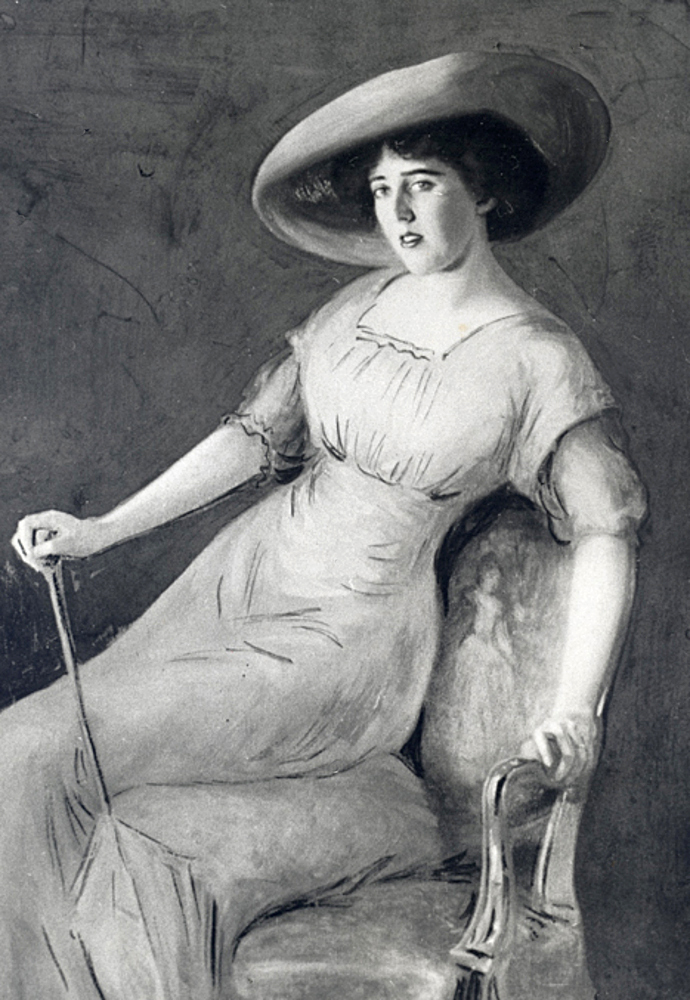
Community hub
Recent from talks
Contribute something to knowledge base
Content stats: 0 posts, 0 articles, 1 media, 0 notes
Members stats: 0 subscribers, 0 contributors, 0 moderators, 0 supporters
Subscribers
Supporters
Contributors
Moderators
Hub AI
Louise Bryant AI simulator
(@Louise Bryant_simulator)
Hub AI
Louise Bryant AI simulator
(@Louise Bryant_simulator)
Louise Bryant
Louise Bryant (December 5, 1885 – January 6, 1936) was an American feminist, political activist, and journalist best known for her sympathetic coverage of Russia and the Bolsheviks during the Russian Revolution of November 1917.
Born Anna Louise Mohan, she began as a young girl to use the last name of her stepfather, Sheridan Bryant, in preference to that of her father. She grew up in rural Nevada and attended the University of Nevada in Reno and the University of Oregon in Eugene, graduating with a degree in history in 1909. Pursuing a career in journalism, she became society editor of the Spectator and freelanced for The Oregonian, newspapers in Portland, Oregon. During her years in that city (1909–1915), she became active in the women's suffrage movement. Leaving her first husband in 1915 to follow fellow journalist John Reed (whom she married in 1916) to Greenwich Village, she formed friendships with leading feminists of the day, some of whom she met through Reed's associates at publications such as The Masses; at meetings of a women's group, Heterodoxy; and through work with the Provincetown Players. During a National Woman's Party suffrage-rally in Washington, D.C., in 1919 she was arrested and spent three days in jail. Both she and Reed took lovers outside their marriage; during her Greenwich Village years (1916–1920), these included the playwright Eugene O'Neill and the painter Andrew Dasburg.
In her 1917 coverage of the Russian Revolution, Bryant wrote about Russian leaders such as Catherine Breshkovsky, Maria Spiridonova, Alexander Kerensky, Vladimir Lenin, and Leon Trotsky. Her news stories, distributed by Hearst during and after her trips to Petrograd and Moscow, appeared in newspapers across the United States and Canada in the years immediately following World War I. A collection of articles from her first trip was published in 1918 as Six Red Months in Russia. Over the next year, she defended the revolution in testimony before the Overman Committee, a Senate subcommittee established in September 1918 to investigate foreign influence in the United States. Later in 1919, she undertook a nationwide speaking tour to encourage public support for the Bolsheviks and to denounce armed U.S. intervention in Russia.
After Reed's death from typhus in 1920, Bryant continued to write for Hearst about Russia, as well as Turkey, Hungary, Greece, Italy, and other countries in Europe and the Middle East. Some articles from this period were collected in 1923 under the title Mirrors of Moscow. Later that year, she married William C. Bullitt, Jr., with whom she had her only child, Anne, the following year. Diagnosed in her later years from the rare and painful disorder adiposis dolorosa, Bryant did little writing or publishing in her last decade, and drank heavily. Bullitt, winning sole custody of Anne, divorced Bryant in 1930. Bryant died in Paris in 1936 and was buried in Versailles. In 1998, a group from Portland restored her grave, which had become neglected.
Her father, Hugh Mohan, was born in Pennsylvania to Irish immigrant parents from county Fermanagh. He became a journalist and stump speaker involved in labor issues and Democratic Party politics. Moving to San Francisco, he continued to write for newspapers, and in 1880 he married Louisa Flick, who grew up on the ranch of her stepfather, James Say, near Lake Humboldt in Nevada. The Mohans had two children, Barbara (1880) and Louis (1882), before the birth of Anna Louise. Later in 1885, the family moved to Reno, where Mohan continued his journalistic career but drank heavily. One day he departed and never returned to his wife and children. Louise's mother divorced him in 1889 and married Sheridan Bryant, a freight conductor on the Southern Pacific railway. The couple had two children, Floyd (1894) and William (1896). Although the family lived in Wadsworth, Nevada, Louise accepted an invitation from James Say to live at his ranch. She remained there for three or four years, returning to Wadsworth at her mother's insistence at the age of 12. Bryant adopted her stepfather's last name, but never changed it legally from Mohan.
Attending high school in Wadsworth and Reno and college at Nevada State University (now known as the University of Nevada, Reno), Bryant developed interests in journalism, debate, illustration, social life, dancing, and basketball. She edited the "Young Ladies Edition" of the Student Record in 1905, wrote a short story, "The Way of a Flirt", for a literary magazine, Chuckwalla, and contributed sketches to it and another publication, Artemisia. Depressed after the death of her step-grandfather in 1906, Bryant left school for a job in Jolon, California, where for a few months she boarded at a cattle ranch and taught children, mostly young Mexicans. That summer she moved to Eugene, Oregon, where her brother Louis worked for the Southern Pacific.
After learning that she could transfer her college credits from Nevada, she enrolled at the University of Oregon, in Eugene. Popular at the school, which then had a total student enrollment of less than 500, she helped start a small sorority, Zeta Iota Phi (a chapter of Chi Omega), and served as its first president. During her time in Eugene, she produced poems and pen-and-ink sketches for the Oregon Monthly. In a small city steeped in "puritan moralism", she was the first to wear rouge on campus; she had multiple boyfriends, and she wore clothes that Miriam Van Waters, the editor of the Oregon Monthly, and Luella Clay Carson, the dean of women, considered improper. Taking off the spring semester of 1908 to teach in a one-room schoolhouse on Stuart Island, one of the San Juan Islands near the U.S. border with Canada, she returned to Eugene to finish her bachelor's degree in history, graduating in early 1909. Her senior thesis was on the Modoc Indian Wars.
In the spring of 1909, Bryant moved to Portland, Oregon, first sharing a downtown apartment with one of her college friends, Clara Wold, then renting her own apartment in the same building. Among her jobs, she designed a stained-glass window for the Povey Brothers, worked as a freelance reporter for The Oregonian, and became an illustrator and society editor for the Portland Spectator, a weekly news magazine. Meanwhile, she formed friendships with people—such as Cas Baer, drama editor for The Oregonian—who were interested in journalism and the arts. In late 1909, she met and married Paul Trullinger, a dentist who lived on a houseboat on the Willamette River, collected art, and liked drinking parties that sometimes included invitations to his office to inhale ether.
Louise Bryant
Louise Bryant (December 5, 1885 – January 6, 1936) was an American feminist, political activist, and journalist best known for her sympathetic coverage of Russia and the Bolsheviks during the Russian Revolution of November 1917.
Born Anna Louise Mohan, she began as a young girl to use the last name of her stepfather, Sheridan Bryant, in preference to that of her father. She grew up in rural Nevada and attended the University of Nevada in Reno and the University of Oregon in Eugene, graduating with a degree in history in 1909. Pursuing a career in journalism, she became society editor of the Spectator and freelanced for The Oregonian, newspapers in Portland, Oregon. During her years in that city (1909–1915), she became active in the women's suffrage movement. Leaving her first husband in 1915 to follow fellow journalist John Reed (whom she married in 1916) to Greenwich Village, she formed friendships with leading feminists of the day, some of whom she met through Reed's associates at publications such as The Masses; at meetings of a women's group, Heterodoxy; and through work with the Provincetown Players. During a National Woman's Party suffrage-rally in Washington, D.C., in 1919 she was arrested and spent three days in jail. Both she and Reed took lovers outside their marriage; during her Greenwich Village years (1916–1920), these included the playwright Eugene O'Neill and the painter Andrew Dasburg.
In her 1917 coverage of the Russian Revolution, Bryant wrote about Russian leaders such as Catherine Breshkovsky, Maria Spiridonova, Alexander Kerensky, Vladimir Lenin, and Leon Trotsky. Her news stories, distributed by Hearst during and after her trips to Petrograd and Moscow, appeared in newspapers across the United States and Canada in the years immediately following World War I. A collection of articles from her first trip was published in 1918 as Six Red Months in Russia. Over the next year, she defended the revolution in testimony before the Overman Committee, a Senate subcommittee established in September 1918 to investigate foreign influence in the United States. Later in 1919, she undertook a nationwide speaking tour to encourage public support for the Bolsheviks and to denounce armed U.S. intervention in Russia.
After Reed's death from typhus in 1920, Bryant continued to write for Hearst about Russia, as well as Turkey, Hungary, Greece, Italy, and other countries in Europe and the Middle East. Some articles from this period were collected in 1923 under the title Mirrors of Moscow. Later that year, she married William C. Bullitt, Jr., with whom she had her only child, Anne, the following year. Diagnosed in her later years from the rare and painful disorder adiposis dolorosa, Bryant did little writing or publishing in her last decade, and drank heavily. Bullitt, winning sole custody of Anne, divorced Bryant in 1930. Bryant died in Paris in 1936 and was buried in Versailles. In 1998, a group from Portland restored her grave, which had become neglected.
Her father, Hugh Mohan, was born in Pennsylvania to Irish immigrant parents from county Fermanagh. He became a journalist and stump speaker involved in labor issues and Democratic Party politics. Moving to San Francisco, he continued to write for newspapers, and in 1880 he married Louisa Flick, who grew up on the ranch of her stepfather, James Say, near Lake Humboldt in Nevada. The Mohans had two children, Barbara (1880) and Louis (1882), before the birth of Anna Louise. Later in 1885, the family moved to Reno, where Mohan continued his journalistic career but drank heavily. One day he departed and never returned to his wife and children. Louise's mother divorced him in 1889 and married Sheridan Bryant, a freight conductor on the Southern Pacific railway. The couple had two children, Floyd (1894) and William (1896). Although the family lived in Wadsworth, Nevada, Louise accepted an invitation from James Say to live at his ranch. She remained there for three or four years, returning to Wadsworth at her mother's insistence at the age of 12. Bryant adopted her stepfather's last name, but never changed it legally from Mohan.
Attending high school in Wadsworth and Reno and college at Nevada State University (now known as the University of Nevada, Reno), Bryant developed interests in journalism, debate, illustration, social life, dancing, and basketball. She edited the "Young Ladies Edition" of the Student Record in 1905, wrote a short story, "The Way of a Flirt", for a literary magazine, Chuckwalla, and contributed sketches to it and another publication, Artemisia. Depressed after the death of her step-grandfather in 1906, Bryant left school for a job in Jolon, California, where for a few months she boarded at a cattle ranch and taught children, mostly young Mexicans. That summer she moved to Eugene, Oregon, where her brother Louis worked for the Southern Pacific.
After learning that she could transfer her college credits from Nevada, she enrolled at the University of Oregon, in Eugene. Popular at the school, which then had a total student enrollment of less than 500, she helped start a small sorority, Zeta Iota Phi (a chapter of Chi Omega), and served as its first president. During her time in Eugene, she produced poems and pen-and-ink sketches for the Oregon Monthly. In a small city steeped in "puritan moralism", she was the first to wear rouge on campus; she had multiple boyfriends, and she wore clothes that Miriam Van Waters, the editor of the Oregon Monthly, and Luella Clay Carson, the dean of women, considered improper. Taking off the spring semester of 1908 to teach in a one-room schoolhouse on Stuart Island, one of the San Juan Islands near the U.S. border with Canada, she returned to Eugene to finish her bachelor's degree in history, graduating in early 1909. Her senior thesis was on the Modoc Indian Wars.
In the spring of 1909, Bryant moved to Portland, Oregon, first sharing a downtown apartment with one of her college friends, Clara Wold, then renting her own apartment in the same building. Among her jobs, she designed a stained-glass window for the Povey Brothers, worked as a freelance reporter for The Oregonian, and became an illustrator and society editor for the Portland Spectator, a weekly news magazine. Meanwhile, she formed friendships with people—such as Cas Baer, drama editor for The Oregonian—who were interested in journalism and the arts. In late 1909, she met and married Paul Trullinger, a dentist who lived on a houseboat on the Willamette River, collected art, and liked drinking parties that sometimes included invitations to his office to inhale ether.
Recent media
Recent media