


Community hub
Recent from talks
Contribute something
Nothing was collected or created yet.
MIPS Technologies
View on Wikipedia37°25′12″N 122°04′22″W / 37.4201°N 122.0728°W
MIPS Tech LLC,[1] formerly MIPS Computer Systems, Inc. and MIPS Technologies, Inc., is an American fabless semiconductor design company that is most widely known for developing the MIPS architecture and a series of RISC CPU chips based on it.[2][3] MIPS provides processor architectures and cores for digital home, networking, embedded, Internet of things and mobile applications.[4][5]
Key Information


MIPS was founded in 1984 to commercialize the work being carried out at Stanford University on the MIPS architecture, a pioneering RISC design. The company generated intense interest in the late 1980s, seeing design wins with Digital Equipment Corporation (DEC) and Silicon Graphics (SGI), among others. By the early 1990s the market was crowded with new RISC designs and further design wins were limited. The company was purchased by SGI in 1992, by that time its only major customer, and won several new designs in the game console space. In 1998, SGI announced they would be transitioning off MIPS and spun off the company.
After several years operating as an independent design house, in 2013 the company was purchased by Imagination Technologies, best known for their PowerVR graphics processor family.[6] They were sold to Tallwood Venture Capital in 2017 and then purchased soon after by Wave Computing in 2018.[7] Wave declared bankruptcy in 2020, emerging in 2021 as MIPS and announcing that the MIPS architecture was being abandoned in favor of RISC-V designs.[8]
In May 2022, MIPS previewed its first RISC-V CPU IP cores, the eVocore P8700 and I8500 multiprocessors.[9] In December 2022, MIPS announced availability of the P8700.[10]
In July 2025, MIPS was acquired by GlobalFoundries.[11][12]
History
[edit]
MIPS Computer Systems Inc. was founded in 1984[13] by a group of researchers from Stanford University including John L. Hennessy and Chris Rowen. These researchers had worked on a project called MIPS (for Microprocessor without Interlocked Pipeline Stages), one of the projects that pioneered the RISC concept. Other principal founders were Skip Stritter, formerly a Motorola technologist, and John Moussouris, formerly of IBM.[14]
The initial CEO was Vaemond Crane, formerly President and CEO of Computer Consoles Inc., who arrived in February 1985 and departed in June 1989. He was replaced by Bob Miller, a former senior IBM and Data General executive. Miller ran the company through its IPO and subsequent sale to Silicon Graphics.
In 1986, MIPS Computer Systems designs were noticed by companies such as Cadnetix, Prime Computer and Silicon Graphics (SGI), these adopting the R2000 for new products, with SGI adopting the MIPS architecture for its computers having noted that the Motorola 68000 series of processors was "at the end of its price-performance curve".[15] Identifying the "time-to-market issues" of companies introducing workstation products, MIPS introduced a range of component kits, processor boards and memory boards, intended as "building blocks" for such companies to build into systems. Additionally, development systems such as the M/500 were sold, intended to support software development at systems vendors building MIPS-based hardware products.[16] In December 1989, MIPS held its first IPO. That year, Digital Equipment Corporation (DEC) released a Unix workstation based on the MIPS design.
After developing the R2000 and R3000 microprocessors, a management change brought along the larger dreams of being a computer vendor. The company found itself unable to compete in the computer market against much larger companies and was struggling to support the costs of developing both the chips and the systems (MIPS Magnum). To secure the supply of future generations of MIPS microprocessors (the 64-bit R4000), SGI acquired the company in 1992[17] for $333 million[18][19] and renamed it as MIPS Technologies Inc., a wholly owned subsidiary of SGI.[19]

During SGI's ownership of MIPS, the company introduced the R8000 in 1994 and the R10000[20] in 1996 and a follow-up the R12000 in 1997.[21] During this time, two future microprocessors code-named The Beast and Capitan were in development; these were cancelled after SGI decided to migrate to the Itanium architecture[22] in 1998.[18][23] As a result, MIPS was spun out as an intellectual property licensing company, offering licences to the MIPS architecture as well as microprocessor core designs.
On June 30, 1998, MIPS held an IPO after raising about $16.3 million with an offering price of $14 a share.[24][25][26] In 1999, SGI announced it would overhaul its operations; it planned to continue introducing new MIPS processors until 2002, but its server business would include Intel's processor architectures as well.[27] SGI spun MIPS out completely on June 20, 2000, by distributing all its interest as stock dividend to the stockholders.
In early 2008 MIPS laid off 28 employees from its processor business group. On August 13, 2008, MIPS announced a loss of $108.5 million for their fiscal fourth-quarter and that they would lay off another 15% of their workforce. At the time MIPS had 512 employees.[28] In May 2018, according to the company's presence on LinkedIn, there may be less than 50 employees.
Notable Contributors
[edit]Notable people who have worked at MIPS include James Billmaier,[29] Steve Blank,[30] Joseph DiNucci,[31] John L. Hennessy,[32] Todd Bezenek,[33] David Hitz,[34] Earl Killian,[35][36] Dan Levin,[37] John Mashey,[38] John P. McCaskey, Bob Miller,[39] Stratton Sclavos,[40] and Skip Stritter.[41]
In 2010, Sandeep Vij was named CEO of MIPS Technologies.[42] Vij studied under John Hennessy as a Stanford University graduate student.[42] Prior to taking over at MIPS, Vij was an executive at Cavium Networks,[42] Xilinx and Altera.[43]
EE Times reported that MIPS had 150 employees as of November 1, 2010.[44] If the August 14, 2008 EDN article[28] was accurate about MIPS having over 500 employees at the time, then MIPS reduced their total workforce by 70% between 2008 and 2010.

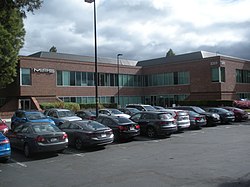
In addition to its main R&D center in Sunnyvale, California,[45] MIPS has engineering facilities in Shanghai, China, Beaverton, Oregon, Bristol and Kings Langley, both in England.[46] It also has offices in Hsin-chu, Taiwan; Tokyo, Japan; Remscheid, Germany and Haifa, Israel.[47]
During the first quarter of 2013, 498 out of 580 of MIPS patents were sold to Bridge Crossing which was created by Allied Security Trust, with all processor-specific patents and the other parts of the company sold to Imagination Technologies.[48] Imagination had outbid Ceva Inc to buy MIPS with an offer of $100 million,[49] and was investing to develop the architecture for the embedded processor market.
In 2017, under financial pressure itself, Imagination Technologies sold the MIPS processor business to a California-based investment company, Tallwood Venture Capital.[50] Tallwood in turn sold the business to Wave Computing in 2018,[51] both of these companies reportedly having their origins with, or ownership links to, a co-founder of Chips and Technologies and S3 Graphics.[52] Despite the regulatory obstacles that had forced Imagination to divest itself of the MIPS business prior to its own acquisition by Canyon Bridge, bankruptcy proceedings for Wave Computing indicated that the company had in 2018 and 2019 transferred full licensing rights for the MIPS architecture for China, Hong Kong and Macau to CIP United, a Shanghai-based company.[53]
In 2021, MIPS announced it would begin making chips based on the RISC-V architecture.[54] In 2022, the company announced availability of its first RISC-V CPU IP core, the eVocore P8700.[10]
In September 2023, MIPS named former Texas Instruments (TI) executive Sameer Wasson CEO. Wasson spent 18 years at TI, most recently as vice president, Business Unit (BU) Manager, Processors.[55]
Company timeline
[edit]| Year | |
|---|---|
| 1981 | Dr. John Hennessy at Stanford University founds and leads Stanford MIPS, a research program aimed at building a microprocessor using RISC principles. |
| 1984 | MIPS Computer Systems, Inc. co-founded by Dr. John Hennessy, Skip Stritter, and Dr. John Moussouris[56] |
| 1986 | First product ships: R2000 microprocessor, Unix workstation, and optimizing compilers |
| 1988 | R3000 microprocessor |
| 1989 | First IPO in November as MIPS Computer Systems with Bob Miller as CEO |
| 1991 | R4000 microprocessor |
| 1992 | SGI acquires MIPS Computer Systems. Transforms it into internal MIPS Group, and then incorporates and renames it to MIPS Technologies, Inc. (a wholly owned subsidiary of SGI) |
| 1994 | R8000 microprocessor |
| 1994 | Sony PlayStation released, using an R3000 CPU with custom GTE coprocessor |
| 1996 | R10000 microprocessor; Nintendo 64 released, incorporating a R4300i processor and coprocessor from MIPS |
| 1998 | Re-IPO as MIPS Technologies, Inc. |
| 1999 | Sony PlayStation 2 released, using an R5900 CPU with custom vector co-processors |
| 2002 | Acquires Algorithmics Ltd, a UK-based MIPS development hardware/software and consultancy company. |
| September 6, 2005 | Acquires First Silicon Solutions (FS2), a Lake Oswego, Oregon company as a wholly owned subsidiary. FS2 specializes in silicon IP, design services and OCI (On-Chip Instrumentation) development tools for programming, testing, debug and trace of embedded systems in SoC, SOPC, FPGA, ASSP and ASIC devices. |
| 2007 | MIPS Technologies acquires Portugal-based mixed-signal intellectual property company Chipidea |
| February 2009 | MIPS Joins Linux Foundation[57] |
| May 8, 2009 | Chipidea is sold to Synopsys. |
| June 2009 | Android is ported to MIPS[58] |
| September 30, 2009 | MIPS Technologies joins the Open Handset Alliance[59] |
| January 2010 | Sandeep Vij appointed as CEO[60] |
| January 2011 | MIPS introduces the first Android-MIPS based Set top box at CES.[61] |
| April 2011 | MIPS Technologies ports Google's Android 3.0, "Honeycomb", to the MIPS architecture[62][63] |
| August 2012 | MIPS Technologies ports Google's Android 4.1, "Jelly Bean". With Indian company Karbonn Mobiles announces world's second tablet running Android 4.1.[64] |
| February 8, 2013 | MIPS Technologies is sold to Imagination Technologies for $100 million.[65] |
| September 22, 2017 | MIPS business is sold by Imagination Technologies to Tallwood Venture Capital as Tallwood MIPS Inc. for $65 million.[50] |
| June 2018 | MIPS Tech Inc. is acquired by Wave Computing.[51] |
| May 2019 | Art Swift is appointed CEO of Wave Computing.[66] |
| September 2019 | After Swift quietly leaves Wave Computing after four months, Sanjai Kohli is appointed as the new CEO.[67] |
| April 2020 | Wave Computing files for bankruptcy.[68] |
| March 2021 | Wave Computing emerges from bankruptcy, renames itself as "MIPS" and joins RISC-V International. Development of the MIPS architecture ceases. All future designs are announced to be based on the RISC-V architecture.[69][70] Sanjai Kohli continues as MIPS CEO.[70] |
| May 2022 | MIPS announced its first RISC-V CPU IP cores, the eVocore P8700 and I8500 multiprocessors.[9] |
| September 2023 | Sameer Wasson is appointed MIPS CEO.[55] |
| January 2024 | MIPS adds two former SiFive executives to its executive team, appointing Drew Barbier as VP of products and Brad Burgess as chief architect.[71] |
| July 2025 | GlobalFoundries agrees to acquire MIPS[72] |
Products
[edit]MIPS Technologies created the processor architecture that is licensed to chip makers.[73][74] Before the acquisition, the company had 125+ licensees who ship more than 500 million MIPS-based processors each year.[75]
MIPS processor architectures and cores are used in home entertainment,[76] networking[77] and communications products. The company licensed its 32- and 64-bit architectures as well as 32-bit cores.[78]
The MIPS32 architecture is a high-performance 32-bit instruction set architecture (ISA) that is used in applications such as 32-bit microcontrollers, home entertainment, home networking devices and mobile designs.[79] MIPS customers license the architecture to develop their own processors or license off-the-shelf cores from MIPS that are based on the architecture.[80]
The MIPS64 architecture is a high performance 64-bit instruction set architecture that is widely used in networking infrastructure equipment through MIPS licensees such as Cavium Networks[81] and Broadcom.[82]
SmartCE (Connected Entertainment) is a reference platform that integrates Android, Adobe Flash platform for TV, Skype, the Home Jinni ConnecTV application and other applications.[83][84] SmartCE lets OEM customers create integrated products more quickly.
MIPS processor core families
[edit]The MIPS processor cores are divided by Imagination into three major families:[85]
- Warrior: hardware virtualization, hardware multi-threading, and SIMD[86]
- Aptiv: microAptiv (compact, real-time embedded processor core), interAptiv (multiprocessor, multi-threaded core with a nine-stage pipeline), proAptiv (super-scalar, deeply out-of-order processor core with high CoreMark/MHz score)[92]
- Classic. 4K, M14K,[79] 24K,[93] 34K,[94] 74K,[95] 1004K[96] (multicore and multithreaded) and 1074K (superscalar and multithreaded) families.
MIPS eVocore RISC-V CPU IP cores
[edit]The MIPS eVocore CPUs are the first RISC-V CPU IP cores from MIPS. Both cores provide support for privileged hardware virtualization, user defined custom extensions, multi-threading, hybrid debug, and functional safety.[9] They include:
- eVocore P8700: multiprocessing system combining a deep pipeline with multi-issue out-of-order (OOO) execution and multi-threading. It can scale up to 64 clusters, 512 cores and 1,024 harts/threads.[9]
- eVocore I8500: in-order multiprocessing system. Each core combines multi-threading and a triple-issue pipeline.[9]
Licensees
[edit]MIPS Technologies had a strong customer licensee base in home electronics and portable media players; for example, 75 percent of Blu-ray Disc players were running on MIPS Technologies processors.[97] In the digital home, the company's processors were predominantly found in digital TVs and set-top boxes.[83] The Sony PlayStation Portable used two processors based on the MIPS32 4K processor.
Within the networking segment, licensees include Cavium Networks and Broadcom.[77] Cavium has used up to 48 MIPS cores for its OCTEON family network reference designs.[98] Broadcom ships Linux-ready MIPS64-based XLP, XLR, and XLS multicore, multithreaded processors.[99] Licensees using MIPS to build smartphones and tablets include Actions Semiconductor and Ingenic Semiconductor.[100] Tablets based on MIPS include the Cruz tablets from Velocity Micro.[101] TCL Corporation is using MIPS processors for the development of smartphones.[102]
Companies can also obtain an MIPS architectural licence for designing their own CPU cores using the MIPS architecture. Distinct MIPS architecture implementations by licensees include Broadcom's BRCM 5000.
Other licensees include Broadcom, which has developed MIPS-based CPUs for over a decade,[103] Microchip Technology, which leverages MIPS processors for its 32-bit PIC32 microcontrollers,[104] Qualcomm Atheros, MediaTek and Mobileye, whose EyeQ chips are based on cores licensed from MIPS.[105]
The first announced licensee for MIPS' RISC-V CPUs is Mobileye, who adopted the MIPS eVocore P8700 for autonomous driving SoCs.[106]
Operating systems
[edit]MIPS is widely supported by Unix-like systems, including Linux,[107] FreeBSD, NetBSD,[108] and OpenBSD.
Google's processor-agnostic[75] Android operating system is built on the Linux kernel.[109] MIPS originally ported Android to its architecture for embedded products beyond the mobile handset, where it was originally targeted by Google but MIPS support was dropped in 2018.[110] In 2010, MIPS and its licensee Sigma Designs announced the world's first Android set-top boxes.[61] By porting to Android, MIPS processors power smartphones and tablets running on the Android operating system.[111]
OpenWrt is an embedded operating system based on the Linux kernel. While it currently runs on a variety of processor architectures, it was originally developed for the Linksys WRT54G, which used a 32-bit MIPS processor from Broadcom. The OpenWrt Table of Hardware now includes MIPS-based devices from Atheros, Broadcom, Cavium, Lantiq, MediaTek, etc.[112]
Real-time operating systems that run on MIPS include CMX Systems, eCosCentric's eCos,[113] ENEA OSE,[114] Express Logic's ThreadX,[115] FreeRTOS, Green Hills Software's Integrity, LynuxWorks' LynxOS, Mentor Graphics, Micrium's Micro-Controller Operating Systems (μC/OS), QNX Software Systems' QNX, Quadros Systems Inc.'s RTXC Quadros RTOS, Segger's embOS and Wind River's VxWorks.
HPE NonStop Guardian OS has a version running on MIPS.
See also
[edit]References
[edit]- ^ "Privacy Policy". MIPS.com. MIPS Tech. 2024. Retrieved March 15, 2024.
- ^ Gantz, John (October 14, 1991). "MIPS will have a tough time in a crowded market". InfoWorld. Vol. 13, no. 41. p. 137.
- ^ Computer History Museum. "John Hennessy: 2007 Fellow Awards Recipient Archived October 3, 2012, at the Wayback Machine." 2007. Retrieved September 16, 2011.
- ^ Agam Shah, IDG. "MIPS Porting Google's Android 3.0 OS for Its Processors Archived August 28, 2011, at the Wayback Machine." April 26, 2011. Retrieved September 16, 2011.
- ^ Sam Dean, Ostatic. "MIPS Advances its Android Plans – Outside of Phones Archived September 16, 2011, at the Wayback Machine." August 3, 2009. Retrieved September 16, 2011.
- ^ "Completion of sale of MIPS" (Press release). October 25, 2017.
- ^ Smith, Ryan. "MIPS Acquired by AI Hardware Vendor Wave Computing". Anand Tech. Archived from the original on June 15, 2018. Retrieved June 16, 2018.
- ^ "Wait, What? MIPS Becomes RISC-V". EEJournal. March 8, 2021. Retrieved March 24, 2021.
- ^ a b c d e Dahad, Nitin (May 12, 2022). "MIPS pivots to RISC-V, targets high performance processing". Embedded.com. Retrieved August 8, 2023.
- ^ a b Leibson, Steven. "MIPS Joins The RISC-V Gang". Forbes. Retrieved August 8, 2023.
- ^ newmips (July 8, 2025). "GlobalFoundries to Acquire MIPS to Accelerate AI and Compute Capabilities". MIPS. Retrieved July 9, 2025.
- ^ Shilov, Anton (July 8, 2025). "GlobalFoundries to make RISC-V CPUs — fab acquires MIPS, will integrate RISC-V and AI IP into its portfolio". Tom's Hardware.
- ^ Junko Yoshida, EE Times. "New CEO Sandeep Vij forms 'Team MIPS'." February 7, 2010. Retrieved June 2, 2020.
- ^ James DeTar, Investors Business Daily. "Panel: Information Technology Still Early Stage Archived April 1, 2012, at the Wayback Machine." October 6, 2010. Retrieved September 16, 2011.
- ^ Hayashi, Alden M. (November 15, 1986). "MIPS Computer targets RISC chips for workstations". Electronic Business. pp. 110–111. Retrieved June 22, 2022.
- ^ Chandler, David (May 1986). "The Monthly Report". UNIX Review. pp. 6, 9, 11–15. Retrieved June 25, 2022.
- ^ PC Magazine. "SGI Archived October 14, 2012, at the Wayback Machine." Retrieved September 19, 2011.
- ^ a b Computer History Museum. "Silicon Graphics Professional IRIS 4D/50GT." Retrieved September 19, 2011.
- ^ a b Corcoran, Cate (March 16, 1992). "MIPS, Silicon merger could kill ACE/ARC". InfoWorld. Vol. 14, no. 11. pp. 1, 107. Retrieved September 19, 2011.
- ^ Linley Gwenapp, Microprocessor Report. "MIPS R10000 Uses Decoupled Architecture." Vol. 8, No. 14, October 24, 1994. Retrieved September 19, 2011.
- ^ Linley Gwenapp, Microprocessor Report. "MIPS R12000 to Hit 300 MHz." Vol. 11, No. 13, October 6, 1997. Retrieved September 19, 2011.
- ^ Stephen Shankland, ZDNet. "Itanium: A cautionary tale." December 7, 2005. Retrieved September 19, 2011.
- ^ Michael Kanellos and Dawn Kawamoto, CNET. "Silicon Graphics scraps MIPS plans." April 9, 1998. Retrieved September 19, 2011.
- ^ Malik, Om (December 2, 1998). "Can MIPS beat ARM?". Forbes. Retrieved September 19, 2011.
- ^ Debora Vrana, Los Angeles Times. "June IPOs Were Not so Hot, but Summer Is Still Young." July 6, 1998. Retrieved September 20, 2011.
- ^ Crag Bicknell, WIRED. "MIPS Slips in IPO." July 1, 1998. Retrieved September 19, 2011.
- ^ Margaret Quan, EE Times. "SGI to shed Cray, shift OS focus to Linux." August 10, 1999. Retrieved September 20, 2011.
- ^ a b Suzanne Deffree, EDN News, "MIPS plans 15% layoff on $108.5M loss." August 14, 2008. Retrieved March 4, 2012.
- ^ VentureBeat Profiles. "Jim Billmaier." Retrieved September 20, 2011.
- ^ UC Berkeley Haas School of Business. "Steve G. Blank Archived September 4, 2011, at the Wayback Machine." Retrieved September 20, 2011.
- ^ VentureBeat Profiles. "Joe DiNucci." Retrieved September 20, 2011.
- ^ IEEE Computer Society. "John L. Hennessy: 2001 Eckert-Mauchly Award Recipient Archived August 15, 2011, at the Wayback Machine." Retrieved September 20, 2011.
- ^ ARM Finance Overseas Ltd. "System and method for managing the design and configuration of an integrated circuit semiconductor design" 2017.
- ^ Joe Kovar, CRN. "2010 Storage Superstars Archived September 22, 2012, at the Wayback Machine." June 21, 2010. Retrieved September 20, 2011.
- ^ "Earl Killian". Paravirtual. November 26, 2010. Archived from the original on February 13, 2012. Retrieved November 26, 2010.
- ^ "S-1 Supercomputer Alumni: Earl Killian". Clemson University. June 28, 2005. Retrieved November 26, 2010.
Earl Killian's ... MIPS's Director of Architecture ...
- ^ BusinessWeek Profiles. "Dan Levin." Retrieved September 20, 2011.
- ^ Computer History Museum. "John Mashey Archived November 13, 2011, at the Wayback Machine." Retrieved September 20, 2011.
- ^ Computer History Museum. "Bob Miller." Retrieved September 20, 2011.
- ^ Forbes. "Stratton D. Sclavos." Retrieved September 20, 2011.
- ^ Computer History Museum. "Skip Stritter." Retrieved September 20, 2011.
- ^ a b c Junko Yoshida, EE Times. "New CEO Sandeep Vij forms ‘Team MIPS’." February 7, 2010. Retrieved September 20, 2011.
- ^ Peter Clarke, EE Times. "MIPS Appoints Former Cavium Exec as CEO MIPS." January 25, 2010. Retrieved September 20, 2011.
- ^ Junko Yoshida, EE Times, "MIPS CEO: Companies need to have a soul". November 1, 2010. Retrieved March 4, 2012.
- ^ Hoovers. "MIPS Technologies." Retrieved September 20, 2011.
- ^ Colleen Taylor, EDN. "MIPS plans HQ in Silicon Forest." March 13, 2007. Retrieved September 20, 2011.
- ^ Company Press Release. "Synopsys Acquires Analog Business Group of MIPS Technologies." May 8, 2009. Retrieved May 8, 2009.
- ^ MIPS Selling All Assets For Combined $7.31/Shr In Cash. Forbes. Retrieved on May 23, 2014.
- ^ "Imagination Tech to buy MIPS Tech for $100M". Associated Press. December 17, 2012. Archived from the original on December 22, 2012. Retrieved December 18, 2012.
- ^ a b "Imagination Technologies Agrees to Takeover by Canyon Bridge". September 22, 2017. Retrieved October 3, 2017.
- ^ a b "MIPS Acquired by AI Startup Wave Computing". June 16, 2018. Retrieved August 4, 2019.
- ^ "Loose Lips Sink MIPS". Electronic Engineering Journal. September 7, 2020. Retrieved September 5, 2022.
- ^ Lee, Jane Lanhee (August 15, 2020). "Tech war chronicles: How a Silicon Valley chip pioneer landed in China". Retrieved September 5, 2022.
- ^ "Wait, What? MIPS Becomes RISC-V". EEJournal. March 8, 2021. Retrieved August 8, 2023.
- ^ a b Hettinga, Wisse (September 7, 2023). "MIPS to Drive RISC-V Market Penetration and Innovation". eeNews Europe. Retrieved September 8, 2023.
- ^ "John Hennessy". Archived from the original on February 11, 2012. Retrieved April 15, 2008.
- ^ TheLinuxFoundation.org. "MIPS Technologies Joins Linux Foundation Archived December 28, 2010, at the Wayback Machine." Retrieved August 12, 2011.
- ^ Steve Bush, ElectronicsWeekly.com. "Google's Android marches onto MIPS processors." Retrieved August 12, 2011.
- ^ "MIPS Technologies Joins the Open Handset Alliance". MIPS Technologies, Inc. September 30, 2009. Archived from the original on July 15, 2010. Retrieved May 3, 2010.
- ^ Peter Clarke, EE Times. "MIPS Appoints Former Cavium Exec as CEO MIPS." January 25, 2010. Retrieved August 12, 2011.
- ^ a b Raphael Savina, AndroidGuys. "CES 2010: First Android Set Top Boxes Archived March 31, 2018, at the Wayback Machine." January 6, 2010. Retrieved September 21, 2011.
- ^ Mark LaPedus, EE Times. "Update: MIPS gets sweet with Honeycomb." April 26, 2011. Retrieved November 4, 2011.
- ^ Peter Clarke, EE Times. "MIPS: Android remains processor neutral." April 1, 2011. Retrieved November 4, 2011.
- ^ Shah, Agam (August 1, 2012). "New Google Jelly Bean 7-inch Tablet Sells for $125 Overseas". PC World.
- ^ Imagination Technologies "Acquisition of MIPS Technologies completed Archived October 2, 2013, at the Wayback Machine." February 8, 2013. Retrieved October 25, 2013.
- ^ Computing, Wave (May 8, 2019). "Wave Computing® Appoints Industry Veteran Art Swift as CEO". GlobeNewswire News Room (Press release). Retrieved December 31, 2021.
- ^ "MIPS' Future in Doubt After CEO Leaves Wave". EE Times India. October 1, 2019. Retrieved December 31, 2021.
- ^ Wave Computing and MIPS waves goodbye April 19, 2020. Retrieved March 11, 2021.
- ^ MIPS becomes RISC-V March 8, 2021. Retrieved March 11, 2021.
- ^ a b "Wave Computing and MIPS emerge from chapter 11 bankruptcy" (Press release). March 1, 2021. Retrieved March 11, 2021.
- ^ Robinson, Dan. "MIPS picks up former SiFive execs in RISC-V drive". www.theregister.com. Retrieved January 4, 2024.
- ^ GlobalFoundries press release, 9 July 2025
- ^ Agam Shah, IDG. "MIPS Porting Google's Android 3.0 OS for Its Processors Archived August 28, 2011, at the Wayback Machine." April 26, 2011. Retrieved October 3, 2011.
- ^ Dean Takahashi, VentureBeat. "MIPS breaks into Android mobile phones with latest chips." January 4, 2011. Retrieved October 5, 2011.
- ^ a b Brian Caufield, Forbes. "For MIPS, Less is More." April 20, 2011. Retrieved September 26, 2011.
- ^ Dean Takahashi, VentureBeat. "MIPS bets big on Google Android systems for the digital home." January 5, 2010. Retrieved September 30, 2011.
- ^ a b Junko Yoshida, EE Times. "‘Blow-out quarter’ highlights MIPS comeback." August 5, 2010. Retrieved October 1, 2011.
- ^ John Spooner, CNET. "MIPS nips new licenses for chips." April 12, 2001. Retrieved October 3, 2011.
- ^ a b Robert Cravotta, Embedded Insights. "M14K." Retrieved October 3, 2011.
- ^ Zewde Yeraswork, CRN. "MIPS Prepares 64-Bit Prodigy CPU Core Architecture." March 29, 2011. Retrieved October 2, 2011.
- ^ Doug Mohney, The Inquirer. "Cavium Hotrods MIPS architecture." June 25, 2007. Retrieved October 5, 2011.
- ^ Eric Brown, LinuxForDevices. ""Enea, NetLogic ship Linux development platform for MIPS". Archived from the original on January 4, 2013.." September 20, 2010. Retrieved September 30, 2011.
- ^ a b Dean Takahashi, VentureBeat. "MIPS aims to drive into consumer electronics gear."January 5, 2010. Retrieved October 5, 2011.
- ^ Janko Roettgers, GigaOm. "Next Up for Android: Your Cable Box? Archived September 18, 2011, at the Wayback Machine." January 5, 2011. Retrieved September 30, 2011.
- ^ Imagination Technologies. "MIPS Processors." Retrieved June 20, 2015.
- ^ Imagination Technologies. "MIPS Warrior Processor Cores." Retrieved June 20, 2015.
- ^ "M-Class M51xx Core Family - Imagination Technologies". Imagination Technologies. Retrieved June 22, 2016.
- ^ "M-Class M6200 and M6250 Processor Cores - Imagination Technologies". Imagination Technologies. Retrieved June 22, 2016.
- ^ "I-Class I6400 Multiprocessor Core - Imagination Technologies". Imagination Technologies. Retrieved June 22, 2016.
- ^ "MIPS Announces I7200 32-bit CPU With New nanoMIPS ISA". Archived from the original on May 1, 2018.
- ^ a b "P-Class P5600 Multiprocessor Core - Imagination Technologies". Imagination Technologies. Retrieved June 22, 2016.
- ^ Imagination Technologies. "MIPS Aptiv Processor Cores." Retrieved June 20, 2015.
- ^ Robert Cravotta, Embedded Insights. "24K." Retrieved October 6, 2011.
- ^ Robert Cravotta, Embedded Insights. "34K." Retrieved October 6, 2011.
- ^ Robert Cravotta, Embedded Insights. "74K." Retrieved October 2, 2011.
- ^ Robert Cravotta, Embedded Insights. "1004K." Retrieved October 2, 2011.
- ^ Owen Fletcher, PC World. "MIPS Ports Android, Shows Embedded Gadgets," June 3, 2010. Retrieved September 23, 2011.
- ^ Doug Mohney, The Inquirer. "Cavium Hotrods MIPS architecture." June 25, 2007. Retrieved September 28, 2011.
- ^ Eric Brown, LinuxForDevices. ""Enea, NetLogic ship Linux development platform for MIPS". Archived from the original on January 4, 2013.." September 20, 2010. Retrieved October 5, 2011.
- ^ Brian Caufield, Forbes. "CES: MIPS Inside." January 6, 2011. Retrieved October 3, 2011.
- ^ Junko Yoshida, EE Times. "China Link Helps MIPS Go Mobile." January 4, 2011. Retrieved October 5, 2011.
- ^ Mads Olholm, SemmiAccurate. "Tablets to Benefit from 3 New Chinese MIPS Cores." June 2, 2011. Retrieved September 20, 2011.
- ^ Linley Gwennap, EE Times. "Broadcom reveals CPU development." November 23, 2010. Retrieved October 2, 2011.
- ^ Jim Turley, Electronic Engineering Journal. "Kicking the CAN with Microchip MIPS." November 24, 2009. Retrieved October 1, 2011.
- ^ Peter Clarke, EE Times. "Mobileye silicon: A clarification." August 19, 2011. Retrieved September 22, 2011.
- ^ "MIPS Rolls Out Its First RISC-V Processor Core – It's a Big 'Un". EEJournal. January 9, 2023. Retrieved August 8, 2023.
- ^ "debian-mips". www.debian.org. Retrieved January 6, 2021.
- ^ The NetBSD foundation. "Platforms supported by NetBSD, July 19, 2011. "
- ^ Ryan Paul, Ars Technica. "MIPS Android port arrives, aimed at the digital home." August 2009. Retrieved September 28, 2011.
- ^ Owen Fletcher, PC World. "MIPS Ports Android, Shows Embedded Gadgets," June 3, 2010. Retrieved October 5, 2011.
- ^ Dusan Belic, IntoMobile.com. "MIPS porting Android 3.0 Honeycomb platform Archived May 22, 2013, at the Wayback Machine". April 29, 2011. Retrieved September 25, 2011.
- ^ "OpenWrt Table of Hardware".
- ^ Colin Holland, EE Times Europe. "eCosPro developer's kit for microMIPS." May 16, 2011. Retrieved October 5, 2011.
- ^ Eric Brown, LinuxForDevices. ""Enea, NetLogic ship Linux development platform for MIPS". Archived from the original on January 4, 2013.." September 20, 2010. Retrieved October 1, 2011.
- ^ Edward Lamie, EE Times. "Real-Time Embedded Multithreading: Using ThreadX and MIPS." February 2009. Retrieved October 2, 2011.
Further reading
[edit]- Malone, Michael Shawn (1991). Going Public: MIPS Computer and the Entrepreneurial Dream. E. Burlingame Books/Harper Collins. ISBN 9780060165192.
