Hubbry Logo
Mark Carleton-SmithMark Carleton-SmithMain
Open search
Mark Carleton-Smith
Community hub
Mark Carleton-Smith
logo
8 pages, 0 posts
0 subscribers
Be the first to start a discussion here.
Mark Carleton-Smith
Mark Carleton-Smith
from Wikipedia

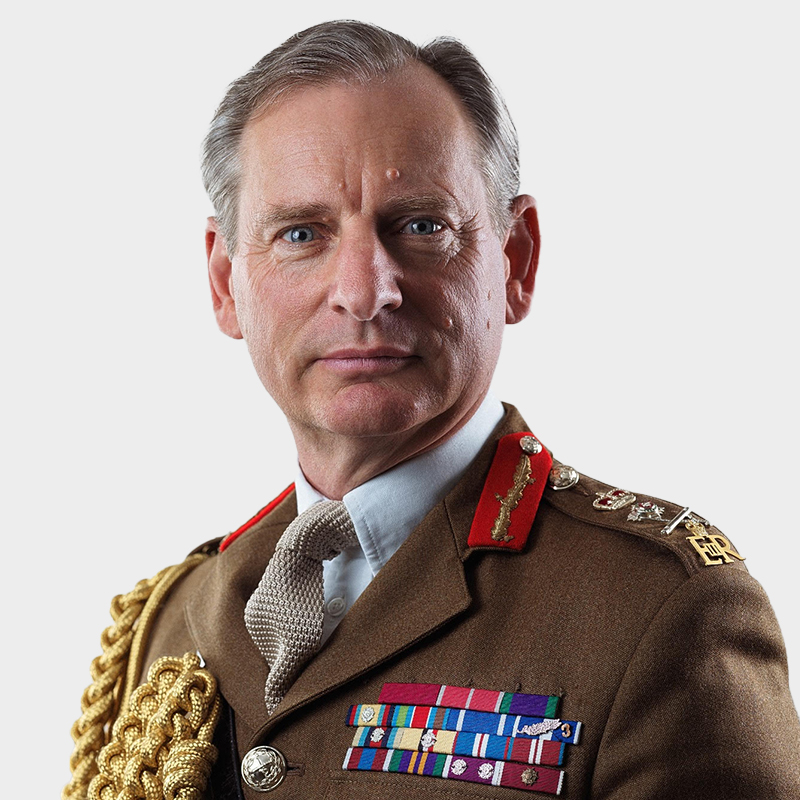
General Sir Mark Alexander Popham Carleton-Smith, GCB, CBE, DL (born 9 February 1964) is a senior British Army officer who served as Chief of the General Staff from June 2018 to June 2022.[1] He previously served as Director Special Forces and commanded 22 Special Air Service Regiment.[2]

Key Information

Early life and education

[edit]

Born on 9 February 1964 at Bielefeld, West Germany,[3] to Major General Sir Michael Carleton-Smith,[4] he began his education at Cheltenham College Junior School,[5] before attending Eton College, an all-boys public school.[6] In 1982, he went to Hatfield College, Durham, to pursue an Army-sponsored degree in Politics and Modern History.[4][7] He graduated from Durham University with a lower second class Bachelor of Arts degree in 1985.[7]

Military career

[edit]

Carleton-Smith was commissioned into the Irish Guards on 3 September 1982,[8] before going up to Durham, graduating as BA. He was promoted to lieutenant on 6 September 1985 (with seniority from 9 April),[9] then to captain on 9 April 1989,[10] and then to major on 30 September 1995.[11] After operational service in Northern Ireland during the Troubles, he was deployed to the Gulf War in 1991,[12] and then saw active service as an SAS squadron commander in Bosnia later in the 1990s.[13]

Carleton-Smith became Chief of Staff of 19 Mechanized Brigade in 1999 and served as Chief of Staff HQ Multi-National Brigade Centre during the Kosovo War later that year.[12] In recognition of his military service in Kosovo, he was appointed a Member of the Order of the British Empire (MBE) in the 2000 New Year Honours,[14] and then awarded the Queen's Commendation for Valuable Service on 3 November 2000.[15]

Promoted to lieutenant colonel on 30 June 2001,[16] Carleton-Smith became Military Assistant to the Commander-in-Chief, Land Forces,[12] becoming Commanding Officer of 22 Special Air Service Regiment in 2002. After serving during the 2003 invasion of Iraq and also during operations in Afghanistan,[13] he was advanced Officer of the Order of the British Empire (OBE) on 23 April 2004.[17] Promoted colonel on 30 June 2005,[18] he became Deputy Director Policy Planning at the Ministry of Defence at that time.[12]

Promoted to brigadier on 31 December 2006 with seniority from 30 June 2006,[19] Carleton-Smith became commander of 16 Air Assault Brigade that year and was deployed to Afghanistan as commander of Task Force Helmand and commander of British Forces there in April 2008.[20] In August 2008 he led Operation Eagle's Summit, which involved a daring foray into Taliban territory.[21] He was promoted Commander of the Order of the British Empire (CBE) for his services in Afghanistan on 6 March 2009.[22]

Carleton-Smith became Director of Army Plans and Resources at the Ministry of Defence in January 2009 and, following promotion to major general on 20 February 2012,[23] he became Director Special Forces.[24] In July 2022, the BBC published a report alleging evidence that "SAS operatives in Afghanistan repeatedly killed detainees and unarmed men in suspicious circumstances," while Carleton-Smith, then Director Special Forces, "failed to pass on evidence to [the] murder inquiry"[25] which was being conducted by the Royal Military Police.[26]

Appointed Director of Strategy at the Army Headquarters in March 2015,[27] he became Deputy Chief of the Defence Staff (Military Strategy and Operations) on 18 April 2016 being promoted to lieutenant general with effect from the same date.[28] On 11 June 2018 he was further promoted to the rank of general, succeeding General Sir Nick Carter as Chief of the General Staff,[29][30] being appointed Knight Commander of the Order of the Bath (KCB) in the 2019 New Year Honours.[31] Succeeded as Chief of the General Staff by General Sir Patrick Sanders in June 2022,[1] Carleton-Smith was promoted Knight Grand Cross of the Order of the Bath (GCB) in the 2023 Birthday Honours.[32]

Carleton-Smith served as Regimental Lieutenant Colonel of the Irish Guards from 18 March 2012[33] for ten years,[34] and as Honorary Colonel of Oxford University Officers Training Corps between February 2017 and June 2022.[35][36]

Personal life

[edit]

In 1991, Carleton-Smith married Catherine Nalder. They have a son and a daughter.[4] He is a member of Pratt's, the Pilgrims Society and the Chelsea Arts Clubs.[4]

Carleton-Smith was appointed a deputy lieutenant of Herefordshire on 27 September 2023.[37]

Honours and awards

[edit]

Source:[38]


Ribbon Description Notes
Knight Grand Cross of the Most Honourable Order of the Bath (GCB) Appointed in 2023[32]
Commander of the Most Excellent Order of the British Empire (CBE) Appointed into the Order in 2009[22]
General Service Medal (1962)
Gulf Medal
UN Medal for Former Yugoslavia
NATO Former Republic of Yugoslavia Medal
NATO Kosovo Medal Queen's Commendation for Valuable Service[39]
Operational Service Medal for Afghanistan
Iraq Medal
Queen Elizabeth II Golden Jubilee Medal
Queen Elizabeth II Diamond Jubilee Medal
Queen Elizabeth II Platinum Jubilee Medal
Accumulated Campaign Service Medal
Medal for Long Service and Good Conduct (Military) With 2 Bars
Officer of the Legion of Merit

References

[edit]
Revisions and contributorsEdit on WikipediaRead on Wikipedia
from Grokipedia
![General Sir Mark Carleton-Smith inspecting Gurkhas](./assets/Chief_of_the_General_Staff_inspects_the_new_Gurkhas_croppedcropped General Sir Mark Alexander Popham Carleton-Smith, KCB, CBE (born 9 February 1964), is a retired senior officer of the who served as from June 2018 to June 2022, becoming the youngest appointee to the role in more than a century and the longest-serving since the Second . Commissioned into the in 1982 following a University Cadetship, his four-decade career encompassed regimental service in , , and , operational deployments in the , , and , and command of elite units including the 22nd and 16 Air Assault Brigade. Carleton-Smith's notable commands included leading 1st Battalion during the in 2005, where his unit conducted counter-insurgency operations in , and subsequent roles as from 2009 to 2012, overseeing special operations amid heightened counter-terrorism demands. As Commander of 16 Brigade from 2006 to 2008, he directed Task Force Helmand in , managing intense combat against forces that tested the brigade's rapid deployment and maneuver capabilities. Promoted through senior staff positions at the , including Deputy Chief of the Defence Staff (Commitments) from 2015 to 2018, he shaped strategic policy on military operations and resources amid fiscal constraints and evolving threats. During his tenure as , Carleton-Smith prioritized modernization efforts, including integration of advanced technologies like drones and cyber capabilities, while advocating for the Army's readiness against peer adversaries such as , despite persistent underfunding and personnel shortages that limited force size to historic lows. He also addressed internal challenges, initiating cultural audits to combat and following public scandals, though his leadership faced scrutiny over historical allegations of oversight lapses in conduct during Afghan operations, as probed in subsequent inquiries. Post-retirement, he has advised firms on defence strategy, leveraging his expertise in high-intensity warfare and irregular conflict.

Early life and education

Upbringing and initial influences

Mark Carleton-Smith was born on 9 February 1964 in , , to Sir Michael Edward Carleton-Smith, a senior officer, and Helga Kaya Stoss. His father's military service stationed the family in , a key garrison area during the , exposing Carleton-Smith from infancy to the routines and ethos of army life abroad. The Carleton-Smith family maintained a longstanding tradition of military involvement, which Carleton-Smith later highlighted as formative. In a 2019 address to U.S. Army War College students, he traced this heritage to his 6th great-grandfather, Sir Guy Carleton, who served as of British forces in during the American War of Independence, underscoring generational influences on his path toward uniformed service. This paternal legacy, combined with the peripatetic nature of military postings, instilled early values of discipline, adaptability, and duty central to his worldview.

Academic and military training

Mark Carleton-Smith attended Cheltenham College Junior School before transferring to , an independent boarding school for boys in , . In 1982, he entered on an Army-sponsored university cadetship, studying Politics and Modern History and earning a with honours in 1985. Following university, Carleton-Smith completed officer training at the Royal Military Academy Sandhurst, graduating and receiving his commission as a in the 1st Battalion, , on 7 August 1986.

Military career

Commissioning and early postings

Carleton-Smith entered the via a University Cadetship in 1982, receiving his commission as a into the 1st Battalion, , on 3 September 1982. Following this, he pursued higher education at , graduating with a in and Modern before assuming full regimental duties. His initial postings involved regimental service with the 1st Battalion across multiple locations, including for ceremonial and public duties, as part of commitments, for training exercises, and South Armagh in . These assignments provided foundational experience in operations, , and international deployments typical for Guards regiments during the era. Early operational exposure came during tours in amid , where the conducted counter-insurgency patrols and security operations in volatile border regions like South Armagh. This service honed his skills in urban and rural combat environments against paramilitary threats. In spring 1991, Carleton-Smith deployed with his battalion to the , participating in the coalition's ground offensive against Iraqi forces as part of the liberation of . These experiences marked his transition from peacetime postings to combat-tested leadership prior to selection for training.

Service in the Special Air Service

Carleton-Smith passed the (SAS) selection course in 1990 and subsequently served with 22 SAS Regiment for approximately 15 years. During this period, he undertook operational deployments in the Gulf, the , , and . In the early 1990s, as an SAS squadron , he participated in operations during the of 1991. He later served as a squadron in Bosnia amid the Yugoslav conflicts. These roles involved both troop and squadron command responsibilities in high-risk environments. Promoted to , Carleton-Smith assumed command of 22 SAS in 2002, leading it through intensified global operations post-9/11. Under his leadership, the regiment conducted missions during the , for which he was appointed Officer of the on 23 April 2004. The unit also saw extensive deployment in , marking a peak period of SAS activity in counter-insurgency and operations. His tenure as extended until 2005.

Senior operational commands

Carleton-Smith was promoted to on 31 December 2006, with seniority from 30 June 2006, and assumed command of 16 Air Assault Brigade, the British Army's high-readiness rapid intervention force comprising airborne and units. Under his leadership from 2006 to 2008, the brigade maintained its focus on expeditionary operations, including parachute assaults and heliborne insertions, preparing for potential crisis response worldwide. In April 2008, Carleton-Smith deployed with 16 Air Assault Brigade to , where he took command of Task Force Helmand, overseeing British and allied forces in amid intensified counter-insurgency operations against strongholds. During this six-month rotation ending in October 2008, he also served as Commander British Forces , coordinating multinational efforts to secure key areas like Lashkar Gah, conduct kinetic operations, and support governance initiatives under NATO's . His command emphasized , mentoring Afghan National Army units, and adapting tactics to asymmetric threats, including improvised explosive devices and ambushes, amid heavy casualties reported in the province. For his service, Carleton-Smith was appointed Commander of the in the 2009 .

Role as Director Special Forces

Mark Carleton-Smith was promoted to the rank of on 20 February 2012 and appointed (DSF), a position he held until 2015. In this role, he served as the most senior officer overseeing the (UKSF), including the (SAS), (SBS), (SRR), and associated support elements such as the . The DSF position entails directing , , and strategic integration of UKSF activities across global theaters, reporting to the Chief of the Defence Staff or Vice Chief while maintaining close coordination with the . During his tenure, Carleton-Smith managed UKSF deployments amid the ongoing withdrawal from following the 2011 transition of combat responsibilities to Afghan forces, as well as emerging counter-terrorism requirements in the and . His leadership occurred during a period of heightened operational tempo, with UKSF conducting raids, gathering, and advisory missions in support of and coalition objectives. Carleton-Smith's prior command of 22 SAS Regiment from 2002, which included oversight of in and post-9/11, informed his strategic approach to enhancing UKSF and resilience. Notably, Carleton-Smith became the first former to be appointed in 2018, reflecting the growing influence of expertise in senior Army leadership. His time as DSF emphasized the adaptation of UKSF to asymmetric threats, including preparations for contingencies beyond traditional state-on-state conflict, though specific operational details remain classified. Successor James Chiswell assumed the role in 2015.

Tenure as Chief of the General Staff

Lieutenant General Mark Carleton-Smith was promoted to general and appointed Chief of the General Staff (CGS) in June 2018, succeeding General Sir Nick Carter. In this role, he served as the professional head of the British Army, advising the Secretary of State for Defence on matters of army policy and maintaining operational effectiveness. His tenure, spanning four years until June 2022, focused on preparing the force for high-intensity warfare against peer competitors amid evolving geopolitical risks. Carleton-Smith prioritized modernization to integrate human and technological capabilities, envisioning a future characterized by "boots and bots," incorporating proxies, pixels, and advanced systems for hybrid threats. He advanced initiatives, including enhanced cyber defenses and data-driven operations, while addressing readiness against Russian aggression through lessons from ongoing conflicts. Additionally, he promoted sustainable practices, such as transitioning army bases toward net-zero emissions, aligning military operations with broader environmental goals without compromising warfighting capacity. The Army under his leadership played a key support role in the UK's response, deploying personnel for , testing, and efforts starting in early , which demonstrated the service's utility in domestic crises. This involvement included over 5,000 members aiding national resilience operations by mid-2021. Carleton-Smith handed over the position to General Sir Patrick Sanders in June 2022, marking the end of his term as the longest-serving CGS in recent decades.

Leadership philosophy and reforms

Strategic modernization efforts

During his tenure as Chief of the General Staff from June 2018 to June 2022, General Sir Mark Carleton-Smith spearheaded the British Army's shift toward a digitized, expeditionary force capable of addressing hybrid threats and great power competition, emphasizing integration of artificial intelligence, uncrewed systems, and data-centric operations over traditional mechanization. This vision, articulated in his foreword to the Army Future Soldier plan published in March 2021, aimed to create a "sharper, more lethal" army aligned with the UK's Integrated Review of Security, Defence, Development and Foreign Policy (2021), retaining critical mass while enhancing global deployability through networked capabilities from satellite to soldier level. The Future Soldier initiative, which Carleton-Smith helped develop, restructured the Army into scalable Brigade Combat Teams—including two heavy, one light mechanized, and one deep reconnaissance strike unit—while establishing the with a Ranger Regiment of four specialized battalions focused on and partner-nation training. Supported by a £41.3 billion investment over the decade (an £8.6 billion increase from prior plans), the reforms prioritized state-of-the-art equipment such as tanks (deliveries from 2025), Boxer armoured vehicles (from 2023), Ajax reconnaissance platforms, and AH-64E Apache helicopters, alongside retirement of legacy systems like the 1980s-era infantry vehicle to enable a field-ready war-fighting division by 2025. Carleton-Smith advocated for a future force of "boots and bots," integrating manned elements with robotic platforms, drone swarms, and autonomous systems commanded from armoured "motherships," as outlined in his September 2020 statements, to achieve precision in contested environments. Key enablers included the digitization program for information-age upgrades to existing platforms, enhanced long-range precision fires, surveillance, and electronic warfare, alongside the creation of a dedicated experimentation unit for warfare. In June 2020, he oversaw the stand-up of the 13th Signal Regiment as the Army's first cyber-focused unit, bolstering defenses against digital threats. Strategically, these efforts reversed post-Afghanistan "domestication" by fostering expeditionary reflexes, forward-basing in NATO's eastern flank (with doubled investment in German facilities), and deepening ties through exercises with allies like and , warning that failure to modernize risked rendering the a "liability" to partners such as the . Complementing warfighting priorities, Carleton-Smith pursued via over 100 solar farms on estates— with initial openings in summer 2021—to achieve garrison carbon neutrality within the decade, yielding operational benefits like reduced burdens despite challenges in fully greening combat equipment. The Land Industrial Strategy, part of three core transformation pillars (people upskilling, prototyping, and industrial growth), targeted 10,000 jobs and trebled potential to £6 billion annually, fostering a blended of regulars, reserves, and civilians exceeding 100,000 personnel.

Positions on military culture and readiness

During his tenure as from June 2018 to June 2022, Mark Carleton-Smith prioritized reforms to army culture, particularly in response to allegations of , , and barriers to women's and retention. In November 2021, following a involving historical claims, he commissioned an independent audit of army culture to "reinforce the best and weed out the worst," as stated in a joint announcement with Defence Secretary Ben Wallace. This initiative aimed to align cultural standards with the army's core values of , , respect for others, , , and selfless commitment, while addressing perceptions of a "laddish" environment that he acknowledged resembled a rugby club more than a modern , hindering enlistment targets. In February 2022, amid escalating tensions over Russia's invasion of , Carleton-Smith directed approximately 82,000 regular troops to pause routine activities for a day of reflection on "the Army's culture and inclusivity," framing it as essential to upholding high standards and operational ethos. He maintained that such efforts strengthened the force's moral component, integral to fighting power, though critics argued it diverted focus from combat training at a time of acute threat. Carleton-Smith consistently tied cultural adaptability to military readiness, asserting in his June 2021 RUSI speech that transformation must center on ", their culture and their skills" to achieve digitization and capabilities. He emphasized preparing for " at its most feral," with soldiers' martial spirit—fostered through rigorous training and ethos—as the ultimate measure of preparedness, rather than equipment alone. To counter Russian , he advocated prepositioning war-fighting equipment in for rapid response, enhancing forward presence and deterrence. Post-retirement, Carleton-Smith expressed reservations about overemphasizing social engineering in the , warning that armed forces should prioritize a resilient warrior ethos and credible deterrence over diversity initiatives that risk diluting lethal focus. He critiqued hollowed-out European for lacking societal resilience—via education, secure supply chains, and —arguing that professional forces must avoid anachronistic and instead build hybrid teams grounded in combat effectiveness.

Controversies and investigations

Allegations of unlawful conduct in

In 2022, a investigation revealed internal emails indicating that senior officers, including Mark Carleton-Smith as (DSF) from February 2012 to April 2015, were briefed on concerns over possible unlawful killings by SAS units in but did not escalate the information to higher command or initiate formal inquiries. The probe focused on operations between 2010 and 2013, alleging that one SAS squadron conducted at least 54 suspicious deaths during night raids in from late 2010 to mid-2011, including executions of unarmed men and detainees, with weapons sometimes planted post-mortem to justify the actions. Carleton-Smith's tenure as DSF overlapped with the latter phase of these alleged incidents, during which documents suggest he received reports of anomalies such as disproportionate ratios of enemy killed to weapons recovered—up to 72:1 in some cases—yet approved continued deployments without mandating deeper probes, according to evidence presented to the Independent Inquiry Relating to (IIRA). The IIRA, established in 2023 under the Inquiries Act 2005, is examining claims of up to 80 extrajudicial killings by three SAS units, systemic failures in oversight, and potential cover-ups, with witness testimonies highlighting how chain-of-command lapses allowed patterns of alleged misconduct to persist unchecked. Critics, including former SAS members and military analysts, have pointed to Carleton-Smith's prior experience commanding SAS Task Force operations in from 2006 to 2008 as contextualizing his alleged reticence to act, arguing it reflected a cultural prioritization of operational tempo over accountability amid high-threat environments. However, the has maintained that while isolated incidents warranted investigation, no evidence of widespread policy-endorsed illegality existed, and Carleton-Smith has not been personally accused of directing unlawful acts but rather of inadequate response to subordinates' concerns. The IIRA, ongoing as of mid-2025, continues to assess these command responsibilities without having issued final findings on individual culpability.

Responses to cultural and operational critiques

In response to widespread critiques of the British Army's internal culture, including persistent issues of , , and —particularly against female personnel—General Sir Mark Carleton-Smith announced an independent external audit of army culture on November 8, 2021. This followed a "full and frank" discussion with Defence Secretary Ben Wallace on a range of concerns raised in media reports and internal feedback. Carleton-Smith described the audit's purpose as to "reinforce the best and weed out the worst" behaviors, emphasizing transparency and accountability while committing to structural reviews for greater inclusivity. Subsequent actions included directing all generals to reflect on their personal examples to catalyze broader behavioral shifts, with officers' progression potentially tied to subordinate feedback mechanisms introduced post-audit. A joint statement with Wallace underscored that cultural reform required collective effort from all ranks, without diluting operational standards. These steps addressed specific allegations, such as those in a 2021 investigation highlighting inadequate handling of harassment claims, though critics from conservative outlets argued the emphasis risked prioritizing political optics over warfighting ethos. On operational critiques alleging that diversity and inclusivity mandates—such as mandatory reflection days on these themes—eroded and from traditional demographics, Carleton-Smith rejected characterizations of reforms as "" or politically motivated. In the 2021 Future Soldier guide outlining transformation, he stated explicitly that adaptations to broaden talent pools and modernize were pragmatic necessities, not ideological concessions, amid falling enlistment rates where female targets lagged significantly. An spokesperson reinforced this in February 2022, framing inclusivity training as essential for sustaining force strength against peers like , rather than virtue-signaling, despite tabloid portrayals of such sessions as detached from frontline priorities during heightened European tensions. Addressing operational capacity concerns, including the army's shrinking size and perceived unreadiness for peer conflicts, Carleton-Smith acknowledged in May 2022 that the force, at around 73,000 regular personnel, was "too small" to independently deter major threats like Russian aggression, which he had earlier identified as surpassing in strategic danger upon assuming the role in 2018. He countered by advocating integrated reforms, such as prioritizing , intelligence fusion, and the creation of the Ranger Regiment for scalable global engagements, positioning these as realistic adaptations to fiscal constraints and demands rather than capitulation to underfunding critiques.

Post-retirement activities

Advisory and private sector roles

Following his retirement from the in June 2022, General Sir Mark Carleton-Smith assumed several advisory positions in strategic consulting and international security forums. In December 2023, he joined CT Group, a global strategic advisory firm founded by Australian political strategist , as a senior advisor, leveraging his expertise in defense and geopolitical risk assessment. CT Group focuses on providing intelligence-led advice to clients on political, economic, and security challenges across sectors including government and corporate entities. Carleton-Smith was appointed as a on the board of Safelane Global International, a company specializing in explosives detection and counter-threat technologies, with the appointment receiving approval from the UK's Advisory Committee on Business Appointments (ACOBA) on 5 December 2023 to ensure compliance with post-government employment rules. He also serves as an international advisor to the Forum, an annual event convened by the Casimir Pulaski Foundation to discuss European and transatlantic security issues. In the advisory domain, Carleton-Smith joined the Advisory Council of the (IISS), a London-based focused on global security analysis, where he contributes to strategic oversight drawing on his background. Additionally, he acts as a for Inter-Mediate, a non-profit organization facilitating private-sector and in conflict zones, a role he took up following his departure from leadership in 2018 but which expanded post-retirement. These positions reflect a transition to roles emphasizing strategic counsel in private security, , and rather than operational command.

Public speaking and geopolitical commentary

Following his retirement from the British Army in June 2022, Carleton-Smith has participated in public forums and interviews addressing geopolitical risks, global security trends, and the implications of major power competition. In May 2024, he delivered a keynote at the INREV Annual Conference in Berlin, analyzing the effects of rising international tensions and conflicts on economic and investment landscapes, underscoring the need for strategic awareness amid volatile environments. During a March 2025 podcast interview focused on and , Carleton-Smith reflected on observed shifts in the , stressing the critical role of societal and resilience while critiquing deployments pursued primarily for social engineering objectives rather than core security imperatives. In discussions oriented toward investors and asset managers, he has highlighted the deepening Russia-China alignment precipitated by the 2022 as a pivotal factor reshaping global blocs and elevating long-term security challenges for Western interests.

Personal life

Family and relationships

Mark Carleton-Smith is the of Major-General Michael Carleton-Smith and Helga Kaya Stoss. He married Catherine Nalder in 1991. The couple has two children: a named Maximilian and a named Katja. In June 2023, the engagement of their Maximilian to Tara Ogilvy, of Mr. and Mrs. Charles Ogilvy of Fownhope, , was announced.

Honours and awards

Key decorations and recognitions

General Sir Mark Carleton-Smith was appointed Knight Grand Cross of the Most Honourable Order of the Bath (GCB) in the 2023 King's Birthday Honours, recognising his leadership as Chief of the General Staff from 2018 to 2022. He was previously appointed Knight Commander (KCB) of the Order in the 2018 New Year Honours, following his earlier appointment as Companion (CB) in the same list for distinguished service. Carleton-Smith received the Commander of the Order of the British Empire (CBE) in 2009 for his operational command roles. In recognition of international cooperation, he was awarded the Officer grade of the by the , presented by General during a ceremony at , , in 2021. His operational decorations include campaign medals for service in multiple theatres: the General Service Medal with Northern Ireland clasp, with rosette, Medal, NATO Medal for the Former Yugoslavia and , , and Iraq Medal. He also holds the , reflecting extended operational deployments, and the Queen's Commendation for Valuable Service. Additionally, Carleton-Smith received the Queen Golden Jubilee Medal (2002), Diamond Jubilee Medal (2012), and Platinum Jubilee Medal (2022).

References

Add your contribution
Related Hubs
User Avatar
No comments yet.