



Community hub
Recent from talks
Contribute something
Nothing was collected or created yet.
Mega Man 2
View on Wikipedia
| Mega Man 2 | |
|---|---|
 North American box art by Marc Ericksen | |
| Developer | Capcom |
| Publisher | Capcom |
| Director | Akira Kitamura |
| Producer | Tokuro Fujiwara |
| Programmer | Nobuyuki Matsushima |
| Artists |
|
| Composer | Takashi Tateishi |
| Series | Mega Man |
| Platforms | |
| Release | |
| Genre | Platform |
| Mode | Single-player |
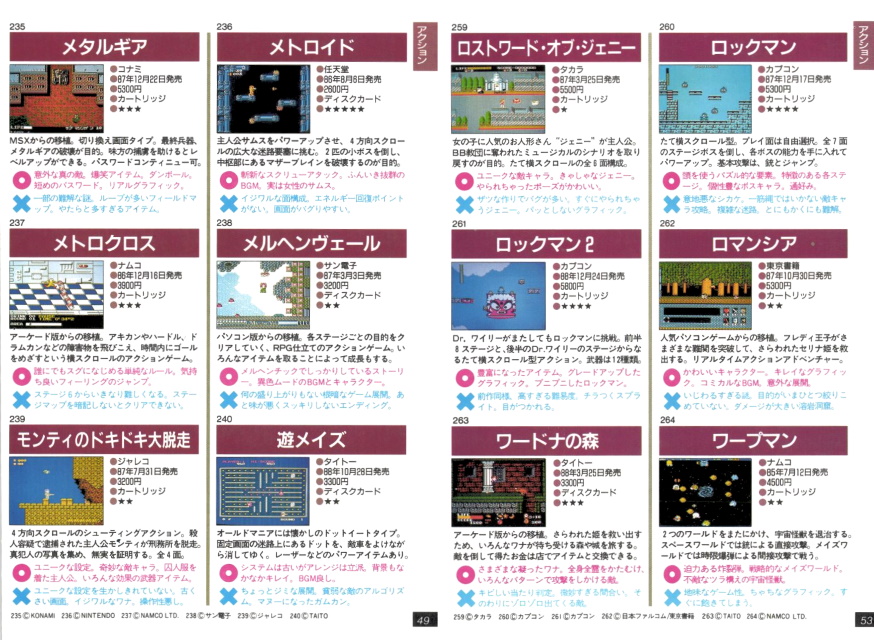
Mega Man 2,[a] known in Japan as Rockman 2: The Mystery of Dr. Wily,[b] is a 1988 video game developed and published by Capcom for the Nintendo Entertainment System (NES). It was released in Japan in 1988 and in North America and PAL regions the following years. Mega Man 2 continues Mega Man's battle against the evil Dr. Wily and his rogue Robot Masters. It introduced graphical and gameplay changes, many of which became series staples.
Although sales for the original Mega Man were unimpressive, Capcom allowed the team to create a sequel. They worked concurrently on other Capcom projects, using their free time to develop the game, using unused content from the first game. Takashi Tateishi composed the soundtrack, with Yoshihiro Sakaguchi serving as a sound programmer.
Mega Man 2 is the second best-selling Mega Man game, with more than 1.51 million copies sold (it was previously the best selling Mega Man game until Mega Man 11 outsold it). Critics praised its audio, visuals, and gameplay as an improvement over the first game. Many publications rank Mega Man 2 as the best game in the series and one of the greatest video games of all time. The game's soundtrack has also been considered one of the greatest of all time. It has been included in several game compilations such as Mega Man Legacy Collection, rereleased for mobile devices, and become a part of console emulation services. A sequel, Mega Man 3, was released in 1990.
Plot
[edit]A year after his initial defeat[c], series antagonist Dr. Wily creates his own set of Robot Masters in an attempt to counter Mega Man: Metal Man, Air Man, Bubble Man, Quick Man, Crash Man, Flash Man, Heat Man, and Wood Man. He also constructs a new fortress and army of robotic henchmen. Mega Man is then sent by his creator, Dr. Light, to defeat Dr. Wily and his Robot Masters.[7] Mega Man defeats the eight new Robot Masters and then challenges Wily himself.[8] During the final fight, Dr. Wily flees into the caves beneath his fortress. When Mega Man follows, Dr. Wily attempts to trick Mega Man into believing he was impersonated by an alien. Mega Man defeats the alien, revealing it to be a holographic projection device with Dr. Wily at the controls of the now malfunctioning device. After the scientist begs for mercy, Mega Man spares Wily and returns home.
Gameplay
[edit]
In Mega Man 2, the player controls Mega Man as he traverses eight stages to defeat the bosses, Dr. Wily's Robot Masters: Metal Man, Air Man, Bubble Man, Quick Man, Crash Man, Flash Man, Heat Man, and Wood Man. Each Robot Master features a unique weapon and a stage related to their weapon's power. For example, Air Man shoots small tornadoes and is fought in a sky-themed level, while Wood Man can use a shield of leaves and is found in a forest-themed stage.[7] After defeating a boss, their signature weapon becomes available to the player. Each Robot Master is weak to the weapons of certain other Robot Masters; therefore, choosing the order in which the levels are played is a vital component of the gameplay.[8][9] After completing certain stages, Mega Man receives a special item.[9] These items create platforms that allow Mega Man to access areas that he otherwise could not.[7]
After defeating the eight Robot Masters, the player proceeds to Dr. Wily's fortress, which consists of five levels that are played linearly.[7] As in the first game, the player is required to fight each Robot Master a second time in Dr. Wily's fortress. However, these battles take place in a single room rather than a series of linearly connected rooms. The room contains teleportation devices that lead to each Robot Master. The devices can be entered in any order, but are not labeled. Once the bosses are defeated again, the player must fight Dr. Wily.
Mega Man 2 features a few gameplay changes from the original Mega Man.[8] A new item, the Energy Tank, allows a player to refill Mega Man's health at any time.[9] Also introduced is a password system.[7] A password is displayed after defeating each Robot Master, allowing the player to return to that particular point in the game after restarting the system.[9] The password stores the particular list of completed Robot Masters, as well as the number of accumulated Energy Tanks. Unlike the first game, Mega Man 2 does not feature a score counter, and the player is unable to return to Robot Master levels once completed.
Development
[edit]So we, of our own accord, got together, spent our own time, we worked really, really hard, you know, just 20-hour days to complete this, because we were making something we wanted to make. Probably in all my years of actually being in a video game company, that was the best time of my working at Capcom, because we were actually working toward a goal, we were laying it all on the line, we were doing what we wanted to do. And it really showed in the game, because it’s a game, once again, that we put all our time and effort and love, so to speak, into it, designing it.
The first Mega Man game—released in 1987—was not successful enough to justify the immediate development of a sequel.[11] According to Roy Ozaki, director Akira Kitamura had wanted to make a sequel to Mega Man, but producer Tokuro Fujiwara was against it.[12] Kitamura then sought permission from Capcom's vice president at the time to make the game.[13] The development team were given permission to develop a sequel on the condition that they work concurrently on other projects as well.[10][14][15] The staff spent their own time on the project to improve upon the original by adding more levels and weapons, as well as improving graphics.[11] The project supervisor of the first Mega Man invited Keiji Inafune to the sequel's development crew; Inafune was working on a separate game at the time.[2] On the previous game, Inafune worked as an artist and character designer but became more involved in the production process of the sequel.[16] "Working on [Mega Man 2] marked my second year at this, and I even got to mentor a 'new kid', which opened up a whole new world of stress for me," Inafune recounted. The development time for the game was only three to four months.[2][17]
Due to the limited amount of cartridge space available for the first game, elements such as planned enemy characters were omitted from the final product. The unused content was later transferred to Mega Man 2.[18] The team was limited by the graphical capabilities of the Nintendo Entertainment System, and designed characters as pixel art to maintain consistency between the designs and final product; some design elements, however, were lost in the transition.[16] The gameplay system from the original game was kept for Mega Man 2, but the team included more traps for the player to navigate. The game's three support items were added to aid the player because of complaints from consumers and Capcom's marketing department regarding the original game's high difficulty.[2] Inafune's supervisor was "especially unsure" about the usefulness of the Energy Tanks.[2]
The first game did not have any influence from fans, but for the second game, Kitamura wanted to get ideas from players and put them in.[19] The developers allowed input from the public by including boss designs created by fans.[20] Capcom received 8,370 boss submissions for the game, although even the designs for the final eight Robot Masters were "tweaked".[2][21]
Inafune intended his artwork for Mega Man 2 to be more "anime-ish" than in the first game.[2] A second difficulty setting was added for the North American and European releases. The original version was labeled "difficult", and a "normal" setting was created that made the "arm cannon" and boss weapons more powerful.[22] Veteran video game cover illustrator Marc Ericksen painted the North American box art, which included Mega Man firing a pistol instead of his trademark Mega Buster. Ericksen explained that he was unfamiliar with the game and was directed by Capcom America to give Mega Man a pistol.[23]
Soundtrack
[edit]The soundtrack for Mega Man 2 was composed by Takashi Tateishi (credited as Ogeretsu Kun), with Mega Man composer Manami Matsumae (credited as Manami Ietel) included for having her work on the credits theme from the first game repurposed for the title screen, and for co-composing a minor part of the melody for Air Man's stage.[24] Matsumae had been moved to the arcade division, considered more prestigious at the time, which necessitated a new composer. Matsumae and Tateishi worked closely during their time at Capcom, with Tateishi assisting Matsumae with U.N. Squadron in a similar manner during the period, albeit uncredited. Tateishi's musical background was unusual compared to his contemporaries at Capcom, in that he had not been classically trained but was instead drawing on his experience performing in a band. He sought to consciously move away from the more classical sounding themes that were common at the time.[25] He was also relatively new to the games industry, having only been hired by Capcom earlier that year for Mad Gear (1988). Tateishi would not remain with the franchise after Mega Man 2, as he and Kitamura both resigned from Capcom soon afterwards to work on Cocoron.[26]
Tateishi's initial compositions for the game were of varying moods, with some of them being considered "too cute" by Kitamura, requesting them to be changed to fit in with the rest of the soundtrack. A single fragment of this declined concept remains in the game as Crash Man's stage theme. Tateishi has indicated that "no one has" the earlier, softer score. Stylistically the score was influenced by Mezzoforte and Yellow Magic Orchestra.[26]
The widely praised piece used for the first two Wily stages was heavily compromised due to data limitations, with Tateishi being forced to use the first eight measures of the song multiple times throughout it. Tateishi intended to compose a song exclusive to the second stage, but also abandoned this idea for the same reasons.[27]
As with the previous game, the sound programming was handled by Yoshihiro Sakaguchi, credited as Yuukichan's Papa.[28]
Reception
[edit]| Publication | Score |
|---|---|
| Electronic Gaming Monthly | 8/10, 8/10, 8/10, 8/10[29] |
| Famitsu | 6/10, 7/10, 8/10, 7/10[30] 4/5[31] |
| IGN | 9.5/10[32] |
| Mean Machines | 95%[3] |
| Total! | 83%[33] |
Though the first Mega Man game had relatively low sales, Mega Man 2 was a huge success. Since its 1988 release, Mega Man 2 has sold over 1.51 million copies worldwide. The game is the second highest selling in the Mega Man series.[34]
Mega Man 2 was critically praised. Electronic Gaming Monthly's four reviewers—Steve Harris, Ed Semrad, Donn Nauert, and Jim Allee—rated the game favorably, each scoring it 8 out of 10. They stated that it was better than the first Mega Man, citing the improved audio-visuals, new power-ups, and password system. Nauert and Allee, however, expressed disappointment that the game was less difficult than the first game.[29] Nadia Oxford of 1UP.com complimented its aesthetics and gameplay. She further stated that Mega Man 2 improved the gameplay of its predecessor by removing excessively difficult elements.[15] Mean Machines' two reviewers, Julian Rignall and Matt Regan, praised several aspects of the game. Rignall lauded the gameplay, citing its addictiveness and the puzzles. Regan praised the difficulty and called the gameplay balanced. Both reviewers complimented the graphics, calling them detailed and stunning, and described it as a great platform game.[3] Retro Gamer editor Richard Burton described it as a "must-have" game for the system, comments echoed by two of Electronic Gaming Monthly's reviewers.[29][35] Zach Miller writing for Game Informer attributed the success of the game to the players' option to defeat the stages in the order of their choosing. He praised the simple control scheme and the variety of weapons and items.[36] GamesRadar ranked it the third-best NES game ever made, calling it "the pinnacle" of the 8-bit Mega Man games.[37]
The game's soundtrack has been well received by critics. Joey Becht of IGN listed three stage themes from Mega Man 2 along with the main title song among the best in the series.[38] In 2008, Game Informer listed Mega Man 2's introduction sequence as the fifth-best video game opening, citing the build up of excitement that the music and appearance of the character instills.[39] The "Doctor Wily Stage Theme" was ranked second in ScrewAttack's "Top 10 Video Game Themes Ever" video.[40] Nintendo Power's editorial staff praised the music in 2008, stating it is among the best on the platform.[41] In 2009, Gamasutra's Brandon Sheffield describe the music as easily recognizable and lamented that contemporary video game music lacked that trait.[42] The opening riff from the "Crash Man" stage's theme inspired the theme music for the YTV program Video & Arcade Top 10.[citation needed]
Mega Man 2 is a favorite among Mega Man fans, with many calling it the best in the series.[32][43][44] Critics have also referred to the game as the series' best.[45] Oxford considered it one of the most memorable game in the series, and Burton and Electronic Gaming Monthly both called the game the best in the series.[15][35][46] IGN's Levi Buchanan listed three of the game's bosses among the "Top 10 Mega Man Robot Masters".[47] Several publications consider the game a critical success and have listed it high on "top game" lists. At the end of 1989, it was the top ranked game on Nintendo Power's Top 30 list.[48] In 1997 Electronic Gaming Monthly named it the 73rd best console video game of all time, saying it was the most appealing and challenging game in the series.[46] In August 2008, Nintendo Power listed Mega Man 2 as the third best Nintendo Entertainment System video game. The editorial staff praised the polished improvements over the previous game.[41] GameSpot named Mega Man 2 as one of "The Greatest Games of All Time".[49] It ranked number 33 in Nintendo Power's "Top 200 Nintendo Games Ever" list and number 60 in Official Nintendo Magazine's "100 Best Nintendo Games" list.[50][51] Miller considered it one of the greatest games of all time.[36] In 2007, IGN's three editorial offices—United States, United Kingdom, and Australia—compiled a list of top 100 games. They listed Mega Man 2 as number 67, citing the action and strategic elements along with the impact it had on the series.[22] Mega Man 2 was placed 4th on IGN's list of the Top 100 NES Games.[52] Game Informer placed the game 32nd on their top 100 video games of all time in 2001.[53]
Legacy
[edit]Kitamura chose to leave Capcom and joined the company Takeru, where he worked on the game Cocoron instead of Mega Man 3.[54]
Keiji Inafune claims the success of Mega Man 2 is what made the Mega Man series a hit that continues to spawn sequels.[11] 1UP.com commented that the game helped establish the series as a prominent and commercially successful video game franchise.[44] IGN cited Mega Man 2 as helping define the platforming genre.[22] Retro Gamer credited it with helping the series obtain the global presence that allowed spin-offs and more sequels to be created.[8] Many of the conventions of the original Mega Man series were defined by the first game, but Mega Man 2 added crucial conventions that were retained for the rest of the series.[8][32] The traditional number of Robot Masters for the series is eight as used in Mega Man 2, rather than the six used in the original.[55][22][32] It was the first in the series to include an opening cinematic.[38] Mega Man 2 also introduced the Energy Tank item, special movement items, teleporter room, and password system, which became staples in future games.[22][32] The Energy Tank became the series' iconic health refill item and later served as inspiration for a promotional "Rockman E-Can" drink.[56] In developing Mega Man 9, producer Inafune and Hironobu Takeshita looked to the first two games in the series for inspiration, with Mega Man 2 serving as a standard to surpass in order to meet fans' expectations.[55][43] Mega Man Universe was to feature a remake of Mega Man 2's story campaign, as well as feature customizable characters and levels.[57] However, Capcom has officially announced the game's cancellation due to "various circumstances."[58] In Super Smash Bros. for Nintendo 3DS and Wii U, Wily Castle, as depicted in Mega Man 2, appears as a selectable stage in both versions of the game. The stage returned in Super Smash Bros. Ultimate.
Rereleases and adaptations
[edit]
In 1990, Tiger Electronics produced a handheld electronic version with abridged gameplay.[59] Mega Man 2 was remade in 1994 for the Sega Genesis game Mega Man: The Wily Wars, featuring updated graphics and sound.[60] In 1999, Mega Man 2 was rereleased for the PlayStation as the second of six Rockman Complete Works discs, though only in Japan and under the original title Rockman 2.[4] It is largely identical to the original NES release, but had a number of bonuses, such as a "navi mode" for beginners that presents the player with a slightly remade version of the game, detailed encyclopedic content, image galleries, and remixed music.[61] Mega Man 2 was included with nine other games in the series in Mega Man Anniversary Collection for the PlayStation 2, GameCube, and Xbox, released between 2004 and 2005. The game's emulation is identical to the re-release contained in Rockman Complete Works.[62] Also in 2005, Mega Man 2 was released alongside other Capcom games as part of a "Plug It In & Play TV Games" peripheral by Jakks Pacific.[63] Mega Man 2 made its way to mobile phones in 2007.[64] The game was added as a part of the Wii's Virtual Console service in PAL regions on December 14, 2007.[65] In celebration of the ninth game's release in September 2008, Capcom released the game on August 26, 2008 in Japan and a North American release on September 15, 2008.[66][67] In March 2009, Capcom released the game for iPhone OS, while in September of the same year the Complete Works version of Mega Man 2 was released on the Japanese PlayStation Store, making it available for download on the PlayStation 3 and PlayStation Portable.[6][68] Inafune expressed a desire to remake Mega Man 2, similar to Mega Man Powered Up, but stated that such a project was dependent on the commercial success of the latter.[69] A tech demo for the Nintendo 3DS called Classic Games was shown at E3 2010, displaying more than a dozen classic games, including Mega Man 2, using 3D effects. Nintendo of America president Reggie Fils-Aimé announced that the games were slated for release on the 3DS and would possibly use the 3DS' features, such as 3D effects, analog control, or camera support.[70] The game was released on the 3DS via the Virtual Console in Japan on August 8, 2012[71] and was released in Europe and North America on February 7, 2013.
Mega Man 2 was novelized in the Worlds of Power series published by Scholastic in 1990. The novel mostly follows the game, even offering game hints at the end of some chapters.[72] Besides the added dialogue, the one major variation in the novel is that Dr. Light fears Mega Man's chances against Dr. Wily's more powerful new robots and while attempting to duplicate him, accidentally turns him into a human being, a difficulty Mega Man must endure throughout the story.[72] The book's cover also lacks the gun depicted on the North American box art of the game, due to a "no weapons" policy that Worlds of Power writers had to abide by.[73]
The game was also adapted into the third story arc for the Archie Comics Mega Man comic, "The Return of Dr. Wily." In the arc, the Robot Masters are intended to either defeat Mega Man or infect him with a virus bit by bit as he absorbs their Special Weapons. All the Robot Masters are defeated but Mega Man ends up under Dr. Wily's control until the Mega Man Powered Up Robot Masters come to his rescue. Dr. Wily escapes and sets his course for the Lanfront Ruins in South America, foreshadowing an adaptation of Super Adventure Rockman.
Influence on nerd rock scene
[edit]
The Mega Man 2 soundtrack is one of the most widely remixed soundtracks in gaming, and a great many covers were produced in the 2000s by various artists.[74] Mixdown magazine described the soundtrack as one that would be "rehashed and reimagined at conventions and festivals until the end of time" and further that covering it had been a rite of passage in the early period of the nerd rock scene.[75] Numerous artists and bands performed all or part of the soundtrack on studio albums in the 2000s, including The NESkimos on Battle Perfect Selection (2002),[76] Chromelodeon on Year 20XX (2003), The Minibosses on Brass (2005), Mega Ran on his self titled album (2007), and The Megas on Get Equipped (2008).[77] Many bands of the era additionally drew their stage names from the series, such as Armcannon, The Protomen, and DJ Cutman.
Capcom endorsed some of these groups, officially licensing Mega Ran's 2007 cover album and bringing him to San Diego Comic-Con that year.[78] In 2010, The Megas were hired by Capcom to produce music for a Mega Man Universe trailer.[79] All of these groups performed at the gaming music event MAGFest through the 2000s and 2010s.[80] Tateishi himself appeared at Super MAGfest 2019 and gave an interview on the development of the game. He also introduced Bit Brigade's performance of the score and performed on stage with Mega Ran.[81][27] In a 2023 interview, Tateishi stated that his favourite rendition of the Mega Man 2 score was JAM Project's version.[82] Many covers of Mega Man 2 tracks appeared on Brave Wave's Giants album in 2024, which included contributions from Tateishi himself.[83]
See also
[edit]


Notes
[edit]References
[edit]- ^ "NES Games" (PDF). Nintendo of America. Archived from the original (PDF) on June 11, 2014. Retrieved August 9, 2015.
- ^ a b c d e f g MM25: Mega Man & Mega Man X Official Complete Works. Udon Entertainment. August 2013. pp. 34–39.
- ^ a b c Rignall, Julian; Matt Regan (January 1991). "Mega Man II Review". Mean Machines. No. 4. EMAP. pp. 16–19. ISSN 0960-4952.
- ^ a b MM25: Mega Man & Mega Man X Official Complete Works. Udon Entertainment. August 2013. pp. 132–133.
- ^ Vasconcellos, Eduardo (June 26, 2007). "Mega Man II Review". IGN. Retrieved June 8, 2017.
- ^ a b Buchanan, Levi (March 26, 2009). "Mega Man II on App Store". IGN. Retrieved June 8, 2017.
- ^ a b c d e Nintendo Power staff (July–August 1989). "Mega Man II". Nintendo Power. No. 7. Redmond, Washington: Nintendo of America. pp. 8–23. ISSN 1041-9551.
- ^ a b c d e Retro Gamer Staff (May 2008). "The Classic Game: Mega Man II". Retro Gamer. No. 49. Imagine Publishing. pp. 36–7. ISSN 1742-3155.
- ^ a b c d Mega Man 2 Instruction Booklet. Capcom U.S.A., Inc. June 1989. pp. 6–9. NES-XR-USA.
- ^ a b Hoffman, Chris (April 2004). "The Best Damn Mega Man Feature Period". Play. Vol. 3, no. 4. Imagine Publishing. ISSN 1747-7859.
- ^ a b c Hoffman, Chris (September 2007). "Playback: Mega Man 2". Nintendo Power. No. 219. Nintendo of America. p. 82. ISSN 1041-9551.
- ^ Szczepaniak, S.M.G (2014). The Untold History of Japanese Game Developers: Gold. America: SMG Szczepaniak. p. 238. ISBN 978-0992926021.
- ^ Szczepaniak, S.M.G (2014). The Untold History of Japanese Game Developers: Gold. America: SMG Szczepaniak. p. 240. ISBN 978-0992926021.
- ^ IGN Staff. "Top 100 Game Creators of All Time: Keiji Inafune". IGN. Archived from the original on March 6, 2009. Retrieved July 27, 2009.
- ^ a b c Oxford, Nadia (May 10, 2007). "Mega Man Retrospective: Get Equipped with 20 Years". 1UP.com. Ziff Davis. Archived from the original on October 13, 2007. Retrieved May 4, 2010.
- ^ a b Elston, Brett (July 3, 2008). "Mega Man 9 - exclusive interview with the mind behind the machines - Part 1". GamesRadar. Future plc. Archived from the original on June 16, 2011. Retrieved May 8, 2010.
- ^ Inafune, Keiji (1997). "Rockman 10th Anniversary Celebration Plans". CFC Style Fan-Book (in Japanese). 3. Capcom: 24.
- ^ Interviewee: Keiji Inafune (November 20, 2003). "Mega Man". Game Makers. Season 2. Episode 19. G4. Archived from the original on September 17, 2011. Retrieved July 13, 2009.
- ^ Szczepaniak, S.M.G (2014). The Untold History of Japanese Game Developers: Gold. America: SMG Szczepaniak. p. 759. ISBN 978-0992926021.
- ^ Niizumi, Hirohiko (September 23, 2007). "TGS '07: Mega Man celebrates 20th anniversary". GameSpot. CBS Interactive. Retrieved May 25, 2010.
- ^ MM25: Mega Man & Mega Man X Official Complete Works. Udon Entertainment. August 2013. pp. 240–241.
- ^ a b c d e IGN Staff (2007). "IGN Top 100 Games 2007: 67 Mega Man 2". IGN. Archived from the original on April 10, 2017. Retrieved July 3, 2009.
- ^ Ericksen, Marc. "MegaMan 2, What's with the pistol??!!". Retrieved June 16, 2013.
- ^ Taher, Mohammed. "A Conversation with Manami Matsumae". Koopa Soundworks. Archived from the original on February 11, 2018. Retrieved August 19, 2015.
- ^ "Takashi Tateishi Interview: A Career After Mega Man 2". VGMO -Video Game Music Online-. November 25, 2010.
- ^ a b "Takashi Tateishi". Brave Wave Productions. Retrieved December 8, 2022.
- ^ a b Alistair (January 7, 2019). "Mega Man 2's Composer Reveals How Wily Stage 1 And Other Themes Came To Be". Siliconera. Retrieved September 9, 2009.
- ^ Greening, Chris. "Interview with the Mega Man 1 & 2 Sound Team: Reunited 20 Years On". Square Enix Music Online. Retrieved February 19, 2011.
- ^ a b c Harris, Steve; Semrad, Ed; Nauert, Donn; Allee, Jim (July 1989). "Electronic Gaming Review Crew". Electronic Gaming Monthly. No. 2. Sendai Publishing. p. 11. ISSN 1058-918X – via Video Game History Foundation.
- ^ Famibo, Hotofuya; Mizuno, Bucho; Morishita, Mariko; Taco X (January 6, 1989). "新作ゲーム クロスレビュー" [New Games Cross Review]. Biweekly Famicom Tsūshin (in Japanese). No. 65. ASCII Corporation. p. 19.
- ^ "ロックマン 2" [Rockman 2]. ファミコン通信 〜 '89全ソフトカタログ [Famicom Tsūshin: '89 All Software Catalog]. Famicom Tsūshin. September 15, 1989. p. 53.
- ^ a b c d e Thomas, Lucas M. (September 16, 2008). "Mega Man 2 Review". IGN. Archived from the original on May 15, 2012. Retrieved July 4, 2009.
- ^ Andy (June 1992). "Life, the Universe and Nintendo Games". Total!. Future Publishing. ISSN 0964-9352.
- ^ "Capcom, Platinum Titles". Capcom. June 30, 2024. Retrieved August 12, 2024.
- ^ a b Burton, Richard (September 2008). "Back to the Nineties: The Latest News from January 1991". Retro Gamer. No. 54. Imagine Publishing. p. 22. ISSN 1742-3155.
- ^ a b Miller, Zach (January 2007). "Greatest Game of All Time". Game Informer. No. 165. GameStop. p. 121. ISSN 1067-6392.
- ^ "Best NES Games of all time". GamesRadar. December 4, 2024. Retrieved May 25, 2025.
- ^ a b Becht, Joey (October 31, 2008). "Top 10 Mega Man Musical Moments". IGN. Archived from the original on September 10, 2009. Retrieved July 3, 2009.
- ^ Game Informer Staff (November 2008). "The Top Ten Video Game Openings". Game Informer. No. 187. GameStop. p. 38. ISSN 1067-6392.
- ^ ScrewAttack staff (2008). "Top 10 Video Game Themes Ever". ScrewAttack. ScrewAttack's Top 10. GameTrailers. Retrieved November 11, 2008.
- ^ a b Nintendo Power staff (August 2008). "Nintendo Power: The 20th Anniversary Issue!". Nintendo Power. No. 231. Future US. p. 71. ISSN 1041-9551.
- ^ Sheffield, Brandon (May 1, 2009). "Opinion: What's Wrong With Game Music?". Gamasutra. UBM plc. Archived from the original on May 3, 2009. Retrieved July 4, 2009.
- ^ a b Nutt, Christian (August 4, 2008). "He Is 8-Bit: Capcom's Hironobu Takeshita Speaks". Gamasutra. UBM plc. Retrieved July 4, 2009.
- ^ a b Bailey, Kat. "Top 5 Overlooked Prequels". 1UP.com. Ziff Davis. Archived from the original on February 25, 2009. Retrieved July 4, 2009.
- ^ "The Top 10 Video Games Before 2000". TechGYD.COM. July 2, 2020. Retrieved August 4, 2020.
- ^ a b "100 Best Games of All Time". Electronic Gaming Monthly. No. 100. Ziff Davis. November 1997. p. 114. Note: Contrary to the title, the intro to the article explicitly states that the list covers console video games only, meaning PC games and arcade games were not eligible.
- ^ Buchanan, Levi (July 1, 2008). "Top 10 Mega Man Robot Masters". IGN. Retrieved July 3, 2009.
- ^ Nintendo Power staff (November–December 1989). "Nintendo Power Top 30". Nintendo Power. No. 9. Redmond, Washington: Nintendo of America. p. 80. ISSN 1041-9551.
- ^ GameSpot Staff (October 24, 2003). "The Greatest Games of All Time". GameSpot. CBS Interactive. Archived from the original on September 17, 2006. Retrieved June 11, 2006.
- ^ Nintendo Power staff (February 2006). "NP Top 200". Nintendo Power. No. 200. Nintendo of America. p. 59. ISSN 1041-9551.
- ^ East, Tom (February 23, 2009). "100 Best Nintendo Games: Part 3". Official Nintendo Magazine. Future plc. Archived from the original on August 31, 2009. Retrieved November 29, 2009.
- ^ IGN Staff (2011). "Top 100 NES Games - #4 Mega Man 2". IGN. Retrieved February 4, 2013.
- ^ Cork, Jeff. "Game Informer's Top 100 Games Of All Time (Circa Issue 100)". Game Informer. Archived from the original on November 19, 2009. Retrieved November 30, 2020.
- ^ Pane, Salvatore. "How Mega Man Survived Its Creator Leaving Capcom". Kotaku. Retrieved August 15, 2018.
- ^ a b Elston, Brett (July 3, 2008). "Mega Man 9 - exclusive interview with the mind behind the machines - Part 2". GamesRadar. Future plc. Archived from the original on June 15, 2011. Retrieved May 8, 2010.
- ^ Spencer (August 15, 2008). "Mega Man energy tanks ready for real life consumption". Siliconera. Retrieved August 15, 2008.
- ^ Dutton, Fred (September 18, 2010). "Mega Man Universe based on Mega Man 2 News". Eurogamer. Retrieved January 21, 2011.
- ^ Ashcraft, Brian (March 31, 2011). "Mega Man Universe Is Totally Canceled". Kotaku. Gawker Media. Archived from the original on April 4, 2011. Retrieved March 10, 2012.
- ^ Tiger Electronics, ed. (1990). Electronic Mega Man 2 LCD Game. Tiger Electronics. Model 7-811.
- ^ Elston, Brett (June 30, 2008). "The ultimate Mega Man retrospective". GamesRadar. Future plc. Retrieved January 3, 2011.
- ^ Nutt, Christian & Speer, Justin (November 6, 2003). "The History of Mega Man". GameSpot. CBS Interactive. Archived from the original on October 26, 2013. Retrieved April 17, 2010.
- ^ Parish, Jeremy (June 22, 2004). "Mega Man Anniversary Collection (PS2)". 1UP.com. Ziff Davis. Archived from the original on May 30, 2012. Retrieved August 20, 2007.
- ^ "JAKKS Pacific Offers TV Games GameKey For Classic Capcom Games". Toy News International. March 9, 2005. Retrieved January 7, 2011.
- ^ Stern, Zack (April 13, 2007). "Street Fighter, Mega Man on mobile phones". Joystiq. AOL. Retrieved August 15, 2007.
- ^ Nintendo staff. "Mega Man™ 2". Nintendo. Retrieved December 18, 2011.
- ^ Capcom staff. "Capcom News". Capcom. Archived from the original on August 22, 2008. Retrieved October 12, 2008.
- ^ "Mega Man 2 for Wii". GameSpot. CBS Interactive. Archived from the original on December 14, 2019. Retrieved July 1, 2009.
- ^ Spencer (September 9, 2009). "Mega Man 2 Brings Robot Fish To PS3, PSP". Siliconera. Retrieved September 9, 2009.
- ^ Theobald, Phil (September 17, 2005). "Mega Man on PSP -- Keiji Inafune and Tatsuya Kitabayashi Interview". GameSpy. IGN. Retrieved July 27, 2009.
- ^ Jackson, Mike (June 20, 2010). "SNES, NES classics set for 3DS return". Computer and Video Games. Future plc. Retrieved June 21, 2010.
- ^ Ishaan (August 3, 2012). "Mega Man 2 Blasts To 3DS Virtual Console In Japan Next Week". Siliconera. Retrieved August 5, 2012.
- ^ a b Miles, Ellen (1990). Mega Man 2. New York, NY: Scholastic, Inc. pp. 4–6, 16, 23, 36, 39, 50, 57, 61, 66, 71. ISBN 0-590-43772-0.
- ^ Struck, Shawn; Scott Sharkey (August 3, 2006). "8-Bit Lit: Behind the NES' Worlds of Power Series". 1UP.com. Ziff Davis. Archived from the original on May 30, 2012. Retrieved August 9, 2007.
- ^ "The Megadrive megamix – how classic videogame soundtracks went from background noise to cratedigger gold". the Guardian. August 27, 2015. Retrieved December 8, 2022.
- ^ Brewster, Will (September 15, 2022). "The 20 Greatest Video Game Soundtracks of All Time - Part One". Mixdown Magazine. Archived from the original on November 11, 2022. Retrieved December 8, 2022.
- ^ "NESkimos - Complete Collection (2002-2012)". 2012.
- ^ Hassiotis, Christopher. "Five Killer Bands Inspired By Video Games". Phoenix New Times. Retrieved December 8, 2022.
- ^ Thill, Scott. "Straight Outta Capcom! Random Honors Mega Man". Wired.
- ^ Good, Owen S. (October 6, 2019). "Mega Man Universe's soundtrack turns up, along with Robot Master art". Polygon. Retrieved December 8, 2022.
- ^ "Magfest Releases the Full Musical Lineup for its January 2013 Event". Anime News Network. Retrieved December 8, 2022.
- ^ "Musical Guests". Super Magfest. May 10, 2019. Retrieved December 8, 2022.
- ^ "35 Years Ago, an Underestimated Platformer Changed the Course of Video Game History". Inverse. February 20, 2024.
- ^ "Giants – Brave Wave". Brave Wave Productions.
External links
[edit]
Mega Man 2
View on GrokipediaStory and Setting
Plot
In Mega Man 2, set in the year 200X, the evil Dr. Wily, seeking revenge after his defeat in the previous game, creates eight powerful Robot Masters—Air Man, Bubble Man, Crash Man, Flash Man, Heat Man, Metal Man, Quick Man, and Wood Man—to help him conquer the world.[7] Faced with this crisis, Dr. Light recruits his creation, the peacekeeping robot Mega Man (also known as Rock), to thwart Wily's scheme.[8] Mega Man embarks on a perilous journey, traversing diverse stages controlled by each Robot Master and defeating them one by one to dismantle Wily's forces.[8] Victorious against the Robot Masters, Mega Man infiltrates Dr. Wily's sprawling fortress, confronting a series of mechanical guardians designed to protect the villain's inner sanctum.[9] The climax unfolds in intense confrontations: first against the Wily Machine 2, a formidable armored vehicle piloted by Wily himself, and then the enigmatic Alien, a deceptive UFO-like entity that reveals itself as another of Wily's traps.[9] With Wily defeated and begging for mercy, Mega Man spares him, only for the doctor to escape once more, vowing future revenge.[9] This cycle underscores the game's themes of heroism in the face of persistent evil and the dual potential of technology for creation or destruction.[8]Characters and World
The events of Mega Man 2 unfold in the year 200X, a near-future vision of Earth where robots have become essential to everyday life, performing tasks from industrial labor to environmental management. This robotic society is depicted through diverse, themed environments in the game's stages, such as sprawling factories, towering skyscrapers, oceanic depths, high-speed rail systems, demolition sites, urban traffic networks, waste processing plants, and vast forests, highlighting the integration of advanced technology into human civilization.[9] At the center of the narrative is the protagonist, Mega Man—originally a household robot named Rock created by the benevolent scientist Dr. Thomas Light as a laboratory assistant. When the villainous Dr. Wily rebelled and reprogrammed peaceful robots for conquest, Dr. Light modified Rock into a combat-ready warrior known as Mega Man, equipping him with the Variable Weapon System that allows absorption of enemy abilities and his primary Arm Cannon for variable firepower. Supporting Mega Man are key allies from Dr. Light's laboratory. Dr. Light himself acts as the creator and steadfast guide, using his expertise in robotics to provide strategic advice and technological upgrades from his base, embodying the ethical use of science for humanity's protection. Roll, Mega Man's adoptive sister robot, was designed by Dr. Light for domestic and supportive roles, such as household maintenance and assisting with repairs, often expressing concern for her brother's safety amid the escalating robot uprising. Introduced in this installment, Rush serves as an adaptable canine-shaped robot companion built by Dr. Light to enhance mobility, capable of transforming into forms like a spring for jumping or a submarine for underwater traversal, underscoring the theme of cooperative human-robot partnerships.[9][10] Opposing them is the antagonist Dr. Albert Wily, a brilliant but deranged former colleague of Dr. Light who, undeterred by prior defeats, constructs an army of Robot Masters to seize global control through robotic domination. These eight Robot Masters were created by Wily, each with designs suited to constructive industrial roles but repurposed as weapons of war: Metal Man, to produce sheet metal in manufacturing plants; Air Man, to control air flows in ventilation systems; Bubble Man, for underwater exploration and pressure testing; Quick Man, to test speeds on high-velocity transport; Crash Man, for demolition with explosives; Flash Man, to manage lighting and time in hazardous areas; Heat Man, for waste incineration at processing facilities; and Wood Man, to maintain and harvest in forested regions.[9]Gameplay
Core Mechanics
Mega Man 2 features a side-scrolling platformer structure where players navigate Mega Man through linear levels filled with platforms, enemies, and obstacles. The game comprises eight Robot Master stages, each dedicated to one of the titular bosses and designed with unique environmental themes and challenges, culminating in a boss encounter at the end of each.[7] Upon defeating all eight Robot Masters, players access Dr. Wily's fortress, consisting of four additional stages that escalate in difficulty with more complex platforming and enemy patterns.[11] Player controls emphasize precise platforming and combat, with Mega Man able to move left and right, climb ladders, and perform a variable-height jump by holding the jump button longer for greater elevation. The primary attack is firing energy pellets from the Mega Buster arm cannon, which can be aimed horizontally while standing or jumping. A key innovation is the sliding maneuver, executed by pressing down and jump simultaneously, allowing Mega Man to slide across the ground at increased speed, evade high-placed enemies, and fit through narrow passages— a feature introduced in this game to enhance mobility without complicating basic controls. Stage progression is non-linear for the Robot Master levels, accessed via an overhead map screen that displays the eight bosses' locations and enables free selection of the next stage, promoting strategic planning based on player preference or acquired abilities.[12][13] The health system revolves around an energy meter that depletes upon taking damage from enemies or hazards, with defeated foes dropping small blue energy pellets that restore minor amounts of health upon collection; larger pellets, obtained from specific enemies or breakable objects, provide greater recovery. Energy Tanks (E-Tanks), limited to a maximum of four and hidden in various stages, serve as emergency reserves: when Mega Man's health falls to a critical level, an E-Tank automatically activates to fully refill the meter, adding a layer of resource management to intense sections.[14] Progress is saved using a password system rather than battery-backed memory, generating a unique code upon stage completion or game over that encodes the status of defeated Robot Masters and collected E-Tanks. Players input this password at the start screen by selecting specific positions on a 6x6 grid labeled A1 through F6, resuming exactly where they left off. This mechanic enhances replayability by allowing experimentation with different stage orders, as the sequence influences overall difficulty through synergies with boss-specific tools acquired later, without requiring a full restart from the beginning.[15]Weapons and Bosses
In Mega Man 2, the core combat revolves around acquiring and utilizing special weapons obtained from defeating the game's eight Robot Masters, adding layers of strategic depth to encounters. Upon defeating a Robot Master, Mega Man gains their signature weapon, each with distinct properties and limited ammunition measured in energy units. These weapons can be selected via the pause menu and are replenished by collecting small and large energy capsules dropped by defeated enemies, encouraging careful resource management during gameplay. For example, the Metal Blade, acquired from Metal Man, functions as a versatile throwable saw blade that can be aimed in eight directions and ricochets off walls, making it effective for crowd control against multiple foes. Similarly, the Quick Boomerang from Quick Man is a returning projectile ideal for hitting distant or evasive targets.[16] The Robot Masters themselves present unique boss fights characterized by specialized attack patterns and environmental interactions that demand precise timing and movement. Air Man, for instance, activates powerful fans in his arena to generate gusts that hinder Mega Man's mobility, forcing players to time jumps carefully while dodging his spreading air shots. Bubble Man, in contrast, launches homing bubbles that bounce across his flooded platform, requiring players to stay mobile and exploit brief openings for counterattacks. These encounters are interconnected through a cyclical weakness system, where each Robot Master's weapon inflicts double damage to a specific counterpart, promoting an optimal progression order to minimize difficulty—such as starting with Metal Man to obtain the Metal Blade for swiftly defeating Bubble Man. The full weakness chart is as follows:| Robot Master | Special Weapon | Primary Weakness Weapon |
|---|---|---|
| Metal Man | Metal Blade | Crash Bomber |
| Air Man | Air Shooter | Leaf Shield |
| Bubble Man | Bubble Lead | Metal Blade |
| Quick Man | Quick Boomerang | Time Stopper, Crash Bomber |
| Crash Man | Crash Bomber | Air Shooter |
| Flash Man | Time Stopper | Metal Blade |
| Heat Man | Atomic Fire | Bubble Lead |
| Wood Man | Leaf Shield | Atomic Fire |
Development
Production History
Development of Mega Man 2 began in late 1987 at Capcom's internal team shortly after the original Mega Man achieved modest commercial success in Japan, with director Akira Kitamura advocating for a sequel despite initial resistance from producer Tokuro Fujiwara, who prioritized other projects. Kitamura, serving as both director and character designer, led a small team including programmer Nobuyuki Matsushima, sprite designer Naoya Tomita, background artist Yasuaki Kishimoto, artist Keiji Inafune, and composer Takashi Tateishi to create the game under severe time constraints, ultimately completing core development in just three months after pausing work on Willow to focus on the project. This rushed timeline stemmed from Capcom's condition that the sequel be developed alongside other titles, limiting resources and preventing extensive playtesting or polishing, which resulted in some unrefined elements like abrupt difficulty spikes in certain stages.[18][5][19] To address the Nintendo Entertainment System's hardware limitations, such as the 256 KB ROM capacity, the team optimized sprite usage and enemy behaviors, introducing the slide mechanic—activated by pressing down and jump—as a core ability to differentiate gameplay from the original and enable access to narrow passages and evasion of projectiles. The non-linear stage select system, allowing players to choose the order of the eight Robot Master stages, was inspired by feedback on the first game's structure, enhancing replayability by encouraging strategic weapon selection against bosses. Difficulty was intentionally reduced compared to the original to broaden appeal, with fewer instant-death traps, more forgiving enemy patterns, and additions like E-Tanks for health recovery, though the short development cycle meant some balances, such as boss weaknesses, were implemented hastily without full iteration.[18][19][20] Due to the compressed schedule and cost considerations for NES cartridges, the team opted for a password system over battery-backed saves to track progress, weapons, and items, a simpler implementation that avoided additional hardware expenses but required players to manually input codes after sessions. This choice aligned with broader industry practices for budget titles but reflected the project's haste, as battery saves were emerging but deemed unfeasible under the timeline. The game launched in Japan as Rockman 2: Dr. Wily no Nazo on December 24, 1988, followed by a North American release as Mega Man 2 in June 1989, with the title change reflecting localization efforts to appeal to Western audiences.[18][21][2]Soundtrack Composition
The soundtrack for Mega Man 2 was composed by Takashi Tateishi, a Capcom sound programmer who drew on the Nintendo Entertainment System's (NES) chiptune constraints to craft memorable 8-bit melodies that defined the game's energetic atmosphere.[22] Tateishi, influenced by rock, jazz fusion, and artists like Yellow Magic Orchestra, aimed to create "cool" tracks that contrasted with the more classical styles of contemporaries like Super Mario Bros., iterating through drafts based on director Akira Kitamura's feedback to emphasize guitar-like riffs and driving rhythms.[23] Working within the NES's 2A03 audio processing unit, which provided two pulse (square) wave channels for melodies, a triangle wave for bass, and a noise channel for percussion effects, Tateishi programmed the music directly into the Famicom hardware, converting piano-based ideas into compatible chiptune formats that typically took about four hours per track.[22][23] Composition techniques focused on looping patterns to accommodate memory limitations, with short motifs extended into immersive loops that supported the game's fast-paced action without voice acting. Tateishi employed tempo variations for tension—such as the rapid 180 BPM frenzy in Air Man's stage theme, co-composed with Manami Matsumae due to its complexity—and leitmotifs that evoked boss personalities, like the urgent, speed-urging riff in Quick Man's theme to mirror the character's agility.[24][22] Noise channels simulated industrial percussion in tracks like Metal Man's stage, while duplicated bass tones in Heat Man's theme maximized the limited channels for a fuller sound.[23] These methods ensured the music looped seamlessly, enhancing player immersion and pacing across stages.[24] Key tracks include the triumphant "Title Theme," which sets a heroic tone with bold square-wave melodies; Robot Master themes like Wood Man's forest-inspired groove, requested by Kitamura to echo the later Dr. Wily Stage 1; and the climactic Dr. Wily's castle music, featuring an urgent, looping urgency that built suspense despite memory constraints forcing reuse in multiple stages.[22][24] The ending credits theme provided a reflective close, tying together leitmotifs from earlier tracks. Overall, the soundtrack comprises over 20 distinct pieces, including stage selects and boss battles, all produced post-core development to integrate with visuals and gameplay flow.[25] The development team prioritized audio synchronization, with Kitamura approving each track in roughly one day to align music with the sequel's intensified action.[22]Reception
Critical Reviews
Upon its release in 1988, Mega Man 2 garnered positive reception from contemporary critics, who highlighted its refinements over the original game. Nintendo Power rated it 9.25 out of 10, commending the smoother controls, varied stage layouts, and engaging boss encounters that encouraged strategic weapon use.[26] Electronic Gaming Monthly assigned an average score of 8 out of 10 across its four reviewers, emphasizing the game's enhanced accessibility and fluid platforming, which made it more approachable for players while retaining challenging elements.[27] Critics frequently praised the title's tight level design, which balanced precise platforming with enemy placement to create rhythmic, replayable challenges. The addictive weapon acquisition system, allowing players to adopt defeated Robot Masters' abilities, was lauded for adding depth and experimentation to combat. Additionally, the soundtrack, composed by Takashi Tateishi, was celebrated for its catchy, memorable chiptunes that elevated the overall atmosphere.[4] However, some reviews pointed to frustrations with the password system, which, while an improvement over the original's lack of progress saving, required manual entry of lengthy codes and could lead to lost advancement if forgotten. The absence of a battery-backed save feature was also noted as a limitation for longer play sessions.[28] In retrospective analyses, Mega Man 2 has been acclaimed for its enduring appeal and polished execution. IGN's 2008 review awarded it 9.5 out of 10, highlighting its refined visuals, sensational music, and focused gameplay as timeless strengths that solidified the series' formula. Modern critiques often acknowledge occasional difficulty spikes, particularly in Dr. Wily's fortress stages, yet praise the high replay value driven by nonlinear boss order and weapon synergies, positioning it as a peak entry in the franchise.[4]Sales and Awards
Mega Man 2 achieved significant commercial success upon its release, selling 1.51 million copies worldwide and becoming the best-selling title in the series at the time.[1] This figure substantially outperformed the original Mega Man, which had comparatively low sales and nearly ended the franchise before the sequel's development.[5] The game's strong performance in the Nintendo Entertainment System library positioned it as a key competitor to contemporaries like Super Mario Bros. 2, contributing to the revival and longevity of the Mega Man series through bundling promotions and word-of-mouth popularity.[29] In terms of awards and honors, Mega Man 2 topped Nintendo Power's Top 30 games list at the end of 1989, reflecting strong reader acclaim during its launch year. Retrospectively, it has received widespread recognition, including ranking fourth on IGN's Top 100 NES Games list, often placing in the top five across similar compilations for its innovative platforming and design.[30] The era's limited formal awards for video games meant few contemporary accolades, but these later honors underscore its enduring commercial and critical impact. The title's success played a role in Capcom's revenue expansion from 1988 to 1990, as Mega Man 2 helped solidify the company's position in the home console market alongside arcade hits.[31] Positive critical reception further boosted sales via grassroots enthusiasm among players.[4]Legacy
Rereleases and Ports
Mega Man 2 has seen numerous official rereleases and ports across multiple platforms, preserving its core 8-bit gameplay while incorporating modern enhancements such as save states, rewind functionality, and HD visual filters in later collections. An early port appeared in the 1994 Sega Genesis compilation Mega Man: The Wily Wars, developed by Minakuchi Engineering and published by Capcom, which updated the visuals and audio of Mega Man 1, 2, and 3 to 16-bit standards while retaining the original level designs and mechanics.[32] Elements from Mega Man 2 were partially incorporated into the 1991 Game Boy title Mega Man: Dr. Wily's Revenge, Capcom's first handheld entry in the series, which reused several bosses and weapons alongside new stages tailored for the portable hardware.[33] The game was featured in the 2004 Mega Man Anniversary Collection for PlayStation 2, Xbox, and GameCube, a Capcom-published bundle containing the first eight core Mega Man titles with minor emulation adjustments for contemporary consoles. It launched on Nintendo's Virtual Console service starting with the Wii in late 2007, followed by releases on the Nintendo 3DS eShop in February 2013 and Wii U in April 2013, emulating the original NES ROM with widescreen support options.[2] In 2015, Capcom released Mega Man Legacy Collection for PlayStation 4, Xbox One, and PC via Steam, compiling Mega Man 1 through 6 with added features including a challenge mode, museum gallery of concept art, and player aids like rewind and borderless display; this collection expanded to Nintendo Switch in May 2018.[34] Mega Man 2 joined the Nintendo Switch Online NES library in 2018, accessible via subscription.[35] Capcom ported Mega Man 2 to iOS and Android devices in January 2017 as part of individual mobile releases for the first six games, optimized with touch controls but criticized for performance issues; these versions were delisted worldwide from app stores on March 29, 2021.[36][37] As of 2025, the game remains available digitally on platforms like Steam and Nintendo Switch through the Legacy Collection, with no full remake announced but ongoing archival support via Capcom's collections emphasizing faithful emulation and accessibility updates for modern controllers.[34]Cultural Influence
Mega Man 2 solidified the core formula for the Mega Man series, emphasizing nonlinear stage progression, weapon acquisition from defeated bosses, and precise platforming challenges that became staples in action-platformer design. This structure influenced subsequent indie titles, such as Shovel Knight (2014), which emulates the game's boss-rush mechanics and relic-based progression while blending elements from classic 8-bit platformers.[38] The game's enduring appeal has fostered a dedicated speedrunning community, where players optimize routes and glitches to complete the Any% category—beating the game with any weapons—in under 30 minutes; the world record stood at 26:32.4 as of November 2025, with ongoing refinements tracked on leaderboards.[39] The soundtrack of Mega Man 2, composed by Takashi Tateishi, has left a profound mark on video game music culture, inspiring numerous remixes and adaptations across genres. Nerd rock band The Protomen drew from the early Mega Man narrative, including elements resonant with Mega Man 2's themes of robotic rebellion, to create their rock opera trilogy starting with the self-titled album in 2009, reimagining Dr. Wily's conflict through dystopian storytelling and heavy riffs.[40] Chiptune enthusiasts frequently honor the score at conventions like MAGFest, where live performances by groups such as Bit Brigade synchronize rock arrangements of tracks like "Dr. Wily Stage 1" with real-time gameplay demonstrations, highlighting the music's rhythmic complexity and memorability.[41] In broader pop culture, Mega Man 2's iconic Robot Masters—designated as DWN-00X models—have permeated memes and parodies centered on their thematic quirks and perceived difficulty spikes, such as Air Man's wind gimmick or the Quick Man's laser traps, often shared in gaming forums to evoke nostalgic frustration. The game influenced narrative expansions in related media, including parodic nods within the Mega Man Battle Network series (2001–2006), where digital avatars echo the classic bosses' elemental powers in a network-based setting. Archie Comics' Mega Man adaptation (2011–2016) incorporated Mega Man 2 elements, featuring Robot Master crossovers and Wily's schemes in a 50-issue run that blended game lore with original storylines. In 2025, Udon Entertainment revived the classic Mega Man comic series with the Mega Man Timelines one-shots, exploring historical eras and incorporating elements from Mega Man 2's storyline and characters.[42] Fan works continue to thrive around Mega Man 2, with ROM hacks like Mega Man 2: The Mystery of Dr. Wily expanding the game's world through custom levels and puzzles while preserving the original engine's constraints. Community events, including cosplay gatherings at conventions and annual showcases like SAGE 2025, feature elaborate Mega Man-themed attire and fan-made projects, integrating the game's characters into modern creative expressions. Recent indie tributes, such as Mighty Retro Zero and other itch.io titles tagged with Mega Man influences, pay homage through pixel-art platforming and boss fights reminiscent of the 1988 classic, demonstrating its role in inspiring grassroots game development.[43][44]References
- https://strategywiki.org/wiki/Mega_Man_2/Walkthrough
- https://strategywiki.org/wiki/Mega_Man_2/Items
- https://strategywiki.org/wiki/Mega_Man_2/Password_Mechanics
- https://strategywiki.org/wiki/Mega_Man_2/Wily_Fortress_1