Hubbry Logo
search
logo
Meppel
Meppel
current hub
2282809

Meppel

logo
Community Hub0 Subscribers
Read side by side
from Wikipedia

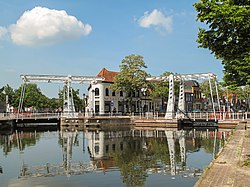
Meppel (Dutch pronunciation: [ˈmɛpəl] ; Drents: Möppelt) is a city and municipality in the Northeastern Netherlands. It constitutes the southwestern part of the province of Drenthe. Meppel is the smallest municipality in Drenthe, with a total area of about 57 km2 (22 sq mi). As of 1 July 2021, it had a population of 34,506 with over 30,000 inhabitants within city limits.

Key Information

People born in Meppel are occasionally referred to as Meppeler Muggen in Dutch;[5] this translates as 'mosquitoes from Meppel'. The nickname comes from a traditional folk tale. The people of Meppel thought the church tower was on fire, but after closer inspection, they realised it was only a swarm of mosquitoes.[6]

History

[edit]
2014 topographic map of the city of Meppel

Meppel developed in the 16th century as an inland harbour for peat transport and distribution.[citation needed] There used to be a lot of waterways in the town, but now only one remains. Meppel received city rights in 1644. On 1 October 1867, Meppel railway station opened to service, drastically improving connectivity in the region. On 1 January 1998, the municipality of Nijeveen, northwest of Meppel, was merged with that of Meppel, retaining the latter name.

Geography

[edit]

Meppel is located at 52°42′N 6°11′E / 52.700°N 6.183°E / 52.700; 6.183 in the southwestern part of the province of Drenthe in the northeastern part of the Netherlands.

The Meppelerdiep, the Drentsche Hoofdvaart and the Hoogeveense Vaart connect Meppel to Zwartsluis, Assen and Hoogeveen. To offload professional transport vessels the Omgelegde Hoogeveense Vaart was dug out south of the city. The Meppelerdiep is accessible for boats with a size of 2,000 ton.

The streams Reest and Wold Aa run through the city. The Reest end in the Meppeler Diep.

The population centres in the municipality are:

Transportation

[edit]

Meppel is served by national and regional train connections with Zwolle to the southwest, which leads to the rest of the country, as well as Leeuwarden and Groningen to the northwest and northeast respectively. The city's station is located on both the Arnhem–Leeuwarden railway (Staatslijn A) and Meppel–Groningen railway (Staatslijn C).

There are regular and frequent bus lines within Meppel and towards Zwolle, Hoogeveen and Assen.[citation needed]

Twin towns – sister cities

[edit]

Meppel is twinned with:[7]

Notable people

[edit]
Louise Fresco
Petrus Kiers

The arts

[edit]
[edit]

References

[edit]
[edit]
Revisions and contributorsEdit on WikipediaRead on Wikipedia
from Grokipedia
Meppel is a city and municipality in the southwestern part of Drenthe province, in the east-central Netherlands, situated near the confluence of the Reest River and several canals including the Drentsche Hoofd and Hoogeveensche, which connect it to the IJsselmeer. Covering an area of 55.50 km², it is the smallest municipality in Drenthe by land area and had a population of 36,546 as of September 2025.[1] Historically, Meppel developed as a trading settlement around its waterways in the 15th century, with records indicating its separation as an independent parish in 1422 and the granting of city rights in 1644, which spurred growth through peat extraction, shipbuilding, and commerce. The city's economy flourished in the 17th and 18th centuries due to its strategic location for transporting goods like turf (peat) to larger markets such as Amsterdam, earning it a reputation as a regional hub; by the 1930s, its prosperous trade and services led to the nickname "Little Rotterdam."[2] Today, Meppel remains a lively commercial center with a focus on services, trade, light industry, and agriculture-related processing, supported by its role as a transport node with rail and water connections.[3] The municipality features a well-preserved historic core with canals, old warehouses, and bridges that reflect its nautical past, including the Stoombootkade dock where steamships once loaded cargo. Notable landmarks include the 600-year-old Grote of Mariakerk church and the Meppeler Toren, alongside sites commemorating its textile heritage, such as the Wevershoek area famous for producing everdoek sailcloth for the Dutch East India Company, and its printing industry legacy preserved in a local museum. Meppel also holds cultural significance for its Jewish community, established in the 18th century and marked by WWII memorials in former Jewish neighborhoods like Touwstraat.[2] Surrounded by Drenthe's natural landscapes, including nearby lakes like Belterwijde and forests to the southeast, the city emphasizes sustainability through initiatives in energy efficiency, recycling, and green spaces.[4]

Overview

Location and Demographics

Meppel is situated in the southwestern part of Drenthe province in the northeastern Netherlands, at coordinates 52°42′N 6°11′E.[5] It borders the province of Overijssel to the south, west, and east, positioning it as a gateway between the more urbanized regions of the central Netherlands and the rural landscapes of the north. The municipality encompasses a total area of 57.03 km², consisting of 55.53 km² of land and 1.50 km² of water, making it the smallest municipality in Drenthe by area.[6] As of 2025 estimates, Meppel has a population of 36,271, reflecting steady growth from 34,506 in July 2021, with an annual increase of approximately 1.3%.[6] More than 30,000 residents live within the core city limits, contributing to a population density of about 653 inhabitants per km². The demonym for locals is "Meppeler." Demographically, Meppel features a balanced age distribution typical of a mid-sized Dutch municipality: 18.7% under 18 years, 60.1% between 18 and 64 years, and 21.2% aged 65 and older.[6] The population is predominantly Dutch, with 90.1% born in the Netherlands and 95% holding Dutch citizenship; small immigrant groups, comprising about 10% of residents, include those from other EU countries and non-Western backgrounds such as Turkey, Morocco, and Suriname. The municipality blends urban and rural elements, with the central city surrounded by smaller villages like Nijeveen, which was incorporated in 1998, fostering a mix of residential, agricultural, and commuter lifestyles.[6]

Etymology and Symbols

The name Meppel derives from Old Dutch terms such as mapel or mêpel, likely referring to a "mossy stream" or "muddy pool" associated with the area's peat bogs and waterways where multiple rivers converge.[7][8] The settlement is first documented in 1141 as Meppele in a charter from the Bishop of Utrecht granting lands to a monastery in Ruinen.[9][10] Residents of Meppel are nicknamed Meppeler muggen ("Meppel mosquitoes"), stemming from a local folk tale, while the city itself is affectionately called the "Mokum of the North" for its vibrant, canal-lined character reminiscent of Amsterdam's nickname Mokum.[11][12] The municipal coat of arms, granted on November 8, 1819, features a silver shield with three black blocks above (symbolizing peat extraction) and three green trefoils below (representing agriculture), set on a red base with ten silver roundels (denoting local currency or tolls); it is topped by a golden crown of three leaves and two pearls.[13] A revised version was adopted in 1955 to refine the design while retaining the core elements.[13] The municipal flag, officially adopted on January 2, 1998, consists of two equal horizontal stripes of white over green, with the coat of arms elements incorporated in the upper hoist: three black blocks and three green trefoils on the white band, evoking the arms' agricultural and industrial heritage.[14] The mosquito legend, central to the Meppeler muggen nickname, recounts a boy mistaking a swirling cloud of mosquitoes around the church tower for a fire, prompting the fire brigade to douse it with water; this humorous tale evolved into a badge of local pride and resilience, symbolizing the community's spirited response to challenges, and is commemorated by a statue near the Grote Kerk.[11][15]

History

Origins and Early Growth

The earliest documented reference to Meppel dates to 1141, when it appeared in a charter from the Bishop of Utrecht granting lands to the monastery in Ruinen, describing a small settlement of farms along the confluence of rivers including the Reest, Wold Aa, and Oevelse Aa. In 1422, Meppel was separated from the parish of Kolderveen and established as an independent parish, which allowed for the construction of its own church.[10] Initially an esdorp (manor village) on slightly elevated sandy ground amid wetlands, Meppel's location at the natural waterway known as the Sethe—later canalized as the Meppelerdiep—facilitated early transport and positioned it as an inland harbor by the 16th century. Peat extraction in surrounding moors became a key activity, with the Meppelerdiep serving as a vital route for shipping turf (peat) to markets in Holland and beyond from the 15th century onward. This role in peat logistics laid the foundation for Meppel's emergence as a regional trade node, though the settlement remained modest with around 45 farms by the mid-15th century.[16] Meppel received city rights in 1644 from the drost (bailiff) of Drenthe, acting on behalf of the States of Drenthe, which formalized its status and spurred economic activity by allowing self-governance, markets, and fairs.[17] These privileges boosted trade in peat, agricultural goods like grains and dairy from Drenthe and Overijssel, and imported commodities, attracting merchants and shippers to the growing port. By the mid-17th century, the peat trade had peaked, with Meppel handling significant volumes transported via the expanded Meppelerdiep, though overexploitation led to a decline starting after 1650 as moors were depleted.[10] The city's strategic waterways connected it to Zwolle, Kampen, and Amsterdam, enhancing its role as a distribution point for regional produce. In the 17th and 18th centuries, Meppel expanded as a marketing center for agricultural products, with population growth from around 1,000 in 1644 to over 3,000 by 1800, driven by inland shipping families settling along the canals.[10] Key infrastructure included the deepening of the Meppelerdiep in the 17th century for larger vessels and the construction of the Drentsche Hoofdvaart between 1767 and 1780, linking Meppel to Assen and facilitating peat and grain transport across Drenthe.[18] Early industries emerged to support trade, including rope-making (touwslagerij) established by the late 16th century to supply shipping needs, alongside shipbuilding and sail-making.[19] By the late 18th century, weaving gained prominence, with 200 to 300 looms producing eversdoek (coarse linen) for export via Zaanstreek merchants, diversifying the socio-economic base beyond peat as its trade waned due to exhaustion of local resources.[20]

19th Century to Present

In the 19th century, Meppel underwent significant modernization, transitioning from its historical reliance on peat extraction to more diversified economic activities centered on modern agriculture and trade. The opening of the railway station on 1 October 1867, as part of the ArnhemLeeuwarden line, marked a pivotal development, enhancing connectivity and facilitating the transport of goods such as dairy products, which bolstered Meppel's role as a regional market hub.[21][22] By the mid-19th century, the butter trade had become particularly prominent, driven by livestock farming in the surrounding low-lying grasslands, reflecting a broader shift toward intensive agricultural production.[23] During the 20th century, Meppel experienced the impacts of World War II under German occupation, which included persecution of the Jewish community—whose synagogue suffered interior damage—but resulted in minimal physical destruction to the town's infrastructure compared to heavily bombed areas in the south.[24] Post-war recovery aligned with the Netherlands' broader economic resurgence, fueled by the Marshall Plan and industrial expansion, allowing Meppel to strengthen its agricultural and commercial sectors through improved infrastructure and market access.[25] In the late 20th and early 21st centuries, administrative changes further shaped Meppel's development. On 1 January 1998, the neighboring municipality of Nijeveen merged with Meppel, expanding its administrative boundaries while retaining the name.[26] The population has since stabilized around 34,000, with a slight increase to an estimated 36,271 by 2025, supported by steady regional employment in trade and services.[6] Recent sustainability efforts, launched under the Programma Duurzaamheid 2020–2023, emphasize energy-saving measures for households and businesses, aiming for CO2 neutrality by 2040 through initiatives like home insulation subsidies and reduced car usage promotion.[27][28] Key events in 2025 highlight ongoing community engagement, including municipal discussions on enhancing burgerparticipatie (resident involvement) in policy-making, as outlined in the Bestuursrapportage 2025, to address local challenges like climate adaptation. Additionally, on 2 November 2025, local resident Jannes Lopers from Nijeveen received a royal distinction for his contributions to community volunteering.[29][30]

Geography and Environment

Physical Features

Meppel lies within the predominantly flat topography of Drenthe province in the east-central Netherlands, characterized by low-lying landscapes shaped by glacial deposits and extensive peat bogs that historically dominated the region. These peatlands, formed over millennia in waterlogged conditions, provided fertile but challenging terrain for early settlement and agriculture, with elevations averaging around 2 meters above sea level. The surrounding area features meadowlands and scattered forests to the southeast, contributing to a mosaic of open fields and wetland remnants that define the local environmental character.[31][32] The municipality is traversed by several key waterways, including the Meppelerdiep, a canalized channel that connects to the IJsselmeer and serves as a vital link for navigation. The Reest stream and Wold Aa river flow through or near the city, with the Reest emptying into the Meppelerdiep, while additional canals such as the Drentsche Hoofdvaart and Hoogeveense Vaart extend connectivity to broader regional networks, facilitating historical trade routes to towns like Assen and Hoogeveen. These water features account for approximately 1.50 km² of the municipality's total surface area of 57.03 km², underscoring Meppel's role as a historic waterway hub tied to peat extraction and transport.[31][26][33] In the built environment, Meppel's historic core centers around the Grote of Mariakerk, a 15th-century Gothic church that exemplifies the town's medieval architectural heritage and serves as a focal point for the urban landscape. Constructed primarily in the mid-1400s, the church features a classicist facade added later and stands as a enduring symbol of the community's development amid the surrounding wetlands. Nearby, the Beulakewijde and Belterwijde lakes offer recreational opportunities, providing scenic areas for boating and nature activities within easy reach of the city.[31][34] Peatland ecology in the Meppel area supports unique biodiversity, including specialized flora like sphagnum mosses and fauna adapted to acidic, nutrient-poor conditions, though much has been altered by historical drainage for agriculture and fuel. Conservation efforts in Drenthe focus on restoring these raised bogs through rewetting and dam construction to prevent further degradation, enhance carbon sequestration, and protect habitats in nearby reserves like Fochteloërveen, where measures have revived active peat formation and wetland functions. These initiatives aim to mitigate subsidence and preserve the ecological integrity of the region's peat ecosystems.[35][36][37]

Climate and Ecology

Meppel features a temperate maritime climate, classified as Cfb under the Köppen-Geiger system, characterized by mild temperatures and consistent moisture throughout the year. Winters are mild with an average January temperature of approximately 2°C, where daily highs reach about 4°C and lows hover near 0°C, moderated by the moderating influence of the nearby North Sea. Summers remain cool and comfortable, with July averages around 17°C, including highs of 22°C and lows of 12°C. Annual precipitation totals roughly 800 mm, distributed fairly evenly but with peaks in autumn months, particularly October and November, contributing to the region's lush vegetation.[38][39][40][41] The local ecology supports notable biodiversity, particularly in the surrounding peat bogs and streams that form part of Drenthe's wetland systems, hosting specialized flora such as sphagnum mosses and insectivorous plants alongside aquatic species in the waterways. These habitats are integral to the region's natural heritage, with peat bogs acting as carbon sinks and supporting rare invertebrates and birdlife. Nearby protected areas, including the Woldberg nature reserve—a moraine landscape with forested hills and sandy features—preserve these ecosystems as part of broader Natura 2000 designations, promoting habitat connectivity and species conservation. The municipality advances environmental sustainability through initiatives outlined on its official portal, such as energy-efficient urban planning, rainwater harvesting, and green space expansion to enhance local biodiversity.[42][43][44][45] Meppel faces environmental challenges like flood risks due to its low-lying position and extensive canal network, managed through integrated Dutch water governance that includes dike maintenance and polder systems to prevent inundation during heavy autumn rains. Peat restoration projects in Drenthe, such as those in the Bargerveen raised bog area, aim to rehabilitate degraded wetlands by rewetting and replanting native vegetation, with ongoing efforts through 2025 to bolster ecological resilience and mitigate climate impacts. These restorations not only revive bog hydrology but also reduce downstream flooding by improving water retention in peat soils.[46][47][48]

Government and Economy

Local Administration

The municipal council of Meppel consists of 23 seats, with members elected every four years by proportional representation. Following the 2022 elections, the council's composition includes SteM (Sterk Meppel) holding 7 seats as the largest party, followed by VVD with 4 seats, CDA with 3 seats, and smaller parties such as ChristenUnie, PvdA, SP, and D66 each with 2 seats.[49][50] The executive branch is led by Mayor Arjen Maathuis of the VVD, who was appointed on April 1, 2025, and serves as the chair of the executive board alongside three aldermen: Klaas de Vries, Robin van Ulzen, and Alfred Peterson.[51][52] The mayor's role includes maintaining public order, coordinating general administration, and chairing the board, which handles day-to-day governance and policy implementation on behalf of the council.[51] Meppel's administrative divisions encompass the core city of Meppel and surrounding villages including Nijeveen (characterized by its agricultural focus), and smaller hamlets such as Broekhuizen, Rogat, and De Schiphorst. The municipality has a total population of 36,271 as of 1 January 2025.[35][53] The municipality manages essential services across these areas, including waste collection and spatial planning to support local development and environmental sustainability.[35] In 2025, the municipality launched resident engagement initiatives under the "Fijn leven in Meppel" program to foster community input on future living conditions, featuring meedenkdiners—informal dinner discussions—starting in November at locations like Koedijkslanden and Haveltermade.[54] These events, along with group conversations and an online survey, aim to gather ideas on local care and societal needs, with participation open to all residents.[54]

Economic Sectors

Meppel functions as a key marketing center for agriculture in the Drenthe region, with a focus on dairy production, crop cultivation, and limited remnants of historical peat extraction activities.[55] The primary sector employs around 300 people, representing about 1.4% of total local jobs, supported by processing facilities such as the FrieslandCampina dairy distribution and logistics center established in the area.[53][56] The secondary sector, encompassing manufacturing and industry, accounts for approximately 2,950 jobs or 13.7% of employment, including small-scale production tied to agricultural processing.[55] Services dominate the economy, comprising the tertiary sector with over 70% of the workforce, particularly in trade (4,090 jobs, or 19%), health and welfare (4,630 jobs, or 21.5%), and logistics (490 jobs, or 2.3%), facilitated by the town's strategic canal and rail connections for regional trade.[53][55] Overall, Meppel's economy contributes significantly to Drenthe province through agri-processing as a primary activity, with total employment reaching 21,580 jobs in 2024.[57] Unemployment in Meppel remains low at 3.6% as of 2024, reflecting a stable labor market pre-dating broader economic shifts.[53] Recent economic trends emphasize sustainability, with municipal initiatives like the Duurzaam 2024-2028 program promoting green energy transitions through subsidies for insulation and renewable installations, including up to €2,500 for low-income households and national ISDE funding for energy-efficient measures extending into 2026.[58][59][60] In October 2025, the municipality reported improved financial stability with strong reserves and low taxes in its 2026 budget projections.[61] Tourism is emerging as a growth driver, integrated into city marketing efforts that leverage the town's cultural and recreational assets to boost local services and employment, aligning with Drenthe's €2.3 billion annual tourism economy.[62][63]

Culture and Society

Heritage and Traditions

Meppel's heritage is anchored in its medieval and early modern architecture, with the Grote of Mariakerk standing as the town's oldest surviving structure. Construction of this Gothic church began in 1432, following the establishment of Meppel as an independent parish in 1422, and it remains a prominent landmark on the Kerkplein, symbolizing the community's religious and cultural roots. The surrounding historic center features picturesque canals lined with traditional Dutch warehouses and merchant houses, many dating to the 17th and 18th centuries when the town prospered as a key transit port for regional trade. These elements, including characteristic drawbridges like the Prinsenbrug, contribute to Meppel's compact, walkable urban fabric that reflects its evolution from a small settlement to a vital commercial hub. Local traditions in Meppel revolve around longstanding communal gatherings that blend commerce, entertainment, and folklore. Weekly market days, held every Thursday since the town's early development, form the basis for the annual Donderdag Meppeldagen, a series of six summer festivals in July and August featuring live music, street theater, flea markets, and canal-side performances that draw over 100,000 visitors yearly. A distinctive piece of local folklore explains the nickname "Meppeler muggen" (Meppel mosquitoes) for residents: according to legend, 18th-century townsfolk mistook a swarm of mosquitoes for smoke from a fire atop the Meppeler Toren, rushing to "extinguish" it with futile efforts, turning the incident into a humorous tale of overzealous community spirit passed down through storytelling. Cultural institutions in Meppel emphasize the town's industrial past, particularly its role in the peat trade that fueled economic growth from the 16th century onward. The Stedelijk Museum Meppel houses exhibits on local history, including the Meppeler Zilver collection of silver artifacts from the 17th century onward that highlight the town's trade heritage as a regional hub. Complementing these efforts, the municipality offers subsidies for arts and cultural projects to support initiatives in visual arts, performances, and heritage education.[64] Preservation initiatives in Meppel focus on safeguarding its "charming town" identity through targeted urban planning and restoration. The well-preserved historic center, encompassing squares like the Hoofdstraat and cozy canal-side cafes, benefits from municipal policies that prioritize maintenance of traditional facades and green spaces to sustain tourism and community vitality. These efforts ensure that Meppel's blend of Gothic landmarks, mercantile heritage, and lively public areas remains accessible and intact for future generations.

Education and Community Life

Meppel offers a range of educational opportunities from primary to higher levels, emphasizing practical and international training. Primary education is provided through several public and religious schools, including openbare basisscholen and those affiliated with Protestant or Catholic foundations, catering to the diverse needs of local families. For secondary education, institutions like Greijdanus College in Meppel deliver comprehensive programs with a Christian perspective, covering general, vocational, and pre-university tracks to prepare students for further studies or employment. Vocational training is accessible via Drenthe College's Meppel campus, which specializes in intermediate vocational education (MBO) across sectors like health, technology, and services, though agricultural-specific programs are more commonly pursued at nearby regional centers in Drenthe. Higher education is supported directly on-site through NHL Stenden University of Applied Sciences' Meppel campus, which hosts bachelor's programs in international teacher education for primary and secondary schools, attracting students from around the world. Residents also benefit from easy access to universities in nearby Zwolle, such as Windesheim University of Applied Sciences, located just 20 kilometers away, facilitating commuting for advanced degrees in fields like business and engineering.[65][66][67][68] Religion plays a significant role in Meppel's social fabric, reflecting Drenthe's historical Protestant dominance with smaller Catholic and other minorities. The majority of residents identify as Protestant, with active congregations centered around key churches like the Grote Kerk, a landmark Reformed Protestant building dating back centuries. Catholic communities maintain a presence through parishes such as the Sint-Stephanuskerk, serving as hubs for worship and community events. This religious diversity fosters interfaith dialogue and seasonal celebrations, though secularism is growing in line with national trends. Community life in Meppel revolves around robust social services and healthcare, promoting well-being in a supportive environment. The Isala Diaconessenhuis, a modern regional hospital opened in 2022, provides comprehensive care for low-complexity and chronic conditions, including outpatient services, rehabilitation, and emergency support, serving over 300,000 residents in southwest Drenthe. Social services are coordinated through organizations like Welzijn MensenWerk, which offers tailored assistance for youth, elderly, and families, including counseling, debt relief, and integration programs for newcomers. Volunteer groups, such as the Red Cross Meppel-Nijeveen branch, engage locals in emergency response, health education, and community aid, with hundreds participating annually to strengthen neighborhood ties. In 2025, initiatives highlighting civic contributions included the royal decoration awarded to Jannes Lopers from nearby Nijeveen for his decades of service as an organist, conductor, and volunteer in local churches, choirs, and music associations.[69][70][71][30] Daily life in Meppel embodies a family-oriented, small-town ethos with a strong emphasis on work-life balance, typical of Dutch provincial living. Families prioritize quality time, supported by short school days and flexible work hours that allow parents to engage in after-school activities and local events. The community's close-knit nature is evident in neighborhood associations and family-friendly facilities like parks and sports clubs, fostering intergenerational bonds. Residents enjoy a relaxed pace, balancing professional commitments—often in nearby industries—with leisure pursuits such as cycling along the Reest River or attending seasonal markets, contributing to high life satisfaction scores in regional surveys.[72][73]

Infrastructure and Transportation

Connectivity Networks

Meppel's rail network integrates the city into the Dutch national system through Meppel railway station, a key junction on the ArnhemLeeuwarden line and the Meppel–Groningen line. Operated primarily by Nederlandse Spoorwegen (NS), these lines facilitate frequent intercity and regional services that connect Meppel to surrounding provinces and major urban centers. Direct trains to Groningen depart every 30 minutes, covering the 60-kilometer distance in approximately 49 minutes, supporting daily commuting and regional travel.[74] Services to Amsterdam, routed via Zwolle, take about 1 hour and 35 minutes, with up to 54 daily departures, enabling efficient links to the Randstad economic hub.[75] Road connectivity in Meppel is anchored by the A32 motorway, which provides direct access northward to Leeuwarden via Heerenveen, spanning approximately 65 kilometers and integrating with the broader E22 European route. The A28 motorway intersects nearby, offering southward connections to Zwolle (20 kilometers) and eastward to Groningen, enhancing freight and passenger mobility across Drenthe and Overijssel provinces. Local bus services, managed by Arriva, complement this network with routes such as line 40 to Zwolle (57 minutes), line 32 to Hoogeveen (approximately 40 minutes), and line 28 via connections to Assen (about 1 hour 22 minutes), operating daily with frequencies up to every 30 minutes during peak hours.[76][77] Waterways form a historic backbone for Meppel's regional links, with the Meppelerdiep canal serving as a primary conduit for both recreational boating and limited commercial freight. This channel connects directly to the Drentsche Hoofdvaart and, via Zwartsluis, to the IJsselmeer, a vast inland sea that facilitates navigation to Flevoland and North Holland. Primarily used today for leisure cruises and small-scale cargo like agricultural goods, the system supports four weekly barge services to Rotterdam through the Inland Terminals Group's Meppel facility, handling containerized transport while prioritizing environmental sustainability.[78][79] Arriva has secured a new 15-year contract for Vechtdal rail and bus operations in Drenthe and Overijssel, which encompasses Meppel and aims to expand service frequency and reliability on lines to Zwolle and Groningen starting December 2028. These upgrades, valued at €650 million, focus on modernizing rolling stock and integrating digital ticketing to improve regional connectivity without major new infrastructure.[80]

Urban Planning and Services

Meppel's urban planning has emphasized sustainable growth since the 1998 municipal merger, which combined the former municipalities of Meppel and Nijeveen along with portions of Ruinerwold, De Wijk, and Havelte to form the current municipality.[10] This restructuring enabled integrated zoning strategies that balance residential expansion with commercial development, as seen in the ongoing preparation of bestemmingsplannen—zoning plans that regulate land use, building types, and environmental integration across the municipality.[81] For instance, the Nieuwveense Landen neighborhood, developed at Meppel's northwest edge, incorporates green spaces and varied housing to promote sustainable urban expansion while preserving adjacent rural landscapes.[82] Zoning policies post-merger prioritize mixed-use areas to support residential and commercial needs without compromising ecological goals, with the municipality enforcing rules on permissible constructions in designated zones.[83] The Boshoven urban development plan exemplifies this approach, integrating lommerrijke (leafy) residential neighborhoods into the veenweidelandschap (peat meadow landscape) through careful site planning that accommodates community-led building cooperatives (CPO) and maintains biodiversity.[84] These efforts align with broader Dutch environmental regulations, ensuring zoning supports low-impact growth. Utilities in Meppel are managed through regional providers with municipal oversight, focusing on reliability and sustainability. Vitens, the largest Dutch water company, supplies drinking water to the area, extracting and purifying sources to serve over 5.8 million customers nationwide, including Meppel residents, with an emphasis on sustainable production by 2030.[85] Electricity distribution falls under Rendo, a Meppel-based network operator that maintains and expands grids for gas, power, and data across Drenthe and Overijssel, supporting local initiatives like the hybrid smart grid in urban districts.[86] Waste management is handled municipally via the Afvalbrengstation in Havelte, where residents sort and dispose of non-container waste, complemented by recycling services from Sortas Recycling B.V. for construction and sloopafval.[87][88] Green energy initiatives have gained momentum, with the Low Carbon Plan for Meppel outlining shared visions for renewable sources and sustainable resources to reduce emissions.[89] In 2025, programs like the Warmteplan Blankenstein promote heat transition strategies, while the Programma Biodiversiteit aims to enhance green areas for flora and fauna, and the Junior Klimaatcoach educates youth on climate action, including tree-planting incentives.[90][91][92] The municipality collaborates on circular economy practices to minimize waste, alongside provincial subsidies for home insulation to boost energy efficiency.[45] Public services include robust healthcare and emergency response systems. The Isala Diaconessenhuis in Meppel serves as a key facility for low-complexity and chronic care, featuring a sustainable, one-story design with green roofs and natural integration since its 2022 opening.[93] Emergency response is coordinated through Veiligheidsregio Drenthe, with Brandweer Meppel providing fire and rescue services from its local post, responding to incidents via the national 112 system.[94] Digital municipal services are accessible via meppel.nl, offering online applications for permits, waste calendars through the AfvalWijzer app, and support at the Informatiepunt Digitale Overheid for those needing assistance with e-government tasks.[95][96] Looking ahead, Meppel's Structuurvisie 2030 envisions sustainable connectivity and development up to 2030, guiding infrastructure investments.[97] For 2026, the municipality has allocated subsidies—applications open from October 15 to November 15, 2025—for projects enhancing welfare, livability, and community infrastructure, prioritizing initiatives in sports, culture, and social services via an online portal.[98]

Leisure and Tourism

Sports and Recreation

Meppel's sports scene is anchored by prominent local clubs that foster community engagement and physical fitness. The Meppeler Sport Club (MSC), founded in 1910, serves as the primary football club, competing in regional leagues and offering teams for men, women, boys, and girls at Sportpark Ezinge.[99] Cycling enthusiasts are supported by FTC Grupetto Meppel, a dedicated association promoting recreational and competitive cycling through organized rides and events in the surrounding Drenthe landscape.[100] Indoor facilities include the Topsporthal Meppel, a multi-purpose sports hall hosting various activities such as basketball and volleyball, while Bad Hesselingen provides a subtropical swimming complex with pools, slides, and aqua fitness programs for all ages.[101][102] Recreational opportunities in Meppel emphasize the province's natural assets, aligning with Drenthe's reputation for an active lifestyle. Nearby waterways, including the Meppelerdiep canal and access to the Frisian Lakes District, enable boating activities like whisper boat rentals and sailing from local marinas such as Marina Meppel.[103] Hiking trails in the adjacent Woldberg nature area, located about 15 kilometers north, offer easy-to-moderate paths through forests and dunes, with routes like the Yellow Trail spanning 3 kilometers.[104] Drenthe boasted the highest sports participation rate in the Netherlands in the 2010s, with data from that period indicating over 70% of residents engaging regularly in physical activities.[105] Local events strengthen Meppel's sports culture through competitive gatherings and municipal support. Annual tournaments, such as the Drenthe Cup youth football event held in Meppel, draw international teams for U12 to U19 competitions in late May.[106] The 2026 municipal budget allocates subsidies for sports organizations, targeting initiatives that enhance accessibility and community involvement in athletic programs.[98] These efforts contribute to broader health initiatives in Drenthe, where municipalities like Meppel implement programs linking sports to public wellness. Local campaigns promote outdoor activities to combat sedentary lifestyles, integrating sports with social goals such as improved mental health and inclusivity for all residents.[105]

Attractions and Events

Meppel's attractions center around its picturesque canals, which offer scenic boat tours highlighting the town's historic trading heritage. Visitors can navigate the Grachten van Meppel, a network of waterways lined with charming bridges and traditional architecture, providing an ideal way to explore the compact historic center. The center features cozy cafes and vibrant squares, such as the Hoofdstraat area, where pedestrians can enjoy a relaxed atmosphere amid monumental buildings like the Meppeler Toren, a prominent 15th-century tower serving as a landmark.[72][107] Nearby natural areas enhance Meppel's appeal for outdoor enthusiasts, particularly the Belterwijde lake, located just a short drive away, where water sports like boating, sailing, and swimming are popular. This expansive lake in the Weerribben-Wieden National Park region draws day-trippers seeking serene waterside activities, with options for rentals at nearby facilities. The town's proximity to these lakes positions it as a gateway for aquatic recreation without venturing far from the urban core.[108][109] Annual events infuse Meppel with cultural vibrancy, starting with the Grachtenfestival in mid-June, a three-day celebration featuring historic ships docked along the canals, live music performances, markets, and family-friendly activities like bungee rowing. Summer brings the Donderdag Meppeldagen, a series of six Thursday evenings in July and August filled with street theater, music, and entertainment in the city center, alongside weekly markets that showcase local produce and crafts. Cultural festivals such as the international Puppet International in autumn present over 250 puppet and object theater shows across multiple venues, attracting artists and audiences from abroad. In 2025, commemorative events for 80 years of freedom since World War II liberation will include exhibitions and public programs from March to September, while community-focused meedenkdiners in November—informal dinner discussions on local life—welcome visitors interested in engaging with residents.[110][111][112][113] Meppel's tourism sector is growing within Drenthe's broader leisure industry, which welcomed 2.2 million visitors as of 2024, bolstered by national trends of increased domestic and international travel. Branded as a "charming town" for its idyllic canals and welcoming vibe, it appeals to those seeking an authentic Dutch experience away from larger crowds. Accessibility enhances its draw, with direct trains from Amsterdam taking about 1 hour 25 minutes and from nearby Zwolle just 15 minutes, making it a convenient day trip destination.[114][115][116][72][117]

International Relations

Twin Towns and Partnerships

Meppel participates in international town twinning as part of the broader post-World War II trend in the Netherlands, where municipalities formed partnerships to promote peace, reconciliation, and cultural understanding across Europe following the devastation of the war.[118] The municipality's primary twin town is Most in the Czech Republic, with the partnership officially established on October 30, 1999, through a formal agreement signed by the mayors of both cities. Initiated by the Rotary Club Meppel in 1997, the twinning was reaffirmed in 2009 and remains active, coordinated by the Foundation Twinning Meppel-Most under the auspices of Meppel's local government. Activities encompass exchanges in sports, music, culture, art, education, and government administration, fostering mutual learning and collaboration.[119] Meppel also maintains a long-standing partnership with Al Hoceima in Morocco, emphasizing cultural exchanges and the integration of the Moroccan diaspora community in the Netherlands. This collaboration includes initiatives such as dialogues between women's organizations to empower Moroccan women in Meppel, as well as professional exchanges involving police officers to share best practices on community integration and local governance. The partnership supports youth programs and educational visits, enhancing cross-cultural understanding and addressing social cohesion challenges.[120][121] These twinnings provide benefits including student and youth exchanges, which have facilitated visits and joint programs up to 2025, promoting language learning, tolerance, and international friendship among residents. While specific events in 2024–2025 are archived locally, ongoing activities continue to strengthen ties through EU-aligned cultural and educational initiatives, though no major EU-funded trade-specific projects were identified beyond general youth mobility support.[119]

Global Connections

Meppel's port, part of the Port of Zwolle authority, serves as a key inland hub for handling dry and wet bulk cargoes, containers, general cargo, and project cargo, facilitating trade flows within the European Union through canal and rail connections to major networks like the Betuweroute.[122][123] Goods from across Europe arrive via these routes for processing in Meppel, supporting local entrepreneurs in export-oriented activities such as manufacturing and logistics.[124] As part of Drenthe province, a major agricultural region producing potatoes, grains, sugar beets, and dairy, Meppel benefits from provincial partnerships that enhance cross-border trade with neighboring countries like Germany, including initiatives like the GRITH project for sustainable industrial transitions involving international collaboration.[125][126][3] The town's international community remains small, reflecting Drenthe's rural character, but includes growing numbers of expats drawn to its affordable housing and proximity to urban centers like Zwolle. Support for internationals is provided through relocation services and online expat networks in the province, aiding integration for professionals in agriculture, tech, and services.[127][128] Drenthe as a whole is increasingly attracting skilled migrants, with internationals playing a vital role in regional economic hubs across the northern Netherlands.[129] Meppel participates in broader Dutch provincial networks focused on sustainability, such as Interreg Europe projects emphasizing hydrogen technologies and circular economy practices. In 2025, Drenthe advanced green initiatives like the H2 Hollandia project, achieving financial close for green hydrogen production to support the EU's energy transition goals, involving regional and international partners.[130][131] The New Roots Interreg project, launched in June 2025, fosters cross-border collaboration between Drenthe, Groningen, Friesland, and German partners on sustainable development.[132] Historically, Meppel contributed to the Dutch diaspora through 19th-century emigration waves from Drenthe, with many residents settling in Michigan's farming communities like Drenthe and Manton, where they established agricultural settlements that shaped local Dutch-American culture. Notable emigrants, such as Johannes Worst from Meppel, exemplified this migration, bringing farming expertise that bolstered early U.S. Midwest economies.[133] Letters from Meppel families to Michigan relatives highlight ongoing ties, influencing community networks that persist today.[134]

Notable People

Public Figures and Leaders

Jan Jansen Bleecker (1641–1732), born in Meppel, Drenthe, was a prominent merchant who emigrated to New Netherland in 1658 at age 17, settling in Beverwyck (later Albany, New York).[135] He established himself as a trader in furs and other goods, becoming a key figure in the colonial economy, and served as alderman and mayor of Albany from 1700 to 1701, contributing to local governance during the early Dutch and English transitions.[136] His family founded the influential Bleecker lineage in American politics and business, with descendants holding public offices in New York.[137] Arent Magnin (1825–1888), also born in Meppel, pursued a career in Dutch colonial administration and politics.[138] He served as Governor of the Dutch Gold Coast from 1871 to 1874, overseeing trade and administrative reforms in the West African colony during a period of economic challenges.[139] Later, Magnin held mayoral positions in Dutch municipalities, culminating as mayor of Veendam until his death, where he focused on local infrastructure and public administration.[139] In contemporary public service, Jannes Lopers from Nijeveen, a village in Meppel municipality, received the Order of Orange-Nassau knighthood on November 2, 2025, for decades of community contributions.[30] Since 1962, he served as organist at multiple Protestant churches in the region, including Koekange, Ruinerwold, and Nijeveen, enhancing services with new hymns and special performances; from 1975, he directed the choir "Comm nu met Sangh," organizing concerts that fostered local musical engagement.[30] Arjen Maathuis, installed as mayor of Meppel on April 1, 2025, represents current local leadership with national visibility.[140] Previously an alderman in another municipality, Maathuis oversees urban development and community initiatives in Meppel, emphasizing sustainable growth and regional cooperation in Drenthe province.[141]

Artists and Innovators

Joseph Joel Duveen (1843–1908), born in Meppel to a Sephardic Jewish family, became a pioneering art dealer after emigrating to England in 1865, where he established a china and antique shop that evolved into the influential Duveen Brothers firm, dominating the international art market in the late 19th and early 20th centuries.[142] His business acumen and philanthropy supported major art institutions, including trusteeships at the National Gallery in London and contributions to public collections worldwide.[143] Petrus Kiers (1807–1875), born near Meppel, was a versatile Dutch artist renowned for his genre scenes, portraits, and still lifes illuminated by dramatic candlelight or lamplight, creating romantic atmospheres that captured intimate domestic moments.[144] Trained at the Amsterdam Academy, he also worked as a graphic artist, etcher, lithographer, and early photographer, producing works that blended realism with subtle emotional depth during the Romantic era.[145] Jan Mankes (1889–1920), a native of Meppel, emerged as a Symbolist and Realist painter whose introspective works explored themes of nature, mortality, and everyday stillness, often featuring owls, moths, and barren landscapes in meticulous detail.[146] Despite his short life ended by tuberculosis, Mankes created around 200 paintings, 100 drawings, and 50 prints, gaining recognition for his precise technique and philosophical undertones influenced by his early apprenticeship in Delft's glass factories.[147] In the realm of scientific innovation, Louise O. Fresco (born 1952 in Meppel) has made significant contributions to global food systems as an agronomist and academic leader, earning a cum laude PhD in tropical plant breeding from Wageningen University in 1986.[148] Her career includes extensive fieldwork in Zambia and Papua New Guinea, followed by roles at the United Nations Food and Agriculture Organization, and since 2014, presidency of Wageningen University & Research, where she advocates for sustainable agriculture integrating technology and ecology to address food security challenges.[149]

References

User Avatar
No comments yet.