Hubbry Logo
MicroreactorMicroreactorMain
Open search
Microreactor
Community hub
Microreactor
logo
8 pages, 0 posts
0 subscribers
Be the first to start a discussion here.
Microreactor
Microreactor
from Wikipedia
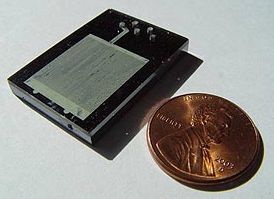
Microreactor technologies developed at LLNL use micromachining techniques to miniaturize the reactor design. Applications include fuel processors for generating hydrogen, chemical synthesis, and bioreaction studies.

A microreactor or microstructured reactor or microchannel reactor is a device in which chemical reactions take place in a confinement with typical lateral dimensions below 1 mm; the most typical form of such confinement are microchannels.[1][2] Microreactors are studied in the field of micro process engineering, together with other devices (such as micro heat exchangers) in which physical processes occur. The microreactor is usually a continuous flow reactor (contrast with/to a batch reactor). Microreactors can offer many advantages over conventional scale reactors, including improvements in energy efficiency, reaction speed and yield, safety, reliability, scalability, on-site/on-demand production, and a much finer degree of process control.

History

[edit]

Gas-phase microreactors have a long history but those involving liquids started to appear in the late 1990s.[1] Static micro mixers as split-and-recombine structures[3] became particular important for micro reaction technology. Chip-based flow thermocylers for PCR were early examples of thermal microreactors for liquid processes.[4][5][6] Other examples are micro flow-through chip calorimeters[7][8]. One of the first microreactors with embedded high performance heat exchangers were made in the early 1990s by the Central Experimentation Department (Hauptabteilung Versuchstechnik, HVT) of Forschungszentrum Karlsruhe[9] in Germany, using mechanical micromachining techniques that were a spinoff from the manufacture of separation nozzles for uranium enrichment.[9] As research on nuclear technology was drastically reduced in Germany, microstructured heat exchangers were investigated for their application in handling highly exothermic and dangerous chemical reactions. This new concept, known by names as microreaction technology or micro process engineering, was further developed by various research institutions. An early example from 1997 involved that of azo couplings in a pyrex reactor with channel dimensions 90 micrometres deep and 190 micrometres wide.[1]

Benefits

[edit]

Using microreactors is somewhat different from using a glass vessel. These reactors may be a valuable tool in the hands of an experienced chemist or reaction engineer:

  • Microreactors typically have heat exchange coefficients of at least 1 megawatt per cubic meter per kelvin, up to 500 MW m−3 K−1 vs. a few kilowatts in conventional glassware (1 L flask ~10 kW m−3 K−1). Thus, microreactors can remove heat much more efficiently than vessels and even critical reactions such as nitrations can be performed safely at high temperatures.[10] Hot spot temperatures as well as the duration of high temperature exposition due to exothermicity decreases remarkably. Thus, microreactors may allow better kinetic investigations, because local temperature gradients affecting reaction rates are much smaller than in any batch vessel. Heating and cooling a microreactor is also much quicker and operating temperatures can be as low as −100 °C. As a result of the superior heat transfer, reaction temperatures may be much higher than in conventional batch-reactors. Many low temperature reactions as organo-metal chemistry can be performed in microreactors at temperatures of −10 °C rather than −50 °C to −78 °C as in laboratory glassware equipment.
  • Microreactors are normally operated continuously. This allows the subsequent processing of unstable intermediates and avoids typical batch workup delays. Especially low temperature chemistry with reaction times in the millisecond to second range are no longer stored for hours until dosing of reagents is finished and the next reaction step may be performed. This rapid work up avoids decay of precious intermediates and often allows better selectivities.[11]
  • Continuous operation and mixing causes a very different concentration profile when compared with a batch process. In a batch, reagent A is filled in and reagent B is slowly added. Thus, B encounters initially a high excess of A. In a microreactor, A and B are mixed nearly instantly and B won't be exposed to a large excess of A. This may be an advantage or disadvantage depending on the reaction mechanism - it is important to be aware of such different concentration profiles.
  • Although a bench-top microreactor can synthesize chemicals only in small quantities, scale-up to industrial volumes is simply a process of multiplying the number of microchannels. In contrast, batch processes too often perform well on R&D bench-top level but fail at batch pilot plant level.[12]
  • Pressurisation of materials within microreactors (and associated components) is generally easier than with traditional batch reactors. This allows reactions to be increased in rate by raising the temperature beyond the boiling point of the solvent. This, although typical Arrhenius behaviour, is more easily facilitated in microreactors and should be considered a key advantage. Pressurisation may also allow dissolution of reactant gasses within the flow stream.

Challenges

[edit]
  • Although there have been reactors made for handling particles, microreactors generally do not tolerate particulates well, often clogging. Clogging has been identified by a number of researchers as the biggest hurdle for microreactors being widely accepted as a beneficial alternative to batch reactors.[13] So far, the so-called microjetreactor[14] is free of clogging by precipitating products. Gas evolved may also shorten the residence time of reagents as volume is not constant during the reaction. This may be prevented by application of pressure.
  • Mechanical pumping may generate a pulsating flow which can be disadvantageous. Much work has been devoted to development of pumps with low pulsation. A continuous flow solution is electroosmotic flow (EOF).
  • The logistics issue and enhanced pressure drop across microreactor limits its applicability in large-scale production units. However, clean solutions are handled well in microreactors.[15]
  • The scale-up of production rates and leakage are quite challenging in case of microreactor. Recently, so called nanoparticle immobilized reactors are developed to solve logistics and scale-up issues, associated with the microreactors.[16]
  • Typically, reactions performing very well in a microreactor encounter many problems in vessels, especially when scaling up. Often, the high area to volume ratio and the uniform residence time cannot easily be scaled.
  • Corrosion imposes a bigger issue in microreactors because area to volume ratio is high. Degradation of few μm may go unnoticed in conventional vessels. As typical inner dimensions of channels are in the same order of magnitude, characteristics may be altered significantly.

T reactors

[edit]

One of the simplest forms of a microreactor is a 'T' reactor. A 'T' shape is etched into a plate with a depth that may be 40 micrometres and a width of 100 micrometres: the etched path is turned into a tube by sealing a flat plate over the top of the etched groove. The cover plate has three holes that align to the top-left, top-right, and bottom of the 'T' so that fluids can be added and removed. A solution of reagent 'A' is pumped into the top left of the 'T' and solution 'B' is pumped into the top right of the 'T'. If the pumping rate is the same, the components meet at the top of the vertical part of the 'T' and begin to mix and react as they go down the trunk of the 'T'. A solution of product is removed at the base of the 'T'.

Applications

[edit]
Glass microreactors involve microfabricated structures to allow flow chemistry to be performed at a microscale. Applications include compound library generation, process development, and compound synthesis

Synthesis

[edit]

Microreactors can be used to synthesise material more effectively than current batch techniques allow. The benefits here are primarily enabled by the mass transfer, thermodynamics, and high surface area to volume ratio environment as well as engineering advantages in handling unstable intermediates. Microreactors are applied in combination with photochemistry, electrosynthesis, multicomponent reactions and polymerization (for example that of butyl acrylate). It can involve liquid-liquid systems but also solid-liquid systems with for example the channel walls coated with a heterogeneous catalyst. Synthesis is also combined with online purification of the product.[1] Following green chemistry principles, microreactors can be used to synthesize and purify extremely reactive Organometallic Compounds for ALD and CVD applications, with improved safety in operations and higher purity products.[17][18]

In microreactor studies a Knoevenagel condensation[19] was performed with the channel coated with a zeolite catalyst layer which also serves to remove water generated in the reaction. The same reaction was performed in a microreactor covered by polymer brushes.[20]

Knoevenagel condensation application

A Suzuki reaction was examined in another study[21] with a palladium catalyst confined in a polymer network of polyacrylamide and a triarylphosphine formed by interfacial polymerization:

Suzuki reaction application

The combustion of propane was demonstrated to occur at temperatures as low as 300 °C in a microchannel setup filled up with an aluminum oxide lattice coated with a platinum / molybdenum catalyst:[22]

Propane combustion application

Enzyme catalyzed polymer synthesis

[edit]

Enzymes immobilized on solid supports are increasingly used for greener, more sustainable chemical transformation processes. > enabled to perform heterogeneous reactions in continuous mode, in organic media, and at elevated temperatures. Using microreactors, enabled faster polymerization and higher molecular mass compared to using batch reactors. It is evident that similar microreactor based platforms can readily be extended to other enzyme-based systems, for example, high-throughput screening of new enzymes and to precision measurements of new processes where continuous flow mode is preferred. This is the first reported demonstration of a solid supported enzyme-catalyzed polymerization reaction in continuous mode.

Analysis

[edit]

Microreactors can also enable experiments to be performed at a far lower scale and far higher experimental rates than currently possible in batch production, while not collecting the physical experimental output. The benefits here are primarily derived from the low operating scale, and the integration of the required sensor technologies to allow high quality understanding of an experiment. The integration of the required synthesis, purification and analytical capabilities is impractical when operating outside of a microfluidic context.

NMR

[edit]

Researchers at the Radboud University Nijmegen and Twente University, the Netherlands, have developed a microfluidic high-resolution NMR flow probe. They have shown a model reaction being followed in real-time. The combination of the uncompromised (sub-Hz) resolution and a low sample volume can prove to be a valuable tool for flow chemistry.[23]

Infrared spectroscopy

[edit]

Mettler Toledo and Bruker Optics offer dedicated equipment for monitoring, with attenuated total reflectance spectrometry (ATR spectrometry) in microreaction setups. The former has been demonstrated for reaction monitoring.[24] The latter has been successfully used for reaction monitoring[25] and determining dispersion characteristics[26] of a microreactor.

Academic research

[edit]

Microreactors, and more generally, micro process engineering, are the subject of worldwide academic research. A prominent recurring conference is IMRET, the International Conference on Microreaction Technology. Microreactors and micro process engineering have also been featured in dedicated sessions of other conferences, such as the Annual Meeting of the American Institute of Chemical Engineers (AIChE), or the International Symposia on Chemical Reaction Engineering (ISCRE). Research is now also conducted at various academic institutions around the world, e.g. at the Massachusetts Institute of Technology (MIT) in Cambridge, Massachusetts, University of Illinois Urbana-Champaign, Oregon State University in Corvallis, Oregon, at University of California, Berkeley in Berkeley, California in the United States, at the EPFL in Lausanne, Switzerland, at Eindhoven University of Technology in Eindhoven, at Radboud University Nijmegen in Nijmegen, Netherlands and at the LIPHT of Université de Strasbourg in Strasbourg and LGPC of the University of Lyon, CPE Lyon, France and at KU Leuven, Belgium.

Market structure

[edit]
Example of a flow reactor system

The market for microreactors can be segmented based on customer objectives, into turnkey, modular, and bespoke systems.

Turnkey (ready to run) systems are being used where the application environment stands to benefit from new chemical synthesis schemes, enhanced investigational throughput of up to approximately 10 - 100 experiments per day (depends on reaction time) and reaction subsystem, and actual synthesis conduct at scales ranging from 10 milligrams per experiment to triple digit tons per year (continuous operation of a reactor battery).

Modular (open) systems are serving the niche for investigations on continuous process engineering lay-outs, where a measurable process advantage over the use of standardized equipment is anticipated by chemical engineers. Multiple process lay-outs can be rapidly assembled and chemical process results obtained on a scale ranging from several grams per experiment up to approximately 100 kg at a moderate number of experiments per day (3-15). A secondary transfer of engineering findings in the context of a plant engineering exercise (scale-out) then provides target capacity of typically single product dedicated plants. This mimics the success of engineering contractors for the petro-chemical process industry.

With dedicated developments, manufacturers of microstructured components are mostly commercial development partners to scientists in search of novel synthesis technologies. Such development partners typically excel in the set-up of comprehensive investigation and supply schemes, to model a desired contacting pattern or spatial arrangement of matter. To do so they predominantly offer information from proprietary integrated modeling systems that combine computational fluid dynamics with thermokinetic modelling. Moreover, as a rule, such development partners establish the overall application analytics to the point where the critical initial hypothesis can be validated and further confined.

References

[edit]
Revisions and contributorsEdit on WikipediaRead on Wikipedia
from Grokipedia
A microreactor is a compact reactor designed to produce between 1 and 20 megawatts of , which can be used directly as or converted to , and is small enough to be fully factory-fabricated and transported by truck, rail, ship, or airplane. These reactors are 100 to 1,000 times smaller than conventional plants, which typically generate around 1,000 megawatts electric (MWe), and are distinguished from small modular reactors (SMRs) by their even more portable scale and power output generally under 50 MWe. Key design features of microreactors include passive safety systems that self-regulate to prevent overheating or meltdown without human intervention, the ability to operate for up to 10 years without refueling, and the use of advanced fuels such as high-assay low-enriched (HALEU) to enhance efficiency and compactness. They can function independently from the electric grid, as part of a , or integrated with renewable energy sources, offering flexibility for deployment in diverse environments. Unlike larger reactors, microreactors emphasize and rapid installation, potentially reducing construction costs and timelines by assembling most components off-site. Microreactors hold significant potential for applications in remote or challenging locations, including powering isolated bases, rural communities, and disaster-stricken areas where traditional is unavailable or unreliable. Beyond , they can support non-electric uses such as , water , , and industrial process heat, contributing to decarbonization efforts in sectors hard to electrify. Their transportability enables quick deployment for emergency power restoration following , enhancing energy resilience in vulnerable regions. Development of microreactors is in early stages, with ongoing research focused on fuel technologies, regulatory frameworks, and demonstration projects led by organizations like the U.S. Department of Energy and . As of 2025, the U.S. Department of Energy has announced initial fueled experiments for 2026 at the INL, and the U.S. Army launched the Janus program targeting deployments at military bases by 2028. Challenges include securing supplies of , addressing proliferation risks associated with higher uranium enrichment levels, and navigating the NRC regulatory certification processes, which can take 3 to 5 years or longer and cost hundreds of millions of dollars, though the DOE has begun allocating initial supplies for late 2025 delivery and supporting domestic production facilities. Light-water-cooled designs are approaching maturity, while advanced concepts like or gas-cooled systems require further validation to realize their full potential.

Fundamentals

Definition and Principles

A is a compact reactor with a power output typically between 1 and 20 megawatts (MWth), designed to generate heat that can be used directly or converted to at scales under 10 megawatts electric (MWe). These reactors are factory-fabricated for by , rail, ship, or air, distinguishing them from larger nuclear plants by their portability and reduced size, often 100 to 1,000 times smaller in volume. The operating principles of nuclear microreactors rely on controlled in a compact reactor core, where such as high-assay low-enriched (HALEU, enriched to 5-20% U-235) undergoes chain reactions to release energy as heat. This heat is transferred via a —such as light water, helium gas, , or —to produce steam for in a or for direct thermal applications. Unlike conventional reactors, microreactors emphasize passive safety systems that use natural forces like and for cooling, self-regulating reactivity to prevent overheating without active intervention or external power. The low and small core size enable operation for 5-10 years without refueling, with inherent shutdown mechanisms if temperatures exceed safe limits. Key physical principles include the fission chain reaction governed by the neutron multiplication factor kk, where k=1k = 1 maintains criticality, and excess reactivity is controlled by burnable poisons or control rods. follows the basic Q=mcΔTQ = m c \Delta T for sensible heating and Q=hAΔTQ = h A \Delta T for , with passive systems relying on high thermal conductivity materials to dissipate . Microreactors can integrate with grids, operate off-grid, or form microgrids, providing resilient power with minimal environmental footprint due to closed cycles and low generation relative to output.

Design and Fabrication

Nuclear microreactors feature modular designs with integrated components, including a core, loops, and power conversion systems, all encased in a transportable vessel typically under 40 feet long and weighing less than 500 tons. Common designs include light--cooled types for near-term deployment, using pressurized to moderate and cool the , and advanced concepts like heat-pipe reactors that employ sodium or other working fluids in sealed pipes for passive heat transport without pumps. Fuels often use TRISO (tristructural isotropic) particles embedded in or metal matrices for enhanced , resisting meltdown even under accident conditions. features incorporate below-ground siting options, robust , and seismic-resistant structures to minimize risks. Materials are selected for high-temperature tolerance, radiation resistance, and corrosion prevention, including zirconium alloys for cladding, stainless steels or nickel-based superalloys for pressure vessels, and ceramics for advanced coolants. Designs prioritize simplicity, with fewer components than large reactors to reduce failure points and costs. Fabrication occurs primarily in controlled factory environments to ensure quality and accelerate deployment, contrasting with on-site construction of traditional plants. Processes leverage advanced manufacturing techniques such as additive manufacturing (3D printing) for complex fuel elements and heat exchangers, precision welding for vessel integrity, and automated assembly for modularity. Qualification testing, including non-nuclear mockups and fueled experiments, verifies performance under operational and accident scenarios. As of 2025, prototypes like the MARVEL microreactor at Idaho National Laboratory demonstrate these methods, with full-scale demonstrations targeted for the late 2020s.

History

Early Developments

The concept of nuclear microreactors originated in the as part of U.S. military efforts to develop compact sources for remote and mobile applications. The U.S. Army, , and initiated programs for small reactors to power submarines, aircraft, and isolated bases, driven by the need for reliable energy in harsh environments during the . The 's submarine reactor program, starting in the late , led to successful deployments like the in 1954, which demonstrated compact fission reactors for propulsion, influencing later land-based designs. In the 1950s, the U.S. Army Nuclear Power Program constructed several portable reactors under 10 MWe, transportable by truck or aircraft, to supply power to remote military installations. Key examples include the PM-1 reactor (1.25 MWe), deployed in 1962 at Warren Peak, Wyoming, which powered radars and provided heating for the Sundance Air Force Station until 1968, achieving 99.45% reliability with minimal staffing. Other deployments were the PM-2A in Greenland (1960) for Camp Century, PM-3A in Antarctica (1962) at McMurdo Station, and SM-1A in Alaska (1962), all designed for quick assembly in extreme conditions. The Soviet Union also developed small reactors, such as those for nuclear icebreakers in the 1950s, for Arctic operations. By the 1960s, eight Army reactors had been built, but operational challenges emerged, including the 1961 SL-1 accident in , a 3 MWe stationary reactor that suffered a , killing three operators and highlighting safety risks in small systems. High maintenance costs, technical issues like and leaks, and competition from cheaper diesel generators led to the decommissioning of most units by the . The Army program ended in 1976, and early civilian small reactors, such as Elk River (22 MWe, 1964–1968), faced similar economic hurdles, with electricity costs up to three times higher than fossil fuels. Despite these setbacks, the era established foundational technologies for compact, transportable .

Modern Evolution

Interest in nuclear microreactors revived in the amid growing demand for clean, reliable power in remote areas and concerns over . In 2008, the U.S. Air Force explored deploying small reactors at bases, prompting renewed Department of Energy (DOE) research into advanced designs. The 2010s saw the distinction between small modular reactors (SMRs, 50–300 MWe) and microreactors (<20 MWe), with emphasis on factory fabrication, passive safety, and HALEU fuel for longer operation without refueling. Development accelerated in the , with private companies and government initiatives leading demonstration projects. The DOE's Advanced Reactor Demonstration Program (ARDP), launched in 2020, funded microreactor concepts like X-energy's Xe-Mobile and Westinghouse's eVinci, designed for 1–5 MWe output and transport by truck. The U.S. Army's Project Pele, initiated in 2021, aims to develop a mobile microreactor by 2027, using a reactor transported in a shipping container for rapid deployment at forward bases. As of 2023, (INL) reported over 60 years of experience with small reactors informing modern designs. By 2025, regulatory progress and testing facilities advanced the field. The (NRC) reviewed designs like Oklo's Aurora (1.5 MWe), with a license application submitted in 2020 and construction permit granted in 2024 for deployment in by 2027. INL's Microreactor Testing at DOME facility began operations in 2025, enabling fueled experiments as early as 2026 for designs from Ultra Safe Nuclear Corporation and others. On November 19, 2025, the Army selected nine U.S. installations for potential microreactor deployment under the Janus Program, targeting operational units by 2028 to enhance energy resilience at remote sites. Challenges persist, including HALEU supply shortages and timelines exceeding 10 years, but advancements in simulation and materials promise cost reductions and broader adoption. As of November 2025, over 10 microreactor designs are in advanced development worldwide, focusing on military, industrial, and applications.

Advantages and Limitations

Key Benefits

Nuclear microreactors provide several advantages over conventional large-scale nuclear power plants, primarily due to their compact size, modularity, and transportability. These reactors, typically producing 1 to 20 megawatts electric (MWe), can be fully factory-fabricated and transported by truck, rail, ship, or airplane, enabling rapid deployment in remote or challenging locations such as military bases, rural communities, mining operations, and disaster-stricken areas. A major benefit is enhanced through passive systems that self-regulate and prevent overheating or meltdown without intervention or external power. Designs often allow operation for 3 to 20 years without refueling, reducing operational complexity and maintenance needs. Microreactors can integrate with microgrids or sources, providing resilient, low-carbon power and supporting applications beyond , including , water , , and industrial process heat. This versatility contributes to decarbonization in hard-to-electrify sectors. Economically, factory assembly and modularity can lower capital costs to $10,000–$20,000 per , with (LCOE) estimates ranging from $0.09 to $0.41 per (kWh), potentially competitive in high-cost areas like rural regions where diesel generation exceeds $0.55–$0.75/. Scalability through multiple units further enhances flexibility for varying power demands. As of 2024, projections suggest deployment of 40–90 units by 2030 and up to 11,850 by 2050, aiding global and climate goals.

Major Challenges

Despite their potential, nuclear microreactors face significant hurdles, particularly in and supply. Certification processes through bodies like the U.S. Nuclear Regulatory Commission (NRC) can take over three years and cost $1–2 billion (in 2015 dollars) for first-of-a-kind designs, delaying . Many advanced concepts, such as heat-pipe or gas-cooled systems, remain in early development stages as of 2024, requiring further testing for validation. Fuel challenges center on high-assay low-enriched (HALEU), enriched to 5–20% , which is not yet commercially available at scale and poses proliferation and security risks due to higher enrichment levels compared to traditional low-enriched uranium (under 5%). Securing reliable HALEU supplies is critical, as is managing novel streams. Economic viability for initial deployments is limited by high first-of-a-kind costs, potentially reaching $0.60/kWh, though series production could reduce this to $0.15–$0.20/kWh. Public acceptance remains a barrier, influenced by perceptions and the need for in deployment sites. Infrastructure limitations in remote areas, including supply chains and skilled labor, along with cybersecurity risks in automated systems, add to deployment complexities.

Types

Basic Microreactor Designs

Basic nuclear microreactor designs primarily include light water-cooled systems, which adapt proven technology from conventional reactors to achieve compact, transportable scales. These reactors use ordinary water as both coolant and moderator, operating at pressures similar to pressurized water reactors (PWRs) but with simplified, integral layouts that combine primary components within a single vessel to minimize size and enhance safety. Power outputs typically range from 1 to 10 MWe, enabling factory fabrication and transport by or rail. Fuels often employ high-assay low-enriched (HALEU, up to 20% U-235) to support longer operational periods without refueling, up to 10 years in some concepts. Examples include the Bilibino floating plant's KLT-40S reactors in , which generate about 35 MWe total but serve as precursors to micro-scale designs, and emerging U.S. concepts like those under development by , scaled down for micro applications. Key features emphasize passive safety through natural circulation cooling, reducing the need for active pumps or external power, and modularity for rapid deployment. These designs are considered more mature, with regulatory pathways leveraging existing licensing experience.

Specialized Configurations

Specialized nuclear microreactor configurations incorporate advanced s and fuels to enable higher efficiency, elevated temperatures, and operation in extreme environments, often exceeding the capabilities of light water systems. High-temperature gas-cooled reactors (HTGRs) use inert gases like as , allowing outlet temperatures up to 750°C for applications beyond , such as process heat or . Power outputs are generally 1-10 MWe, with TRISO (tristructural isotropic) fuel particles providing by containing fission products even under accident conditions. The U-Battery, a 4 MWe helium-cooled design, exemplifies this type, though its development was cancelled as of 2018; ongoing efforts include China's scaled for micro use. Molten salt reactors (MSRs) employ liquid fluoride or chloride salts as coolant and sometimes fuel solvent, operating at to avoid high-pressure vessels and enabling passive drainage for safety. These designs produce 1-10 MWe and support or fuel cycles, with potential for online reprocessing to minimize waste. The in , a 10 MWth demonstration under construction as of 2023, uses -based fuel. Liquid metal-cooled fast reactors, such as sodium or lead-based systems, achieve high and breeding capabilities; the (10-50 MWe, though on the upper end for micro) uses sodium coolant for 30-year operation without refueling. Heat pipe microreactors represent a novel specialized type, using passive heat transfer via embedded pipes filled with working fluids (e.g., sodium) that evaporate and condense to move heat from core to power conversion without pumps. The Westinghouse eVinci, outputting 5 MWe for over 8 years, is a heat pipe design in pre-licensing with the U.S. NRC as of 2024, suitable for remote sites. These configurations, while promising for versatility, require additional validation for fuel performance and material compatibility, with demonstrations like Idaho National Laboratory's MARVEL project testing heat pipe tech ongoing as of 2025.

Applications

Electricity Generation

Nuclear microreactors are designed to provide reliable, in remote or off-grid locations where traditional power is impractical or unreliable. They can generate 1 to 20 megawatts thermal (MWth), equivalent to 0.3 to 6 megawatts electric (MWe), sufficient to power small communities, industrial sites, or bases. For example, they can replace diesel generators in rural Alaskan villages or outposts, reducing costs and emissions. In military applications, microreactors support forward operating bases and isolated installations by enabling autonomous power supply independent of vulnerable supply chains. The U.S. Department of Defense's Project Pele, initiated in 2020, aims to develop a transportable microreactor prototype delivering up to 5 MWe by 2027, enhancing in contested environments. As of November 2025, demonstration efforts like the MARVEL microreactor at are testing sodium-cooled designs for such uses. Microreactors also integrate into microgrids with renewables, providing baseload power to stabilize intermittent sources like solar or wind in disaster-prone areas. Following events like hurricanes, they can be rapidly deployed via truck or barge for emergency restoration, operating for up to 10 years without refueling.

Non-Electric Applications

Beyond electricity, nuclear microreactors supply high-temperature process heat for industrial and environmental uses, contributing to decarbonization in hard-to-abate sectors. They enable water desalination in arid regions, producing fresh water alongside power; for instance, a 10 MWth unit could desalinate up to 10,000 cubic meters per day using reverse osmosis. Hydrogen production is another key application, where microreactors provide steam for or thermochemical splitting, supporting clean fuel for transportation and industry. Pilot concepts, such as those explored by Westinghouse's eVinci microreactor, target 1-5 MWe equivalents for plants in remote operations. Additional uses include for communities and process heat for chemical manufacturing or extraction, reducing reliance on fossil fuels. As of November 2025, these applications remain in development, with regulatory approvals pending for commercial deployment in the late 2020s.

Research and Commercialization

Academic Research

Academic research on nuclear microreactors focuses on design optimization, safety systems, economic viability, and integration with renewable energy grids. Institutions such as the University of Illinois at Urbana-Champaign lead efforts through the Illinois Microreactor Project, developing advanced microreactor concepts for remote power applications and collaborating with industry on fuel cycle innovations. At the , researchers have developed a physics-based control for autonomous load following in microreactors, enabling real-time power adjustment without human intervention, as demonstrated in simulations published in 2025. A 2025 study also evaluated the economic competitiveness of microreactors in energy markets, finding they can be cost-effective for off-grid and high-demand scenarios under favorable regulatory conditions. Idaho National Laboratory (INL), in partnership with universities, conducts testing and validation through the DOE Microreactor Program, including the 2025 Program Review assessing progress in technical focus areas like advanced fuels and passive safety. Research emphasizes high-assay low-enriched uranium (HALEU) fuels and modular designs, with publications reviewing global deployment potential and applications in remote areas. Emerging directions include hybrid systems combining microreactors with solar or for resilient microgrids, and studies on non-proliferation risks associated with compact designs. Conferences and workshops, such as those hosted by the American Nuclear Society, facilitate interdisciplinary collaboration on these topics as of 2025. The sector is experiencing rapid growth driven by demand for clean, reliable power in remote, , and applications, with significant U.S. support accelerating commercialization. As of 2025, the broader (SMR) market, which includes microreactors, is projected to expand from USD 0.27 billion in 2024 to USD 0.67 billion in 2025, reflecting a 152.1% (CAGR), fueled by investments in advanced nuclear technologies. Key players include NANO Nuclear Energy, which is advancing the and microreactors and announced plans for the first commercialized U.S. microreactor in in partnership with the University of Illinois; Oklo, focusing on fast-spectrum microreactors for off-grid power; and BWX Technologies, developing the BANR microreactor for defense applications. In July 2025, the U.S. Department of Energy selected 11 companies, including Westinghouse and , for advanced reactor pilot demonstrations at INL's site, aiming to validate technologies for commercial deployment. The (DIU) identified eight eligible vendors in April 2025 for the Advanced Nuclear Power for Installations (ANPI) program, including Antares Nuclear, , and Ultra Safe Nuclear Corporation, to supply microreactors for military bases. Military adoption is a major trend, with the U.S. Army's Program selecting nine installations in November 2025 as potential sites for microreactor deployment by 2028, enhancing at remote bases. Private investments surged in 2025, including TerraPower's USD 650 million funding round for advanced reactors, while tech firms like committed to purchasing microreactors for data centers. Challenges include regulatory hurdles from the (NRC), HALEU supply constraints, and high initial costs, though programs like the DOE's risk reduction initiatives aim to address these for market entry by the late 2020s.

References

Add your contribution
Related Hubs
User Avatar
No comments yet.