Hubbry Logo
Multiscale modelingMultiscale modelingMain
Open search
Multiscale modeling
Community hub
Multiscale modeling
logo
8 pages, 0 posts
0 subscribers
Be the first to start a discussion here.
Contribute something
Multiscale modeling
Multiscale modeling
from Wikipedia
Modeling approaches and their scales

Multiscale modeling or multiscale mathematics is the field of solving problems that have important features at multiple scales of time and/or space. Important problems include multiscale modeling of fluids,[1][2][3] solids,[2][4] polymers,[5][6] proteins,[7][8][9][10] nucleic acids[11] as well as various physical and chemical phenomena (like adsorption, chemical reactions, diffusion).[9][12][13][14]

An example of such problems involve the Navier–Stokes equations for incompressible fluid flow.
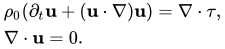
In a wide variety of applications, the stress tensor is given as a linear function of the gradient . Such a choice for has been proven to be sufficient for describing the dynamics of a broad range of fluids. However, its use for more complex fluids such as polymers is dubious. In such a case, it may be necessary to use multiscale modeling to accurately model the system such that the stress tensor can be extracted without requiring the computational cost of a full microscale simulation.[15]

History

[edit]

Horstemeyer 2009,[16] 2012[17] presented a historical review of the different disciplines (mathematics, physics, and materials science) for solid materials related to multiscale materials modeling.

The recent surge of multiscale modeling from the smallest scale (atoms) to full system level (e.g., autos) related to solid mechanics that has now grown into an international multidisciplinary activity was birthed from an unlikely source. Since the US Department of Energy (DOE) national labs started to reduce nuclear underground tests in the mid-1980s, with the last one in 1992, the idea of simulation-based design and analysis concepts were birthed. Multiscale modeling was a key in garnering more precise and accurate predictive tools. In essence, the number of large-scale systems level tests that were previously used to validate a design was reduced to nothing, thus warranting the increase in simulation results of the complex systems for design verification and validation purposes.

Essentially, the idea of filling the space of system-level “tests” was then proposed to be filled by simulation results. After the Comprehensive Test Ban Treaty of 1996 in which many countries pledged to discontinue all systems-level nuclear testing, programs like the Advanced Strategic Computing Initiative (ASCI) were birthed within the Department of Energy (DOE) and managed by the national labs within the US. Within ASCI, the basic recognized premise was to provide more accurate and precise simulation-based design and analysis tools. Because of the requirements for greater complexity in the simulations, parallel computing and multiscale modeling became the major challenges that needed to be addressed. With this perspective, the idea of experiments shifted from the large-scale complex tests to multiscale experiments that provided material models with validation at different length scales. If the modeling and simulations were physically based and less empirical, then a predictive capability could be realized for other conditions. As such, various multiscale modeling methodologies were independently being created at the DOE national labs: Los Alamos National Lab (LANL), Lawrence Livermore National Laboratory (LLNL), Sandia National Laboratories (SNL), and Oak Ridge National Laboratory (ORNL). In addition, personnel from these national labs encouraged, funded, and managed academic research related to multiscale modeling. Hence, the creation of different methodologies and computational algorithms for parallel environments gave rise to different emphases regarding multiscale modeling and the associated multiscale experiments.

The advent of parallel computing also contributed to the development of multiscale modeling. Since more degrees of freedom could be resolved by parallel computing environments, more accurate and precise algorithmic formulations could be admitted. This thought also drove the political leaders to encourage the simulation-based design concepts.

At LANL, LLNL, and ORNL, the multiscale modeling efforts were driven from the materials science and physics communities with a bottom-up approach. Each had different programs that tried to unify computational efforts, materials science information, and applied mechanics algorithms with different levels of success. Multiple scientific articles were written, and the multiscale activities took different lives of their own. At SNL, the multiscale modeling effort was an engineering top-down approach starting from continuum mechanics perspective, which was already rich with a computational paradigm. SNL tried to merge the materials science community into the continuum mechanics community to address the lower-length scale issues that could help solve engineering problems in practice.

Once this management infrastructure and associated funding was in place at the various DOE institutions, different academic research projects started, initiating various satellite networks of multiscale modeling research. Technological transfer also arose into other labs within the Department of Defense and industrial research communities.

The growth of multiscale modeling in the industrial sector was primarily due to financial motivations. From the DOE national labs perspective, the shift from large-scale systems experiments mentality occurred because of the 1996 Nuclear Ban Treaty. Once industry realized that the notions of multiscale modeling and simulation-based design were invariant to the type of product and that effective multiscale simulations could in fact lead to design optimization, a paradigm shift began to occur, in various measures within different industries, as cost savings and accuracy in product warranty estimates were rationalized.

Mark Horstemeyer, Integrated Computational Materials Engineering (ICME) for Metals, Chapter 1, Section 1.3.

The aforementioned DOE multiscale modeling efforts were hierarchical in nature. The first concurrent multiscale model occurred when Michael Ortiz (Caltech) took the molecular dynamics code Dynamo, developed by Mike Baskes at Sandia National Labs, and with his students embedded it into a finite element code for the first time.[18] Martin Karplus, Michael Levitt, and Arieh Warshel received the Nobel Prize in Chemistry in 2013 for the development of a multiscale model method using both classical and quantum mechanical theory which were used to model large complex chemical systems and reactions.[8][9][10]

Areas of research

[edit]

In physics and chemistry, multiscale modeling is aimed at the calculation of material properties or system behavior on one level using information or models from different levels. On each level, particular approaches are used for the description of a system. The following levels are usually distinguished: level of quantum mechanical models (information about electrons is included), level of molecular dynamics models (information about individual atoms is included), coarse-grained models (information about atoms and/or groups of atoms is included), mesoscale or nano-level (information about large groups of atoms and/or molecule positions is included), level of continuum models, level of device models. Each level addresses a phenomenon over a specific window of length and time. Multiscale modeling is particularly important in integrated computational materials engineering since it allows the prediction of material properties or system behavior based on knowledge of the process-structure-property relationships.[citation needed]

In operations research, multiscale modeling addresses challenges for decision-makers that come from multiscale phenomena across organizational, temporal, and spatial scales. This theory fuses decision theory and multiscale mathematics and is referred to as multiscale decision-making. Multiscale decision-making draws upon the analogies between physical systems and complex man-made systems.[citation needed]

In meteorology, multiscale modeling is the modeling of the interaction between weather systems of different spatial and temporal scales that produces the weather that we experience. The most challenging task is to model the way through which the weather systems interact as models cannot see beyond the limit of the model grid size. In other words, to run an atmospheric model that is having a grid size (very small ~ 500 m) which can see each possible cloud structure for the whole globe is computationally very expensive. On the other hand, a computationally feasible Global climate model (GCM), with grid size ~ 100 km, cannot see the smaller cloud systems. So we need to come to a balance point so that the model becomes computationally feasible and at the same time we do not lose much information, with the help of making some rational guesses, a process called parametrization.[citation needed]

Besides the many specific applications, one area of research is methods for the accurate and efficient solution of multiscale modeling problems. The primary areas of mathematical and algorithmic development include:

See also

[edit]

References

[edit]

Further reading

[edit]
[edit]
Revisions and contributorsEdit on WikipediaRead on Wikipedia
from Grokipedia
Multiscale modeling is a computational framework that integrates simulations across multiple spatial, temporal, and physical scales to analyze complex systems in science and , linking detailed microscopic processes—such as atomic interactions—to emergent macroscopic behaviors that single-scale approaches cannot adequately capture due to computational limitations or loss of resolution. This methodology employs a of models, ranging from and at fine scales to like finite element methods at coarser scales, enabling efficient predictions of system properties while balancing accuracy and cost. Central to multiscale modeling are two primary strategies: sequential approaches, which hierarchically coarse-grain information from finer to coarser scales using techniques like the Cauchy-Born rule or free-energy calculations, and concurrent methods, which dynamically couple models across domains to resolve local phenomena without relying on phenomenological parameters. Challenges in implementation include seamless scale coupling to avoid artifacts, handling statistical fluctuations and memory effects, and bridging vast timescale disparities—from femtoseconds in atomic vibrations to seconds in structural responses—often addressed through algorithms like the Heterogeneous Multiscale Method (HMM) or equation-free schemes. These principles allow for error-controlled simulations that exploit scale separation, such as in perturbation analysis or theory, to derive effective equations for multiscale dynamics. The approach finds extensive applications in materials science, where it simulates dislocation motion, phase transformations, and fracture to design advanced alloys and composites; in biomechanics, linking organ-level loading to cellular deformations for injury prediction; and in fluid mechanics, modeling nanoscale flows in porous media or turbulent phenomena via hybrid continuum-molecular methods. In biomedicine, it integrates multiphysics data to elucidate disease mechanisms, such as in cardiovascular systems, while in environmental engineering, it aids in simulating pollutant transport across scales. Overall, multiscale modeling drives innovation by providing mechanistic insights into phenomena like nanotechnology device performance and sustainable energy materials, with ongoing advancements incorporating machine learning for enhanced scalability and predictive power.

Fundamentals

Definition and Principles

Multiscale modeling involves the development and integration of mathematical and computational models to capture system behaviors across disparate spatial and temporal scales, from atomic to macroscopic levels, enabling the prediction of overall properties without simulating every fine detail. This approach bridges microscopic accuracy with macroscopic efficiency, addressing complex phenomena in fields like physics, , and by linking models that operate at different resolutions. Central principles include the separation of scales, which categorizes phenomena by spatial extents—atomic around 101010^{-10} m, mesoscale from 10910^{-9} to 10610^{-6} m, and macroscale beyond 10610^{-6} m—and temporal spans from femtoseconds (101510^{-15} s) to seconds. This separation exploits the hierarchical nature of physical laws, as seen in the Navier-Stokes equations for macroscale , which emerge from underlying molecular interactions without resolving them explicitly. Information flows bidirectionally: upscaling aggregates fine-scale data, such as deriving effective parameters like stress tensors from atomic simulations, to inform coarse models; downscaling refines macroscale solutions, for instance by interpolating velocity fields to guide microscopic refinements. Fundamentally, fine-scale dynamics are often described by the for probabilistic state transitions: ut=jaj(x)(u(x+νj,t)u(x,t)),\frac{\partial u}{\partial t} = \sum_j a_j(\mathbf{x}) \bigl( u(\mathbf{x} + \boldsymbol{\nu}_j, t) - u(\mathbf{x}, t) \bigr), where uu is the probability density, aja_j are transition rates, and νj\boldsymbol{\nu}_j are jumps, which connects to continuum descriptions via the governing phase-space evolution in . Single-scale models fail in complex systems because they overlook emergent properties—like turbulence in fluids, where macroscopic chaos arises from unresolved molecular collisions—leading to inaccurate empirical relations and prohibitive computational costs across scale disparities.

Scale Hierarchies and Coupling

In multiscale modeling, physical systems are structured into hierarchies of scales that reflect the natural organization of phenomena across lengths and times, typically progressing from quantum and atomic levels to molecular or mesoscopic intermediates and finally to continuum or macroscopic descriptions. At the quantum/atomic scale, interactions occur over angstroms and femtoseconds, governing electronic structures and interatomic forces, as seen in materials where configurations determine bonding in . The molecular/mesoscopic scale bridges this by aggregating atoms into larger entities like polymers or grains, spanning nanometers and picoseconds to microseconds, where collective behaviors such as or phase transitions emerge. At the continuum/macroscopic scale, meters and seconds dominate, capturing bulk properties like stress-strain responses through partial differential equations. This enables systematic analysis by exploiting scale separation, where finer details inform coarser behaviors without resolving every atomic motion. Coupling mechanisms facilitate information transfer across these hierarchies to maintain model consistency. Upscaling aggregates fine-scale data into effective coarse-scale parameters, for example, by averaging atomic simulation outputs to compute macroscopic elastic moduli that represent homogenized material stiffness. , conversely, imposes coarse-scale constraints—such as imposed strains or velocities—onto finer models to guide local simulations while preserving global consistency. These transfers occur either sequentially, where parameters are precomputed at finer scales and passed upward before coarse simulations proceed, or concurrently, where scales are simulated simultaneously with real-time handshaking at interfaces to capture dynamic interactions. Sequential approaches reduce computational cost but may overlook transient couplings, while concurrent methods enhance accuracy at the expense of complexity. A cornerstone of coupling in periodic media is homogenization theory, which derives effective macroscopic properties by asymptotically expanding the solution over multiple scales. The basic formulation assumes a fast variable y=x/εy = x / \varepsilon (where ε\varepsilon is the small periodicity parameter) and expands the solution as uε(x)=u0(x,y)+εu1(x,y)+ε2u2(x,y)+,u^\varepsilon(x) = u_0(x, y) + \varepsilon u_1(x, y) + \varepsilon^2 u_2(x, y) + \cdots, leading to cell problems on the unit periodic domain that yield homogenized coefficients, such as effective conductivity or elasticity tensors, through volume averaging. Error control in coupling relies on interface conditions, like continuity or displacement matching, to minimize discrepancies between scales and ensure . Despite these advances, coupling poses significant challenges, including information loss during upscaling, where fine-scale heterogeneities are averaged out, potentially overlooking critical fluctuations or that influence macroscopic behavior. Bidirectional flows exacerbate this by propagating errors across scales, leading to instabilities such as artificial reflections at interfaces or in concurrent simulations. These issues demand robust error estimators and adaptive strategies to bound inaccuracies without excessive computation.

Historical Development

Early Foundations

The early foundations of multiscale modeling emerged from , where Isaac Newton's (1687) introduced the laws of motion that underpin , enabling deterministic descriptions of macroscopic phenomena such as fluid flow and solid deformation. These laws treated systems at large scales as continuous media, but they inherently overlooked underlying microscopic constituents like atoms and molecules. In the 1860s, James Clerk Maxwell laid crucial groundwork with his , positing that macroscopic properties like and arise from the statistical behavior of countless colliding particles, thus initiating the conceptual bridge between molecular and continuum scales. Ludwig Boltzmann advanced this framework in the 1870s through , formulating the to describe the evolution of particle distribution functions and introducing the H-theorem, which mathematically demonstrated how leads to irreversible macroscopic increase, effectively linking atomic-scale dynamics to thermodynamic observables. Building on kinetic theory, Albert Einstein's 1905 analysis of provided empirical validation for atomic existence by modeling the erratic paths of suspended particles as resulting from collisions with fluid molecules, deriving the diffusion coefficient via the Stokes-Einstein relation and highlighting fluctuations that connect microscale randomness to macroscale transport. The early 20th century saw further scale-bridging with Erwin Schrödinger's 1926 , which governs quantum phenomena at atomic and subatomic levels, allowing for the probabilistic description of behavior and laying the basis for transitioning quantum effects to classical regimes in later multiscale contexts. Simultaneously, the Chapman-Enskog expansion, initiated by Sydney Chapman in the 1910s and refined by David Enskog in 1917, offered a perturbative approach to solve the asymptotically, deriving the Navier-Stokes equations for viscous fluids from kinetic theory and illustrating how transport coefficients emerge across scales. Contributions from these pioneers—Newton, Maxwell, Boltzmann, Einstein, Schrödinger, Chapman, and Enskog—established analytical paradigms for scale integration, emphasizing statistical averaging and perturbation to reconcile disparate physical descriptions. However, these early developments were constrained by their reliance on hand-derived solutions in a pre-computational , often employing approximation techniques like Poincaré's averaging method from the , which simplified oscillatory perturbations in nonlinear systems such as celestial orbits but proved inadequate for highly coupled or multiscale interactions.

Key Milestones

In the mid-20th century, the development of methods provided a foundational tool for sampling fine-scale phenomena in complex systems, enabling statistical simulations of atomic and molecular behaviors through random sampling techniques. Concurrently, finite element methods emerged in the as a key approach for macroscale simulations, particularly in , by discretizing continuous domains into finite elements to solve partial differential equations for stress and deformation. These innovations, driven by early computational capabilities, laid the groundwork for bridging microscopic and macroscopic scales in and physics applications. During the 1970s and 1990s, simulations matured significantly, building on pioneering work in the 1950s and 1960s that demonstrated the feasibility of numerically integrating for hundreds of interacting particles to study and gas dynamics. Similarly, advanced from its theoretical formulation in 1964, which established that the ground-state properties of interacting systems are uniquely determined by the , to practical implementations in the that enabled efficient quantum mechanical calculations for materials and chemical systems. From the 2000s onward, hybrid / (QM/MM) approaches gained widespread adoption, originating from a 1976 study that combined quantum calculations for reactive regions with for surrounding environments to model enzymatic reactions realistically. Coarse-graining frameworks, such as the MARTINI model introduced in 2004, further accelerated simulations by mapping atomic details to larger beads, facilitating studies of membranes and biomolecular assemblies at mesoscales. The establishment of the SIAM Journal on Multiscale Modeling & Simulation in 2003 reflected the field's growing maturity, providing a dedicated venue for interdisciplinary research on multiscale algorithms and applications. In recent years up to 2025, initiatives by the U.S. Department of Energy have enabled unprecedented multiscale simulations, with systems like Aurora deployed in 2025 to support high-fidelity modeling across scales in energy and national security applications. Additionally, the integration of , exemplified by introduced in 2017, has enhanced multiscale modeling by embedding physical laws directly into neural network training to solve partial differential equations efficiently from data.

Modeling Approaches

Hierarchical Methods

Hierarchical methods in multiscale modeling involve sequential integration of models across scales, where simulations at one level parameterize or models at another level without simultaneous execution, enabling efficient bridging of disparate length and time scales. These approaches typically proceed either bottom-up, aggregating fine-scale details into effective coarse-scale descriptions, or top-down, applying macroscopic constraints to guide microscale dynamics. By decoupling scales, hierarchical methods facilitate the transfer of information unidirectionally, reducing the need for full-resolution simulations across the entire domain while preserving key physical behaviors. In bottom-up hierarchical modeling, fine-scale simulations, such as (MD), generate parameters for coarser continuum models, allowing atomic-level phenomena to inform macroscopic properties like transport coefficients. For instance, MD trajectories can compute via the Green-Kubo formula, where the shear μ\mu is obtained from the of the off-diagonal stress tensor components: μ=VkBT0σxy(t)σxy(0)dt\mu = \frac{V}{k_B T} \int_0^\infty \langle \sigma_{xy}(t) \sigma_{xy}(0) \rangle dt, with VV the system volume, kBk_B Boltzmann's constant, and TT temperature; this is then directly inserted into Navier-Stokes equations for fluid flow simulations. Another representative example is extracting elastic constants from atomic simulations of solids using molecular dynamics (GFMD), which leverages the fluctuation-dissipation theorem to relate thermal fluctuations in atomic displacements to the elastic Gαβ(q)G_{\alpha\beta}(\mathbf{q}) in reciprocal space. The inverse correlation matrix, scaled by thermal energy, yields stiffness coefficients Φαβ(q)\Phi_{\alpha\beta}(\mathbf{q}), enabling the computation of effective moduli for continuum elasticity models while simulating only surface atoms to achieve near-linear scaling in system size. Top-down hierarchical approaches impose constraints from coarser scales onto finer models to focus sampling on relevant regions of , enhancing efficiency in exploring targeted configurations. A key technique is constrained , where macroscopic variables—such as collective coordinates from a coarse-grained (CG) model—are used to apply time-dependent restraints on atomistic simulations, guiding the system toward desired states like protein conformational transitions. For example, in multiscale enhanced sampling, a derived from CG distances generates interpolated restraints for atomistic , refining ensembles from single-basin trajectories into multi-basin distributions with high exchange acceptance rates in replica-exchange schemes. Central techniques in hierarchical methods include coarse-graining, which systematically reduces degrees of freedom by mapping atomistic details to effective CG interactions, and renormalization group (RG) methods for capturing scale-invariant behaviors near critical points. In coarse-graining for polymers, iterative Boltzmann inversion (IBI) refines CG potentials by iteratively matching target radial distribution functions from reference MD simulations, starting with an initial guess and updating via VCG(n+1)(r)=VCG(n)(r)kBTln[gtarget(r)/gCG(n)(r)]V_{CG}^{(n+1)}(r) = V_{CG}^{(n)}(r) - k_B T \ln \left[ g_{target}(r) / g_{CG}^{(n)}(r) \right], where gg denotes pair correlations; this is often combined with force-matching, which minimizes the least-squares difference between all-atom and CG forces to derive bonded and non-bonded terms. For critical phenomena, RG methods employ block-spin transformations or flow equations to coarse-grain Hamiltonians, revealing universal scaling through the β-function, defined as β(g)=dgdl\beta(g) = \frac{dg}{dl} where l=ln(Λ/k)l = \ln(\Lambda / k) is the RG flow parameter and gg a coupling constant; fixed points where β(g)=0\beta(g^*) = 0 dictate critical exponents, such as the correlation length exponent ν\nu from the eigenvalue of the linearized flow. These methods offer significant advantages, particularly reduced computational cost compared to fully atomistic simulations, as fine-scale computations are localized and reused across coarse-scale iterations. In , homogenization techniques exemplify this by averaging microscale responses—such as stress-strain relations in fiber-reinforced composites—into effective macroscopic tensors via computational homogenization, where representative volume elements (RVEs) under yield homogenized stiffness matrices with errors below 5% relative to direct measurements while cutting time by orders of magnitude through parallelizable microscale boundary value problems.

Concurrent and Hybrid Methods

Concurrent approaches in multiscale modeling involve domain decomposition techniques where regions of different resolutions—such as fine-scale () and coarse-scale continuum models—simulate simultaneously and exchange information in real-time at their interfaces. This enables the capture of dynamic interactions across scales without sequential handoffs, allowing adaptive refinement in critical areas like interfaces or defects. For instance, adaptive mesh refinement (AMR) in (CFD) can be coupled with simulations at boundaries to model phenomena such as or propagation, where atomic-level details influence macroscopic flow. A prominent example of concurrent methods is the Heterogeneous Multiscale Method (HMM), which couples microscale solvers (e.g., MD or Monte Carlo) to macroscale differential equations by estimating missing macroscopic data from local fine-scale simulations, enabling efficient resolution of multiscale problems like turbulent flows or wave propagation. Hybrid methods blend disparate modeling paradigms to bridge scales efficiently, often partitioning the system into regions treated by different theories. A prominent example is the quantum mechanics/molecular mechanics (QM/MM) approach, which applies quantum mechanical (QM) calculations to a reactive core (e.g., active sites in enzymes) while using molecular mechanics (MM) for the surrounding environment to reduce computational cost. The total energy is computed as Etotal=EQM+EMM+EboundaryE_{\text{total}} = E_{\text{QM}} + E_{\text{MM}} + E_{\text{boundary}}, where the boundary term accounts for interactions across the QM-MM interface, such as electrostatic embedding or link-atom schemes to handle covalent bonds. This method, foundational for biomolecular simulations, has been widely adopted for studying enzymatic reactions and material defects. Lattice Boltzmann methods (LBM) serve as hybrid meso-continuum bridges, simulating fluid flows at intermediate scales by evolving particle distribution functions on a lattice, which naturally couples microscopic collisions to macroscopic hydrodynamics via the Chapman-Enskog expansion. In multiscale contexts, LBM facilitates concurrent coupling with continuum solvers for problems like porous media flow or multiphase transport, enabling real-time information transfer without explicit scale separation. Advanced variants include multigrid methods for partial differential equations (PDEs), which accelerate convergence across scales using the V-cycle algorithm: starting from a fine grid, restricting residuals to coarser grids for smoothing low-frequency errors, interpolating corrections back, and iterating until convergence. This hierarchical cycling reduces the total computational work from O(N^2) to O(N), independent of grid size N, where N is the number of grid points, making it ideal for multiscale PDEs in elasticity or . Machine learning hybrids enhance these frameworks by employing neural networks as surrogate models for fine-scale physics, trained on MD datasets to predict effective coarse-scale behaviors like force fields or transport coefficients. For example, graph neural networks can learn from data, enabling concurrent simulations of large systems with near-QM accuracy at MM speeds. In granular flows, handshaking regions exemplify concurrent , where discrete element methods (DEM) in high-fidelity zones transition smoothly to continuum descriptions via overlapping buffers that enforce and conservation, as seen in modeling shear bands or avalanches. These techniques contrast with sequential hierarchies by allowing bidirectional feedbacks but require careful validation to ensure interface consistency.

Applications

Materials Science

In materials science, multiscale modeling bridges atomic-scale phenomena to macroscopic properties, enabling the prediction of material behavior under various conditions such as mechanical loading and thermal processing. This approach integrates quantum mechanical calculations, like (DFT), with classical (MD) simulations to capture defect dynamics at the atomic level, which then inform mesoscale models for broader structural evolution. For instance, DFT and MD have been employed to study dislocation motion in metals, revealing how atomic-scale interactions govern plastic deformation and strength. These simulations demonstrate that dislocation velocities in body-centered cubic metals can vary by orders of magnitude with temperature and stress, providing critical parameters for higher-scale models. At the mesoscale, phase-field models simulate microstructure evolution, such as and phase transformations, by solving diffuse-interface equations that account for interfacial energies and kinetics without explicitly tracking sharp boundaries. This method has successfully predicted the coarsening of precipitates in alloys during annealing, highlighting how curvature-driven flows influence overall material homogeneity. Transitioning from meso- to macroscale, multiscale frameworks couple crystal plasticity models with finite element analysis to predict life in polycrystalline materials. Crystal plasticity finite element (CPFE) methods incorporate orientation-dependent slip systems derived from lower-scale simulations, enabling accurate forecasting of stress concentrations and accumulation under cyclic loading. For example, these coupled models have been applied to quantify crack initiation in , incorporating microstructural features like alpha-beta phases. In fiber-reinforced composites, hierarchical homogenization techniques upscale microscale mechanisms to simulate crack propagation, where representative volume elements (RVEs) compute effective stiffness and . Such approaches reveal that in carbon-fiber systems initiates at fiber-matrix interfaces, propagating under mode I loading. This homogenization bridges the gap between nanoscale fiber pull-out and macroscale laminate failure, aiding in the design of -tolerant structures. Specific applications highlight the versatility of these methods in and polymers. In carbon nanotubes (CNTs), / (QM/MM) hybrid simulations assess interfacial strength in CNT-polymer composites, demonstrating that covalent bonding via amine groups enhances load transfer by 20-30% over van der Waals interactions. These models predict ultimate tensile strengths exceeding 50 GPa for functionalized single-walled CNTs, crucial for lightweight reinforcements. For polymers, coarse-grained MD simulations capture rheological behavior, such as viscoelastic flow in entangled chains, by mapping atomistic details to bead-spring representations that access experimentally relevant timescales. This has elucidated shear-thinning in melts, where relaxation times scale with molecular weight as τM3.4\tau \propto M^{3.4}, informing processing parameters for and molding. Multiscale modeling has accelerated materials discovery, particularly for (HEAs) in the , by combining atomistic simulations with continuum models to explore vast compositional spaces. These efforts identified HEAs like MoNbTaW with superior mobilities at high temperatures, enabling creep-resistant designs for applications. Through iterative DFT-MD- dynamics workflows, multiscale approaches have explored compositional spaces for . Recent machine learning-assisted multiscale designs, as of 2024, further accelerate discovery of energy materials by integrating data-driven predictions across scales. Such advances underscore the role of multiscale approaches in tailoring microstructures for enhanced performance, from defect engineering to property optimization.

Biological and Biomedical Systems

Multiscale modeling in biological and biomedical systems integrates processes across length and time scales, from molecular interactions to organ-level behaviors, to elucidate complex phenomena such as disease progression and therapeutic responses. This approach is essential for capturing emergent properties in , where events at the nanoscale influence macroscopic outcomes like tissue remodeling or immune responses. By coupling discrete simulations of individual molecules or cells with continuum descriptions of bulk transport, these models provide insights into dynamic biological processes that single-scale methods cannot resolve. At the molecular-to-cellular scale, (MD) simulations enable detailed examination of and conformational changes critical for cellular function. For instance, the Anton supercomputer has facilitated millisecond-scale all-atom MD simulations of proteins, revealing folding pathways and intermediate states that were previously inaccessible due to computational limitations. These simulations, achieving timescales up to 1 millisecond for systems like the bovine pancreatic trypsin inhibitor, demonstrate how atomic-level fluctuations drive functional dynamics in biomolecules. Complementing MD, reaction-diffusion equations model intracellular signaling pathways, describing how morphogens or second messengers propagate spatial patterns through and nonlinear reactions. Such models have been applied to pathways like Wnt signaling in development, where activator-inhibitor dynamics generate graded concentrations that instruct cell fate decisions. Bridging cellular to tissue scales, agent-based models (ABM) coupled with simulate collective behaviors in pathological contexts, such as tumor growth and . In these hybrid frameworks, individual cells are represented as discrete agents that proliferate, migrate, and interact via rules derived from mechanobiology, while nutrient and vascular factors evolve according to partial differential equations for and consumption. A notable example is the modeling of avascular tumor spheroids transitioning to vascularized states, where endothelial cells form sprouts in response to (VEGF) gradients, influencing tumor invasion rates by up to 50% in simulated scenarios. These models highlight how mechanical stresses from remodeling couple with biochemical cues to drive tissue-level heterogeneity. Specific applications include drug delivery systems, where Brownian dynamics tracks nanoparticle diffusion and adhesion at the cellular scale, linked to pharmacokinetic models at the organ level. For example, multiscale simulations show that smaller nanoparticles, such as 50 nm compared to 200 nm, exhibit deeper penetration into tumor interstitium due to reduced entrapment in perivascular regions. In neuroscience, MD of ion channels informs parameters for Hodgkin-Huxley-type models, which are then embedded in neural network simulations to predict network excitability. Simulations of voltage-gated sodium channels reveal gating kinetics that alter action potential propagation, scaling to explain epileptic seizure dynamics in cortical networks. The integration of multiscale modeling with has advanced , particularly in cancer pharmacodynamics, by optimizing treatment regimens based on patient-specific tumor evolution. informed by multiscale models has been used to predict adaptive responses to therapies like . Advances like neural master equations, as of , enhance modeling of molecular processes in disease dynamics. These approaches, incorporating genomic data and dynamical simulations, enable tailoring of drug combinations to individual resistance profiles.

Fluid Dynamics and Environmental Systems

Multiscale modeling in and environmental systems bridges microscopic interactions, such as molecular collisions in nanofluidics, to macroscopic phenomena like global . At the molecular-to-mesoscale level, () simulations capture nanoscale fluid behaviors, including slip at boundaries where traditional no-slip conditions fail due to molecular layering and surface interactions. For instance, MD studies reveal that slip lengths in simple fluids can vary with surface curvature, enhancing predictions of flow resistance in nanochannels. Dissipative particle dynamics (DPD) extends this by modeling mesoscale phenomena in nanofluidic systems, such as polymer-grafted channels where stimuli-responsive brushes control solvent flow through hydrodynamic interactions. These methods enable accurate representation of transport properties in confined geometries, where continuum assumptions break down. Complementing MD and DPD, the lattice Boltzmann method (LBM) simulates mesoscale flows in porous media by discretizing the on a lattice, effectively handling complex geometries like rock pores without explicit boundary tracking. LBM has been unified for multiscale porous systems, allowing seamless transitions from pore-scale velocity profiles to Darcy-scale permeability estimates, improving simulations of and processes. Transitioning to mesoscale-to-macroscale coupling, kinetic theory-based approaches link particle-level descriptions to continuum equations for rarefied gases, where the exceeds continuum validity. Direct simulation Monte Carlo (DSMC) methods, rooted in kinetic theory, couple with Navier-Stokes solvers at interfaces to model flows in microdevices or high-altitude atmospheres, capturing non-equilibrium effects like velocity slip and temperature jumps. This hybrid framework resolves disparities between kinetic and hydrodynamic regimes, as demonstrated in unified gas-kinetic schemes that preserve conservation laws across scales. In global circulation models (GCMs), subgrid parameterizations represent unresolved cloud processes by statistically modeling microphysical interactions, such as droplet and , within coarser grid cells. The multiscale modeling framework (MMF) embeds cloud-resolving models into GCMs to explicitly simulate convective clouds, reducing parameterization errors and improving precipitation forecasts. Specific applications in atmospheric modeling integrate aerosol microphysics—from particle and at submicron scales—to synoptic prediction. The with aerosol- interactions (WRF-ACI) couples bin-resolved microphysics schemes with dynamical cores, quantifying how aerosols alter cloud droplet spectra and efficiency, leading to more accurate regional simulations. In ocean dynamics, nested grid approaches upscale eddy-resolving simulations (resolutions ~1-10 km) to basin-scale models (~100 km), capturing submesoscale instabilities that drive heat and nutrient transport. Multi-nest primitive equation models enable two-way coupling, where fine-grid eddies feedback into large-scale currents, enhancing representations of western boundary currents like the . These multiscale strategies have advanced climate forecasting, particularly in IPCC assessments from the 2010s to 2020s, by incorporating closures that parameterize subgrid-scale mixing in ocean and atmosphere components. For example, MMF-based GCMs in AR6 projections better resolve turbulent fluxes, reducing biases in and cloud feedbacks, thereby refining ensemble predictions of global warming scenarios. Concurrent coupling methods at scale interfaces, though computationally intensive, further mitigate scaling challenges in these hybrid simulations.

Challenges and Future Directions

Computational and Validation Challenges

Multiscale modeling encounters significant computational challenges due to the high dimensionality inherent in coupling phenomena across disparate scales, which exacerbates the curse of dimensionality and leads to exponential increases in computational costs as the number of variables grows. For instance, simulating atomic-level details in applications can require tracking millions of , rendering traditional numerical methods infeasible without techniques. Parallelization is essential to manage these demands, particularly for domain coupling in concurrent methods, where frameworks like the (MPI) enable across clusters to handle inter-scale interactions efficiently. However, effective MPI implementation requires careful load balancing to avoid bottlenecks in data exchange between fine- and coarse-scale domains, as seen in simulations of fluid-structure interactions. Exascale simulations amplify storage requirements, often generating petabytes of from multiscale runs that capture transient behaviors over extended time periods, necessitating advanced I/O strategies to prevent I/O bottlenecks on supercomputers. Validation and verification (V&V) of multiscale models are complicated by the absence of at intermediate scales, where experimental measurements are sparse or infeasible, making it difficult to confirm the of scale-bridging assumptions. Uncertainty propagation further hinders reliability, with methods like sampling and used to quantify how microscale variabilities affect macroscale predictions, though these approaches are computationally intensive for high-dimensional inputs. Error bounds are often derived from estimates, which provide adaptive indicators for mesh refinement in finite element-based multiscale methods by assessing residuals post-simulation. Specific issues include inconsistencies in parameter transfer between scales, where upscaling from microscale simulations to macroscale models can introduce discrepancies due to averaging assumptions that overlook local heterogeneities. in stochastic simulations poses another challenge, as random number generation and coupling protocols can lead to variations across runs, particularly in biological systems with inherent noise. Established V&V frameworks, such as the ASME V&V 40 standard, guide credibility assessment by integrating risk-informed processes that evaluate model relevance, verification rigor, and validation evidence tailored to application contexts like simulations. One of the most prominent emerging trends in multiscale modeling is the integration of machine learning (ML) and artificial intelligence (AI) to accelerate simulations and enhance predictive accuracy across scales. ML-assisted interatomic potentials (MLIPs), such as those based on equivariant graph neural networks like MACE and NequIP, have enabled efficient atomistic simulations that rival density functional theory (DFT) accuracy while reducing computational costs by orders of magnitude, for instance, achieving a mean absolute error of 0.18 THz in phonon dispersion predictions for energy materials. This approach facilitates high-throughput screening, as demonstrated by the GNoME platform, which discovered over 381,000 stable materials, expanding the known materials database by an order of magnitude and supporting applications in batteries and photovoltaics. Generative AI models, including variational autoencoders and diffusion models, further enable inverse design by generating novel structures, such as 11,630 new 2D materials with formation energies below 0.3 eV/atom above the convex hull. Another key development involves hybrid integrated computational materials (ICME) frameworks that link atomic-scale composition to mesoscale microstructure through ML and nanoscale simulations. In nickel-based superalloys, such frameworks combine thermodynamics, (MD), and ML models like SevenNet potentials to screen billions of compositions, reducing candidates from 2 billion to 12 viable alloys with 99.3% accuracy in phase prediction, achieving a 60,000-fold gain over traditional methods. These approaches incorporate diffusion kinetics from databases like Thermo-Calc TCNI12, predicting properties such as aluminum diffusion coefficients below 1.04 × 10⁻¹⁶ m²/s, and extend to and steels for predictive microstructure design. In 2D materials, multiscale techniques integrating DFT, MD, phase-field modeling, and ML have advanced property predictions, such as graphene's thermal conductivity of 910–1655 W m⁻¹ K⁻¹ and MoS₂ bandgap reductions under 2% strain, addressing challenges in system size limitations through hybrid physics-ML surrogates. Emerging computational paradigms also emphasize adaptive and dynamic partitioning, including multiple movable quantum mechanics (QM) regions within classical or continuum environments, to model transient processes like electron transfer in photosystems with unprecedented spatiotemporal resolution. Quantum computing integration, via methods like variational quantum eigensolvers on noisy intermediate-scale quantum devices, promises to scale electronic structure calculations for complex systems, complementing ML for fault-tolerant quantum simulations. These trends promote sustainability by minimizing resource-intensive ab initio computations and fostering user-friendly interfaces through AI and virtual reality, broadening accessibility for interdisciplinary fields like biochemistry and nanoscience. Overall, such advancements position multiscale modeling as a cornerstone for autonomous material discovery and multiphysics simulations in energy, electronics, and beyond.

References

Add your contribution
Related Hubs
Contribute something
User Avatar
No comments yet.