Hubbry Logo
Muscle cellMuscle cellMain
Open search
Muscle cell
Community hub
Muscle cell
logo
8 pages, 0 posts
0 subscribers
Be the first to start a discussion here.
Muscle cell
Muscle cell
from Wikipedia
Not found
Revisions and contributorsEdit on WikipediaRead on Wikipedia
from Grokipedia
A muscle cell, also known as a myocyte, is the specialized contractile cell that forms the basic structural and functional unit of all muscle tissues in the body, enabling movement, circulation, and other vital processes through the generation of force via contraction. These cells are categorized into three distinct types—skeletal, , and —each exhibiting unique structural features, control mechanisms, and physiological roles tailored to their locations and functions. cells, which are striated and multinucleated, are responsible for voluntary movements and are attached to bones via tendons. cells, also striated but involuntary, form the myocardium of the heart and are interconnected by intercalated discs to ensure synchronized contractions. cells, non-striated and involuntary, line the walls of hollow organs and blood vessels, facilitating functions such as and vascular tone regulation. At the cellular level, all muscle cells share core components for contraction, including actin and myosin filaments that interact in a sliding mechanism triggered by calcium ions, though the organization and regulation differ by type. Skeletal muscle cells are elongated, cylindrical fibers ranging from 10 to 100 micrometers in diameter and up to several centimeters long, containing multiple nuclei and organized into sarcomeres that give them their characteristic striations under microscopy. These cells feature a highly developed sarcoplasmic reticulum for calcium storage and T-tubules that propagate action potentials deep into the fiber for rapid, uniform contraction. In contrast, cardiac muscle cells are shorter and branched, with a single central nucleus, and rely on gap junctions in intercalated discs for electrical coupling, allowing the heart to function as a unified pump. Smooth muscle cells are spindle-shaped with a single nucleus, lacking sarcomeres but possessing dense bodies and caveolae that anchor filaments and aid in calcium signaling, enabling slower, sustained contractions. Muscle cells develop from mesodermal precursors through myogenesis, a process involving transcription factors like MyoD and Myf-5 that drive cell fusion and differentiation. Skeletal muscle arises from somites and limb bud mesoderm, forming multinucleated syncytia during embryogenesis. Cardiac muscle differentiates from the cardiogenic mesoderm and becomes functional early in fetal development, around day 32 of gestation. Smooth muscle originates from diverse embryonic layers depending on the organ, such as mesoderm for vascular smooth muscle. Functionally, contraction in skeletal muscle follows the sliding filament theory, where neural excitation releases calcium to bind troponin, exposing myosin-binding sites on actin for cross-bridge cycling. Cardiac contraction is modulated by the autonomic nervous system and hormones, featuring a prolonged action potential for tetanic prevention. Smooth muscle contraction is often initiated by autonomic nerves or circulating factors, involving calmodulin-mediated myosin light chain phosphorylation. These adaptations underscore the versatility of muscle cells in maintaining , with comprising about 40% of body mass in adults and playing key roles in and posture. Disruptions in muscle cell function contribute to conditions like muscular dystrophies, cardiomyopathies, and vascular disorders, highlighting their .

Structure and Classification

Skeletal muscle cells

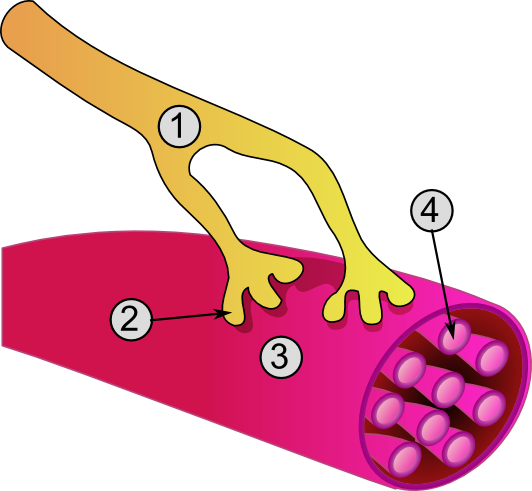
Skeletal muscle cells, also known as muscle fibers or myofibers, are elongated, cylindrical, multinucleated cells that form the functional units of skeletal muscles responsible for voluntary movement. These fibers arise from the fusion of multiple myoblasts during development, resulting in syncytial structures that can extend up to 30 cm in length in certain muscles like the sartorius, with diameters ranging from 10 to 100 micrometers. The multiple nuclei within each fiber are characteristically located at the periphery, just beneath the sarcolemma, the plasma membrane of the muscle cell. This multinucleated organization supports the large size and extensive contractile apparatus of the fibers, enabling powerful and coordinated contractions for locomotion and posture maintenance. A defining feature of cells is their striated appearance, caused by the highly organized arrangement of —the repeating units of the contractile apparatus—aligned within myofibrils that run parallel to the fiber's long axis. fibers are classified into two main types based on their contractile and metabolic properties: Type I (slow-twitch) fibers, which are oxidative and fatigue-resistant, suited for activities like sustained posture or ; and Type II (fast-twitch) fibers, which are primarily glycolytic and generate rapid, powerful contractions for short bursts of activity, such as sprinting or . Type II fibers can be further subdivided into Type IIa (fast oxidative-glycolytic, with moderate ) and Type IIx (fast glycolytic, with high power but low fatigue resistance), allowing muscles to adapt to diverse functional demands. The striations and fiber type distribution contribute to the precise control of force and speed in voluntary movements, with organization detailed further in discussions of contractile proteins. Human skeletal muscles contain varying numbers of these fibers; for example, the typically has approximately 253,000 fibers in young adults, organized into where each fiber is innervated by a single at a specialized called the . This junction ensures precise, all-or-none activation of fibers within a motor unit, facilitating graded force production through recruitment of multiple units for voluntary actions like arm flexion. Surrounding the fibers are layers of that provide structural support and transmit contractile forces: the endomysium envelops individual fibers, the perimysium bundles fibers into fascicles, and the encases the entire muscle. Additionally, skeletal muscle fibers are associated with satellite cells—quiescent stem cells located between the and —that play a crucial role in muscle maintenance and repair by proliferating and fusing with damaged fibers to restore function.

Cardiac muscle cells

Cardiac muscle cells, also known as cardiomyocytes, are specialized striated muscle cells that form the contractile tissue of the heart. These cells are typically branched and cylindrical, with lengths ranging from 50 to 100 micrometers and diameters of about 25 micrometers, allowing for efficient packing within the myocardial wall. Unlike skeletal muscle fibers, each cardiac muscle cell contains a single, centrally located nucleus, which facilitates coordinated gene expression across the interconnected network. The striated appearance arises from the organized arrangement of contractile proteins within the cells, enabling powerful and rhythmic contractions essential for heart function. A defining feature of cardiac muscle cells is the presence of intercalated discs, which are specialized junctions located at the ends of the cells where they connect to adjacent cardiomyocytes. These discs include desmosomes and fascia adherens for mechanical coupling, providing structural integrity to withstand the repetitive stretching and contracting of the heart. Gap junctions within the intercalated discs allow for electrical coupling by permitting the direct passage of ions and small molecules between cells, ensuring synchronized depolarization across the myocardium. This dual mechanical and electrical connectivity transforms individual cells into a functional , critical for efficient propagation of action potentials. Within cardiac muscle cells, myofibrils are composed of repeating sarcomeres, similar to those in , which consist of overlapping and filaments responsible for contraction. However, the excitation-contraction coupling in cardiac cells features unique arrangements of and the (SR) optimized for rapid calcium handling. in cardiac muscle are larger and positioned at the Z-lines of sarcomeres, forming dyads with the SR rather than the triads seen in , which enhances calcium influx from extracellular sources and release from intracellular stores. The SR surrounds the myofibrils closely, storing and releasing calcium ions efficiently to trigger contractions, with additional calcium entering via L-type channels during each beat to sustain the process. Certain cardiac muscle cells exhibit autorhythmicity, the intrinsic ability to generate spontaneous action potentials without external stimulation, a property most prominent in pacemaker cells of the . These specialized cells, derived from the same lineage as contractile cardiomyocytes, possess unique expressions, such as funny currents (If) and calcium channels, that drive slow during , leading to rhythmic firing at rates of 60-100 beats per minute. This autorhythmic capability initiates the heartbeat and propagates through the network to coordinate ventricular contraction.

Smooth muscle cells

Smooth muscle cells are , or spindle-shaped, uninucleated structures that typically measure 30 to 200 micrometers in length and 3 to 10 micrometers in width. These cells lack the organized sarcomeres found in striated muscle, resulting in a smooth, non-striated appearance under light microscopy. Instead, their contractile apparatus consists of thin filaments and thicker filaments arranged in an oblique, crisscrossing pattern throughout the , enabling a more diffuse and flexible force generation. The filaments insert into dense bodies, which are discrete, electron-dense protein aggregates scattered throughout the and along the plasma , serving to anchor the filaments and transmit contractile forces across the cell. Intermediate filaments, primarily composed of desmin, link these dense bodies to one another and to the , forming a cytoskeletal network that enhances mechanical stability and efficient force propagation to adjacent cells and . Smooth muscle is categorized into single-unit and multi-unit types based on cellular organization and coordination. Single-unit smooth muscle features cells electrically coupled by gap junctions containing connexins, promoting coordinated, wave-like activity resembling a functional , as observed in the tunica media of the . Multi-unit smooth muscle, by contrast, comprises discrete cells with independent neural innervation and no widespread gap junctions, allowing precise, individual control, such as in the pupillary constrictor muscle of the iris. These cells are predominantly situated in the tunica media of walls, the muscularis layers of the digestive tract, and the bronchial walls of airways, where their elongated form and attachments facilitate sustained circumferential tension. The plasma membrane of smooth muscle cells contains numerous caveolae, flask-shaped invaginations rich in and that cluster L-type voltage-gated calcium channels, supporting localized calcium handling essential for structural integrity during prolonged activity.

Development and Regeneration

Embryonic development

Muscle cells originate from distinct regions of the during early embryogenesis. Skeletal muscle cells derive from the paraxial mesoderm, specifically the somites, which form along the , while cells and most cells arise primarily from the splanchnic layer of the , with some cells deriving from and other mesodermal sources. Progenitor cells from these mesodermal origins undergo migration and commitment to the myogenic lineage, primarily regulated by the paired box transcription factors and Pax7. In skeletal muscle development, -expressing cells in the dermomyotome of somites migrate to sites of muscle formation, such as the limb buds, where Pax7 further specifies cell precursors and myogenic progenitors. plays a predominant role in early embryonic , driving and migration of myoblasts, whereas Pax7 is essential for fetal muscle growth and the establishment of a progenitor pool. Differentiation of these myogenic progenitors into mature muscle cells is orchestrated by the myogenic regulatory factors (MRFs), a family of basic helix-loop-helix transcription factors including Myf5, , myogenin, and MRF4. Myf5 and initiate commitment to the myogenic lineage by activating muscle-specific in proliferating myoblasts, while myogenin and MRF4 promote terminal differentiation and the withdrawal from the . These factors function in a hierarchical and partially redundant manner, with Myf5 being the earliest expressed during somitogenesis to specify myoblasts. In , mononucleated myoblasts fuse to form multinucleated myotubes, a process critical for generating the syncytial structure of muscle fibers. This fusion occurs after MRF activation, involving molecules and cytoskeletal rearrangements to align and merge myoblasts. For , cardioblasts from the coalesce bilaterally and fuse to form the primitive heart tube around the midline, establishing the linear structure that undergoes subsequent looping and chamber formation. cells differentiate from mesenchymal progenitors primarily in the , with additional contributions from cells for certain vascular types; these progenitors respond to local inductive signals, such as epithelial-mesenchymal interactions and TGF-β signaling, to form contractile layers around developing organs and vessels without myoblast fusion. In embryos, somitogenesis begins during the third week post-fertilization, with the first somites appearing around day 20 and continuing until week 5, providing the initial pool of progenitors. Myotube formation in commences by weeks 7-8, marking the onset of primary , while the primitive heart tube assembles by the end of week 3. These processes are modulated by signaling pathways such as Wnt and Notch, which refine progenitor specification; Wnt signaling promotes myogenic commitment in somitic cells, whereas Notch inhibits premature differentiation to maintain the progenitor state.

Postnatal growth and regeneration

Postnatal muscle growth primarily occurs through , where fibers increase in size in response to mechanical stimuli such as resistance exercise. This involves the addition of s and an expansion in their cross-sectional area, driven by signaling pathways activated by mechanical tension, metabolic stress, and muscle damage. Hormones like insulin-like growth factor-1 (IGF-1) and nutrients further support protein synthesis, leading to net muscle mass gains without significant in adults. In contrast, —characterized by reduced number and size—arises from disuse, such as immobilization, or aging-related , involving upregulated via the ubiquitin-proteasome system and impaired mitochondrial function. , affecting up to 50% of individuals over 80, accelerates muscle loss through chronic and anabolic resistance, diminishing force production. Muscle regeneration in postnatal life relies heavily on satellite cells, quiescent stem cells marked by Pax7 expression that reside between the basal lamina and sarcolemma of muscle fibers. Upon injury, such as strains or trauma, these cells activate, proliferate as Pax7-positive myoblasts, and differentiate into myocytes that fuse with damaged fibers or form new myofibers, restoring structure and function. This process is robust in skeletal muscle, enabling repair after acute damage through coordinated expression of myogenic regulatory factors like MyoD and myogenin. Cardiac muscle, however, exhibits minimal regenerative capacity postnatally; injury typically leads to cardiomyocyte apoptosis and replacement by fibrotic scar tissue via fibroblast activation, impairing contractility due to the limited proliferation of terminally differentiated cardiomyocytes. Smooth muscle regeneration is intermediate, often involving dedifferentiation and proliferation of existing cells rather than dedicated stem cells. Recent advances in muscle regeneration target satellite cell limitations and genetic defects. Stem cell therapies, particularly using mesenchymal stem cells (MSCs) derived from or , enhance repair by secreting paracrine factors that promote satellite cell activation and reduce in models of and . Ongoing clinical trials as of 2025 indicate that MSCs can improve functional outcomes in muscular dystrophies through mechanisms supporting myoblast fusion and vascularization. For (DMD), CRISPR-Cas9 editing of the gene has progressed to phase I/II trials, where editing of patient myoblasts restores expression, with preclinical data indicating up to 60% functional protein recovery and reduced in animal models. A 2025 trial update reports safe delivery via AAV vectors, with initial human results showing modest restoration in limb muscles.

Molecular Components

Contractile proteins and filaments

Muscle cells rely on specialized contractile proteins organized into filaments to generate force and enable contraction. The primary proteins include and , which form thick and thin filaments, respectively, interacting via the cross-bridge cycle to produce mechanical work from . These filaments are arranged differently in striated (skeletal and cardiac) versus , influencing contractility across cell types. Thick filaments consist of myosin II, a hexameric protein with two heavy chains and four light chains. Each heavy chain (~200-220 kDa) features a globular motor head with actin- and nucleotide-binding sites, a neck region serving as a lever arm, and a coiled-coil tail for filament assembly. The light chains (essential and regulatory, ~15-20 kDa) stabilize the neck and modulate activity. Myosin II exhibits ATPase activity in its head domain, hydrolyzing ATP to ADP and inorganic phosphate, which powers conformational changes and force generation during the power stroke. Isoforms vary by muscle type, with fast skeletal myosin showing higher ATPase rates (~30 s⁻¹) compared to slow cardiac (~5-6 s⁻¹), adapting to physiological demands like speed versus endurance. Thin filaments are polymers of , associated with regulatory proteins and in striated muscle. exists as globular monomers (G-actin, ~42 kDa) that polymerize into double-helical filamentous structures (F-actin, ~7 nm diameter), forming the core of thin filaments anchored at Z-lines. , a coiled-coil dimer (~40 kDa), binds along F-actin, spanning seven actin subunits and sterically blocking myosin-binding sites in the relaxed state. The complex, comprising three subunits, regulates this interaction: (TnC, ~18 kDa) binds calcium ions to initiate contraction; (TnI, ~21 kDa) inhibits actin-myosin binding at low calcium by anchoring in a blocked position; and (TnT, ~31 kDa) links the complex to . Calcium binding to TnC induces TnI release, pivoting to expose myosin sites. In striated muscle, these filaments organize into s, the basic contractile units (~2-3 μm long). Thin filaments anchor at Z-lines, defining boundaries, and extend into the isotropic I-band before overlapping thick filaments in the anisotropic A-band. The A-band spans the full length of thick filaments, with the central H-zone (lacking thin filament overlap) flanked by regions of partial overlap. , a giant elastic protein (~3-4 MDa), spans from Z-line to M-line, aligning filaments and providing passive elasticity via its extensible I-band region (tandem immunoglobulin and PEVK domains), which generates restoring force (0-5 pN per molecule) to maintain integrity during stretch. Smooth muscle lacks sarcomeres, featuring a non-sarcomeric arrangement of - filaments in dense bodies and oblique lattices for isotropic contraction. Regulatory proteins caldesmon and calponin modulate interactions: caldesmon (~87-93 kDa), an - and -binding protein, cross-links filaments, inhibits activity, and maintains myosin spacing to balance force without calcium sensitization. Calponin (~34 kDa), -associated, reduces shortening velocity and stabilizes filaments but does not directly regulate force or calcium sensitivity. These adaptations support sustained, low-energy contractions in organs like blood vessels. The cross-bridge cycle kinetics underpin force generation, where total force FF arises from the number of attached bridges nn, force per bridge ff, and displacement dd:
F=nfdF = n \cdot f \cdot d
This models collective head contributions during ATP-driven cycling. The length-tension relationship, describing how varies with length, follows Hill's equation for force-velocity dynamics:
(F+a)(v+b)=(F0+a)b(F + a)(v + b) = (F_0 + a)b
where FF is , vv is , F0F_0 is maximum isometric , and aa, bb are muscle-specific constants shaping the hyperbolic curve. This equation reveals molecular insights into cross-bridge attachment rates and energy efficiency.

Energy production and metabolism

Muscle cells across types—skeletal, cardiac, and smooth—exhibit high energy demands to support contraction, relaxation, and maintenance, with ATP as the currency generated through specialized biochemical pathways and organelles. Mitochondria are central to this process, particularly in oxidative fibers; in , slow-twitch Type I fibers contain high mitochondrial densities (up to 12.2 µmol/L in ), enabling sustained aerobic activity, while fast-twitch Type II fibers have lower densities (1.9 µmol/L in gracilis) suited for brief, intense efforts. cells feature even higher mitochondrial volume fractions (~35%), supporting continuous pumping via β-oxidation and , whereas cells maintain lower densities (~3-5%) for tonic contractions with efficient, primarily oxidative ATP production from glucose. ATP production relies on interconnected systems: the phosphocreatine shuttle provides rapid resynthesis through -mediated transfer (with stores exceeding ATP by 4-fold in ), delivers anaerobic ATP with lactate as a byproduct (dominant in Type II fibers rich in stores), and via the Krebs cycle yields efficient aerobic energy (prevalent in Type I fibers and cardiac cells). , abundant in slow-twitch and cardiac fibers, facilitates and diffusion to mitochondria, enhancing aerobic capacity during prolonged activity. In , supports biosynthetic needs under stress, but oxidative pathways predominate for contractile energy, with adaptations like increased compensating for disruptions. in these pathways, such as for or glycolytic enzymes, follow Michaelis-Menten kinetics, where reaction velocity vv is given by v=Vmax[S]Km+[S]v = \frac{V_{\max} [S]}{K_m + [S]} with VmaxV_{\max} as maximum rate, [S] as substrate concentration, and KmK_m as the Michaelis constant indicating enzyme-substrate affinity. Glucose metabolism exemplifies ATP yields: anaerobic glycolysis nets ~2 ATP per glucose molecule, Glucose+2ADP+2Pi2Lactate+2ATP+2H+,\text{Glucose} + 2 \text{ADP} + 2 \text{P}_i \rightarrow 2 \text{Lactate} + 2 \text{ATP} + 2 \text{H}^+, while full aerobic oxidation produces ~36 ATP through combined glycolysis, Krebs cycle, and electron transport. A significant portion of ATP sustains homeostasis, particularly via the sarco/endoplasmic reticulum Ca²⁺-ATPase () pump, which reuptakes Ca²⁺ into the for relaxation and consumes ~70% of total ATP in active muscle cells across types. Fatigue mechanisms impair this balance: lactate buildup from anaerobic glycolysis causes and inhibits contractile proteins, while calcium dysregulation—from impaired function or SR release—reduces force generation and exacerbates energy depletion. These processes highlight metabolic specialization, with Type I fibers resisting fatigue through oxidative resilience and myoglobin-mediated oxygen buffering.

Function and Contraction

Skeletal muscle contraction

Skeletal muscle contraction begins at the neuromuscular junction, where an action potential arriving at the motor neuron terminal triggers the release of acetylcholine from synaptic vesicles into the synaptic cleft. This neurotransmitter binds to nicotinic acetylcholine receptors on the postsynaptic muscle fiber membrane, opening ligand-gated sodium channels and generating a localized depolarization known as the end-plate potential. The end-plate potential, typically exceeding the threshold for an action potential, depolarizes the adjacent sarcolemma, initiating a propagating action potential along the muscle fiber surface and deep into the transverse tubules (T-tubules). The action potential in the activates dihydropyridine receptors (DHPRs), which serve as voltage sensors and physically couple to ryanodine receptors (RyRs) on the (SR) membrane, triggering the release of stored calcium ions into the . This calcium release, part of excitation-contraction coupling, raises cytosolic calcium concentration rapidly; the calcium binds to on the thin filaments, inducing a conformational change that shifts away from the myosin-binding sites on . Exposure of these sites enables myosin heads from the thick filaments to form cross-bridges with , initiating the power stroke powered by . The explains the mechanism of shortening, where successive cross-bridge cycles cause and filaments to slide past each other, reducing length without altering filament overlap proportions during contraction. In this process, the detached myosin head hydrolyzes ATP to ADP and inorganic , reattaching to a new site farther along the thin filament to generate force and displacement. A single elicits a brief twitch contraction, characterized by rapid rise and fall in tension due to transient calcium elevation, whereas high-frequency stimulation (typically 50-100 Hz) causes temporal summation of twitches, fusing into a sustained that produces 3-4 times greater force than a single twitch. Muscle relaxation follows of the and reuptake of calcium into the SR by the sarco/endoplasmic reticulum Ca²⁺-ATPase () pump, which uses ATP to transport calcium against its gradient, lowering cytosolic levels and allowing to re-cover binding sites, detaching cross-bridges. The rate of relaxation influences movement efficiency, as seen in the force-velocity relationship, where maximal force is achieved at zero velocity (isometric conditions) and decreases hyperbolically as shortening velocity increases, reflecting cross-bridge cycling dynamics. This relationship, first described experimentally in frog , underscores how balances force and speed for voluntary actions like locomotion.

Cardiac muscle contraction

Cardiac muscle contraction is characterized by its autorhythmic and synchronized nature, initiated by specialized pacemaker cells in the sinoatrial (SA) node. These cells exhibit spontaneous diastolic depolarization during phase 4 of the action potential, driven primarily by the funny current (I_f), a hyperpolarization-activated mixed Na^+-K^+ inward current that activates upon repolarization and contributes to the gradual membrane depolarization. This process is complemented by the calcium clock mechanism, where spontaneous sarcoplasmic reticulum (SR) Ca^{2+} releases elevate cytosolic Ca^{2+}, activating the Na^+-Ca^{2+} exchanger (N_CX) to further depolarize the membrane and open L-type Ca^{2+} channels, culminating in the action potential upstroke. The action potential generated in the SA node propagates rapidly across the cardiac myocardium through gap junctions located in the intercalated discs, enabling electrical coupling and coordinated contraction of cardiomyocytes as a functional . Unlike , cardiac action potentials feature a prolonged plateau phase (phase 2) lasting approximately 200 ms due to sustained Ca^{2+} influx, resulting in a longer refractory period that prevents summation of contractions and , ensuring complete relaxation between beats to allow ventricular filling. Excitation-contraction coupling in cardiac muscle relies on (CICR), where opens L-type Ca^{2+} channels in the , permitting a small influx of extracellular Ca^{2+} that triggers ryanodine receptors on the SR to release a much larger store of Ca^{2+} into the . This amplified Ca^{2+} transient binds to , facilitating cross-bridge cycling between and for contraction. The majority of contractile Ca^{2+} is sourced from the SR via this CICR process, with termination occurring through SR Ca^{2+}- reuptake and extrusion mechanisms to restore diastolic levels. The Frank-Starling mechanism intrinsically adjusts to venous return by linking preload to contractile force; increased stretches sarcomeres, enhancing Ca^{2+} sensitivity and SR Ca^{2+} release, thereby augmenting without altering characteristics. This length-dependent activation ensures that the heart matches output to input, maintaining circulatory balance during varying hemodynamic demands. Autonomic nervous system modulation fine-tunes cardiac contraction: sympathetic stimulation via norepinephrine binding to β1-adrenergic receptors activates the cAMP-PKA pathway, increasing I_f, L-type Ca^{2+} current, and SR Ca^{2+} handling to elevate and contractility. Conversely, parasympathetic input through vagal release of on M2 receptors inhibits adenylate cyclase, reducing cAMP and slowing SA node depolarization to decrease rate and atrial force.

Smooth muscle contraction

Smooth muscle contraction is a slower, more sustained process compared to striated muscle, enabling functions such as maintaining vascular tone and facilitating . It is primarily regulated by changes in intracellular calcium concentration, which modulates the interaction between and filaments through phosphorylation-dependent mechanisms. Unlike , smooth muscle lacks and relies on (MLCK) for activation, allowing for graded and adaptable force generation. Contraction in smooth muscle is triggered by neural, hormonal, or mechanical stimuli. Autonomic nerves release neurotransmitters like norepinephrine or , which bind to G protein-coupled receptors on the , leading to or direct modulation of ion channels. Hormonal signals, such as norepinephrine from the , similarly activate receptors to initiate signaling cascades. Stretch of the muscle tissue can also provoke contraction by activating mechanosensitive ion channels, resulting in membrane . This opens voltage-gated calcium channels, primarily L-type channels, allowing extracellular calcium influx, while intracellular release from the via inositol trisphosphate (IP3) or ryanodine receptors further elevates cytosolic calcium levels. The influx of calcium binds to calmodulin, forming a calcium-calmodulin complex that activates MLCK. This kinase the regulatory light chain of myosin II at serine 19 (and sometimes threonine 18), increasing the enzyme's activity and enabling the formation of cross-bridges between myosin heads and actin filaments. The resulting cross-bridge cycling generates sliding force and shortening of the muscle cell, producing contraction. This step allows for precise control, as the extent of phosphorylation correlates with the degree of force development. A key feature of smooth muscle is the latch state, which permits energy-efficient maintenance of tone. In this state, dephosphorylated remains attached to , sustaining force with minimal even as calcium levels and decrease. This is facilitated by pathways such as RhoA/Rho-kinase, which inhibit myosin light chain (MLCP), preventing rapid and allowing prolonged contraction without continuous energy expenditure. Relaxation occurs when calcium is sequestered back into the or extruded via pumps like the plasma membrane Ca2+-ATPase, reducing the calcium-calmodulin complex. Simultaneously, MLCP dephosphorylates myosin light chains, detaching cross-bridges and allowing filaments to slide apart; factors like enhance this by increasing cGMP and activating MLCP. Smooth muscle contractions vary by type and organization. Phasic contractions are rhythmic and transient, as seen in the where they drive through periodic depolarizations. Tonic contractions are sustained and steady, characteristic of vascular maintaining diameter. These differences arise from variations in calcium handling and phosphatase activity, with tonic muscles exhibiting greater latch-state stability. is classified as single-unit or multi-unit based on coordination: single-unit , such as in the gut or , functions as a with gap junctions (connexins) enabling electrical and synchronized contractions across cells. Multi-unit , found in the iris or , consists of independently innervated cells that contract individually without widespread , allowing finer control.

Evolution

Origins in early animals

Muscle cells are believed to have first appeared approximately 600–700 million years ago during the early diversification of metazoans, coinciding with the period. Fossil evidence from this era, such as the ~560-million-year-old Haootia quadriformis from Newfoundland, , reveals impressions interpreted as muscle-like contractile structures, suggesting that simple muscular constrictors predated the by tens of millions of years. These findings indicate that basic contractile tissues were already present in soft-bodied organisms, enabling primitive and potentially contributing to the ecological success of early animal lineages. Ctenophores also exhibit early muscle systems, with recent research (as of 2025) confirming their neuromuscular organization and contributing to debates on metazoan phylogeny. The monophyletic origin of muscle cells traces back to choanoflagellate-like unicellular ancestors, where the core - contractile machinery was already established as a conserved feature across eukaryotes. This system, involving filaments and motors for cell and , was co-opted in early metazoans to form multicellular contractile apparatuses. Molecular studies confirm that II subclasses, including those for smooth and striated muscle types, diverged prior to the metazoan radiation, providing a foundational toolkit for muscle . The evolution of the heavy chain (MyHC) played a pivotal role in this process, with ancient duplications enabling specialization in contractile function. In cnidarians, such as (e.g., Aurelia and Clytia ), MyHC homologs support striated-like muscles used for , featuring organized myofibrils that resemble bilaterian counterparts but with distinct ultrastructural arrangements. These cnidarian muscles highlight the early deployment of MyHC variants in non-bilaterian metazoans, underscoring their conserved role in metazoan locomotion. Debates persist regarding the versus of muscle cells, with evidence for a single origin of basic contractility contrasted by independent evolutions of specialized types. Schmid and Seipel (2005) proposed a monophyletic descent of striated muscle from a triploblastic cnidarian-like , based on shared developmental regulators and cnidarian striations. In contrast, Steinmetz et al. (2012) argued for polyphyletic origins of striated muscles, citing genomic and ultrastructural differences between cnidarian and bilaterian lineages, suggesting . Across bilaterians, myogenic regulatory factors (MRFs), such as and Myf5 homologs, remain highly conserved, reinforcing a shared genetic framework for muscle specification despite these divergences.

Diversification in vertebrates and invertebrates

In vertebrates, diversification of striated skeletal and cells, enabling specialized contractile functions in locomotion and circulation, respectively, was facilitated by duplications, particularly in the heavy chain (MyHC) family, which produced multiple isoforms tailored to specific muscle types; for instance, distinct fast and slow MyHC isoforms support varying contraction speeds in skeletal muscles across lineages. cells contribute to visceral and vascular contractility without striations, with MyHC isoforms adapted for sustained contractions. In , muscle cell organization diverged earlier, with cnidarians featuring epithelio-muscular cells integrated into epithelial layers of the and , where myofibrils lie parallel to the body surface for simple body wall contractions. Bilaterian exhibit further specializations: non-striated muscles predominate in mollusks and , often with oblique striations in flight muscles that enhance power output through asynchronous contraction, while nematodes possess obliquely striated muscles adapted for body undulation. These muscle types reflect adaptations to hydrostatic or exoskeletal locomotion, contrasting with striations. Key evolutionary divergences in muscle cells occurred around 550 million years ago during the bilaterian radiation, marking the protostome-deuterostome split, where myosins evolved distinct heavy chain structures and alternative splicing patterns compared to myosins, influencing filament assembly and contractility. In , for example, myosin heavy chain genes underwent lineage-specific expansions to support diverse muscle functions, differing from the isoform multiplicity in . These changes highlight how post-bilaterian expansions drove muscle specialization across phyla. Adaptations in muscle isoforms further illustrate diversification; in , fast MyHC isoforms in flight muscles enable exceptionally rapid actomyosin kinetics for high-frequency wing beats, while slower isoforms support muscles, reflecting selective pressures for aerial locomotion. Regeneration capacity also varies phylogenetically, with planarians (flatworms) exhibiting high regenerative potential through neoblast stem cells that replenish muscle tissues, in contrast to the limited satellite cell-mediated repair in mammals, where often predominates post-injury. These variations underscore evolutionary trade-offs in muscle resilience across animal lineages.

References

Add your contribution
Related Hubs
User Avatar
No comments yet.