Hubbry Logo
Nella LastNella LastMain
Open search
Nella Last
Community hub
Nella Last
logo
8 pages, 0 posts
0 subscribers
Be the first to start a discussion here.
Nella Last
Nella Last
from Wikipedia

Nella Last (née Nellie Lord; 4 October 1889 – 22 June 1968) was an English housewife and diarist who lived in Barrow-in-Furness, Lancashire, England. She wrote a diary for the Mass Observation Archive from 1939 until 1966,[1] making it one of the most substantial diaries held by Mass Observation. Her diary, consisting of around 12 million words, two million of which were written during World War II, is one of the longest in the English language.[2]

Key Information

Biography

[edit]

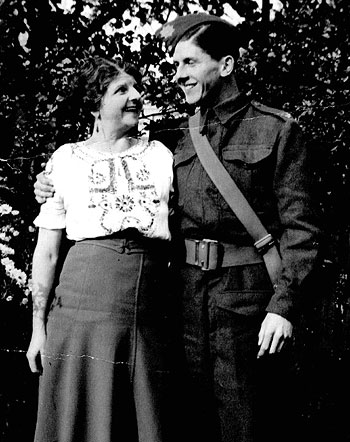
She was the daughter of local railway clerk John Lord. She married Will Last on 17 May 1911, a shopfitter and joiner. They had two sons, Arthur (8 August 1913 – 18 May 1979) and Clifford (13 December 1918 – 20 October 1991). During the Second World War, she volunteered for the Women's Voluntary Service (WVS) and the British Red Cross.

An edited version of the two million words or so she wrote during World War II was originally published in 1981 as Nella Last's War: A Mother's Diary, 1939-45, and republished as Nella Last's War: The Second World War Diaries of 'Housewife, 49' in 2006 when interest in her work grew.[3] Last's diary from January 1944 to the beginning of May 1945 is currently missing, as it was lost from the Mass Observation collection before it was moved to Sussex University.[4] A second volume of her diaries, Nella Last's Peace: The Post-war Diaries of Housewife 49, was published in October 2008,[5] and a third and final volume Nella Last in the 1950s appeared in October 2010.[6]

Her published writing describes what it was like for ordinary people to live through World War II, reporting on the bombing of Barrow in April 1941 (including her own home at 9 Ilkley Road) and offering her reflections on a wide range of contemporary issues. Some critics, such as Edward Blishen, see a proto-feminism that anticipates the post-war women's movement in her account of her own marriage and her liberation from housewifery through her war work.

Her younger son Clifford Last (1918–1991) emigrated to Australia following the war and went on to become a noted sculptor, with works displayed at the Ballarat Fine Art Gallery.[7]

Last died on 22 June 1968, aged 78. Her husband Will died on 19 May 1969.

TV film

[edit]

Last's wartime diaries were dramatised by Victoria Wood for ITV in 2006 as Housewife, 49, which is how she headed her first entry at the age of 49.[8] Wood played the role of Last.[9]

References

[edit]
[edit]
Revisions and contributorsEdit on WikipediaRead on Wikipedia
from Grokipedia
Nellie "Nella" Last (née Lord; 4 October 1889 – 22 June 1968) was a British housewife and Mass Observation diarist whose writings chronicled domestic life in Barrow-in-Furness during the Second World War and its aftermath. Beginning her diary in September 1939 at age 49, she documented personal anxieties, family dynamics, and community responses to rationing, air raids, and evacuation efforts as part of the Mass Observation Archive's effort to record ordinary British experiences. Her entries highlight a transformation from pre-war neurosis and marital dissatisfaction to active involvement in voluntary work, such as the Women's Voluntary Service, which boosted her confidence and social engagement. Last's diaries, maintained until the mid-1960s, provide empirical insights into civilian resilience, gender roles, and economic hardships, including post-war austerity and reconstruction challenges. Edited and published posthumously in volumes like Nella Last's War (1981) and Nella Last's Peace (2006), they serve as primary sources for social historians studying wartime Britain's . Though not initially seeking publication, her articulate prose captured the era's causal realities— from psychological strains of uncertainty to adaptive community solidarity—without romanticization. Her work inspired cultural adaptations, including the 2006 BBC drama Housewife, 49, underscoring its enduring value in revealing unvarnished individual agency amid collective trials.

Early Life and Family Background

Childhood and Education

Nellie Lord, who later adopted the name Nella, was born on 4 October 1889 in , then in (now ), , to John Lord, a railway audit clerk whose position placed the family in the . At the age of five, she experienced a severe that resulted in a broken and , rendering her crippled for years. This injury necessitated multiple surgical operations extending until she was 13 years old, during which time she endured significant physical limitations and pain. Her formal was consequently severely disrupted by these health challenges, limiting her and academic progression at a time when her father's income could have supported private schooling options. Despite these early adversities, no records indicate advanced formal beyond basic schooling, reflecting the era's constraints on girls from provincial middle-class families compounded by personal issues.

Marriage and Pre-War Domestic Life

Nella Last married William Last, a joiner and shopfitter who operated a in with his brother on an older in , on 17 May 1911. The couple had two sons: Arthur, born in 1913 and later a trainee tax inspector in , and Clifford, born in 1918 and residing in Barrow at the outset of the war. Both sons secured scholarships in their youth. The family lived in , a single-industry town dominated by the shipyard, which shaped local economic and social conditions. In September 1936, they relocated to a new semi-detached house at 9 Ilkley Road, approximately one mile north of the town center. As a , Last's pre-war domestic life revolved around routine household management, including cooking, , , and other maintenance tasks essential to sustaining the family unit. A childhood accident resulting in lameness confined her to a more sedentary existence, prompting immersion in literature—particularly the novels of —as a primary intellectual outlet; she later reflected on her early self as a "queer, intense child" who escaped into books. Last possessed manual dexterity, which she attributed to "clever fingers" suited for crafting and projects that supplemented household needs. Her role aligned with conventional expectations of middle-class domesticity in , though the industrial character of Barrow influenced everyday practicalities, such as reliance on local shipyard-related commerce for goods and services.

Involvement with Mass Observation

Joining the Project

In late August 1939, amid escalating international tensions that foreshadowed the outbreak of the Second World War, the Mass Observation project issued an invitation to the British public for volunteers to maintain personal diaries recording their reactions to current events and daily life. Nella Last, a 49-year-old residing in , , responded to this appeal and commenced her diary on 31 , just days before Britain's declaration of war on on 3 September. Her initial entries captured the oppressive atmosphere of uncertainty, including concerns over her sons' potential and the broader societal shifts. Last likely encountered the recruitment through a newspaper advertisement, as Mass Observation frequently sought contributors via public notices in outlets such as the Daily Express. Upon joining, she was assigned the code "Housewife 49," derived from her occupation and age, which became her identifier within the archive. Her participation marked the start of nearly three decades of prolific diarizing, yielding one of the archive's most voluminous collections from an individual contributor.

Scope and Style of Her Diaries

Nella Last's diaries for the project encompassed a broad scope, including responses to specific directives on topics such as public holidays, personal fears, household routines, and reactions to major war events like and D-Day. She documented everyday domestic challenges, including , clothing repairs, and community involvement in organizations like the Women's Voluntary Service, alongside voluntary entries on family interactions, her sons' military service, and local evacuee experiences in . Her contributions extended beyond wartime to post-1945 observations on reconstruction, aging, and societal shifts into the and , totaling monthly submissions over approximately 30 years and forming one of the project's most extensive personal archives. In style, Last's writing was vivid, candid, and , blending detailed accounts of mundane activities—such as meal preparations or neighborhood —with poignant inner reflections on marital dissatisfaction, struggles, and critiques of gender roles and wartime policies. Lacking formal literary training, she employed a natural, unpretentious that interspersed humor, sadness, and sharp social observations, often revealing a tension between public duty and private turmoil, as in her evolving sense of personal amid national . This approach yielded entries of exceptional clarity and emotional depth, interweaving factual reportage with subjective to provide historians with authentic insights into mid-20th-century British civilian life.

Wartime Experiences and Observations

Daily Life and Home Front Challenges

Nella Last, a housewife in Barrow-in-Furness, a shipbuilding town in Lancashire, faced immediate disruptions to daily life upon the outbreak of war. On 1 September 1939, she observed women purchasing rolls of brown paper to cover windows for blackout compliance, noting the challenges posed by her modern home's large windows. The first blackout on 5 September evoked a sense of dread, which she described as turning the town into a "city of Dreadful Night." Rationing imposed severe constraints on household provisioning, with Last meticulously planning meals amid shortages of staples like butter, meat, and sugar, introduced progressively from January 1940 onward. She expressed frustration over the lack of variety and the need to improvise with limited ingredients, such as stretching meager rations through home-grown produce and careful budgeting. Gasoline rationing further restricted mobility, confining outings and complicating errands. Air raids escalated home front perils, particularly during the Barrow Blitz in April-May 1941, when German bombers targeted the town's industrial sites. On 14 April 1941, Last witnessed the rubble of a bombed , and by 15 April, the sounds of falling bombs left her emotionally overwhelmed. The raid on 4 May 1941 brought direct destruction, with ceilings collapsing and walls cracking in her vicinity, marking a "night of terror." These events resulted in approximately 90 civilian deaths in Barrow during period. On 7 May, she learned of a young friend's death in a direct hit, underscoring the personal toll. To contribute to the , Last engaged in voluntary work, including visits to the Women's Voluntary Service (WVS) center on 5 and later efforts in canteens and charity shops. She also crafted dolls and other comforts, adapting her domestic skills to support troops and civilians amid material scarcities. These activities provided structure but compounded fatigue from disrupted routines and constant vigilance against raids.

Personal Reflections on War Events


Nella Last began her on 3 September 1939, the day Britain declared on , recording a profound of loss and emotional vulnerability: "I felt a sinking, sick feeling... as if something precious had gone out of life forever," and expressing a rare longing for companionship amid the uncertainty. Her reflections highlighted the personal toll, particularly her anguish over her son Cliff's impending military service, noting, "It’s dreadful to think of him having to kill boys like himself - to hurt and be hurt. It breaks my heart." These entries reveal her grappling with the 's moral and familial disruptions from its outset.
During the Dunkirk evacuation in May-June 1940, Last conveyed deep empathy and admiration for the troops' resilience, writing that the news "brought tears... such bravery amidst despair," underscoring her emotional investment in survival. As the Blitz intensified, her fears of invasion and loss permeated her writings; she described constant anxiety over her sons' fates, questioning, "Will my boys come back? The uncertainty is unbearable," while clinging to stoic determination amid air raid terrors. In one vivid account of evacuees, she observed their plight with compassion: "Poor little things, so far from home, looking lost," reflecting broader concerns for civilian displacement. The Barrow Blitz raids, particularly on 4 May 1941, elicited raw descriptions of terror and survival; Last detailed a night of land mines, incendiaries, and bombs that shattered her home's windows and ceilings, leaving her family in shock and her emotionally numb amid reports of local deaths and injured animals. She recounted the ordeal's immediacy—"The noise was terrifying... I felt so helpless"—yet noted small acts of resolve, like planning to comfort her husband post-raid, blending dread with practical endurance. By 1944, with D-Day on 6 June, her reflections shifted toward cautious optimism: "A flicker of hope today... but the cost is heavy on my heart," maintaining awareness of the war's human price even as victory loomed. Throughout, Last's entries balanced visceral fears with an underlying hope, portraying war as a catalyst for on resilience and community.

Post-War Life and Continued Diarizing

Reconstruction and Family Dynamics

Following the end of World War II in 1945, Nella Last's diaries documented the challenges of post-war reconstruction within her family, marked by persistent austerity measures that exacerbated domestic tensions and limited rebuilding efforts. Rationing intensified beyond wartime levels, with shortages of staples like meat, fuel, and petrol persisting until mid-1950, forcing reliance on tinned foods and barter systems for essentials such as eggs after Last lost her chickens to illness. Her household in Barrow-in-Furness, an industrial area reliant on shipbuilding and manufacturing, reflected broader economic strains as ordinary Britons navigated unemployment risks and slow recovery, with Last noting community-wide hardships including high suicide rates among local women. Family dynamics remained fraught, particularly in Last's to William (Will) Last, a joiner and shop-fitter whose business provided modest stability but little emotional support. After over 35 years together, Last described them as mismatched opposites, with Will increasingly withdrawn and prone to disagreements, such as over purchasing a car amid petrol restrictions. Her diaries from August 1945 to December 1948 frequently alluded to this emotional distance without naming him directly, often referring to "my husband," highlighting a lack of in decisions or reconstruction activities like home repairs or initiatives. Interactions with her sons, Arthur and Cliff, underscored ongoing parental anxieties amid their post-demobilization transitions. , the elder and a tax inspector exempt from conscription during the war, settled with his wife and their young sons Peter and , limiting family contact to occasional visits that Last cherished but found insufficient for emotional reconnection. Cliff, the younger son who had served overseas in the Army Machine Gun Corps, returned unsettled, prompting Last's worries about his future; he later emigrated to to pursue sculpture, further straining family ties as she grappled with separation in an era of limited travel and communication. These dynamics revealed Last's role as the family's emotional anchor, compensating for Will's reticence by organizing small outings, such as trips to Coniston in the , to foster unity despite material constraints.

1950s Reflections and Declining Health

In the early 1950s, Nella Last continued her contributions to the project, documenting the transition to peacetime prosperity in Britain through detailed accounts of everyday experiences in . Her entries from 1950 to 1952, with occasional extensions into 1953, captured the sentiments of ordinary citizens amid economic recovery, including observations on rising , suburban modernization, and lingering measures. Last expressed ambivalence toward these changes, noting a of disconnection from the of national narratives while grappling with personal isolation in her domestic routine. Last's reflections often revisited her wartime through voluntary work, contrasting it with the postwar return to unfulfilling , which she described as stifling amid her husband's reclusive habits. She pondered broader societal shifts, such as fears of nuclear conflict during the era, and critiqued the superficiality of emerging affluence, viewing it as inadequate compensation for eroded community bonds forged in hardship. These writings revealed a deepening on aging and purpose, as Last, then in her early sixties, questioned the value of her archived observations despite Mass Observation's encouragement. Throughout the decade, Last's physical and mental health deteriorated, exacerbating pre-existing conditions stemming from a childhood accident that fractured her thigh and pelvis, leaving lasting mobility limitations. She reported recurrent "nerves" and fatigue, attributes linked to the postwar cessation of adrenaline-fueled activities that had previously bolstered her well-being during the war. Her husband's chronic depression and physical frailty compounded her burdens, prompting frequent medical consultations and short trips to coastal areas or the Lake District for respite, though these provided only temporary relief. By mid-decade, Last conveyed a pervasive dissatisfaction and struggle for meaning, her diaries shifting toward themes of entrapment and unaddressed marital strains rather than the observational vigor of earlier years.

Personal Struggles and Worldviews

Marital Dissatisfaction and Mental Health

Nella Last's to Will Last, a joiner and shop-fitter from a working-class background in , was characterized by emotional repression and isolation that profoundly shaped her personal dissatisfaction. Will's serious and remote confined Nella largely to domestic duties, limiting her social engagements through controlling behaviors such as sullen withdrawal, which she described in her diaries as framing her life in a restrictive mold she resented. In a 22 November 1940 entry, she articulated this frustration vividly: "I’d sooner die than step into the frame you make for me," reflecting a deep-seated longing for stifled by the marital dynamic. This relational strain contributed directly to Nella's recurring mental and physical health issues, including anxiety, heart trouble, vomiting, loss of appetite, and extreme frustration, which persisted throughout much of the . These symptoms culminated in a complete nervous breakdown between 1937 and 1938, during which she lost the ability to walk; initially misdiagnosed as , the condition was later attributed by her physician, Dr. Millar, to induced by Will's dominance and the ensuing isolation. Symptoms aligned with post-traumatic stress patterns, encompassing guilt, , alienation, , and muscle tension, exacerbating her sense of entrapment. The onset of and her involvement with the project provided partial relief, as diary writing served as a form of self-therapy, allowing Nella to process trauma and assert emerging independence; a 28 August 1941 entry references her recovery from the pre-war breakdown. Volunteer work with organizations like the Women's Voluntary Service further mitigated risks of recurrence by fostering social outlets and purpose, though underlying marital tensions endured, with Will's own declining adding to household strains in later years. Despite these coping mechanisms, Nella's diaries reveal persistent reflections on the marriage's stifling effects, underscoring its causal role in her psychological burdens.

Social and Political Views

Nella Last expressed disillusionment with the perpetuation of by political leaders, viewing it as a recurring human failing despite the evident devastation from prior conflicts like . In her diaries, she highlighted the "unfathomable waste" of the ongoing , both in human lives and resources, reflecting a poignant critique rather than ardent endorsement of military efforts. On social matters, Last demonstrated early feminist sensibilities, railing against dismissive attitudes toward women as "silly and weak" and critiquing Victorian-era patriarchal structures that enforced male dominance in and . She advocated for future marital partnerships based on equality rather than , drawing from her own experiences of marital dissatisfaction and a desire for personal amid traditional roles. Last also noted class tensions in her household, aspiring to middle-class opportunities for her sons despite her working-class husband's preferences, which underscored her awareness of barriers. Her diaries reveal a commitment to community solidarity during wartime, where she found empowerment through volunteer work with organizations like the Women's Voluntary Service, fostering resilience and purpose among ordinary citizens. While supportive of the home front's collective efforts, Last's occasional political remarks conveyed broader criticisms of societal and governmental shortcomings, though she did not align explicitly with any party such as Labour or Conservatives.

Publications of the Diaries

Initial Editing and Release

The diaries of Nella Last, contributed to the Archive from 1939 to 1966, attracted attention from editors Richard and Suzie Fleming in the late 1970s through their examination of the archive's holdings. Broad, a writer, and Fleming, a specializing in Spanish and social movements, selected extracts primarily from Last's wartime entries spanning September 1939 to 1945, comprising roughly 5% of her approximately two million words to focus on themes of domestic resilience, personal growth, and societal shifts during the conflict. Their editorial approach prioritized coherent narrative flow and introspective passages, preserving Last's original voice while omitting repetitive or tangential content, a process likened by later commentators to extracting ore from due to the diaries' voluminous and unpolished nature. The resulting volume, Nella Last's War: A Mother's Diary, 1939-45, was first published in 1981 by the independent British press Falling Wall Press, marking the initial public release of any substantial portion of Last's writings. This edition included an introduction contextualizing Last's contributions within the Mass Observation project, which solicited voluntary diaries to document ordinary British experiences, and highlighted her pseudonym "Housewife, 49" assigned by the archive based on her age and occupation. The book received modest initial attention but gained wider readership upon its 2006 reissue by Profile Books, spurred by the success of the 2006 ITV drama Housewife, 49, which drew directly from the diaries. No major controversies arose from the editing choices, as Broad and Fleming aimed for fidelity to Last's unvarnished observations rather than interpretive overlay, though subsequent volumes by other editors expanded on post-war material.

Subsequent Volumes and Scholarly Use

Following the success of the initial 1981 edition, editors Patricia Malcolmson and Robert Malcolmson released Nella Last's Peace: The Post-War Diaries of Housewife, 49 in October 2008, drawing from Last's Mass Observation entries spanning 1945 to 1948 to document the challenges of rationing, reconstruction, and family readjustment in post-war Britain. A third volume, Nella Last in the 1950s: Further Diaries of Housewife, 49, appeared in 2010, covering her reflections on aging, health decline, and societal changes through the decade, including entries up to her death in 1962. These later editions expanded access to Last's full diary archive, held by the Mass Observation collection at the University of Sussex, which totals over 16,000 pages from 1939 to 1965, emphasizing her evolving self-analysis beyond the war years. Scholars have extensively utilized Last's diaries for insights into mid-20th-century British women's experiences, particularly themes of personal agency and domestic resilience. In Nine Wartime Lives: Mass Observation and the Making of the Modern Self (, 2010), her entries illustrate tensions between national duty and marital constraints, portraying her wartime volunteerism as a pathway to partial within patriarchal norms, though limited by persistent gender roles. Analyses in journals, such as Patricia Brand's examination in the Burkhardt Review (2020), interpret the diaries as a form of self-therapy, where writing enabled Last to cultivate and cope with anxiety, evidenced by her shift from self-doubt to assertive community involvement. Further studies, including Brian Salter's 2008 paper on diary temporality, highlight how Last's reflexive style engaged with immediate events while post-war introspection, distinguishing her contributions from more observational records. The diaries' scholarly value lies in their unfiltered granularity, offering primary data on psychology absent from official records; however, editors note selective omissions in publications to preserve privacy, potentially underrepresenting raw emotional volatility. Cited in works on and oral-like testimony, Last's writings counter idealized narratives of wartime unity by revealing mundane frictions, such as rationing-induced irritations and familial strains, with cross-references in multiple studies affirming their reliability as ego-documents over aggregated surveys.

Cultural Impact and Adaptations

Media Representations

The primary media representation of Nella Last is the 2006 British television film Housewife, 49, adapted from her wartime diaries contributed to the project. Written by and starring in the title role, the film depicts Last's experiences as a 49-year-old housewife in during the late and , focusing on her involvement with the Women's Voluntary Service, marital tensions, and personal growth through diarizing. Directed by Gavin Millar, it features as her husband and aired on ITV on November 10, 2006, running 93 minutes. The film received critical acclaim for its faithful portrayal of Last's introspective voice and domestic resilience, earning Wood a Best Actress award at the 2007 BAFTA Television Awards and the production multiple nominations, including for Best Single Drama. Reviewers praised its nuanced depiction of everyday wartime life, with an aggregate score of 82% on based on 12 critic reviews. It has been credited with introducing Last's story to a wider audience, emphasizing her psychological depth over dramatic . Radio adaptations include BBC Radio 4's Book of the Week series Nella Last's Peace in 2008, which dramatized excerpts from her post-war diaries (1945–1954), narrated by to highlight the challenges of peacetime readjustment, rationing, and family dynamics. This five-part drew directly from unpublished material, maintaining Last's candid observations on health decline and social changes. No major feature films, stage plays, or additional documentaries have been produced as of 2025, though Last's diaries have inspired short-form video essays on platforms like analyzing her contributions to .

Historical and Literary Significance

Nella Last's diaries, contributed to the project from September 1939 to 1965, constitute one of the archive's most extensive personal records, offering granular insights into civilian life on Britain's during . As a middle-aged housewife in , Last documented daily challenges such as , blackouts, air raids—including the 1941 Barrow Blitz—and community mobilization efforts like salvage drives and welfare work, capturing the interplay of national events with individual resilience and adaptation. Her entries illuminate social dynamics in a northern industrial town, including gendered labor shifts, family tensions under wartime stress, and the psychological toll of prolonged uncertainty, serving as a for historians studying the socio-economic fabric of wartime Britain beyond elite or military narratives. Scholars value Last's writings for their evidential role in examining women's evolving agency amid patriarchal constraints, portraying her diary-keeping as a mechanism for self-therapy and nascent through volunteerism and reflection, rather than mere dutiful . Postwar extensions of her diaries, covering reconstruction, , and the , extend this utility to analyses of Britain's transition to peacetime, including domestic economies and strains like her own reported and depressive episodes. Unlike aggregated surveys, Last's unfiltered, month-by-month submissions—totaling over 80,000 words during the war alone—provide causal granularity on how macro policies manifested in micro-lived experiences, aiding reconstructions of public and regional disparities. Literarily, Last's prose stands out for its introspective depth and coherence, transcending Mass Observation's directive prompts to yield vivid, almost novelistic vignettes of ordinary endurance, as noted in editorial assessments of her "warmth and ." Her self-aware style—blending factual reportage with emotional candor—elevates the beyond raw data, influencing subsequent publications like Nella Last's War (1981), which editors Richard Broad and Suzie Fleming framed as a "mother's " revealing inner fortitude amid marital dissatisfaction. This literary merit has prompted scholarly readings as a testament to emergent female voice in mid-20th-century Britain, where diaristic form enabled subversion of domestic roles, though her work remains tied to archival authenticity rather than polished authorship.

References

Add your contribution
Related Hubs
User Avatar
No comments yet.