

ORWO (for ORiginal WOlfen) is a registered trademark of the company ORWO Net GmbH, based in Wolfen and is also traditionally known for black and white film products, made in Germany and sold under the ORWO brand.
Key Information


ORWO was established in East Germany in 1964 as a brand for photographic film and magnetic tape, mainly produced at the former VEB Filmfabrik Wolfen (now Chemical Park Bitterfeld-Wolfen). The Wolfen factory was founded by AGFA (Aktien-Gesellschaft für Anilin-Fabrikation) in 1910, and in 1936 developed Agfacolor Neu, the first modern colour film which incorporated dye couplers.
The division of Germany after World War II saw AGFA divided, into Agfa AG, Leverkusen in West Germany, and VEB Film- und Chemiefaserwerk Agfa Wolfen in East Germany, which eventually rebranded as ORWO. The company was privatised in 1990 as ORWO AG, but film production ceased at Wolfen in 1994 following the liquidation of the company, with its constituent parts closed or sold off. The Industry and Film Museum Wolfen now occupies part of the original factory.[1]
One of the successor companies, FilmoTec GmbH was founded in 1998 to produce high quality black and white cinema and technical films, based in Wolfen under the ORWO brand (license rights are held by the ORWO Net GmbH). Currently, the ORWO film range incorporates negative film for motion picture production (UN 54 and N 75), duplicating film, print film, sound recording film, and film leaders for the processing and distribution business.
In 2020 FilmoTec was brought under common ownership under Seal 1818 GmbH with part of the film coating company InovisCoat GmbH, also based in Germany and with shared Agfa heritage, to offer films for the film industry under the traditional brand “ORWO”.[2] Subsequently these were branded "Original Wolfen".
History
[edit]AGFA
[edit]
A dye factory was established at the Rummelsburger See near Berlin in 1867. Its name was changed to AGFA (Actien-Gesellschaft für Anilin-Fabrikation) in 1873.[3] The Wolfen factory was established by AGFA in 1910 and its original Leverkusen works (near Cologne) around the same time. In 1911, the first casting plant at Wolfen for polymer films (nitrocellulose) was built by AGFA. By 1925, with AGFA now part of the industrial conglomerate I.G. Farben, Wolfen was specialising in film production and Leverkusen photographic paper. In 1932, the process of making Triacetate Cellulose (TAC) film was patented at the Wolfen facility [4]
The Agfa Wolfen plant developed Agfacolor Neu, the first modern colour film incorporating dye couplers,[5] in 1936. It was simpler to process than its contemporary, Kodak Kodachrome from 1935.
After World War II
[edit]On 20 April 1945, following the defeat of Nazi Germany in World War II, the Wolfen plant was taken over by US forces, and important patents and other documents regarding the Agfacolor process were confiscated and handed over to Western competitors, such as Kodak and Ilford. As the plant was located in what was to become the Soviet zone of occupied Germany, the US forces then handed it over to the Soviet military administration, which dismantled large parts of the plant and moved it, with key German staff, to Svema in Shostka, Ukraine, where it formed the basis for the Soviet colour film industry.
AGFA was split into two companies each with one of the two plants: Agfa AG, Leverkusen in West Germany, and VEB Film- und Chemiefaserwerk Agfa Wolfen in East Germany. Agfa AG (Leverkusen), by then a subsidiary of Bayer, subsequently merged with Gevaert (based in Mortsel, Belgium) in 1964 to form Agfa-Gevaert.
ORWO (VEB Film- und Chemiefaserwerk Wolfen)
[edit]
On the last day of 1953, Agfa Wolfen was returned to the GDR by the USSR as one of the last reparations companies. At this time the company still shared the AGFA trademark with Agfa Leverkusen and both companies produced films under the AGFA brand with the same names, such as Isopan F. To distinguish them, the film edge markings were L IF for Agfa Leverkusen, and W IF for Agfa Wolfen. Trading of materials however continued between plants.
In 1953 in a trade agreement it was agreed that VEB Film- und Chemiefaserwerk Agfa Wolfen would have the sole rights to the AGFA brand in Eastern Europe, and Agfa AG would retain sole rights to the AGFA brand in the rest of the world. This hampered Wolfen's exports and therefore after 1964 films from Wolfen were rebranded ORWO (ORiginal WOlfen) and the factory was renamed to VEB Filmfabrik Wolfen.
After the formation of the combine VEB Fotochemisches Kombinat Wolfen in 1970, the VEB Filmfabrik Wolfen became its leading factory.[6] Factories integrated into the new Fotochemisches Kombinat were VEB Fotopapierwerk Dresden, VEB Fotopapierwerk Wernigerode, VEB Gelatinewerk Calbe, VEB Fotochemische Werke Berlin and the VEB Foto- und Lichtpauspapierwerk Berlin. The now Kombinat also began developing and producing other information recording materials, such as magnetic, video, and computer tapes. Later VEB Magnetbandfabrik Dessau and VEB Galfütex Schmölln (in 1982 renamed to VEB ORWO-Plast Schmölln[7]) were joined to the Fotochemisches Kombinat Wolfen.
ORWO-branded 35mm colour slide film became available in the United Kingdom in the 1970s through magazine advertisements for mail order suppliers. It was a cheaper alternative to the mainstream brands available at the time.
ORWO prepared the changeover from Agfacolor to C-41, similar to considerations in the USSR, but had not completed it by the end of the GDR,[8] which led to decreasing sales figures in western countries, where the Kodak C-41 process dominated the market.
In 1989, at its peak, a total of 14,500 employees were employed at the Wolfen site, encompassing an area of 165 hectares. They produced 40 million square meters of base material, of which 50 percent was processed to raw film. 200 different film stocks were made, converted to over 2500 products. The production height of magnetic recording materials was 2 million square meters, and in the chemical fibre sector, around 100,000 tons of various pulp, viscose products and special products were delivered.[9]
Privatisation and Breakup
[edit]Following German reunification in 1990 the holding company was privatised as ORWO AG with Folienwerk Wolfen GmbH an early spin off. The Treuhand liquidated the company in 1994 and film production ceased. Attempts were made to revive the company and in 1995, Berlin-based photo merchant Heinrich Mandermann joined ORWO, and on April 1, 1996, ORWO films were put back on the market. However, they were no longer produced locally, merely assembled from products from other manufacturers such as Forte and Ilford. Due to the owners illness the company was again insolvent in 1997.
A number of separate successor companies emerged from the remnants of the former industrial behemoth, all suppliers to the optical, electrical and film industries: [10]
- Folienwerk Wolfen GmbH founded 1991, PET films for packaging, printing, medical and industrial uses.
- Organica Feinchemie GmbH Wolfen, founded in 1995, organic fine chemistry.
- FEW Chemicals GmbH, founded 1997, speciality and fine chemistry.
- Island Polymer Industries GmbH, founded 1998, Triacetate Cellulose (TAC) film production using former ORWO Wolfen facility, for photographic (film base) and optical markets, largest cast film manufacturer in Europe.[11]
- ORWO FilmoTec GmbH, founded 1998, Cine films and related technical films.
- ORWO Net AG, founded 1999, Digital photo supplies, photofinishing.
The ORWO Net GmbH retained the rights to the ORWO trademark for a variety of photographic products.[12]
FilmoTec GmbH
[edit]
The FilmoTec GmbH was formed in 1998 to continue to manufacture a range of black and white camera and technical films for motion picture use under the ORWO brand. Film coating was contracted out, to Ilford and later InovisCoat. In 2020, twenty employees work in the areas of research, development, production, configuration, and distribution of ORWO black and white films.
Products are particularly aimed towards the technical needs of the world's archiving, motion picture, and holographic industries. FilmoTec is, with Kodak, now one of only two companies still producing black and white films for motion picture use.
In partnership with ORWO North America, ORWO film currently supplies all US Library of Congress black and white industrial films, in addition to high-profile archival clients like the Smithsonian and MOMA. For example, black and white movies that have been selected by the US Library of Congress for archival copy preservation in the last five years have been most likely reprocessed onto ORWO film.[citation needed]
Seal 1818 GmbH
[edit]In 2020 FilmoTec was brought under common ownership with film coating company InovisCoat, based in Monheim am Rhein, Germany to offer products for the film industry under the traditional ORWO brand, both companies sharing AGFA heritage.[13] In particular, for the first time since the liquidation of ORWO AG in 1994, the new ownership structure with Filmotec and InovisCoat (together with a number of other companies) reunites the ORWO films, their intellectual property, formulas, and research and development, with access to film manufacturing capability.
InovisCoat was founded by former employees of the consumer film division of Agfa-Gevaert, with its film coating plant based at Leverkusen, Germany which was spun off into a new company Agfa-Photo in 2004. The company (Agfa-Photo GmbH) folded a year later in 2005, although a separate holding company still retains the license rights to the Agfa-Photo brand. InovisCoat brought together technical expertise in film emulsions and coating with acquisition of one of the former Leverkusen wide coating machines for film production, and a smaller narrow coating machine for testing, relocated to new premises in Monnheim on Rhein, the new smaller scale facility capable of multilayer film coating for both photographic and other applications. It manufactures coated films for a number of companies including Polaroid B.V., ADOX, Bergger, Lomography and ORWO Filmotec. The company was subsequently split into two parts in 2012: InovisProject owning the assets which was acquired by its major customer Polaroid B.V; and InovisCoat Photo, later renamed back to InovisCoat, having access to the equipment, but owning no assets.[14][15]
The companies being brought together under the ORWO name (the holding company Seal 1818 GmbH, FilmoTec GmbH and InovisCoat GmbH) underwent an organised restructure in 2022, to enable the introduction of new working practices and products. It was originally proposed to launch new products under the ORWO name and Logo, this was replaced by "Original Wolfen", as ORWO Net GmbH still holds all brand rights.[16]
Filmotec announced the introduction of two new films to the market in 2022, a new black & white film for still camera use 'NP 100' and a new colour cine film stock 'NC 500' using ECN-2 development process, which would provide cinematographers with an alternative to the Kodak Vision3 colour camera stocks.[17]
Current Products
[edit]Black & white camera film
[edit]
- U N54, Universal Negative film ISO 100/21°, panchromatic medium-speed black and white negative camera film for both outdoor and indoor usage. Formats: 16 mm/35 mm, 122 m/400 ft (16 mm/35 mm) on core and 305 m/1000 ft on core (35 mm).[18]
- N 75, Negative film ISO 400/27°, fast black and white panchromatic camera film for both outdoor and indoor usage. Formats: 16 mm/35 mm, 30.5 m/100 ft, 122 m/400 ft (16 mm/35 mm) on core and 305 m/1000 ft on core (35 mm).[19]
The UN 54 and N 75 motion picture camera films are also widely repackaged by third parties as still camera film.
Colour camera film
[edit]- NC 500, ISO 400/27°, colour film. Formats: 16 mm (100 ft & 400 ft) & 35 mm (400 ft, 1000 ft, 2000 ft)[20][21][22]
- NC 400, ISO 400/27°, colour film. Format 16 mm (100 ft & 400 ft)
Still camera films
[edit]Black and white films
- Original Wolfen NP 100
- Original Wolfen P 400
- Original Wolfen Cine UN 54
- Original Wolfen Cine DP 31 (discontinued, stock only)
- Original Wolfen Cine DN 21 (discontinued, stock only)
- Original Wolfen Cine PF 2 (discontinued, stock only)
Colour films
- Original Wolfen Color NC 500
- Original Wolfen Color NC 400
Other products
[edit]- Laboratory films
- Duplicating films
- Sound recording films
- Holographic films
- Leader films
- Special films
Discontinued Products
[edit]ORWO (VEB Filmfabrik Wolfen)
[edit]- Still camera film
- Magnetic tape
-
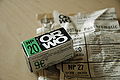 ORWO NP 20 (before 1980s)
 -
 ORWO NP 22 (before 1990)
 -
 1980s ORWOCHROM Reversal film slide taken in UK (before 1990)
 -
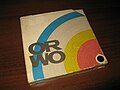 Magnetic tape packaging (before 1990)
 -

-
 ORWO PAN 400 cartridge (before 1994)


Wolfen Industrial and Film Museum
[edit]The Industrie- und Filmmuseum Wolfen provides a permanent exhibition about the history of the Filmfabrik Wolfen and the ORWO products.[23]
See also
[edit]References
[edit]- ^ "Industrie und filme museum Wolfen". www.ifm-wolfen.de. Retrieved 2021-10-24.
- ^ "North Channel Bank Provides Financing for Acquisition of Film Material Producers InovisCoat and FilmoTec". www.northchannelbank.de. 2020-08-25. Retrieved 2021-10-24.
- ^ "History". www.agfa.com. Retrieved 2021-10-24.
- ^ "About us". www.islandpolymer.com. Island Polymer Industries. Retrieved 2021-11-07.
- ^ "A short history of colour photography - agfacolor-neu". www.scienceandmediamuseum.org.uk. Science and Media Museum. Retrieved 2022-02-25.
- ^ "The Chemical Park – History". www.chemiepark.de. Chemical Park Bitterfeld-Wolfen. Retrieved 2016-10-27.
- ^ "Festschrift zur 950-Jahr-Feier der Stadt Schmölln". www.total-lokal.de (in German). p. 24. Retrieved 2025-08-08.
- ^ "Rohfilm". DEFA Stiftung. Retrieved 2016-10-27.
- ^ "History". www.orwonet. January 1909. Retrieved 2021-10-24.
- ^ "The Chemical Park – Companies at the location". Chemical Park Bitterfeld-Wolfen. Retrieved 2016-10-27.
- ^ "About us". www.islandpolymer.com. Island Polymer Industries. Retrieved 2021-11-07.
- ^ "50 Jahre Orwo". Wirtschaftshistoriker Rainer Karlsch (in German). Archived from the original on 2019-01-22. Retrieved 2019-01-22.
- ^ "North Channel Bank Provides Financing for Acquisition of Film Material Producers InovisCoat and FilmoTec". www.northchannelbank.de. 2020-08-25. Retrieved 2021-10-24.
- ^ "history". www.inoviscoat.de. Retrieved 2021-10-24.
- ^ "history". www.silvergrainclassics.com. 5 November 2023. Retrieved 2024-11-01.
- ^ "ORWO managed Financial Restructuring Plans Agreed by Courts and Dates Released for New Film Stocks". www.orwo.wtf. Retrieved 2022-02-12.
- ^ "ORWO confirms two new films are being released in 2022". kosmofoto.com. 3 February 2022. Retrieved 2022-02-12.
- ^ "Technical information Orwo Negative Film UN54" (PDF). www.filmotec.de. Archived from the original (PDF) on 2016-03-25. Retrieved 2021-10-26.
- ^ "Technical Information Negative Film N 75" (PDF). www.filmotec.de. Retrieved 2025-08-10.
- ^ "A New Motion Picture Film Stock Arrives Thanks To ORWO". No Film School. 2023-03-13. Retrieved 2023-03-24.
- ^ "Orwo 16mm NC500 Colour Cine". ORWO Film. Retrieved 2023-03-24.
- ^ "ORWO 35mm NC500 Colour Cine". ORWO Film. Retrieved 2023-03-24.
- ^ "Industry and Filmmuseum – ERIH". www.erih.net (in German). Retrieved 2021-06-21.
 Media related to ORWO at Wikimedia Commons
Historical Development
Origins as Agfa Wolfen (1909–1945)
The Filmfabrik Wolfen was established by the Berlin-based Aktien-Gesellschaft für Anilin-Fabrikation (Agfa) in 1909 as an expansion of its photographic film production capacities, prompted by growing demand and the need for larger-scale manufacturing near existing chemical industry sites between Dessau and Halle.[3][10] The site was selected for its proximity to raw material suppliers and transportation infrastructure, enabling efficient production of cellulose-based films derived from chemical processes. Construction began that year, and official permission to commence operations was granted on July 19, 1910, marking the start of large-scale output focused initially on motion picture films and photographic emulsions.[3][11] By the early 1920s, the Wolfen plant had become Agfa's primary hub for film manufacturing, producing items such as viscose artificial silk alongside core photographic products like panchromatic films and printing papers.[12] In 1925, Agfa integrated into the Interessengemeinschaft Farbenindustrie AG (IG Farben), a chemical cartel that centralized control and boosted R&D investments, allowing Wolfen to scale up to become one of Europe's leading facilities for sensitized materials with annual outputs exceeding millions of meters of film stock.[11][13] Throughout the 1920s and 1930s, the main products included Kine positive film for cinema projection, which dominated exports and domestic markets, supported by advancements in emulsion stability and sensitivity.[3] A pivotal innovation occurred in 1936 when engineers at Wolfen developed and publicly demonstrated Agfacolor Neu, the world's first viable multilayer color reversal film suitable for both still and motion picture applications, featuring integrated dye couplers in a single emulsion layer for simplified processing.[12][3] This breakthrough, unveiled at the Berlin Olympics, positioned Agfa Wolfen as a leader in color photography amid rising commercial demand, though production volumes remained limited initially due to complex manufacturing requirements. Under IG Farben's wartime directives from 1939 to 1945, the facility ramped up output of black-and-white and color stocks for military documentation, propaganda films, and aerial reconnaissance, employing forced labor from nearby camps to meet quotas amid Allied bombings that damaged but did not halt operations.[11] By war's end in May 1945, Wolfen had produced over 80% of Germany's photographic film supply, underscoring its strategic importance before Soviet occupation dismantled IG Farben's control.[13]Soviet Zone Reorganization and Early ORWO (1945–1964)
Following the capitulation of Nazi Germany on 8 May 1945, the Agfa Wolfen film factory, located in the Bitterfeld-Wolfen area of what became the Soviet occupation zone, was seized by Soviet forces. The plant, a key site for photographic and motion picture film production, was promptly converted into a Soviet joint-stock company (SAG Wolfen) under direct military administration to facilitate reparations and controlled output. A substantial portion of the machinery, technical documentation, and semi-finished products was dismantled and transported to the Soviet Union, severely disrupting operations and prioritizing resource extraction over local reconstruction. Despite these measures, limited production of black-and-white photographic films and celluloid base materials resumed by late 1945 to fulfill immediate needs for documentation, propaganda, and export obligations, with output focused on panchromatic negatives and positive printing stocks essential for the emerging socialist administration.[2][10] As the Soviet occupation zone transitioned into the German Democratic Republic (GDR) on 7 October 1949, the Wolfen facility underwent further reorganization to align with the principles of socialist nationalization and central planning. By 1951, it was formally established as VEB Filmfabrik Wolfen, a volkseigener Betrieb (people-owned enterprise) under the Ministry of Light Industry, marking the shift from Soviet direct control to GDR state ownership while retaining much of the pre-war technical expertise. Production expanded under the Five-Year Plans, emphasizing self-sufficiency in photosensitive materials; by the mid-1950s, annual output included over 10 million meters of motion picture film and several million rolls of still photography stock, much of it exported to Comecon countries for hard currency. Efforts to revive color processes, building on wartime Agfacolor technology, yielded experimental stocks like Orwocolor precursors, though quality lagged behind Western standards due to material shortages and ideological directives prioritizing quantity over innovation. The enterprise continued using Agfa trademarks inherited from the Nazi era, despite growing tensions with West German Agfa-Gevaert over intellectual property.[14][15] Throughout the 1950s and early 1960s, VEB Filmfabrik Wolfen faced challenges from resource constraints and political interference, including worker uprisings in 1953 that briefly halted operations amid demands for better conditions. Reorganization intensified post-1956, with investments in synthetic base materials and magnetic coatings to diversify into audio tapes, reflecting broader GDR industrialization goals. By 1964, to resolve trademark disputes with West Agfa and assert independent branding, the GDR authorities sold Agfa naming rights to the Leverkusen-based firm and introduced the ORWO (Original Wolfen) marque for all photographic and emerging magnetic products, symbolizing a break from capitalist heritage while leveraging the site's legacy. This transition formalized the plant's role as the GDR's primary supplier of imaging media, producing lines such as NP-series panchromatic films with ISO ratings from 10 to 400, tailored for amateur and professional use in a controlled economy.[14][3]State-Owned Operations in the GDR (1964–1990)
In 1964, the state-owned VEB Filmfabrik Wolfen in the German Democratic Republic (GDR) adopted the ORWO brand, short for "Original Wolfen," following the sale of Agfa trademark rights to the Western Agfa-Gevaert in Leverkusen; this rebranding aimed to assert independence from Western competitors while leveraging the site's legacy in film production.[3][2] Operations centered on the Wolfen facility, which spanned chemical and photochemical processes inherited from pre-war Agfa, with additional sites in Bitterfeld for raw materials and Premnitz for chemical fibers, all coordinated under central planning directives from the Socialist Unity Party.[3] As a Volkseigener Betrieb (people-owned enterprise), ORWO functioned as a monopoly producer of photographic films, papers, and related chemicals, supplying domestic needs including DEFA state film studios and amateur photographers, while prioritizing output quotas over consumer-driven innovation.[2] By 1970, ORWO expanded into a Kombinat structure, incorporating magnetic tape production for audio, video, and data storage, reflecting GDR efforts to diversify under the national chemical industry program; this included facilities for coating acetate and polyester bases with iron oxide or chromium formulations.[3][2] Key products encompassed panchromatic black-and-white films such as NP 20 (ISO 22) and NP 22 (ISO 125) for still photography, color reversal films like Orwochrom UT 21, negative color stocks such as NC 19, X-ray films, and audio tapes including Fe I series cassettes and reel-to-reel magnetophones.[2] These items were formulated for reliability in Comecon export markets, with ORWO capturing significant shares in the Soviet Union and other Eastern bloc countries through barter trade, though formulations often prioritized cost control over emulsion speed or fine grain, resulting in products that trailed Western equivalents in sensitivity and latitude due to import restrictions on advanced dyes and stabilizers.[3] At its 1989 peak, the Wolfen site employed 14,500 workers across 165 hectares, operating 2,500 production assemblies to manufacture approximately 200 variants of film and tape; annual output included 40 million square meters of cellulose acetate or triacetate base material (with 50 percent converted to sensitized raw film), 2 million square meters of magnetic coatings, and 100,000 tons of auxiliary chemical fibers.[3] This scale supported GDR self-sufficiency in imaging and recording media, with exports generating foreign currency for the regime, yet central planning inefficiencies—such as chronic shortages of high-purity solvents and inconsistent quality control—limited technological parity with Kodak or Agfa West, confining advancements to incremental processes like improved panchromatic sensitivity without proprietary color coupler breakthroughs.[3][16] Environmental externalities marred operations, as unchecked wastewater discharges from silver halide processing contaminated local waterways, notably contributing to the toxic "Silver Lake" in Bitterfeld-Wolfen by the late 1980s, where silver and chemical effluents rendered the site a symbol of industrial disregard under GDR priorities favoring production over abatement.[17] Despite these issues, ORWO sustained a workforce through state subsidies and ideological framing as a pillar of socialist industry, though underlying material constraints foreshadowed vulnerabilities exposed by the 1989-1990 collapse of the Eastern bloc.[16]Post-Reunification Privatization and Production Halt (1990–2000)
Following the German reunification on October 3, 1990, ORWO's state-owned operations, previously under VEB Kombinat Fotochemisches Werk Wolfen, were transferred to the Treuhandanstalt, the federal privatization agency tasked with restructuring approximately 8,000 East German enterprises.[18] In 1990, the entity was restructured as ORWO AG, a stock corporation, marking an initial step toward market-oriented operations amid broader economic integration into West Germany's framework.[3] ORWO AG encountered immediate difficulties, including outdated production technologies inherited from the GDR era and intense competition from Western manufacturers such as Kodak and Agfa, whose films benefited from advanced emulsions and global distribution networks. Efforts to maintain viability, including attempts by entrepreneur Heinrich Mandermann to consolidate privatization as a unified entity, faltered due to mounting financial losses and insolvency risks inherent to transitioning from a planned economy.[19] By 1994, these pressures culminated in the Treuhandanstalt's decision to liquidate the core film factory in Wolfen on May 20, effectively halting all film and magnetic tape production at the site.[3] [2] The liquidation dismantled ORWO AG's integrated operations, with constituent parts like Folienwerk Wolfen GmbH spun off earlier as subsidiaries, but without restoring manufacturing capacity. Remaining film stocks were sold into the mid-1990s, with ORWO-branded products re-entering the market in 1996 through assembly of pre-existing materials rather than new production.[3] In 1999, Lintec Computer AG acquired select assets, establishing PixelNet AG and ORWO Media GmbH, which repurposed the Wolfen laboratory for digital imaging services, signaling a pivot away from analog photochemical processes.[3] This era underscored the broader challenges of East German industrial conversion, where over 15,000 privatizations by the Treuhandanstalt often resulted in closures due to uncompetitiveness in a unified market.[20]Private Revival and Expansion Efforts (2000–Present)
In the early 2000s, following the liquidation of state assets from the former East German ORWO operations, private entities acquired trademarks and residual manufacturing capabilities, laying groundwork for brand revival amid resurgent interest in analog photography. ORWO Net GmbH, established in 2002 and based in Wolfen, initially focused on photo finishing, labs, and digital printing services rather than film production, though it held the ORWO trademark in Germany.[3] Separate efforts targeted film stock manufacturing; by the 2010s, smaller-scale production of black-and-white emulsions resumed under private firms like FilmoTec GmbH, which coated ORWO-branded negative films such as UN54 for still and motion picture use.[21] A pivotal expansion occurred in 2020 when FilmoTec and related coating facilities, including InovisCoat GmbH, were unified under Seal 1818 GmbH, owned by British filmmaker and entrepreneur Jake Seal, enabling scaled-up ORWO film output. This consolidation supported the launch of new stocks, including the Wolfen NP100 panchromatic negative in 2022 and the Wolfen NC500, the brand's first original color negative film in over three decades, produced with a nominal ISO 500 sensitivity and marketed for its cinematic grain structure.[22][23] Seal's ORWO group, distinct from ORWO Net's service-oriented operations, established an online shop in the early 2020s to distribute these films globally, alongside motion picture stocks like N75.[24] Further growth included ORWO Studios, founded by Seal to integrate film production with post-production facilities in Louisiana, supporting independent filmmakers and analog workflows. In 2023, additional color variants like NC400 and NC200 were introduced, though user reports noted challenges such as pronounced grain and halation, attributed to experimental formulations derived from archived Wolfen recipes.[25][26] By April 2025, Seal acquired Italian manufacturer FILM Ferrania, securing expanded coating lines and raw materials to bolster ORWO's supply chain amid global film shortages.[27] ORWO Net's insolvency in March 2025 and subsequent acquisition by The Customization Group in July did not disrupt film efforts, as Seal's entities operated independently, focusing on photochemical revival rather than printing. These initiatives positioned ORWO as a niche player in the analog renaissance, with annual outputs emphasizing limited-edition runs and heritage formulations, though scalability remains constrained by specialized equipment and material sourcing.[28][29]Products and Technical Specifications
Active Film Stocks
ORWO maintains production of several black-and-white and color negative films, primarily under the Wolfen brand for still photography and ORWO branding for motion picture use, leveraging emulsions developed or refined at the Wolfen site since the company's revival in the 2010s.[30] These stocks emphasize analog characteristics like fine grain, high latitude, and distinctive tonality, with availability in 35mm cassettes for photo applications (typically 36 exposures) and bulk rolls for cine formats such as 16mm and 35mm.[31] Production focuses on panchromatic sensitivities, with ISO ratings from 100 to 500, catering to enthusiasts and professionals amid renewed interest in film stocks.[32] Key black-and-white photo stocks include the Wolfen UN54, a ISO 100 panchromatic negative emulsion recreating historical ORWO formulas with fine grain structure (approximately 8-10 microns) and contrast suitable for portraiture and landscapes, available in 35mm.[33] The Wolfen P400 offers ISO 400 sensitivity for low-light conditions, featuring robust push-pull capabilities up to two stops while maintaining shadow detail.[30] Wolfen NP100 provides another ISO 100 option with enhanced acutance for sharper edges in general use.[30] For motion picture, ORWO UN54 extends in 35mm bulk, prized for its neutral grayscale rendering in narrative filmmaking.[34] Color negative stocks center on the Wolfen NC series, with NC500 delivering ISO 500 tungsten-balanced performance, characterized by warm mood tones, reduced halation, and compatibility with C-41 processing for a cinematic aesthetic in available light or studio setups.[35] Variants include NC400 (ISO 400, similar tonality for daylight adaptation via filtration) and the more recent NC200 (ISO 200, introduced in mid-2025 for versatile outdoor shooting with balanced saturation).[36] [32] Motion picture options encompass ORWO DN21 (35mm color negative for principal photography), DP31 (internegative for duplication), and PF2 V3 (positive print stock for projection), all in 100ft or 400ft rolls, supporting Super 35 formats with emulsions tuned for archival stability.[34]| Film Stock | Type | ISO | Primary Format | Key Characteristics |
|---|---|---|---|---|
| Wolfen UN54 | B&W Negative | 100 | 35mm (36exp) | Fine grain, high resolution |
| Wolfen P400 | B&W Negative | 400 | 35mm (36exp) | Good latitude, pushable |
| Wolfen NP100 | B&W Negative | 100 | 35mm (36exp) | High acutance |
| Wolfen NC500 | Color Negative | 500 | 35mm (36exp) | Tungsten bias, mood tones |
| Wolfen NC400 | Color Negative | 400 | 35mm (36exp) | Cinematic warmth, C-41 process |
| Wolfen NC200 | Color Negative | 200 | 35mm (36exp) | Balanced for daylight, recent 2025 |
| ORWO DN21 | Color Negative | Varies | 35mm bulk | Principal capture |
| ORWO PF2 V3 | Color Positive | Varies | 35mm bulk | Print stock, projection |
Discontinued Lines and Formulations
ORWO's discontinued black-and-white negative films, primarily from the NP series produced during the German Democratic Republic (GDR) era, encompassed a range of panchromatic emulsions optimized for still photography and cinema applications. These formulations, developed at the Wolfen plant, featured fine grain, balanced gradation, and high edge sharpness, though they often exhibited higher contrast compared to Western counterparts like Kodak or Ilford stocks. Production of the NP line ceased following the company's privatization and liquidation in the mid-1990s, with no direct successors until limited revivals of select emulsions post-2000. Key variants included NP-15 (ISO 25, low-sensitivity for fine detail), NP-20 (ISO 80, DIN 20, portrait-oriented with harmonious tonality), NP-22 (ISO 125, DIN 22, an export variant of NP-20 with similar characteristics), NP-27 (ISO 400 for stills), NP-55 (ISO 55, low-grain print film), and NP-7 (ISO 400 cinema version).[5][37][38] Later attempts, such as the ORWO PAN 400 (ISO 400 panchromatic cartridge film introduced in the early 1990s), were short-lived, with availability ending before 1994 due to economic challenges post-reunification.[39] Color reversal films under the Orwochrom brand, such as UT18 (ISO 50 slide film processed via the proprietary ORWO C-9165 chemistry), represented ORWO's efforts to compete in the transparency market but were hampered by formulation incompatibilities with standard E-6 processes after discontinuation of C-9165 in the 1990s. Production of UT18 halted around 1992, rendering surviving stocks processable only with specialized or historical methods. Similarly, color negative lines like NC19 (ISO 64, medium format) were phased out by the early 1990s, lacking modern equivalents due to outdated dye couplers and stability issues.[40][41] Magnetic audio media formulations, including reel-to-reel tapes (e.g., Type 120, 360 meters, double-play) and compact cassettes like Audio Fe I LH 60 (ferric oxide, standard length) and chrome variants (TPK series), utilized polyester bases coated with iron oxide particles for analog recording. These were mass-produced for consumer and professional use in the GDR from the 1960s until liquidation in 1994, after which global competition from brands like BASF and Ampex led to their obsolescence.[2]| Film Line | Type | ISO | Key Formulation Notes | Discontinuation Period |
|---|---|---|---|---|
| NP-15 | B&W Negative | 25 | Fine-detail panchromatic | Early 1990s |
| NP-20 | B&W Negative | 80 | Portrait tonality, high contrast | Early 1990s |
| NP-22 | B&W Negative | 125 | Export fine-grain variant | Early 1990s |
| Orwochrom UT18 | Color Reversal | 50 | C-9165 process, slide | ~1992 |
| Color NC19 | Color Negative | 64 | Medium format, outdated dyes | Early 1990s |