Hubbry Logo
On ChinaOn ChinaMain
Open search
On China
Community hub
On China
logo
8 pages, 0 posts
0 subscribers
Be the first to start a discussion here.
On China
On China
from Wikipedia

President and Mrs. Nixon visit the Great Wall of China and the Ming tombs, 24 February 1972.

Key Information

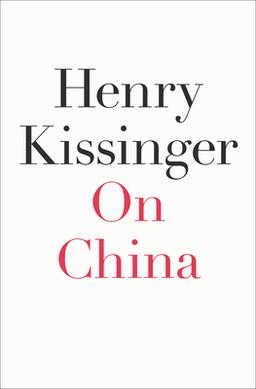
On China is a 2011 non-fiction book by Henry Kissinger, former National Security Adviser and United States Secretary of State. The book is part an effort to make sense of China's strategy in diplomacy and foreign policy over 3000 years and part an attempt to provide an authentic insight on Chinese Communist Party leaders.[1][2] Kissinger, considered one of the most famous diplomats of the 20th century,[3] played an integral role in developing the relationship between the United States and the People's Republic of China during the Nixon administration, which culminated in Nixon's 1972 visit to China.[4]

Kissinger's book focuses on Chinese history through the lens of foreign policy considerations, particularly his own brand of realpolitik. The book begins by inspecting China's historical views on peace and war, international order and compares it to the United States' approach to foreign policy.[5] The book follows how Sino-Soviet border clashes forced China to consider building a relationship with the United States. Kissinger records his own experiences in coordinating the 1972 Nixon visit, including authentic accounts on the nature of Mao Zedong and personality of Zhou Enlai.[6] The final part of the book looks to the future of Sino-American relations, critiquing the areas which prevent the US and China from developing a mutually beneficial relationship whilst warning of the consequences of another cold war.[7]

The book is a combination of pure history, discussion of foreign policy and personal narration of Kissinger's experiences in China.[8] It does not fit in to the genre of autobiography, memoir or monograph, but can be considered part reminiscence, part reflection, part history and part exploration in to the life of Kissinger and his experiences with China.[5] The book has received various reviews since its release in 2011. The response to Kissinger was polarising with the book receiving varying responses from several newspapers and individuals.

Background

[edit]

Henry Kissinger

[edit]

On China is the 13th book written by Henry Alfred Kissinger (1923–2023),[2] completed by him in 2011 at the age of 88, 34 years after he retired his position in the American political system. Kissinger was a German-born American political scientist who was the first person to serve as both National Security Adviser and Secretary of State.[9] He was awarded a PhD at Harvard in 1954, and swiftly transitioned in to the American political system working with the likes of Nelson Rockefeller, Chester Bowles and Lucius Clay.[10] He worked with Rockefeller on various projects until 1968, who, impressed with Kissinger's professionalism gave word to Nixon to offer him a role as the president's assistant for National Security Affairs in 1968.[10] Kissinger became National Security Adviser in 1969 and Secretary of State in 1973.[9]

US–PRC relations

[edit]

Relations between the United States and China after the Second World War had been paternalistic and relatively friendly.[11] However, relations fractured in 1949-1950 when the People's Republic of China was established on 1 October after peasant-backed Communists defeated the Nationalist government of Chiang Kai-shek.[12] The ideological tensions between the U.S. and the People's Republic of China were worsened by the Korean War and The First Taiwan Strait Crisis which saw America engage in battle against China and threaten nuclear attack. The Tibetan Uprising and China's first atomic test in 1964 would further strain US-PRC relations with the predominant American representation of China revolving around aggression, expansionism and extremism.[11] It was only when underlying Sino-Soviet tensions escalated in to the Sino-Soviet border conflict in 1969, and subsequent nuclear threats from Moscow, did China look to the U.S.[13][14] With a common enemy, the Soviet Union, China and the U.S. adjusted their policy toward each other and engaged in rapprochement in 1970.[15] Under Nixon, Henry Kissinger normalised U.S. and Chinese relations by connecting with high ranking Chinese officials; opening the US up to China.[16] Kissinger arranged a secret meeting in China in 1971 and Richard Nixon's 1972 visit to China.[17] The 1972 Summit between the U.S. and China opened communication, trade, and agreement on certain principles of international conduct.[18]

Content

[edit]

Kissinger's On China is a combination of history, personal narrative, political analysis and reflection being compiled in to 17 chapters. One reviewer delineates the book is an "attempt to explain Chinese diplomacy to an American audience, to review the course of U.S.–China relations, and briefly but incisively to address the challenge of sustaining a mutually beneficial interaction".[19]

In the first few chapters of the book Kissinger provides a history of the Chinese view on international affairs and their concepts of international relations. He focuses on Chinese Realpolitik and Sun Tzu's Art of War. Kissinger states that for many years China was the "middle kingdom" of the world surrounded by various small and insignificant states which threatened invasion leading to the construction of a strategic body of thought. Kissinger describes China's belief that they are the centre of the world and exemplify the paradigm of civilisation.[20] Kissinger examines the domestic and international hardships of China which presaged the development of the People's Republic of China. Zachary Keck from E-International Relations wrote "This helps convey the continuity in Chinese foreign policy that, to some degree, hints that there is some predictability in Beijing's actions".[21]

Kissinger introduces Mao Zedong's ideologies, aspiration and tactics and his quest for psychological advantage. Kissinger references how a Chinese game known as wei qi (or Go) drove China's military engagements and influenced their position in the cold war. Kissinger follows on with the topic of the Cold War by summarising the motives of U.S, North Korea, China and the USSR, examining triangular diplomacy and the causes of the Korean War. Kissinger proffers that the result of the cold war was a failure for all parties involved within the conflict.

The American and Chinese road to reconciliation is detailed. Kissinger discusses the political and international contexts which led to the meeting of President Nixon and Mao Zedong. Kissinger includes a recount of discussion between the Mao and Nixon and the Nixon-Zhou dialogue and various other conversations leading up to their deaths in 1976. The process of examining the leading political figures of China and the problems they faced allowed the reader to "look over the shoulder in the traditions of classic realism".[21] He reveals Zhou promoted the need for four modernisations in China before he died. Kissinger examines the legacies left behind by Mao and Zhou.

The rise of Deng is recorded in the later chapters of the book, revealing how he effectively reformed and opened China up. The book shows how Deng neutralised relations with the U.S. and strengthened China internally to preclude the spread of Soviet influence. He records the deaths of leaders such as Hua Guofeng. Kissinger records how China adopted a three-world approach in response to international relations.

The latter part of the book covers the relationship between the U.S. and China under President Clinton in the 1990s, the disintegrating of the Soviet Union and the Third Taiwan Strait Crisis. The state of affairs as per 2011 (when the book was written) is assessed, providing an optimistic view of China's international role. Kissinger also articulates the areas in which the U.S. and China differ in the modern international environment.

The books final parts examine the future of China and the US and their relationship together. He posits that China will continue to develop into a superpower, whilst comparing the US-China relationship to the Britain and German pre-World War Two. Kissinger finishes examining contemporary areas which erode the U.S. and Chinese ability to create a mutually beneficial relationship.

Reception

[edit]

On China has received various reviews since its release in 2011. There has been appraisal, criticism and nuanced reviews from a multiplicity of well-known newspapers and journals, which have critiqued Kissinger's perspective, objectivity and content found within his book.

Praise

[edit]

Donald S. Zagoria from Columbia University considered Kissinger's book a "remarkable achievement" which "will certainly add to his reputation as one of America's pre-eminent strategic thinkers".[22] He found the book multifaceted, with various parts attempting to achieve several outcomes. Zagoria reflected that the book tried to make sense of Chinese diplomacy and foreign policy across its entirety as an empire and nation, while also being "part memoir, part reflection, and part a memorandum to U.S. policymakers on how to achieve a cooperative relationship with this rising superpower". Kissinger is praised for being realistic and prudent, and the book is recommended to students of specialising in U.S. relations to China.[1]

Oxford University historian Rana Mitter, who specialises in the history of the Republic of China, considered Kissinger's book an erudite and elegant insight into the new world superpower. In his review, Mitter wrote of the freshness of the history because it was written by "a surviving top-level figure who was at the 1971 meeting".[4] Mitter was impressed by the authentic accounts of the personality of Mao as "sardonic" and Zhou "penetrating". Mitter believes Kissinger "showed a long-term vision that few politicians of any country could match today".[6]

Los Angeles Times former China correspondent, Linda Mathews, offered another positive review. Mathews described the book as a blend of strategic analysis of China, the United States and the Soviet Union, which was informative and authentic.[2] Mathews was also impressed by the vignettes of his meetings with Chinese Communist Party leaders. The review suggests that those who love diplomatic history will "delight" in the assessment of the misconceptions, mistakes and missed opportunities that fractured the relations between the U.S. and PRC prior to Nixon's historic trip. She concludes that for the ordinary reader, the book offers enthralling, "entertaining and sometimes gossipy accounts of his meetings with China's most august leaders".[2]

Criticism

[edit]

Former chief critic for the New York Times Michiko Kakutani regarded Kissinger's On China as a measure to protect his image in the public eye, whilst underplaying the consequences of Chinese leadership on civilians.[23] Kakutani establishes Kissinger's On China as a "sometimes perverse" book which attempts to address the role he played in connecting Nixon to China whilst provide an exploration of the history of China, its policies and attitudes toward the west. She contends, however, that as Kissinger explores his dealings with China he attempts to burnish his legacy as Nixon's National Security Adviser and Secretary of State. Kakutani also illuminates Kissinger's soft-pedalling of the human costs of Mao's ruthless decades-long reign. Additionally, Kakutani questions the consequences of more recent American efforts to press human-rights issues with the Chinese. She suggested Kissinger is "chillingly cavalier" about the millions of people who died under Mao's rule, exhibiting ignorance and naivety about Mao under the many myths he created about himself.[23]

A review published by The Economist[24] condemned Kissinger's On China as an inaccurate and problematic piece relating history and decisions of Chinese foreign policy. The review deduces that Kissinger's book is marred by his flattering picture of Chinese foreign policy, in which it is led by calculated, effective, master strategists. The articles also propose that Kissinger gave little consideration that Mao and Zhou were communists influenced by Mao's adaption of Marxist Ideology and Lenin which manifested in Chinese foreign policy and political structures. The review considered Kissinger to be "disappointingly vague"[24] in the final parts of the book where he attempts to answer a question on future of American–Chinese relations: Will China's rise as a superpower inevitably pave a way to conflict with the U.S.? The review contends that rather than providing a definitive answer on how to avoid the repetition of conflict, Kissinger looks backward to the relationship of Germany and Britain a century ago.[24]

Jasper Becker, a British author and commentator, criticised Kissinger's book for failing to address the key question "why and how did President Richard Nixon decide that it was in America's interests to protect communist China?".[25] Becker contends that Kissinger failed to articulate why exactly America believed it had to protect China from a Chinese-Soviet war. Becker contests Kissinger's rationale behind backing China detailed in the book, suggesting the Soviet Union was a more expansionary, aggressive power. Becker believes China's decision to send troops to Korea, Vietnam, Burma and Cambodia, whilst financing the training of insurgents in other countries, exhibited parallel aggression to the Soviet Union.[25] Additionally, the review deplored Kissinger's examination of Chinese leadership, saying that Kissinger accepted what Chinese leaders said and did at face value without challenge. Becker declared Kissinger "has no curiosity at all: he never looks behind the curtain". He believes the "Chinese couldn't believe their luck in finding such a naive and biddable partner as Kissinger".[25]

See also

[edit]

References

[edit]
[edit]
Revisions and contributorsEdit on WikipediaRead on Wikipedia
from Grokipedia
On China is a 2011 book by Henry A. Kissinger, the former U.S. National Security Advisor and Secretary of State, providing a comprehensive historical analysis of Chinese diplomacy, strategic culture, and foreign policy from ancient tributary systems through the Communist era to contemporary great-power relations. Drawing on Kissinger's extensive personal involvement in U.S.-China engagement, including the orchestration of President Richard Nixon's 1972 visit to Beijing, the work emphasizes China's self-conception as the Middle Kingdom and its preference for indirect, psychological maneuvering over direct confrontation in international affairs. The book traces pivotal episodes, such as the and the "," which shaped modern , and the era's revolutionary diplomacy, including alliances with the U.S. against the . Kissinger argues that understanding China's historical patterns—rooted in Sun Tzu's emphasis on stratagems and the avoidance of —is essential for managing U.S.-China competition, advocating sustained dialogue to prevent Thucydides Trap-like escalation. Published by Penguin Press, it became a bestseller and influenced policy discussions on Sino-American relations, highlighting economic interdependence as a stabilizer amid military asymmetries. Notable for its insider perspective, On China has drawn praise for elucidating opaque aspects of Beijing's but faced criticism for insufficient scrutiny of the Chinese Communist Party's authoritarian internal dynamics and for implying a need for Western accommodation to China's ascent, potentially underplaying ideological divergences and concerns in favor of balance-of-power realism. Kissinger's framework, informed by decades of direct negotiations, underscores causal continuities in Chinese statecraft—prioritizing long-term equilibrium over short-term ideological crusades—but some analysts contend it reflects the author's own legacy more than a detached empirical assessment of post-reform China's assertive turn.

Authorship and Historical Context

Henry Kissinger's Background and Expertise

Henry Alfred Kissinger was born on May 27, 1923, in , , to a Jewish family, and emigrated to the in 1938 to escape Nazi persecution, becoming a naturalized citizen on June 19, 1943. During , he served in the U.S. Army's 84th Infantry Division as an intelligence specialist and German interpreter, participating in operations including the and the efforts in occupied . After the war, Kissinger attended , earning a in 1950, a master's in 1952, and a Ph.D. in government in 1954; his dissertation, : Metternich, Castlereagh and the Problems of Peace, 1812–1822, analyzed 19th-century European balance-of-power diplomacy, laying the intellectual foundation for his advocacy of pragmatic statecraft over ideological crusades. His early scholarship, including the 1957 book Nuclear Weapons and Foreign Policy, further demonstrated expertise in strategic deterrence and realist power dynamics, influencing U.S. policy debates on and alliance management. Kissinger's government service uniquely equipped him for insights into Chinese strategy through high-level achievements. Appointed Advisor by President on January 20, 1969, and serving until November 3, 1975, he orchestrated with the via talks and linkage strategies. Concurrently holding the role of from September 22, 1973, to January 20, 1977, under Presidents Nixon and , Kissinger engineered the pivotal opening to China, including his clandestine July 1971 trip to —disguised and routed via —which facilitated Nixon's February 1972 summit and the , shifting global alignments against Soviet hegemony. These maneuvers exemplified his success in leveraging balance-of-power tactics to extract concessions from adversaries, contrasting with less effective idealistic approaches in or elsewhere. Over four decades, Kissinger engaged directly with successive Chinese leaders, amassing empirical observations of decision-making processes unattainable through secondary analysis. He conferred with and during the 1971–1972 breakthroughs, in normalization efforts post-1978, and amid post-Cold War adjustments, spanning generations from revolutionary founders to reformist successors. This sustained access informed On China (2011), building on his prior volumes (1994), which dissected historical statecraft precedents, and World Order (2014), which probed multipolar equilibrium challenges—yet uniquely drawing from these prolonged, firsthand interactions to dissect Chinese strategic continuity. Such experience underscores his authority in applying to Beijing's opaque elite dynamics, prioritizing verifiable outcomes over declarative rhetoric.

Publication Details and Motivations

was published on May 17, 2011, by Penguin Press in format, spanning 608 pages including notes and index. The release occurred amid escalating between the and , following 's 2001 entry into the and ongoing military modernization efforts that heightened American strategic concerns. Kissinger's primary motivation for authoring the book stemmed from his assessment that Western policymakers persistently misinterpreted China by treating it as a prospective amenable to standard international norms, rather than recognizing it as a civilization-state with millennia-old strategic traditions rooted in concepts like (all-under-heaven) and adapted to Confucian hierarchy. He drew upon declassified U.S. diplomatic records from the Nixon era, his personal involvement in Sino-American , and classical Chinese texts such as Sun Tzu's and historical annals to prioritize archival evidence over contemporaneous media interpretations often skewed by ideological lenses. The publication timing aligned with the aftermath of the 2008 global financial crisis, where China's 4 trillion yuan (approximately $586 billion) stimulus package propelled GDP growth back to over 10% by mid-2009, outpacing the slower U.S. recovery that averaged around 2% annual growth through 2011 and underscoring the urgency for pragmatic bilateral engagement to manage rising tensions rather than ideological confrontation. This context amplified the book's appeal, contributing to its status as a commercial success with strong sales driven by public and elite interest in navigating China's ascent.

Foundations of Chinese Strategic Thinking

Ancient and Imperial Influences

Chinese strategic thinking originated in the (475–221 BCE), where survival amid constant conflict fostered principles emphasizing psychological mastery and indirect methods over brute force. Sun Tzu's , composed around the 5th to 4th century BCE, encapsulated these ideas, advocating that "all warfare is based on deception" and prioritizing knowledge of the enemy and oneself to achieve victory without battle. This approach contrasted sharply with later Western doctrines, such as Carl von Clausewitz's emphasis on decisive confrontation and annihilation of enemy forces in (1832), as Kissinger highlights in analyzing China's preference for stratagems that exploit weaknesses through feints, alliances, and misinformation rather than direct clashes. Empirical success of these tactics is evident in the unification under the (221–206 BCE), where Legalist —enforcing strict laws and centralizing power—merged with Confucian ideals of hierarchical order to sustain imperial continuity. The imperial era extended these foundations into a systemic framework for managing periphery threats without overextension. The tributary system, formalized from the Han Dynasty (206 BCE–220 CE) onward, positioned China as the "Middle Kingdom" (Zhongguo), demanding ritual acknowledgment of superiority from vassals in exchange for trade and nominal protection, thereby projecting influence through cultural hierarchy rather than territorial conquest. A key Han strategy against nomadic Xiongnu incursions involved the "five baits" outlined by minister Jia Yi (200–169 BCE): lavish gifts of silk garments, musical instruments, female slaves, fine food, and inner palace residences to corrupt tribal elites, fostering internal divisions and dependency on Chinese largesse. This causal mechanism—weakening foes via inducements rather than military campaigns—enabled resource conservation, as seen in Emperor Wu's (r. 141–87 BCE) alternating diplomacy and limited expeditions that ultimately fragmented the Xiongnu confederation by 119 BCE. China's worldview reinforced adaptive realism, viewing as concentric circles of harmony under Sinocentric , eschewing universal moral claims or egalitarian alliances in favor of pragmatic equilibrium for regime longevity. Confucian-Legalist synthesis underpinned this: promoted internal moral order and ritual deference, while Legalism ensured coercive against external chaos. The Ming Dynasty's (1368–1644 CE) naval expeditions under Admiral (1405–1433 CE) exemplified restrained projection—seven massive fleets reached Africa to awe tributaries and gather exotica, yet pursued no colonies or permanent bases, reflecting a of symbolic dominance over expansive empire-building; subsequent emperors dismantled the fleet to prioritize continental defenses. This pattern of calculated restraint, driven by geographic vulnerabilities and resource limits, perpetuated cycles of consolidation amid barbarian pressures, underscoring a realism attuned to long-term survival over ideological crusades.

Enduring Principles of Chinese Diplomacy

Kissinger argues that Chinese diplomacy maintains strategic continuity from antiquity, eschewing or ideological crusades in favor of leveraging time through patience and internal strengthening. This approach treats prolonged negotiations as a tool to wear down opponents while consolidating domestic power, negotiating only from positions of relative strength, and projecting flexibility to mask underlying resolve. Drawing on classical influences such as Sun Tzu's emphasis on and indirect methods, Chinese statecraft prioritizes timing and subtlety over overt displays of force, enabling adaptation across dynasties without rupture. Underlying this continuity is a form of that subordinates to pragmatic power dynamics, evident in the imperial era's avoidance of multi-front conflicts and preference for bilateral arrangements over entangling alliances. Even amid communist governance, policies reflect this heritage by focusing on selective engagements that preserve , contrasting with the doctrinal fervor that has periodically driven Western interventions. China's vast and historical centrality cultivate a "defensive offense," wherein influence expands through economic inducements and asymmetric leverage rather than territorial conquests, as precursors to modern initiatives demonstrate a pattern of drawing tributaries into orbits of dependency without direct subjugation. This resilience stems from centralized authority that mitigates internal fragmentation, unlike Europe's recurrent balance-of-power shifts fueled by fragmented polities and doctrinal rivalries. By minimizing domestic upheavals through hierarchical control, Chinese diplomacy sustains long-term coherence, viewing adversaries' impatience as a vulnerability to exploit rather than a catalyst for decisive clashes. Kissinger contrasts this with Western tendencies toward legalistic , attributing China's endurance to a worldview that integrates , , and statecraft into a unified strategic .

Modern Chinese Foreign Policy Evolution

Mao Era and Revolutionary Strategies

Mao Zedong's leadership from the founding of the in 1949 until his death in 1976 marked a period of revolutionary fervor fused with strategic pragmatism in foreign policy, as analyzed in Kissinger's examination of China's diplomatic evolution. Mao articulated a worldview combining Marxist-Leninist internationalism with Chinese exceptionalism, initially aligning the new regime with the through the "lean to one side" doctrine proclaimed in June 1949, which positioned China firmly within the socialist camp to consolidate power amid internal consolidation and external threats. This alignment yielded the 1950 Sino-Soviet , , and Mutual Assistance, providing economic and military aid but subordinating China to Soviet influence, which Mao viewed as a necessary expedient for regime survival rather than ideological purity. A pivotal demonstration of Mao's strategies occurred in the , where Chinese forces intervened on October 19, 1950, after troops advanced toward the border, aiming to secure a communist against potential U.S. . Kissinger highlights this as a calculated prioritizing territorial security over expansion, with Mao deploying the despite domestic exhaustion from , resulting in an estimated 180,000 to 900,000 Chinese casualties but achieving a in 1953 that preserved and deterred direct assaults on . The intervention underscored Mao's causal realism: ideology served as a unifying tool, but decisions hinged on empirical threats to , avoiding overextension into broader global conflict. Tensions with the escalated into the by the early 1960s, driven by ideological divergences—Mao's advocacy for continuous revolution clashing with Khrushchev's —and territorial disputes, culminating in armed clashes along the Ussuri River in March 1969 that heightened fears of a full-scale Soviet invasion. Kissinger portrays this rift as enabling China's pragmatic pivot toward the , with Mao exploiting the triangular dynamic for survival; border threats prompted secret U.S. outreach, evident in the 1971 Kissinger visit and 1972 Nixon summit. The (1966–1976), an internal purge claiming millions of lives and paralyzing bureaucracy, distracted from external vulnerabilities yet did not derail foreign maneuvers—Mao refrained from invading despite rhetoric, focusing on psychological deterrence and deterrence of Soviet aggression. This era's strategies, per Kissinger's analysis, reveal Mao's use of revolutionary ideology not as an end but as a means for national resilience, culminating in the February 28, 1972, , which ambiguously deferred Taiwan's status to balance anti-Soviet alignment with domestic unity. Empirical outcomes—China's avoidance of direct war and preservation of the regime amid isolation—affirm a continuity with historical Chinese statecraft: long-term patience over ideological absolutism, even as internal chaos like the weakened conventional diplomacy.

Reform Era Under Deng and Successors

Deng Xiaoping's ascent to paramount leadership after Mao Zedong's death in 1976 culminated in the launch of economic reforms at the Third Plenum of the Eleventh of the (CCP) in December 1978. These reforms prioritized the —agriculture, industry, science and technology, and national defense—shifting emphasis from class struggle and ideological orthodoxy to pragmatic development aimed at enhancing productivity and living standards while preserving CCP monopoly on power. The policy pivot, often summarized by Deng's phrase "," facilitated selective opening to foreign investment and technology acquisition, enabling industrial upgrading without political liberalization. In foreign affairs, Deng advocated taoguang yanghui ("hide your capabilities and bide your time"), a doctrine of strategic restraint that prioritized domestic consolidation over international assertiveness, eschewing formal alliances and territorial confrontations to minimize external interference. This low-profile approach extended to cross-Strait relations, where Deng promoted "peaceful reunification" with through economic inducements and the "" model, initially formulated for but extended as an offer to to leverage prosperity as a magnet for integration. The 1989 crackdown, which suppressed pro-democracy protests and elicited Western sanctions, functioned primarily as an internal political reset, reinforcing CCP authority without derailing the continuity of reformist or economic opening. Deng's successors, (general secretary 1989–2002) and (2002–2012), adhered to this framework of calculated restraint, exemplified by China's accession to the on December 11, 2001, which imposed market-access commitments in exchange for export opportunities and integration into global supply chains. Under their leadership, annual GDP growth averaged approximately 10% from 1980 to 2010, driven by export-led industrialization, infrastructure investment, and , which cumulatively lifted hundreds of millions from and amassed foreign reserves exceeding $3 trillion by decade's end. This sustained expansion positioned China to overtake as the world's second-largest by nominal GDP in 2010, with output reaching $5.88 trillion against Japan's $5.47 trillion. Kissinger interprets these developments not as emulation of Western but as a contemporary manifestation of millennia-old Chinese statecraft, wherein tactical masked accumulation of relative power, allowing the CCP to fortify its rule amid rapid modernization. Successors maintained avoidance of hegemonic posturing, focusing on multilateral engagement and to build leverage incrementally, though underlying priorities remained and regime stability over ideological export.

US-China Relations in the Book

Pre-Engagement Tensions and Isolation

In On China, depicts the U.S.- relationship from the founding of the (PRC) in 1949 to 1971 as a phase of deliberate isolation, marked by mutual misperceptions amplified by proxy conflicts rather than fundamental ideological incompatibility. Following the PRC's establishment on October 1, 1949, the withheld recognition, instead maintaining diplomatic ties with the Republic of (ROC) on and viewing the mainland regime as an illegitimate aggressor backed by Soviet influence. This stance crystallized amid the Chinese Civil War's outcome, which U.S. policymakers framed as a preventable "loss of ," fueling domestic recriminations during the McCarthy era (roughly 1950–1954), where fears of communist infiltration led to investigations and purges targeting alleged sympathizers in government and academia. The (1950–1953) intensified hostilities, with PRC forces intervening in October 1950 to support against U.N. (primarily U.S.) troops, resulting in a July 1953 armistice that left the peninsula as a zone and prompted the U.S. to impose comprehensive trade sanctions and an embargo on the PRC, effectively isolating it economically through the and . Beijing's concurrent support for insurgencies and "wars of national liberation"—including aid to communist movements in , Africa, and —heightened U.S. threat perceptions, portraying China as an exporter of that endangered Western-aligned governments. Yet, despite escalatory episodes like the crises of 1954–1955 and 1958, where PRC artillery bombarded ROC-held islands such as and Matsu, neither side pursued direct, large-scale warfare; U.S. naval patrols and air cover deterred invasion without provoking full confrontation, evidencing pragmatic restraint amid ideological rhetoric. Kissinger argues this isolation stemmed from causal miscalculations, including U.S. that condemned Chinese actions while downplaying Soviet atrocities like the gulags, thereby prolonging Mao Zedong's domestic radicalism by depriving of external moderating influences. The emerging Sino-Soviet rift, accelerating after over ideological disputes and border clashes, inadvertently created an opening for , as sought to counter Moscow's dominance without U.S. involvement initially exacerbating the divide. This period's proxy-driven antagonism, Kissinger contends, was not inexorable but sustained by avoidable policy choices, underscoring the costs of ideological posturing over strategic realism.

Nixon-Kissinger Opening and Aftermath

![President Richard Nixon and Pat Nixon visit the Great Wall of China during the 1972 state visit][float-right] Henry Kissinger, as National Security Advisor, undertook a secret diplomatic mission to Beijing from July 9 to 11, 1971, arriving via Pakistan to meet Premier Zhou Enlai and lay groundwork for improved U.S.-China relations. This clandestine trip, concealed from the press and even parts of the U.S. government, resulted in an invitation for President Richard Nixon to visit the People's Republic of China (PRC). Nixon accepted, traveling to Beijing from February 21 to 28, 1972, marking the first visit by a sitting U.S. president to mainland China. The visit culminated in the , issued on February 28, 1972, which articulated mutual recognition of divergent ideologies but a shared interest in normalizing relations. In it, the U.S. acknowledged that "all Chinese on either side of the maintain there is but and that is a part of ," without endorsing unification or altering U.S. commitments to 's defense. This formulation deferred the issue while signaling a thaw in hostilities. The communiqué also addressed broader geopolitical concerns, including mutual opposition to Soviet hegemony. These diplomatic breakthroughs yielded immediate strategic gains. In October 1971, shortly after Kissinger's trip, United Nations General Assembly Resolution 2758 admitted the PRC to the UN Security Council, expelling the Republic of China (Taiwan), a shift facilitated by the nascent U.S.-PRC . The opening enabled , leveraging Sino-Soviet tensions to contain Soviet influence without direct U.S.-Soviet confrontation. It also pressured during peace talks, contributing to the U.S. withdrawal via the signed on January 27, 1973. Relations formalized on January 1, 1979, when the U.S. recognized the PRC as the sole legal government of China, severing official ties with Taiwan while enacting the Taiwan Relations Act to sustain unofficial relations and arms sales. Tensions persisted over U.S. arms provisions to Taiwan, prompting the 1982 U.S.-PRC Joint Communiqué limiting such sales to defensive needs. The 1989 Tiananmen Square crackdown elicited U.S. sanctions, including an arms embargo still in effect as of 2011, underscoring ongoing mutual strategic hedging amid economic interdependence. This engagement integrated China into global markets, fostering post-Mao economic reforms that moderated ideological exportation and prioritized development, empirically curbing the spread of revolutionary communism.

Key Theses and Analytical Framework

Chinese Realism vs. Western Idealism

In "On China," Henry Kissinger delineates a fundamental divergence in strategic cultures, portraying Chinese diplomacy as rooted in a realist paradigm that prioritizes holistic equilibrium, protracted adaptation, and relative advantage over absolute victories or ideological impositions. Unlike Western traditions, which often pursue decisive confrontations and universal principles, Chinese thinkers drew from ancient practices like the game of wei qi (also known as Go), where players encircle territories gradually to achieve encirclement and containment rather than direct elimination of opponents. This approach, Kissinger contends, reflects a long-view orientation that avoids doctrinal crusades, such as exporting Confucianism akin to Wilsonian universalism, and instead emphasizes psychological maneuvering and outcomes amid fluid power dynamics. Historical Chinese statecraft, from the Warring States period onward, focused on harmonizing with inevitable trends (shi) rather than remaking adversaries, fostering ambiguity to maintain stability without overextension. In contrast, Western—particularly American—strategic thought is depicted as more legalistic and universalist, seeking codified treaties, moral absolutes, and transformative interventions that frequently overlook underlying asymmetries in power and culture. Kissinger highlights post-World War II U.S. efforts, such as the remaking of through imposed and economic overhaul, as emblematic of this , which succeeded under unique circumstances but faltered elsewhere by ignoring entrenched realities. This propensity for overreach, he argues, stems from a chess-like mindset favoring knockout blows and principle-driven crusades, evident in ventures like the 2003 invasion, where assumptions of rapid societal reconfiguration disregarded local power structures and led to prolonged instability. Chinese realism, by comparison, yields enduring coexistence through adaptive ambiguity, as seen in imperial-era that absorbed barbarian incursions without , prioritizing internal cohesion over external . Empirically, Kissinger invokes the (1839–1842 and 1856–1860) as a pivotal lesson in vulnerability, where Qing China's technological and organizational disparities enabled British naval dominance, resulting in unequal treaties that ceded and opened ports, imprinting a deep-seated aversion to diplomatic postures inviting humiliation. This "century of humiliation" reinforced modern Chinese realism, manifesting in post-1949 policies that eschew vulnerability-based negotiations in favor of building asymmetric strengths, such as nuclear deterrence by 1964, to deter repeats of capitulation. Kissinger posits this causal realism—grounded in empirical adaptation to power gradients—outperforms Western idealism's neglect of such asymmetries, which invites strategic miscalculations in multipolar contests.

Implications for Global Power Dynamics

Kissinger contends that U.S. policy toward China must transcend zero-sum antagonism, cultivating a "community of interest" through deepened economic interdependence, selective technological partnerships, and multilateral frameworks akin to a Pacific Community, while bolstering military deterrence via alliances to hedge against contingencies. This approach draws on classical balance-of-power diplomacy, where mutual accommodation prevents escalation, as opposed to ideological crusades that invite deadlock. Central to his prescriptions is an acknowledgment of China's non-expansionist ambitions, focused on restoring regional primacy reflective of its millennia-old Sinocentric worldview, rather than universal dominion; premature strategies, Kissinger warns, risk fulfilling prophecies of by compelling into aggressive postures absent viable alternatives. He contrasts this with the Soviet experience, where isolationist entrenched belligerence, whereas post-1972 integrated economically, yielding behavioral restraints without systemic overhaul. Kissinger envisions a stable global order as perpetual managed competition among sovereign powers, rejecting convergence toward Western liberal norms as illusory and destabilizing; the empirical record since normalization—marked by crisis aversion in areas like and trade despite ideological chasms—substantiates this realism over idealistic overreach. He advises subordinating exhortations to core strategic imperatives, as alienates without leverage, whereas pragmatic dialogue has historically tempered Chinese assertiveness more effectively than lectures that echo failed Soviet-era confrontations.

Reception and Critical Analysis

Praise for Insights and Predictive Value

Historians such as have praised the book's deep engagement with classical Chinese strategic thought, particularly its application of Sun Tzu's principles to modern diplomacy, providing a nuanced lens on Beijing's long-term calculative approach rather than Western assumptions of ideological confrontation. Policymakers and analysts at institutions like Brookings have credited the framework for anticipating China's post-2010 assertiveness, including territorial expansions in the , where economic growth funded rapid naval buildups and island militarization that aligned with the predicted shift from defensive restraint to proactive . The analysis demonstrated predictive accuracy by linking China's economic ascent—averaging over 10% annual GDP growth from 2000 to 2010—to enabling military modernization, a trend that materialized in the through deployments of advanced anti-ship missiles and bases, validating warnings against underestimating Beijing's capacity to leverage prosperity for strategic leverage without immediate conflict. This foresight was underscored by Chinese leadership's enduring respect, as evidenced by President Xi Jinping's 2023 condolence message to President Biden upon Kissinger's death, describing him as a "longstanding and good friend of the " whose insights facilitated half a century of engagement. Kissinger's realist emphasis on balance-of-power dynamics influenced calls for measured responses in U.S. policy, contributing to restraint in the Obama administration's 2011 "pivot to Asia," which sought to counterbalance without escalation amid rising tensions. A 2023 New York Times opinion piece argued that this approach remains vindicated, as U.S. rhetoric has often overhyped the "China threat" without commensurate strategic depth, echoing the book's caution against ideological overreach in favor of pragmatic coexistence. Even among detractors, the work's value from Kissinger's unparalleled access to Chinese leaders—from Mao Zedong to later paramount figures—is widely acknowledged as offering firsthand perspectives superior to detached think-tank analyses.

Criticisms of Approach and Omissions

Critics have faulted On China for its limited attention to China's domestic repression and abuses, treating these as secondary to geopolitical strategy rather than integral factors influencing state behavior. The book provides muted analysis of events like the crackdown, understating its causes and the scale of fatalities while downplaying cases such as dissident Fang Lizhi's asylum. This omission extends to broader societal repression, with the narrative prioritizing elite diplomacy over grassroots dynamics or public dissent, potentially overlooking how internal controls shape external assertiveness. Such critiques, often from outlets with progressive leanings like the New York Review of Books and , argue that this elite-centric lens distorts causal understanding by sidelining non-state actors and ideological rigidities. Kissinger's framework has drawn accusations of excusing by subordinating moral considerations to power balances, portraying Chinese leaders like as shrewd strategists despite policies linked to tens of millions of deaths, such as the Great Famine of 1959–1961. Left-leaning reviewers contend this approach justified U.S. engagement that bolstered the without yielding political , enabling economic gains at the expense of democratic reforms. However, empirical outcomes align with the book's skepticism toward automatic via trade: post-1978 reforms lifted nearly 800 million from by 2020, per World Bank data, yet the intensified controls, with no substantive shift toward pluralism as evidenced by ongoing and party dominance. From a conservative perspective, the analysis appears overly conciliatory, underemphasizing China's offensive maneuvers like appropriation—estimated at $225–$600 billion annually in U.S. losses by 2017—and framing initiatives as defensive rather than expansionist. Defenders of the strategic focus counter that rights-centric isolationism has historically faltered, as seen in the U.S. of the , which succeeded through pragmatic power management rather than ideological confrontation alone, yielding accurate foresight on China's resilience absent . This approach's predictive edge—anticipating non-liberalization amid growth—outweighs idealistic alternatives that misjudged engagement's limits, though critics from both flanks persist in charging it with moral myopia or undue restraint.

Legacy and Contemporary Relevance

Impact on US Policy Debates

The realist framework articulated in On China, emphasizing strategic coexistence and avoidance of zero-sum confrontation, has informed debates framing U.S. tariffs on China under the Trump administration (2018–2020) as a hedging mechanism to enforce reciprocity rather than full economic decoupling. Proponents of this view, drawing on the book's analysis of historical Sino-American balancing, argued that measures like the Section 301 tariffs—imposing duties on $380 billion in Chinese goods by 2019—served to recalibrate interdependence without severing supply chains critical to U.S. interests. This perspective persisted into the Biden administration, which retained most tariffs while pursuing targeted export controls, such as the October 2022 semiconductor restrictions, alongside diplomatic engagements to prevent escalation to military conflict. In policy discourse, realists have invoked the book's advocacy for sustained dialogue—rooted in the triangular diplomacy of the Nixon era—to justify high-level U.S.-China summits, including Secretary of State Antony Blinken's June 2023 visit to Beijing, which sought to stabilize bilateral channels amid tensions over Taiwan and technology. These engagements echoed the text's caution against isolating China, positioning alliances like the Quadrilateral Security Dialogue as complementary to communication rather than alternatives. Conversely, hawkish critics, including members of Congress and think tank analysts, have dismissed the book's prescriptions as obsolete in light of China's assertiveness, citing initiatives such as the AUKUS pact (announced September 2021) and semiconductor export bans as necessary countermeasures to Beijing's military buildup and intellectual property practices. The volume's ideas have surfaced in congressional deliberations on , where references to its historical analysis of the "" policy underscore arguments for strategic ambiguity over provocation, countering narratives of inevitable U.S.- clash by highlighting opportunities for managed . This has bolstered realist positions in hearings, such as those examining deterrence without abandonment, though direct citations remain selective amid broader partisan divides. While the engagement paradigm promoted in On China is credited with contributing to stability—evident in reduced great-power hostilities post-1979 normalization—detractors contend it underestimated risks of , enabling firms like to achieve global dominance through subsidized access to Western know-how during the and . U.S. policies under this influence facilitated joint ventures and market openings that transferred dual-use technologies, exacerbating vulnerabilities later addressed by bans on equipment in federal networks (2019 onward). These trade-offs fuel ongoing debates, with realists prioritizing long-term equilibrium and hawks advocating decoupling to safeguard U.S. primacy in critical sectors.

Reassessments Following Kissinger's Death

Following Henry Kissinger's death on November 29, 2023, Chinese state media and officials eulogized him as an "old friend of the ," crediting his role in the U.S.- with enabling decades of bilateral ties. President conveyed condolences to U.S. President , explicitly praising the Nixon-Kissinger opening as a "correct strategic choice" that "paved the way for profound changes in the world." State broadcaster replayed archival footage of Kissinger's secret 1971 trip to , while Foreign Ministry spokesman highlighted his "outstanding contributions" to normalizing relations. On platforms like , netizens expressed gratitude for the diplomatic legacy amid but voiced skepticism over persistent tensions, including U.S. tariffs and frictions, with some lamenting the end of an era of pragmatic engagement. In the United States, post-death analyses of Kissinger's legacy on China policy revealed divisions, with institutions like Brookings portraying him as both a bold architect of the 1972 opening that integrated China into global institutions and an enabler of long-term strategic imbalances by prioritizing short-term Soviet containment over democratic values. The New York Times affirmed the enduring validity of his realist framework in On China, arguing it cautioned against ideological "de-risking" hype—such as broad economic decoupling—without viable alternatives, as U.S. policies risked isolating Beijing further without curbing its technological ascent. Critics in left-leaning obituaries drew analogies to alleged war crimes in Vietnam and Chile, questioning the moral costs of realpolitik, yet reassessors noted empirical outcomes: the engagement strategy correlated with China's internal reforms lifting over 800 million from poverty and averting direct superpower clashes. These tributes unfolded against 2020s flashpoints, including U.S. export controls since 2022—escalating the "chip wars"—and parallels to , where Kissinger's pre-death advocacy for negotiated realism over echoed On China's warnings against Western ideological blinders in great-power competition. The book's theses, unchanged since 2011, appeared vindicated in highlighting China's historical aversion to ideological crusades, as Xi's "" diplomacy—marked by assertive rhetoric since 2019—nonetheless prioritized economic over outright rupture. Debates persist on its applicability to Xi's era, with some analysts arguing the text underemphasized Beijing's shift toward , yet U.S.-China dialogues on proliferation, including North Korea's six nuclear tests since 2006, underscore how engagement channels yielded partial restraints, such as China's support for UN sanctions, averting broader regional cascades absent diplomatic leverage.

References

Add your contribution
Related Hubs
User Avatar
No comments yet.