Hubbry Logo
Once BrewedOnce BrewedMain
Open search
Once Brewed
Community hub
Once Brewed
logo
8 pages, 0 posts
0 subscribers
Be the first to start a discussion here.
Once Brewed
Once Brewed
from Wikipedia

Once Brewed (also known as Twice Brewed or Once Brewed/Twice Brewed) is a village in Northumberland, England. It lies on the Military Road (B6318). A motorist arriving over the B6318 from the east will see the place name shield "Once Brewed", while those coming from the west will read "Twice Brewed".

Key Information

Once Brewed lies just south of Hadrian's Wall, which runs along the top of the Whin Sill ridge above the village to the north. The Roman fort of Vindolanda is a couple of miles away to the south-east. The Roman earthwork known as the Vallum runs right past Once Brewed, adjoining and also overlain by the Military Road.

Toponymy

[edit]
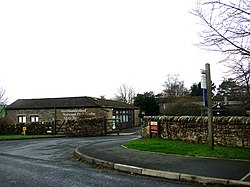
The new youth hostel and Visitor Centre is called "The Sill".

According to a sign in the Once Brewed Youth Hostel, there first was the Twice Brewed Inn, and the youth hostel was therefore called "Once Brewed". The "Once Brewed" closed in 2015/6 and was rebuilt as "The Sill". The Sill Visitor Centre and café was officially opened by Prince Charles in 2018.[1]

Location

[edit]

The village consists of the Twice Brewed Inn, a combined YHA youth hostel and Visitor Centre to the Northumberland National Park ('The Sill'), and also some farms. One of the farms is a bit further away, and is called "West Twice Brewed" on the Ordnance Survey maps.

Both the Twice Brewed Inn and the youth hostel are popular sleeping places for walkers on the Hadrian's Wall Path and the Pennine Way.

The village of Iverton, which appears on 18th-century maps of Northumberland[2] and latterly in two probate records from the 1830s, appears to have been coextensive with, or in very close proximity to, Twice Brewed.[3] R. G. Collingwood, writing in 1921, identifies Iverton with Everton, a "ruined farm half a mile [one kilometre] west of Chesterholm", or roughly the distance between Chesterholm and Twice Brewed. No farm of that name appears on Ordnance Survey maps from the 1920s or earlier, however. It is possible that the name of the Twice Brewed Inn gradually became attached to the buildings around Everton as the latter fell into disrepair.

The same maps place 'Forsten', another no longer extant Northumberland village, just across Bradley Burn from Once Brewed. Collingwood's identification of Forsten with Fourstones near Hexham thus appears to be mistaken.

Twice Brewed Inn

Twice Brewed Inn

[edit]

There are several stories which explain the name of the inn. The most romantic story has it that on the eve of the Battle of Hexham in 1464, Yorkist foot soldiers demanded their beer be brewed again because it lacked its usual fighting strength. The ploy worked as the Lancastrian army later fled after an early morning raid against the rejuvenated troops.[4] A more prosaic explanation is that 18th-century farmers tended to brew (and serve) weak ale, and hence "twice brewed" meant the inn offered stronger ale.[5] A third theory is that Hadrian's Wall snakes its way across the brows, or "brews", of two hills where there is also a meeting of a pair of drovers’ roads.[4]

The antiquarian William Hutton walked the length of Hadrian's Wall in 1801 and stayed one night at the Twice Brewed inn. He describes how a pudding was cooked "as big as a peck measure" and "a piece of beef ... perhaps equal to half a calf".[6] Although the inn was full, the landlady was able after some delay to find him a bed for the night.[6]

Governance

[edit]

Once Brewed is in the parliamentary constituency of Hexham. Joe Morris (Labour) is the Member of Parliament.

Before Brexit, its residents voted to elect MEPs for the North East England constituency in the European Parliament.

For Local Government purposes it belongs to Northumberland County Council a unitary authority, with Once Brewed lying in the Tynedale Division.[7] Prior to the 2009 structural changes to local government in England it was part of Tynedale Council.

References

[edit]
Revisions and contributorsEdit on WikipediaRead on Wikipedia
from Grokipedia
Once Brewed is a small settlement in , , located on the B6318 Military Road (also known as the Military Way) within and adjacent to the . It functions primarily as a visitor hub for tourists exploring the Roman frontier landscape, offering access to walking trails, archaeological sites, and accommodation amid dramatic upland terrain. The area's historical significance stems from its proximity to , constructed by the Romans around AD 122 as a defensive barrier across northern Britain, with nearby features including the Vallum earthwork and temporary Roman camps that date to the AD. Pollen evidence from the site indicates woodland clearance during the Roman period, supporting agricultural and military activities, while medieval and post-medieval use involved pastoral farming on what was once part of East Bog Farm. The modern name "Once Brewed" emerged in in association with a youth hostel established there in 1934 by the Youth Hostels Association, funded by the Trevelyan family; it may derive from a play on the nearby "Twice Brewed" designation, possibly alluding to lighter beverages like rather than strong ale. Key attractions include the Twice Brewed Inn, a country pub and brewery dating to the early in an area known for ale houses since at least the mid-18th century, which provides lodging, dining, and locally brewed beers inspired by the surrounding landscape. Adjacent is The Sill: National Landscape Discovery Centre, opened in 2017 as a sustainable facility replacing earlier visitor infrastructure including the previous youth hostel, featuring exhibitions on local , , and Roman history, a rooftop viewpoint, and educational programs to promote the park's dark skies and biodiversity. The YHA The Sill at Hadrian's Wall (formerly YHA Once Brewed), with its original building from 1934 rebuilt in 1968 and the site redeveloped in 2017, accommodates up to 79 guests and supports hiking along the Pennine Way and Hadrian's Wall Path.

Etymology

Name Origins

The name "Twice Brewed," from which "Once Brewed" derives as a variant, may originate from the , where "brew" (a form of "brow") signifies the edge of a hill, reflecting the settlement's location between two prominent hills that overlook the surrounding landscape along . This etymology ties the place name to the local topography, with visibly snaking across the brows of these hills. A secondary folk theory attributes the name to the potency of ale served at the local , suggesting that the beer was so strong that travelers required it to be "brewed twice" for dilution, while locals needed only "once brewed." This explanation, though popular, is considered less likely by linguists favoring the dialectal origin. Earliest references to the name appear in 18th-century records, with the area documented as "Twice Brewed" since at least the mid-1700s, coinciding with the presence of an ale house. By the 19th century, travelogues along , such as those describing inns in the vicinity, alluded to the site without fully distinguishing the emerging conventions. This interpretation is corroborated by maps from the 1860s, which label the locality consistent with the hill-brow derivation.

Naming Variations

The settlement known as Once Brewed is subject to a dual naming convention influenced by its position along the B6318 Military Road, where signage indicates "Once Brewed" for travelers approaching from the east and "Twice Brewed" for those arriving from the west, a practice possibly stemming from 19th-century signposting inconsistencies or local humor tied to the area's heritage. This variation reflects the hamlet’s informal identity, with the names often used interchangeably to refer to the cluster of buildings near . Historical records document the predominance of "Twice Brewed" in early mappings, with Armstrong's 1769 map labeling structures as "Twice Brew’d Ale," Fryer's 1820 map as "Twicebrewd Ale," and Greenwood's 1828 map distinguishing "Old Twice Brewed" from "Twice Brewed." The 1842 tithe map refers to a building as "West Twice Brewed," while Ordnance Survey maps from the 1880s onward show inconsistencies, such as the 1858 and 1895 editions marking the current Twice Brewed Inn site as a public house, the 1896 edition shifting it to "West Twice Brewed," and the 1921-1922 edition reestablishing "Twice Brewed." In the 20th century, official efforts favored "Once Brewed" for the youth hostel site established in 1934, named by Lady Mary Trevelyan to evoke lighter tea service in contrast to the stronger ales at the nearby inn. The naming variation gained cultural prominence through tourism promotion, particularly in Youth Hostels Association (YHA) literature from onward, which highlighted the Once Brewed hostel as a key stop for walkers along and the . This helped embed the dual names in guidebooks and visitor narratives, turning the quirk into a memorable feature of the region's identity. In modern usage, post-2016 developments have standardized "Once Brewed" for The Sill National Landscape Discovery Centre, built on the former YHA site and opened in to serve as a central hub for interpreting the area's and , while "Twice Brewed" persists for the adjacent .

Geography

Location and Coordinates

Once Brewed is a small hamlet in , , positioned at approximately 55°00′N 2°23′W and situated at an elevation of about 230 meters (755 feet) above . The settlement lies directly on the B6318, known as the Military Road, which was constructed between 1751 and 1759 by government forces in the aftermath of the 1745 Jacobite rising to improve military access across the region. It is roughly midway along this historic route, located about 34 miles west of and 24 miles east of Carlisle. Once Brewed forms part of the of Henshaw and falls within the boundaries of . As a compact , it encompasses a limited area of less than 1 square kilometer, centered around key facilities like the local and . Accessibility to Once Brewed relies primarily on road travel, with the AD122 Hadrian's Wall Country Bus providing infrequent services—typically every 2–3 hours during peak seasons—from railway station, which is 3 miles to the south; the village itself has no direct rail connection. The name "Once Brewed" appears on signage for travelers approaching from the east along the Military Road, while "Twice Brewed" is used for those coming from the west.

Surrounding Landscape

Once Brewed is situated within the rolling hills of the , characterized by undulating and dramatic escarpments formed by the Whin Sill, a prominent igneous feature that creates steep outcrops such as Peel Crags to the east and Highshield Crags to the north. The settlement occupies a shallow valley at the base of this escarpment, providing a sheltered position amid the broader upland terrain of . Geologically, the area underlies Carboniferous sedimentary rocks, including and , intruded by the Great Whin Sill—a tabular layer of dolerite formed approximately 295 million years ago during the late period. These intrusions are exposed in nearby crags and quarries, such as Cawfield Quarry, where the resistant dolerite stands proud against softer surrounding strata, shaping the rugged topography visible along . The surrounding features expansive habitats dominated by heather, , and a variety of wildflowers, supporting diverse including birds like merlins and hen harriers in this internationally recognized wilderness. As part of , the area was designated an International Dark Sky Park (Gold Tier) in 2013, owing to its minimal , which enhances stargazing opportunities across the low-population upland landscape. Environmental protections are stringent due to the site's inclusion in the buffer zone of the Hadrian's Wall World Heritage Site, established to safeguard archaeological and natural features; this imposes restrictions on development and land use to prevent erosion, visual intrusion, or habitat disruption.

History

Roman and Prehistoric Context

The area surrounding Once Brewed preserves evidence of prehistoric human activity from the onward, with pollen records from nearby Fellend Moss indicating cereal cultivation and woodland clearance dating to approximately 2500–700 BC. These findings suggest early agricultural settlement in the landscape, potentially linked to broader patterns of land use along the Whin Sill. Bronze Age cairns dot the surrounding hills, functioning as burial monuments and markers of territorial or ritual importance. Complementing these are cup-and-ring markings etched into nearby crags, a hallmark of prehistoric rock art in Northumberland dating primarily to 2000–1000 BCE; these motifs, consisting of concentric circles around central cups, likely held symbolic or ceremonial significance for early communities. Evidence from the includes an enclosed settlement on Shawhead Hill, roughly 2 km south of Once Brewed, identified through archaeological survey. Nearby hillforts on the encompassing uplands have yielded sherds and stone tools, indicative of defended communities; these artifacts, preserved in waterlogged anaerobic conditions, are maintained by the Trust as part of ongoing regional excavations. The Roman period transformed the region into a strategic frontier zone with the construction of in AD 122 under Emperor , aimed at demarcating and defending the northern boundary of Roman Britannia. The wall and its associated vallum—a rearward ditch and mound system—pass directly adjacent to Once Brewed, with visible remnants approximately 500 meters north; Milecastle 39, a small gateway fortification spaced at Roman mile intervals, stands prominently nearby at Castle Nick. Positioned 1.5 miles south of Once Brewed, the fort served as a vital auxiliary base from AD 85 onward, predating and supporting the wall's construction; it housed successive garrisons and yielded over 1,000 wooden writing tablets from AD 85–130, offering invaluable insights into daily Roman military life. The fort's nine overlaid phases reflect continuous occupation until around AD 370. The craggy terrain of the Whin Sill near Once Brewed enhanced the wall's defensive role, with sheer cliffs providing a against northern incursions. A temporary Roman camp at Once Brewed, identified as a , attests to construction-phase logistics midway between Housesteads and Great Chesters forts. Geophysical surveys, including magnetometry, have further revealed anomalies suggestive of temporary camps and potential signal stations (turrets) along this sector, bolstering the frontier's communication and patrol networks.

Post-Medieval Development

The construction of General Wade's Military Road (B6318) between 1751 and 1759, following the Jacobite Rebellion, marked the onset of significant post-medieval development in the Once Brewed area. Built to facilitate rapid troop movements between Newcastle and Carlisle, the road traversed the landscape parallel to , overlaying parts of the Roman Vallum earthwork and spurring the erection of initial structures to support military personnel and passing travelers. Early inns emerged along this route to provide lodging and refreshment, transforming the sparsely settled locale into a rudimentary service point amid the moors. By the , Once Brewed had evolved into a modest stopover for traffic traversing the Military Road, benefiting from improved connectivity that linked remote borderlands to larger towns. The settlement's growth remained limited, centered on agricultural activities with a small resident base primarily comprising farm laborers tending dispersed holdings in Henshaw township. Inns such as the Twice Brewed public house, documented on maps from 1858 onward, served as key hubs for weary coaches, underscoring the area's role in regional transport before the advent of railways diminished such reliance. The 20th century brought notable milestones in infrastructure and tourism, highlighted by the opening of the Youth Hostels Association (YHA) Once Brewed hostel in 1934. Established on land at East Bog Farm and donated by Sir Charles Trevelyan, a prominent supporter of youth travel initiatives, the facility catered to hikers and history enthusiasts drawn to the nearby Roman Wall, which retained its allure as an enduring historical landmark. The original hostel was demolished in 1968 and replaced by a new one that opened later that year with 56 beds; this was remodeled in 1986–1987, increasing capacity to 86 beds. The second hostel operated until its closure on September 11, 2015, after which the site was demolished to make way for The Sill: National Landscape Discovery Centre. A third YHA hostel, integrated into The Sill, opened on July 29, 2017, and continues to accommodate guests as of 2025. Once Brewed's post-medieval history also reflects the lingering legacy of the 16th-century , whose cross-border feuds between English and Scottish families shaped the defensive character of the surrounding landscape. Raiding activities, which persisted until their suppression under King James I in the early , prompted the construction of fortified pele towers in the vicinity, some of whose ruins remain as testament to this turbulent era.

Landmarks

Twice Brewed Inn

The Twice Brewed Inn serves as a key landmark in the small hamlet of Once Brewed, functioning as a welcoming hub for hikers, history enthusiasts, and tourists exploring . Built as a along the Military Road in the mid-18th century, it catered to travelers navigating the newly constructed route through Northumberland's rugged terrain. The inn's position on the B6318 road enhanced its role in facilitating passage across this historically significant path. Architecturally, the Twice Brewed Inn exemplifies traditional design with its long, stone-built structure featuring a slate roof, characteristic of the region's vernacular buildings. The interior preserves elements of its heritage, including original fireplaces that contribute to the cozy ambiance of the taproom. This space now serves award-winning local ales produced by the on-site Twice Brewed Brewery, established in 2017, which draws on the area's ancient brewing traditions dating back to Roman times at nearby . The brewery utilizes local well water and sustainable practices, such as filtration for , to craft a range of beers including gluten-free options. The inn's history includes notable anecdotes, such as the 1801 visit by antiquarian William Hutton, who documented his stay there during his traversal of Hadrian's Wall in his 1802 publication The History of the Roman Wall. Local folklore ties the inn's name to 18th-century road builders working on the Military Road, who reportedly found the local beer too weak and humorously requested it be "brewed twice" to strengthen it, inspiring the moniker for the establishment and surrounding area. In the 19th century, the inn expanded with stables to support increasing coaching traffic, solidifying its status as a vital stopover. Today, the Twice Brewed Inn operates as a multifaceted venue, combining a offering home-cooked meals with a providing 23 en-suite rooms, many dog-friendly and equipped for accessibility. Since the , it has hosted the annual Twice Brewed Beer and Music Festival in its and marquee, featuring live music, stalls, and shuttle services for attendees. The inn emphasizes Hadrian's Wall-themed events, including stargazing sessions and shows in its new 30-seat facility, partnered with Kielder Observatory since 2025, under Northumberland's .

The Sill Discovery Centre

The Sill: National Landscape Discovery Centre was constructed between 2015 and 2016 on the site of the former Youth Hostels Association (YHA) hostel, which dated back to 1934, and officially opened to the public on 29 July 2017. The project, costing £14.8 million in total, received a £7.8 million grant from the to support its development as the UK's first dedicated landscape discovery centre. Designed by JDDK Architects, the eco-friendly structure draws inspiration from the Great Whin Sill geological formation, featuring diagonal lines that echo the surrounding landscape's undulations. Approximately 80% of its external walls incorporate local materials such as whin stone, , and native to minimize visual impact and blend seamlessly with the environment. A key feature is the fully accessible living roof covered in whin grass, which serves as a 360-degree viewing platform offering panoramic vistas of and the countryside while supporting local . The building's emphasizes low environmental footprint, with regional employment accounting for 90% of the construction workforce. The centre's facilities include interactive exhibition spaces focusing on the region's , , and , complemented by temporary displays on topics like and . Additional amenities comprise the Once Brewed serving local produce, a shop specializing in regional crafts, and meeting rooms for educational groups. It also hosts a year-round programme of events, such as stargazing sessions at its Dark Sky Discovery Site and talks on Roman history tied to . Managed by the Authority in partnership with YHA , The Sill serves as a hub to promote and deepen public understanding of the landscape's ecological and historical significance. Since opening, it has attracted over 125,000 visitors annually as of 2023/24, surpassing initial targets and fostering community engagement through learning programmes and economic support for local producers.

Administration and Demographics

Governance

Once Brewed falls under the jurisdiction of Henshaw Parish Council, the lowest tier of local government responsible for community services, maintenance of public spaces, and representing local interests in the area. This parish council collaborates with higher authorities on issues such as traffic management and environmental protection, including recent discussions on speed limits along the B6318 Military Road. At the county level, the hamlet is represented within the Haydon and Hadrian ward of Northumberland County Council, where elected members address broader regional planning, infrastructure, and economic development. As part of , designated in 1956, Once Brewed is subject to stringent planning restrictions enforced by the Northumberland National Park Authority to conserve the area's natural beauty, biodiversity, and cultural heritage. The authority's policies prioritize , ensuring that any construction or land use aligns with the park's statutory purposes of protection and public enjoyment. Once Brewed also lies within the section of the Frontiers of the , inscribed in , which imposes additional safeguards for archaeological and historical features. Developments in this zone require coordination with , the statutory advisor on heritage matters, to prevent adverse impacts on the site's integrity and outstanding universal value. Post-2016 planning frameworks, including the Management Plan (adopted 2022) and the adopted Local (2020), promote controlled growth through zoning that balances economic benefits with rural preservation, such as supporting visitor facilities while limiting . These policies integrate with the park's International Dark Sky Park status, granted in 2013, enforcing controls to maintain low night-sky brightness and enhance astro-tourism.

Population Characteristics

Once Brewed is a small within Henshaw civil in , , characterized by its rural setting near . The encompasses several settlements, including Once Brewed, and recorded a total of 684 in the 2021 . The demographic profile of Henshaw reflects a typical aging rural community in , higher than the national average. This older structure is common in sparsely populated areas of , where the overall county median age stands at 48 years as of the 2021 . Ethnic diversity in the aligns closely with broader trends, where 97.6% of residents identified as white in the 2021 Census, indicative of low ethnic minority representation in remote rural locales. Household data for the shows around 280 , many comprising older couples or retirees, contributing to a stable but slowly declining population from 762 in 2011 to 684 in 2021.

References

Add your contribution
Related Hubs
User Avatar
No comments yet.