Hubbry Logo
Operation CornflakesOperation CornflakesMain
Open search
Operation Cornflakes
Community hub
Operation Cornflakes
logo
8 pages, 0 posts
0 subscribers
Be the first to start a discussion here.
Operation Cornflakes
from Wikipedia
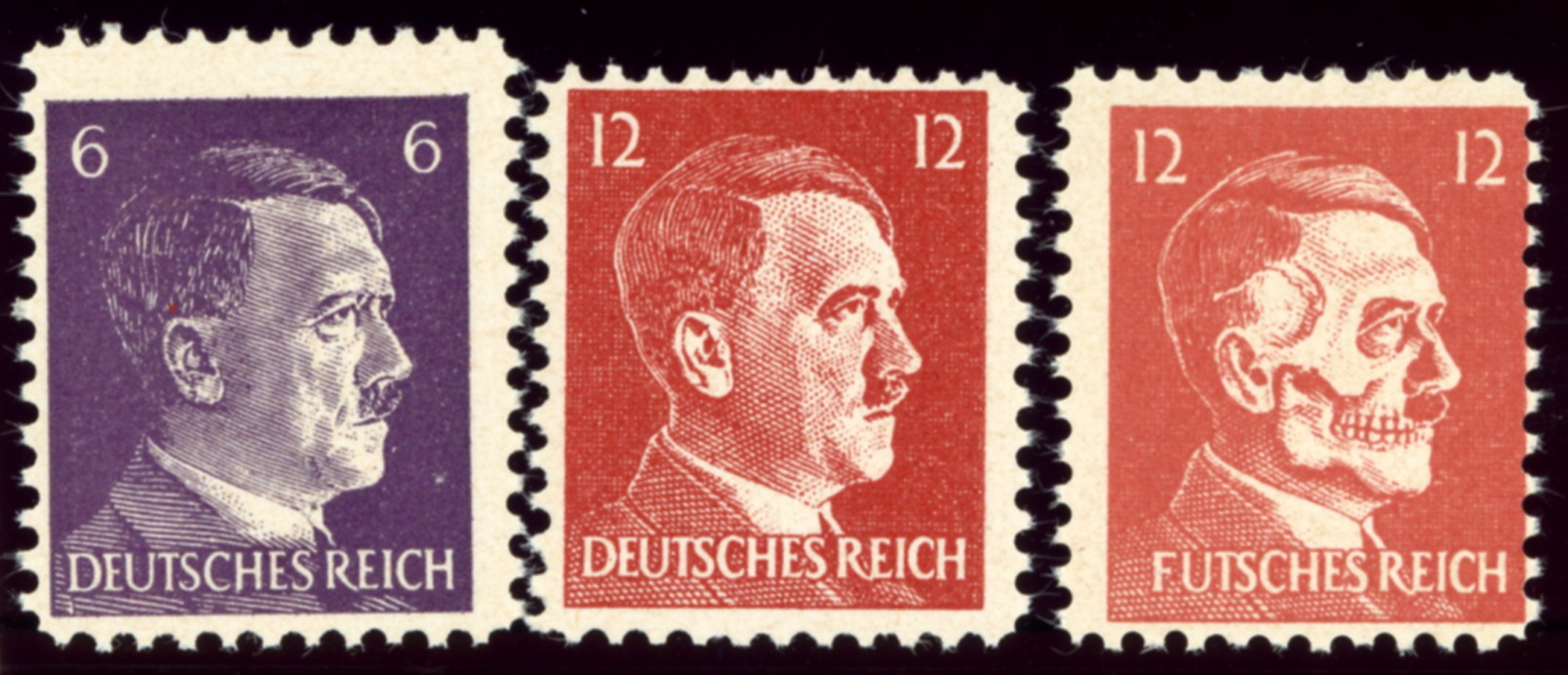
The original text Deutsches Reich ('German Empire') was maintained for the standard forgeries, but was changed to Futsches Reich ('Ruined Empire') on the "Death Head" variant, a focus of American forgers

Operation Cornflakes was a morale operation by the Office of Strategic Services during World War II that aimed to trick Deutsche Reichspost into inadvertently delivering anti-Nazi propaganda to German citizens through mail.[1]

The operation involved special planes that were instructed to airdrop bags of false, but properly addressed, mail in the vicinity of bombed mail trains. When recovering the mail during clean-up of the wreck, the postal service would hopefully confuse the false mail for genuine mailbags and deliver it to the various addresses.[1]

Stamp forgeries

[edit]

The British were the first to forge the Hitler head stamp in 3, 4, 6 and 8-pfennig values from 1941 until the end of the war.[2] These stamps were of better quality versus the Americans' attempt at forgery because the British used actual stamp production facilities whereas the Americans did not have access to quality ingredients such as paper, ink or engravers.[2] The American forgeries focused much of their efforts on the 12-pfennig stamp depicting Hitler's head and exposed skull.[3]

Overview

[edit]

Initiated in 1942, the Office of Strategic Services (OSS) was formed from the division of the Foreign Information Service (FIS) and the Office of the Coordinator of Information (COI), a division that President Franklin D. Roosevelt enacted by Executive order 9128.[4] The remainder of the COI was renamed the Office of Strategic Services. The newly formed OSS was under jurisdiction of the Joint Chief of Staff, giving the OSS the capability and status of a military branch.[4]

The overarching goal of the operation was to disrupt the morale of the German people by using a large scale psychological warfare operation (PSYOP) that the British MI6 had been pushing into service with the help of the Royal Air Force (RAF).[3] Using the same pattern of mission as a previous OSS operation in Hungary, the OSS crafted their more intricate Operation Cornflakes.[5] The distribution of propaganda in letters and distributed by the German postal system was thought to be an ideal method of reaching the German population and undermining support for Hitler.

Operation Cornflakes began with OSS officials collecting any and all German prisoners of war (POWs) that had experience with the Reichspost (Germany's postal service).[3] These POWs were given better meals in exchange for information in collection, sorting, canceling and delivery of the mail. The OSS did not infiltrate Germany directly because they felt it necessary to focus their efforts in the liberation of France in 1944, but by the waning years of the war secret Intelligence agents of the OSS could be found trickling in. The information came from nearby outposts in neutral countries that supplied the OSS with information.[6]

With this information the OSS and German exiles scoured the telephone directories and pulled over two million, randomly selected names registered within the Reich to send forged letters to.[5][2] A unit of the OSS in Rome claimed to have forged over 15,000 envelopes a week.[2] The letters contained writings about family happenings and gossip about non-existent people, the idea being that the domestic mail was not censored unlike the business mail.[3] Forged letters from Rome were addressed and sealed in Siena, then went to Rome where they were placed into counterfeit mail bags which were sent to Bari to be routed and canceled, then delivered to surrounding cities.[5]

In hopes of further shaking the morale of the German people, the OSS called upon master forgers similar in nature as MI6 once had. Rather than having an image of Heinrich Himmler replacing Hitler, the OSS used a stamp of Hitler with some minor modifications. The modifications included a skull overlay that resembles a portion of Hitler's face having been "eaten away". The German subscript at the bottom of the stamp was altered from 'Deutsches Reich' (German Empire) to 'Futsches Reich' (ruined empire). These stamps were known as the "Death Head" and were usually placed in the letter with other subversive materials.[3]

The letters were arranged in Reichspost bags that the OSS had forged to resemble the original bags. These precisely-made bags were indistinguishable from the real German mail bags and were mimicked down to the material used.[5] The bags were loaded aboard bombs specially designed to deploy the bags near a destroyed train, preferably one carrying mail, and drop the forgeries in amongst the originals in hope that they would be put into circulation with the rest of the mail. However, all the prior planning was almost for naught after the Reichspost altered the cancellation machines used for domestic mail in August 1944, making the thousands of letters previously written void.[3]

The OSS obtained a copy of the revised cancellation design and went to work again drafting up new letters and with the letters, subversive material. By September the next blow to the OSS operation was intelligence gathered that no domestic mail would be delivered due to wartime internal power struggle within Germany.[3] One page newspaper leaflets called Das Neue Deutschland which contained material that the official newspaper would never print were placed into some of the outgoing letters to be dropped by the 15th Air Force.[5] The 15th Air Force and fighter group detachment were tasked with the destruction of the mail train and the planting of the mailbags of propaganda (Cornflakes) amongst the debris.[5]

The first mission of Operation Cornflakes took place on 5 January 1945, when a mail train to Linz was bombed. Bags containing a total of about 3,800 propaganda letters were dropped at the site of the wreck, which were subsequently picked up and delivered to Germans by the postal service.[7] Within 1944–45 twenty missions had been completed, reporting a success rate of 50%, leaving the 15th Air Force with over 320 delivered mailbags of propaganda.[5]

A total of 96,000 stamps were made for Operation Cornflakes. It is unknown how many were sent, but it is believed that the "Death Head" stamps were never posted.[8][9]

Aftermath

[edit]

A major oversight by the OSS and its task force in Rome was that the ravages of war shut down many of the cities' critical services and in some cases the postal service. While some cities continued its services of mail delivery, the allied bombing had turned many residences into piles of rubble; millions of people without a home were displaced and forced to leave and seek refuge elsewhere, in many cases with relatives.[3] Without a physical address left to deliver the mail to, much of it was discarded. Another oversight was simply the fact that when people received mail from an unknown source they would usually destroy it, especially if the letters contained allied propaganda, either out of loyalty or fear of punishment.[3]

See also

[edit]

References

[edit]
Revisions and contributorsEdit on WikipediaRead on Wikipedia
from Grokipedia

Operation Cornflakes was a covert campaign executed by the (OSS) Morale Operations Branch during , from February to April 1945, aimed at infiltrating the German postal system with forged anti-Nazi materials to erode civilian morale and foster perceptions of against the regime.
The operation's method involved Allied aircraft, primarily P-38 fighter-bombers from the 14th Fighter Squadron of the 15th Air Force, first strafing or bombing German mail trains to scatter authentic mailbags, followed by low-level drops of 320 counterfeit mailbags containing approximately 96,000 pieces of —such as letters, postcards, and s—over targeted sites in and , exploiting the Deutsche spost's obligation to collect and redistribute disrupted mail.
items included the forged Das Neue Deutschland, purporting to be an underground publication revealing divisions in the Nazi high command and urging defection, alongside poison-pen letters and envelopes affixed with altered postage stamps depicting with a bandaged or skull imagery labeled "Futsches " to symbolize a doomed empire; these were meticulously replicated using intelligence from German prisoners of war and prewar directories to mimic legitimate correspondence.
While some materials evaded detection and reached German households, contributing to broader efforts amid the collapsing , the operation's impact remained difficult to quantify due to wartime disruptions, German security measures that reportedly destroyed up to 97 percent of forgeries in certain instances, and the predominance of other factors like Allied bombing in displacing postal services and refugee populations.

Historical Context

Psychological Warfare in World War II

Psychological warfare during encompassed systematic efforts by Allied forces to manipulate the perceptions, emotions, and behaviors of Axis populations, particularly in , with the primary objectives of eroding military morale, fostering civilian disillusionment, and prompting actions such as or resistance that weakened the enemy's war effort. These operations drew on , , and targeted messaging to exploit vulnerabilities in Nazi ideology and societal cohesion, complementing physical military strategies amid the total mobilization of resources on both sides. Unlike direct combat, psyops sought to achieve strategic gains through non-kinetic means, prioritizing the disruption of the enemy's will to fight over immediate territorial or material destruction. Allied —overtly attributed to British or American sources—included extensive radio broadcasts via the , which reached German audiences despite jamming attempts, and massive aerial leaflet campaigns conducted by the RAF and USAAF. By , these efforts had distributed millions of leaflets over German cities and fronts, conveying messages of inevitable defeat, Nazi atrocities, and promises of humane treatment for surrenders, often printed in German to appeal directly to troops and civilians. Such operations were coordinated through entities like the British Political Warfare Executive and the U.S. Office of War Information, aiming to counter ' Ministry of Propaganda by highlighting discrepancies between official narratives and battlefield realities. However, Nazi laws, which criminalized possession of enemy materials under threat of severe punishment, combined with cultivated public toward foreign sources—fueled by years of Goebbels' counter-propaganda labeling Allied messages as lies—severely limited the penetration of psyops. Interrogations of German prisoners of revealed that while leaflets were frequently recovered and read in secret, their perceived enemy origin often led to rapid disposal to avoid detection, with many respondents expressing distrust or indifference due to fears of reprisals and the regime's tight information control. This empirical feedback from POW surveys and reports underscored the need for a pivot to , which disguised its Allied origins by mimicking internal German dissent or rogue broadcasts to bypass and infiltrate controlled media spaces. Black operations, such as clandestine radio stations operated by the British Special Operations Executive, exemplified this adaptation; stations like Soldatensender Calais and Gustav Siegfried Eins broadcast vulgar, defeatist content purporting to be from dissident Wehrmacht units or underground networks, using authentic German slang and news delays to feign legitimacy. These were supported by powerful transmitters like Aspidistra, enabling reach into the German heartland without overt attribution. In the context of total war's immense resource demands—where strategic bombing campaigns consumed vast quantities of fuel, aircraft, and ordnance—psyops offered a cost-efficient alternative, leveraging minimal matériel for potentially outsized morale disruption, as evidenced by post-capture analyses showing incremental erosion in frontline cohesion when combined with material shortages.

Establishment of OSS Morale Operations

The Office of Strategic Services (OSS) was formally established on June 13, 1942, under the direction of , who had previously coordinated information efforts since 1941 to counter Axis intelligence and capabilities. , recognizing the psychological impact of Nazi operations, prioritized tactics within the OSS structure to exploit enemy vulnerabilities beyond conventional military engagement. The Morale Operations (MO) Branch emerged as a dedicated OSS component in early January 1943, with operational readiness achieved by March, focusing on "black" propaganda—fabricated materials designed to erode enemy cohesion by sowing doubt, fostering internal discord, and promoting among troops and civilians. Unlike overt leaflet drops or broadcasts, which faced overt resistance and , MO emphasized insidious dissemination methods that leveraged trusted enemy infrastructure for delivery, drawing on empirical observations of how state-controlled systems could unwittingly amplify deceptive content. MO's forgery expertise developed rapidly in forward theaters, including and following Allied landings in 1942–1943, where specialized teams honed techniques for replicating stamps, envelopes, official seals, and correspondence to mimic authentic enemy correspondence. These efforts built on initial small-scale successes, such as documents tested in limited distributions that evaded detection and influenced targeted recipients, validated by field intelligence reports on postal recovery processes after air raids. Central to MO's strategy was exploiting the , Germany's highly efficient and state-monopolized , which processed millions of items daily with minimal scrutiny for domestic mail, positioning it as a reliable vector for infiltration akin to a covert "" mechanism. This rationale stemmed from assessments of the 's operational resilience—evidenced by its continued functionality amid wartime disruptions—and its role in maintaining civilian and military through routine, unquestioned delivery, allowing forged items to blend seamlessly and reach unintended audiences without alerting censors.

Planning and Preparation

Development of the Concept

The concept for Operation Cornflakes originated in late 1944 within the Office of Strategic Services (OSS) Morale Operations Branch, as OSS personnel sought innovative methods to deliver propaganda directly into German homes amid intensifying Allied air campaigns against rail infrastructure. OSS agents recognized that routine bombing of mail trains by Allied forces scattered authentic correspondence across wreckage sites, which German postal workers dutifully collected and redistributed under Deutsche protocols, often without thorough inspection. This observation prompted brainstorming sessions to hijack the process by intermingling forged mailbags with the debris, ensuring unwitting dissemination through the existing postal network rather than overt leaflet drops that civilians frequently ignored or reported. The operation derived its name from the , reflecting the intent for recipients to encounter subversive materials alongside their morning routines, maximizing psychological impact through surprise and domestic normalcy. Key developers Jan Libich and refined the blueprint, with Libich conducting targeted research into German postal operations to identify vulnerabilities in recovery procedures. The causal logic emphasized authenticity via disruption: precise strikes on mail trains would create plausible chaos, allowing dropped sacks—mimicking official ones—to blend seamlessly and exploit recovery teams' haste, thereby bypassing and achieving higher penetration than alternative dissemination channels. Planning prioritized routes serving symbolically resonant destinations, such as —Adolf Hitler's hometown—to amplify demoralizing effects on regime loyalists. Input from specialists ensured the sacks' visual and procedural fidelity, though the focus remained on systemic integration over isolated fabrication. Resource coordination involved approximately 21 Morale Operations personnel across OSS outposts in and , who collaborated with the U.S. 15th Air Force for synchronized drops by P-38 pilots from the 14th Fighter Group. This inter-branch alignment, under figures like OSS MO chief Eugene Warner, allocated printing and addressing capabilities while securing air support commitments from leaders such as , underscoring the operation's reliance on multi-domain precision to evade detection and sustain credibility. By early 1945, the blueprint transitioned from ideation to preparatory phases, setting the stage for field integration without compromising the element of deceptive realism.

Forgery Techniques and Materials

The Office of Strategic Services (OSS) employed to produce forged 6-pfennig violet and 12-pfennig red head stamps, replicating the standard German issues of the era. These counterfeits featured perforations ranging from 11 to 13, differing from the genuine stamps' 14-perforation gauge, and used inks and papers that varied in quality due to wartime shortages, often failing to match the originals precisely in color and texture. A specialized variant overlaid a skull image on Hitler's portrait with the inscription "Futsches Reich" (Ruined Empire), printed in sheets of 50 by OSS units in and , totaling 726,550 stamps. Envelopes were crafted to emulate standards, utilizing German-style stationery and addresses sourced from prewar telephone directories containing over two million names, supplemented by return addresses derived from wartime newspapers and death notices to reflect postal restrictions on personal correspondence. Production involved a mix of typed and hand-addressed envelopes, with approximately 15,000 units prepared weekly by 21 OSS Morale Operations personnel in facilities at for addressing and for stuffing and sealing. Postmarks were forged using predated cancels mimicking cities such as , Hannover, and , applied in or at airfields after studying genuine samples and consulting prisoner-of-war interrogations to ensure contextual accuracy. Mailbags replicated authentic sacks from burlap material, affixed with counterfeit tags and labels to pass initial scrutiny by German postal workers. Verification of these forgeries relied on cross-referencing with captured German mail, POW insights, and real postal artifacts to minimize detectable anomalies, though imperfections like inconsistent from limited scribes per cancel type and errors in some addresses later enabled identification by authorities. No watermarks were imitated, as wartime paper shortages rendered them unnecessary for basic deception.

Execution

Initial Mail Train Disruptions

The inaugural execution of Operation Cornflakes took place on February 5, 1945, targeting a German mail train bound for , , with U.S. Army Air Forces P-38 Lightning fighter-bombers conducting a precision strafing and bombing run to derail the locomotive and scatter its cargo. This disruption aimed to create recoverable debris from the train's estimated load of genuine mail sacks, avoiding total destruction that might prevent German recovery teams from salvaging and resorting the materials. Moments after the initial attack, a follow-up wave of P-38s released eight mail bags directly onto the wreckage site, each containing approximately 800 forged postal items designed to mimic authentic correspondence and integrate seamlessly with the scattered real . These drops totaled between 3,000 and 6,400 propaganda-laden envelopes and packages, featuring altered postage stamps and addressed to civilian recipients in to exploit the German postal system's routine sorting and delivery protocols. German railway and postal personnel promptly recovered the intermixed sacks from the derailment near , processing thousands of items—including the infiltrated fakes—for onward distribution through the domestic mail network, thereby bypassing standard filters and delivering subversive content directly to households. The mission's mechanics validated the procedural concept of aerial interdiction followed by contamination, highlighting challenges such as wind dispersion of bags, vulnerability during low-altitude drops, and the need for forged materials to withstand scrutiny during manual sorting. This test run focused on Austrian civilian morale disruption, leveraging Linz's symbolic ties to to amplify psychological impact without broader territorial targeting.

Subsequent Propaganda Drops

Following the initial execution on January 5, 1945, Operation Cornflakes expanded with 20 subsequent missions conducted by the USAAF's 14th of the 15th from February 4 to April 16, 1945, targeting rail routes in southern Germany and , including areas near , , , , and Ried. These drops, averaging about two per week, disseminated 320 fake mailbags totaling roughly 96,000 forged letters and newspapers, with each bag containing approximately 300 items designed for postal recovery. Adaptations addressed evolving wartime conditions, such as shifting front lines and variable weather, by focusing on high-traffic lines anticipated for rapid German postal servicing and incorporating alternative drop sites like trucks or roads in response to a directive prioritizing mail delivery by any means. Delivery methods refined iteratively through OSS coordination with aircrews, employing low-altitude special bombs that detonated 50 feet above tracks to simulate realistic scattering from bombed trains, while envelopes used authentic-looking varied postmarks from cities including , Hannover, and . Aircrews received specialized training via Morale Operations liaisons for precision placement, enabling scaled-up volumes per mission. Operational tweaks drew from mission feedback and intelligence gathered from German POW mail clerks, emphasizing routes with demonstrated recovery efficiency to counter disruptions like refugee displacements from Allied bombing. One failure occurred when a drop included envelopes stamped "Geheime" (secret), alerting postal sorters to the forgeries and resulting in their discard rather than distribution.

Propaganda Content

Forged Postal Items

The forged postal items for Operation Cornflakes consisted primarily of envelopes, postcards, and enclosed letters mimicking everyday civilian correspondence handled by the Deutsche Reichspost. These artifacts incorporated canceled postage stamps, with OSS forgers replicating German designs such as the Hitler head issue, sometimes modified with symbolic alterations like death's head motifs and inscriptions denoting a "ruined Reich" to evade initial scrutiny while embedding propaganda. Envelopes and postcards adhered to standard Reichspost dimensions and paper stocks, sourced from captured samples to ensure compatibility with German sorting and cancellation machines. Authenticity was enhanced through varied addressing techniques, including both typewritten labels and handwritten scripts imitating diverse German handwriting styles to simulate organic civilian flow. Letters often featured personal touches, such as fabricated family updates or business notes, drawn from OSS-compiled dossiers of genuine German postal formats, addresses, and return labels to blend seamlessly into disrupted rail shipments. Production occurred in OSS facilities in , where a dedicated unit generated over 15,000 envelopes weekly, packed into forged sacks indistinguishable from originals in material, stitching, and labeling for aerial dispersal. These items avoided anachronistic materials by relying on wartime-era inks, papers, and printing methods matched against 1940s standards, as verified through pre-operation analysis of intercepted mail to minimize post-recovery detectability by German authorities. While stamp forgeries occasionally deviated in counts (e.g., 11-13 versus genuine 14), the overall design prioritized workflow integration over perfect replication, enabling inadvertent distribution via recovery teams.

Themes and Messaging

The propaganda disseminated through Operation Cornflakes employed techniques, presenting materials as originating from clandestine German resistance groups or official sources to conceal Allied involvement and exploit existing societal fissures. Core messaging focused on fostering by portraying the Nazi regime as on the brink of collapse, with fabricated narratives of widespread troop desertions, acute food shortages, and futile resistance against inevitable Allied victory. These elements drew from intelligence assessments of German vulnerabilities, such as home-front discord revealed in POW interrogations, aiming to induce civilian passivity and erode willingness to sustain the . A prominent theme involved sowing internal betrayal and distrust toward , exemplified by forged letters mimicking high-level correspondence, such as a purported 20 September 1943 missive from implying military generals were negotiating peace and plotting against Hitler to avert total ruin. Poison-pen letters further amplified this by targeting personal relationships, including anonymous notes to soldiers' families alleging spousal or with authorities, designed to provoke emotional turmoil and interpersonal suspicion within the German populace. Such content avoided direct calls to arms, instead subtly encouraging through implied existence of an active anti-Nazi underground, as in enclosures from fabricated outlets like Das Neue Deutschland, which posed as an insurgent publication decrying regime corruption. Messaging targeted civilians primarily, using realistic personal and business addresses to simulate authentic mail circulation, thereby bypassing overt and promoting private dissemination of rumors about incompetence and fabricated atrocities attributed to Nazi officials. Specialized variants, such as the "Ten Commandments for Austrians" leaflets urging evasion of , tailored defeatist appeals to regional identities vulnerable to . This approach relied on causal mechanisms of psychological erosion—amplifying perceived elite betrayal to undermine collective resolve—without revealing external origins, aligning with broader OSS strategies informed by observed German sensitivities to internal discord.

Assessment and Impact

Methods of Evaluation

The primary evaluation method for Operation Cornflakes relied on interrogations and surveys of German prisoners of war (POWs) and deserters, focusing on their reported exposure to anomalous mail items such as forged letters or stamps deviating from standard postal norms. These assessments sought to quantify recognition rates of materials among recipients, with interrogators probing for details on delivery authenticity and content recall to infer dissemination success. Cross-verification occasionally drew from captured German postal logs or manifests, where available, to correlate self-reports with logistical traces of disrupted . Secondary metrics encompassed post-drop reconnaissance of targeted rail sites via or ground agent observations to detect evidence of material recovery and processing by German postal workers, supplemented by OSS mission logs estimating bag recovery rates from outcomes. Internal OSS Morale Operations Branch reports compiled distribution approximations based on flight manifests, drop coordinates, and confirmed interceptions, prioritizing empirical tallies of executed drops over speculative reach models. Measurement challenges were inherent, stemming from the lack of randomized control groups amid conditions, where broader Allied bombing and front-line disruptions obscured isolated effects from general morale erosion. Self-reported data from POWs risked due to survival incentives or post-capture rationalizations, necessitating across multiple interrogations for pattern validation. Evaluators maintained methodological discipline by isolating observable correlations—such as mail receipt acknowledgments—from unsubstantiated causal inferences regarding attitudinal or behavioral shifts, thereby grounding conclusions in rather than assumed psychological linkages.

Reported Outcomes

Approximately 96,000 forged propaganda letters were delivered via 320 airdropped mailbags over and from February to April 1945, as documented in OSS mission records from the 14th of the 15th . Post-war investigations confirmed that portions of this material reached civilian and military recipients through the , with some Germans reporting exposure to the forged items during interrogations. Interrogated prisoners of war provided of belief in the authenticity of the , including perceptions of an active anti-Nazi resistance network, which aligned with minor reported increases in desertions among units in affected regions during the operation's timeframe. Broader OSS morale operations, encompassing similar subversion tactics, were estimated to have influenced up to 10,000 desertions overall, though isolating Cornflakes' specific contribution remains difficult amid concurrent psychological efforts. These outcomes were contextualized by Germany's deteriorating position following the Ardennes Offensive's collapse in , which exacerbated civilian and military unease; Cornflakes materials may have amplified this through targeted messaging on , but served as one factor among many, including aerial bombings and territorial losses, without evidence of direct causation for widespread surrenders or postal system breakdowns. Empirical measurement was constrained by the covert nature of the drops and lack of isolated metrics, with German censors reportedly destroying up to 97% of suspicious forgeries upon detection.

Limitations and Failures

The forged postal items carried detectable inconsistencies, including printing errors on stamps depicting an inverted skull superimposed over Adolf Hitler's profile, which German censors identified and led to the and of affected mailbags. Typos and stylistic anomalies in the propaganda letters further heightened detection risks, as officials routinely scrutinized salvaged mail from disrupted trains for irregularities. Operational scale remained constrained despite efforts to produce up to 15,000 forged letters weekly; over three months, only 20 aerial missions delivered approximately 320 mailbags containing 96,000 pieces, a negligible proportion relative to the Deutsche Reichspost's daily handling of millions of items. Drop accuracy suffered from adverse weather, turbulence, and exposure to flak during low-level flights over defended territory, often scattering bags away from targeted sites and reducing recovery rates by postal workers. Psychological effects proved elusive to isolate, as black propaganda's cumulative impact intertwined with broader Allied military advances and conventional bombing campaigns, yielding no verifiable evidence of decisive contributions to German morale collapse or Nazi regime downfall. OSS evaluations underscored the opacity of morale operations, noting that net outcomes defied precise quantification amid variables like frontline defeats. The intensive labor in authentic-looking materials—encompassing custom stamps, papers, and enclosures—diverted skilled personnel from potentially higher-yield endeavors, with retrospective OSS reporting questioning the return on such specialized efforts.

Legacy

Post-War Analysis

Declassified OSS documents, preserved in CIA archives and released progressively from the 1970s onward, affirm the operational ingenuity of Operation Cornflakes in forging authentic-looking German postal materials to infiltrate mail streams, with planning commencing in mid-1944 and executions tied to specific RAF bombings from January to May 1945. These internal reviews, including progress reports dated , detail procedural successes such as the replication of postage meters and stamps but offer scant evidence of measurable morale degradation, emphasizing instead the challenges in verifying dissemination amid wartime chaos. Historical scholarship, informed by archival holdings at institutions like , regards Cornflakes as a creative exemplar of within the OSS Morale Operations Branch, yet concurs that its contribution to Allied victory was peripheral, overshadowed by conventional military advances and the regime's internal implosion by spring 1945. Analyses drawing on POW interrogations—used primarily to refine postal techniques—reveal low penetration rates, with forged items comprising a tiny fraction of recovered mail and rarely reaching beyond local postal hubs. Myths propagated in some popular narratives, including unsubstantiated claims of inciting postal worker defections or widespread civilian revolts, lack corroboration in declassified files or empirical studies, which instead highlight the operation's experimental nature without attributing systemic disruptions to it. Overall, post-war evaluations underscore the inherent difficulties in isolating psychological operations' effects, concluding that Cornflakes' morale impact, if any, was negligible and unquantifiable against the backdrop of Germany's total defeat.

Influence on Modern Psychological Operations

Operation Cornflakes demonstrated the principle of leveraging enemy infrastructure—such as postal systems—for disseminating deceptive materials, a tactic that informed subsequent U.S. psychological operations by emphasizing infiltration of trusted channels to enhance credibility and reach. This approach contrasted with overt leaflet drops, prioritizing subtlety to bypass skepticism and exploit routine civilian processes for morale disruption. Post-World War II, (OSS) veterans, who spearheaded such efforts, transitioned into the (CIA), carrying forward methodologies for forgery and covert influence that shaped Cold War-era activities, including campaigns aimed at Soviet targets through forged documents and media. In psychological warfare manuals and CIA operations, the OSS's focus on authentic-seeming forgeries influenced tactics like producing counterfeit publications and exploiting communication networks, though specific postal forgery replications were less documented due to the shift toward radio and print media. These principles underscored the value of "black" propaganda—attributed to adversaries—to sow internal discord without revealing origins, a core tenet retained in U.S. for non-kinetic operations. Contemporary analogues appear in cyber-domain influence operations, where adversaries mimic official channels (e.g., or email systems) to deliver , echoing Cornflakes' exploitation of perceived legitimacy for penetration. However, the operation's legacy highlights inherent risks in psychological tactics: unverifiable impacts, as post-mission assessments relied on anecdotal POW interrogations yielding inconclusive effects, prompting modern psyops to prioritize and measurable behavioral outcomes over speculative disruption. This empirical caution favors targeted, trackable interventions in digital environments, where authenticity can be algorithmically verified, reducing reliance on unquantifiable "morale plays." Referenced in declassified OSS histories and military analyses through 2025, Operation Cornflakes endures as a in psywar training for its innovative mechanics, with no significant reinterpretations emerging recently amid evolving focuses on hybrid threats.

References

Add your contribution
Related Hubs
User Avatar
No comments yet.