Hubbry Logo
Operation Crescent WindOperation Crescent WindMain
Open search
Operation Crescent Wind
Community hub
Operation Crescent Wind
logo
8 pages, 0 posts
0 subscribers
Be the first to start a discussion here.
Operation Crescent Wind
from Wikipedia

Operation Crescent Wind
Part of the War in Afghanistan (2001–2021)

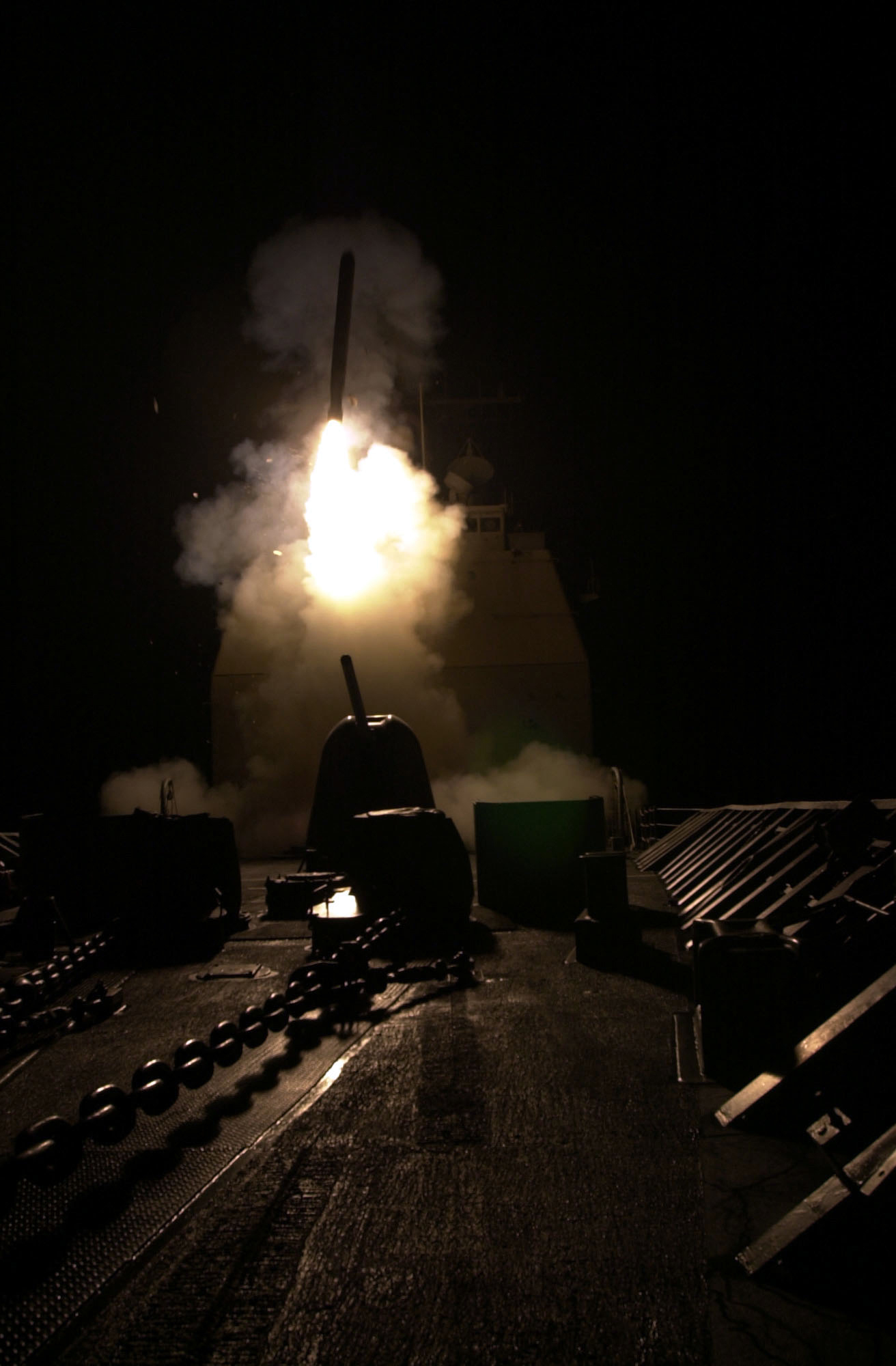
A Tomahawk cruise missile is launched from the USS Philippine Sea in a strike against al-Qaeda training camps and Taliban military installations in Afghanistan on 7 October 2001
Date7 October 2001 – 17 December 2001
Location
Result US-UK victory
Belligerents
United States
United Kingdom
Afghanistan Islamic Emirate of Afghanistan
Commanders and leaders
United States Tommy Franks
United States Charles F. Wald
Afghanistan Muhammad Omar
Units involved

United States Air Force

United States Navy

 Royal Navy

Royal Air Force
Casualties and losses
3 killed (friendly fire)
3,100–3,600 civilian deaths[1]

Operation Crescent Wind was the codename for the American and British air campaign over Afghanistan in October and November 2001. The bombing campaign was aided by British special forces troops on the ground to provide targeting information for airstrikes. The campaign significantly weakened the Taliban, paving the way for offensives by the Northern Alliance to take place in November which quickly overran Taliban-controlled regions of Afghanistan.

Opening strikes

[edit]

The initial strikes were launched from Whiteman Air Force Base, Missouri with two B-2 bombers of the 509th Bomb Wing taking off on the night of 7 October, followed by two on the nights of 8 October and 9 October as well. These bombers refueled with the help of KC-10 and KC-135 tankers of the 60th and 349th Mobility Wings along with the 319th Reconnaissance Wing with coordination by the Eighteenth Air Force, first doing so off the coast of California, followed Hawaii, Guam, and the Strait of Malacca, then a fifth refueling near Diego Garcia before striking their targets in Afghanistan with GBU-31 JDAMs. After delivering their ordnance, the B-2s turned back to receive a final refueling over the Indian Ocean before landing at Andersen Air Force Base. At this point the crews were swapped with the replacement crews who flew the B-2s back to Whiteman in Missouri. It took 30 hours of flying just to reach targets in Afghanistan, with the original crews flying 44 hours and 20 minutes total at the longest, and the aircraft operating for 70 hours in total. The operation remains the longest combat bombing sortie in history.[2]

Initial targets included command and control nodes, Taliban Air Defenses, as well as the modest Taliban Air Force, with the airports of Kabul, Herat, Kandahar, Zaranj and Mazar-i-Sharif being targeted. The Taliban were believed to have had 40 pilots capable of getting some 50 MiG-21s and Su-22s airborne, though there was less concern about these as traditional interceptors as there was about them eventually being loaded with explosives and used to suicide bomb American encampments.[3]

The opening night's B-2 strike was followed by ten B-52s and either five or eight B-1Bs of 28th Bomb Wing from Andersen Air Force Base striking with both JDAMs and Mk 82 unguided bombs, with F-14Ds of VF-213 from CVW-11 of the USS Carl Vinson participating in the strikes with GBU-16s and 12s, while also armed with AIM-54Cs, AIM-7Ms and AIM-9Ls to provide top cover in the low chance of Taliban interceptors. Assistance was also provided by E2Cs from VAW-117.[4][5][6][7] While some of the aircrews on the first night reported encountering AAA and MANPAD SAM fire, Taliban aircraft never left the ground, and virtually the entirety of their air force was destroyed in the first night.[8]

A few hours after the initial strikes, the USS Carl Vinson was joined by the USS Enterprise with more F-14As of VF-41 and EA-6Bs of VAQ-141 from CVW-8.[4] and later by HMS Trafalgar and HMS Triumph, who launched cruise missiles along with the Vinson and Enterprise.[3]

Reaction

[edit]

On 18 October 2001, Tom Pitstra, a GroenLinks member of the Dutch House of Representatives, dissented from his party's support for the invasion of Afghanistan after the bombardment of Kabul led to civilian casualties.[9] Both GroenLinks and the ruling cabinet supported the invasion. Due to his break from his party, Pitstra was censured and barred from GroenLinks' party list in the 2002 Dutch general election.[10]: 85 [9]

References

[edit]
[edit]
Revisions and contributorsEdit on WikipediaRead on Wikipedia
from Grokipedia
Operation Crescent Wind was the codename for the initial joint and air offensive against and targets in , beginning on October 7, 2001, as the opening salvo of in response to the . The campaign featured coordinated strikes employing over 100 land-attack cruise missiles launched from U.S. surface ships and submarines, alongside bombing runs by strategic bombers such as the B-2 Spirit, B-1 Lancer, and B-52 Stratofortress, as well as tactical aircraft from carriers. On the first night, coalition forces struck approximately 31 targets, including military installations, sites, and command centers, rapidly degrading air defenses and communications infrastructure. By mid-October, continuous 24-hour operations were feasible due to minimal enemy resistance, enabling for advances and forces on the ground. The air campaign's precision strikes and overwhelming firepower were instrumental in the swift overthrow of the regime by early December 2001, though it also sparked debates over civilian casualties from errant bombs and cluster munitions, with estimates varying amid conflicting reports from U.S. military assessments and organizations.

Background and Context

Pre-9/11 Taliban Rule and Al-Qaeda Ties

The , an Islamist militant group originating from Pashtun religious students, seized control of on September 27, 1996, overthrowing the existing government led by President and executing former President Najibullah Ahmadzai. By 1998, the controlled approximately 90% of Afghan territory, establishing the Islamic Emirate of Afghanistan under Mohammed Omar's leadership and imposing a rigid interpretation of Hanafi law derived from Deobandi traditions. This regime enforced public amputations, floggings, and executions for offenses like theft, adultery, and music possession, while systematically suppressing women through mandates requiring male guardians for travel, prohibiting beyond age eight, and barring women from most employment and public life without full-body coverings. Ethnic minorities, particularly and , faced targeted persecution, including mass killings and , which fragmented governance and left remote provinces as de facto ungoverned spaces conducive to hosting transnational militants. Osama bin Laden, founder of , relocated to in mid-1996 after expulsion from , receiving explicit protection from the regime despite repeated U.S. diplomatic demands—exceeding 30 instances between 1996 and 2001—for his on charges. Under this sanctuary, bin Laden rebuilt 's infrastructure, establishing over 50 training camps near , Darunta, and other sites, where by 1998 upwards of 10,000 recruits annually received instruction in weapons, explosives, and tactics tailored for global operations. In exchange, provided financial tribute to the —estimated at millions annually for protection and land use—and dispatched Arab fighters to bolster forces against the , forging a symbiotic alliance rooted in shared Salafi-jihadist ideology and mutual defense against external threats. Bin Laden escalated anti-U.S. rhetoric from Afghan soil, issuing a August 23, 1996, fatwa titled "Declaration of War against the Americans Occupying the Land of the Two Holy Places," accusing the U.S. of desecrating and calling for expulsion from . This was followed by a February 23, 1998, fatwa co-signed by allied jihadist leaders, explicitly declaring it the duty of worldwide to kill and their allies—civilian and —in any feasible manner to liberate holy sites and end perceived crusader aggression. The 's refusal to curb these activities, despite UN sanctions in 1999 targeting bin Laden's presence, underscored the regime's complicity, as Al-Qaeda's operations directly leveraged Afghanistan's territorial haven to plan attacks, including the August 1998 U.S. embassy bombings in that killed 224 people. Pre-invasion intelligence, corroborated by declassified assessments, revealed intertwined logistics, with Al-Qaeda's opium trade facilitation and protection rackets contributing to Taliban revenues prior to the group's 2000 cultivation ban, further entrenching their operational interdependence.

Immediate Post-9/11 Demands and Taliban Refusal

In the address to a of on September 20, 2001, President issued explicit demands to the regime in , requiring it to immediately close all terrorist training camps, deliver and other leaders sheltering in Afghan territory to U.S. authorities, and permit full access by American and allied personnel to inspect and dismantle the camps to ensure compliance. framed these as non-negotiable conditions, warning that the would "share in [the terrorists'] fate" if it failed to act, thereby establishing a direct causal link between refusal and prospective military consequences. This ultimatum rested on the ' invocation of its right to under Article 51 of the Charter, a position reinforced by UN Security Council Resolution 1368, adopted unanimously on September 12, 2001, which condemned the 9/11 attacks as threats to international peace and implicitly recognized the legitimacy of defensive measures against those responsible.) The Taliban leadership, under Mullah Mohammed Omar, responded with conditional refusals rather than compliance, demanding evidence of bin Laden's involvement in the attacks before any handover and offering instead to detain and try him in an Afghan Islamic court—proposals that echoed unfulfilled assurances from , when the regime similarly promised cooperation after al-Qaeda's bombings of U.S. embassies in and but ultimately protected bin Laden from . U.S. officials dismissed these terms as evasive, citing the Taliban's history of harboring bin Laden despite repeated pre-9/11 requests—over 30 documented demands since 1996—and viewing the conditions as a means to delay or deny accountability, thereby perpetuating the safe haven for operations that enabled the 9/11 plot. By early October, amid escalating rhetoric including a reported private U.S. reiteration of the deadline around October 2, the Taliban's intransigence closed the diplomatic window, directly precipitating the shift to military action as the only viable means to eliminate the threat. The strategic rationale for Operation Crescent Wind stemmed from the direct causal connection between the September 11, 2001, attacks—which killed 2,977 people in New York, Washington, D.C., and Pennsylvania—and Al-Qaeda's operational bases in Afghanistan, where the Taliban regime provided safe harbor to the group's leadership, including Osama bin Laden. U.S. intelligence assessments confirmed that Al-Qaeda maintained multiple training camps and command structures within Taliban-controlled territory, enabling the planning and execution of the 9/11 plot, as evidenced by captured documents and interrogations of Al-Qaeda operatives post-invasion. The Taliban's refusal to extradite bin Laden and dismantle these facilities, despite U.S. demands issued on September 20, 2001, positioned the regime as an enabler of transnational terrorism, necessitating targeted military action to disrupt Al-Qaeda's capacity for further attacks on U.S. soil and allies. Initial objectives focused narrowly on degrading terrorist infrastructure, including command-and-control nodes, training facilities, and air defenses, rather than broader , with operations designed to employ precision-guided munitions to limit to non-combatants. President articulated in his October 7, 2001, address that the strikes targeted " terrorist training camps and military installations of the regime," emphasizing empirical threat elimination over occupation, informed by pre-strike intelligence on camp locations and military assets. This approach reflected a first-strike calculus prioritizing the prevention of imminent threats, as 's Afghan sanctuaries had facilitated prior attacks like the 1998 embassy bombings, underscoring the regime's complicity in sustaining a global terrorist network. Legally, the operation invoked the inherent right of individual and collective self-defense under Article 51 of the UN Charter, affirmed by UN Security Council Resolutions 1368 (September 12, 2001) and 1373 (September 28, 2001), which recognized the 9/11 attacks as a threat to international peace and endorsed measures to combat terrorism. NATO's unprecedented invocation of Article 5 on September 12, 2001—treating the attacks on the U.S. as an attack on all members—provided multilateral endorsement, enabling allied participation in the air campaign. Operation Crescent Wind, as the aerial component of the broader , distinguished itself by focusing on air superiority and precision strikes, aligning with principles of necessity and proportionality in response to an armed attack traceable to state-harboring non-state actors.

Planning and Objectives

US-UK Coordination and Intelligence Preparation

The CIA's Jawbreaker team, comprising paramilitary officers and analysts, deployed to northern on September 26, 2001, to establish liaisons with commanders and gather real-time intelligence on and positions. This effort built on limited pre-9/11 contacts but accelerated post-attack target identification, focusing on command centers, training camps, and airfields through on-ground and liaison reports from figures like Mohammed Fahim. By early October, these inputs enabled the designation of over 50 initial strike targets, prioritizing precision to minimize collateral damage amid the rugged terrain, which complicated ground verification but favored high-altitude air operations. US-UK coordination formalized rapidly after , with Prime Minister pledging full support during his visit to Washington, leading to integrated planning under the "Five Eyes" intelligence framework. The UK contributed through liaisons augmenting CIA efforts and shared (SIGINT) from joint facilities, including intercepts relayed via the NSA and processed at forward bases like , a outpost hosting US B-2 and B-52 bombers for rehearsal missions. RAF assets, including , were pre-positioned for integration, with contingency exercises simulating shared targeting data feeds to ensure in fusing from Jawbreaker with electronic intercepts. Planners incorporated empirical assessments of environmental and threat factors, drawing from 1998 cruise missile strikes against al-Qaeda camps that revealed Taliban air defenses—primarily outdated Soviet-era SA-7 MANPADS and limited —posed negligible risk to standoff munitions at altitudes above 15,000 feet. October's onset of drier weather reduced fog and probabilities compared to seasons, per meteorological data from regional stations, while terrain models highlighted valley chokepoints for Taliban movements, informing rules to avoid urban areas like . These preparations emphasized targeted bombings over area saturation, validated by cross-verified intelligence to counter Taliban dispersal tactics observed in prior skirmishes with the .

Defined Military Goals and Rules of Engagement

The primary military goals of , the initial phase of launched on October 7, 2001, centered on dismantling 's operational infrastructure and eroding military cohesion to pave the way for subsequent ground operations. These included the systematic destruction of approximately 11 training camps and over 39 command-and-control nodes, alongside neutralization of air defense systems such as sites and radar facilities, to secure air superiority and disrupt terrorist logistics. Secondary objectives encompassed for anti- factions like the , aiming to accelerate their territorial gains without committing large-scale coalition ground troops initially. Success metrics were defined in terms of verifiable target attrition rates, informed by pre-strike intelligence on camp occupancy and command site functionality, rather than broader political outcomes. Rules of engagement (ROE) for the campaign mandated positive identification of targets through multi-source intelligence confirmation, prohibiting strikes absent clear evidence of military use to align with principles of distinction and proportionality under . Drawing from empirical models, thresholds for collateral risk incorporated on-site estimates and precision capabilities, with engagements vetoed if exposure exceeded 10-20% of total effects based on modeling. Centralized command oversight via U.S. Central Command ensured ROE compliance, emphasizing precision-guided munitions to limit unintended damage in rugged terrain. Real-time battle damage assessments, leveraging Predator UAV video feeds and satellite reconnaissance, enabled iterative targeting adjustments within hours, confirming target neutralization before reallocating assets. These protocols reflected lessons from prior conflicts, prioritizing measurable military degradation over expansive humanitarian rationales.

Anticipated Challenges and Risk Assessments

Planners of Operation Crescent Wind identified Afghanistan's Hindu Kush mountain range as a primary operational hurdle, where altitudes exceeding 3,000 meters (10,000 feet) thinned atmospheric density, causing unguided munitions to overshoot targets due to reduced drag and altered ballistics, while even precision-guided weapons faced trajectory deviations from variable winds and oxygen scarcity affecting aircraft performance. This terrain, spanning much of eastern and central Afghanistan, concealed Taliban command posts, training camps, and munitions stores in extensive cave networks developed during the Soviet-Afghan War (1979–1989), complicating intelligence verification and strike efficacy. Taliban forces, anticipating aerial bombardment based on prior U.S. operations like the 1991 Gulf War, were expected to employ dispersal tactics—fragmenting into small, mobile units embedded among civilian populations and rugged landscapes—to minimize losses and exploit rules of engagement restricting strikes near non-combatants. Risk assessments highlighted the temporal constraint of the October–November 2001 window, as impending winter snowfalls in the Hindu Kush would ground low-altitude close air support and hinder ground advances, potentially stalling momentum before Taliban consolidation. U.S. and planners weighed the danger of , wherein initial air-centric objectives—disrupting leadership and Taliban infrastructure—could expand into protracted ground commitments if aerial pressure alone failed to induce regime collapse, drawing parallels to the Soviet Union's decade-long quagmire against mujahedeen guerrillas who leveraged similar geography for . Assessments incorporated historical data indicating a low probability of total Taliban eradication without follow-on ground forces, given their adaptive command structure and tribal loyalties, yet emphasized a feasible rapid decapitation via targeted strikes on 50–100 key nodes to fracture cohesion within weeks. Intelligence evaluations underscored enemy adaptability risks, including the Taliban's potential to relocate assets to urban areas like or , increasing probabilities from urban bombing inaccuracies estimated at 10–20% for initial sorties under high-altitude conditions. Planners mitigated these through joint U.S.- integration for on-ground targeting, but acknowledged vulnerabilities to anti-aircraft fire from Soviet-era systems scattered in valleys, potentially elevating pilot loss rates above 1% per mission in contested airspace. Overall, risk models projected a 60–70% chance of Taliban field army degradation within 30 days, tempered by resurgence potential if political vacuums post-collapse enabled warlord fragmentation, informed by post-Soviet Afghan civil war dynamics.

Execution of the Campaign

Initial Strikes on October 7, 2001

On October 7, 2001, President addressed the nation from the , announcing the commencement of U.S. military strikes against terrorist training camps and regime military installations in , framing the action as a necessary response to the and the 's refusal to surrender leaders. The address emphasized that the targets were selected to disrupt 's use as a terrorist base while minimizing civilian harm, with initial operations involving standoff weapons to degrade air defenses and command infrastructure. The first wave consisted of over 50 Land Attack Missiles (TLAMs) launched from U.S. Navy surface ships—including cruisers and destroyers—and one submarine positioned in the North , striking radar facilities near and , as well as early warning sites and batteries to suppress air defenses. These precision-guided launches, occurring shortly after Bush's speech around 12:30 p.m. EDT (evening local time in ), marked the opening salvo of Operation Crescent Wind, the air campaign codename for U.S. and British aerial operations in October-November 2001, aimed at immediate disruption of capabilities. Subsequent to the missile barrage, U.S. Air Force heavy bombers executed sorties, including B-2 Spirits flying non-stop from in —completing missions exceeding 40 hours—and B-1 Lancers and B-52 Stratofortresses staging from in the , targeting more than 20 sites such as airfields at and , command-and-control bunkers, and ammunition depots with precision-guided munitions like Joint Direct Attack Munitions (JDAMs). These bomber strikes, integrated with the salvos, focused on neutralizing fixed assets in the opening hours to establish air superiority. By the end of the first night, the strikes had destroyed key elements of air defenses and grounded or eliminated much of their limited inventory—primarily Soviet-era MiG-21s, Su-22s, and helicopters—rendering over half inoperable according to initial battle damage assessments, though the 's small fleet (fewer than 50 operational aircraft total) limited broader aerial threats from the outset. This rapid degradation disrupted command communications and prevented effective counter-air responses, setting conditions for follow-on operations without U.S. losses in the initial phase.

Target Selection and Air Operations

Target selection for Operation Crescent Wind prioritized high-value objectives linked to and military capabilities, vetted through fused intelligence from , signals intercepts, and human sources to confirm operational relevance rather than symbolic value. Initial strikes on October 7, 2001, focused on approximately 30 training camps and associated facilities, command-and-control nodes, airfields, and potential missile sites, with over 40 fixed targets struck in the first wave using cruise missiles and manned aircraft. Cultural and historical sites were explicitly excluded from targeting lists unless evidence indicated militarization, aligning with that emphasized minimizing non-combatant risks through estimation processes. Air operations commenced with predominantly nocturnal missions to exploit Taliban radar limitations and reduce aircrew exposure, employing B-1, B-2, and B-52 bombers alongside carrier-based strike fighters for standoff and close-in delivery. Precision-guided munitions, including Joint Direct Attack Munitions (JDAMs) retrofitted to unguided bombs, enabled all-weather accuracy with under 13 meters, converting over 90% of ordnance dropped into guided strikes by mid-campaign. By early November 2001, coalition forces had conducted more than 6,500 sorties, sustaining a tempo of 100-200 daily missions that depleted fixed infrastructure while conserving munitions through real-time battle damage assessments. As static targets were exhausted within weeks, operations adapted to dynamic targeting of fleeting threats, such as troop concentrations and convoys, prioritized via time-sensitive intelligence from unmanned aerial vehicles and joint platforms. ISR assets, including E-8 JSTARS and Predator drones, provided persistent and video feeds for target verification, enabling rapid weaponeering adjustments and reducing erroneous engagements through . This shift emphasized data-driven retargeting over pre-planned lists, with forward air controllers coordinating strikes to align with emerging threats identified in near-real time.

Integration with Special Forces and Northern Alliance Support

U.S. Operational Detachment Alpha (ODA) 595, part of the 5th Special Forces Group, inserted into northern on October 19, 2001, linking up with commander Abdul Rashid Dostum's forces near to facilitate coordinated air-ground operations. These teams, numbering about 12 soldiers, provided on-the-ground intelligence and laser designation for precision-guided munitions, enabling U.S. aircraft to deliver Joint Direct Attack Munitions (JDAMs) directly onto Taliban frontline positions that had previously stalled advances. This integration marked a shift from initial fixed-target bombing to , where acted as forward air controllers, amplifying the impact of airstrikes by ensuring strikes hit massed enemy troops and fortifications without significant to allied proxies. By late October, similar coordination extended to other Northern Alliance factions, including those under Ahmad Shah Massoud's successors in the Panjshir Valley, where additional Special Forces elements directed airstrikes on Taliban defenses around Kabul, beginning sustained JDAM employment against troop concentrations starting around October 25. The synergy proved decisive in breaking entrenched stalemates; for instance, repeated precision strikes on Taliban artillery and command posts near Mazar-i-Sharif demoralized defenders, allowing Dostum's 2,500–3,000 horsemen and infantry to overrun positions that air power alone could not capture, culminating in the city's fall on November 9. After-action analyses from U.S. Central Command highlighted how this model minimized American ground troop commitments—relying on fewer than 100 Special Forces personnel initially—while leveraging Northern Alliance manpower for advances, a tactic rooted in the recognition that Taliban numerical superiority required disruption of their cohesion through targeted aerial interdiction. This air-supported proxy offensive accelerated the collapse of Taliban control in the north, with forces, bolstered by over 1,000 confirmed sorties in the Mazar sector alone by early November, pushing southward to unopposed after November 13. The approach demonstrated causal efficacy in : without enabling real-time target acquisition, offensives risked prolonged attrition against fortified lines, but integrated strikes exponentially increased enemy casualties—estimated at thousands in the northern theater—and fractured command structures, paving the way for rapid territorial gains with limited U.S. exposure. British teams provided supplementary reconnaissance in the region, further refining strike coordinates, though U.S. elements dominated the operational tempo.

Forces and Assets Deployed

US Air and Naval Components

The US Navy's naval forces formed the backbone of early strike capabilities, with surface combatants and submarines launching roughly 50 land-attack cruise missiles (TLAMs) on October 7, 2001, against radar sites, airfields, and command centers; these subsonic, terrain-following missiles, equipped with GPS and inertial navigation for precision terminal guidance, enabled standoff attacks from the and without risking piloted aircraft initially. Aircraft carriers, led by the , surged forward from the to launch sorties—primarily F/A-18 Hornets and EA-6B Prowlers—totaling over 3,000 combat missions by mid-November, leveraging catapults and arrestor wires for high-tempo operations that degraded air defenses and supported subsequent ground efforts through laser-guided bomb deliveries. Submarines like the USS Florida contributed additional TLAM volleys, with their vertical launch systems allowing submerged firings that added to the initial salvo's saturation effect on fixed targets. Complementing naval aviation, the Air Force's strategic assets included B-2 Spirit stealth bombers, which executed the campaign's inaugural deep-penetration strikes on October 7; three aircraft flew non-stop 44-hour round-trip missions from , —refueled by KC-135 and KC-10 tankers—dropping 14 GBU-31 2,000-pound JDAMs on hardened aircraft shelters and runways at and airfields, exploiting low-observable cross-sections under 0.1 square meters and internal bomb bays for undetected payload release. These missions demonstrated the B-2's capability for global reach and precision, with under 10 meters via GPS-aided inertial systems. AC-130H Spectre gunships, deployed from bases in starting mid-October, provided persistent with integrated electro-optical/ sensors, side-firing 105mm howitzers, 40mm cannons, and 25mm Gatlings for ; operating at low altitudes (7,000-10,000 feet) primarily at night to minimize exposure, they inflicted targeted attrition on convoys and positions, logging hundreds of hours that enhanced ground force maneuverability post-initial phases. Deployment scales underscored efficacy: naval and air assets combined for over 1,100 munitions expended in the first week alone, with post-strike assessments confirming destruction of more than 80% of fixed strategic targets like command bunkers and , per Department of Defense battle damage evaluations that cross-referenced and . This empirical performance, driven by all-weather precision guidance, contrasted with prior conflicts' unguided bombing inaccuracies, enabling rapid suppression of integrated air defenses and facilitation of follow-on tactical operations.

British Contributions

The United Kingdom's military contributions to Operation Crescent Wind, codenamed Operation Veritas domestically, centered on naval and air assets deployed to the Arabian Sea and regional bases. HMS Illustrious, an Invincible-class aircraft carrier, sailed from Portsmouth on 3 September 2001 with embarked RAF Harrier GR7s and Royal Navy Sea Harriers, positioned for ground attack and reconnaissance roles in support of coalition strikes. The vessel was reconfigured primarily as a helicopter platform to facilitate special forces insertions and extractions, hosting Chinook helicopters from No. 27 Squadron RAF while maintaining Harrier capabilities for close air support if required. RAF Tornado GR4s from Nos. 9 and 31 Squadrons operated from Masirah Air Base in , conducting initial reconnaissance sorties over northern starting in late October 2001. Equipped with LITENING III targeting pods, these aircraft gathered imagery intelligence on positions, command nodes, and air defense sites, feeding data into coalition targeting cycles. Integration occurred through Airborne Warning and Control System (AWACS) aircraft, enabling British pilots to coordinate with U.S. strike packages for time-sensitive targeting. These efforts contributed to the degradation of air defenses, with British reconnaissance identifying key and sites for subsequent coalition suppression strikes, as outlined in operational summaries. HMS Illustrious remained on station through early 2002, providing logistical flexibility and force projection without direct ground commitments in the initial phase. Overall, assets emphasized burden-sharing in intelligence and enabling functions rather than primary strike volume.

Logistical and Intelligence Support

Logistical operations for Operation Crescent Wind relied on forward basing at facilities such as in , which served as a key transit and hub for supporting the air campaign. Similarly, in the hosted B-52 Stratofortress bombers for strike missions, including departures documented on October 22, 2001, enabling reach into Afghan airspace without immediate regional basing. These distant locations necessitated robust , with KC-10 Extender and KC-135 Stratotanker aircraft providing multiple in-flight refuelings to sustain B-1 Lancer and B-52 missions exceeding 12 hours, as bombers operated from bases thousands of miles from targets. Intelligence preparation drew on pre-strike efforts by the CIA and NSA, which utilized intercepts and networks to map Taliban command sites, training camps, and associated infrastructure targeted on October 7, 2001. CIA liaison operations with Afghan opposition groups supplemented NSA monitoring of communications, yielding coordinates for fixed targets like radar installations and airfields prior to the campaign's launch. These breakthroughs, informed by post-9/11 prioritization of collection, allowed for a substantial portion of initial target packages to be developed without on-ground validation, though dynamic adjustments proved necessary as operations unfolded. Fuel in Afghanistan's austere posed significant hurdles, with no established forward supply depots at the outset, compelling reliance on airlifted sustainment and tanker orbits to circumvent limited ground infrastructure and hostile overland routes. Early-phase distribution integrated air-dropped supplies and improvised methods like pack animals alongside strategic air mobility, as verified by records of initial OEF sustainment flows. This approach mitigated risks from the landlocked theater's dependencies on uncooperative neighbors, ensuring continuity for prolonged air sorties despite the absence of permissive basing.

Immediate Military Outcomes

Destruction of Taliban and Al-Qaeda Assets

The initial strikes of Operation Crescent Wind on October 7, 2001, focused on dismantling Al-Qaeda's operational infrastructure in Afghanistan, including training camps used for terrorist preparation and recruitment. Precision-guided munitions, launched from U.S. Navy ships and submarines via Tomahawk cruise missiles, as well as airstrikes from B-1, B-2, and B-52 bombers, targeted these facilities in regions such as the White Mountains near the Pakistan border. Battle damage assessments (BDA) conducted via satellite imagery and unmanned aerial vehicles confirmed the collapse of bunkers and structures at multiple sites, rendering the majority inoperable and forcing abandonment. Taliban military assets, particularly (C2) nodes essential for coordinating defenses, were systematically neutralized in the opening phase. U.S. Central Command (CENTCOM) operations destroyed 39 such sites within the first 100 days, disrupting communication networks and leadership coordination. Air defense systems, including legacy Soviet-era , were prioritized and rendered ineffective through early strikes, with no significant surface-to-air threats reported after the first week, thereby securing air superiority for follow-on missions. Post-strike imagery verified radar site demolitions and equipment destruction, preventing effective detection of incoming aircraft. Armored and vehicular assets of the , comprising T-55 tanks, BMP infantry fighting vehicles, and support trucks, faced attrition from and interdiction strikes as ground advances by forces exposed concentrations. Declassified metrics from the campaign indicate substantial losses to these mobile units, with BDA imagery documenting wrecked convoys and immobilized hardware that hampered maneuverability. This material degradation, combined with the razing of camps—where 11 key facilities were confirmed destroyed—severely curtailed the adversaries' capacity to sustain offensive or defensive operations.

Casualties Inflicted and Captures

U.S. and British air strikes during Operation Crescent Wind targeted command posts, training facilities, and military convoys, resulting in the confirmed deaths of key enemy leaders and an estimated several hundred combatants in October and November 2001. Among these, , 's chief of military operations and a principal planner of the , was killed in a precision airstrike on a compound in on November 16, 2001, as verified by U.S. intelligence intercepts and forensic evidence. Department of Defense assessments emphasized the destruction of over 30 command sites and multiple camps, contributing to tactical attrition of enemy forces, though comprehensive body counts were not released to prevent adversarial exploitation of figures. Air operations disrupted Taliban retreats and logistics, enabling Northern Alliance forces to encircle and compel surrenders, particularly after the siege of ended on November 14, 2001, with roughly 4,000 to 5,000 and foreign fighters capitulating. Several hundred of these, primarily Arab and Central Asian affiliates, were transferred to prison near , where an uprising on November 25, 2001, led to intense fighting; U.S. special operators and supporting airstrikes neutralized the revolt by November 28, killing approximately 400 combatants in the process, with fewer than 100 survivors recaptured. Coalition fixed-wing and rotary-wing aircraft incurred no combat losses to enemy action throughout the campaign's initial phase, reflecting the 's limited air defense capabilities.

Disruption of Command Structures

The initial phase of strikes on , 2001, targeted command facilities in , including sites linked to Mullah Omar's operational base, as well as al-Qaeda's training complex near the city, where had previously maintained presence; these attacks compelled senior figures to disperse and relocate to evade further precision munitions. U.S. and British aircraft, employing missiles and bomber-delivered ordnance, struck over 30 command-and-control nodes in the opening days, severing key communication relays and forcing operators to abandon fixed positions for improvised, decentralized networks. By mid-October, U.S. Central Command reported the destruction of 39 command-and-control sites, which fragmented vertical authority chains and isolated regional commanders from central directives out of . This decapitation effort, though failing to eliminate top leaders like Omar—who evaded capture by relocating southward—nonetheless induced operational paralysis, as evidenced by capturing fragmented transmissions indicative of uncoordinated responses and internal recriminations among field units. The resultant command vacuum created cascading effects, whereby Taliban forces in northern provinces could not effectively marshal reinforcements or synchronize defenses against Northern Alliance offensives, as disrupted logistics and reporting loops left mid-level echelons reliant on outdated or absent orders. This isolation amplified the impact of support on ground maneuvers, enabling rapid territorial gains without large-scale U.S. troop commitments, as Taliban cohesion eroded under sustained pressure on their hierarchical structure.

Reactions and Assessments

US and Allied Domestic Responses

President George W. Bush's approval rating reached 92 percent in an ABC News/Washington Post poll conducted 9-10, 2001, immediately following the onset of Operation Crescent Wind on October 7, reflecting widespread domestic endorsement of the initial strikes against and targets. This surge built on post-September 11 unity, with Gallup polls showing Bush's rating at 90 percent in early , driven by public perception of the operation as a necessary retaliation for the 9/11 attacks. Bipartisan congressional support underpinned the military action, as the Authorization for Use of Military Force passed on September 14, 2001, with the House voting 420-1 and the Senate 98-0, providing legal basis for operations in Afghanistan without significant partisan division at the outset. Empirical polling data confirmed broad public backing, with a Pew Research Center survey indicating 83 percent approval for the U.S.-led campaign against the Taliban and al-Qaeda by late 2001, and Gallup reporting over 85 percent favoring military action to remove the Taliban from power in contemporaneous October surveys. In the , recalled on October 4, 2001, for a that secured cross-party endorsement for British participation in the strikes, with MPs affirming the alliance's commitment to dismantle networks sheltered by the . Domestic media in both nations, including major U.S. outlets like ABC and British broadcasters, framed the operation as a proportionate pursuit of , highlighting the destruction of terrorist over potential risks, in contrast to subsequent retrospective analyses that emphasized prolonged engagements. This initial coverage aligned with polling trends showing sustained high support levels into November 2001, before gradual erosion amid reports of operational challenges.

International Community and UN Involvement

Following the September 11, 2001, attacks, invoked Article 5 of its founding treaty on September 12, marking the first time the alliance recognized an armed attack on one member as an attack on all, thereby endorsing collective action against those responsible, including operations targeting in . This invocation facilitated allied contributions to the air campaign under Operation Crescent Wind, which commenced on October 7, 2001, with initial strikes supported by intelligence and logistical aid from members. The United Nations Security Council reinforced this framework through Resolution 1373, adopted unanimously on September 28, 2001, which obligated all states to prevent and suppress terrorist financing, deny safe haven to terrorists, and cooperate in counter-terrorism efforts, explicitly addressing threats like those posed by Al-Qaeda and its Taliban hosts. This resolution, building on prior condemnations of the 9/11 attacks, provided a multilateral mandate for measures against regimes harboring terrorists, aligning with the objectives of Crescent Wind without authorizing specific military force but establishing global norms against sanctuary provision. Empirical alliances extended beyond Western partners, with Uzbekistan granting access to the Karshi-Khanabad (K2) airbase in October 2001, enabling U.S. airlift operations, refueling, and staging critical for Crescent Wind's early phases, including supply drops into . Initially, provided overflight rights and sharing, Iran offered logistical assistance and border coordination against Taliban incursions, and authorized overflights, basing, and cooperation, reflecting a pragmatic consensus across regional adversaries against the Taliban's role in sheltering . Over 40 nations extended offers of basing, , or other support for Operation Enduring Freedom's inception, underscoring broad international opposition to rather than U.S. isolation.

Taliban and Al-Qaeda Counter-Narratives

The Taliban regime portrayed the initial U.S. and British airstrikes under Operation Crescent Wind as an imperial "crusade" against Islam, with spokespersons such as Foreign Minister Wakil Ahmed Muttawakil declaring on October 7, 2001, that the attacks would strengthen their resolve and lead to ultimate victory for the mujahideen, framing the conflict as a defensive jihad against infidel invaders. Taliban leaders, including Mullah Omar, issued statements asserting the invincibility of their forces, claiming divine protection and predicting that American bombers would be repelled, while radio broadcasts from Kabul emphasized minimal damage to military assets and exaggerated reports of downed U.S. aircraft to bolster morale among fighters. These narratives sought to depict the operation as futile aggression that would unify Afghan tribes against foreign occupation. Osama bin Laden, in an audio statement broadcast on Al Jazeera on October 7, 2001—the day strikes commenced—escalated the rhetoric by warning of escalating retaliation and portraying the U.S. as weakened by fear, while implying foreknowledge of the without explicit denial, and vowing that 's global network would endure beyond any destruction of Afghan bases. propagandists echoed this by claiming ideological and operational resilience, asserting in subsequent communiqués that the loss of training camps like those in and represented mere tactical setbacks, with the group's decentralized structure ensuring continued jihadist recruitment and operations worldwide. These counter-narratives were undermined by empirical evidence of disruption, including intelligence intercepts revealing command panic and coordination failures by mid-October 2001, as well as the rapid surrender of thousands of fighters at strongholds like and in November, signaling collapse rather than invincibility. Al-Qaeda's boasts of resilience clashed with verified destruction of over 11 training camps and 39 command sites, corroborated by post-strike assessments, alongside captures of key operatives that fragmented leadership and forced bin Laden's flight to , contradicting claims of unyielding strength.

Controversies and Criticisms

Allegations of Civilian Casualties and

During the initial phase of Operation Crescent Wind, allegations of civilian casualties surfaced primarily from sources and international NGOs, claiming hundreds of deaths from airstrikes. However, verified incidents were far fewer, with U.S. military investigations confirming only a handful of errant strikes causing limited , often involving sites later determined to have dual military-civilian use due to co-location of assets. For instance, on October 16, 2001, U.S. aircraft struck an International Committee of the Red Cross (ICRC) warehouse in , damaging the structure and injuring one Afghan employed by the organization, with no fatalities reported in that event; acknowledged the error as a targeting misidentification. A subsequent strike on the same site on October 26 inflicted further damage but again resulted in no confirmed deaths, prompting ICRC protests over the risks to humanitarian operations. Human Rights Watch documented approximately 20-50 deaths from specific errant precision strikes in October-November 2001, such as misdirected hits on villages near positions, but noted challenges in verification amid restrictions on access and tendencies to inflate figures for ; many claims lacked independent corroboration and were adjusted downward upon review for evidence of human shielding, where fighters embedded among to deter attacks. U.S. forces employed a high proportion of precision-guided munitions—over two-thirds of ordnance dropped in the campaign's early weeks—reducing unintended damage compared to unguided alternatives, with post-strike battle damage assessments revealing that several alleged "purely " targets, including storage facilities, housed munitions or command elements. These findings underscored causal factors like tactics, rather than indiscriminate bombing, as primary contributors to verified collateral incidents. Broader NGO estimates, such as those exceeding 1,000 deaths in the October-November period, encompassed unverified reports and conflated s with casualties, often relying on -provided data without on-site confirmation; U.S. reviews, including Central Command inquiries, upheld that direct fatalities numbered in the low dozens for errant cases, proportionate to the operation's focus on high-value military targets amid 9/11's scale of nearly 3,000 deaths. Mitigation efforts included leaflet drops warning civilians of impending strikes and real-time intelligence adjustments, though imperfect intelligence on movements contributed to isolated errors.

Debates on Proportionality and Precision Bombing Efficacy

The initial air strikes of Operation Crescent Wind on , 2001, predominantly employed precision-guided munitions (PGMs) such as the (JDAM), which converted unguided bombs into GPS-guided weapons with a (CEP) of approximately 5-13 meters under operational conditions. This marked a shift from historical campaigns, like those in or , where unguided ordnance often resulted in wide-area devastation; in , PGMs constituted over 70% of munitions expended in the early phase, enabling strikes on specific airfields, command nodes, and training camps with reduced risk of extraneous damage. Proponents, including U.S. analysts, argued this precision upheld proportionality under by minimizing incidental harm relative to the anticipated military advantage of disrupting terrorist infrastructure post-9/11, as evidenced by the rapid neutralization of and sites without equivalent blanket destruction. Critics, however, highlighted limitations in efficacy against mobile and concealed targets in Afghanistan's rugged terrain, where caves and valleys obscured convoys and leadership, rendering even JDAMs less decisive without persistent intelligence, surveillance, and reconnaissance (ISR) integration. Retrospective analyses, such as those from the , affirmed air power's role in initial tactical disruption—destroying key assets and enabling ground advances—but noted that precision alone could not compensate for enemy dispersal tactics, with success rates dropping against transient targets despite technological advances over unguided alternatives. Neoconservative commentators praised the campaign's swift results as validation of technology-driven warfare, citing the collapse of defenses within weeks as proof of proportional force yielding outsized gains. In contrast, realist scholars critiqued over-reliance on PGMs as fostering illusions of standoff dominance, arguing that terrain-masked mobility and adaptive enemy behaviors necessitated complementary ground operations for sustained efficacy, a point underscored by the incomplete elimination of command elements.

Long-Term Strategic Miscalculations and Retrospective Critiques

Retrospective analyses have highlighted strategic miscalculations in Operation Crescent Wind, particularly the underestimation of entrenched Pashtun tribal loyalties that sustained resilience beyond initial military defeats. The campaign's reliance on precision air strikes and proxies effectively shattered command nodes in northern and urban areas but inadequately addressed the Pashtun heartland in the south and east, where cultural and ties—rather than mere ideological fervor—fostered passive support or sanctuary for remnants. U.S. planners, drawing from first-hand intelligence on vulnerabilities, anticipated rapid capitulation akin to historical air-ground synergies but overlooked how dispersed, low-tech fighters could exploit ethnic grievances against Tajik-Uzbek dominated proxies, allowing regrouping in ungoverned spaces. A key oversight was the failure to synchronize air-enabled advances with swift establishment of credible structures, creating a post-strike vacuum that and narcotics networks rapidly filled, eroding early momentum. Empirical data from declassified assessments show Taliban-initiated attacks plummeting to near zero by December 2001 but rebounding sharply by mid-2003, correlating with delayed ground commitments and insufficient follow-on stabilization forces. Critics, including military historians, argue this reflected a causal disconnect between kinetic successes and the need for parallel political consolidation, as air power alone proved insufficient against adaptive insurgents leveraging cross-border havens in . Defenders of the operation's design contend it fulfilled its delimited objectives—degrading operational capacity and fracturing cohesion—without inherent flaws in execution, attributing protracted instability to exogenous factors like the 2003 invasion's resource diversion. Official retrospectives note that the shift of elite special operations units, intelligence assets, and airlift capacity to halved available enablers in by 2004, enabling reconstitution from Pakistani safe havens rather than any shortfall in Crescent Wind's precision targeting. This view, echoed in conservative analyses, posits that expanding to ambitious —imposing centralized on fractious tribes—deviated from the operation's narrow counter-terrorism focus, transforming tactical victories into strategic overextension.

Legacy and Broader Impact

Contribution to Taliban Overthrow

Operation Crescent Wind, commencing on October 7, 2001, initiated a sustained air campaign that targeted command structures, military installations, and supply lines, significantly weakening their defensive capabilities across . By disrupting communications and logistics, these strikes created vulnerabilities exploited by U.S. Special Operations Forces working alongside the , facilitating rapid ground advances. The air support proved decisive in enabling victories, with U.S. airstrikes providing that broke resistance in key battles. For instance, intensified bombing preceded the capture of on November 9, 2001, and on November 13, 2001, where combined U.S. air power and assaults routed forces holding these cities. Military assessments attribute the swift collapse of defenses in northern and central regions primarily to this synergistic air-ground model, which compensated for the 's limited conventional capabilities. In southern , Crescent Wind's operations isolated Taliban holdouts by severing reinforcement routes and destroying armored assets, culminating in the fall of on December 7, 2001—the regime's last major stronghold. This marked the effective end of control over urban centers, reducing their territorial dominance from approximately 90% of the country prior to October 2001 to fragmented rural pockets within two months. The air campaign's precision targeting and volume of sorties—over 6,500 by early December—directly enabled opposition forces to overthrow the regime without large-scale U.S. ground troop commitments.

Influence on Subsequent Phases of the Afghanistan War

Operation Crescent Wind established a template for in Afghanistan by integrating precision airstrikes with forces (SOF) and indigenous proxies, such as the , to achieve rapid territorial gains with minimal initial U.S. ground commitments. This approach facilitated the transition to Phase II of , where ground operations intensified following the fall of major Taliban strongholds in November 2001; for instance, U.S. SOF teams, already embedded with Afghan allies during the air campaign, directed that enabled proxy advances toward and , paving the way for larger-scale U.S. conventional deployments in operations like Anaconda in December 2001–March 2002. The campaign's emphasis on persistent aerial surveillance and strikes, including the first combat deployments of MQ-1 Predator drones armed with Hellfire missiles and GPS-guided munitions from B-52 and B-1 bombers, influenced subsequent phases by normalizing unmanned persistent operations over contested terrain. This model extended into OEF's stabilization efforts from 2002 onward, where air assets provided overwatch for expanding ground patrols and proxy militias, reducing U.S. casualty exposure while targeting remnants; however, the reliance on air power dispersed rather than annihilated enemy leadership, with hundreds of fighters, including , escaping to Pakistan-based sanctuaries by late 2001. Critically, Crescent Wind highlighted the double-edged nature of proxy-dependent strategies: while enabling the 's overthrow in under three months through leveraged local forces, it engendered power vacuums in ungoverned rural areas, as Afghan warlords filled voids without cohesive U.S. ground occupation, fostering conditions for resurgence and reconstitution. This empirical continuity of threats—evidenced by sustained cross-border attacks post-2001—necessitated OEF's evolution into a protracted by 2003, with increased U.S. troop levels from fewer than 1,000 in late 2001 to over 20,000 by 2005, underscoring the causal link between initial light-footprint tactics and the war's indefinite extension.

Evaluations of Success in Counter-Terrorism Objectives

The initial air strikes under Operation Crescent Wind, commencing on October 7, 2001, targeted training camps, command centers, and infrastructure, significantly degrading the group's operational base in . This disruption forced and senior leaders to relocate to by late 2001, severing their direct control over Afghan sanctuaries used for plotting international attacks. From 2002 to 2021, no large-scale operations or attacks on Western targets were launched from Afghan territory, a stark contrast to the pre-2001 period when the country served as the primary hub for global jihadist planning, including the 9/11 attacks. Data on disrupted plots further underscores tactical successes: U.S. intelligence assessments post-strikes noted the destruction of over 80% of known facilities in , hampering recruitment, training, and logistics for transnational terrorism. While affiliates like emerged elsewhere, the core network's capacity for spectacular attacks diminished, with subsequent plots (e.g., the ) relying on decentralized cells outside rather than centralized Afghan direction. Critiques of long-term counter-terrorism efficacy often highlight the insurgency's resurgence by 2006, but this stemmed primarily from cross-border sanctuaries in Pakistan's , where and fighters regrouped with tacit support from elements within Pakistan's . The air campaign itself demonstrated precision in neutralizing immediate threats without comparable insurgent safe havens during the operation's phase, though broader U.S. policy failures in pressuring allowed jihadist reconstitution. Overall, Operation Crescent Wind achieved verifiable tactical disruption of Al-Qaeda's Afghan apparatus, contributing to a two-decade hiatus in major attacks originating from that theater, though strategic counter-terrorism outcomes were undermined by unaddressed regional enablers rather than deficiencies in the strikes' execution.

References

Add your contribution
Related Hubs
User Avatar
No comments yet.