Recent from talks
Nothing was collected or created yet.
Operation Niki
View on WikipediaThis article may contain excessive or inappropriate references to self-published sources. (August 2024) |
| Operation Niki | |
|---|---|
| Part of Turkish invasion of Cyprus | |
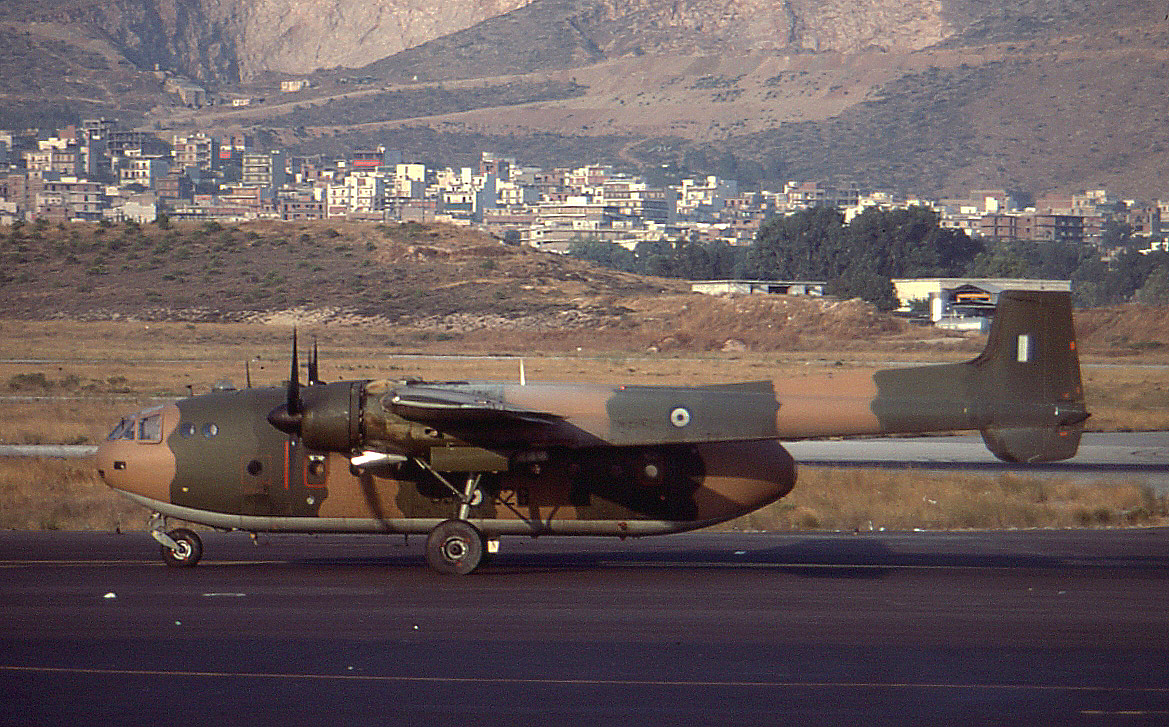
A Hellenic Air Force Noratlas on a training mission in Ellinikon International Airport, Athens, 1979 | |
| Type | Clandestine airlift |
| Location | |
| Planned by | |
| Objective | Reinforcement of Cypriot forces |
| Date | 21–22 July 1974 |
| Executed by |
|
| Outcome | Reinforced Cypriot forces with significant losses |
| Casualties | Aircraft crew and 33 commandos killed in action 10 commandos wounded in action Destruction of three aircraft. |
Operation Niki (Greek: Επιχείρηση Νίκη), named after the goddess Nike, was a clandestine airlift operation during the Turkish invasion of Cyprus that was carried out on 21–22 July 1974, with the aim of transporting a battalion of Greek commandos from Souda, Crete to Nicosia, Cyprus. Upon their arrival, the aircraft were engaged in friendly fire, which resulted in the loss of 33 men and the destruction of three aircraft.[1][2]
Background
[edit]Since the 1950s, Greece had established a foreign policy favoring the union of Cyprus with Greece. In 1960, the Republic of Cyprus was established with Greek Cypriots and Turkish Cypriots being its two founding communities. Archbishop Makarios was elected as its first President. Makarios came to believe that unification of the island with Greece was not possible and pursued a policy of non-alignment.
After a military coup in April 1967, a right-wing military junta seized power in Athens. The Greek juntists suspected Makarios for not being truly in favor of unification and prepared five plans to overthrow him between 1971 and 1974.[3] Eventually, on 15 July 1974, a military coup d'état orchestrated by the Cypriot National Guard and the junta of Athens succeeded in deposing Makarios and replacing him with nationalist Nikos Sampson. On the pretext of a peacekeeping operation, Turkey took military action code-named Operation Atilla and invaded Cyprus on 20 July 1974.[4][better source needed]
Preparations and departure
[edit]The Greek leadership in Athens was largely taken by surprise. The political situation deteriorated rapidly due to the Turkish invasion and the junta was soon at the verge of total collapse. Despite an initial order for implementation, the existing military plans for the reinforcement of the defenses in Cyprus were cancelled. In a climate of confusion and indecision, it was eventually decided to send one commando battalion by air. An initial plan to airlift a battalion based in northern Greece from Thessaloniki airport using requisitioned Boeing 720 aircraft of Olympic Airways was cancelled.[5][6] Later, it was decided to airlift another unit from Souda airport, using almost the entire transport fleet of the Hellenic Air Force at the time. The unit chosen was the A' Raider Squadron, reinforced with men from the amphibious-capable C' Raider Squadron. Thus, in the late afternoon of July 21, a fleet of 20 Noratlas and 10 C-47 aircraft were relocated to Souda airport, base of the 115th Combat Wing.[1]
According to orders, the transport aircraft would secretly take off at night with five minutes separation and fly without fighter escort. To avoid detection, they would fly at altitudes below 200 ft in full radio silence with minimum lights and no visual contact between them. They would land in Nicosia, unload the force and take off immediately for the return to Greece under the cover of darkness. Each aircraft would carry four airmen (two pilots, a flight engineer and a navigator) and approximately 30 commandos with their weapons and ammunition.[7][8] It was estimated that the 750 km flight to Cyprus would last around three hours. As a result, the latest time at which an aircraft could take off, fly to Cyprus, unload and depart before dawn was 24:00. The first plane departed Souda at around 22:35 and the departure plan was followed by the first five aircraft.[9][10] Afterwards, several delays resulted in only 13 Noratlas aircraft of the 354th Tactical Transport Squadron managing to take off before the midnight time limit and 2 after the midnight limit against orders but not all managing to land due to time constraints.[11][12] These planes were numbered in the order of their departure, receiving codes Niki-1 to Niki-15. The remaining five Noratlases and all the C-47 did not take off.[5]
Arrival in Nicosia
[edit]| External image | |
|---|---|
The Cypriot National Guard lacked an air force, hence Turkey had full air superiority over the island. Turkish Air Force had bombed Nicosia airport and only one third of the runway was usable.[14]
Of the 15 Noratlases that took off, 13 made it to Cyprus and the remaining two landed on Crete and Rhodes due to mechanical problems. Upon arrival at Nicosia International Airport at around 02:00 AM, the aircraft were engaged by Cypriot National Guard anti-aircraft gunners of the 195 MEA/AP battalion, who were uninformed about their arrival and mistook them for a Turkish airborne assault.[15] As a result, the 4th Noratlas (Niki-4) received heavy fire and was shot down two miles short of the runway with the loss of four crew and 27 commandos. Two more commandos were killed and 10 wounded on-board Niki-6, which landed with both engines severely damaged.[1] One more Noratlas aircraft (Niki-3) was badly damaged and could not take off again. Another aircraft (Niki-12) did not have sufficient fuel for the return flight. These aircraft were destroyed on the ground by the co-pilot and the engineer of Niki 12, following orders of the Hellenic Air Force Headquarters. The rationale for doing so was that Greece was not officially at war with Turkey, thus any evidence of Greek involvement in the operations in Cyprus should be erased. The remaining nine aircraft managed to return safely to Greece after unloading their troops.[1]
Aftermath
[edit]The transported Greek commando unit, which was given the Greek Cypriot designation 35th Raider Squadron (35 MK), fought during the Battle of Nicosia Airport being crucial in its defense and successfully defended the airport.[16] They also fought during the second Turkish invasion of August 1974 and contributed decisively to preventing Nicosia from falling into Turkish hands. Ironically, the unit had no casualties in the battlefield. With the exception of the order to Lt Cdr E. Handrinos to turn back his vessel (L-172 Lesvos) and disembark the ELDYK troops he had picked up the previous day, Operation Niki marked the only materialized Greek attempt to reinforce the defense of Cyprus during the invasion.[citation needed]
No military investigation was ever ordered regarding the circumstances of the loss of Niki-4 and neither was anyone ever held responsible. The Greek junta collapsed on 23 July 1974, mainly because of the events in Cyprus.[17]
Return of remains
[edit]The remains of Niki-4 and the bodies of most of the men it carried were hastily buried on a hill, which is now a military cemetery and war memorial known as Makedonitissa Tomb. In summer 2015, excavations started at Makedonitissa with the aim to recover any human remains.[18] After 14 months, DNA identification of those on board was completed and the remains of 16 Greek soldiers were handed over to their relatives in early October, 2016, 42 years after their death.[19]
Criticism of the operation
[edit]Operation Niki has been characterized as suicidal.[20][21] It was ill-prepared and used unreliable, ageing aircraft and aircraft crews and commandos were unfamiliar with the terrain at their destination. Ground forces at Nicosia had not been notified in time about their arrival. The operation had no tactical justification but merely a symbolic and morale-boosting character.[5] The rationale of an airlift instead of an airdrop operation has also been criticized.[5]
See also
[edit]References
[edit]- ^ a b c d Μήτσαινας, Γεώργιος Δ. (2004). Ελληνικά Φτερά Στην Κύπρο [Greek Wings in Cyprus] (in Greek). Ταξιδευτής. ISBN 960-630-182-6.
- ^ Φασουλάς, Γιάννης; Σκάλκος, Γιάννης (2011). Νίκη στη νεκρή ζώνη [Victory in the Dead Zone] (in Greek). Αγαθός Λόγος. ISBN 978-960-99749-5-0.
- ^ Athanasopulos, Haralambos (2001-10-14). Greece, Turkey and the Aegean Sea: A Case Study in International Law. Jefferson, N.C: McFarland. p. 152. ISBN 0-7864-0943-6.
- ^ Constandinos, Andreas (2009). America, Britain and the Cyprus Crisis of 1974: Calculated Conspiracy or Foreign Policy Failure?. Milton Keynes: AuthorHouse. ISBN 978-1-4389-8906-8.
- ^ a b c d Βλάσσης, Σάββας Δ. "Επιχείρηση Νίκη. Αερομεταφορά αντί αεραπόβασης" (PDF). Καταδρομή. No. Summer 2007. pp. 68–75. Archived from the original (PDF) on 2017-08-07. Retrieved 2016-10-31.
- ^ "ΑΠΟΚΑΛΥΠΤΗΡΙΑ ΜΝΗΜΕΙΟΥ ΛΕΣΧΗΣ ΚΑΤΑΔΡΟΜΕΩΝ ΚΑΙ ΙΕΡΟΛΟΧΙΤΩΝ – ΕΠΙΧΕΙΡΗΣΕΙΣ ΔΥΝΑΜΕΩΝ ΚΑΤΑΔΡΟΜΩΝ ΣΤΗΝ ΚΥΠΡΟ 1964-1974 – hellenicdefence.gr" (in Greek). 2020-01-31. Retrieved 2024-09-27.
- ^ Σ. Καρκαλέτσης. Αποστολή «Νίκη» 1974: Η επιχείρηση αυτοκτονίας της πολεμικής αεροπορίας στην Κύπρο, Αεροπορική Ιστορία, τ. 42, Αυγ. - Σεπ. 2006, archived here.
- ^ "ΝΟΡΑΤΛΑΣ: 50 χρόνια από την ρίψη από φίλια πυρά (BINTEO)". ant1live.com. 20 July 1974.
- ^ "Επιχείρηση "ΝΙΚΗ": Συγκλονιστικές μαρτυρίες Ελλήνων καταδρομέων - "Κύριοι, πάμε Κύπρο, αυτή είναι η διαταγή που ήρθε…" (VIDEO - ΦΩΤΟ)". tothemaonline.com (in Greek). Retrieved 2024-09-27.
- ^ Polignosi. "Επιχείρηση Νίκη". www.polignosi.com. Retrieved 2024-09-27.
- ^ A. Politis, Giannis (2024-07-21). "Πενήντα χρόνια από την τουρκική εισβολή στην Κύπρο - Επιχείρηση "Νίκη": Η "αποστολή αυτοκτονίας" και τα θανάσιµα λάθη". www.parapolitika.gr (in Greek). Retrieved 2024-09-27.
- ^ "Το χρονικό της επιχείρησης "ΝΙΚΗ" - Δείτε πως σκοτώθηκαν οι καταδρομείς που πήγαν να αποκρούσουν την εισβολή του '74 | Το Κουτί της Πανδώρας". www.koutipandoras.gr (in Greek). 2016-10-04. Retrieved 2024-09-27.
- ^ "ΚΩΔΙΚΟΣ "ΝΙΚΗ": ΑΠΟΣΤΟΛΗ ΑΥΤΟΚΤΟΝΙΑΣ ΤΗΣ Α΄ ΜΟΙΡΑΣ ΚΑΤΑΔΡΟΜΩΝ ΣΤΗ ΚΥΠΡΟ" [Code “Victory”: Suicide Mission of the 1st Road Squadron in Cyprus] (in Greek).
{{cite web}}: CS1 maint: deprecated archival service (link) - ^ "Pilot recalls last flight to Cyprus' abandoned Nicosia airport 40 years on". Associated Press. 2015-03-24. Retrieved 2024-09-26.
- ^ "Υπόθεση Noratlas: Μια ιστορία ηρωισμού, ντροπής και αναλγησίας". ProtoThema (in Greek). 2015-08-08. Retrieved 2024-09-27.
- ^ Φασουλάς, Γιάννης; Σκάλκος, Γιάννης (2011). "ΝΙΚΗ" στη Νεκρή Ζώνη, η Αντίσταση της Α' ΜΚ στον "Αττίλα" και την Προδοσία ["VICTORY" in the dead zone, the resistance of the A' MK against "Attila" and the betrayal] (in Greek). Athens: Αγαθός Λόγος. p. 133. ISBN 978-960-99749-5-0.
- ^ Arvanitopoulos, Constantine (1991). "The Rise and Fall of the Greek Military Regime: 1967-1974". Journal of Modern Hellenism (8): 115 – via Google Scholar.
There can be no doubt that the Cyprus debacle was the immediate cause for the regime's collapse.
- ^ "Cypriot officials say they may have found Greek aircraft shot down in 1974". The Guardian. Associated Press. 2015-08-06. Retrieved 2024-08-14.
- ^ Waiting for answers for 42 years, Kathimerini, 18/10/2016.
- ^ Vlachos, Konstantinos. "Επιχείρηση "ΝΙΚΗ": Η αποστολή "αυτοκτονίας" από την Ελλάδα την δεύτερη ημέρα της τουρκικής εισβολής" [Operation "Niki": The "suicide" mission from Greece the second day of the Turkish invasion]. www.liberal.gr (in Greek). Retrieved 2024-09-26.
- ^ "Εισβολή στην Κύπρο - Επιχείρηση "Νίκη": Η "αποστολή αυτοκτονίας" που οδήγησε στην κατάρριψη του Noratlas από φίλια πυρά". ProtoThema (in Greek). 2023-07-20. Retrieved 2024-09-26.
External links
[edit]- Nord N.2501D/N.2501 Noratlas from HAF.
- ASN Aircraft accidents Nord 2501D Noratlas at Nicosia Airport: 52-133 | 52-139 | 52-143 | 53-207
Operation Niki
View on GrokipediaHistorical Context
The Cyprus Enosis Movement and Intercommunal Tensions
The Enosis movement, advocating for the political union of Cyprus with Greece, emerged among the island's Greek-speaking majority in the wake of Greece's independence from the Ottoman Empire in 1821, drawing on ethnic and cultural ties to the Greek mainland.[4] This aspiration gained traction under British administration after 1878, particularly as Greek Cypriots, who constituted about 81 percent of the population in 1960 (including small Armenian and Maronite communities), viewed Cyprus as historically and ethnically Greek.[5] Turkish Cypriots, approximately 19 percent of the population, opposed Enosis, favoring either continued partition (Taksim) or maintenance of the status quo to protect their minority rights amid fears of subjugation.[5] The movement's armed phase began with the National Organization of Cypriot Fighters (EOKA), which launched an insurgency against British rule on April 1, 1955, through bombings and attacks aimed at forcing Enosis, resulting in over 100 British military casualties by 1959.[6] Cyprus achieved independence on August 16, 1960, via the Zurich and London Agreements, establishing a bi-communal republic with power-sharing provisions: a Greek Cypriot president, Turkish Cypriot vice president, both with veto rights over key decisions, and proportional representation in the civil service and military reflecting the 80-20 demographic split.[7] However, implementation faltered due to disputes over ratios—Turkish Cypriots demanded 30 percent of civil service positions despite holding only about 14 percent—and Greek Cypriot reluctance to fully honor veto powers.[7] On November 30, 1963, President Archbishop Makarios III proposed 13 constitutional amendments to eliminate separate Turkish Cypriot municipalities, reduce veto authority, and integrate security forces, which Turkish Cypriots rejected as undermining their safeguards.[7] This triggered the "Bloody Christmas" violence starting December 21, 1963, when clashes in Nicosia escalated into widespread attacks, primarily targeting Turkish Cypriots, leading to at least 200-300 deaths (disputed figures, with Turkish sources claiming higher) and the flight of around 25,000 Turkish Cypriots into enclaves controlling just 3 percent of the island's territory.[1][8] Intercommunal tensions persisted through the 1960s, with sporadic violence bouts until 1967, despite the deployment of United Nations Peacekeeping Force in Cyprus (UNFICYP) in March 1964 to enforce cease-fires and buffer zones.[7] Greek Cypriot hardliners, including the paramilitary EOKA B formed in 1971, revived Enosis demands through intimidation and bombings against moderates, while Turkish Cypriots armed themselves via supplies from Turkey and maintained self-governance in enclaves.[6] These divisions, rooted in incompatible national goals—Enosis versus Taksim—fostered mutual distrust, with Greek Cypriots viewing Turkish demands as obstructionist and Turkish Cypriots perceiving Enosis as existential threat, setting the stage for escalation in 1974.[9] By the early 1970s, over 500 intercommunal deaths had occurred since 1963, alongside economic isolation of Turkish enclaves, underscoring the failure of the 1960 framework to reconcile the communities' irreconcilable visions.[10]Greek Military Junta's Involvement in Cyprus
The Greek military junta, which assumed power through a coup on April 21, 1967, pursued policies aimed at achieving enosis, the unification of Cyprus with Greece, viewing the island as integral to national interests amid ongoing intercommunal violence since 1963.[11] The regime maintained influence over Cyprus through a contingent of approximately 600 Greek Army officers embedded in the Cypriot National Guard, providing training, command roles, and strategic direction to pro-enosis elements.[12] This involvement escalated after President Makarios III, elected in 1959 and re-elected in 1968 and 1973, sought to assert greater independence by demanding the withdrawal of these officers in early 1974, interpreting their presence as undue interference.[13] In November 1973, following a palace coup within the junta, Brigadier General Dimitrios Ioannidis assumed de facto control as head of the Military Police and the shadowy "Group of 17" conspirators, sidelining President Phaedon Gizikis and prioritizing aggressive action on Cyprus to bolster the regime's domestic legitimacy amid economic woes and student unrest.[14] Ioannidis, an ardent anticommunist, regarded Makarios as a pro-Soviet obstacle to enosis, having previously supported EOKA-B, the paramilitary group founded by General Georgios Grivas to advance unionist goals through guerrilla tactics.[15] Under his direction, the junta cultivated EOKA-B networks and planned the removal of Makarios, rejecting diplomatic overtures and Zurich-London agreements that guaranteed Cypriot independence.[16] On July 15, 1974, Ioannidis authorized a coup d'état executed by National Guard units under pro-junta officers, including Brigadier General Michael Georgitsis, who broadcast the overthrow of Makarios and declared Nikos Sampson, an EOKA-B hardliner, as interim president with enosis as the explicit objective.[17] [13] The operation involved armored assaults on the presidential palace, resulting in Makarios's narrow escape after 38 minutes of bombardment, though official junta announcements initially denied involvement to avoid immediate international backlash.[15] Sampson's five-day regime featured celebratory marches in Nicosia proclaiming union with Greece, but lacked broader support among Greek Cypriots wary of Turkish retaliation.[11] The junta's orchestration of the coup, intended to force enosis and demonstrate resolve, instead precipitated Turkey's invasion on July 20, 1974, under Operation Attila, as Ankara cited the threat to Turkish Cypriots and treaty obligations violated by the unilateral action.[17] Ioannidis's strategy underestimated Turkish military readiness and NATO dynamics, where Greece's junta had alienated allies; declassified Greek intelligence later confirmed the regime's direct orders and exclusion of civilian input.[14] This miscalculation not only partitioned Cyprus but accelerated the junta's collapse, with Karamanlis recalled on July 23, 1974, amid public outrage over the crisis.[18]Turkish Invasion of Cyprus: Operation Attila Phase One
On July 20, 1974, Turkey initiated the first phase of its military operation in Cyprus, codenamed Attila, following the Greek junta's coup d'état against President Makarios III on July 15, which installed Nikos Sampson as leader and raised fears of enosis (union with Greece). Turkish Prime Minister Bülent Ecevit authorized the landings after diplomatic efforts, including the Geneva Conference, failed to reverse the coup, citing obligations under the 1960 Treaty of Guarantee. The operation involved elements of the Turkish VI Corps, including the 50th Infantry Regiment (three battalions), an airborne brigade (four battalions via parachute), a commando brigade (three battalions by helicopter), two marine battalions for amphibious assault, and support from the Turkish Cypriot Resistance Organization (TMT) with approximately 15,000 fighters already on the island. Naval forces, including the amphibious ships TCG Ertuğrul and TCG Bayraktar, plus five destroyers for gunfire support, and air units with F-104G fighters, F-100C/D aircraft, C-130 transports, and UH-1 helicopters provided cover. By the end of the first day (G-Day), around 13,500 Turkish troops had landed.[1] The primary amphibious landings occurred at Pladini Beach west of Kyrenia (Girne), with additional assaults at Five Mile Beach, establishing a beachhead secured by 11:25 a.m. amid minimal initial resistance from the Cypriot National Guard (Ethniki Froura, EF). Simultaneously, airborne operations dropped paratroopers at drop zones near Kriní Airfield and Mándres, linking with local TMT forces and the Turkish Cyprus Regiment battalion to form an airhead. Turkish objectives focused on creating contiguous lodgments, securing Kyrenia port for resupply, controlling the Agírda Pass through the Pentadactylos Mountains, and advancing toward Nicosia to protect Turkish Cypriot enclaves while eliminating EF salients. Cypriot forces, including the 251st Infantry Battalion and elements of the 286th Armored Infantry Battalion, mounted counterattacks, such as at Kióneli, but these were repelled with Turkish air strikes targeting EF bases and armor. Greek Expeditionary Force units (ELDYK) in Nicosia also engaged dropped paratroopers, inflicting casualties but failing to dislodge them.[1][19] By July 21-22, Turkish forces linked their beachhead and airhead, capturing Kyrenia and consolidating a lodgment approximately 22 km by 15 km, representing about 3% of Cyprus's territory. The United Nations Security Council called for a ceasefire, effective at 4:00 p.m. on July 22, halting phase one after Turkish advances reached the outskirts of Nicosia but before a full breakthrough to the Attila Line (the northern third of the island). Casualties were significant on both sides, with Turkish reports estimating around 500 killed in the initial fighting, while Cypriot and Greek forces suffered heavier losses due to inferior equipment and coordination. This phase exposed vulnerabilities in Cypriot defenses, prompting urgent Greek reinforcements via airlift to bolster Nicosia, but the ceasefire allowed Turkey to fortify its positions ahead of phase two in August.[1][19]Strategic Planning and Objectives
Decision to Launch Operation Niki
The Greek military junta, facing the Turkish military landings in northern Cyprus on July 20, 1974, which captured key beachheads and threatened the junta-backed Sampson regime, authorized Operation Niki as a desperate reinforcement effort on July 21.[20] This clandestine airlift aimed to transport approximately 600 elite troops from the Hellenic Army's 1st Commando Force, along with ammunition and supplies, to Nicosia Airport to bolster Greek Cypriot National Guard defenses and prevent further Turkish advances during the fragile ceasefire.[1] The operation reflected the junta's miscalculation of Turkey's resolve and Greece's own military constraints, including limited transport aircraft availability and the prohibition on using NATO facilities to avoid alliance repercussions.[2] De facto junta leader Brigadier General Dimitrios Ioannidis, who had consolidated power after the November 1973 coup against Georgios Papadopoulos, played a central role in greenlighting the mission despite internal debates over its feasibility.[21] Ioannidis and the junta's National Defense Council viewed the deployment as essential to upholding their enosis (union with Greece) policy, which had prompted the July 15 coup against President Makarios III, but underestimated the Turkish air superiority and the logistical challenges of a low-altitude, radio-silent flight over 800 kilometers.[22] No formal consultation with civilian elements or allies occurred, underscoring the junta's insular decision-making amid reports of faltering Cypriot resistance.[11] The approval prioritized symbolic defiance over strategic prudence, with planners opting for 14 Nord Noratlas aircraft from the 354th Tactical Transport Squadron based in Crete, loaded at Elefsis and marshaled at Souda Bay under cover of darkness to evade detection.[1] This choice ignored Greece's broader inferiority in air power and naval support against Turkey, a decision later criticized for accelerating the junta's collapse on July 23-24, as the operation's partial success failed to alter the battlefield dynamics.[23] Primary motivations stemmed from ideological commitment to ethnic Greek unity rather than empirical assessment of success odds, with junta documents and post-event analyses revealing overreliance on surprise and commando shock value against entrenched Turkish positions.[2]Selection of Forces and Equipment
The Greek military leadership selected the 1st Commando Battalion of the Hellenic Army for Operation Niki, an elite unit specialized in airborne insertions and close-quarters combat, to provide rapid reinforcement to Cypriot National Guard forces defending Nicosia Airport against the Turkish advance. This choice reflected the operation's emphasis on clandestine, high-mobility deployment rather than large-scale conventional forces, given logistical constraints and the risk of escalation with Turkey.[1][2] The battalion's personnel, equipped with light infantry weapons including G3 rifles, machine guns, mortars, and recoilless anti-tank launchers, were prioritized for their ability to disembark quickly and engage in defensive actions without heavy armor or artillery support. Equipment loads were limited to essentials compatible with air transport, excluding vehicles or bulky supplies to maximize sortie capacity and minimize vulnerability during transit.[2] Airlift capabilities centered on 20 aging Nord 2501 Noratlas tactical transports and 10 C-47 Dakota aircraft drawn from the Hellenic Air Force's 354th Squadron "Pegasus" at the 115th Combat Wing, assembled at Souda Bay Air Base in Crete for the overnight mission on 21-22 July 1974. The Noratlas, each crewed by four members and capable of carrying up to 60 troops or equivalent cargo, were chosen for their short-takeoff performance and ruggedness, despite maintenance issues and the absence of modern avionics, while C-47s supplemented with additional personnel and supplies.[3][24][25]Intended Role in Cyprus Defense
Operation Niki aimed to transport and deploy the Greek Army's 1st Raider Battalion, an elite unit of approximately 600 commandos specialized in airborne insertions and rapid assaults, to Nicosia International Airport in Cyprus. The primary objective was to reinforce the outnumbered Cypriot National Guard forces defending against the Turkish invasion's Phase One, which had begun on July 20, 1974, with airborne assaults on the airport and advances toward the capital.[1][2] Upon landing, the commandos were intended to integrate with local defenders to secure the airport perimeter, which Turkish paratroopers had partially seized, and conduct counterattacks to disrupt Turkish supply lines and armored thrusts from the Kyrenia sector. This deployment was planned to provide a decisive boost in manpower and expertise to hold critical central front lines, preventing the encirclement of Nicosia and buying time for broader Greek strategic responses amid NATO constraints. The operation reflected the Greek military junta's assessment that elite reinforcements could tip local battles in favor of Greek Cypriot resistance, despite logistical risks and limited overall Greek commitment.[1][25] The selection of Noratlas transport aircraft underscored the clandestine nature, prioritizing low-altitude flights to evade detection while maximizing troop capacity for immediate combat deployment. Intended outcomes included stabilizing defenses around Nicosia, where Cypriot forces faced superior Turkish numbers and air support, though planners acknowledged the high-risk profile given Turkey's air dominance and the island's isolation.[2]Execution of the Operation
Preparations and Departure from Greece
On July 21, 1974, amid the escalating Turkish invasion of Cyprus, the Greek military junta under Dimitrios Ioannidis authorized Operation Niki to airlift reinforcements to bolster the defense of Nicosia International Airport. The operation targeted the deployment of the Hellenic Army's 1st Commando Battalion, comprising elite raiders trained for rapid intervention, who were stationed on Crete. Preparations were expedited and clandestine, with troops mobilized from their bases and assembled at Souda Air Base near Chania, Crete, where transport aircraft were readied under cover of darkness to evade NATO surveillance and potential Turkish interdiction.[1][2] The airlift involved 20 Nord Noratlas tactical transport aircraft from the Hellenic Air Force's 354th Squadron "Pegasus," supplemented by 10 C-47 Dakota planes, loaded with commandos, light weapons, ammunition, and essential supplies for immediate combat engagement upon arrival. Aircraft were configured for low-level flight to minimize radar detection, with pilots briefed on a direct route over the Aegean Sea toward Cyprus, despite risks from Turkish air superiority and uncertain weather conditions. No formal coordination occurred with Cypriot National Guard units, contributing to later communication failures.[3][2] Departure commenced at 22:30 hours on July 21, 1974, with Noratlas aircraft taking off from Souda Air Base at five-minute intervals to maintain spacing and reduce vulnerability to interception. The operation proceeded without prior notification to allied forces, reflecting the junta's isolated decision-making amid fears of broader Greco-Turkish war. Initial flights proceeded smoothly, though delays in some takeoffs—possibly due to mechanical checks or loading issues—slightly disrupted the schedule, setting the stage for the perilous transit to Cyprus.[2][26]Aerial Route and Challenges En Route
The Noratlas aircraft of the Hellenic Air Force's 354th Squadron departed from Souda Air Base on Crete at approximately 22:35 on July 21, 1974, bound for Nicosia International Airport in Cyprus, covering a distance of roughly 550 kilometers southeast over the Mediterranean Sea.[1] The route was designed for clandestinity, avoiding direct overflight of Turkish-controlled airspace by hugging low-altitude paths to evade radar detection from Turkish forces active in the region during their ongoing invasion.[27] Pilots maintained strict radio silence, extinguished all external lights, and flew at minimal altitudes—often below 500 feet—upon nearing Cyprus to minimize visibility to enemy patrols and anti-aircraft systems. Navigation relied primarily on gyrocompasses due to the operation's secrecy, which precluded use of advanced aids that might reveal positions.[27] These measures, while essential for evasion, compounded risks from the ageing Nord 2501 Noratlas transports, which dated from the 1950s and suffered from known reliability issues, including potential engine failures under prolonged low-level flight strain.[3] Of the 15 Noratlas dispatched, only 13 successfully reached Nicosia, with two compelled to abort and return to Crete owing to mechanical malfunctions or navigational uncertainties exacerbated by the night's conditions and equipment limitations. Crew inexperience with such covert, unlit night missions further heightened the peril, as the junta's hasty planning prioritized speed over thorough preparation. No Turkish interceptions occurred en route, attributable to the low-profile tactics, though the fleet's vulnerability to fighter sweeps remained a constant threat given Turkey's superior air assets in the Aegean theater.[2][27]Arrival and Landings at Nicosia Airport
The Greek aircraft participating in Operation Niki began arriving over Nicosia International Airport in the early hours of July 22, 1974, following a clandestine flight from Crete. Cypriot National Guard forces had hastily repaired the bomb-damaged runway and tested its lights around 01:00 hours, with a convoy of vehicles entering the airport area to prepare for the landings.[2] However, due to communication delays, some Cypriot anti-aircraft units initially mistook the incoming Noratlas transports for Turkish aircraft, leading to sporadic friendly fire during the approach.[25] Landings commenced shortly thereafter, with Niki 2 touching down first at 01:52 hours, followed by Niki 1 at 01:55 hours. Subsequent aircraft, including Niki 7 at 02:18 hours, managed to land despite prior en route damage or ongoing fire. The commandos aboard—part of the Greek 1st Commando Squadron—disembarked rapidly upon touchdown, numbering approximately 278 troops who remained in Cyprus to reinforce defenses after successful deliveries from multiple flights.[25] [2] Damaged but flyable aircraft, such as Niki 6 and Niki 12, completed their landings but were rendered inoperable on the ground, with crews later evacuating or tasked with destroying abandoned planes.[25] The landed forces immediately moved to secure the airfield perimeter, linking up with Cypriot National Guard elements already present. Niki 15, the final aircraft to land, departed Nicosia at 04:02 hours after unloading, highlighting the compressed timeline of the operation amid escalating Turkish advances. This phase delivered critical reinforcements but was complicated by the airfield's vulnerability and the element of surprise lost to prior alerts.[25] [2]Immediate Results and Casualties
Successful Deliveries and Ground Actions
The initial waves of Operation Niki achieved successful deliveries at Nicosia Airport in the early hours of July 22, 1974, with the first three Noratlas aircraft (Niki 1, 2, and 3) landing despite sustaining damage from Cypriot anti-aircraft fire mistaken for Turkish intruders.[2] These flights transported commandos from 'A' Company of the 1st Raider-Parachutist Battalion, led by Major Georgios Papameletiu, who quickly disembarked to secure the area and prepare for defensive operations.[2] Subsequent aircraft, including Niki 5 through 12, 14, and 15, also completed landings, contributing to the delivery of 318 commandos from the 1st Combat Squadron originating from Souda Air Base in Crete.[25] Of this force, 278 troops remained on the ground to reinforce Cypriot National Guard positions at the airport, focusing on holding critical infrastructure against Turkish advances.[25] The delivered Greek commandos engaged in ground actions alongside local forces, repelling initial Turkish paratrooper assaults and maintaining temporary control of Nicosia Airport runways and terminals.[25] These efforts delayed Turkish consolidation of the airfield, allowing Cypriot defenders to regroup and inflict losses on invading units before broader withdrawals.[2] The commandos' actions provided a brief but tangible bolstering of defenses in the face of superior Turkish airborne and amphibious operations.[25]
