Hubbry Logo
Private labelPrivate labelMain
Open search
Private label
Community hub
Private label
logo
8 pages, 0 posts
0 subscribers
Be the first to start a discussion here.
Private label
Private label
from Wikipedia
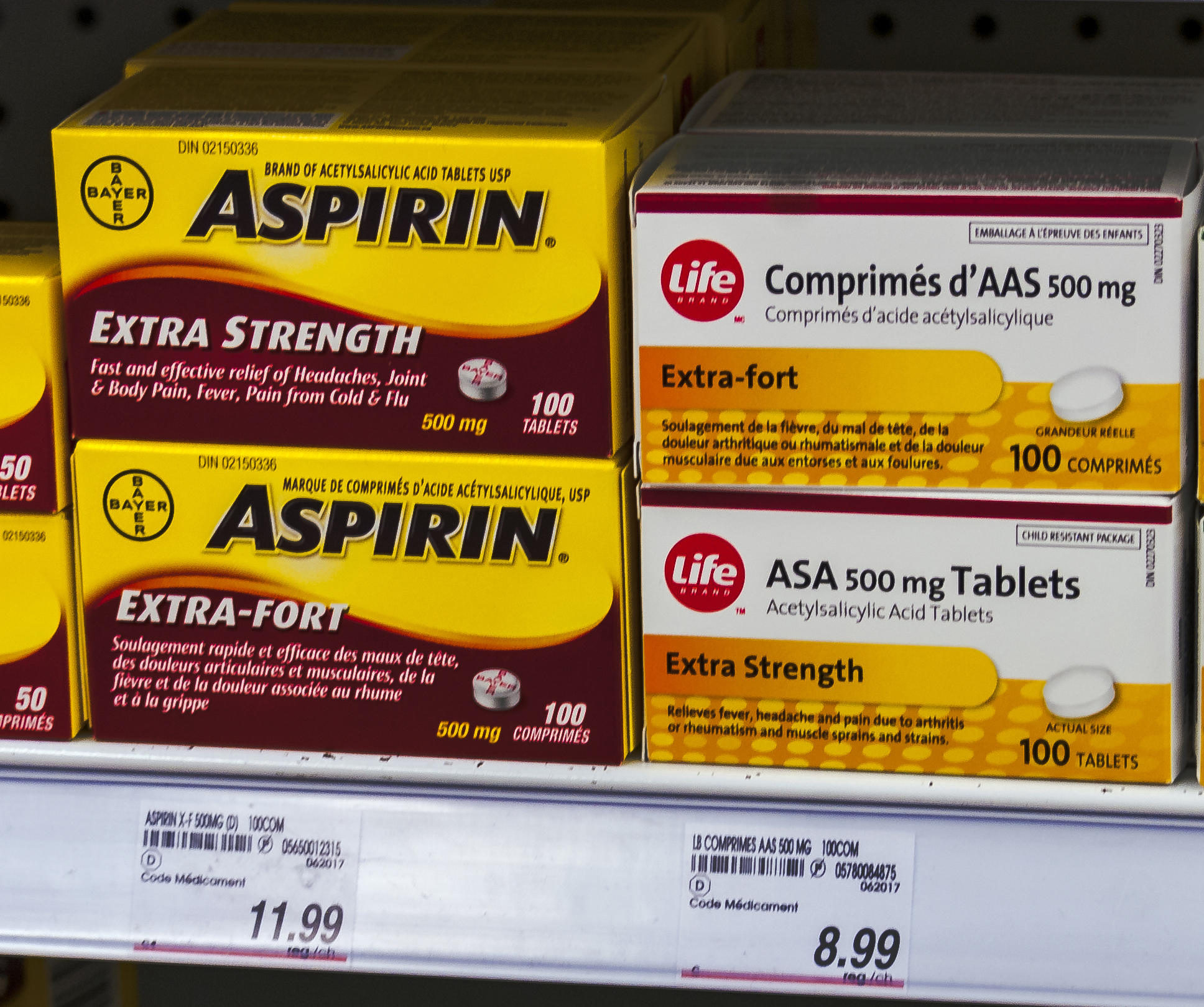
Two brands of aspirin. Left: a national brand made by Bayer. Right: a private-label brand. Note the price difference and similar boxes.

A private label, also called a private brand or private-label brand, is a brand owned by a company, offered by that company alongside and competing with brands from other businesses.[1][2] A private-label brand is almost always offered exclusively by the firm that owns it. However, in rare instances, the brand is licensed to another company.[3] The term often describes products, but can also encompass services.

The most common definition of a private label product is one that is outsourced: company A makes a product for company B, which company B then offers under their brand name.[4][5][6] However, it can also define products made in retailer-owned firms.[7][8] For example, in 2018, The Kroger Company had 60% of its private brands produced by third parties; the remaining 40% was manufactured internally by plants owned by Kroger.[9] Private-label producers are usually anonymous, sometimes by contract. In other cases, they are allowed to mention their role publicly.[10][11]

Etymology

[edit]

The term private label originated in retail,[12] but has since been used in other industries as well. Probably the best-known private-label brands are store brands, which are managed by supermarket and grocery store chains. Examples are Simple Truth by Kroger and Great Value by Wal-Mart.[13] Store brands compete with national brands or name brands, like Coca-Cola or Lay's.[14][15][16]

The term private-label product overlaps with the term white-label product. They are sometimes used interchangeably but don't mean the same thing. A private-label product is created exclusively for a client, who sets specific demands on what the product or service must contain.[17] A white-label product is not created exclusively for one company, and although white-label manufacturers might offer customizations to their products, these are usually limited.[18] The specifications of a private-label product are set out by the client, whereas a white-label product is more generic and already designed.[19][20]

Store brands

[edit]
νώμα (noma, "remembrance, memory"), a private-label trademark of Lidl for its Greek branch. Around 80% of the products in a Lidl store are private labels.[21]
Shelves in a Swedish grocery store showing both private label and international brands.

In the supermarket and grocery store industry, the term private label/brand is almost always used, even if the same product is sold non-exclusively to multiple retailers with different packaging (white label/brand).

A store brand, also called a house brand[22] or, in British English, an own brand,[23] is a private-label brand trademarked and managed by a retailer.[1] This brand is almost always offered exclusively at the chain store that owns it; in rare instances, however, the brand is licensed to another company.[24] Examples of store brands are Simple Truth by Kroger, Great Value by Wal-Mart, Clover Valley by Dollar General, Market Pantry by Target, and Specially Selected by Aldi.[13][25] Store brands can also be eponymous, or named after the store, such as Joe's O's cereal by Trader Joe's.[26] Store brands compete with national brands, also called premium brands or name brands,[14][15][16] with its items sometimes being called brand-name products.[27] Examples are Coca-Cola, Lay's, and Kellogg's. The general appeal of store-brand products is that they are usually offered at a lower price than their name-brand counterparts.[1]

Most private-label store brand products are manufactured by third parties, but companies owned by the retailer make some.[8] For instance, a vice president of The Kroger Company stated in 2018 that approximately 60% of their private-label products are outsourced. The remaining 40% is manufactured internally: in 2018, Kroger owned 38 plants, including 19 dairy farms, 10 bakeries, and 2 butcheries, strategically spread across the US.[9] Similarly, Safeway Inc. owned 32 plants as of 2012.[28] Most retailers prefer to keep the identity of their suppliers private, and accordingly have non-disclosure clauses in their contracts, making it difficult to determine the producer of a private-label product.[10][11] In a few cases though, the manufacturer is allowed to mention it publicly,[29] is revealed through a product recall, or in rare instances, is stated on the product itself. For example, the bags of Kirkland Signature coffee by Costco feature the text "Custom roasted by Starbucks".[30][31]

Private-label brands emerged in the 19th century.[12] Until the early 20th century, their general focus was on delivering quality at a price below that of the national brands. In the first half of the 20th century, the quality of private brands diluted and their standards dropped. In their competitive struggle against national brands, low prices were considered more important than quality. In the second half of the century, this trend gradually reversed.[32] As quality and visual appearance improved, private labels rose to prominence in the 1970s and '80s.[33] By the 1990s, they were increasingly seen as a threat to the established brands.[34] Also, from the 1990s onwards, a premiumization of store brands began to occur,[35] giving rise to more expensive premium private labels.[36][37] A survey conducted by the UK's Groceries Code Adjudicator in 2024 noted that retailers were introducing more own-label products and the adjudicator commented that this trend added to management complexities for suppliers.[38]

Generic brands are often associated with store brands. Generic products were first introduced in the United States in 1977,[39][40][41] quickly winning market share from national and private-label brands.[42] A 1981 academic article described them as products "without brand names, in very plain packages with simple labels and usually sold at prices below both the national and private brands with which they compete".[39] Packages of generic products often feature only the name of the type of product it contains, e.g. "Cola" or "Batteries".[40] Nowadays, the terms generic brand and store brand are sometimes used interchangeably.[14][43][44] The term generic can be used as a pejorative toward store brand items that are perceived as bland or cheap.[45][46]

A private-label brand is often produced by the same company that manufactures the national brand of that product.[47] Different brands target different consumers. For instance, Kimberly-Clark makes Huggies diapers, but also produces a Walmart budget version.[48] Allegedly, some store-brand items are identical to their name-brand counterparts: they are said to be literally the same product, except for the packaging and price.[43] In other cases, a manufacturer can have multiple formulas for one product, creating a private-label version using one method and the national-label version using another.[49] In 2007, a mass-recall of contaminated pet food products brought to light that more than 100 different brands of pet food, both premium- and private-label, were in fact produced by a single company: Menu Foods Inc. in Ontario, Canada. The ingredients and recipes they used differed substantially among brands, depending on what their clients specified.[48]

In the United Kingdom, supermarkets have been criticised for "fake farm" private label brands.[50][51]

In fast food

[edit]

Fast-food restaurant chains sell their products under their private-label brands. Their core items are usually fries and meat-based items, but they might also offer brownies, muffins, cookies, and salads. These private-brand products are offered alongside national-brand products, such as soft drinks by Coca-Cola or Pepsi, and ice creams co-branded with Oreo or M&M's.[52]

In finance

[edit]

A private-label credit card (PLCC) is a type of credit card that can only be used at a specific company or chain of companies. Since this is virtually always a retail business, they are also called store cards.[53][54] The retailer partners with a bank that issues the cards, funds the credits, and collects payments from customers. The cards themselves are branded with the logo of the store, but not the bank.[55] Examples are the Target Circle Card (formerly Target RedCard) (issued by TD Bank, N.A.),[56] the Walmart Reward Card (issued by Capital One),[57] and the Amazon Store Card (issued by Synchrony Bank).[58] PLCCs also do not carry the logo of the payment network (e.g. Visa or Mastercard), but they do use that network for transactions.[53]

Private-label store credit cards are sometimes compared to but not the same as co-branded credit cards. These cards usually feature the payment network logo, and sometimes the bank's logo.[59] Unlike PLCCs, co-branded cards work like 'normal' credit cards, usable at any place where that type of card is accepted.[60] For instance, warehouse chain Nordstrom offers a Nordstrom Store Card (private label) and a Nordstrom Credit Card (co-branded), both issued by TD Bank, N.A. and using Visa's network.[53]

See also

[edit]

References

[edit]
[edit]
Revisions and contributorsEdit on WikipediaRead on Wikipedia
from Grokipedia
A private label, also known as a store brand or private brand, is a product manufactured by one but sold under the brand name of another entity, typically a retailer, enabling the sale of exclusive without the retailer needing to manage production directly. This model allows retailers to offer customized, often lower-priced alternatives to national brands, competing directly with them on shelves while maintaining control over branding, , and . Private labels encompass a wide range of categories, from groceries and household items to apparel and electronics, and are produced by third-party manufacturers who may supply multiple retailers with similar base products differentiated only by labeling. The practice of private labeling dates back to the , when retailers began sourcing or producing goods to sell under their own names as a way to expand offerings and build customer loyalty. It gained widespread adoption in the mid-20th century, particularly in the food sector during the and , and surged in popularity during economic challenges like the 1970s recession, when cost-conscious consumers sought affordable options. Today, retailers partner with manufacturers to develop products that align with their store image—ranging from generic, budget-friendly items to premium, organic lines—often achieving profit margins 25-50% higher than national brands due to reduced costs and direct control over pricing. For instance, manufacturers handle and production, while the retailer customizes aspects like to create a unique identity. Private labels offer several key benefits, including stronger cost controls, as well as enhanced customer loyalty, with 74% of consumers viewing them as comparable in quality to name brands according to a 2025 Ipsos study. They also enable retailers to differentiate their assortments, appeal to diverse segments like price-sensitive shoppers or those seeking premium exclusives, and foster repeat business through perceived value. However, challenges include building recognition from scratch, risks of excess if products underperform, dependency on reliable manufacturers for consistency, and potential vulnerabilities in supply chains. Prominent examples include Walmart's Great Value line for everyday essentials; as proprietary brands exclusive to the retailer, products like Great Value cleaning items are generally unavailable for dropshipping or external resale due to contractual restrictions with manufacturers and the retailer's control over distribution channels, enhancing store loyalty but limiting broader market access. Costco's Kirkland Signature—which generated approximately $57 billion in revenue in 2024 (23% of net sales)—and unique private-label snacks that emphasize quality and exclusivity. Amazon Basics provides another illustration in , offering affordable versions of common goods like batteries and cables. In terms of market impact, private label sales reached $271 billion in the U.S. in 2024, marking a 3.9% increase from the previous year and accounting for approximately 20% of dollar sales, with 55% of shoppers reporting higher purchases amid ongoing economic pressures. Projections indicate continued growth, with sales expected to approach $277 billion in 2025 and an annual rate of about 6% through 2030, driven by innovation in sustainable and health-focused products.

Overview and Terminology

Definition

A private label, also known as a store brand, refers to a product that is manufactured by a third-party but branded and marketed exclusively under the name of a specific retailer or , allowing it to compete directly with national or manufacturer in the same category. This model enables retailers to offer goods without investing in their own production facilities, as the retailer typically contracts with external manufacturers to produce items according to specified quality, design, and formulation standards. Unlike national brands, which are produced and promoted by the manufacturer for broad distribution, private labels are sold solely through the retailer's channels, fostering customer loyalty by providing perceived exclusivity. Key characteristics of private labels include their exclusivity to a single seller, which differentiates them from widely available branded products and allows retailers to control pricing and positioning. They are often priced lower than comparable national brands—typically 20-40% less—due to reduced and expenditures that manufacturers of national brands incur, enabling a focus on value-driven perceptions among consumers. Private labels are highly customizable, as retailers dictate specifications for ingredients, , and features to align with their or store image, while emphasizing affordability and reliability to build trust. Private labels are prevalent across various consumer goods categories, including groceries such as staples and , apparel like and accessories, electronics including batteries and cables, and items like supplies and products. In the production process, the retailer initiates by selecting a manufacturer and providing detailed on product requirements, then oversees branding and without owning the manufacturing facilities, which keeps operational costs low and scalable. This approach allows retailers to respond quickly to market trends and preferences through tailored offerings.

Etymology

The practice of private labeling originated in the 19th century, but the term "private label" emerged in the retail industry during the early , specifically to denote brands owned and exclusively offered by a particular store or chain, setting them apart from national controlled by manufacturers. Linguistically, "private" emphasizes the retailer's sole control and exclusivity over the brand, preventing its sale through other channels, while "label" refers to the proprietary branding and packaging applied to the products. The term gained popularity in U.S. grocery trade publications during the 1920s and 1930s, where it was used to describe retailer-specific packaging for commodities such as evaporated milk, marking a shift toward formalized store branding in the sector. By the mid-20th century, "private label" had broadened beyond retail to fields like finance, where it denotes store-issued credit cards usable only at affiliated merchants, representing an analogous application of the concept rather than a separate etymological development.

Historical Development

Early Origins

The practice of private labeling emerged in the , initially within the and clothing sectors as retailers sought to offer affordable, branded alternatives to high-cost imported goods. , pioneering retailers such as and introduced private-label clothing products, allowing them to control quality and pricing while differentiating from competitors in a market dominated by wholesalers. This approach extended to basic commodities, marking an early shift toward retailer-specific branding to meet consumer demand for consistent options at reduced costs. A key example of this development occurred with the Great Atlantic & Pacific Tea Company (), founded in 1859, which introduced private brands for tea and spices in the mid-1800s. By blending and packaging these products under its own labels, A&P aimed to cut costs associated with branded imports and foster customer loyalty through perceived reliability. In Europe, similar practices began around the same period, with retailers like J Sainsbury's—established in 1869 in —launching private labels on dairy and grocery items to navigate a fragmented market of specialized shops. The primary drivers behind these early initiatives included economic pressures from volatile markets and the desire for retailer differentiation, enabling stores to build distinct identities and margins without relying solely on manufacturer . Department stores in , such as those importing textiles and , began applying their own labels to these items to assure quality and streamline sales in an expanding consumer base. Private labeling saw its first widespread adoption in the 1870s through 1890s among U.S. grocery chains, where it provided consistent quality at prices lower than branded imports, appealing to price-sensitive urban consumers amid rapid industrialization. Chains like leveraged this strategy to expand beyond loose bulk sales, transforming the retail landscape by emphasizing packaged, store-branded essentials. A notable milestone came in the 1880s when extended private labeling to staples such as flour and sugar, introducing branded versions like its line in 1882 and thereby accelerating the transition from generic bulk commodities to differentiated, loyalty-building products. This expansion solidified private labels as a core retail tool for cost control and market positioning in the late .

Modern Expansion

The expansion of private labeling in the was markedly accelerated by economic pressures, beginning with the of the , when price-sensitive consumers turned to affordable store brands as retailers sought to maintain amid widespread hardship. This period saw increased adoption of private labels in grocery and department stores, as chains like leveraged them to offer value-driven alternatives without the premiums of national brands. By the post-World War II era, the rapid rise of further propelled growth, with these large-format stores using private labels to differentiate through lower prices and broader assortments, capturing a significant portion of the expanding retail market. Private labels gained widespread adoption in the food sector during the 1950s and 1960s, with 84% of U.S. carrying them by 1958. The 1970s recession and high triggered another surge, as budget-conscious shoppers favored private labels for their cost advantages, leading to U.S. grocery market shares of around 15-20% by the early . Retail chain consolidation in the played a pivotal role, enabling ; for instance, European discounters like pioneered no-frills models heavily reliant on private labels, emphasizing basic packaging and exclusive store products to minimize overhead. Technological advances, particularly the widespread adoption of barcoding in the mid-1970s, transformed efficiency, allowing retailers to track inventory, reduce errors, and scale private label production cost-effectively across distribution networks. In the , opened new opportunities for cost savings, enhancing margins for private labels. By the late , private labels comprised around 16-18% of U.S. grocery sales, solidifying their role as a strategic tool for retail competitiveness.

Types and Variations

Private Label Brands

Private label brands employ a tiered structure to cater to diverse preferences, balancing affordability, quality, and specialization. The standard or value tier focuses on cost-effective products that emphasize everyday and price competitiveness, such as Walmart's Great Value line, which offers basic groceries like canned goods and household essentials at lower prices than national brands. In contrast, the premium tier positions products as high-quality alternatives to national brands, often featuring superior ingredients or packaging to justify higher pricing; Costco's Kirkland Signature, for instance, includes items like coffee roasted in partnership with established suppliers, rivaling premium market leaders in taste and reliability. Niche tiers target specific segments, such as organic or specialty lines, appealing to health-conscious or eco-aware shoppers; Whole Foods' 365 Everyday Value brand exemplifies this by specializing in natural and organic foods without synthetic additives. The development process for private label brands typically begins with the retailer conducting market research to identify gaps, followed by selecting a third-party manufacturer capable of meeting quality, cost, and scalability requirements. Retailers then design custom packaging to align with their brand identity, ensuring visual appeal and differentiation, while collaborating on formulation to comply with regulatory standards. Quality testing occurs through prototype sampling and iterative feedback to verify performance and safety before scaling production; co-packers, specialized third-party firms, provide flexibility by handling manufacturing without requiring retailers to invest in their own facilities, as seen in partnerships like McCain Foods producing exclusive frozen items. Key branding strategies for private labels center on enhancing perceived value and fostering store loyalty, often through exclusive offerings unavailable from national brands. Retailers emphasize affordability paired with reliable quality to build trust, integrating private labels into loyalty programs that reward repeat purchases with discounts or points. Trader Joe's exemplifies this approach with its unique private brands, such as quirky snacks and seasonal items developed via exclusive suppliers, which create a sense of discovery and exclusivity, driving customer allegiance without direct national brand equivalents. Ownership models for private label production vary. For example, in 2018, Kroger produced approximately 40% of its Our Brands grocery products at its 38 in-house facilities, with the remaining 60% sourced from third-party partners adhering to strict specifications. This hybrid model allows retailers to scale efficiently while maintaining brand consistency. Private labeling differs from white labeling in that private label products are specifically developed and customized for a single retailer, often featuring unique formulations, packaging, and branding that are exclusive to that retailer's stores, whereas white label products are generic items produced in bulk by a manufacturer and sold to multiple retailers with only minor rebranding, lacking such exclusivity or customization. For instance, Target's Up&Up line exemplifies a private label through its tailored everyday essentials, such as reformulated cleaning products designed solely for Target's distribution channels. This exclusivity allows the retailer to maintain full control over product specifications, marketing, and sales strategy, which is not possible with white label arrangements where the base product remains standardized across buyers. In contrast to generic products, private labels incorporate dedicated branding and efforts tied to the retailer's identity, enhancing perceived and customer , while generics are unbranded commodities identified solely by their functional attributes, such as basic without promotional investment. For example, a private label like a store's branded leverages the retailer's name to signal reliability and value, differentiating it from a plain generic equivalent that relies on low price alone without any associative branding. This branding element in private labels enables retailers to build equity and justify premium positioning within their assortment, unlike the purely utilitarian approach of generics. Private labeling also stands apart from co-branding, as it involves products wholly owned and controlled by the retailer without shared or joint marketing with external partners, whereas co-branding entails collaborative arrangements where two or more brands combine their identities on a product to leverage mutual strengths. In private labeling, there are no joint national-private partnerships; instead, the retailer exercises sole authority over design, promotion, and sales, avoiding the compromises inherent in co-branded initiatives. Regarding other variants, private labels emphasize exclusive deals where the retailer secures products manufactured to its specifications for in-house distribution only, contrasting with licensed brands that involve the retailer obtaining rights to use an external brand's name or under agreed terms, often limiting control. This structure underscores the retailer's complete dominance over distribution channels, , and pricing strategies in private labeling, free from manufacturer-imposed restrictions or licensing fees.

Applications in Various Sectors

Retail and Grocery Sector

In the retail and grocery sector, private label products have become a dominant force, accounting for approximately 20.7% of total unit sales in the U.S. grocery industry in 2023, rising to 23.2% unit market share in the first half of 2025. This share reflects a record high, driven by consumer demand for value amid economic pressures, with private labels outperforming national brands in sales growth. Retailers like Aldi exemplify this trend, where private label items constitute about 90% of total sales as of 2025, emphasizing a model built almost entirely on in-house brands. Private labels particularly thrive in categories such as dairy (e.g., milk and cheese) and pantry staples (e.g., bakery items and household care products), where they capture significant market penetration due to consistent quality and lower costs. Retailers employ targeted strategies to maximize private label success, including strategic shelf space allocation to enhance visibility and accessibility for these products. Private labels are typically priced 20-30% below comparable national brands, allowing grocers to appeal to price-sensitive shoppers while maintaining healthy margins—often 25-30% higher than those from national brands. For instance, Kroger's Simple Truth line offers organic and products across groceries, including and , positioning it as an affordable premium alternative that has expanded to over 1,500 items as of 2023. Similarly, Walmart's Equate brand provides health and personal care items, such as vitamins and over-the-counter medications, at discounted prices to capture everyday essentials. The for private labels in grocery relies heavily on co-manufacturers and packers, who produce goods efficiently at scale while often remaining anonymous to protect exclusivity. These partners, including facilities that also supply national brands, enable retailers to offer diverse products without building extensive in-house capabilities; for example, some private label items are manufactured by the same suppliers as leading consumer goods but under retailer-specific and formulations. This arrangement reduces costs and speeds innovation, though it requires robust quality controls to maintain consistency. Private labels foster loyalty in the grocery sector by offering exclusive, retailer-specific products that encourage repeat visits and basket-building. Their perceived value and improvements have shifted perceptions from mere generics to trusted alternatives, with nearly half of consumers planning to maintain or increase purchases even as eases.

Apparel Sector

In the apparel sector, private label manufacturing involves factories producing clothing from scratch or in white label format, allowing retailers to apply their own labels and develop custom collections tailored to their specifications. Some manufacturers accept small orders with low minimum order quantities (MOQs), enabling smaller retailers or startups to participate in this model.

Food Service Sector

In the food service sector, private labeling plays a crucial role in quick-service restaurants (QSRs) and fast-food chains by enabling the creation of exclusive menu items and supplies that enhance brand identity while optimizing costs. Chains often partner with specialized third-party manufacturers to produce ingredients and components, which are then branded exclusively for their operations. This approach allows for customization that differentiates offerings from competitors, such as unique sauces or baked goods tailored to specific recipes, without the need for in-house production facilities. A prominent example is McDonald's Big Mac sauce, a signature condiment developed in collaboration with supplier Golden State Foods, which produces the creamy, tangy mixture under McDonald's proprietary formula as a trade secret-protected item. Similarly, chains like source their sesame seed buns from large-scale bakers, ensuring consistency across locations while maintaining cost efficiencies through bulk private label contracts. Subway employs a comparable strategy with its dough, supplied by manufacturers including ARYZTA and Southwest , who produce custom formulations like the chain's Italian herb and cheese variety exclusively for Subway's sandwiches. These private label arrangements allow QSRs to control quality and without revealing recipes to the public. Private labeling in this sector supports key strategies for cost control and menu differentiation, enabling chains to negotiate lower prices with suppliers compared to national brands while offering unique items that build customer loyalty. For instance, utilizes its 7-Select private label for snacks like beef jerky, trail mix, and potato chips, which are produced by co-manufacturers to provide affordable, on-the-go options that align with demands and generate higher margins than branded alternatives. Delivery platforms like are also experimenting with private label meals, including microwaveable solutions and robotic-prepared salads, to create exclusive offerings that stand out in a crowded market and reduce reliance on third-party partners. These tactics help food service operators manage volatile ingredient costs—such as those for potatoes or spices—while fostering perceived exclusivity. Growth in private labeling within the food service sector, particularly among convenience stores and QSRs, has accelerated as operators expand prepared food lines to capture higher-profit categories. , for example, grew its private label portfolio to over 300 stock-keeping units (SKUs) by 2023, encompassing prepared foods like pizzas and snacks that achieved more than 9% penetration in units and gross profit dollars, driven by consumer demand for value-driven, store-branded options. This expansion reflects broader trends where chains leverage private labels to boost same-store in prepared foods by 6-11% annually, emphasizing quality and affordability to compete with national brands.

Financial Services Sector

Private label credit cards represent a key application of private labeling in the sector, where retailers partner with financial institutions to offer branded credit products exclusively usable at their stores or affiliated locations. These cards, such as the Amazon Store Card and Target RedCard, provide consumers with tied to specific merchants, often featuring perks like discounts on purchases to encourage and higher spending. Unlike general-purpose cards, private label cards are restricted to the issuing retailer's , which allows for tailored rewards such as immediate savings or promotional financing. However, the number of private label accounts has declined from 253 million in 2018 to 161 million in 2024. The mechanics of private label credit cards involve third-party banks or finance companies handling the operational backend, including credit underwriting, account management, and risk assessment, while the retailer maintains control over branding, customer acquisition, and incentive structures. For instance, serves as a primary issuer for numerous programs, processing applications and payments behind the scenes to enable seamless in-store and online transactions. Retailers design perks to boost engagement, such as the Target RedCard's 5% discount on nearly all purchases or Macy's Card offering up to 30% off initial buys, which can lead to higher approval rates due to less stringent focused on in-store behavior rather than broad credit history. Similarly, the Credit Card earns 5 points per dollar spent at Gap brands like and , redeemable for rewards that reinforce brand exclusivity. This structure benefits retailers by driving immediate sales while issuers earn from interest and fees. Beyond credit cards, private label extends to leasing and financing products in the sector, particularly for or asset acquisition branded under names to streamline purchases. In private label leasing, companies like Balboa Capital collaborate with vendors to offer customized lease programs that appear as the vendor's proprietary offering, covering items such as machinery or vehicles without the customer needing to seek external loans. For example, automotive manufacturers like have partnered with firms such as for private label financing agreements that bundle leases with brand-specific terms, enhancing the buying experience and loyalty as of 2025. This approach simplifies approvals and payments, often with flexible terms like deferred interest, making it attractive for transactions. Recent growth in digital wallets has further integrated private label financial products, allowing store-branded cards and financing to be embedded in mobile apps for contactless payments and tracking. Synchrony, for one, has enabled private label cards to link with platforms like , facilitating quick access to perks without physical cards and supporting the shift toward digital-first retail finance. This trend is accelerating, with retailer-tied digital wallets—such as those for programs—projected to capture over 50% of payments by 2030, as they combine financing, rewards, and seamless checkout to deepen .

Benefits and Challenges

Advantages

Private labels offer significant advantages to retailers, primarily through enhanced profitability and strategic control. Retailers typically achieve higher profit margins on private label products compared to national brands, with margins often exceeding 40% for private labels versus 25-35% for national brands as of 2025. This stems from reduced intermediary costs and direct oversight of production and distribution. Additionally, retailers gain full control over , allowing them to set competitive rates without negotiating with brand manufacturers. Exclusive private label offerings also help build customer by differentiating the store and reducing direct from national brands, as seen in programs like those of , which strengthen shopper retention. For consumers, private labels provide accessible value without compromising essential . These products are typically priced 15-30% lower than comparable national brands as of , enabling significant savings on everyday purchases. This affordability arises from the absence of premium branding and expenses passed on by national brands, while recent quality improvements—such as better ingredients and —make private labels viable alternatives that meet consumer expectations. Manufacturers benefit from stable production opportunities and operational efficiencies when supplying private labels. Long-term volume contracts with retailers ensure predictable demand, helping to utilize excess manufacturing capacity and stabilize output during fluctuations in national brand sales. The anonymity of private label production also protects the manufacturer's premium national brand image, avoiding any perception of quality dilution while allowing them to leverage economies of scale. Beyond these stakeholder-specific gains, private labeling promotes broader efficiencies by streamlining coordination between retailers and manufacturers, reducing through targeted production. It also enables quick adaptability to emerging trends, such as , where retailers can introduce eco-friendly private label lines to meet consumer preferences without the constraints of national brand timelines.

Disadvantages

Consumers often perceive private label products as inferior in quality compared to national brands, associating them with lower standards and value despite evidence from blind taste tests demonstrating parity or even superiority in sensory attributes. For instance, in a 2013 evaluation of staple foods like and cheese, store brands tied with or outperformed national brands in 33 out of 57 categories. However, recent surveys as of 2025 show 72% of consumers view private labels as strong alternatives to national brands. This perceptual gap persists even when objective tests, such as in-store blind tastings of categories like and cookies, reveal no significant quality differences, leading to hesitation in purchasing private labels outside of economic necessity. Such perceptions heighten the risk of to retailers from quality scandals or product defects, as private labels directly tie failures to the store's brand identity rather than a separate manufacturer. Retailers bear for issues like bodily injury from defects or claims, amplifying the potential for consumer backlash and loss of trust when problems arise. For example, lawsuits over misleading in private label products have highlighted how these incidents can erode retailer credibility and invite regulatory scrutiny. Operationally, private labeling introduces risks from heavy dependency on third-party suppliers, which can result in disruptions such as delays, quality inconsistencies, or shortages if a single source fails. Retailers often rely on a limited number of manufacturers, increasing vulnerability to external shocks like shortages or geopolitical issues, without the direct control national brands exert over their production. Additionally, the initial development phase demands higher upfront costs for , , , and minimum order quantities, which can strain resources for smaller retailers entering the market. In terms of market limitations, private labels offer limited transferability, as their value is confined to the specific retailer and does not extend to other channels or independent recognition like national brands. This retailer-specific restricts if the store loses market position or if consumers switch outlets. Furthermore, excessive dominance of private labels on shelves raises antitrust concerns, as mergers or preferential placement can reduce , foreclose access for national brands, and prompt regulatory intervention to prevent abuse. Critics argue that private labels stifle innovation by serving as copycat products that mimic successful national brand offerings, rapidly replicating features without investing in original research and development, which discourages manufacturers from pioneering new ideas. This practice, known as innovation cloning, allows retailers to capture market share from trailblazers, potentially leading to a less dynamic industry overall.

Market Statistics

The global private label market was valued at $915.1 billion in 2024 and is projected to grow at a (CAGR) of 5.9% from 2025 onward. In the United States, private label sales reached a record $271 billion in 2024, reflecting a 3.9% increase from the previous year, with projections estimating $277 billion for 2025. Europe maintains the highest penetration rates, with private labels accounting for 39.1% of total grocery sales value in 2024, up 0.3 percentage points from 2023, and overall sales approximating $412 billion that year. For instance, in the United Kingdom, private label products comprised 52.3% of grocery sales as of January 2025. Private labels hold a significant share in the grocery sector, representing about 25% of unit volume across major product categories in the United States in recent years. Non-food categories, such as and apparel, are experiencing the fastest growth, with the global private label segment valued at $10.64 billion in 2024. This contributes to the overall market's expansion at a 5.9% CAGR. In contrast, the private label and beverages segment, a core grocery area, was worth $431.99 billion in 2024 and is expected to grow at a 7.35% CAGR through 2032. Regionally, the market is emerging rapidly, with China's private label packaged food sector anticipated to expand at a 6.8% CAGR from 2025 to 2030. In the United States, major retailers like derive 31% of their total sales from private labels as of early 2025. During the , the post-pandemic period saw a notable surge in private label adoption in the U.S. grocery sector, driven by value-seeking consumers, with dollar rising from 18% in 2019 to 21.2% in the first half of 2025 and unit share reaching 23.2%. In recent years, private labeling has increasingly incorporated advanced technologies to enable greater customization, particularly through AI and , allowing retailers to offer personalized products such as custom items tailored to individual preferences. This shift toward is driven by AI algorithms that optimize designs and for on-demand production, reducing waste and enabling rapid iteration in retail settings. For instance, e-commerce platforms like Amazon have expanded their private label offerings, such as AmazonBasics, integrating these technologies to enhance product and streamline supply chains, thereby boosting consumer engagement in competitive markets. Sustainability remains a pivotal trend, with private label products emphasizing eco-friendly practices like recyclable and ethical sourcing to meet rising consumer demands. Major retailers, including , are committing to transition their private brand to sustainable materials by 2025, focusing on reducing use and incorporating recycled content to align with global regulations and principles. Products featuring such claims have demonstrated cumulative growth of 28% over the past five years, outpacing non-sustainable alternatives, with recyclability ranked as the top consumer priority across multiple countries. This trend is projected to continue, supported by advancements in biodegradable materials and transparent labeling that verify environmental impact. Private labeling is expanding into emerging sectors, notably and supplements, where demand for clean-label, plant-based, and personalized products is surging. The global dietary supplements market, with private label accounting for a significant portion, is expected to reach $230 billion by 2027, fueled by trends like blends for mental clarity and functional gummies that cater to wellness-focused consumers. In digital finance, white-label solutions are gaining traction, enabling banks and fintechs to offer customized, AI-driven services such as embedded finance ecosystems and real-time management without building from scratch. These expansions reflect a broader pivot toward specialized, tech-enabled private labels that address niche consumer needs in and . Looking ahead, the U.S. private label market is projected to exceed $280 billion by 2030, driven by these innovations and a focus on premiumization, where high-quality private brands capture greater value. Premium private labels, emphasizing superior ingredients and innovative formats, are expected to drive overall penetration to 24% of grocery spending by 2030, up from around 20% currently. However, challenges persist, particularly in following disruptions in the , with retailers facing volatility in demand, pressures, and talent shortages for AI integration. To counter this, 59% of retailers are broadening private label assortments to safeguard margins, while investing in and diversified sourcing to enhance agility amid geopolitical and economic uncertainties.

References

Add your contribution
Related Hubs
User Avatar
No comments yet.