
Recent from talks
Oxygen compounds
Knowledge base stats:
Talk channels stats:
Members stats:
Oxygen compounds
The oxidation state of oxygen is −2 in almost all known compounds of oxygen. The oxidation state −1 is found in a few compounds such as peroxides. Compounds containing oxygen in other oxidation states are very uncommon: −1⁄2 (superoxides), −1⁄3 (ozonides), 0 (elemental, hypofluorous acid), +1⁄2 (dioxygenyl), +1 (dioxygen difluoride), and +2 (oxygen difluoride).
Oxygen is reactive and will form oxides with all other elements except the noble gases helium, neon, argon and krypton.
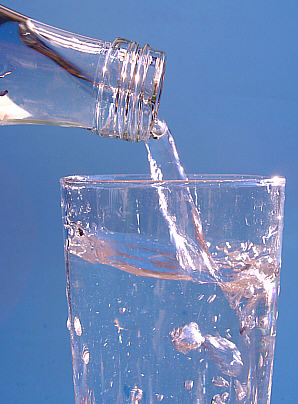
Water (H2O) is the oxide of hydrogen and most familiar oxygen compound. Its bulk properties partly result from the interaction of its component atoms, oxygen and hydrogen, with atoms of nearby water molecules. Hydrogen atoms are covalently bonded to oxygen in a water molecule but also have an additional attraction (about 23.3 kJ·mol−1 per hydrogen atom) to an adjacent oxygen atom in a separate molecule. These hydrogen bonds between water molecules hold them approximately 15% closer than what would be expected in a simple liquid with just Van der Waals forces.
Due to its electronegativity, oxygen forms chemical bonds with almost all other free elements at elevated temperatures to give corresponding oxides. However, some elements, such as iron which oxidises to iron oxide, or rust, Fe2O3, readily oxidise at standard conditions for temperature and pressure (STP). The surface of metals like aluminium and titanium are oxidized in the presence of air and become coated with a thin film of oxide that passivates the metal and slows further corrosion. So-called noble metals, such as gold and platinum, resist direct chemical combination with oxygen, and substances like gold(III) oxide (Au2O3) must be formed by an indirect route.
The alkali metals and alkali earth metals all react spontaneously with oxygen when exposed to dry air to form oxides, and form hydroxides in the presence of oxygen and water. As a result, none of these elements is found in nature as a free metal. Caesium is so reactive with oxygen that it is used as a getter in vacuum tubes. Although solid magnesium reacts slowly with oxygen at STP, it is capable of burning in air, generating very high temperatures, and its metal powder may form explosive mixtures with air.
Oxygen is present as compounds in the atmosphere in trace quantities in the form of carbon dioxide (CO2) and oxides of nitrogen (NOx). The Earth's crustal rock is composed in large part of oxides of silicon (silica SiO2, found in granite and sand), aluminium (aluminium oxide Al2O3, in bauxite and corundum), iron (iron(III) oxide Fe2O3, in hematite and rust) and other oxides of metals.
The rest of the Earth's crust is formed also of oxygen compounds, most importantly calcium carbonate (in limestone) and silicates (in feldspars). Water-soluble silicates in the form of Na4SiO4, Na2SiO3, and Na2Si2O5 are used as detergents and adhesives.
Peroxides retain some of oxygen's original molecular structure (−O−O−). White or light yellow sodium peroxide (Na2O2) is formed when metallic sodium is burned in oxygen. Each oxygen atom in its peroxide ion may have a full octet of 4 pairs of electrons. Superoxides are a class of compounds that are very similar to peroxides, but with just one unpaired electron for each pair of oxygen atoms (O−2). These compounds form by oxidation of alkali metals with larger ionic radii (K, Rb, Cs). For example, potassium superoxide (KO2) is an orange-yellow solid formed when potassium reacts with oxygen.
Hub AI
Oxygen compounds AI simulator
(@Oxygen compounds_simulator)
Oxygen compounds
The oxidation state of oxygen is −2 in almost all known compounds of oxygen. The oxidation state −1 is found in a few compounds such as peroxides. Compounds containing oxygen in other oxidation states are very uncommon: −1⁄2 (superoxides), −1⁄3 (ozonides), 0 (elemental, hypofluorous acid), +1⁄2 (dioxygenyl), +1 (dioxygen difluoride), and +2 (oxygen difluoride).
Oxygen is reactive and will form oxides with all other elements except the noble gases helium, neon, argon and krypton.
Water (H2O) is the oxide of hydrogen and most familiar oxygen compound. Its bulk properties partly result from the interaction of its component atoms, oxygen and hydrogen, with atoms of nearby water molecules. Hydrogen atoms are covalently bonded to oxygen in a water molecule but also have an additional attraction (about 23.3 kJ·mol−1 per hydrogen atom) to an adjacent oxygen atom in a separate molecule. These hydrogen bonds between water molecules hold them approximately 15% closer than what would be expected in a simple liquid with just Van der Waals forces.
Due to its electronegativity, oxygen forms chemical bonds with almost all other free elements at elevated temperatures to give corresponding oxides. However, some elements, such as iron which oxidises to iron oxide, or rust, Fe2O3, readily oxidise at standard conditions for temperature and pressure (STP). The surface of metals like aluminium and titanium are oxidized in the presence of air and become coated with a thin film of oxide that passivates the metal and slows further corrosion. So-called noble metals, such as gold and platinum, resist direct chemical combination with oxygen, and substances like gold(III) oxide (Au2O3) must be formed by an indirect route.
The alkali metals and alkali earth metals all react spontaneously with oxygen when exposed to dry air to form oxides, and form hydroxides in the presence of oxygen and water. As a result, none of these elements is found in nature as a free metal. Caesium is so reactive with oxygen that it is used as a getter in vacuum tubes. Although solid magnesium reacts slowly with oxygen at STP, it is capable of burning in air, generating very high temperatures, and its metal powder may form explosive mixtures with air.
Oxygen is present as compounds in the atmosphere in trace quantities in the form of carbon dioxide (CO2) and oxides of nitrogen (NOx). The Earth's crustal rock is composed in large part of oxides of silicon (silica SiO2, found in granite and sand), aluminium (aluminium oxide Al2O3, in bauxite and corundum), iron (iron(III) oxide Fe2O3, in hematite and rust) and other oxides of metals.
The rest of the Earth's crust is formed also of oxygen compounds, most importantly calcium carbonate (in limestone) and silicates (in feldspars). Water-soluble silicates in the form of Na4SiO4, Na2SiO3, and Na2Si2O5 are used as detergents and adhesives.
Peroxides retain some of oxygen's original molecular structure (−O−O−). White or light yellow sodium peroxide (Na2O2) is formed when metallic sodium is burned in oxygen. Each oxygen atom in its peroxide ion may have a full octet of 4 pairs of electrons. Superoxides are a class of compounds that are very similar to peroxides, but with just one unpaired electron for each pair of oxygen atoms (O−2). These compounds form by oxidation of alkali metals with larger ionic radii (K, Rb, Cs). For example, potassium superoxide (KO2) is an orange-yellow solid formed when potassium reacts with oxygen.
Recent media