Hubbry Logo
Peter StrzokPeter StrzokMain
Open search
Peter Strzok
Community hub
Peter Strzok
logo
8 pages, 0 posts
0 subscribers
Be the first to start a discussion here.
Peter Strzok
Peter Strzok
from Wikipedia

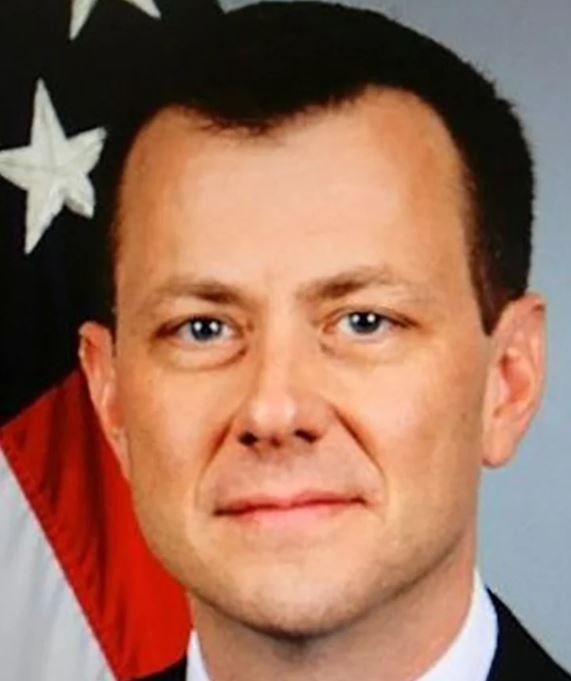
Peter Paul Strzok II (/strʌk/, like struck; born March 7, 1970)[1] is an adjunct professor at Georgetown University[2][3] and former United States Federal Bureau of Investigation (FBI) agent.[4][5][6] During his FBI career, he was the Deputy Assistant Director of the Counterintelligence Division and led the investigation into Russian interference in the 2016 United States elections.[6][7][8][9] He had previously been the chief of the division's Counterespionage Section and led the investigation into Hillary Clinton's use of a personal email server.[10][6][11]

Key Information

In June and July 2017, Strzok worked on Robert Mueller's Special Counsel investigation into any links or coordination between Donald Trump's presidential campaign and the Russian government.[12][7][9] In July 2017, Mueller removed Strzok from the Russia investigation after partisan text message exchanges between Strzok and FBI lawyer Lisa Page were revealed, including a message in which Strzok said "we'll stop" Trump from becoming president.[10][13][14] News of the text messages led Trump, Republican congressmen and right-wing media to speculate that Strzok participated in a conspiracy to undermine the Trump presidency.[15][16][17][18]

On August 10, 2018, FBI deputy director David Bowdich fired Strzok for the text messages after the FBI's employee disciplinary office had recommended that Strzok only be suspended for 60 days and demoted.[4] On August 6, 2019, Strzok filed a wrongful termination suit against the FBI and the U.S. Department of Justice, asking to be reinstated and awarded back pay. He asserted in the suit that his text messages were "protected political speech", and that the termination violated his First Amendment rights.[19] In May 2024, the Justice Department agreed to settle Strzok's wrongful termination suit for $1.2 million. Strzok's 2020 book, Compromised: Counterintelligence and the Threat of Donald J. Trump,[20] became a New York Times and Washington Post bestseller.[21][22]

Early life

[edit]

Peter Paul Strzok II was born near Sault Ste. Marie, Michigan, to Peter Paul Strzok and Virginia Sue Harris.[1] His father is a retired US Army Lieutenant Colonel who served in the Corps of Engineers.[23] During a 21-year military career, his father did two tours in Vietnam, two in Saudi Arabia, and three in Iran, where Strzok attended elementary school at the American School in Tehran prior to the Iranian Revolution. The family later moved to Upper Volta, where the elder Strzok took an assignment with Catholic Relief Services after retiring from military service.[24] One of Strzok's uncles is Father James Strzok, SJ, a Jesuit priest doing missionary work in east Africa.[25] The Strzok family is of Polish descent.

For high school, Strzok attended St. John's Preparatory School in Minnesota, graduating in 1987.[26] He earned a bachelor's degree from Georgetown University in 1991 as well as a master's degree in 2013.[27][28] After Georgetown, Strzok served as an officer in the United States Army before leaving to join the FBI in 1996 as an intelligence research specialist.[8][29] Strzok is married to Melissa Hodgman, an associate director at the U.S. Securities and Exchange Commission.[30][31]

FBI

[edit]

A career employee with the FBI for 22 years before his firing in August 2018,[32] Strzok had been a lead agent in the FBI's "Operation Ghost Stories" against Andrey Bezrukov and Yelena Vavilova, a Russian spy couple who were part of the Illegals Program, a network of Russian sleeper agents who were arrested in 2010.[33][34] By July 2015, he was serving as the section chief of the Counterespionage Section, a subordinate section of the FBI's Counterintelligence Division.[6]

Strzok led a team of a dozen investigators during the FBI's investigation into Hillary Clinton's use of a personal email server and assisted in the drafting of public statements for then-FBI Director James Comey.[35] He changed the description of Clinton's actions from "grossly negligent", which could be a criminal offense, to "extremely careless".[6] The draft was reviewed and corrected by several people and its creation was a team process.[citation needed] In his statement to Congress, Comey said that "no reasonable prosecutor" would bring charges based on available evidence.[6] Later, when additional emails were discovered a few days before the election, Strzok reportedly supported reopening the Clinton investigation.[36] He then co-wrote the letter[37] which Comey used to inform Congress, which "reignited the email controversy in the final days" and "played a key role in a controversial FBI decision that upended Hillary Clinton's campaign."[36]

Strzok rose to the rank of Deputy Assistant Director in the Counterintelligence Division and was the number two official within that division for investigations involving Russia.[12][38][8] In that capacity, he led the FBI's investigation into Russian interference in the 2016 United States elections,[6][39] and examined both the Steele dossier and the Russian role in the 2016 Democratic National Committee email leak.[40][5][35] He oversaw the bureau's interviews with then-National Security Advisor Michael Flynn; Flynn later pled guilty to lying during those interviews.[41]

In July 2017, Strzok became the most senior FBI agent working for Robert Mueller's 2017 Special Counsel investigation looking into any links or coordination between Trump's presidential campaign and the Russian government.[42][43] He served in that position until August 2017, at which time he was moved to the Human Resources Branch.[13][44][45][46][47] According to The New York Times, Strzok was "considered one of the most experienced and trusted FBI counterintelligence investigators,"[29] as well as "one of the Bureau's top experts on Russia" according to CNN.[6]

Strzok left the investigation in late July 2017 after the discovery of personal text messages sent to Lisa Page, an FBI lawyer, during the 2016 election campaign, which criticized Trump and said he would "stop" Trump.[13] At the request of Republicans in Congress, the Justice Department (DOJ) Inspector General (IG) began an inquiry in January 2017 into how the FBI handled investigations related to the election, and the IG announced it would issue a report by March or April 2018.[29][48] The report was eventually released on June 14, 2018, after several delays.

On June 15, 2018, the day after this IG report was published, Strzok was escorted from FBI headquarters as part of the bureau's internal conduct investigations.[49] The move put Strzok on notice that the bureau intended to fire him, though he had appeal rights that could delay such action.[50] On June 21, 2018, Attorney General Jeff Sessions said that Strzok had lost his security clearance.[51]

On August 10, 2018, under intense political pressure from Trump and Republicans in Congress following the IG report, FBI deputy director David Bowdich fired Strzok.[52] The dismissal overruled a recommendation by the FBI Office of Professional Responsibility, whose head, Candice Will, had determined Strzok should only be demoted and suspended for 60 days, and Strzok's attorney cited Will's lesser disciplinary action in the course of criticizing the firing.[53][54][55]

On August 13, a GoFundMe campaign was created by "Friends Of Special Agent Peter Strzok" to raise money for Strzok's lost income and ongoing legal costs.[56]

Text messages

[edit]

The IG's investigation examined thousands of text messages exchanged using FBI-issued cell phones between Strzok and Lisa Page, with whom he was having an extramarital affair.[57] She was also a trial attorney on Mueller's team.[58][59] The texts were sent between August 15, 2015, and December 1, 2016. At the request of the House Permanent Select Committee on Intelligence, the DOJ turned over 375 of these text messages to the House Judiciary Committee.[58][59][60] Some of the texts disparaged then-presidential candidate Donald Trump,[58][59][61][62] Chelsea Clinton, Attorney General in the Obama administration Eric Holder, former Democratic Governor Martin O'Malley, and candidate for the Democratic presidential nomination Bernie Sanders.[63][64][65] Strzok called Trump an "idiot" in August 2015 and texted "God Hillary should win 100,000,000 - 0" after a Republican debate in March 2016.[58][59][66]

In their messages, Strzok and Page also advocated creating a Special Counsel to investigate the Hillary Clinton email controversy, and discussed suggesting former U.S. Attorney Patrick Fitzgerald be considered for such a probe.[67] Devlin Barrett from The Washington Post alleged Strzok and Page had been using the backdrop of discussing the Clinton investigation as a cover for their personal communications during an affair.[68] Upon learning of the text messages, Mueller removed Strzok from the investigation.[29] Messages released in January 2018 showed that Strzok was hesitant to join the Mueller investigation, with Page encouraging him not to do so.[69]

Strzok's colleagues and a former Trump administration official said that Strzok had never shown any political bias.[70][61] An associate of his says the political parts of the text messages were especially related to Trump's criticism of the FBI's investigation of the Clinton emails.[70] According to FBI guidelines, agents are allowed to have and express political opinions as individuals. Former FBI and DOJ officials told The Hill that it was not uncommon for agents like Strzok to hold political opinions and still conduct an impartial investigation.[71] Several agents asserted that Mueller had removed Strzok to protect the integrity of the special counsel's Russia investigation.[72] Strzok was not punished following his reassignment.[73] Defenders of Strzok and Page in the FBI said no professional misconduct between them occurred.[61]

The decision by the DOJ to publicize the private messages in December 2017 was controversial. Statements by DOJ spokeswomen revealed that some reporters had copies of the texts even before the DOJ invited the press to review them, but the DOJ did not authorize the pre-release. Democrats on the House Judiciary Committee have asked for a review of the circumstances under which the texts were leaked to select press outlets.[74]

A comprehensive review in February 2018 of Strzok's messages by The Wall Street Journal concluded that "texts critical of Mr. Trump represent a fraction of the roughly 7,000 messages, which stretch across 384 pages and show no evidence of a conspiracy against Mr. Trump".[75]

The Office of Inspector General's report on the FBI's handling of the Clinton email investigation published on June 14, 2018, criticized Strzok's text messages for creating the appearance of impropriety. However, the report concluded that there was no evidence of bias in the FBI's decision not to pursue criminal charges against Clinton.[76] The report revealed additional texts hostile to Donald Trump by Strzok. In early August 2016, after Page asked Strzok, "[Trump's] not ever going to become president, right? Right?!", Strzok responded: "No. No he won't. We'll stop it."[77] Many Democrats believed that the FBI's actions during the 2016 presidential campaign, such as reopening the Clinton email investigation on the eve of the election and elements within the FBI telling The New York Times that there was no clear link between the Trump campaign and Russia, ended up harming the Clinton campaign and benefitting the Trump campaign.[78]

At a July 12, 2018 public congressional hearing, Strzok denied that the personal beliefs expressed in the text messages impacted his work for the FBI. Strzok explained that a "We'll stop Trump" text message was written late at night and off-the-cuff shortly after Trump denigrated the immigrant family of a fallen American war hero, Khizr and Ghazala Khan, and that the message reflected Strzok's belief that Americans would not vote for a candidate who engaged in such "horrible, disgusting behavior". Strzok said the message "was in no way – unequivocally – any suggestion that me, the FBI, would take any action whatsoever to improperly impact the electoral process for any candidate." Strzok added that he knew of information during the 2016 presidential campaign that could have damaged Trump but that he never contemplated leaking it. Strzok also said that he criticized politicians such as Hillary Clinton and Bernie Sanders in his "blunt" text messages. Strzok claimed the investigation into him and the Republicans' related rhetoric was misguided and played into "our enemies' campaign to tear America apart".[76]

A December 2019 report by the Justice Department inspector general acknowledged the text message from Strzok about stopping Trump, but said Strzok's actions were not taken because of bias and he did not have undue influence in launching the FBI investigation of Russian meddling in the 2016 elections.[79][80]

Reactions

[edit]

Strzok's personal messages to Lisa Page have been used by Republicans to attack the impartiality of Mueller's investigation into Donald Trump's alleged collusion with Russia during the election. Conservative media outlets and Republicans have used the text messages as part of an aggressive campaign to discredit the Mueller investigation and protect President Trump. Other Republicans have defended Mueller and his work, including Deputy Attorney General Rod Rosenstein who said that he would fire Mueller only if there was actual cause under DOJ regulations, and that no such cause existed. Rosenstein also praised Mueller for removing Strzok from the Russian investigation.[81]

In 2018, President Trump falsely claimed that 19,000 text messages between Strzok and Page "were purposely & illegally deleted" and that these text messages "Would have explained whole Hoax".[82][83] PolitiFact rated the claim "Pants-on-fire" false. An investigation by the Justice Department's inspector general found no evidence the messages were purposefully deleted, some from the work phones were recovered, and that the texts on their personal phones were lost when they were reset.[82][83]

Some commentators on Fox News used Strzok's messages to comment negatively on the Mueller investigation. Jesse Watters said that Mueller's investigation now amounted to a coup against President Trump, if "the investigation was weaponized to destroy his presidency for partisan political purposes".[84][85][86][87][88] Fox Business host Lou Dobbs said that the FBI and DOJ were working clandestinely to destroy the Trump presidency, and called for a "war" against the "deep state".[89] One guest on Fox's talk and news show Outnumbered, Kevin Jackson, speculated that Strzok's messages were evidence of a plot by FBI agents to make "an assassination attempt or whatever" against President Trump, which other Fox hosts quickly contradicted and said was not "credible".[90] Fox News figures referred to the investigation as "corrupt", "crooked" and "illegitimate", and likened the FBI's tactics to the KGB, the Soviet-era spy organization.[84]

Congressional scrutiny

[edit]

In an August 15, 2016 text message, Strzok told Page: "I want to believe the path you threw out for consideration in Andy's (Andrew McCabe, Deputy Director of the FBI) office that there's no way Trump gets elected—but I'm afraid we can't take that risk. It's like an insurance policy in the unlikely event you die before you're 40." This message attracted scrutiny from Republicans, including Senator Chuck Grassley, chairman of the United States Senate Committee on the Judiciary, who stated: "Some of these texts appear to go beyond merely expressing a private political opinion, and appear to cross the line into taking some official action to create an 'insurance policy' against a Trump presidency." Sources close to Strzok and Page told The Wall Street Journal that Strzok was not contemplating using the FBI's investigation into possible collusion between the Trump campaign and Russia to harm Trump's candidacy, but rather emphasizing the need to aggressively pursue any such leads before the election "because some of Mr. Trump's associates could land administration jobs and it was important to know if they had colluded with Russia."[91][92]

On January 20, 2018, Senator Ron Johnson (R–WI) released a letter in which he stated that the FBI's technical system had failed to preserve five months' worth of texts between Strzok and Page. According to the letter, the texts in question were sent between mid-December 2016 and mid-May 2017.[93] A Justice Department official later said that the technical lapse had affected thousands of FBI-issued phones, which failed to store text messages for periods of up to a year.[94]

In late January 2018, a number of congressional Republicans, including Sen. Ron Johnson, asserted that they had evidence that pointed towards FBI agents working clandestinely to undermine the Trump presidency; they asserted that Strzok and Page were in a "secret society" against Trump. Congressional Republicans refused to release the evidence behind the assertion, but ABC News obtained a copy of the message that Republicans were referring to and noted that the message that refers to a "secret society" may have been made in jest.[95] The day after his assertion that these messages demonstrated "corruption at the highest levels of the FBI" and after a copy of the messages were revealed by ABC News, Johnson walked back his comments and said that there was a "real possibility" that the messages were made in jest.[96]

In February 2018, Johnson speculated that a text message between Strzok and Page raised questions about "the type and extent of President Obama's personal involvement" in the Clinton emails investigation.[97] Fox News reiterated Johnson's claim that text messages between Strzok and Page suggested that former President Barack Obama was deeply involved in the investigation into Hillary Clinton's emails. Fox News spokeswoman Carly Shanahan did not answer an inquiry from CNN about whether Fox News reached out to Obama for comment.[98] Johnson's claim was covered by various then pro-Trump websites, such as Drudge Report, Breitbart, InfoWars and The Gateway Pundit, before President Trump himself tweeted "NEW FBI TEXTS ARE BOMBSHELLS!"[98] Other news outlets reported that the text messages were sent in September 2016, months after the Clinton emails investigation had concluded, and three days before Obama would confront Russian President Vladimir Putin about interference in the 2016 election at the G20 Hangzhou summit.[98][99] Associates of Strzok and Page told The Wall Street Journal that the texts were about the FBI's investigation into Russian electoral interference.[97] Fox News continued to report its original version of the story after the new context for the messages had been publicly proffered.[98]

Post-FBI

[edit]

Lawsuit

[edit]

Strzok filed a wrongful termination lawsuit against the DOJ and the FBI in federal court on August 6, 2019, asking to be reinstated and awarded back pay. He argued that the Justice Department had terminated him because of "unrelenting pressure" from Trump over his comments in private text messages. Strzok asserted in the suit that his sentiments were "protected political speech," that the DOJ had violated his privacy by releasing his texts to the media, and that his termination violated the First Amendment.[100] He alleged that the Trump administration had "consistently tolerated and even encouraged partisan political speech by federal employees", but only if that speech lauded the president and denounced his opponents. He said his removal was "part of a broader campaign against the very principle of free speech ... initiated and led by" Trump. The Justice Department and FBI spokeswomen declined to comment.[19] In February 2023, federal judge Amy Berman Jackson ruled that Trump and FBI director Christopher Wray could be questioned under oath regarding the suit.[101]

His lawsuit was consolidated with that of Lisa Page, who in December 2019 sued the FBI and Justice Department, accusing them of violating the Privacy Act. In May 2024, Strzok and Page reached a tentative settlement with the Justice Department.[102] On July 26, it was revealed that Strzok will receive $1.2 million and Lisa Page will receive $800,000.[103]

Book

[edit]

In September 2020, Houghton Mifflin Harcourt published Strzok's book, Compromised: Counterintelligence and the Threat of Donald J. Trump,[20] which became a New York Times and Washington Post bestseller.[21][22] During an NBC News interview upon release of the book, Strzok confirmed a recent report in The New York Times that the FBI had opened a broad counterintelligence investigation into Trump after the president fired FBI director James Comey in May 2017, based on concerns over Trump's "financial entanglements" with Russia. That investigation was curtailed days later by Deputy Attorney General Rod Rosenstein, giving the FBI the impression that the incipient Mueller investigation would pursue it, though Rosenstein instructed Mueller not to, effectively ending the investigation.[104][105]

Academics

[edit]

Since October 2020, Strzok has been an adjunct professor at Georgetown University’s School of Foreign Service.[2][3]

Podcast

[edit]

On February 6, 2023, the Cleanup On Aisle 45 podcast, hosted by Allison Gill, announced that Peter Strzok would be the new co-host starting on February 22, 2023.[106] On the November 27, 2024 episode of ‘’Cleanup on Aisle 45’’ Allison Gill announced, that Peter Strzok was no longer going to be the co-host for an undisclosed reason after that episode.

References

[edit]
[edit]
Revisions and contributorsEdit on WikipediaRead on Wikipedia
from Grokipedia

Peter Paul Strzok II is an American former special agent who rose to deputy of the FBI's Counterintelligence Division after joining the agency in 1996 and serving for 22 years until his firing in 2018. During his tenure, Strzok led the FBI's investigation into Hillary Clinton's use of a private email server and initiated Crossfire Hurricane, the probe into alleged coordination between the 2016 Trump presidential campaign and Russian interference in the U.S. election. His career concluded amid revelations of private text messages exchanged with FBI lawyer Lisa Page expressing overt against —including a stating "[No]. No. No he's not [president]. We'll stop it"—which the Department of Justice determined created serious doubt about Strzok's capacity for impartiality in handling politically charged investigations, despite finding no documentary proof that this animus directly altered specific decisions. Strzok was removed from Mueller's team in 2017, reassigned to , and terminated for violations of FBI policies on media contacts and personal conduct, a decision he contested in a lawsuit alleging political retaliation that was ultimately dismissed in 2025. Post-FBI, Strzok published the memoir Compromised defending the Russia investigation's origins and legitimacy, and he currently serves as an adjunct professor of counterintelligence at Georgetown University's School of Foreign Service.

Early Life and Education

Family Background and Upbringing

Peter Paul Strzok II was born on March 7, 1970, near . His father, also named Peter Paul Strzok, was a career U.S. officer who attained the rank of and served 21 years in the Corps of Engineers, including overseas tours in , , and . Strzok's mother was Sue Harris. Raised in a family, Strzok experienced the influences of his father's service-oriented background, which emphasized discipline and public duty. Claims that Strzok grew up in or that his father conducted clandestine operations under charitable cover have been debunked as unsubstantiated rumors lacking evidence. Following his father's example, Strzok himself commissioned as an officer after college, serving prior to his FBI career.

Academic Career

Strzok earned a in Foreign Service from Georgetown University's in 1991. While serving as an FBI official, he returned to Georgetown and completed a in Foreign Service in 2013, focusing on international affairs. Following his termination from the FBI in August 2018, Strzok joined Georgetown as an in the in fall 2020. In this role, he teaches undergraduate courses such as IPOL 323: and , drawing on his prior professional experience in operations. No peer-reviewed publications or independent research contributions by Strzok are documented in academic records.

FBI Career Prior to 2016

Entry and Early Assignments

Peter Strzok entered the Federal Bureau of Investigation (FBI) in 1996 after serving as an officer in the United States Army during the 1990s. In his initial capacity, Strzok worked as an analyst focused on terrorism-related cases. He subsequently advanced to the role of special agent, with early assignments in the FBI's Boston and Washington field offices, where he contributed to investigations involving national security threats. These positions laid the foundation for his later specialization in counterintelligence operations, though specific case details from this period remain limited in public records.

Counterintelligence Roles and Notable Cases

Strzok entered the FBI in and was assigned to its operations, initially focusing on threats posed by Russian services. Throughout the early , he conducted field investigations into foreign espionage, building specialized knowledge in identifying and disrupting covert activities by state actors, particularly those originating from the SVR, Russia's . His work emphasized long-term and gathering to counter "illegals"—deep-cover operatives who embed in target societies without diplomatic cover. One of Strzok's most prominent pre-2016 cases was his role as a lead agent in Operation Ghost Stories, a decade-long FBI effort targeting a Russian illegals program. This operation uncovered a network of at least ten SVR-directed spies living undercover in the United States, engaging in activities such as talent-spotting in , academia, and circles. The investigation relied on technical , physical tracking, and of encrypted communications, leading to coordinated arrests on June 27 and 28, 2010, in locations including New York, , and . Among those apprehended were , convicted of and false identity; and the couple Andrey Bezrukov (posing as Donald Heathfield) and Yelena Vavilova (posing as Tracey Foley), who had resided in the U.S. and for over 20 years while raising children and pursuing professional covers in business consulting. The detainees pleaded guilty to charges including to act as unregistered foreign agents and were deported in a prisoner swap with on July 9, 2010, at , exchanging them for four individuals held by , including . Operation Ghost Stories demonstrated the effectiveness of persistent counterintelligence tradecraft in neutralizing long-dormant threats without alerting the broader network, though critics later questioned whether the spies had gathered significant actionable intelligence during their tenure. Strzok's contributions to this case established his reputation within the FBI as a key figure in Russian counterespionage, informing his later assignments in high-profile investigations.

Role in 2016 Election Investigations

Hillary Clinton Email Probe

Peter Strzok served as the lead supervisory special agent for the FBI's "Midyear Exam" investigation, launched on July 10, 2015, into 's use of a private email server as from 2009 to 2013, focusing on potential unauthorized disclosure and mishandling of . The probe entailed forensic analysis of approximately 30,000 emails recovered from Clinton's server, which had been deleted by her aides, as well as examinations of associated devices and interviews with Clinton's staff. Strzok headed a team of about a dozen agents and analysts, coordinating the aspects and contributing to key assessments, including the July 2016 conclusion that, despite evidence of carelessness and potential violations of security protocols, the findings did not warrant criminal prosecution due to insufficient intent to prosecute under relevant statutes like the Espionage Act. In the investigation's closure phase, Strzok participated in drafting the July 5, 2016, statement by FBI Director James Comey publicly announcing no charges against Clinton, a decision the Department of Justice Inspector General later criticized for deviating from FBI norms but attributed primarily to Comey's unilateral actions rather than Strzok's influence. The IG report noted Strzok's involvement in Midyear Exam decisions but emphasized he was not the sole decision-maker, with team consensus driving recommendations. However, contemporaneous text messages between Strzok and FBI lawyer Lisa Page, exchanged during the probe, expressed partisan views—such as Strzok's August 2015 reference to pressure to "finish midyear exam" amid electoral implications—prompting scrutiny over whether personal biases affected professional judgment, though the IG found no documentary or testimonial evidence that such sentiments altered investigative outcomes in the Clinton matter. The probe's dynamics shifted on October 26, 2016, when the FBI's New York field office alerted headquarters to approximately 675,000 emails discovered on a belonging to , Clinton aide Huma Abedin's husband, during a separate investigation. Strzok played a central role in the ensuing review, helping to prioritize the emails for checks and assisting in drafting Comey's October 28, 2016, letter to notifying lawmakers of the renewed examination of "pertinent" communications potentially related to the closed case. Over the following week, Strzok's team conducted a compressed review using search terms and sampling, determining by November 6, 2016, that the newly reviewed materials—largely duplicates of prior emails—yielded no evidence altering the no-prosecution recommendation, which Comey reaffirmed publicly two days before the election. The IG report deemed this rapid reopening and closure procedurally sound, crediting Strzok's team's efficiency, but highlighted ongoing concerns about the texts' implications for , with some congressional critics, including Senate Judiciary Committee members, arguing they evidenced a predisposition to shield from electoral damage.

Trump-Russia Counterintelligence Operation

Peter Strzok, then serving as section chief in the FBI's Counterintelligence Division, formally opened the Crossfire Hurricane counterintelligence investigation on July 31, 2016, hours after the FBI received reporting from Australian officials via its legal attaché in . The tip stemmed from a May 2016 conversation in which Trump campaign foreign policy advisor informed Australian diplomat that Russia had indicated possession of thousands of emails damaging to Hillary Clinton's campaign; Australian authorities passed this information to the FBI on July 26, 2016, following ' release of emails on July 22, 2016. Strzok, who selected the operation's code name—"Crossfire Hurricane," drawn from a lyric in the song ""—authored the electronic communication documenting the predication for the full investigation under FBI guidelines, without prior consultation with Papadopoulos or direct verification of the tip's reliability. As the lead supervisory , Strzok oversaw the early phases of Crossfire Hurricane, which focused on four U.S. persons linked to the Trump campaign—Papadopoulos, , , and —due to their reported contacts with Russian-affiliated individuals. He directed the team's pursuit of investigative leads, including defensive briefings to the Trump campaign on August 17, 2016 (delivered by Strzok and agent Joe Pientka to candidate Trump and advisor Christie's campaign transition team) and the initiation of FISA surveillance applications targeting beginning in October 2016. Strzok also managed the FBI's initial handling of unverified intelligence from former British spy , whose dossier alleging Trump-Russia ties was received in September 2016; by January 2017, Strzok had internally flagged the dossier's information as potentially unreliable and "minimally corroborated," recommending against its use in certain briefings. The 2019 Department of Justice Inspector General report by Michael Horowitz concluded that the FBI met the low "articulable factual basis" threshold for opening Crossfire Hurricane as a full investigation, citing tip as sufficient predication, and found no documentary evidence that Strzok's political views influenced the decision. However, the 2023 report by criticized the FBI's handling under Strzok's leadership, determining that the agency relied on "raw, unanalyzed, and uncorroborated intelligence" without adequate predication verification—such as interviewing Papadopoulos or assessing Australian sourcing—and exhibited by rapidly escalating to full investigation status rather than a preliminary inquiry. Durham further noted that Strzok and colleague Lisa Page exchanged private text messages expressing strong opposition to Trump during the probe's outset, including Strzok's August 2016 reference to an "" against a Trump presidency, which raised concerns about potential personal motivations influencing investigative rigor, though no direct evidence linked these to specific actions. These findings underscored systemic issues in FBI practices, including failure to heed internal warnings about Russian tactics that could mimic or exploit genuine threats.

Text Messages Controversy

Content and Context of Exchanges with Lisa Page

Peter Strzok, a veteran FBI counterintelligence agent, and Lisa Page, an FBI attorney serving as special counsel to Deputy Director Andrew McCabe, exchanged tens of thousands of text messages and SMS communications from roughly 2015 to 2017, many recovered by the Department of Justice Office of the Inspector General (OIG) during its examination of the FBI's Clinton email investigation. The pair were involved in an extramarital affair, which permeated the personal nature of numerous exchanges, including expressions of affection, logistical discussions about their relationship, and complaints about work-life balance. Professionally, the messages touched on ongoing FBI matters, such as staffing for the Clinton probe (known internally as "Midyear Exam") and reactions to media coverage of investigations. A significant portion of the politically oriented content emerged during the 2016 presidential campaign, coinciding with Strzok's involvement in both the review and the FBI's probe into Russian interference (Crossfire Hurricane, initiated July 31, 2016). These texts frequently conveyed disdain for and optimism about Hillary 's prospects. For example, in March 2016, Strzok referred to Trump as a "fucking idiot" while discussing his primary campaign performance. On August 8, 2016—one week after Crossfire Hurricane's opening—Page texted Strzok questioning Trump's electoral viability: "[Trump's] not ever going to become president, right? Right?!" Strzok responded: "No. No he's not. We'll stop it." The exchanges also included strategic musings on political contingencies. On August 15, 2016, Strzok alluded to a discussion in McCabe's office about preparing for a Trump victory, likening it to : "I want to believe the path you threw out for consideration in Andy’s office—that there’s no way he [Trump] gets elected—but I’m afraid we can’t take that risk. It’s like an in the unlikely event you die before you’re 40." Additional messages reflected anxiety over Trump's potential win, with Page expressing fears in 2016 about its implications for their personal and professional lives, and Strzok reassuring her while decrying Trump's character. Post-election texts in November 2016 showed shock and vows to join opposition efforts, such as Strzok's intent to participate in anti-Trump activities despite FBI restrictions. The OIG review identified over 19,000 such messages on Strzok's FBI-issued Samsung device, noting that while many were innocuous or work-related, the politically charged ones—particularly those post-nomination—highlighted personal biases that cast doubt on the appearance of impartiality in sensitive investigations. Strzok later testified that phrases like "we'll stop it" reflected confidence in democratic processes and voter rejection of Trump, not illicit interference, attributing them to late-night emotional venting after Trump's criticism of a slain soldier's family. Page similarly described the "insurance policy" reference as shorthand for robust investigative thoroughness against Russian threats, independent of electoral outcomes. Despite these explanations, the texts fueled scrutiny over whether personal animus influenced professional judgments during overlapping probes into Clinton's emails and Trump-Russia ties.

Discovery, Removal from Special Counsel Team, and Public Disclosure

In July 2017, during the Department of Justice Office of the Inspector General's (OIG) review of the FBI's handling of the email investigation, OIG investigators identified thousands of text messages exchanged between Strzok and FBI lawyer Lisa Page on their government-issued devices, spanning from 2015 to early 2017 and including expressions of strong political bias against , such as Strzok's August 2016 message stating, "we'll stop it," in reference to Trump's candidacy. On July 27, 2017, following this identification of politically charged messages, the OIG notified senior FBI and DOJ officials, including then-FBI Deputy Director , prompting immediate internal reviews of Strzok's conduct. Special Counsel Robert Mueller was informed of the texts' content shortly thereafter, leading to Strzok's removal from the Russia investigation team on July 28, 2017, after he had joined in June following Mueller's May 17 appointment; Strzok was reassigned to the FBI's division, though the exact rationale for removal was not publicly detailed at the time beyond concerns over the messages' implications for . The FBI did not inform or the public of the removal or underlying texts immediately, citing ongoing internal disciplinary processes, which drew later for lack of transparency amid questions about investigative . Public disclosure began on December 12, 2017, when the DOJ released approximately 375 redacted text messages to select media outlets ahead of Deputy Attorney General Rod Rosenstein's congressional testimony the next day, without prior consultation from the OIG, which had been analyzing the full set; the released texts highlighted anti-Trump sentiments, including Page's query on August 8, , "[Trump's] not ever going to become president, right? Right?!" and Strzok's reply, "No. No he's not. We'll stop it." Additional batches surfaced in January 2018 via Freedom of Information Act requests and congressional inquiries, revealing further exchanges, while a December 2018 OIG supplemental report addressed a five-month gap (December to May 2017) in preserved texts due to a technical failure in the FBI's automated collection tool, recovering over 19,000 messages total but attributing the loss to systemic archiving issues rather than intentional deletion. The disclosures fueled debates over potential bias in the FBI's election-related probes, with the full OIG report on the Clinton investigation, released June 14, 2018, concluding the texts "cast a cloud" over the FBI's objectivity but found no of direct political influence on investigative decisions.

Implications for Bias in FBI Operations

The text messages exchanged between Peter Strzok and Lisa Page, particularly those expressing strong antipathy toward Donald Trump, prompted widespread concerns regarding the impartiality of FBI personnel involved in politically sensitive investigations. In an August 8, 2016, exchange, Page asked Strzok if Trump could become president, to which he replied, "No. No he's not. We'll stop it," a statement the Department of Justice Inspector General (OIG) report described as casting "serious doubt" on the agents' ability to maintain objectivity. The OIG review of over 50,000 messages identified multiple instances of political bias, including derogatory references to Trump as a "loathsome human" and expressions of support for Hillary Clinton, occurring amid Strzok's leadership roles in both the Clinton email investigation and the nascent Trump-Russia counterintelligence probe. Although the OIG concluded that this did not demonstrably influence specific decisions in the email probe—such as the decision not to recommend charges—the emphasized that the messages created an "appearance of " that eroded in the FBI's neutrality. Strzok's central involvement in opening the Crossfire Hurricane investigation into potential Trump campaign-Russia ties, initiated on July 31, 2016, amplified these concerns, as his texts overlapped temporally with key actions like interviewing witnesses and assessing the Steele dossier's credibility. , including House Judiciary Committee findings, highlighted over 40,000 such exchanges as indicative of a broader culture where senior agents' personal views potentially compromised institutional detachment, prompting calls for reforms to prevent politicization of . These revelations contributed to Strzok's reassignment from Robert Mueller's team on July 13, 2017, and eventual dismissal, underscoring operational vulnerabilities in the FBI's internal safeguards against bias. Critics, including subsequent reviews like John Durham's 2023 , argued that unchecked personal animus in high-level roles exemplified systemic flaws, such as inadequate predication for probes and reliance on unverified , thereby questioning the FBI's adherence to apolitical standards in election-related matters. While Strzok testified that his statements reflected emotional venting rather than intent to subvert processes, the documented exchanges fueled perceptions of entrenched ideological leanings within the agency, influencing legislative pushes for enhanced oversight and device monitoring policies.

Dismissal from the FBI

Internal Disciplinary Review

The FBI's (OPR) initiated a formal internal disciplinary review of Peter Strzok following the December 2017 discovery of his text messages with Lisa Page, which were referenced in the Department of Justice Inspector General's June 2018 report on the email investigation. The review focused on Strzok's conduct, including whether the exchanges violated FBI policies on , , and the use of devices for personal communications that could undermine confidence in the bureau's operations. OPR, led at the time by Candice Will, examined Strzok's actions in the context of his leadership roles in sensitive matters during the 2016 election cycle. OPR substantiated findings of misconduct, determining that Strzok's texts—such as assurances to Page that the FBI would prevent Trump's and derogatory references to Trump supporters—breached standards requiring agents to maintain the appearance of neutrality and avoid conduct that could reasonably be seen as politically motivated. Despite acknowledging the severity of the bias expressed, OPR recommended a relatively lenient penalty: a 60-day suspension without pay and from his GS-16 level to GS-15, citing Strzok's prior 20-year career without major infractions and arguing that termination was disproportionate. This proposal aligned with precedents for similar violations involving unauthorized device use or poor judgment, where suspensions and were common outcomes rather than outright dismissal. FBI Deputy Director overruled OPR's recommendation in early August 2018, proposing termination instead on grounds that Strzok's actions had caused irreparable harm to the bureau's reputation and public trust, particularly given his senior role in high-profile investigations scrutinized by and the media. Bowdich emphasized that the texts had fueled perceptions of institutional bias, exacerbating ongoing controversies over the FBI's handling of the email probe and Russia counterintelligence operation, and that lesser discipline would fail to address the "pall" cast over these efforts. Strzok's attorney, Aitan Goelman, contested this escalation as a departure from OPR's independent assessment and typical FBI disciplinary norms, attributing it to external political pressures rather than the merits of the case. The final decision rested with FBI Director Christopher Wray, who approved the termination effective August 13, 2018, without providing Strzok an opportunity for further appeal at that stage. Subsequent court rulings in Strzok's wrongful termination affirmed that the firing stemmed from verified misconduct and its operational impact, rejecting claims of undue political influence.

Termination and Immediate Aftermath

On August 13, 2018, FBI Deputy Director terminated Peter Strzok's employment, overruling a recommendation from the FBI's for a 60-day suspension and demotion. The decision cited Strzok's exchange of over 50,000 text messages with FBI lawyer Lisa Page, which included disparaging remarks about —such as calling him an "idiot" and expressing that the pair would "stop" his election—as well as his unauthorized use of personal for official business involving sensitive information. Bowdich stated that Strzok's actions caused "long-term damage" to the FBI's reputation for impartiality, emphasizing the need to uphold institutional standards amid public scrutiny from the Department of Justice Inspector General's June 2018 report on FBI handling of the Clinton investigation. Strzok had been on paid since July 2017, following his removal from Robert Mueller's team after the texts surfaced internally, but continued receiving his salary of approximately $130,000 annually until the firing. The termination denied him access to his full benefits accrued over 20 years of service, as federal rules forfeit such entitlements for removals deemed serious . In immediate response, President Trump posted on : "Just fired Agent Strzok, formerly of the FBI, was in charge of the Crooked sham investigation. It was a total fraud on the American people." Strzok's attorney, Aitan Goelman, countered that the firing resulted from "unrelenting pressure" from the Trump administration and violated , arguing the texts reflected private opinions protected under the First Amendment and did not impact investigative outcomes, as corroborated by the Inspector General's finding of no evidence of bias affecting FBI decisions. FBI officials defended the process as standard and independent, noting it followed an exhaustive internal review separate from political influences. The dismissal drew polarized reactions: Republican lawmakers, including Rep. Brian Fitzpatrick, praised it as overdue accountability for undermining public trust in FBI impartiality, while critics in outlets like argued it set a for buckling to executive pressure, potentially chilling employee expression. Strzok forfeited his immediately upon termination, limiting his prospects in roles, and began transitioning to private-sector consulting amid ongoing congressional scrutiny of his prior investigations.

Suit Over Leaked Texts and Privacy Violations

In August 2019, Peter Strzok filed a civil lawsuit against the Department of Justice (DOJ) in the U.S. District Court for the District of Columbia, alleging violations of the Privacy Act of 1974. He claimed that DOJ officials intentionally disclosed his private text messages with FBI lawyer Lisa Page—exchanged on government-issued devices between 2015 and 2017—to media outlets without his consent, constituting an unauthorized release of personal records maintained by a federal agency. The suit specified that the leaks, first reported by outlets including The Washington Post and The New York Times in December 2017, were designed to generate public and political pressure for his removal from the FBI, resulting in reputational harm, emotional distress, and loss of employment opportunities. Strzok sought compensatory damages exceeding $500,000, along with punitive measures to prevent future disclosures. The Privacy Act claim centered on Section 552a(b), which prohibits federal agencies from disseminating records about individuals to non-consenting third parties unless specific exceptions apply, such as law enforcement needs or routine uses defined in agency systems of records notices. Strzok's attorneys argued that no such exception justified the selective release of the messages, which included politically critical remarks about Donald Trump, as the texts were not part of any criminal investigation but rather internal communications reviewed during an internal FBI probe into his conduct. DOJ defended the disclosures as permissible under internal policies for handling misconduct allegations, though court documents revealed inconsistencies in how the texts were handled compared to similar cases involving other employees. Page filed a parallel Privacy Act lawsuit against the DOJ and FBI in December 2019, mirroring Strzok's claims of unauthorized leakage leading to and professional ruin. On July 26, 2024, both cases settled out of court, with the government agreeing to pay Strzok $1.2 million and Page $800,000, totaling $2 million in compensation for the alleged privacy breaches. The settlements did not include admissions of liability by the DOJ, but Strzok's legal team described them as validation of the privacy violations, noting the prolonged litigation—spanning nearly five years—highlighted accountability gaps in federal handling of employee communications. No further appeals or related Privacy Act claims from these events have been reported as of October 2025.

Wrongful Termination Lawsuit and Outcomes

In August 2019, Peter Strzok filed a civil lawsuit in the U.S. District Court for the District of Columbia against the Department of Justice (DOJ) and the Federal Bureau of Investigation (FBI), alleging that his August 2018 termination constituted wrongful discharge in violation of his First Amendment free speech rights and Fifth Amendment due process protections. Strzok claimed the firing resulted from political retaliation, driven by then-President Donald Trump's public criticism of his text messages with Lisa Page, which expressed anti-Trump sentiments, and that the FBI yielded to "unrelenting pressure" from the executive branch rather than following standard disciplinary procedures. He sought reinstatement to his position, back pay, and damages, arguing the texts were private opinions not directly impacting his official duties. The litigation advanced through discovery, including the June 2023 deposition of FBI Director Christopher Wray, who testified on the agency's handling of the case amid political scrutiny. Strzok's attorneys contended that the termination bypassed progressive discipline outlined in the FBI's internal processes, such as suspension or , and was instead accelerated due to external political influences rather than solely professional misconduct related to the texts or his performance on the investigation. The government defended the action as necessary to preserve in the FBI's , citing the texts' revelation of apparent bias during sensitive work. On September 23, 2025, U.S. District Judge granted in favor of the DOJ and FBI, dismissing the suit with prejudice. The ruling held that Strzok's First Amendment claim failed because, as a public employee engaged in matters of public concern, his speech rights were outweighed by the government's compelling interest in ensuring the FBI's operational integrity and public confidence, particularly given the texts' context in high-profile investigations. Jackson emphasized that the FBI's efficiency and discipline concerns justified the termination, without opining on its overall appropriateness. No reinstatement, back pay, or damages were awarded, marking the conclusive defeat of Strzok's wrongful termination challenge. This outcome was distinct from a separate July 2024 settlement in Strzok's over the DOJ's disclosure of his text messages, which yielded $1.2 million but explicitly preserved his termination claims for resolution. The dismissal underscored judicial deference to agency decisions on employee speech in roles, where perceived bias could undermine institutional credibility.

Post-FBI Activities

Publication of Memoir

In September 2020, Peter Strzok published Compromised: Counterintelligence and the Threat of Donald J. Trump, a 384-page account drawing on his FBI career in . The book, issued by Mariner Books, details Strzok's involvement in operations such as the 2010 arrest of Russian spies that inspired the television series , as well as his role in the FBI's Crossfire Hurricane investigation into potential ties between Donald Trump's 2016 presidential campaign and Russian interference. Strzok frames the narrative around what he describes as Trump's vulnerability to foreign influence, particularly from , asserting that the president's actions and associations represented a risk overlooked by the FBI due to internal and political pressures. Strzok uses the to defend his professional conduct and text messages with Lisa Page, portraying them as private expressions of personal frustration rather than evidence of operational bias, while criticizing the Trump administration's response, including his dismissal from the FBI. He omits detailed discussion of certain investigative decisions, such as the handling of the or specific FISA applications, focusing instead on broader themes of bureaucratic infighting and the politicization of intelligence work. The publication followed Strzok's settlement with the Department of Justice over privacy violations from the leak of his texts, during which he was restricted from certain disclosures, though he maintains the book adheres to legal constraints. Reception was polarized, with supporters viewing it as an insider's vindication of FBI amid political attacks, evidenced by a 4.4 average rating from over 2,500 users. Critics, including reviewers in outlets like , highlighted omissions of potentially damaging details and argued the title's emphasis on Trump as a "threat" reflected Strzok's evident personal animus, consistent with the anti-Trump sentiments in his leaked messages, rather than detached analysis. described it as "compelling" for its window into but noted Strzok's clear "axe to grind," underscoring the memoir's role as a partisan rebuttal to narratives of FBI misconduct during the probe.

Academic and Teaching Positions

Following his termination from the in August 2018, Peter Strzok was appointed as an in Georgetown University's , effective fall 2020. In this undergraduate-level role, Strzok teaches courses focused on and , drawing on his prior experience as a officer. He holds both a in Foreign Service (1991) and a from Georgetown's Graduate School (2013), making him an alumnus of the institution. Strzok's adjunct position has continued into at least 2025, as confirmed in public profiles and interviews where he is described as actively teaching at the university. No other academic or teaching appointments at different institutions have been reported.

Media Appearances and Podcast Involvement

Following his dismissal from the in August 2018, Peter Strzok became a frequent commentator on cable news networks, often appearing on MSNBC to discuss matters, the FBI's investigation, and related political developments. For instance, on August 15, 2022, he appeared on MSNBC's to address the FBI's search of , asserting that the bureau does not target political sides in its operations. On June 16, 2023, during an MSNBC Deadline: White House segment, Strzok described former President as a " nightmare" in the context of risks. He also featured on MSNBC's Weekends with on May 26, 2024, critiquing Trump's attacks on the FBI and Department of Justice as akin to authoritarian tactics. Strzok's congressional testimony on July 12-13, 2018, before the House Judiciary and Oversight Committees drew extensive media coverage, including defenses of his conduct amid scrutiny of his text messages. Strzok has made fewer documented appearances on CNN, though he met privately with congressional committees in June 2018, as reported by the network, where he addressed reactions to his texts within Special Counsel Robert Mueller's team. Radio and public media outlets have also hosted him, such as WNYC's The Brian Lehrer Show on September 11, 2020, where he detailed his role in the Russia probe. In podcasting, Strzok co-hosts Cleanup on Aisle 45 with NBC News correspondent Ali Vitali, a program launched post-FBI that analyzes Trump-era events and accountability issues, as referenced in episode listings and guest bios. He has guested on several others, including The Lawfare Podcast episodes discussing foreign intelligence surveillance and human source handling, Crooked Media's Pod Save America variant "Lock Him Up?" on Trump accountability and January 6 hearings, and The David Frum Show on July 16, 2025, addressing the perceived erosion of FBI independence under Trump. Additional guest spots include The Back Room with Andy Ostroy (episodes in 2021 and later), Burn the Boats on June 18, 2024, regarding Trump's classified documents case, and The Weekend Show on August 4, 2024, covering his views on vindication and election-related violence. These platforms typically feature Strzok providing insider perspectives on investigations, though critics have questioned the objectivity of such outlets given their alignment with progressive viewpoints.

References

Add your contribution
Related Hubs
User Avatar
No comments yet.