Hubbry Logo
PhyllocaridaPhyllocaridaMain
Open search
Phyllocarida
Community hub
Phyllocarida
logo
8 pages, 0 posts
0 subscribers
Be the first to start a discussion here.
Phyllocarida
Phyllocarida
from Wikipedia

Phyllocarida
Temporal range: 500–0 Ma
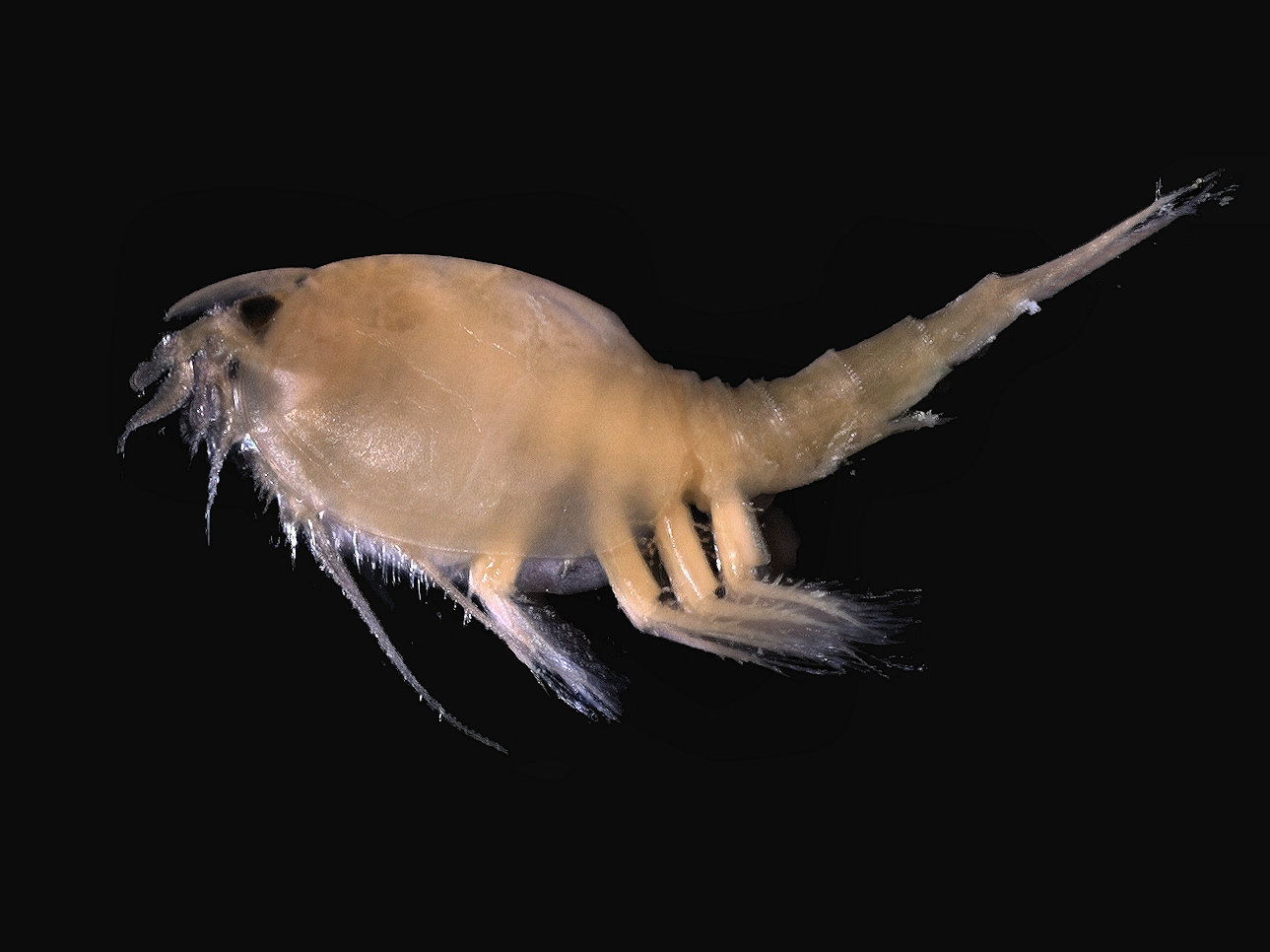
Nebalia bipes
Scientific classification Edit this classification
Kingdom: Animalia
Phylum: Arthropoda
Class: Malacostraca
Subclass: Phyllocarida
Packard, 1879
Orders

Phyllocarida is a subclass of crustaceans, comprising the extant order Leptostraca and the extinct orders Hymenostraca and Archaeostraca.[1] This clade of marine crustaceans diversified extensively during the Ordovician.[2]

Undescribed fossil of a very large phyllocarid from the Yukon (Devonian)

See also

[edit]

References

[edit]
[edit]
Revisions and contributorsEdit on WikipediaRead on Wikipedia
from Grokipedia
Phyllocarida is a subclass of the class , characterized by a large bivalved composed of two valves that enclose the head and most thoracic segments, connected by an adductor muscle and often featuring a movably hinged rostral plate anteriorly. These primitive s possess biramous antennules, a with lacinia mobilis, biramous maxillules and maxillae, thoracic endopods typically with exopodites or epipodites, eight thoracic somites, seven free abdominal somites, and a bearing furcal rami, with a pair of uropods arising from the seventh abdominal somite. The subclass encompasses small, primarily benthic marine forms, with extant members limited to the order Leptostraca, while extinct groups were more abundant in ancient seas. The taxonomic scope of Phyllocarida includes one living order, Leptostraca (introduced by Claus in 1880), which contains three families—Nebaliidae, Paranebaliidae, and Sarsinebalidae—and approximately 66 described worldwide as of 2024, all confined to marine environments from shallow coastal waters to the . Additionally, the subclass incorporates three extinct orders: Hymenostraca, Archaeostraca, and Hoplostraca, which dominated ecosystems and exhibit a fossil record extending back to the Lower , highlighting a once-diverse lineage that has since diminished dramatically. Living leptostracans, such as those in the Nebalia, are distinguished by a folded that broods eggs and a hinged rostrum, adaptations suited to their detritivorous, infaunal lifestyles on soft sediments; recent discoveries include new species like Nebalia holothurophila described in 2024. In evolutionary terms, Phyllocarida occupies a basal position within , often regarded as the sister group to the more derived (encompassing orders like decapods and isopods), based on shared primitive traits such as the bivalved and phyllopodous appendages. This placement underscores their significance in understanding the origins of malacostracan diversity, with fossils revealing a radiation of bivalved arthropods that paralleled early molluscan and forms in ecological roles. Despite their ancient lineage—first named as an order by in —modern phyllocarids persist as "living fossils," offering valuable models for studying development and phylogeny amid the class's overall expansion to over 40,000 .

Taxonomy and systematics

Higher classification

Phyllocarida is defined as a subclass within the class , which belongs to the superclass , subphylum Crustacea, phylum Arthropoda, and kingdom Animalia. In some classifications, it is treated as an infraclass of . The taxon was introduced by Alpheus S. Packard Jr. in 1879. In older systems, Phyllocarida was sometimes regarded as an order within , another major malacostracan subclass. Key diagnostic traits of Phyllocarida at the subclass level include a bivalved enclosing the body, seven pleonal somites (contrasting with the typical six in other malacostracans), and thoracic gills borne on the thoracic limbs, which distinguish it from subclasses such as Hoplocarida (characterized by a spiny and appendages) and (with a more fused and diverse appendage modifications). The current taxonomic consensus, as reflected in authoritative databases, places Phyllocarida as a basal subclass under > .

Included orders

Phyllocarida is divided into three orders: the extant Leptostraca and the two extinct orders Archaeostraca and Hymenostraca. The order Leptostraca comprises the only living phyllocarids, with approximately 40 described distributed across three families: Nebaliidae (containing about 33 in five genera, including Nebalia with such as Nebalia bipes), Nebaliopsidae (one genus, Nebaliopsis, with two ), and Paranebaliidae (three genera—Paranebalia, Levinebalia, and Saronebalia—with six ). The extinct order Archaeostraca, ranging from the to the , encompasses multiple families, including Caryocarididae and Rhinocarididae, with hundreds of species known from marine deposits. The extinct order Hymenostraca, documented from the to the (with some extensions into the ), includes families such as Ceratiocarididae and Hymenocarididae, represented by diverse taxa exhibiting varied forms. In older literature, Archaeostraca and Hymenostraca were occasionally merged due to superficial similarities in bivalved carapaces, but recent phylogenetic analyses, incorporating and morphology, support their separation as distinct orders within Phyllocarida. Overall, Phyllocarida includes around 40 extant species and several hundred species across these orders, with no recognized suborders.

Description

External morphology

Phyllocarida exhibit a distinctive external dominated by a bivalved formed from two laterally compressed valves fused along the dorsal midline without a functional , enclosing the head and most of the to create a cephalo-thorax region. This typically bears a forward-projecting rostrum at the anterior margin, prominent scars from adductor muscles that held the valves together, and concentric growth lines indicating incremental molting. In extant Leptostraca, the surface is generally smooth or lightly calcified, while many taxa display tuberculate, pitted, or spinose ornamentation for protection or camouflage. The underlying segmentation is evident externally through the exposed portions of the body. The head is fused to eight thoracic somites, bearing eight pairs of biramous, leaf-like (phyllopodous) appendages that project ventrally from beneath the ; the posterior four thoracic somites often remain partially exposed. Posterior to the cephalo-thorax is a flexible, seven-segmented pleon (), with each except the last bearing biramous pleopods for swimming; the pleon terminates in a distinct bearing paired furcal rami. Externally visible cephalic appendages include biramous antennules and multiannulate antennae, which extend forward from under the rostrum. Compound eyes are a prominent external feature, typically sessile in some primitive forms or mounted on movable stalks in most extant species, providing a wide field of vision; pigmentation and ommatidial structure vary but are adapted for low-light marine environments. Overall size ranges from 3 to 17 mm in extant Leptostraca, though some reach up to 30 mm, while fossil phyllocarids like Ceratiocaris (Hymenostraca) attained lengths of 50–100 mm, reflecting greater diversity in body proportions among Paleozoic representatives.

Internal anatomy

The respiratory system of Phyllocarida primarily relies on branchial gills attached to the endopods of the thoracic appendages, which are biramous and flattened to facilitate gas exchange through a thin, vascularized surface. These gills, often divided into a gill lobe and a flabellum on the exopodite, support active blood circulation for oxygen transport. In addition, supplementary pseudobranchiae form a respiratory membrane lining the inner carapace surface, enhancing oxygen uptake particularly in hypoxic conditions by increasing the effective respiratory area. The digestive system includes a straight gut extending from mouth to , comprising a short , , and , with peristaltic contractions aiding food movement. The , a paired digestive enveloping much of the head cavity, secretes enzymes for and absorbs nutrients, functioning as both liver and equivalents. Mandibular glands, located near the mouthparts, produce salivary secretions to initiate enzymatic breakdown of ingested particles. The is relatively simple, consisting of a small, two-lobed supraesophageal connected to optic and antennal , which integrates sensory input. A ventral nerve cord runs posteriorly along the body, featuring fused ganglia in thoracic and abdominal segments for segmental control of locomotion and visceral functions. Reproductive anatomy varies, with extant forms being dioecious. Females possess a ventral brood pouch formed by the and thoracic limbs, where fertilized eggs undergo direct development without free-living larval stages such as zoea, hatching as miniature adults. Sensory structures include chemoreceptors, primarily aesthetascs on the antennae, enable detection of chemical cues in the environment for foraging and .

Distribution and ecology

Modern distribution

Phyllocarida, represented primarily by the order Leptostraca, exhibit a cosmopolitan distribution across marine environments worldwide, with species recorded in all major ocean basins including the Atlantic, Pacific, and Indian Oceans. The family Nebaliidae, which encompasses the majority of extant species, is particularly widespread, occurring from coastal shelves to deep-sea habitats in these regions. In contrast, the family Nebaliopsidae is more restricted, with its sole genus Nebaliopsis showing a predominantly pelagic distribution in the Southern Hemisphere, including parts of the Indo-Pacific deep sea. Depth ranges for Phyllocarida span from intertidal zones to abyssal depths exceeding 3000 meters, though records beyond 5000 meters are rare and typically limited to specific genera. For instance, species of the genus Nebalia, such as N. bipes, are commonly found in shallow coastal muds and sediments from intertidal to subtidal areas. Deeper occurrences include Nebaliella caboti (378–2900 m) and Dahlella caldariensis (2450–2620 m), reported from bathyal to upper abyssal environments, often associated with hydrothermal vents or soft sediments. As of 2025, species diversity within Phyllocarida totals 66 extant species across 10 genera, with the highest concentrations in temperate and tropical shelf seas of the Atlantic and Pacific. Diversity diminishes in polar regions, where only a few species, such as Nebalia in the and N. bipes in the , have been documented, reflecting limited adaptation to extreme cold or ice-covered conditions. Recent explorations have expanded knowledge of Phyllocarida distributions in extreme habitats. In 2021, a new species, Sarsinebalia ledoyeri, was described from mud volcanoes on the Moroccan margin of the Gulf of Cadiz in the northeast Atlantic, marking the first record of this genus in the region and highlighting their presence in chemosynthetic environments at bathyal depths. Additional findings include Nebaliella ochotica from the northwest Pacific deep sea (3287–4469 m), and in 2024, Nebalia holothurophila from southern California seagrass beds, underscoring ongoing discoveries in both abyssal and coastal settings.

Habitat preferences and behavior

Phyllocarida, commonly known as leptostracans, predominantly inhabit benthic environments in marine soft sediments such as and , where they are often associated with organic-rich substrates like algal mats, meadows, and detrital accumulations. These habitats range from intertidal zones and shallow subtidal areas to deeper submarine canyons and mud volcanoes, with species tolerating a wide spectrum of conditions including low dissolved oxygen levels and elevated . For instance, Nebalia hessleri thrives in dynamic detrital mats composed of surf grass and at depths of around 19 meters off , where oxygen is scarce, surviving anoxic conditions for 8-12 hours by accessing surface air or through physiological adaptations. Similarly, Paranebalia belizensis occupies algal beds of Halimeda opuntia in ecosystems of , favoring protected sites with salinities of 33-36.5‰ and temperatures around 28°C. This preference for soft, organic-laden bottoms supports their role as ecosystem engineers in processing , though some species, like Nebalia sp. in Australian beds, occur epifaunally on . Feeding in phyllocarids is primarily detritivorous and scavenging, with individuals using their biramous thoracic limbs—phyllopodous in structure—to filter suspended particles or grasp larger from the . Unlike decapods, they lack highly specialized mouthparts, relying instead on the coordinated action of maxillae and maxillipeds to manipulate food, as described in classic studies of Nebalia bipes where limb setae create currents for particle capture. Species such as Nebalia hessleri exhibit omnivorous tendencies, consuming plant , carrion, and a broad range of offered foods in settings, reflecting opportunistic in nutrient-poor sands or detritus-rich mats. This mechanism allows efficient exploitation of microbially decomposed organic material, contributing to nutrient cycling in benthic communities. Behaviorally, phyllocarids display low mobility, often burrowing nocturnally into sediments to avoid diurnal predators, with activities peaking at night in habitats. Short-distance locomotion occurs via pleopod paddling, enabling brief swims or repositioning, while brooding females carry eggs and juveniles in a ventral marsupium, facilitating direct development without free-living larvae. is typically continuous or seasonal, with ovigerous females dominant in populations, and juveniles comprising the majority, as seen in Nebalia sp. where growth rates reach 0.050-0.088 mm/day and lifespans span 49-102 days. Ecologically, they serve as key decomposers in food webs, breaking down and supporting secondary production (e.g., 5.8 g ash-free dry weight m⁻² annually in beds), while acting as prey for nocturnal fishes and larger crustaceans, with predation driving high mortality at dense populations up to 1.5 million individuals/m².

Fossil record

Temporal and spatial distribution

The fossil record of Phyllocarida spans from the middle , with the earliest known occurrences dating to approximately 505 million years ago (Ma), such as Canadaspis perfecta from the . The group achieved its peak diversity during the and periods, coinciding with the , which represented a post-Cambrian recovery phase that facilitated widespread radiation on marine shelves. Following this zenith, diversity declined after the , with most extinct lineages disappearing by the late , though some Archaeostraca persisted into the Upper . Spatially, Phyllocarida fossils are distributed across major paleocontinents, including , , and , reflecting their adaptation to shallow marine environments worldwide. In , for instance, members of the order Archaeostraca were particularly abundant in shales of , such as those in and New York, underscoring their dominance in epicontinental seas during the period of peak diversification. Similar assemblages appear in (e.g., and ) and (e.g., and ), indicating a broad trans-equatorial presence on global marine shelves. Extinction patterns among Phyllocarida orders highlight a progressive loss of diversity, with Hymenostraca vanishing by the end of the and Archaeostraca persisting until the Upper . In contrast, the order Leptostraca endured as relict "living s," maintaining low diversity through the and to the present. Overall, more than 200 have been documented, predominantly from strata, illustrating the group's historical prominence before its reduction to modern remnants.

Preservation and key discoveries

Phyllocarid fossils are typically preserved as compressed impressions in fine-grained shales and mudstones, where the bivalved is often retained as a carbonaceous film, sometimes with traces of appendages visible. This mode of preservation is common in deposits, reflecting rapid burial in low-oxygen environments that minimized decay and scavenging. Exceptional preservation occurs in Konservat-n, such as the Middle Cambrian in , , where Archaeostraca species like Canadaspis perfecta exhibit detailed soft-tissue features including biramous appendages and digestive structures. Similarly, the in the UK has yielded three-dimensionally preserved phyllocarids with intact appendages, revealing antennal structures and biramous limbs through serial sectioning techniques. Taphonomic biases favor the recovery of phyllocarid carapaces due to their bivalved, chitinous composition, which resists and provides a protective for internal during burial. However, soft parts such as limbs and gills are rarely preserved outside of exceptional sites, as they decay rapidly unless conditions inhibit microbial activity and bioturbation. This bias results in an overrepresentation of carapace-only specimens in the fossil record, potentially underestimating morphological diversity. Significant recent discoveries include the first caryocaridid phyllocarid, Soomicaris ordosensis sp. nov., reported from Upper black shales in western , , extending the group's known range in that region. In the same year, excavations in yielded four Silurian Archaeostraca species, including the new Cugocaris future gen. et sp. nov. and Cugocaris? latus sp. nov., from deposits in Province, highlighting a shift from caryocaridid to ceratiocaridid dominance. These finds, preserved in finely laminated shales, include ontogenetic series that inform growth patterns. More recent discoveries as of 2025 include a new hoplostracan species, Aridelocaris ohioensis n. gen., n. sp., from the Early Mississippian of , , representing one of the oldest members of Hoplostraca, new records of Pennsylvanian phyllocarids from , and a new occurrence in the (Mississippian) of the Basin, . Advances in non-destructive imaging, such as computed tomography (CT) scanning, have enabled visualization of internal in compressed phyllocarid fossils, including those of Hymenostraca, revealing hidden appendage details without physical preparation. For instance, CT analyses of phyllocarids have clarified antennal and thoracic structures previously obscured in two-dimensional views.

Evolutionary history

Origins and diversification

The origins of Phyllocarida trace back to the stem-group in the early , approximately 520 million years ago, with the earliest records appearing in early strata, such as the Chengjiang biota (around 520–518 Ma). These primitive forms, such as early archaeostracans, exhibit basal malacostracan traits including homonomous, foliaceous limbs that suggest ancestry from stem-eumalacostracans, positioning Phyllocarida as a foundational group in malacostracan evolution rather than an evolutionary dead end. Phylogenetic analyses based on morphology from to modern taxa support this stem-group status, highlighting shared features like a bivalved carapace and biramous appendages that bridge early crustacean diversification. Diversification accelerated during the , coinciding with the (GOBE) around 485–443 Ma, following the relatively low-diversity baseline. This "Ordovician explosion" involved niche partitioning, with benthic archaeostracans dominating infaunal and epifaunal habitats while nektonic hymenostracans, such as early caryocaridids emerging from late ancestors in the middle (~477 Ma), adapted to pelagic lifestyles. Diversity peaked in the to (443–359 Ma), with over 50 genera documented across suborders like Ceratiocaridina and Caryocaridina, reflecting adaptive radiations into shallow marine environments. Key drivers included the expansion of epicontinental seas and oxygenated shallow-water habitats during the , which facilitated ecological opportunities amid competition from trilobites and emerging eumalacostracans. The benthic-to-pelagic transition in groups like caryocaridids contributed to the Plankton Revolution, enhancing trophic complexity in marine ecosystems. However, post-Devonian decline ensued, with non-Leptostraca orders facing elevated rates that outpaced , leading to the of diverse archaeostracan lineages by the late . This pattern may relate to Late Devonian anoxic events and rising predation pressures, though only Leptostraca persisted into modern times.

Relation to other crustaceans

Phyllocarida occupies a basal position within the class , consistently resolved as the to in both morphological and molecular phylogenies. This relationship is supported by shared morphological traits, including the possession of seven pleonites and phyllopodous biramous limbs on the trunk, which represent plesiomorphic features of the malacostracan . Molecular from 18S rDNA sequences of extant Leptostraca further corroborates this placement, positioning Phyllocarida as the earliest-diverging malacostracan lineage. Several structural homologies underscore the close affinity between Phyllocarida and other malacostracans, reflecting an evolutionary continuum in modification for sensory and locomotor functions. The significance of Phyllocarida's position is highlighted by the extant Leptostraca, often regarded as "living s" due to their morphological stasis since the , providing a window into the ancestral malacostracan ground pattern. Features like the tripartite brain and protocerebral organization in Leptostraca inform reconstructions of early malacostracan and tagmosis. However, integrating phyllocarids into molecular phylogenies poses challenges, as long-branch attraction in datasets can distort basal relationships and complicate calibrations for divergence timing. Debates persist regarding the exact rooting of , with some cladistic analyses based on morphological characters placing Phyllocarida as an outgroup to the entire malacostracan clade, potentially due to autapomorphic specializations in taxa. This positioning has implications for understanding pancrustacean , as Phyllocarida's primitive traits, such as undifferentiated trunk limbs, help delineate the transition from non-malacostracan crustaceans to the diverse eumalacostracan radiation.

References

Add your contribution
Related Hubs
User Avatar
No comments yet.